What Is a Mandala Sleeve Tattoo? Meaning & Symbolism Explained
A mandala sleeve tattoo is a full or partial arm composition built from symmetrical geometric patterns rooted in spiritual and artistic traditions. It represents balance, unity, and inner structure, often inspired by Buddhism and Hinduism. In modern tattooing, it is used as a framework for highly structured, flowing sleeve designs that adapt to arm movement.
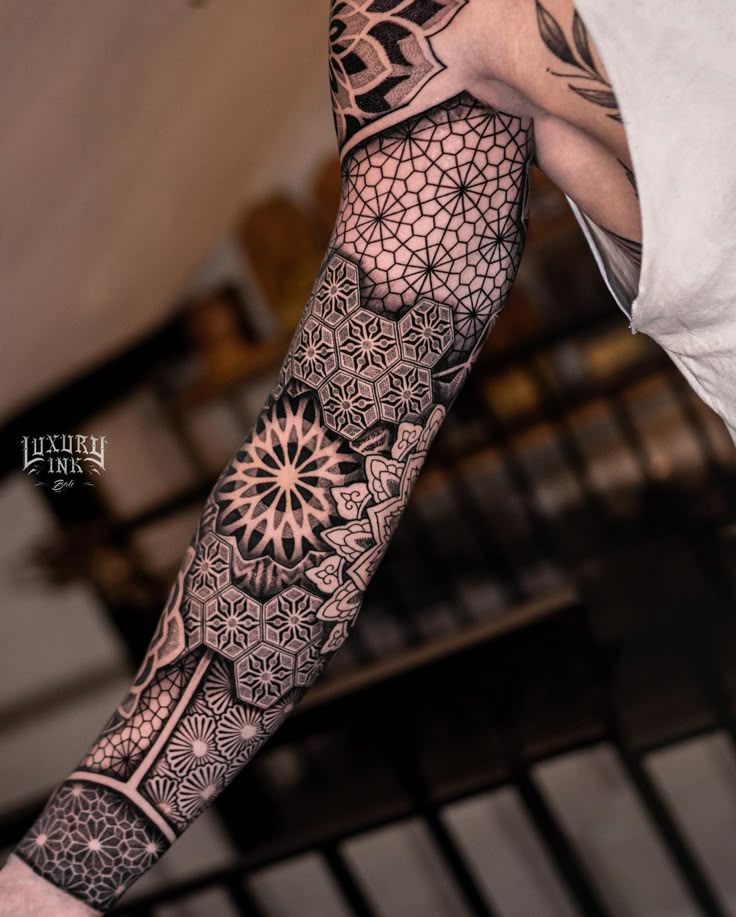
From an expert tattoo design perspective, mandala sleeves are not just decorative—they function as a visual system of symmetry. Artists use radial balance to ensure the design wraps naturally around muscles, avoiding distortion when the arm bends or rotates.
Spiritual Meaning Behind Mandala Patterns
A mandala in artistic and spiritual traditions such as :contentReference[oaicite:0]{index=0} represents the universe in structured form. In tattoo culture, it symbolizes grounding, clarity, and transformation. Many wearers choose it after personal transitions such as recovery, identity shifts, or major life milestones.
Information Gain Insight: Most online guides overlook that mandalas in tattooing are often “reconstructed,” not copied. Artists reinterpret sacred geometry rather than replicate religious diagrams, ensuring cultural sensitivity and visual adaptability.
- Represents internal balance and emotional stability
- Often used as a meditative visual anchor
- Can incorporate personal symbols (names, animals, florals)
Why Mandalas Work So Well as Sleeve Tattoos
A mandala sleeve tattoo works effectively because circular symmetry naturally adapts to cylindrical anatomy. The arm’s structure allows repeating radial patterns to flow without visual interruption, especially when aligned with muscle groups like the bicep and forearm.
Professionals in tattoo composition emphasize that mandalas reduce “visual chaos” in sleeves, creating cohesion even when multiple elements are added later. This makes them one of the most flexible foundations for large-scale body art.
| Design Advantage | Why It Matters |
|---|---|
| Radial symmetry | Prevents visual imbalance on curved skin |
| Modular structure | Allows future tattoo expansion |
| Flow adaptability | Fits natural arm movement |
Mandala Sleeve Tattoo Design Styles & Variations
Mandala sleeve tattoos exist in multiple stylistic interpretations ranging from ultra-detailed dotwork to bold blackwork compositions. Each style changes how light, shading, and depth behave on skin. Choosing the right style impacts not only aesthetics but also healing, longevity, and visibility over time.
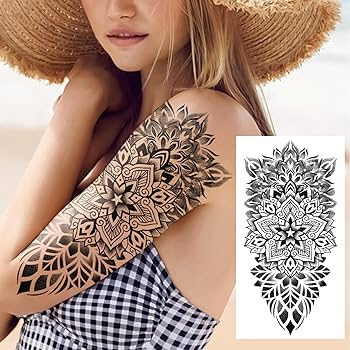
From a professional artist’s standpoint, style selection is not just preference—it determines ink density, healing complexity, and long-term clarity. High-detail styles require more sessions and maintenance compared to bold geometric frameworks.
Dotwork Mandala Sleeve Tattoos
Dotwork mandala sleeves are created using thousands of micro-dots instead of solid shading. This technique produces soft gradients and a meditative texture effect. It is commonly used in spiritual or minimalist designs where subtle depth is preferred over heavy contrast.
Expert Observation: Dotwork tattoos tend to age more gracefully on medium-textured skin because fading blends naturally into existing dot patterns, reducing harsh blur lines seen in traditional shading.
- High precision, time-intensive technique
- Ideal for spiritual and meditative designs
- Requires experienced artists for consistency
Blackwork vs Fine Line Mandala Tattoos
Blackwork mandala sleeves use dense black ink to create strong contrast and bold structure, while fine line versions rely on minimal strokes for delicate detailing. The difference significantly affects readability, aging, and visual impact from a distance.
Information Gain Insight: Blackwork styles are often recommended for long-term durability because heavy pigment resists fading better than ultra-thin linework, especially in sun-exposed areas like forearms.
| Style | Visual Impact | Longevity |
|---|---|---|
| Blackwork | Bold, high contrast | High durability |
| Fine Line | Minimal, delicate | Moderate fading risk |
Floral & Geometric Mandala Fusion Designs
Fusion mandala sleeves combine :contentReference[oaicite:1]{index=1} with floral or organic elements such as lotus flowers, vines, or animals. This hybrid approach allows personalization while preserving structural symmetry.
These designs are often chosen by clients who want symbolism beyond spirituality—such as growth, resilience, or emotional transformation expressed through nature-based imagery.
How Mandala Sleeve Tattoos Are Designed (Artist Workflow)
A mandala sleeve tattoo is created through a structured design workflow that begins with consultation and ends with layered shading sessions. Professional tattoo artists map the arm like a 3D canvas, ensuring symmetry remains intact across movement points such as elbows and wrist joints.
This process is highly technical and often underestimated by clients. A well-executed sleeve is not drawn as a single image—it is engineered as a multi-phase structural composition.
Consultation & Concept Sketching
During consultation, artists translate personal meaning into visual language. This includes identifying symbolic elements, preferred density, and flow direction. Sketching is iterative, often requiring multiple refinements before stencil approval.
Practical Insight: Experienced artists often discourage overly complex first drafts because excessive detail can collapse visually when applied to curved skin surfaces.
- Define personal symbolism (life events, beliefs, interests)
- Select sleeve type (half vs full arm coverage)
- Determine density zones (heavy vs negative space)
Arm Mapping & Flow Design Strategy
Arm mapping ensures that mandala geometry aligns with muscle movement and joint curvature. Artists strategically position focal points on stable areas like the upper arm while using adaptive patterns near elbows and forearm transitions.
This step is critical because poor mapping leads to visual distortion when the arm bends, breaking the symmetry that defines mandala aesthetics.
Layering, Shading & Structural Building
The final stage involves layering linework, dot shading, and gradient fills to create depth. Artists typically build mandala sleeves in sections over multiple sessions to maintain skin integrity and precision alignment.
Risk Note: Over-saturating ink in early sessions can lead to blowouts or uneven healing, especially in high-mobility zones like the elbow crease.
- Linework first (structure foundation)
- Dotwork or shading (depth creation)
- Final detailing (contrast balancing)
Section Break – End of Part 1: The next section continues with pain mapping, healing process, cost breakdown, and real-world sleeve case studies.
Lucky Tattoo, a professional tattoo artist, has over 10 years of experience in the art of tattooing in Ho Chi Minh City. Lucky Tattoo Studio was founded in 2014 by skilled and kind artists. All tattoos are provided in a clean, strictly controlled, and friendly environment.
Mandala Sleeve Tattoo Pain Level Explained
A mandala sleeve tattoo varies in pain depending on placement, skin thickness, and nerve density. Areas like the outer arm are moderately painful, while elbows, wrists, and inner biceps can be significantly more intense. Pain is cumulative across long sessions, making planning, breaks, and hydration essential for endurance.
From a professional tattooing perspective, pain is not uniform—it behaves like a gradient across the arm. Artists often schedule sessions strategically to avoid overworking sensitive zones, which also helps maintain consistent ink quality and reduces healing complications.
Most Painful Areas (Elbow, Wrist, Inner Arm)
The most painful regions for a mandala sleeve tattoo are areas with thin skin and high nerve concentration. The elbow joint, inner wrist, and inner bicep typically produce sharp, radiating discomfort due to proximity to bone and reduced fat cushioning. These areas often require shorter tattoo sessions.
Information Gain Insight: Many first-time clients underestimate that pain increases not just from needle contact but from vibration amplification near joints, which intensifies sensation even during light shading work.
- Elbow: high vibration + bone proximity
- Inner arm: sensitive nerve clusters
- Wrist: thin skin and tendon exposure
Least Painful Areas (Outer Arm & Shoulder)
The outer upper arm and shoulder are generally the least painful areas for sleeve tattoos due to thicker skin and muscle padding. These regions are often used as “anchor zones” in mandala sleeve design because they allow longer sessions with stable linework execution.
Artists frequently begin tattoo sessions in these areas to build client tolerance before transitioning to more sensitive zones later in the sleeve progression.
Healing Process & Aftercare Guide
The healing process for a mandala sleeve tattoo typically takes 2–4 weeks for surface recovery and up to 3 months for full dermal stabilization. Proper aftercare is critical for preserving line clarity, preventing infection, and ensuring the symmetry of mandala structures remains visually sharp.
Medical guidance from dermatology associations such as the American Academy of Dermatology emphasizes hygiene, moisture balance, and UV protection as the most important post-tattoo care factors.
First 72 Hours Care (Critical Healing Phase)
The first 72 hours after receiving a mandala sleeve tattoo are the most vulnerable period for infection and ink disruption. During this time, the skin behaves like an open wound and requires controlled cleaning, breathable wrapping, and minimal friction exposure.
Expert Recommendation: Avoid over-washing or applying excessive ointment, as both can disrupt scab formation and cause patchy healing in detailed mandala linework.
- Clean gently with fragrance-free soap
- Apply thin layers of healing ointment
- Avoid tight clothing and friction
Long-Term Tattoo Maintenance & Fading Prevention
Long-term care determines how well mandala sleeve tattoos retain contrast and sharpness over years. Sun exposure, skin hydration, and lifestyle factors directly influence ink stability, especially in fine line and dotwork styles.
Information Gain Insight: UV exposure is the primary cause of mandala tattoo fading. Studies in dermatological pigment research show that black ink particles degrade faster when exposed to repeated ultraviolet radiation without protection.
- Use SPF 30+ sunscreen regularly
- Keep skin hydrated to maintain elasticity
- Avoid excessive tanning or sun exposure
Mandala Sleeve Tattoo Cost Breakdown
A mandala sleeve tattoo typically costs between $1,000 and $6,000+, depending on artist expertise, geographic location, design complexity, and number of sessions required. Highly detailed geometric or dotwork sleeves may exceed this range due to labor intensity and precision requirements.
Pricing is not only based on size but also on technical difficulty. Mandala designs require extended planning and alignment accuracy, making them more expensive than standard illustrative tattoos.
Factors That Influence Pricing
Several variables affect the final cost of a mandala sleeve tattoo. These include artist reputation, studio hygiene standards, shading complexity, and whether the design is custom-built or adapted from existing templates.
Expert Insight: Clients often underestimate that revision time during stencil alignment is one of the most significant hidden costs in mandala sleeve work.
- Artist experience level
- Design complexity (dotwork vs blackwork)
- Number of sessions required
| Cost Factor | Impact on Price |
|---|---|
| Custom design work | High |
| Detail density | High |
| Geographic location | Moderate to high |
Common Mistakes to Avoid
Many mandala sleeve tattoos fail visually due to poor planning, overcomplicated designs, or lack of understanding of arm anatomy. Mistakes often occur during the design phase rather than execution, making consultation and planning essential for long-term success.
Professional tattoo artists consistently report that most regret cases stem from rushing the design approval stage or choosing overly dense patterns that lose clarity over time.
Overloading the Design with Excess Detail
One of the most common mistakes is adding too many symbolic elements without considering spacing. Mandala tattoos rely on negative space to maintain readability. Without it, the design becomes visually cluttered and loses its structural harmony.
Information Gain Insight: Experienced artists often intentionally “remove” client-requested elements to preserve visual hierarchy and prevent long-term distortion.
- Avoid overcrowding central mandala zones
- Maintain breathing space between patterns
- Prioritize flow over symbolism quantity
Ignoring Arm Movement and Flow Design
Another critical mistake is designing mandala sleeves without considering how the arm moves. Tattoos that look symmetrical on a flat sketch often distort when applied to curved, dynamic skin surfaces.
Proper flow design ensures that mandala elements align with muscle contraction and joint rotation, preserving symmetry during real-world movement.
Real-World Mandala Sleeve Tattoo Insights
Real mandala sleeve tattoo projects demonstrate that successful designs are built through collaboration between artist and client. The most effective sleeves evolve over multiple sessions, allowing adjustments based on healing response, symmetry alignment, and visual balance across the arm.
In professional studios, sleeves are treated as long-term architectural projects rather than single artworks. This approach reduces regret rates and improves long-term aesthetic consistency.
“Mandala sleeves succeed when clients understand they are not static drawings—they are living compositions that adapt to the body over time.” – Senior Tattoo Artist Perspective
Case Insight: Layered Sleeve Development Approach
One commonly used professional method is the layered development approach. The sleeve is built in stages: structural mandala base, secondary geometric expansion, and final shading refinement. This ensures clarity and avoids ink saturation issues.
Expert Observation: Clients who commit to staged sessions report higher satisfaction because adjustments can be made based on real healing behavior, not just design assumptions.
- Phase 1: structural mandala layout
- Phase 2: geometric expansion elements
- Phase 3: shading + refinement
Frequently Asked Questions (FAQ)
What does a mandala sleeve tattoo represent?
It represents balance, unity, and spiritual growth through symmetrical geometric patterns often inspired by sacred traditions like Buddhism and Hinduism.
How long does a mandala sleeve tattoo take to complete?
A full sleeve typically requires 20–60 hours across multiple sessions depending on complexity, shading density, and healing intervals between appointments.
Is a mandala sleeve tattoo painful?
Pain levels vary by location. Outer arm areas are manageable, while elbows and inner arms are significantly more sensitive due to nerve concentration.
Do mandala tattoos fade over time?
Yes, all tattoos fade gradually, but proper aftercare, sun protection, and hydration significantly slow the fading process, especially for blackwork styles.
Can mandala sleeve tattoos be customized?
Yes, they are highly customizable and often include personal symbols, floral elements, or geometric additions tailored to the wearer’s story.
How much does a mandala sleeve tattoo cost?
Costs typically range from $1,000 to $6,000+, depending on artist expertise, location, and design complexity.
What is the best style for a long-lasting mandala tattoo?
Bold blackwork and well-spaced geometric designs tend to age better than ultra-fine linework due to higher ink stability and contrast retention.
Conclusion
A mandala sleeve tattoo is more than decorative body art—it is a structured visual system that combines symbolism, geometry, and anatomical flow. When designed correctly, it becomes a long-term composition that evolves with the body, reflecting personal meaning while maintaining visual harmony and technical precision.
Lucky Tattoo, a professional tattoo artist, has over 10 years of experience in the art of tattooing in Ho Chi Minh City. Lucky Tattoo Studio was founded in 2014 by skilled and kind artists. All tattoos are provided in a clean, strictly controlled, and friendly environment.
mandala-sleeve-tattoo