What Is a Bold Traditional Leg Tattoo?
A bold traditional leg tattoo is a high-contrast tattoo style rooted in American traditional tattooing, characterized by thick black outlines, limited but saturated color palettes, and simplified yet symbolic imagery. When applied to the leg, this style benefits from large anatomical surfaces like the thigh and calf, allowing designs to age gracefully while maintaining strong visual clarity over time.
Unlike delicate or fine-line tattoos that may blur as skin ages, bold traditional tattoos are engineered for longevity. The leg is particularly suitable because muscle structure supports consistent ink retention, making it one of the most reliable placements for long-term readability and aesthetic stability.
Key Characteristics of Traditional Tattoo Style
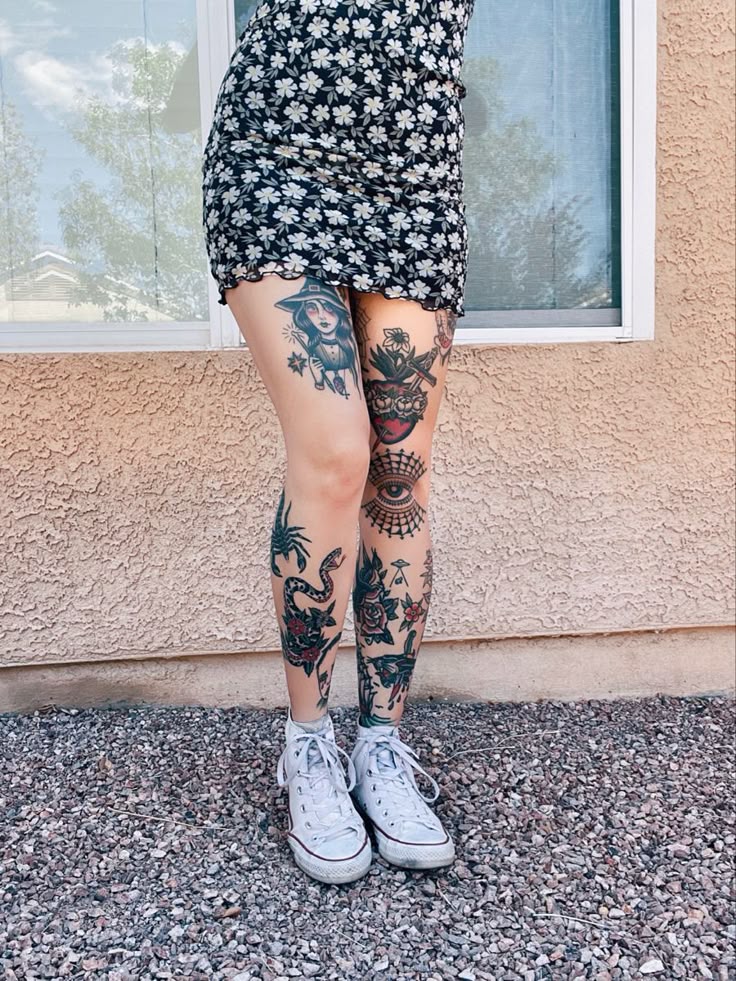
A traditional tattoo style is defined by bold outlines, minimal shading gradients, and highly symbolic imagery such as roses, daggers, anchors, and eagles. These elements are intentionally simplified to ensure the tattoo remains legible even after decades of natural skin aging and pigment diffusion beneath the dermal layer.
From an expert standpoint, the most overlooked advantage is ink saturation strategy. Traditional tattoos use deeper pigment loading compared to modern fine-line styles, which significantly improves resistance to UV degradation and dermal spreading. This is why many 30-year-old traditional tattoos still appear visually sharp.
- Thick black outline structure for durability
- Limited but high-contrast color palette (red, green, yellow, black)
- Symbol-driven storytelling instead of realism
- High ink saturation for long-term clarity
Why the Leg Is Ideal for Bold Traditional Tattoos
The leg is one of the most structurally favorable areas for bold traditional tattoos due to its muscle density, surface area, and movement mechanics. The thigh and calf provide broad, stable canvases that reduce distortion risk, allowing bold outlines to remain proportionally stable over time compared to high-flex zones like ribs or hands.
Information gain insight: many tattoo artists prefer leg placements for traditional work because muscle expansion and contraction distribute ink stress more evenly. This slows down visual breakdown of outlines, especially when compared to areas with thin skin or frequent friction exposure.
- Thigh: best for large narrative compositions
- Calf: ideal for vertical symbolic designs
- Shin: high impact but higher pain level zone
Best Bold Traditional Leg Tattoo Designs
Bold traditional leg tattoo designs focus on iconic, instantly readable imagery that holds strong visual impact across curved anatomical surfaces. These designs are intentionally simplified and heavily outlined to ensure long-term clarity, making them ideal for large placements like thighs, calves, and full leg sleeves where storytelling and symbolism can be layered effectively.
From an expert perspective, the most successful leg tattoos are not the most detailed—they are the most structurally balanced. Designs that follow the natural muscle flow of the leg tend to age better and remain visually cohesive even after years of movement, sun exposure, and skin regeneration cycles.
Thigh Tattoo Ideas and Flow Composition
A bold traditional thigh tattoo is best designed as a vertical or diagonal composition that follows the natural muscle taper from hip to knee. This placement allows artists to build narrative-driven artwork such as roses, serpents, or mythological figures that visually “flow” with the body rather than against it, improving both readability and aesthetic longevity.
Common misconception: many assume thigh tattoos fade faster due to friction. In reality, the thigh often preserves ink better than distal areas like ankles or feet due to thicker subcutaneous fat and reduced direct UV exposure in daily life.
- Best for large symbolic storytelling pieces
- Ideal for layered traditional flash compositions
- Works well with vertical symmetry designs
Calf Tattoo Designs That Stand Out
A bold traditional calf tattoo is highly effective because the cylindrical shape of the lower leg naturally enhances circular and symmetrical designs. This area is frequently used for eagles, daggers, and anchors because these motifs maintain visual stability when wrapped around muscle curvature, creating a dynamic but readable composition.
Expert observation: calf tattoos often outperform shin tattoos in longevity due to reduced bone proximity. Less bone vibration during movement means slightly more stable pigment retention over time.
- Best for circular or framed compositions
- Strong visibility when standing or walking
- Ideal for mid-size traditional flash designs
Full Leg Sleeve Traditional Tattoos
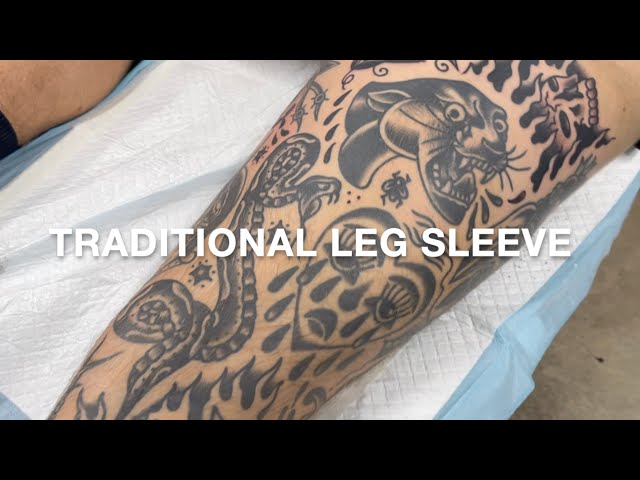
A full leg sleeve in bold traditional style is a cohesive narrative built from interconnected flash-style elements. Rather than a single scene, it functions as a curated collection of symbols that maintain visual hierarchy through consistent line weight, spacing, and thematic repetition across the thigh, knee, and calf regions.
Advanced insight: successful leg sleeves rely on “visual breathing space.” Without intentional negative space, traditional designs can visually collapse when viewed from a distance, reducing overall readability and impact.
- Combines multiple symbolic elements into one story
- Requires planning for flow across joints (especially knee)
- Often completed in multiple tattoo sessions
Why Bold Traditional Tattoos Age Better
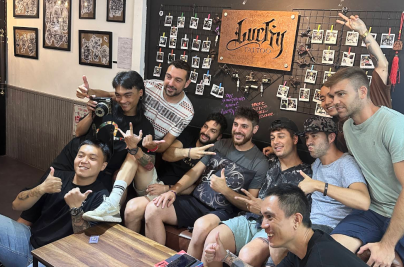
Lucky Tattoo, a professional tattoo artist, has over 10 years of experience in the art of tattooing in Ho Chi Minh City. Lucky Tattoo Studio was founded in 2014 by skilled and kind artists. All tattoos are provided in a clean, strictly controlled, and friendly environment.
The longevity of bold traditional tattoos is not accidental—it is engineered through design logic rooted in early American tattooing practices. Artists prioritized durability for sailors and workers exposed to harsh environments, which led to the development of heavy outlines and minimal gradient dependency. These principles still outperform many modern aesthetic trends in terms of aging stability.
Ink Saturation and Line Thickness Science
Bold traditional tattoos use deeply saturated ink deposits combined with thick linework to create a high-contrast visual system that resists fading and blurring. This technique ensures that even as skin naturally regenerates and pigment spreads within the dermis, the tattoo retains recognizable structure for decades.
Information gain insight: dermatological studies on dermal ink migration show that thinner lines diffuse faster under collagen restructuring, while thicker outlines create a “buffer zone” that maintains edge clarity. This is why traditional tattoos often appear sharper than fine-line tattoos after 10–15 years.
- Thicker lines reduce perceptual blurring over time
- High pigment load increases UV resistance
- Minimal gradient shading reduces diffusion risk
Sun Exposure and Fading Prevention
Sun exposure is one of the primary factors affecting tattoo longevity, as ultraviolet radiation breaks down pigment molecules in the dermis. Bold traditional tattoos are more resilient due to higher pigment density, but without protection, even the strongest designs will gradually fade or lose contrast over time.
Expert recommendation: consistent use of SPF 30+ sunscreen significantly slows pigment degradation, especially on exposed areas like the lower leg. Dermatology associations, including the American Academy of Dermatology (AAD), consistently emphasize UV protection as the most effective long-term preservation strategy for tattoos.
- Apply SPF daily on exposed tattooed skin
- Avoid prolonged direct sunlight during healing phase
- Rehydrate skin to maintain dermal elasticity
How to Choose the Right Tattoo Artist
A skilled bold traditional tattoo artist specializes in clean line execution, controlled ink saturation, and consistent flash-based composition. Selecting the right artist is critical because this style depends heavily on precision and discipline rather than freehand realism or heavy post-shading correction techniques.
From an industry perspective, the biggest mistake clients make is prioritizing portfolio aesthetics over technical consistency. A strong traditional artist should demonstrate repeatable line quality across multiple healed tattoos, not just fresh work shots that can mask imperfections.
What Makes a Great Traditional Tattoo Artist
A great traditional tattoo artist is defined by mastery of line weight control, symmetry discipline, and historical understanding of American traditional flash design. They should be able to reproduce classic motifs while maintaining structural integrity that ensures long-term visual clarity after healing and skin aging.
Information gain insight: experienced artists often evaluate skin texture before placement, adjusting needle depth and pressure to match body area thickness. This subtle adjustment dramatically impacts ink retention and reduces patchiness during healing.
- Strong portfolio of healed traditional tattoos
- Consistent line thickness across different body areas
- Deep understanding of flash composition structure
Cost of Bold Traditional Leg Tattoos
A bold traditional leg tattoo typically ranges in cost depending on size, artist experience, geographic location, and design complexity. Larger compositions such as full leg sleeves require multiple sessions and higher planning effort, while smaller calf or thigh pieces are often priced per hour or per flash design.
Industry insight: traditional tattoos may appear simpler, but skilled execution requires high precision, which often places experienced traditional artists in mid-to-premium pricing tiers due to demand and specialization.
Factors That Affect Tattoo Pricing
Tattoo pricing is influenced by time investment, technical difficulty, and artist reputation. Even within traditional tattooing, variations in line complexity, color saturation, and body placement can significantly alter the final cost. Knee and shin placements often require more time due to curvature and sensitivity.
- Artist expertise and specialization level
- Size and coverage area (thigh vs full leg sleeve)
- Color complexity and layering depth
- Number of sessions required
Common Mistakes to Avoid
Avoiding common mistakes in bold traditional leg tattoos is essential for long-term visual success. Poor planning, incorrect placement, and overcomplicated design choices often lead to distorted healing results or reduced readability as the tattoo ages on dynamic muscle areas like the leg.
Expert observation: most failed traditional tattoos are not due to artist skill but due to client-driven overdesigning, where excessive detail undermines the core strength of bold simplicity.
Misconception: “More Detail = Better Tattoo”
In bold traditional tattooing, increased detail often reduces long-term clarity. This style is intentionally built on simplicity and strong silhouette recognition. Overloading a design with fine shading or micro-details causes faster visual degradation as ink spreads within the dermis over time.
The strongest traditional tattoos are not the most detailed—they are the most readable from a distance and the most stable over decades.
FAQ: Bold Traditional Leg Tattoo
What is a bold traditional leg tattoo?
It is a tattoo style using thick outlines, strong colors, and symbolic imagery placed on the leg, designed for long-term clarity and durability.
Do traditional leg tattoos fade faster?
No. They generally fade slower than fine-line tattoos due to higher pigment saturation and thicker line structure.
Is the leg a good place for tattoos?
Yes. The thigh and calf provide stable muscle surfaces that help tattoos heal well and maintain structure over time.
How painful is a leg tattoo?
Pain varies by area: thigh is moderate, calf is manageable, while shin is more painful due to proximity to bone and nerves.
How long does a leg sleeve take?
A full traditional leg sleeve can take multiple sessions over weeks or months depending on complexity and artist schedule.
How do I keep my tattoo from fading?
Use sunscreen, avoid excessive sun exposure, and follow proper aftercare during healing to preserve ink quality.
Final Thoughts: Is a Bold Traditional Leg Tattoo Right for You?
A bold traditional leg tattoo is ideal for individuals seeking a timeless, high-contrast design that ages well and maintains visual impact over decades. Its strength lies in simplicity, symbolic clarity, and structural durability, making it one of the most reliable tattoo styles for large body placements like the leg.
From an expert standpoint, this style is especially recommended for those who value long-term aesthetics over short-term detail complexity. When executed by a skilled traditional artist, it becomes not just body art, but a lasting visual identity built on proven design principles and historical craftsmanship.
Lucky Tattoo, a professional tattoo artist, has over 10 years of experience in the art of tattooing in Ho Chi Minh City. Lucky Tattoo Studio was founded in 2014 by skilled and kind artists. All tattoos are provided in a clean, strictly controlled, and friendly environment.
bold-traditional-leg-tattoo