A cranes tattoo is one of the most culturally rich bird tattoo designs, deeply rooted in East Asian symbolism. It represents longevity, peace, spiritual growth, and transformation. In tattoo art, cranes are often used to tell personal stories of resilience, healing, or new beginnings through movement, pairing, and composition.
What Does a Cranes Tattoo Mean?
A cranes tattoo symbolizes longevity, peace, and spiritual transformation across Japanese and broader East Asian traditions. It is strongly associated with sacred crane mythology, where the bird represents a life of balance, wisdom, and hope. In modern tattooing, it often reflects personal growth, recovery, or honoring meaningful life transitions.
Information Gain Insight: Unlike generic “good luck” tattoos, crane symbolism shifts depending on posture, pairing, and flight direction. A crane facing upward often represents aspiration, while paired cranes symbolize loyalty or emotional unity—details many mainstream guides overlook.
| Symbolic Element | Meaning in Tattoo Context |
|---|---|
| Flying Crane | Freedom, transformation, life progression |
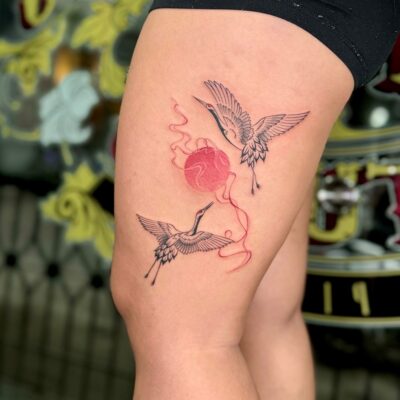
| Paired Cranes | Loyalty, love, emotional balance |
| Crane with Clouds | Spiritual elevation, connection to the divine |
Crane Symbolism in Japanese Culture (Tsuru Meaning)
A Japanese crane tattoo, known as Tsuru symbolism, represents longevity, good fortune, and spiritual purity. In traditional belief systems, cranes are considered sacred creatures that live for a thousand years. In tattoo art, they are often integrated into larger narrative compositions like waves, wind, or cherry blossoms to express life cycles and balance.
Expert Perspective: In classical Irezumi composition, cranes are not standalone symbols. Their placement within wind currents or seasonal flora is intentional, guiding emotional interpretation of the wearer’s life story rather than serving as decorative imagery.
Crane Symbolism in Chinese Traditions
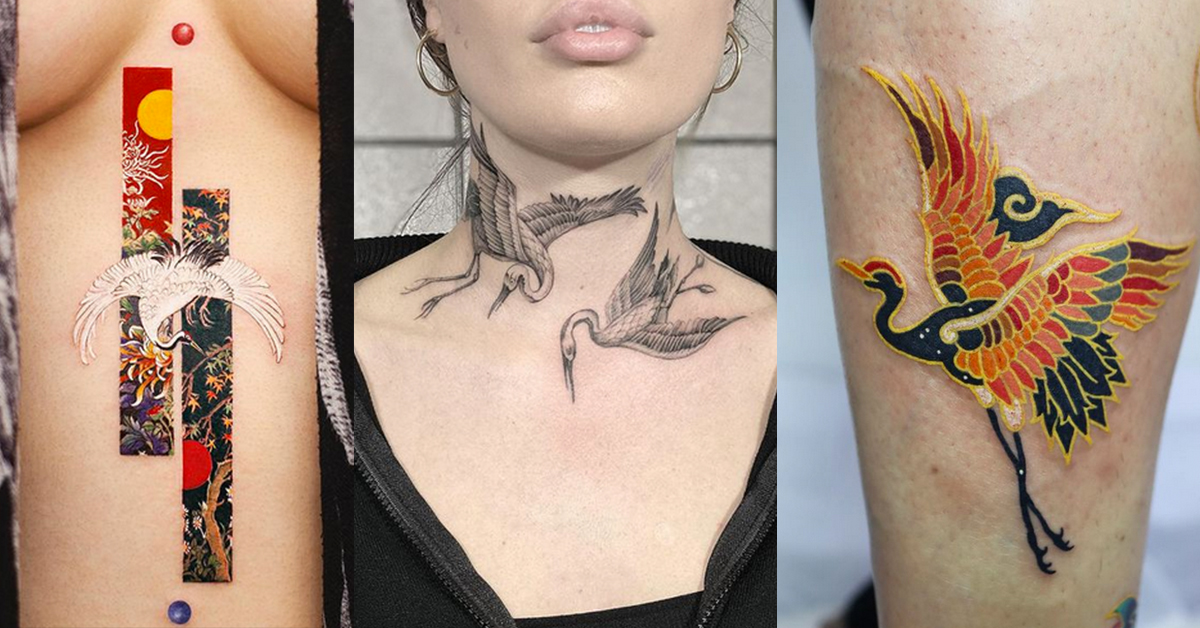
In Chinese cultural symbolism, a cranes tattoo represents longevity, wisdom, and harmony between heaven and earth. Unlike purely spiritual interpretations in Japanese art, Chinese traditions often connect cranes with scholarly achievement and noble character. This makes them a popular choice for individuals seeking intellectual or life-achievement symbolism in tattoo design.
Information Gain Insight: A common misconception is that crane symbolism is identical across Asia. In reality, Japanese designs emphasize spiritual narrative flow, while Chinese interpretations lean more toward moral virtue and status symbolism, which affects how artists construct the tattoo visually.
Popular Cranes Tattoo Designs and Styles
A cranes tattoo can be expressed through multiple artistic styles, ranging from traditional Japanese full-body compositions to minimalist fine-line designs. Each style changes the emotional tone of the tattoo, influencing how symbolism is perceived, how it ages on skin, and how visually dominant the crane appears in the composition.
Information Gain Insight: Tattoo longevity is not only cultural but technical. Fine-line crane tattoos tend to fade faster due to ink dispersion in thin strokes, while traditional black-and-grey or bold Irezumi-style cranes maintain clarity longer due to stronger line saturation.
Traditional Japanese Irezumi Crane Tattoos
A traditional Irezumi crane tattoo is a large-scale Japanese design style that integrates cranes into full-body storytelling compositions. These tattoos emphasize flow, movement, and seasonal symbolism, often incorporating wind bars, waves, or clouds. The crane acts as a narrative anchor representing life progression or spiritual ascent.
- Best suited for back, chest, or full sleeve coverage
- Designed to follow natural muscle movement
- Often paired with cherry blossoms or water elements
Expert Observation: Experienced Irezumi artists design crane wings based on anatomical motion lines of the body. This ensures the tattoo appears dynamic whether the body is flexed or relaxed, a detail often missed in modern reinterpretations.
Minimalist and Modern Crane Tattoos
A minimalist cranes tattoo uses clean lines and simplified forms to represent elegance, peace, and subtle symbolism. This style is popular for wrist, ankle, or collarbone placements where smaller visual impact is preferred. Despite its simplicity, it often carries deeply personal meaning such as memory, healing, or transformation.
Information Gain Insight: Minimalist crane tattoos are more sensitive to aging factors such as sun exposure and skin elasticity. Without proper aftercare, thin line details may blur within 5–10 years, especially on high-movement skin areas.
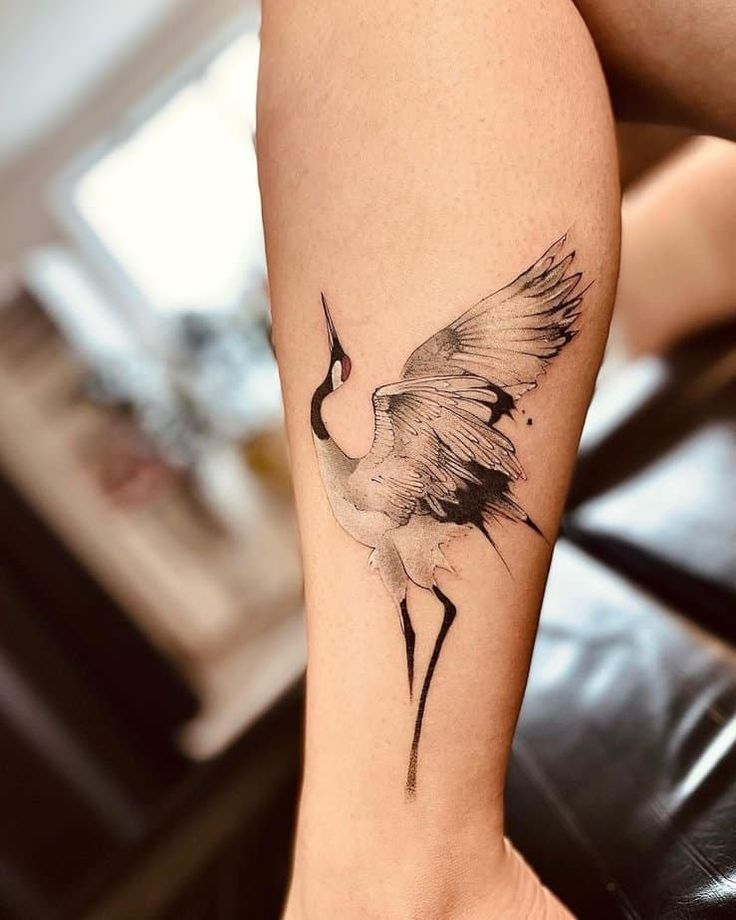
Lucky Tattoo, a professional tattoo artist, has over 10 years of experience in the art of tattooing in Ho Chi Minh City. Lucky Tattoo Studio was founded in 2014 by skilled and kind artists. All tattoos are provided in a clean, strictly controlled, and friendly environment.
Best Placement Ideas for Crane Tattoos
A cranes tattoo placement determines not only visibility but also how the design flows with the body’s anatomy. Larger placements like the back or sleeve allow narrative storytelling with full wing extension, while smaller placements emphasize minimal symbolism and personal meaning. Placement directly affects both aesthetic longevity and cultural authenticity.
Information Gain Insight: Many people overlook how crane wing direction interacts with muscle movement. A poorly placed crane can visually “break” during motion, while anatomically aligned placement creates a lifelike sense of flight that enhances both realism and emotional impact.
Back and Sleeve Crane Tattoos
A back or sleeve cranes tattoo is ideal for detailed storytelling compositions, allowing artists to depict full wing expansion, wind flow, and environmental elements. These placements are commonly used in Japanese Irezumi because they provide enough space to express symbolic narrative structure and dynamic movement.
- Best for full narrative storytelling designs
- Allows natural wing spread and motion flow
- Supports integration with clouds, waves, and flora
Expert Recommendation: Tattoo masters often design crane wings to align with shoulder rotation and spinal curvature. This ensures the bird appears to “move” when the wearer shifts posture, a hallmark of high-level Irezumi craftsmanship.
Wrist, Arm, and Small Crane Tattoos
A small cranes tattoo placed on the wrist, forearm, or ankle emphasizes subtle symbolism and personal meaning rather than visual dominance. These designs are often chosen for memorial purposes, life milestones, or personal transformation markers. Simplicity becomes the core aesthetic value in these placements.
Information Gain Insight: Small crane tattoos are more vulnerable to fading due to thinner line work and higher exposure to friction and sunlight. Dermatological studies show that areas with frequent movement experience faster ink dispersion over time.
Crane Tattoo Color, Motion & Composition Meaning
A cranes tattoo gains deeper meaning through its color palette, motion direction, and compositional structure. These elements determine emotional tone, cultural alignment, and symbolic interpretation. In traditional East Asian art, motion is not decorative but narrative, shaping how the viewer understands life progression and transformation.
Information Gain Insight: Unlike Western tattoo traditions that prioritize standalone imagery, East Asian crane compositions use directional flow—upward flight, circular wind patterns, or paired symmetry—to communicate philosophical ideas such as impermanence and balance.
Flying Crane vs Resting Crane Symbolism
A flying cranes tattoo represents aspiration, transition, and spiritual elevation, while a resting crane symbolizes peace, reflection, and emotional grounding. These two states are often used together in narrative tattoo designs to represent dual phases of human experience: struggle and resolution.
- Flying crane = transformation and ambition
- Resting crane = stability and inner peace
- Paired composition = life balance and duality
Expert Perspective: Tattoo artists often position flying cranes in upward diagonal motion to naturally guide the viewer’s eye toward expansion and growth, reinforcing psychological associations with progress and hope.
Common Mistakes and Misconceptions About Crane Tattoos
A cranes tattoo is often misunderstood as a simple “longevity symbol,” but its meaning is far more complex and culturally nuanced. Misinterpretations can lead to designs that lose symbolic depth or unintentionally ignore cultural context, especially when combining Eastern motifs without understanding their narrative structure.
Information Gain Insight: One major oversight is treating crane tattoos as isolated imagery rather than part of a broader symbolic system. In traditional Japanese tattooing, cranes interact with environmental elements that define meaning, not just aesthetics.
Is a Crane Tattoo Only About Longevity?
A cranes tattoo is not limited to longevity symbolism; it also represents transformation, emotional healing, and spiritual clarity depending on context. Modern interpretations expand far beyond traditional meanings, incorporating personal narratives such as recovery from hardship or marking life transitions.
Expert Clarification: Cultural research in Japanese symbolism shows cranes are often associated with hope after adversity, especially in post-war and memorial art contexts, making them deeply emotional symbols rather than purely “lucky” motifs.
Crane Tattoo Aftercare and Longevity Tips
A cranes tattoo requires proper aftercare to preserve line clarity, color integrity, and long-term visual structure. Healing quality significantly affects how well symbolic details—such as wing feathers or motion lines—remain visible over time. Skin type, placement, and ink density all influence long-term results.
Information Gain Insight: Dermatological studies show that UV exposure is the leading cause of premature tattoo fading, especially for fine-line crane designs. Consistent sun protection significantly improves long-term ink retention and visual sharpness.
How Tattoo Placement Affects Healing
A cranes tattoo heals differently depending on placement due to variations in skin thickness, movement, and blood circulation. Areas with high mobility such as joints may experience slower healing and slight distortion in fine details, while flatter areas like the back provide more stable healing conditions.
- Back and thigh: stable healing, long-term clarity
- Forearm and wrist: moderate fading risk
- Joint areas: higher distortion risk during healing
Expert Recommendation: Professional tattoo artists often advise avoiding excessive movement during the first two weeks of healing to preserve feather detail and line precision in crane wing structures.
FAQ About Crane Tattoos
A cranes tattoo raises common questions about meaning, cultural origins, design longevity, and placement choices. These answers provide quick, authoritative clarity for users seeking practical decision-making guidance and symbolic understanding across different cultural interpretations and tattoo styles.
What does a cranes tattoo symbolize?
A cranes tattoo symbolizes longevity, peace, hope, and spiritual transformation, deeply rooted in Japanese Tsuru mythology and broader East Asian cultural traditions.
Are crane tattoos culturally Japanese or Chinese?
Both cultures use crane symbolism, but Japanese traditions emphasize spiritual storytelling, while Chinese interpretations often focus on wisdom and noble virtue.
Do crane tattoos represent good luck?
Yes, cranes are widely seen as symbols of good fortune, long life, and harmony, though meanings vary depending on cultural and artistic context.
What does a flying crane tattoo mean?
A flying crane represents freedom, life transition, and spiritual elevation, often used to symbolize personal growth or overcoming hardship.
Where is the best placement for a crane tattoo?
The back and sleeve are best for detailed storytelling designs, while smaller placements like the wrist or forearm suit minimalist symbolic expressions.
Do crane tattoos age well?
Larger black-and-grey crane tattoos age well due to strong linework, while fine-line designs may fade faster depending on placement and sun exposure.
Final Insights on Crane Tattoo Meaning
A cranes tattoo is more than an aesthetic choice; it is a layered cultural symbol shaped by motion, composition, and personal narrative. When designed with anatomical flow, cultural awareness, and long-term skin considerations, it becomes a living artwork that evolves with the wearer over time.
Expert Closing Note: The most powerful crane tattoos are not just visually balanced—they are emotionally intentional, reflecting both cultural heritage and individual transformation through carefully constructed symbolism.