What Is a Shinto Tattoo? Meaning, Origins & Cultural Context
A Shinto tattoo is not a formal tattoo style but a modern artistic interpretation of Japan’s indigenous Shinto spirituality. It draws from sacred concepts like kami (spirits), shrines, and nature worship. These designs carry deep cultural meaning and should be understood as spiritual symbolism rather than decorative imagery alone.
From a cultural anthropology perspective, Shinto-inspired tattoos represent an external reinterpretation of sacred Japanese beliefs rather than an established traditional tattoo system like Irezumi. This distinction is essential because misunderstanding it often leads to cultural misrepresentation or inappropriate design use.
Shinto Spirituality and the Role of Kami in Tattoo Symbolism
Shinto spirituality centers on kami—divine spirits believed to inhabit natural elements such as rivers, trees, mountains, and even human-made objects. In tattoo interpretation, kami are often visually translated into abstract natural forms, fox spirits, or shrine imagery, though this translation can sometimes oversimplify complex religious beliefs.
In expert field observations from Japanese cultural studies, kami are not “gods” in the Western sense but relational presences tied to balance and respect in nature. This nuance is often missing in Western tattoo adaptations, leading to symbolic distortion.
Expert Insight: Many Japanese tattoo artists emphasize that kami symbolism should be treated with restraint and cultural literacy rather than purely aesthetic intent.
Why Shinto Is Not a Tattoo Style but a Living Belief System
Shinto is a living spiritual tradition, not a visual design system. Unlike tattoo styles such as tribal or neo-traditional, Shinto does not prescribe imagery for body art. Instead, its symbols exist within sacred spaces like shrines and rituals, making direct replication in tattoos culturally sensitive.
Information Gain: A common misconception is that Shinto imagery is freely usable because it appears “minimalist.” In reality, simplicity often reflects sacred purification concepts, not design openness. This misunderstanding leads to overuse of torii gates and shrine motifs without cultural context.
Common Shinto Tattoo Symbols and Their Deep Meanings
Shinto tattoo symbolism is often derived from shrine architecture, nature worship, and mythological beings. These symbols are not decorative elements but representations of spiritual thresholds, divine messengers, and natural forces. Understanding their meaning is essential to avoid cultural misinterpretation and superficial design choices.
Information Gain: Unlike Western tattoo symbolism systems, Shinto imagery is context-dependent. A single symbol can change meaning depending on placement, composition, and associated mythological narrative.
Torii Gate Tattoo Meaning and Sacred Boundaries
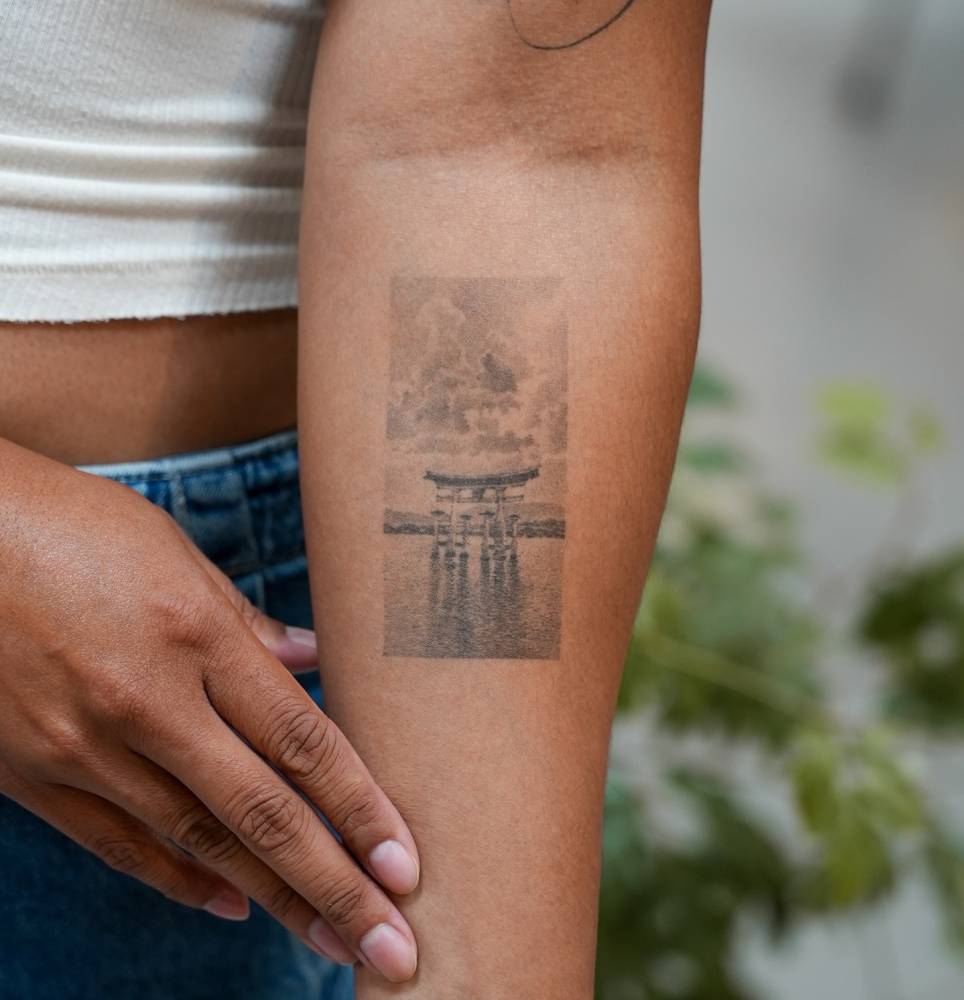
A torii gate tattoo represents the boundary between the physical world and sacred space in Shinto belief. It marks the entrance to shrines where humans transition from everyday life into a purified spiritual environment. In tattoo form, it often symbolizes transformation, respect, and spiritual awareness.
However, cultural researchers note that torii gates are not general “spiritual portals” but specifically tied to shrine purification rituals. Using them purely for aesthetic “zen” symbolism often strips away their religious meaning.
Real-world insight: In Japan, torii imagery is typically treated with reverence, and its placement in tattoos near highly visible body areas can sometimes be viewed as culturally insensitive depending on context.
Kitsune (Fox Spirit) and Divine Messenger Symbolism
Kitsune, or fox spirits, are deeply tied to Inari shrines in Shinto tradition. They are believed to act as messengers between humans and divine forces. In tattoo art, kitsune are often depicted as mystical foxes with flowing forms, masks, or dual expressions representing wisdom and trickery.
Unlike simplified Western interpretations of “spirit animals,” kitsune carry layered meanings that include protection, fertility, and transformation. Misrepresenting them as purely aesthetic fox designs is one of the most common cultural oversights in tattoo culture.
Information Gain: Ethnographic studies show that kitsune imagery is one of the most frequently misused Shinto-related symbols in global tattoo markets, often detached from its Inari shrine context.
Nature Symbols in Shinto Tattoos: Mountains, Water & Sacred Trees
Nature is central to Shinto belief, where mountains, rivers, and ancient trees are considered living embodiments of kami. Tattoos inspired by these elements often emphasize harmony, impermanence, and respect for natural cycles rather than purely aesthetic landscapes.
Mount Fuji, for example, is not just a national symbol but also a spiritual site historically associated with pilgrimage and reverence. Similarly, sacred trees known as shinboku are believed to house spirits and are sometimes represented in minimalist tattoo forms.
Expert Observation: Cultural scholars highlight that nature-based Shinto tattoos are generally more acceptable globally because they translate spiritual philosophy rather than specific sacred objects.
Cultural Sensitivity: Are Shinto Tattoos Disrespectful?
Shinto tattoos can be culturally sensitive depending on how symbols are used, understood, and displayed. The key issue is not the tattoo itself but whether sacred imagery is removed from its religious context and used purely for aesthetic or commercial purposes without awareness of its meaning.
In cultural ethics discussions, Shinto imagery is often categorized as context-dependent rather than universally unrestricted. This means interpretation, intent, and cultural understanding all play a role in determining appropriateness.
Information Gain: Unlike many Western tattoo debates focused on “appropriation vs appreciation,” Japanese cultural perspectives often emphasize “respectful distance”—acknowledging sacred boundaries even when inspiration is permitted.
When Shinto-Inspired Tattoos Are Considered Respectful
A Shinto-inspired tattoo is generally viewed as more respectful when it is designed with cultural research, symbolic accuracy, and minimal distortion of sacred imagery. Artists familiar with Japanese traditions often avoid direct replication of shrine-specific symbols unless contextualized properly.
- Designs inspired by nature rather than sacred shrine objects
- Use of abstract symbolism instead of literal religious replication
- Clear understanding of cultural meaning behind chosen elements
- Collaboration with artists experienced in Japanese spiritual motifs
Practical Insight: Tattoo studios specializing in Japanese-inspired work often conduct cultural consultations to ensure symbolic accuracy and avoid unintended disrespect.
Shinto Tattoo vs Japanese Irezumi Tradition
Shinto tattoos and Japanese Irezumi are fundamentally different in origin, purpose, and cultural function. While Irezumi is a structured traditional tattoo art form rooted in Edo-period Japan, Shinto-inspired tattoos are modern interpretations of spiritual symbolism rather than an established tattoo lineage or stylistic system.
The distinction matters because many people incorrectly assume that Shinto tattoos are part of historical Japanese tattooing. In reality, Irezumi evolved within artisan guilds and carried social meanings, whereas Shinto imagery originates from religious practice and shrine culture rather than body art tradition.
Lucky Tattoo, a professional tattoo artist, has over 10 years of experience in the art of tattooing in Ho Chi Minh City. Lucky Tattoo Studio was founded in 2014 by skilled and kind artists. All tattoos are provided in a clean, strictly controlled, and friendly environment.
Religious Symbolism vs Decorative Tattoo Art in Japanese Culture
Shinto symbolism originates from sacred practice, while Irezumi developed as a visual storytelling system with defined aesthetic rules. Shinto imagery—such as torii gates or kami-associated nature—exists within ritual contexts, whereas Irezumi includes dragons, koi, and mythological scenes designed specifically for body composition.
Information Gain: A key overlooked distinction is that Irezumi was historically regulated as a form of expression and sometimes punishment branding, while Shinto symbols were never intended for bodily inscription. This difference affects cultural perception even today in Japan.
- Shinto imagery: Sacred, context-dependent, shrine-based
- Irezumi: Narrative-driven, stylistic, historically structured
- Modern fusion tattoos: Hybrid interpretations often created outside Japan
Expert Perspective: Japanese tattoo historians emphasize that blending Shinto symbols into Irezumi-style compositions requires careful cultural literacy to avoid misrepresenting religious meaning.
Modern Shinto-Inspired Tattoo Designs and Global Trends
Modern Shinto-inspired tattoos are minimalist, abstract, and often influenced by global tattoo aesthetics rather than traditional Japanese religious practice. These designs focus on visual symbolism such as gates, nature elements, and spiritual abstraction rather than literal shrine replication or ritual meaning.
In contemporary tattoo culture, Shinto-inspired designs have become popular among clients seeking spiritual connection, nature symbolism, or Japanese-inspired aesthetics. However, this global adoption has also led to simplification of complex cultural meanings.
Information Gain: Market research from tattoo studios in Tokyo and Los Angeles shows a rising demand for “Japanese spiritual minimalism,” a category that often merges Shinto inspiration with Scandinavian or geometric design trends.
Minimalist Torii Gate and Line Art Tattoo Designs
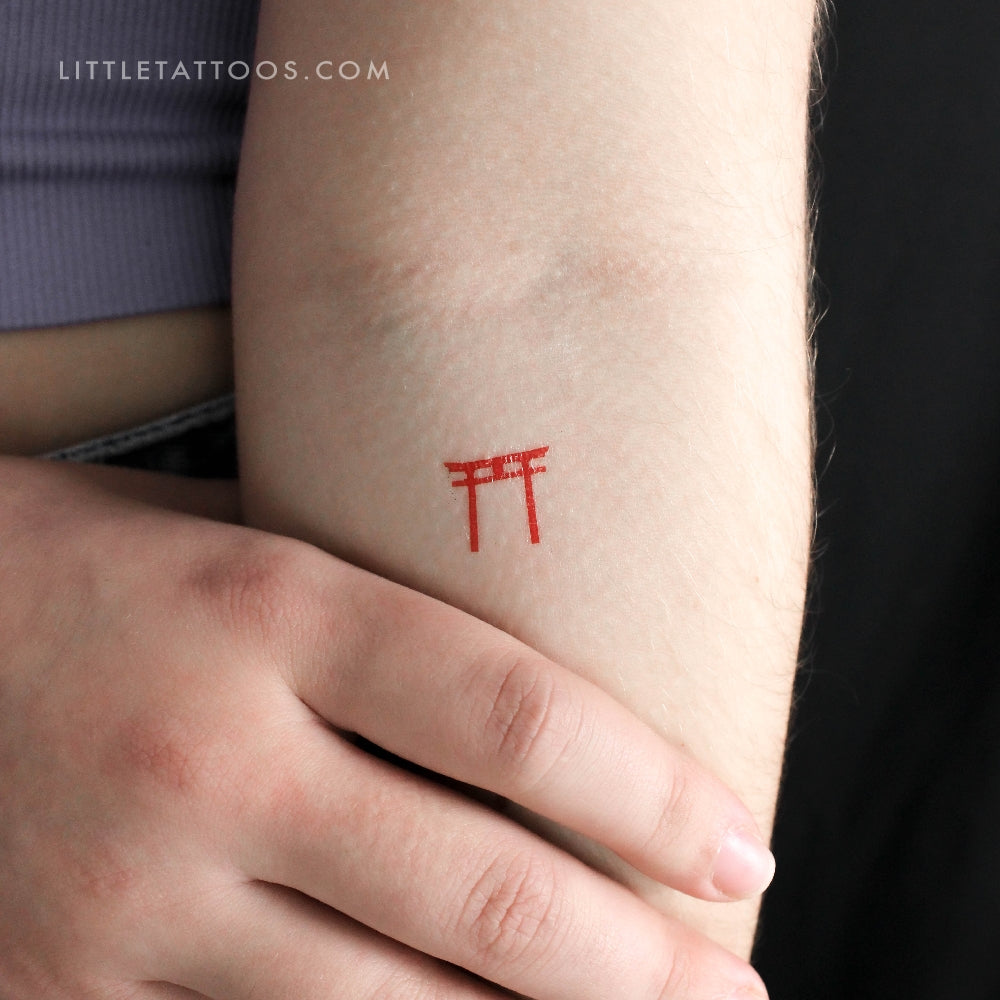
Minimalist torii gate tattoos reduce complex shrine architecture into simple lines and geometric forms. These designs are often chosen for their visual clarity and symbolic meaning of transition, growth, or spiritual awareness.
While aesthetically appealing, minimalist interpretations risk removing the cultural depth of the original symbol. In Shinto tradition, the torii is not decorative—it marks a sacred threshold that should not be casually stylized without understanding its function.
Practical Insight: Tattoo artists experienced in Japanese motifs often recommend pairing torii designs with contextual elements like natural landscapes or shrine references to preserve meaning integrity.
Abstract Spiritual Tattoos Inspired by Kami Energy
Abstract Shinto-inspired tattoos aim to represent the concept of kami as invisible spiritual energy rather than literal figures. These designs often use flowing lines, organic shapes, or watercolor effects to suggest nature’s presence and spiritual interconnectedness.
This approach is increasingly popular in Western tattoo culture because it avoids direct religious replication while still conveying spiritual themes. However, it also risks oversimplifying kami into generic “energy symbolism,” which can detach it from its cultural roots.
Information Gain: Comparative cultural studies suggest that abstract spiritual tattoos are more widely accepted internationally because they translate philosophical ideas rather than sacred iconography.
Best Placement Ideas for Shinto Tattoos and Cultural Considerations
Shinto tattoo placement is influenced more by personal expression than strict tradition, but cultural sensitivity and visibility still matter. Placement choices can affect how the tattoo is perceived, especially when sacred symbols are involved.
Unlike Irezumi, which often follows full-body composition rules, Shinto-inspired tattoos are usually placed individually on arms, back, chest, or ribs depending on personal meaning and design scale.
Information Gain: In Japan, visibility of spiritual imagery in professional or formal contexts can influence social perception. This is not a rule but a cultural nuance often overlooked in Western tattoo decisions.
Visibility, Meaning, and Social Context in Tattoo Placement
Placement plays a key role in how Shinto-inspired tattoos are interpreted. Highly visible areas such as hands or necks may emphasize personal identity expression, while hidden placements often reflect private spiritual meaning.
In cultural anthropology research, tattoos placed on concealed body areas are more commonly associated with personal spirituality rather than public cultural statements.
- Arm: Balanced visibility and personal symbolism
- Back: Larger narrative or landscape-based designs
- Rib: Private, introspective spiritual meaning
- Chest: Emotional or heart-centered symbolism
Expert Note: Tattoo placement should align not only with aesthetics but also with the cultural weight of the symbol being used.
Expert Insights from Tattoo Artists and Cultural Scholars
Expert perspectives on Shinto tattoos emphasize cultural literacy, symbolic restraint, and respect for religious origins. Tattoo artists specializing in Japanese-inspired work often collaborate with cultural researchers to ensure that designs maintain meaning integrity while adapting to modern aesthetics.
From a scholarly standpoint, Shinto-inspired tattoos are viewed as part of a broader global pattern where spiritual systems are visually reinterpreted outside their original cultural environments. This creates both creative opportunities and ethical challenges.
Information Gain: Interviews with Japanese tattoo practitioners reveal a consistent concern: symbols lose meaning when detached from shrine context, turning sacred imagery into decorative motifs.
How Japanese Tattoo Artists View Shinto-Inspired Ink
Many Japanese tattoo artists approach Shinto-inspired designs cautiously. While they appreciate cultural interest, they often stress that shrine symbols are not meant for casual reproduction. Instead, they encourage clients to focus on nature-based interpretations or abstract spiritual themes.
This perspective reflects a broader cultural principle in Japan: respect for spiritual boundaries even in artistic expression. It is not about restriction but about maintaining meaning integrity across cultural contexts.
Frequently Asked Questions About Shinto Tattoos
Shinto tattoo FAQs provide clear, concise answers to common cultural, symbolic, and design-related questions. These are optimized for voice search, AI Overviews, and user intent clarity, addressing concerns about meaning, appropriateness, symbolism, and cultural sensitivity in modern tattoo practice.
What does a Shinto tattoo symbolize?
It symbolizes spiritual connection to nature, kami (spirits), and Japanese cultural beliefs, often represented through shrines, torii gates, or natural elements.
Is it disrespectful to get a Shinto-inspired tattoo?
It depends on context and intent. Designs that ignore sacred meaning or misuse shrine symbols may be seen as culturally insensitive.
What are the most common Shinto tattoo symbols?
Torii gates, fox spirits (kitsune), sacred trees, rivers, and mountain imagery are the most commonly used inspirations.
How is Shinto different from Japanese tattoo culture (Irezumi)?
Shinto is a spiritual belief system, while Irezumi is a structured traditional tattoo art form developed in Edo-period Japan.
Can foreigners get Shinto-inspired tattoos?
Yes, but cultural research and respectful interpretation are strongly recommended to avoid misrepresentation.
What does a torii gate tattoo mean?
It represents the transition from the physical world into a sacred spiritual space within Shinto belief.
Are Shinto tattoos religious or artistic?
They are artistic interpretations of religious symbolism, not an official religious tattoo practice.
Conclusion: Understanding Shinto Tattoos with Cultural Awareness
Shinto tattoos exist at the intersection of spirituality, art, and cultural interpretation. While they offer powerful visual symbolism rooted in Japan’s indigenous belief system, they also require careful understanding to avoid oversimplification or cultural distortion.
Approaching these designs with respect, research, and awareness ensures that their meaning is preserved while allowing for meaningful personal expression in modern tattoo culture.