What Are Traditional Thai Tattoos (Sak Yant)?
Traditional Thai tattoos, known as Sak Yant, are sacred geometric and symbolic body inscriptions rooted in ancient Southeast Asian spiritual systems. They combine Buddhist prayers, Khmer-influenced yantra designs, and animist protection beliefs. Unlike decorative tattoos, they function as ritual objects activated through chanting and blessing ceremonies performed by monks or trained Ajarn masters.
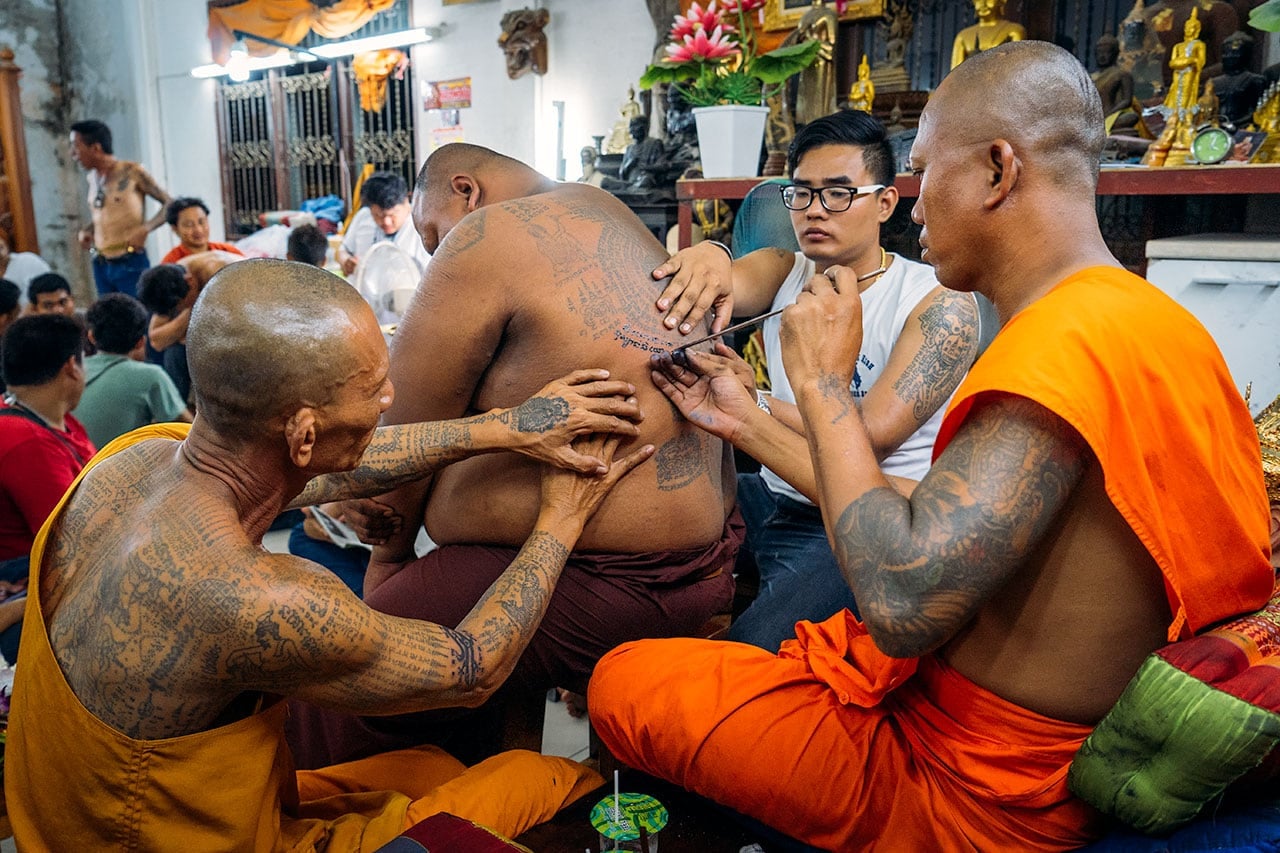
Sak Yant is not simply body art but a structured spiritual system that assigns meaning, intention, and moral responsibility to each design. Practitioners believe the tattoo’s power depends on both the accuracy of the sacred geometry and the recipient’s behavior after receiving it.
Expert Insight: Anthropological studies of Southeast Asian ritual tattooing highlight that Sak Yant functions as a “lived belief system,” where symbols are activated through ritual speech, ethical conduct, and community recognition—not just visual representation.
Sacred Meaning Behind Yantra Symbols
The sacred meaning behind Yantra symbols in Thai tattoos is based on geometric diagrams believed to encode spiritual energy, protection, and cosmic order. These patterns are not decorative; they represent structured prayers and metaphysical maps activated through chanting. Each line, square, and script is designed to align the wearer with protective forces and moral discipline.
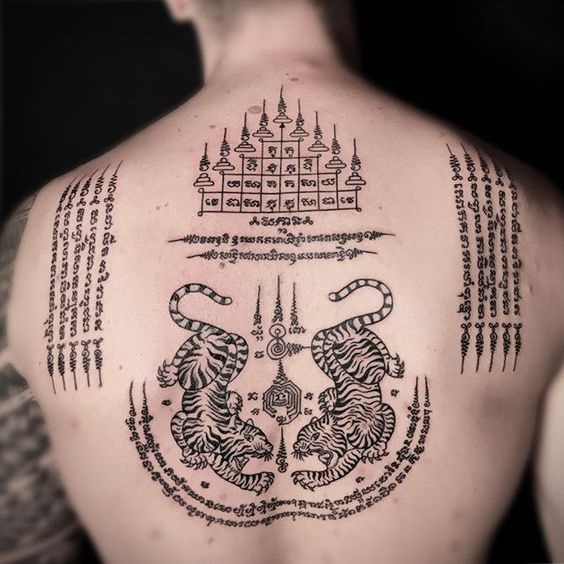
Yantra symbols in Sak Yant tradition are influenced by ancient Indian and Khmer metaphysical systems, later adapted into Thai Buddhist ritual practice. Common motifs include tigers for strength, Hanuman for resilience, and geometric grids representing spiritual balance and cosmic protection.
Information Gain: Unlike modern tattoo interpretations, traditional Ajarn masters emphasize that incorrect placement or distortion of Yantra geometry is believed to reduce or nullify spiritual effectiveness, which is rarely mentioned in tourist-focused content.
- Tiger Yantra: strength, dominance, survival instinct
- Hanuman Yantra: loyalty, courage, protection in conflict
- Geometric grids: spiritual alignment and mental discipline
Common Misconceptions About Thai Tattoos
Common misconceptions about Thai tattoos often reduce Sak Yant to “magic tattoos” or aesthetic spiritual symbols, ignoring their ritual, ethical, and cultural complexity. In reality, these tattoos require formal blessing rituals, moral commitments, and cultural respect that extend far beyond visual symbolism or tourism-driven interpretations.
Many visitors mistakenly assume Sak Yant is purely decorative or interchangeable with modern tattoo styles. However, traditional practitioners view them as lifelong spiritual commitments that may include behavioral expectations such as abstaining from harmful actions or maintaining respectful conduct.
Expert Perspective: Field research in Thai temple communities shows that Ajarn masters often refuse certain designs to individuals they perceive as unprepared for the ethical responsibilities associated with specific yantra patterns.
The Ancient Origins of Sak Yant Tattoos
The ancient origins of Sak Yant tattoos trace back to a blend of Khmer Empire influences, early Southeast Asian animist practices, and later Buddhist ritual integration. These tattoos evolved as protective inscriptions used by warriors, monks, and rural communities to invoke safety, strength, and spiritual alignment through sacred geometry and oral chanting traditions.
Unlike modern tattoo culture, Sak Yant emerged as a functional belief system embedded in warfare, agriculture, and daily survival practices. Over centuries, it transitioned into a structured spiritual discipline maintained by temple lineages and Ajarn masters.
Information Gain: Historical interpretations suggest Sak Yant was not originally a unified system but a convergence of regional protective scripts that were standardized through Buddhist temple influence during the expansion of Theravada Buddhism in mainland Southeast Asia.
Khmer Influence on Tattoo Traditions
The Khmer influence on Thai tattoo traditions is foundational, as early Yantra-style inscriptions and sacred geometry concepts were widely present in Khmer spiritual and architectural systems. These ideas were later absorbed into Thai cultural practices through migration, trade, and religious exchange across mainland Southeast Asia.
Khmer inscriptions often combined spiritual protection formulas with geometric structures believed to channel divine energy. When integrated into Thai culture, these elements evolved into the structured Sak Yant system practiced today.
Expert Observation: Archaeological comparisons of temple inscriptions across Angkor-era sites show visual parallels between carved yantra patterns and modern Sak Yant designs, suggesting a long continuity of symbolic geometry across the region.
- Shared geometric symbolism across temples and tattoos
- Use of sacred scripts for protection and authority
- Integration into early warrior and royal cultures
Animism and Early Spiritual Beliefs in Thailand
Animism in early Thai spiritual belief systems played a crucial role in shaping Sak Yant traditions, as it introduced the idea that invisible spirits inhabit natural and human-made environments. Tattoos were used as protective tools to negotiate with these spirits and prevent harm from unseen forces.
Before formalized Buddhist influence, communities across Southeast Asia relied on spirit-based protection systems that included charms, inscriptions, and ritual markings. Sak Yant absorbed these practices, blending them with later Buddhist frameworks.
Information Gain: Unlike simplified modern explanations, anthropological research shows that animist tattoo traditions were not symbolic alone—they were considered active spiritual defenses used in agriculture, travel, and warfare contexts.
- Belief in protective and harmful spirits
- Use of body inscriptions for spiritual shielding
- Integration with early healing and ritual practices
The Role of Buddhism in Thai Tattoo Culture
Buddhism plays a central role in Thai tattoo culture by providing ethical structure, ritual legitimacy, and chanting practices that activate Sak Yant designs. Theravada Buddhist influence transformed earlier animist and Khmer-inspired markings into formalized spiritual tattoos performed within temple environments and sanctioned by monastic authority.
Within this system, tattoos are not merely symbolic but are considered activated through Pali chants and ritual blessings. This integration of Buddhism created a unique hybrid tradition where spiritual discipline and body art intersect.
Expert Insight: Ethnographic studies of Thai temple rituals show that Sak Yant ceremonies often include moral guidance sessions, reinforcing the belief that spiritual protection is linked to ethical behavior.
Temple Tattoo Blessing Ritual Explained
The temple tattoo blessing ritual in Sak Yant tradition is a structured ceremonial process where sacred designs are activated through chanting, intention setting, and ritualized application by monks or Ajarn masters. This process transforms ink and geometry into spiritually meaningful protective symbols within Thai Buddhist belief systems.
The ritual typically begins with prayer, followed by selection of a design based on the recipient’s life circumstances. The tattoo is then applied using traditional bamboo or metal rods while sacred chants are recited continuously to “activate” the design’s protective properties.
Information Gain: Unlike modern tattooing environments, temple rituals often include behavioral guidelines before and after tattooing, reinforcing the idea that spiritual protection is conditional rather than automatic.
- Pre-ritual prayer and intention setting
- Selection of spiritually appropriate Yantra design
- Chanting during tattoo application
- Post-ritual blessing and behavioral guidance
Lucky Tattoo, a professional tattoo artist, has over 10 years of experience in the art of tattooing in Ho Chi Minh City. Lucky Tattoo Studio was founded in 2014 by skilled and kind artists. All tattoos are provided in a clean, strictly controlled, and friendly environment.
Wat Bang Phra Ceremony Example
The Wat Bang Phra ceremony is one of Thailand’s most important Sak Yant tattoo gatherings, where thousands of devotees and visitors receive blessings from monks and Ajarn masters. The ritual involves chanting, trance-like devotion, and collective energy believed to activate protective spiritual power within traditional tattoo designs.
At Wat Bang Phra, participants often gather annually in large numbers, especially during temple festivals. The atmosphere blends religious devotion with cultural heritage, where tattoo recipients perform symbolic animal movements representing their Yantra design after receiving blessings.
Information Gain: Unlike typical tourist narratives, the ceremony is not primarily a “tattoo event” but a religious gathering where tattoos are only one part of a larger spiritual ecosystem involving merit-making, meditation, and moral reflection.
- Annual temple festival draws thousands of participants
- Monks perform synchronized chanting rituals
- Participants express tattoo symbolism through animal movements
Ajarn Masters and Tattoo Lineage
Ajarn masters are traditionally trained tattoo practitioners who preserve and transmit sacred Sak Yant designs through lineage-based teaching systems. Their authority is rooted not only in technical skill but also in spiritual knowledge, ritual discipline, and adherence to Buddhist ethical frameworks that govern tattoo symbolism and application.
These masters act as cultural custodians, ensuring that Yantra designs are preserved accurately and applied under appropriate spiritual conditions. Their role is essential in distinguishing authentic Sak Yant traditions from commercial tattoo adaptations found in urban studios.
Expert Insight: Ethnographic research shows that Ajarn authority is often earned through years of apprenticeship, temple service, and demonstrated moral conduct rather than formal certification systems.
How Ajarn Learn Sacred Designs
The training process for Ajarn masters involves long-term apprenticeship under senior teachers, often within temple environments where sacred texts, chants, and geometric formulas are memorized and practiced. This oral and experiential transmission ensures that the spiritual integrity of Sak Yant designs is preserved across generations.
Unlike modern tattoo education systems based on technical certification, Ajarn training emphasizes spiritual discipline, ritual accuracy, and ethical responsibility. The designs are often learned through repetition, meditation, and participation in ritual ceremonies.
Information Gain: Many sacred Yantra formulas are not publicly documented, as they are traditionally considered esoteric knowledge shared only within trusted teacher-student relationships.
- Apprenticeship-based learning model
- Oral transmission of sacred formulas
- Integration of meditation and ritual practice
Popular Sak Yant Designs and Meanings
Popular Sak Yant designs represent specific spiritual functions such as protection, strength, charisma, or fortune. Each design combines geometric Yantra structures with symbolic figures and sacred scripts that reflect centuries of cultural evolution across Buddhist, Khmer, and animist traditions in Southeast Asia.
These tattoos are selected based on personal circumstances and spiritual needs, often guided by an Ajarn master who interprets symbolic compatibility between the individual and the design’s intended meaning.
Expert Perspective: Field observations indicate that design selection is often more personalized than assumed, with masters adjusting patterns based on perceived emotional state, life challenges, and ethical readiness.
Tiger, Hanuman, and Geometric Patterns
The Tiger, Hanuman, and geometric Yantra patterns are among the most recognized Sak Yant designs, each carrying distinct spiritual meanings rooted in Thai cultural mythology and Buddhist symbolism. These designs are not decorative but function as encoded protective systems within traditional belief frameworks.
The Tiger symbolizes raw strength and survival instinct, often associated with warriors and protection in dangerous environments. Hanuman represents loyalty, courage, and resilience derived from epic mythological traditions. Geometric patterns symbolize balance, cosmic order, and mental discipline.
Information Gain: Unlike simplified travel explanations, traditional Ajarn interpretations emphasize behavioral alignment with the tattoo’s meaning—such as maintaining discipline for strength-based Yantra designs.
- Tiger Yantra: protection, aggression control, survival
- Hanuman Yantra: loyalty, bravery, endurance
- Geometric Yantra: balance, spiritual alignment
Is It Cultural Appropriation or Respectful Practice?
The question of cultural appropriation in Sak Yant tattoos centers on whether foreign participation respects the spiritual, religious, and cultural frameworks that define the tradition. Scholars and practitioners emphasize that respectful engagement depends on intention, understanding, and adherence to ritual protocols rather than nationality alone.
In Thailand, perspectives vary across communities, but many temple practitioners welcome respectful visitors who approach the practice as a spiritual experience rather than aesthetic consumption. The key distinction lies in whether the tattoo is treated as sacred or purely decorative.
Expert Insight: Anthropological studies highlight that cultural appropriation debates often oversimplify living traditions that are already syncretic and historically adaptive.
How Locals View Foreign Participation
Local perspectives on foreign participation in Sak Yant tattooing are generally pragmatic, with acceptance often tied to respect for ritual processes, temple etiquette, and cultural humility. Many Ajarn masters evaluate intention and behavior rather than nationality when deciding whether to perform sacred tattoos.
Foreign participants who follow ritual guidelines, respect temple rules, and understand the spiritual significance are often welcomed into ceremonies. However, disrespectful behavior or purely aesthetic motivations may be discouraged or refused by practitioners.
Information Gain: Field interviews suggest that temple communities often distinguish between “cultural participants” and “touristic consumers,” with the former being more positively received.
- Respect for ritual process is essential
- Behavior matters more than nationality
- Temples may refuse inappropriate requests
Modern Evolution of Thai Tattoo Culture
Modern Thai tattoo culture has evolved through the intersection of traditional Sak Yant practices, global tattoo tourism, and contemporary artistic expression. While sacred temple-based tattooing continues, urban tattoo studios increasingly reinterpret Yantra designs for aesthetic and commercial audiences.
This evolution has created a dual system: one rooted in spiritual tradition and another driven by global tattoo trends. The coexistence of both systems reflects broader cultural adaptation in Thailand’s rapidly globalizing society.
Expert Insight: Cultural studies indicate that modernization does not necessarily replace tradition but often leads to parallel systems where sacred and commercial practices coexist.
Traditional vs Modern Tattoo Studios in Thailand
The difference between traditional Sak Yant practices and modern tattoo studios lies primarily in purpose, process, and spiritual context. Traditional practices emphasize ritual activation, moral responsibility, and lineage authority, while modern studios focus on artistic design, hygiene standards, and client-driven customization.
In temples, tattoos are performed as spiritual rituals involving chanting and blessings, whereas modern studios prioritize visual aesthetics and technical precision without religious activation components.
Information Gain: A key overlooked difference is that traditional Sak Yant tattoos are often believed to carry behavioral obligations, whereas modern versions are purely symbolic without ritual expectations.
- Temple tattoos: ritual + spiritual activation
- Studio tattoos: aesthetic + artistic expression
- Different expectations of meaning and responsibility
Conclusion: Why Sak Yant Is More Than a Tattoo
Sak Yant tattoos represent a complex intersection of spirituality, cultural identity, and historical tradition in Thailand. Far beyond decorative body art, they function as living ritual systems that integrate Buddhist ethics, Khmer heritage, and animist beliefs into a unified symbolic practice that continues to evolve today.
The enduring significance of Sak Yant lies in its ability to connect personal identity with collective cultural memory. Whether viewed through an anthropological or spiritual lens, these tattoos remain powerful expressions of Southeast Asia’s layered cultural history and living religious traditions.
Frequently Asked Questions (FAQ)
What is Sak Yant tattooing?
Sak Yant is a traditional Thai tattoo practice combining sacred geometry, Buddhist prayers, and animist beliefs, believed to provide spiritual protection and strength.
Are Sak Yant tattoos religious?
Yes, they are deeply connected to Theravada Buddhism and temple-based rituals, often involving chanting and blessings from monks or Ajarn masters.
Do Sak Yant tattoos really have power?
Believers say they provide protection and luck, but academically they are understood as cultural and religious symbolic systems rather than measurable supernatural forces.
Can tourists get Sak Yant tattoos?
Yes, but respectful participation is expected, including understanding ritual significance and following temple etiquette.
What do tiger tattoos mean in Thailand?
Tiger Yantra tattoos symbolize strength, protection, and survival instincts, often associated with warriors and protection in danger.
Where are traditional Sak Yant tattoos performed?
They are commonly performed in Thai Buddhist temples such as Wat Bang Phra or by trained Ajarn masters in traditional settings.
Is Sak Yant tattooing safe?
When performed in proper temple or professional settings, it is generally safe, though traditional bamboo methods may be more physically intense than modern tattooing.