Japanese tattoos are among the most respected and visually powerful tattoo traditions in the world. Known as Irezumi, these designs combine mythology, folklore, spirituality, nature, and storytelling into cohesive body art compositions. Unlike many modern tattoos that focus on standalone images, traditional Japanese tattoos are designed as complete narratives where every element contributes meaning, movement, and balance.
Whether you are considering a Japanese dragon tattoo, koi fish tattoo, samurai tattoo, geisha tattoo, or hannya tattoo, understanding the deeper symbolism behind the imagery can help you choose a design that remains meaningful for decades. This guide explores the history, symbolism, artistic principles, and expert considerations behind authentic Japanese tattooing.
What Is a Japanese Tattoo?
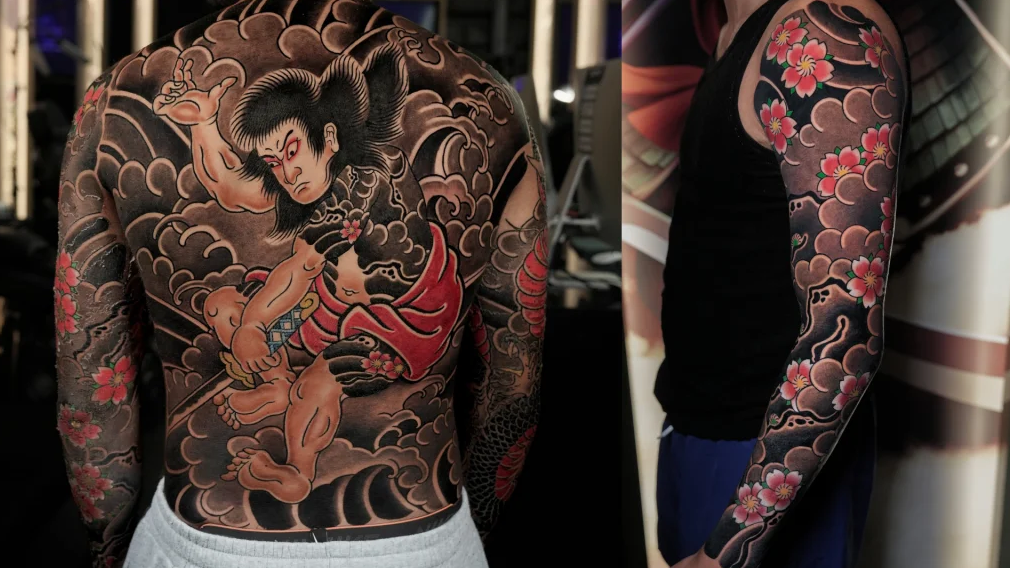
A Japanese tattoo, often referred to as Irezumi, is a traditional tattoo style originating in Japan that combines mythology, symbolism, folklore, and large-scale artistic composition. Unlike isolated tattoo designs, traditional Japanese tattoos are created as interconnected visual stories designed to flow naturally with the body and communicate deeper personal meaning.
Japanese tattooing represents centuries of artistic evolution. While modern interpretations exist worldwide, traditional Irezumi follows specific compositional rules developed over generations.
One reason Japanese tattoos remain highly sought after is their ability to balance aesthetics with symbolism. Every dragon, koi fish, flower, wave, cloud, or warrior typically serves a purpose within the larger narrative.
For experienced collectors, a Japanese tattoo is often viewed less as a decoration and more as a lifelong artistic project.
Definition of Irezumi and Traditional Japanese Tattooing
Irezumi refers to the traditional practice of Japanese tattooing characterized by large-scale designs, bold outlines, rich shading, symbolic imagery, and harmonious body flow. Authentic Irezumi often incorporates folklore, mythology, and seasonal symbolism to create unified compositions rather than isolated artwork.
The word “Irezumi” literally translates to “inserting ink.” Historically, the term described traditional methods of tattooing that predated modern tattoo machines.
Traditional Japanese tattooing commonly features:
- Dragons
- Koi fish
- Samurai warriors
- Hannya masks
- Geisha figures
- Tigers
- Oni demons
- Phoenix birds
- Cherry blossoms
- Peonies
- Maple leaves
- Waves and wind bars
What separates authentic Japanese tattooing from many modern styles is the emphasis on harmony. Individual symbols are rarely chosen without considering how they interact with surrounding elements.
How Japanese Tattoos Differ from Western Tattoo Styles
Japanese tattoos differ from Western tattoo styles through their emphasis on body flow, storytelling, symbolism, and large-scale composition. While Western tattoos often prioritize standalone imagery, traditional Japanese tattooing focuses on creating a unified visual narrative that extends across significant portions of the body.
Many first-time clients assume a Japanese dragon tattoo is simply a dragon rendered in a Japanese art style. In reality, traditional artists often view the dragon as only one component within a much larger composition.
| Traditional Japanese Tattoo | Typical Western Tattoo |
|---|---|
| Narrative-driven composition | Individual image focus |
| Large-scale body coverage | Independent pieces |
| Strong cultural symbolism | Personal symbolism often prioritized |
| Integrated backgrounds | Minimal supporting elements |
| Body-flow oriented | Placement flexibility |
This distinction becomes especially important when planning sleeves, backpieces, or bodysuits.
Why Japanese Tattoos Remain Popular Worldwide
Japanese tattoos continue to attract tattoo collectors worldwide because they combine visual impact, timeless symbolism, artistic complexity, and cultural depth. Their ability to tell meaningful stories through cohesive designs gives them enduring appeal across generations and tattoo styles.
Several factors contribute to their continued popularity:
- Strong visual readability from a distance
- Rich symbolic meaning
- Exceptional aging characteristics
- Compatibility with large projects
- Connection to mythology and folklore
- Highly recognizable artistic identity
Expert Observation: Many experienced tattoo artists report that clients who begin with a single Japanese-themed piece often expand into larger compositions because the style naturally encourages narrative development.
The History of Irezumi: From Ancient Japan to Modern Tattoo Culture
Japanese tattooing evolved through centuries of cultural, artistic, and social transformation. From early spiritual markings to elaborate Edo-period body art and modern global appreciation, Irezumi reflects both Japan’s history and the enduring human desire to communicate identity through visual storytelling.
Understanding this history helps explain why certain motifs, compositions, and artistic principles remain central to authentic Japanese tattooing today.
Early Origins and Cultural Development
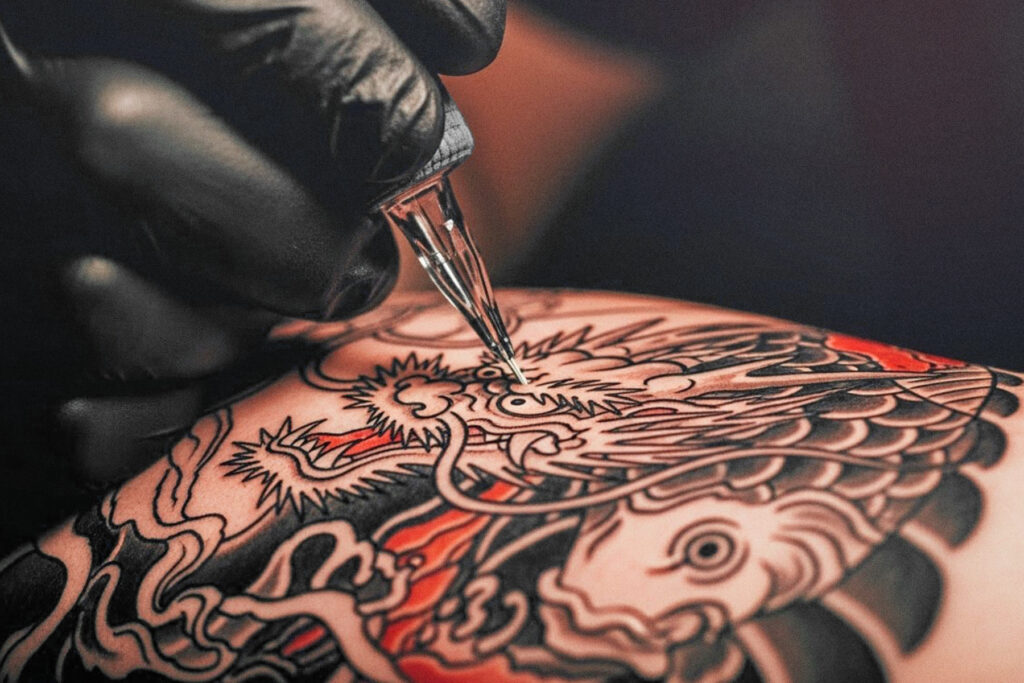
The earliest forms of Japanese tattooing date back thousands of years and likely served spiritual, tribal, and protective functions. Historical evidence suggests tattoos were used for identification, status, ritual practices, and cultural expression long before modern decorative tattooing emerged.
Archaeological discoveries indicate tattoo-like markings may have existed among ancient populations inhabiting the Japanese archipelago.
Over time, tattoo meanings evolved alongside social structures, religious influences, and artistic traditions.
Some historians believe tattoos initially served purposes such as:
- Spiritual protection
- Tribal identification
- Status recognition
- Ritual participation
- Community belonging
Although many details remain debated among scholars, these early practices laid the foundation for later developments.
The Edo Period and the Rise of Irezumi
The Edo Period transformed Japanese tattooing into a sophisticated artistic tradition. Influenced by woodblock prints, folklore, and popular literature, tattoo artists began creating large-scale decorative compositions that remain the foundation of modern Irezumi.
During the Edo Period (1603–1868), artistic culture flourished throughout Japan.
Illustrated novels and Ukiyo-e woodblock prints became major influences on tattoo imagery. Heroes, warriors, mythical creatures, and folklore characters frequently appeared in tattoo designs.
Many motifs still common today gained popularity during this era:
- Dragons
- Koi fish
- Samurai
- Tigers
- Mythological heroes
- Protective spirits
Information Gain Insight: Most modern articles mention symbolism but fail to explain that many famous Japanese tattoo motifs became popular through illustrated storytelling traditions. In many ways, traditional Japanese tattoos functioned as wearable visual literature.
Misconceptions About Japanese Tattoos and Organized Crime
One of the most common misconceptions is that Japanese tattoos are inherently connected to organized crime. While some criminal groups historically adopted large tattoo projects, Japanese tattooing itself predates these associations by centuries and represents a much broader artistic tradition.
Unfortunately, media portrayals have often oversimplified the relationship between tattoos and organized crime.
As a result:
- Some public facilities historically restricted tattoo visibility.
- International audiences developed misconceptions.
- Cultural understanding became distorted.
Today, Japanese tattooing is widely recognized globally as a respected artistic discipline practiced by professional artists and collectors from diverse backgrounds.
Many contemporary Japanese tattoo artists actively educate clients about the distinction between cultural art traditions and historical stereotypes.
How Modern Japanese Tattooing Has Evolved
Modern Japanese tattooing combines traditional symbolism with contemporary techniques, artistic innovation, and global influences. While many artists preserve classic Irezumi principles, others adapt the style to modern aesthetics, smaller formats, and personalized storytelling.
Today’s clients often seek designs that balance authenticity with individuality.
Common modern adaptations include:
- Japanese-inspired half sleeves
- Neo-Japanese compositions
- Black-and-grey Japanese work
- Fine-detail adaptations
- Hybrid cultural influences
However, highly respected Japanese tattoo artists generally maintain several foundational principles:
- Symbolic consistency
- Body flow awareness
- Balanced composition
- Meaningful storytelling
- Strong contrast and readability
Understanding the Storytelling System Behind Japanese Tattoos
Traditional Japanese tattoos are not collections of unrelated images. Authentic Irezumi functions as a storytelling system where primary subjects, supporting motifs, seasonal references, background elements, and body placement work together to create a unified visual narrative with symbolic depth.
This is the area where most online guides provide incomplete information.
Many people research individual symbols such as dragons or koi fish without understanding how those symbols interact within the broader composition.
Professional Japanese tattoo artists often begin planning by asking:
- What story should the tattoo tell?
- What values should it represent?
- How will the imagery flow across the body?
- Which supporting elements reinforce the message?
Why Traditional Japanese Tattoos Are Designed as Complete Narratives
Traditional Japanese tattoos are designed as complete narratives because their symbolism becomes more powerful when motifs interact together. Rather than focusing on isolated images, Irezumi uses relationships between characters, nature, mythology, and movement to communicate deeper meaning.
Consider two tattoo concepts:
Design A: A dragon tattoo placed on the arm.
Design B: A dragon ascending through storm clouds above crashing waves while protecting sacred pearls.
The second composition tells a story.
Traditional Japanese tattooing prioritizes this narrative approach.
Main Subject vs Supporting Elements
The primary subject serves as the central character of the tattoo, while supporting elements provide context, symbolism, movement, and emotional depth.
| Main Subject | Supporting Elements |
|---|---|
| Dragon | Clouds, waves, wind bars |
| Koi Fish | Waterfalls, maple leaves |
| Samurai | Cherry blossoms, armor details |
| Hannya Mask | Peonies, smoke, serpents |
Expert Perspective: Supporting elements are often what transform a technically good tattoo into an exceptional composition.
Seasonal Symbolism in Japanese Tattoo Design
Seasonal symbolism plays a major role in traditional Japanese tattooing. Flowers, leaves, weather patterns, and natural imagery often communicate themes of impermanence, transformation, resilience, and life’s changing cycles.
Examples include:
- Cherry blossoms = fleeting beauty
- Maple leaves = maturity and change
- Peonies = prosperity and courage
- Snow imagery = endurance and resilience
Many modern clients overlook these subtle meanings despite their importance in traditional design planning.
How Placement Changes Meaning
Body placement influences both visual impact and symbolic interpretation. Traditional Japanese tattooing considers muscle flow, movement, visibility, and narrative progression when determining placement.
For example:
- A dragon rising up the arm can symbolize ambition and ascension.
- A koi fish swimming upward often represents overcoming adversity.
- A backpiece may represent protection and personal strength.
Placement is therefore more than an aesthetic decision—it becomes part of the story itself.
The Role of Background Elements
Background elements are not decorative fillers in Japanese tattooing. Waves, clouds, wind bars, smoke, and water create movement, establish atmosphere, connect symbols, and reinforce the narrative structure of the composition.
One of the clearest signs of an inexperienced Japanese tattoo designer is weak background integration.
In authentic compositions, backgrounds often occupy substantial visual space because they unify the entire project.
Waves
Waves commonly symbolize power, resilience, constant movement, and life’s challenges. They frequently accompany dragons, koi fish, and maritime folklore themes.
Wind Bars
Wind bars create directional flow and visual energy. They help guide the viewer’s eye through large compositions while adding dramatic movement.
Clouds
Clouds often connect earthly and spiritual realms. They are commonly paired with dragons, deities, and celestial imagery.
Smoke and Water
Smoke and water create depth, atmosphere, and transitions between major symbolic elements while maintaining compositional harmony.
Common Mistakes When Combining Japanese Symbols
Many tattoo collectors unintentionally combine Japanese symbols that conflict culturally, visually, or narratively. Understanding how motifs interact helps create more authentic and meaningful tattoo compositions.
- Combining unrelated motifs without narrative purpose
- Overcrowding designs with excessive symbolism
- Ignoring seasonal consistency
- Using background elements as afterthoughts
- Choosing imagery solely for appearance
- Copying internet designs without understanding meaning
Professional Recommendation: Before selecting specific imagery, define the core message of your tattoo. A clear narrative foundation typically leads to stronger design decisions than choosing symbols independently.
In the next section, we will examine the most iconic Japanese tattoo motif—the dragon—and explore its symbolism, mythology, design variations, and placement considerations.
Lucky Tattoo, a professional tattoo artist, has over 10 years of experience in the art of tattooing in Ho Chi Minh City. Lucky Tattoo Studio was founded in 2014 by skilled and kind artists. All tattoos are provided in a clean, strictly controlled, and friendly environment.
Japanese Dragon Tattoo Meaning and Symbolism
A Japanese dragon tattoo represents wisdom, protection, strength, prosperity, and harmony with natural forces. Unlike many Western depictions where dragons are portrayed as destructive creatures, Japanese dragons are typically viewed as guardians, spiritual guides, and symbols of positive transformation.
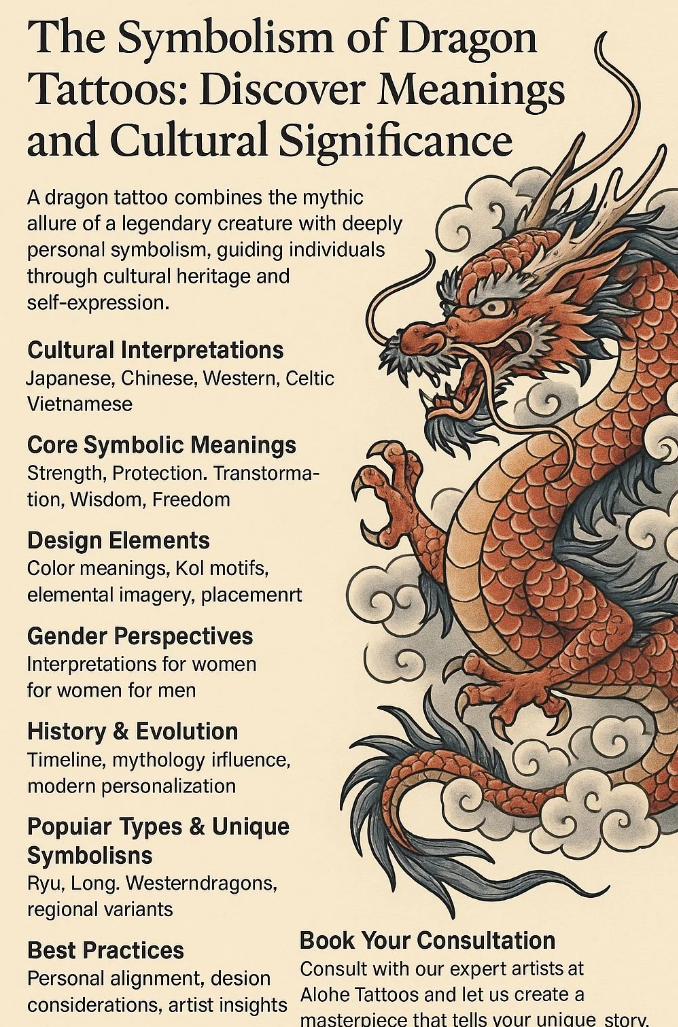
Dragons occupy a central position in Japanese folklore, Shinto beliefs, and Buddhist symbolism. As a result, they have become one of the most requested subjects in Japanese tattooing worldwide.
What Dragons Represent in Japanese Mythology
In Japanese mythology, dragons symbolize wisdom, divine power, protection, and mastery over natural elements. They are often associated with water, rainfall, rivers, oceans, and agricultural prosperity rather than destruction or chaos.
Many dragon legends involve protective deities who maintain balance between heaven, earth, and water.
Common symbolic associations include:
- Wisdom and knowledge
- Protection from adversity
- Spiritual growth
- Good fortune
- Authority and leadership
- Natural balance
Information Gain Insight: Many tattoo guides overlook the fact that Japanese dragons are often depicted alongside water because they are traditionally considered water deities. This relationship influences both symbolism and composition.
Different Dragon Variations and Their Meanings
Different Japanese dragon designs may emphasize unique symbolic qualities depending on posture, color, accompanying elements, and artistic interpretation. Understanding these variations helps clients select imagery aligned with their personal values.
| Dragon Variation | Common Meaning |
|---|---|
| Ascending Dragon | Growth and ambition |
| Descending Dragon | Wisdom and balance |
| Dragon with Pearl | Knowledge and enlightenment |
| Dragon with Waves | Mastery over challenges |
| Dragon with Clouds | Spiritual power |
Best Placements for Japanese Dragon Tattoos
Japanese dragon tattoos work best in larger placements that allow movement, flow, and storytelling. Sleeves, backpieces, chest panels, and leg sleeves provide sufficient space for the dragon’s body and supporting elements.
Professional artists often recommend:
- Full sleeves for dynamic movement
- Backpieces for maximum detail
- Chest panels for balanced compositions
- Leg sleeves for long serpentine dragons
Real Design Examples and Composition Tips
The strongest dragon tattoos integrate supporting motifs such as clouds, waves, peonies, maple leaves, or sacred pearls. These elements provide context and elevate the design from a standalone image into a complete visual narrative.
Experienced Japanese tattoo artists frequently advise against overcrowding compositions with multiple dominant subjects. A well-executed dragon often requires visual space to maintain readability and impact over time.
Koi Fish Tattoo Meaning: Perseverance, Success, and Transformation
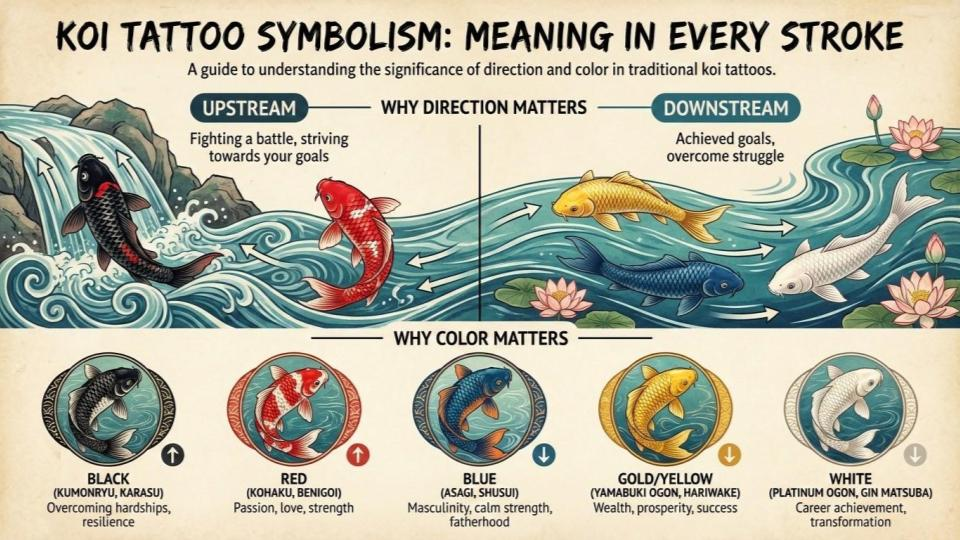
A koi fish tattoo symbolizes perseverance, resilience, ambition, and personal transformation. Inspired by one of Japan’s most enduring legends, koi fish tattoos are particularly popular among individuals who have overcome significant obstacles or are pursuing meaningful life goals.
The Legend of the Koi Fish
The famous koi fish legend tells the story of a determined fish swimming upstream against powerful currents before transforming into a dragon. This narrative has made the koi one of the strongest symbols of perseverance in Japanese culture.
The symbolism resonates strongly with tattoo collectors because it reflects universal themes:
- Overcoming adversity
- Personal growth
- Achievement through effort
- Resilience under pressure
- Transformation and success
Expert Observation: Many clients choose koi fish tattoos following major life transitions such as career changes, recovery journeys, business success, or personal reinvention.
Color Variations and Symbolism
Koi fish colors often carry additional symbolic meanings. While interpretations vary, traditional color choices can add deeper layers of personal significance.
| Color | Common Symbolism |
|---|---|
| Black | Overcoming hardship |
| Red | Passion and courage |
| Gold | Success and prosperity |
| Blue | Tranquility and perseverance |
| White | Purity and transformation |
Koi Fish Direction: Swimming Upstream vs Downstream
The direction of a koi fish can influence interpretation. Upstream movement often symbolizes active struggle and determination, while downstream movement may represent accomplishment, acceptance, or the completion of a personal journey.
This subtle design decision is frequently overlooked by first-time collectors but can significantly affect narrative meaning.
Combining Koi with Other Japanese Elements
Koi fish pair exceptionally well with dragons, lotus flowers, waterfalls, maple leaves, and cherry blossoms. These combinations reinforce themes of transformation, resilience, and life’s changing seasons.
One particularly meaningful narrative involves a koi transitioning into a dragon, representing the journey from effort to achievement.
Samurai Tattoo Meaning: Honor, Courage, and Discipline
A samurai tattoo symbolizes honor, discipline, courage, loyalty, and personal responsibility. Inspired by Japan’s warrior class, these tattoos appeal to individuals who value integrity, self-mastery, and commitment to a meaningful purpose.
Historical Inspiration Behind Samurai Tattoos
Samurai tattoos draw inspiration from the historical warriors who served feudal Japan. Their code of conduct, often associated with Bushido principles, continues to influence modern interpretations of strength and character.
Core values commonly associated with samurai imagery include:
- Honor
- Discipline
- Loyalty
- Courage
- Self-control
- Duty
Information Gain Insight: Many clients assume samurai tattoos primarily represent combat ability. In reality, experienced Japanese tattoo artists often emphasize the ethical and philosophical aspects of samurai culture rather than warfare itself.
Popular Samurai Tattoo Styles
Modern samurai tattoos range from highly traditional depictions to contemporary interpretations that blend realism, Japanese illustration, and Neo-Japanese influences.
- Armored samurai warriors
- Masked samurai portraits
- Battle scenes
- Mythological warrior compositions
- Samurai paired with dragons or tigers
Sleeve and Backpiece Composition Ideas
Samurai tattoos work especially well in large compositions where storytelling can unfold naturally across the body. Background elements such as cherry blossoms, smoke, banners, and storm clouds enhance visual depth and symbolic meaning.

Geisha Tattoo Meaning and Cultural Symbolism
A geisha tattoo symbolizes elegance, artistic mastery, beauty, cultural tradition, and emotional depth. Contrary to common misconceptions, geisha represent highly trained performers and cultural artists rather than romanticized stereotypes often portrayed in popular media.
What a Geisha Truly Represents
Geisha are traditionally skilled practitioners of music, dance, conversation, and cultural arts. Their symbolism often centers on refinement, discipline, intelligence, and grace.
Many geisha tattoo designs represent:
- Artistic dedication
- Beauty and elegance
- Cultural appreciation
- Femininity
- Personal expression
Common Western Misunderstandings
One of the most common misconceptions is that geisha imagery represents seduction or entertainment alone. Historically, geisha occupied a far more complex cultural role focused on artistic excellence and traditional performance.
Clients seeking authentic geisha tattoos should understand these cultural distinctions before finalizing a design.
Artistic Design Variations
Geisha tattoos may be paired with cherry blossoms, fans, peonies, lanterns, or traditional architecture. These supporting elements strengthen storytelling while preserving cultural context.
Hannya Tattoo Meaning: Emotion, Jealousy, and Transformation
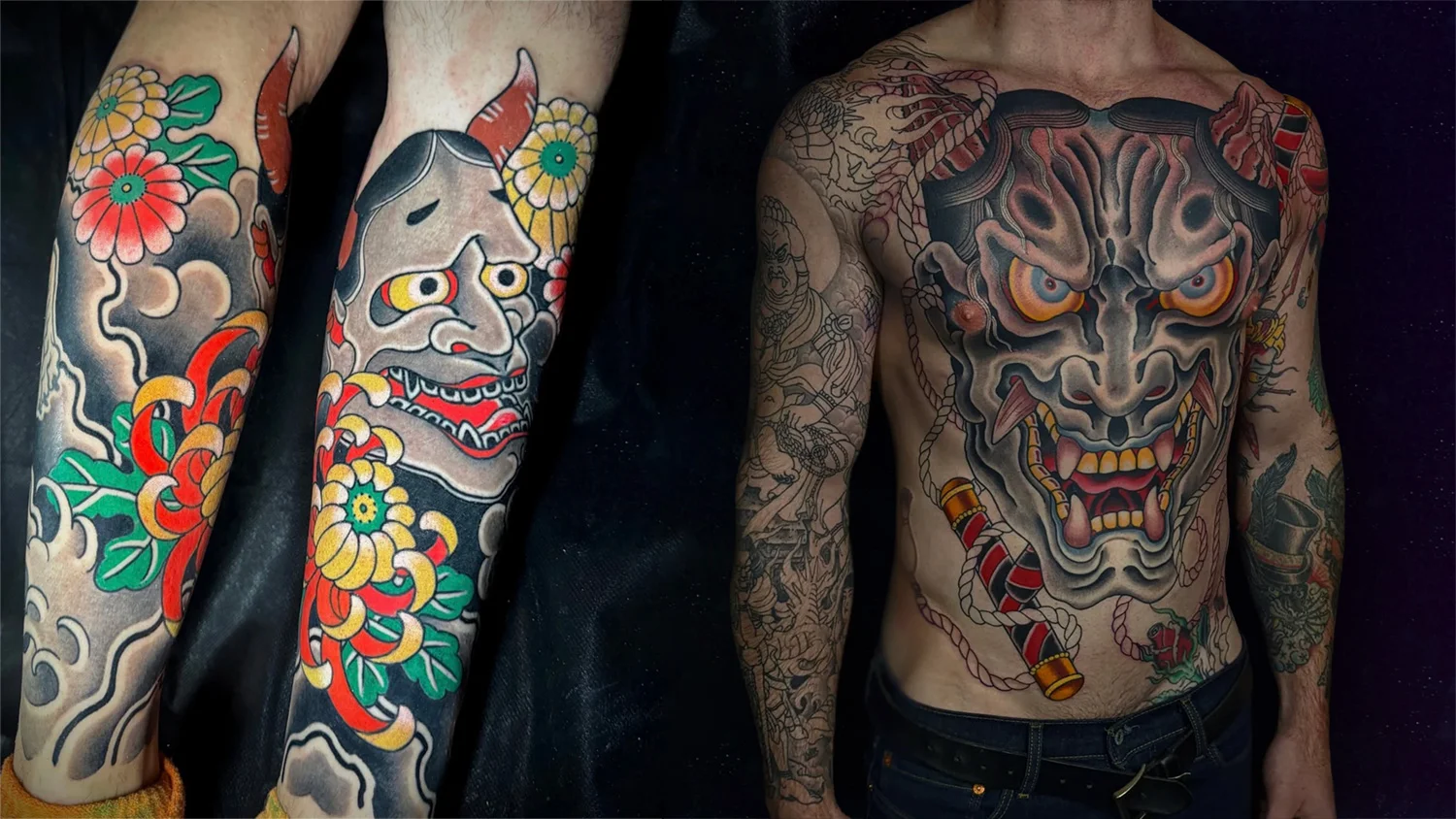
A hannya tattoo represents intense human emotions, inner conflict, suffering, jealousy, and ultimately transformation. Originating from traditional Japanese Noh theater, the Hannya mask has become one of the most psychologically complex symbols in Japanese tattooing.
The Origin of the Hannya Mask
The Hannya mask originates from Japanese theatrical traditions where it portrayed a woman transformed by overwhelming emotional pain and jealousy. Over time, it evolved into a broader symbol of human struggle and emotional complexity.
Its enduring popularity comes from its ability to represent both darkness and personal growth.
Positive and Negative Interpretations
While often associated with jealousy or anger, modern Hannya tattoos frequently symbolize emotional resilience, self-awareness, healing, and transformation through adversity.
| Traditional Interpretation | Modern Interpretation |
|---|---|
| Jealousy | Emotional growth |
| Suffering | Healing |
| Anger | Self-awareness |
| Inner conflict | Personal transformation |
Modern Hannya Tattoo Designs
Contemporary Hannya tattoos often incorporate flowers, snakes, smoke, peonies, and waves to add narrative depth and soften the mask’s intense visual impact.
Other Popular Japanese Tattoo Symbols and Their Meanings
Beyond dragons, koi fish, samurai, geisha, and Hannya masks, Japanese tattooing includes numerous symbols drawn from folklore, mythology, nature, and spirituality. Each motif contributes unique meanings and can significantly influence the overall narrative of a tattoo composition.
Oni Masks
Oni tattoos symbolize strength, protection, justice, and the confrontation of personal fears. Although often depicted as demons, Oni can also serve as guardians against harmful influences.
Tigers
Tiger tattoos represent courage, protection, resilience, and mastery over adversity. They are frequently paired with wind imagery and mountain symbolism.
Phoenix
The phoenix symbolizes rebirth, renewal, resilience, and the ability to emerge stronger after hardship.
Peonies
Peonies are associated with prosperity, courage, honor, and beauty. They are among the most common floral motifs in traditional Irezumi.
Cherry Blossoms
Cherry blossoms symbolize life’s impermanence, beauty, and appreciation of the present moment.
Maple Leaves
Maple leaves represent maturity, change, and the natural progression of life’s seasons.
Snakes
Snake tattoos often symbolize protection, wisdom, renewal, healing, and transformation.
Frequently Asked Questions About Japanese Tattoos
What does a Japanese tattoo symbolize?
Japanese tattoos can symbolize strength, protection, wisdom, perseverance, honor, transformation, prosperity, and personal growth depending on the imagery used.
What is the difference between Irezumi and a Japanese tattoo?
Irezumi specifically refers to traditional Japanese tattooing practices, while Japanese tattoo is a broader term that includes both traditional and modern Japanese-inspired designs.
Is a Japanese dragon tattoo considered good luck?
Yes. Japanese dragons are commonly associated with protection, wisdom, prosperity, and positive spiritual energy.
What does a koi fish tattoo mean?
A koi fish tattoo symbolizes perseverance, resilience, ambition, and the ability to overcome life’s obstacles through determination.
Are Japanese tattoos culturally respectful for non-Japanese people?
Generally yes, provided the designs are approached respectfully, researched thoroughly, and created with an understanding of their cultural significance.
How much does a Japanese tattoo sleeve cost?
Pricing varies based on artist experience, geographic location, complexity, and size. High-quality Japanese sleeves typically require multiple sessions and a substantial investment.
How long does a Japanese sleeve take to complete?
A full Japanese sleeve often requires several months of work spread across multiple appointments, depending on healing schedules and design complexity.
Which Japanese tattoo is best for strength and courage?
Popular choices include dragons, samurai, tigers, and koi fish swimming upstream because they symbolize resilience, bravery, discipline, and determination.
Final Thoughts: Choosing a Japanese Tattoo with Purpose and Authenticity
Japanese tattoos remain one of the most sophisticated and symbolically rich forms of body art in the world. Their enduring appeal comes not only from their visual impact but also from their ability to communicate powerful personal stories through mythology, folklore, spirituality, and artistic composition.
Key Takeaways for First-Time Clients
The strongest Japanese tattoos begin with meaning rather than imagery alone. Understanding symbolism, composition, body flow, and cultural context leads to more authentic and satisfying long-term results.
- Focus on narrative before selecting symbols.
- Work with an experienced Japanese tattoo artist.
- Prioritize composition over individual elements.
- Consider long-term aging and placement.
- Learn the cultural significance behind your design.
Next Steps Before Booking Your Tattoo Appointment
Before committing to a Japanese tattoo, review artist portfolios carefully, discuss symbolism during consultation, and ensure your chosen design aligns with both personal meaning and traditional artistic principles. A thoughtfully planned Japanese tattoo can remain visually powerful, culturally respectful, and personally meaningful for a lifetime.