A samurai tattoo is more than an impressive piece of body art. It represents a philosophy rooted in honor, discipline, courage, loyalty, and perseverance. Inspired by the legendary warrior class of feudal Japan, these tattoos have become one of the most respected and visually striking themes in Japanese tattoo culture.
While many people choose a samurai tattoo because of its powerful appearance, the deeper meaning often extends far beyond aesthetics. The symbolism can reflect personal struggles, dedication to self-improvement, resilience through adversity, or commitment to a set of values that guide daily life.
In this guide, you’ll learn the true meaning behind samurai tattoos, how different design elements change symbolism, the historical origins of samurai imagery, and practical insights that most tattoo guides overlook.
What Does a Samurai Tattoo Mean?
A samurai tattoo symbolizes honor, discipline, courage, loyalty, resilience, and personal integrity. While individual meanings vary by design, most samurai tattoos represent a commitment to overcoming challenges, protecting what matters most, and living according to a personal code of ethics inspired by the traditional Bushido philosophy.
The historical samurai were members of Japan’s warrior class who served noble families and military leaders for centuries. Their reputation was built on unwavering loyalty, exceptional discipline, and a willingness to face adversity without fear.
These same principles explain why samurai tattoos remain popular today. People often choose them during significant life transitions, after overcoming personal hardships, or as permanent reminders of values they strive to uphold.
Direct Answer: Core Meaning of a Samurai Tattoo
The core meaning of a samurai tattoo centers on honor, courage, self-discipline, and loyalty. Unlike tattoos that symbolize external achievements, samurai imagery often reflects internal character traits and a commitment to personal growth, resilience, and ethical decision-making.
In modern tattoo culture, samurai designs frequently represent:
- Personal strength during difficult times
- Commitment to self-improvement
- Protection of family and loved ones
- Mental toughness and resilience
- Respect for tradition and discipline
- Living with purpose and integrity
For many tattoo collectors, the appeal lies in the balance between strength and restraint. Historically, samurai were expected to master not only combat but also philosophy, literature, and self-control.
How Samurai Values Influence Modern Tattoo Symbolism
Modern samurai tattoo symbolism extends beyond warfare. Today, these designs are frequently chosen to represent personal accountability, emotional resilience, leadership, and perseverance through life’s challenges rather than physical combat or aggression.
The values associated with samurai culture remain surprisingly relevant:
| Traditional Samurai Value | Modern Interpretation |
|---|---|
| Honor | Living authentically |
| Loyalty | Commitment to family and relationships |
| Courage | Facing uncertainty and adversity |
| Discipline | Personal growth and self-improvement |
| Respect | Integrity and ethical behavior |
This connection between historical principles and modern life explains why samurai tattoos resonate with people from diverse backgrounds.
Common Misconception: Is a Samurai Tattoo Only About Fighting?
A common misconception is that samurai tattoos primarily symbolize violence or combat. In reality, authentic samurai symbolism focuses far more on discipline, honor, responsibility, and personal character than physical conflict.
Experienced Japanese-style tattoo artists often note that clients who understand the deeper meaning tend to be more satisfied with their tattoos over time. The design becomes a representation of personal values rather than simply an image of a warrior.
“The strongest samurai symbolism is not found in the sword itself, but in the discipline required to carry it responsibly.”
Real-World Example: Why People Choose Samurai Tattoos Today
A military veteran may choose a samurai tattoo to symbolize duty and sacrifice. An entrepreneur may see it as a reminder of discipline and persistence. Someone who has overcome addiction, illness, or personal hardship may connect with the resilience and perseverance associated with warrior culture.
This flexibility of meaning is one reason samurai tattoos have remained relevant across generations and cultures.
The History Behind Samurai Tattoo Symbolism
Understanding the historical roots of samurai culture provides deeper insight into tattoo symbolism. The samurai were not simply warriors; they represented a social class defined by duty, honor, education, and adherence to strict ethical principles that continue to influence Japanese culture today.
Many modern tattoo articles simplify samurai history into generic warrior imagery. However, understanding the historical context can help individuals choose more authentic and meaningful tattoo designs.
Who Were the Samurai?
The samurai were elite warriors who served feudal lords in Japan from approximately the 12th century until the late 19th century. Their responsibilities included military service, governance, and maintaining social order within their territories.
Over time, samurai became symbols of:
- Military excellence
- Leadership
- Strategic thinking
- Social responsibility
- Moral discipline
Contrary to popular belief, many samurai were highly educated and studied philosophy, poetry, and literature alongside martial training.
Understanding Bushido: The Warrior Code
Bushido, often translated as “The Way of the Warrior,” was the ethical framework that guided samurai conduct. Its principles continue to influence modern interpretations of samurai tattoos.
Key Bushido principles included:
- Rectitude
- Courage
- Benevolence
- Respect
- Honesty
- Honor
- Loyalty
When people choose samurai tattoos today, they are often expressing alignment with these principles rather than simply admiration for Japanese history.
How Samurai Culture Influences Modern Tattoo Art
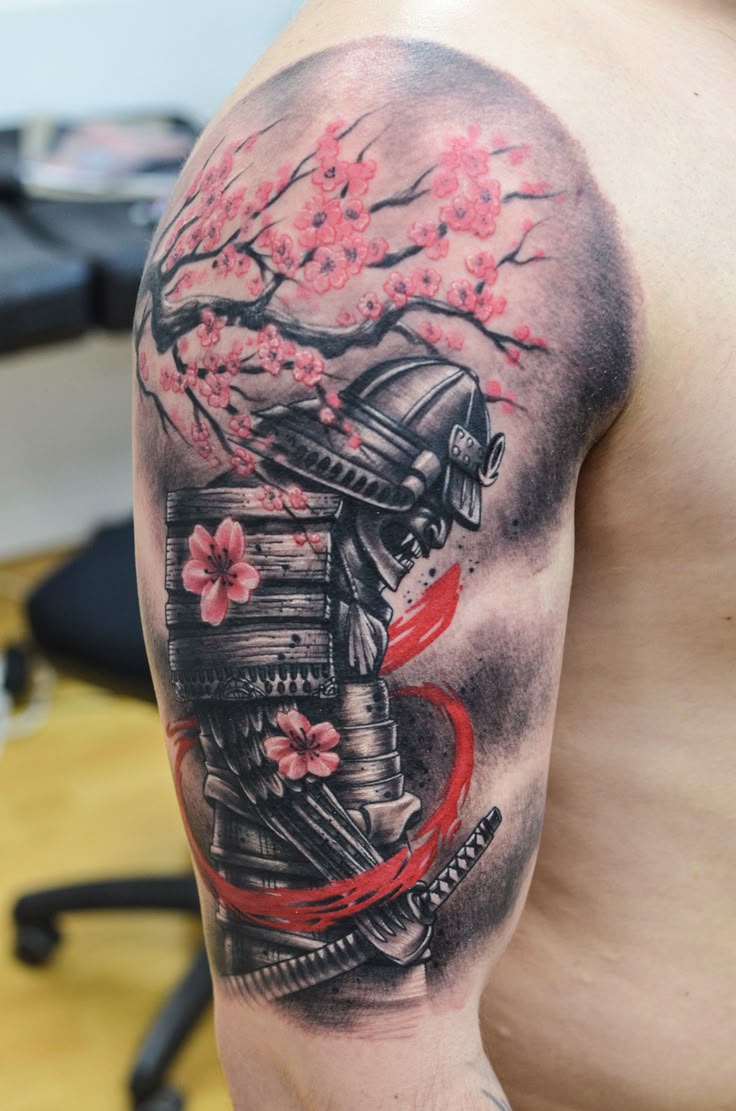
Samurai culture remains one of the foundational influences within traditional Japanese tattooing. Many iconic tattoo compositions combine warrior imagery with symbolic elements such as dragons, koi fish, waves, cherry blossoms, and protective masks.
These combinations create layered narratives that communicate multiple meanings simultaneously.
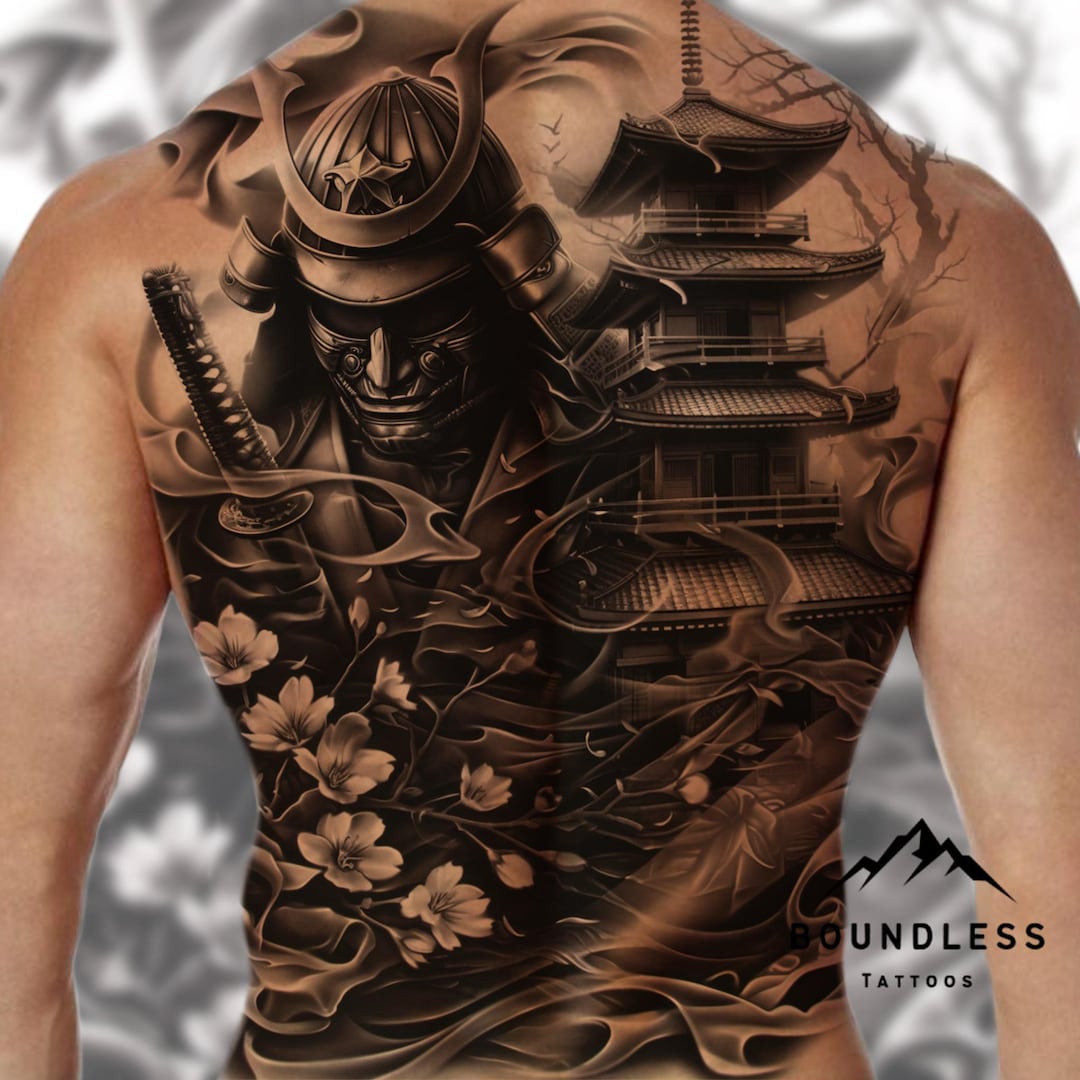
For example:
- Samurai + Dragon = Wisdom and power
- Samurai + Cherry Blossom = Honor and life’s impermanence
- Samurai + Koi Fish = Perseverance and ambition
- Samurai + Oni Mask = Strength against adversity
Information Gain: Historical Meaning vs Modern Interpretation
One overlooked aspect of samurai tattoo symbolism is how dramatically meaning has evolved over time. Historically, samurai identity was connected to social hierarchy and military service. Modern tattoo interpretations focus more on personal transformation and character development.
This shift explains why samurai tattoos appeal to people with no direct connection to Japanese heritage. The symbolism has become universal while still retaining strong cultural roots.
Samurai Tattoo Symbolism Explained
Samurai tattoos carry multiple layers of symbolism that can change depending on the design, pose, facial expression, armor, weaponry, and accompanying imagery. Understanding these symbolic layers helps create a tattoo that reflects personal values rather than relying solely on visual appeal.
Many people select a design based on aesthetics alone. However, experienced tattoo artists often recommend identifying the symbolic message first and building the artwork around that intention.
Honor and Integrity
Honor remains the most recognized samurai trait. Tattoos emphasizing honor often feature composed facial expressions, ceremonial armor, and dignified posture rather than action-oriented battle scenes.
These designs are commonly chosen by individuals who value accountability, ethical leadership, and personal integrity.
Courage and Strength
Samurai tattoos frequently symbolize courage, particularly when depicting warriors entering battle or standing against overwhelming odds. The symbolism focuses on facing fear rather than eliminating it.
This distinction is important. Courage is not the absence of fear but the willingness to act despite uncertainty.
People recovering from difficult life experiences often identify strongly with this interpretation.
Loyalty and Duty
Loyalty-focused samurai tattoos emphasize commitment to family, relationships, principles, or responsibilities. These designs may feature banners, clan symbols, or traditional armor representing service and dedication.
Such tattoos are particularly popular among military personnel, first responders, and individuals who prioritize service-oriented careers.
Discipline and Self-Control
Discipline is perhaps the most underrated aspect of samurai symbolism. While dramatic battle scenes attract attention, many tattoo enthusiasts are drawn to the quiet strength represented by years of training, patience, and self-mastery.
Designs emphasizing discipline often feature:
- Meditative poses
- Formal stances
- Minimalist compositions
- Balanced visual structure
Perseverance Through Adversity
Samurai tattoos can also symbolize endurance and resilience. Battle-worn armor, scars, damaged weapons, or weathered appearances often communicate survival through hardship and personal growth through struggle.
This symbolism resonates strongly with people who have overcome significant challenges, making it one of the most emotionally meaningful interpretations of samurai imagery.
Information Gain: How Design Elements Change Meaning
One of the most overlooked aspects of samurai tattoos is that small design choices can significantly alter symbolism. Armor style, facial expression, weapon position, and battle condition each communicate different messages. Understanding these distinctions helps create a more intentional and personalized tattoo.
Many competing tattoo guides discuss general meanings but fail to explain how specific visual elements influence interpretation.
Helmeted Samurai Tattoos
A helmeted samurai tattoo typically symbolizes duty, leadership, responsibility, and readiness. These designs often emphasize authority and commitment to a greater purpose rather than individual achievement.
Traditional helmets were designed not only for protection but also to communicate rank and identity.
Symbolism of Duty and Leadership
People who choose helmeted samurai imagery are often drawn to leadership roles or responsibilities that require consistency, sacrifice, and accountability.
The design sends a message of preparedness rather than aggression.
Masked Samurai Tattoos
Masked samurai tattoos symbolize protection, resilience, intimidation of adversity, and emotional control. The mask often represents the ability to remain composed under pressure while facing life’s challenges.
Unlike modern interpretations, traditional samurai masks were practical equipment designed to protect warriors while projecting confidence.
Protection and Fearlessness
A masked samurai can symbolize protecting loved ones, defending personal values, or maintaining strength during difficult periods of life.
Many collectors choose this style after major personal transformations because it reflects both vulnerability and resilience.
Samurai with Katana Tattoos
A samurai holding a katana generally represents readiness, determination, personal power, and commitment to action. The position of the sword often influences the deeper meaning of the design.
An unsheathed sword may indicate decisive action, while a sheathed sword can symbolize restraint and wisdom.
Readiness, Power, and Determination
One of the strongest symbolic messages in Japanese warrior art is that true power comes from control rather than force. This principle is frequently reflected in high-quality samurai tattoo compositions.
Understanding these distinctions allows individuals to create tattoos that communicate a far more specific and meaningful story.
Lucky Tattoo, a professional tattoo artist, has over 10 years of experience in the art of tattooing in Ho Chi Minh City. Lucky Tattoo Studio was founded in 2014 by skilled and kind artists. All tattoos are provided in a clean, strictly controlled, and friendly environment.
Samurai Tattoo Combinations and Their Meanings
Combining a samurai with traditional Japanese symbols creates deeper storytelling within a tattoo design. Elements such as dragons, cherry blossoms, koi fish, Oni masks, and Hannya masks add specific meanings that can transform a standard warrior image into a highly personalized piece of body art.
Samurai and Dragon Tattoo Meaning
A samurai and dragon tattoo symbolizes the balance between wisdom and strength. The samurai represents discipline and honor, while the dragon embodies power, protection, intelligence, and spiritual authority in Japanese mythology.
This combination is often chosen by individuals seeking leadership roles or pursuing personal mastery. Unlike Western dragons, Japanese dragons are typically viewed as benevolent protectors associated with wisdom and balance.
Expert tattoo artists frequently recommend this pairing for large-scale projects such as sleeves, back pieces, and chest panels because the flowing dragon body creates natural movement throughout the composition.
Samurai and Cherry Blossom Tattoo Meaning
A samurai and cherry blossom tattoo symbolizes honor, mortality, and appreciation for life’s temporary nature. The design reflects one of the most important concepts in Japanese philosophy: the acceptance that beauty and life itself are fleeting.
Historically, cherry blossoms were associated with samurai because their brief bloom mirrored the uncertainty of life and the warrior’s willingness to face death with dignity.
This design is particularly meaningful for individuals who have experienced significant life transitions or who wish to celebrate resilience through change.
Samurai and Koi Fish Tattoo Meaning
A samurai and koi fish tattoo represents perseverance, determination, ambition, and transformation. Together, these symbols create a powerful narrative about overcoming obstacles and achieving personal growth.
Japanese folklore often depicts koi fish swimming upstream against powerful currents. This struggle mirrors the disciplined mindset associated with samurai culture.
Many people recovering from difficult life circumstances choose this combination because it reflects both endurance and eventual success.
Samurai and Oni Mask Tattoo Meaning
A samurai and Oni mask tattoo symbolizes confronting adversity, inner strength, and protection against external challenges. While Oni are often misunderstood as purely evil spirits, tattoo symbolism is considerably more nuanced.
In Japanese tattoo culture, Oni imagery frequently represents:
- Overcoming personal demons
- Protection from harmful influences
- Transformation through hardship
- Strength gained from adversity
When paired with a samurai, the design can illustrate the ongoing struggle between discipline and chaos.
Samurai and Hannya Mask Tattoo Meaning
A samurai and Hannya mask tattoo often represents emotional complexity, self-control, and the consequences of unchecked emotions. The contrast between the disciplined warrior and the emotional symbolism of the Hannya mask creates powerful visual storytelling.
This combination is often selected by individuals who have overcome emotional challenges or learned difficult life lessons through personal growth.
Information Gain: Best Symbol Pairings Based on Personal Goals
One aspect rarely discussed by competitors is matching tattoo symbolism to personal objectives rather than aesthetics alone.
| Personal Goal | Recommended Pairing |
|---|---|
| Leadership | Samurai + Dragon |
| Resilience | Samurai + Koi Fish |
| Personal Growth | Samurai + Cherry Blossoms |
| Overcoming Hardship | Samurai + Oni Mask |
| Emotional Mastery | Samurai + Hannya Mask |
Best Placements for a Samurai Tattoo
The best placement for a samurai tattoo depends on design complexity, desired visibility, aging considerations, and personal symbolism. Because samurai tattoos often contain intricate armor details, facial features, and background elements, larger placements generally produce better long-term results.
Full Sleeve Placement
A full sleeve offers one of the most effective canvases for samurai tattoos because it provides enough space to showcase storytelling, movement, and supporting Japanese elements without sacrificing detail.
Benefits include:
- Excellent detail retention
- Strong visual flow
- Easy incorporation of dragons, waves, and cherry blossoms
- Balanced composition opportunities
Half Sleeve Placement
A half sleeve provides a versatile option for individuals seeking meaningful symbolism without committing to a full-arm design. It allows significant detail while remaining easier to conceal when necessary.
This placement works particularly well for portrait-style samurai compositions.
Chest Placement
Chest samurai tattoos often carry deeply personal symbolism because they are positioned close to the heart. Many collectors use this placement to represent values, family loyalty, or life philosophies.
The natural muscle contours of the chest can enhance dramatic warrior poses and armor designs.
Back Placement
The back is widely considered the premier placement for traditional Japanese tattooing. It offers the largest uninterrupted canvas, making it ideal for complex samurai scenes and full Irezumi-style compositions.
Many master tattoo artists consider the back the best location for storytelling because it accommodates large-scale narratives without design restrictions.
Leg Placement
Leg placements provide substantial space while offering greater privacy than arms or chest designs. Thigh tattoos, in particular, allow highly detailed samurai portraits and battle scenes.
For individuals entering professional environments with stricter appearance expectations, leg placements often provide practical advantages.
Forearm Placement
Forearm samurai tattoos are ideal for smaller, highly visible designs. They work best when the artwork focuses on a portrait, mask, helmet, or symbolic element rather than an extensive battle scene.
Practical Consideration: How Detail Affects Placement Choice
One of the biggest mistakes people make is selecting a placement before finalizing the design. Highly detailed samurai tattoos often lose clarity when compressed into small spaces.
Professional artists commonly recommend:
- Large-scale designs for realistic styles
- Simplified compositions for smaller placements
- Bold linework for long-term readability
- Avoiding excessive micro-detail
Choosing the Right Samurai Tattoo Style
The artistic style of a samurai tattoo significantly influences both visual impact and long-term aging. Choosing the right style requires balancing aesthetics, symbolism, skin characteristics, placement, and the expertise of the tattoo artist.
Traditional Irezumi Style
Traditional Irezumi emphasizes bold outlines, strong symbolism, and large-scale compositions. It remains one of the most respected forms of Japanese tattooing and often ages exceptionally well.
Key characteristics include:
- Bold linework
- Flowing backgrounds
- Traditional Japanese motifs
- Large cohesive compositions
Neo-Japanese Style
Neo-Japanese tattoos blend traditional symbolism with modern artistic techniques. This style offers greater creative flexibility while maintaining connections to Japanese culture.
It is particularly popular among younger collectors seeking contemporary interpretations of samurai imagery.
Realism Style
Realistic samurai tattoos focus on photographic detail, dramatic lighting, and highly accurate facial expressions. These tattoos can be visually stunning but require exceptional artist skill.
Because realism relies heavily on fine detail, artist selection becomes especially important.
Blackwork Style
Blackwork samurai tattoos use strong contrast, bold shapes, and minimal color. They often provide excellent longevity and visual impact while maintaining a modern aesthetic.
Many tattoo artists recommend blackwork for individuals concerned about long-term fading.
Watercolor Style
Watercolor samurai tattoos emphasize artistic expression and vibrant visual effects. While visually unique, they often require careful planning to ensure long-term readability.
Potential drawbacks include faster fading and reduced detail retention compared to traditional Japanese styles.
Expert Insight: Which Styles Age Best Over Time?
According to experienced tattoo artists, traditional Japanese and blackwork styles generally age more predictably than highly detailed realism or watercolor designs.
“Bold lines and strong contrast almost always outperform excessive detail over decades of wear.”
This is a critical consideration that many first-time tattoo collectors overlook.
Cultural Respect and Common Misconceptions
Respectful samurai tattoo design begins with understanding Japanese history, symbolism, and cultural context. While appreciation differs from appropriation, thoughtful research and collaboration with knowledgeable artists help ensure the final tattoo honors its origins rather than relying on stereotypes.
Is Getting a Samurai Tattoo Cultural Appropriation?
In most cases, a samurai tattoo is considered cultural appreciation rather than appropriation when chosen with genuine respect, accurate symbolism, and an understanding of its historical significance.
Problems typically arise when cultural symbols are used carelessly or inaccurately.
How to Create a Respectful Japanese-Inspired Design
A respectful design incorporates authentic symbolism, accurate historical references, and consultation with artists experienced in Japanese tattoo traditions.
Recommended practices include:
- Researching symbolism thoroughly
- Avoiding random combinations of unrelated symbols
- Working with Japanese-style specialists
- Understanding the meaning behind chosen imagery
Mistakes People Make When Choosing Samurai Tattoos
Many tattoo regrets stem from poor planning rather than poor execution. Understanding common mistakes can prevent costly revisions later.
- Choosing designs solely for appearance
- Ignoring symbolism
- Selecting inexperienced artists
- Overcrowding compositions
- Underestimating required tattoo size
Expert Perspective from Japanese Tattoo Artists
Many respected Japanese-style artists emphasize storytelling over decoration. They encourage clients to focus on personal meaning before discussing visual details.
This approach often produces more satisfying tattoos with stronger long-term significance.
How Much Does a Samurai Tattoo Cost?
Samurai tattoo costs vary significantly based on size, style, artist experience, geographic location, and project complexity. While small designs may cost a few hundred dollars, large custom sleeves and back pieces can require substantial investment over multiple sessions.
Factors Affecting Price
Several variables influence pricing:
- Artist reputation
- Design complexity
- Tattoo size
- Session duration
- Geographic location
- Color versus black-and-grey work
Size and Placement Considerations
Larger placements generally require greater investment because they involve more detail, longer sessions, and increased design planning.
Artist Experience and Pricing
Highly experienced Japanese tattoo specialists often charge premium rates. However, their expertise can significantly improve design quality, symbolism accuracy, and long-term results.
Real Cost Examples for Different Tattoo Sizes
While pricing varies widely, general ranges may include:
| Size | Estimated Cost Range |
|---|---|
| Small Forearm Piece | $200–$800+ |
| Half Sleeve | $1,000–$3,500+ |
| Full Sleeve | $3,000–$10,000+ |
| Full Back Piece | $5,000–$20,000+ |
Samurai Tattoo Aftercare and Long-Term Maintenance
Proper aftercare directly affects healing quality, color retention, line clarity, and long-term appearance. Even the most skilled tattoo artist cannot compensate for poor healing practices during the critical recovery period.
First 48 Hours Care Guide
The first two days are crucial for minimizing infection risk and supporting proper healing.
- Follow artist instructions precisely
- Keep the tattoo clean
- Avoid unnecessary touching
- Wear loose clothing
- Avoid swimming and soaking
Healing Timeline Expectations
Surface healing typically occurs within several weeks, while deeper layers of skin may require months to fully recover.
Patience is essential during this process.
Preventing Fading in Detailed Samurai Tattoos
Sun exposure is one of the leading causes of tattoo fading. Consistent sunscreen use significantly improves long-term appearance.
Additional recommendations include:
- Maintaining skin hydration
- Avoiding excessive UV exposure
- Scheduling touch-ups when necessary
- Following artist aftercare guidance
Information Gain: Why Fine Samurai Details Age Differently
Many realistic samurai tattoos contain extremely fine lines that may soften over time. This natural process occurs because ink spreads slightly within the skin over many years.
Designs that prioritize readability, contrast, and strategic simplification often maintain stronger visual impact decades later.
How to Choose the Best Samurai Tattoo Artist
Selecting the right artist is arguably the most important decision in the tattoo process. Technical skill, cultural knowledge, composition expertise, and experience with Japanese imagery significantly influence the final outcome.
Portfolio Evaluation Checklist
Before booking, evaluate:
- Line quality
- Consistency across healed tattoos
- Experience with Japanese designs
- Composition and flow
- Client reviews
Questions to Ask Before Booking
Important consultation questions include:
- How much experience do you have with samurai tattoos?
- Can I see healed examples?
- How will this design age?
- What size do you recommend?
- How many sessions will be required?
Red Flags to Avoid
Potential warning signs include poor hygiene, limited portfolios, unwillingness to discuss symbolism, unrealistic promises, and heavily discounted pricing that seems too good to be true.
Real-World Example of a Successful Design Consultation
Experienced collectors often spend weeks refining symbolism before finalizing artwork. This planning process frequently leads to stronger designs that remain meaningful long after tattoo trends change.
Frequently Asked Questions About Samurai Tattoos
What does a samurai tattoo symbolize?
A samurai tattoo typically symbolizes honor, discipline, courage, loyalty, resilience, and commitment to personal values inspired by the Bushido code.
What is the difference between a samurai tattoo and a ronin tattoo?
A samurai tattoo usually represents duty and loyalty, while a ronin tattoo symbolizes independence, freedom, self-reliance, and forging one’s own path.
Are samurai tattoos culturally respectful?
Yes, when chosen with respect, accurate symbolism, and an understanding of Japanese history rather than stereotypes or misconceptions.
Which placement is best for a samurai tattoo?
Full sleeves, backs, chests, and thighs are generally considered the best placements because they provide sufficient space for detailed storytelling and long-term clarity.
Do samurai tattoos have to be large?
No. Smaller designs can work effectively, particularly portraits, masks, helmets, and symbolic elements, although complex scenes usually benefit from larger placements.
Which tattoo style is best for a samurai tattoo?
Traditional Irezumi, Neo-Japanese, realism, and blackwork styles are among the most popular options. The ideal choice depends on personal goals and long-term aging considerations.
How much does a samurai tattoo cost?
Costs vary based on size, complexity, and artist expertise. Small designs may start around a few hundred dollars, while full sleeves and back pieces can reach several thousand dollars.
Do samurai tattoos age well?
Well-designed tattoos with strong contrast, appropriate sizing, and proper aftercare generally age very well, especially traditional Japanese and blackwork styles.
Final Thoughts: Is a Samurai Tattoo Right for You?
A samurai tattoo is one of the most meaningful and visually powerful choices in Japanese-inspired body art. Beyond its striking appearance, it represents timeless principles such as honor, discipline, courage, resilience, loyalty, and personal growth.
The most successful samurai tattoos are not chosen solely because they look impressive. They are selected because their symbolism aligns with the wearer’s values, experiences, and aspirations.
Whether you are drawn to traditional Irezumi, realistic warrior portraits, black-and-grey compositions, or large-scale Japanese storytelling, taking the time to understand symbolism, choose the right artist, and plan thoughtfully will result in a tattoo that remains meaningful for decades.
Ultimately, a samurai tattoo is not simply an image of a warrior. It is a permanent reminder of the principles you choose to carry through life.
Lucky Tattoo, a professional tattoo artist, has over 10 years of experience in the art of tattooing in Ho Chi Minh City. Lucky Tattoo Studio was founded in 2014 by skilled and kind artists. All tattoos are provided in a clean, strictly controlled, and friendly environment.
samurai-tattoo