A phoenix tattoo is more than a visually striking piece of body art. Across cultures and centuries, the phoenix has represented rebirth, resilience, transformation, and the ability to rise stronger after hardship. For many people, this mythical bird becomes a deeply personal symbol tied to recovery, growth, survival, and major life transitions.
Whether you’re researching your first tattoo or refining ideas for a custom masterpiece, understanding the symbolism, cultural roots, design variations, and placement considerations behind phoenix tattoos can help you make a decision that remains meaningful for decades.
What Does a Phoenix Tattoo Mean?
A phoenix tattoo symbolizes rebirth, transformation, resilience, hope, and personal renewal. Inspired by the mythical bird that rises from its own ashes, the design is often chosen to commemorate overcoming adversity, beginning a new chapter in life, or embracing profound personal growth.
Few tattoo symbols carry as much emotional depth as the phoenix. Unlike decorative motifs that primarily focus on aesthetics, the phoenix tells a story. It represents a process: destruction, renewal, and evolution.
The core symbolism centers on the mythical cycle of death and rebirth. According to legend, the phoenix reaches the end of its life, burns in flames, and emerges again from the ashes stronger than before. This narrative resonates with people who have experienced:
- Recovery from serious illness
- Overcoming addiction
- Surviving personal trauma
- Divorce or relationship changes
- Career reinvention
- Major spiritual transformation
- Significant personal growth
From a psychological perspective, phoenix tattoos often serve as visual reminders of resilience. Tattoo artists frequently report that clients seeking phoenix designs are not simply choosing a beautiful bird—they are marking a meaningful turning point in their lives.
The Core Symbolism of Rebirth and Renewal
The phoenix represents the ability to start over after hardship. Its symbolism extends beyond survival, emphasizing growth, wisdom, and transformation gained through difficult experiences.
Unlike symbols that focus solely on strength, the phoenix highlights the journey through adversity. This distinction is important. The meaning is not that challenges never happen; rather, it reflects the capacity to emerge stronger because of them.
Many tattoo collectors intentionally incorporate flames, ashes, or rising motion into the design to reinforce this narrative. These visual elements communicate movement, progression, and evolution rather than simple endurance.
The most meaningful phoenix tattoos are rarely about perfection. They are about transformation.
Why the Phoenix Represents Resilience and Personal Growth
A phoenix tattoo represents resilience because it embodies recovery after destruction. The symbol communicates adaptability, perseverance, and the ability to create positive change after life’s most challenging moments.
Resilience differs from toughness. Toughness implies resistance to damage, while resilience describes the ability to recover and adapt after being affected. The phoenix perfectly captures this distinction.
Many clients choose the phoenix after experiences such as:
- Completing cancer treatment
- Achieving long-term sobriety
- Recovering from financial hardship
- Leaving toxic environments
- Rebuilding confidence after failure
In these situations, the tattoo serves both as a personal reminder and as a permanent representation of growth.
Common Misconception: Is Every Phoenix Tattoo About Overcoming Trauma?
No. While many people associate phoenix tattoos with hardship and recovery, the symbol also represents ambition, evolution, personal development, and future aspirations.
One of the biggest misconceptions in tattoo culture is that phoenix tattoos must be linked to tragedy. In reality, many people choose them to celebrate positive transitions:
- Launching a business
- Becoming a parent
- Moving to a new country
- Completing higher education
- Beginning a spiritual journey
The meaning is highly personal. The symbolism of rebirth applies equally to positive growth and recovery from adversity.
Real-World Example: Why People Choose Phoenix Tattoos After Major Life Changes
People often choose phoenix tattoos because the imagery provides a powerful visual representation of life transitions and personal reinvention.
Consider a professional who leaves a stable corporate career to pursue entrepreneurship. The experience may involve uncertainty, risk, failure, and eventual success. A phoenix tattoo can symbolize the transformation from one identity into another.
Similarly, someone recovering from a life-threatening illness may view the phoenix as a celebration of survival and a reminder to embrace life with renewed appreciation.
These examples illustrate why phoenix tattoos remain among the most emotionally meaningful tattoo choices available.
Information Gain: The Hidden Reason Phoenix Tattoos Remain Popular Decades Later
Unlike trend-driven tattoo concepts that may lose relevance over time, phoenix tattoos are rooted in universal human experiences. Nearly everyone encounters change, loss, growth, or renewal. Because the symbolism remains relevant throughout life, phoenix tattoos often age better emotionally than highly specific trends.
The Origins of the Phoenix Symbol Across Different Cultures
The phoenix appears in multiple civilizations, but its meaning varies significantly across cultures. Understanding these differences helps tattoo enthusiasts create more authentic and personally meaningful designs rather than relying solely on generic interpretations.
One overlooked aspect of phoenix tattoos is that many modern designs blend symbols from entirely different traditions. While this can produce beautiful artwork, understanding the origins allows for more intentional design decisions.
Phoenix in Greek Mythology
In Greek mythology, the phoenix is a legendary bird associated with cyclic renewal, immortality, and rebirth through fire. This version forms the foundation of most Western phoenix tattoo symbolism.
Ancient accounts describe a magnificent bird that lived for hundreds of years before constructing a nest and igniting itself in flames. From the ashes emerged a new phoenix, continuing the cycle indefinitely.
This myth became a powerful metaphor for:
- Renewal after loss
- Triumph over adversity
- Immortality of the spirit
- Continuous self-improvement
Many Western tattoo designs draw heavily from this interpretation, emphasizing flames, dramatic wings, and upward motion.
Ancient Egyptian Interpretations
The Egyptian counterpart to the phoenix is often linked to the Bennu bird, a sacred symbol connected to creation, renewal, and the cyclical nature of life.
Unlike the fiery rebirth narrative popularized in Greek mythology, Egyptian symbolism focused more on regeneration, divine order, and the rising sun.
This distinction offers an interesting design opportunity. Individuals seeking spiritual or cosmic symbolism may find Egyptian-inspired phoenix concepts more aligned with their personal beliefs.
Chinese Fenghuang Symbolism Explained
The Chinese Fenghuang differs significantly from the Western phoenix. Rather than symbolizing destruction and rebirth through fire, it represents harmony, virtue, prosperity, and balance.
In traditional Chinese culture, the Fenghuang is associated with:
- Grace
- Nobility
- Wisdom
- Harmony
- Feminine energy
- Prosperity
Many modern tattoo articles incorrectly treat the Fenghuang as identical to the Western phoenix. This oversimplification ignores centuries of distinct cultural meaning.
For individuals seeking symbolism related to balance, abundance, or spiritual harmony, Fenghuang-inspired tattoos may be more appropriate than traditional fire-based phoenix designs.
Japanese Phoenix Meanings and Tattoo Traditions
Japanese phoenix tattoos often symbolize justice, renewal, loyalty, virtue, and harmony. These designs are deeply rooted in traditional Japanese tattoo art and frequently feature elaborate compositions.
In Japanese tattooing, the phoenix is commonly paired with complementary imagery such as:
- Cherry blossoms
- Clouds
- Dragons
- Koi fish
- Peonies
- Waves
These supporting elements enhance the overall narrative and create large-scale compositions suitable for sleeves, backs, and chest panels.
Traditional Japanese artists often use strong linework, flowing movement, and bold color palettes to create visually powerful phoenix tattoos that age exceptionally well.
Information Gain: Cultural Differences Most Tattoo Guides Ignore
One of the most common mistakes people make is combining symbols from different traditions without understanding their meanings. For example, a Western fire phoenix, Chinese Fenghuang, and Japanese Irezumi elements may each represent different values and philosophies.
This does not mean designs cannot be blended creatively. However, understanding these distinctions allows clients to communicate more effectively with artists and create tattoos with greater authenticity.
| Tradition | Primary Meaning | Common Design Traits |
|---|---|---|
| Greek | Rebirth and resilience | Flames, ashes, rising motion |
| Egyptian | Creation and renewal | Solar symbolism, sacred bird imagery |
| Chinese Fenghuang | Harmony and prosperity | Elegant feathers, balanced composition |
| Japanese | Virtue and transformation | Bold color, traditional motifs, flowing movement |
How to Choose the Right Phoenix Tattoo Design
The best phoenix tattoo design aligns with your personal story, aesthetic preferences, body placement, and long-term goals. Rather than copying a trending image, successful designs connect symbolism with individual experiences and practical tattoo considerations.
One of the biggest reasons people regret tattoos is choosing artwork based solely on appearance. A design that looks impressive online may not reflect your personality, values, or intended meaning.
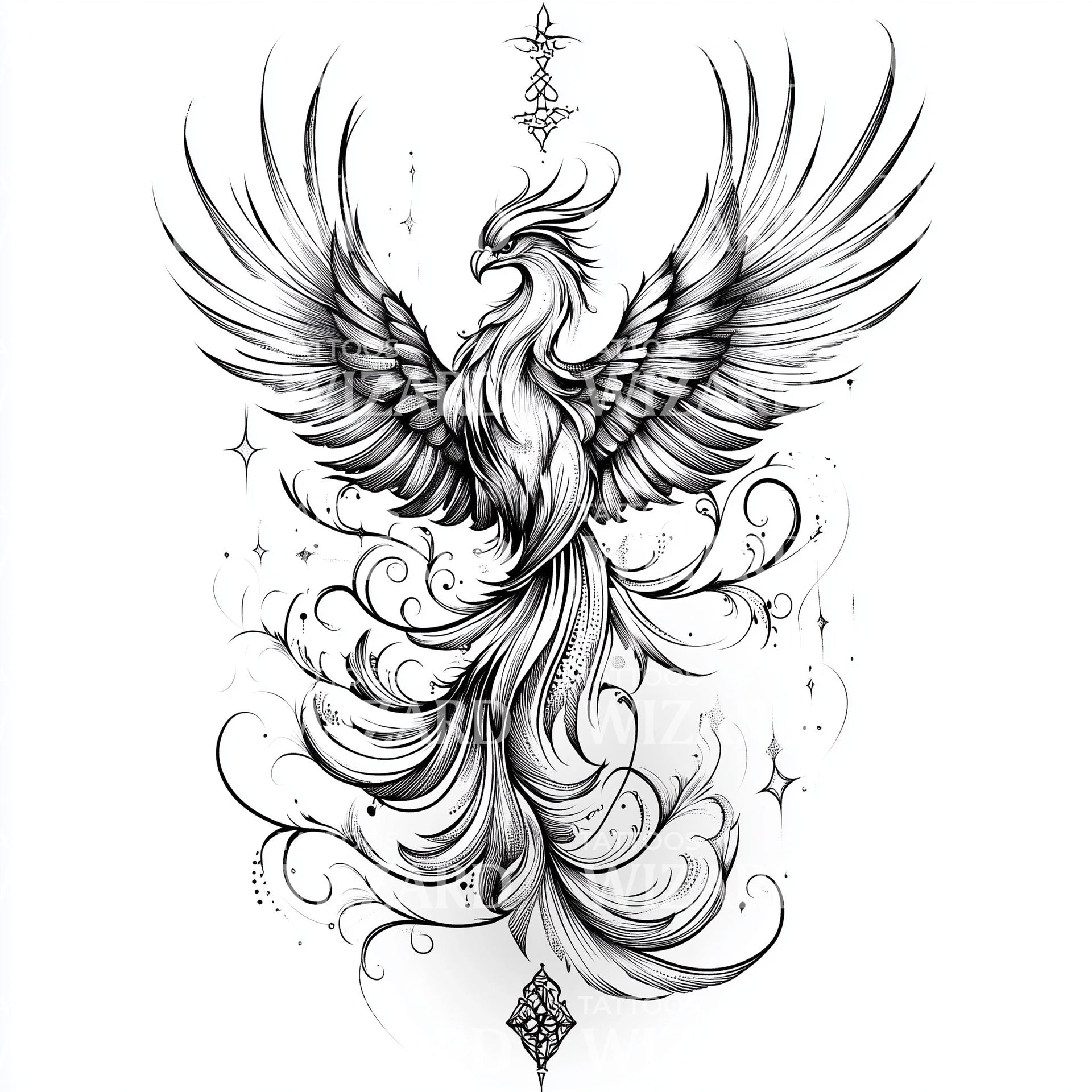
Professional tattoo artists often recommend evaluating four key factors before finalizing a phoenix design:
- Personal symbolism
- Preferred artistic style
- Body placement
- Long-term aging characteristics
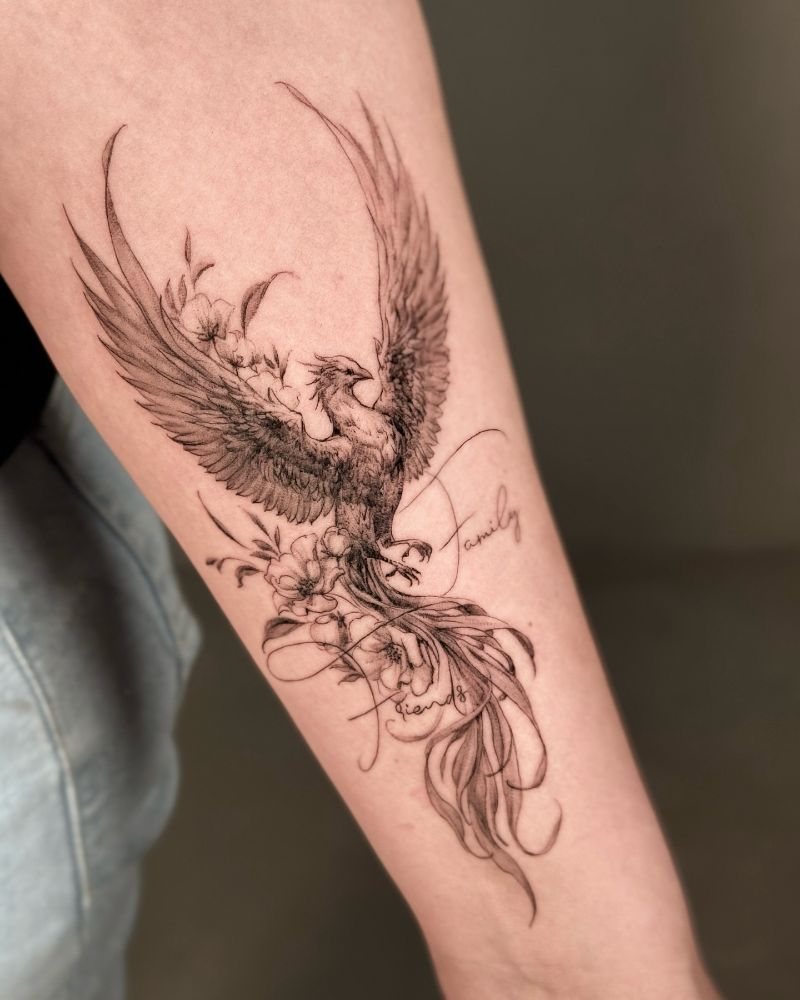
Realistic Phoenix Tattoos
Realistic phoenix tattoos focus on lifelike detail, dramatic feather textures, and dynamic movement. They are ideal for individuals seeking visually impressive artwork with strong emotional impact.
These designs often require:
- Larger placement areas
- Experienced artists
- Longer session times
- Higher budgets
Because realism depends heavily on detail, scale becomes especially important. Small realistic phoenix tattoos often lose clarity as they age.
Japanese Phoenix Tattoos
Japanese phoenix tattoos combine symbolic depth with bold visual storytelling. They are among the most respected styles for large-scale tattoo compositions.
Many collectors choose Japanese designs because traditional techniques emphasize longevity. Strong outlines and balanced color distribution help maintain visual impact over time.
Geometric Phoenix Tattoos
Geometric phoenix tattoos merge ancient symbolism with modern design principles. These tattoos emphasize structure, precision, and transformation through abstract visual elements.
They are particularly popular among professionals and minimalists who want meaningful symbolism without highly traditional imagery.
Unlike realistic designs, geometric tattoos often age well because they rely on simplified shapes rather than intricate micro-details.
Lucky Tattoo, a professional tattoo artist, has over 10 years of experience in the art of tattooing in Ho Chi Minh City. Lucky Tattoo Studio was founded in 2014 by skilled and kind artists. All tattoos are provided in a clean, strictly controlled, and friendly environment.
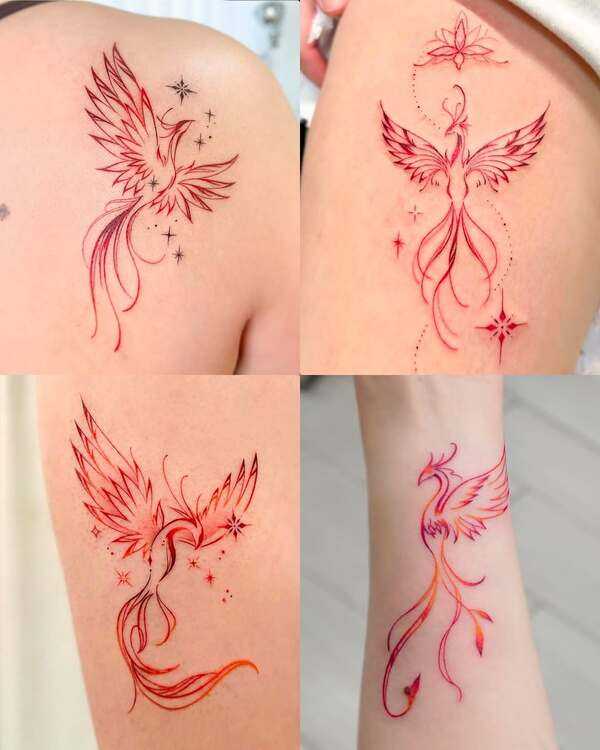
Watercolor Phoenix Tattoos
Watercolor phoenix tattoos use fluid color transitions and painterly effects to create an artistic interpretation of rebirth and transformation. They are ideal for individuals who prioritize creativity, emotion, and visual movement over traditional tattoo aesthetics.
The appeal of watercolor designs lies in their ability to capture the dynamic energy of fire and renewal. Vibrant oranges, reds, yellows, blues, and purples can create an almost ethereal appearance.
However, watercolor tattoos require careful planning. Without strong foundational linework, some designs may lose definition faster than traditional styles.
Experienced tattoo artists often recommend:
- Combining watercolor effects with structured outlines
- Choosing larger placements for better color transitions
- Using high-contrast color combinations
- Committing to periodic touch-ups when necessary
Tribal and Minimalist Variations
Tribal and minimalist phoenix tattoos offer simplified interpretations of the phoenix while preserving core symbolism such as resilience, renewal, and personal growth.
Minimalist designs are particularly attractive for first-time tattoo clients, professionals seeking discreet artwork, or individuals who value subtle symbolism.
Tribal-inspired phoenix tattoos emphasize movement, strength, and heritage through bold black patterns and stylized shapes.
One overlooked advantage of minimalist phoenix tattoos is aging performance. Simpler designs often retain visual clarity longer than highly detailed artwork.
Expert Insight: Matching Design Style to Personal Story
The most successful phoenix tattoos connect artistic style with personal meaning. Rather than selecting a design solely based on aesthetics, consider how the style reinforces your intended message.
| Life Experience | Recommended Style | Symbolic Focus |
|---|---|---|
| Recovery Journey | Realistic Phoenix | Strength and survival |
| Spiritual Growth | Japanese Phoenix | Balance and renewal |
| Career Reinvention | Geometric Phoenix | Transformation and structure |
| Creative Expression | Watercolor Phoenix | Freedom and evolution |
| Minimalist Lifestyle | Minimalist Phoenix | Personal meaning without excess |
The Life-Event Mapping Framework
A phoenix tattoo becomes significantly more meaningful when its design reflects a specific life event or personal transformation. Matching symbolism to personal experiences creates deeper emotional relevance and often results in higher long-term satisfaction with the tattoo.
Many competitors discuss symbolism broadly but rarely explain how to personalize phoenix imagery according to individual life circumstances. This framework bridges that gap.
Phoenix Tattoos for Recovery and Healing
Phoenix tattoos frequently commemorate recovery from illness, addiction, trauma, or other major life challenges. The symbol represents not only survival but also the growth that follows hardship.
Many survivors incorporate elements such as:
- Ascending flames
- Broken chains
- Lotus flowers
- Dates of personal milestones
- Inspirational phrases
Healthcare professionals and mental health advocates often recognize symbolic milestones as valuable tools for reinforcing positive identity changes and recovery achievements.
Phoenix Tattoos for Career Reinvention
Career-focused phoenix tattoos symbolize professional growth, entrepreneurship, leadership development, and successful transitions into new industries or opportunities.
A geometric phoenix often works particularly well for professionals because it conveys evolution while maintaining a sophisticated appearance.
Examples include:
- Launching a business
- Changing industries
- Returning to education
- Achieving executive leadership positions
Phoenix Tattoos for Spiritual Growth
Phoenix tattoos can symbolize spiritual awakening, personal enlightenment, and the pursuit of deeper purpose. These designs often incorporate cultural, religious, or philosophical symbolism.
Popular additions include:
- Sacred geometry
- Mandalas
- Celestial imagery
- Sun motifs
- Japanese symbolic elements
The goal is not merely decoration but creating a visual narrative of inner transformation.
Phoenix Tattoos for Relationship Recovery
Phoenix tattoos can represent healing after divorce, heartbreak, toxic relationships, or significant emotional transitions. They symbolize resilience, self-discovery, and moving forward with renewed confidence.
Rather than focusing on the past, many people choose imagery emphasizing upward movement and future growth.
Why Personalized Symbolism Creates More Meaningful Tattoos
Personalized tattoos generally maintain stronger emotional relevance because they reflect unique experiences rather than temporary trends. Custom symbolism often reduces future regret and strengthens long-term satisfaction.
Professional tattoo artists frequently report that clients who invest time in developing meaningful concepts tend to value their tattoos more years later.
Best Placement Ideas for a Phoenix Tattoo
The best placement for a phoenix tattoo depends on size, artistic style, visibility preferences, and desired level of detail. Larger placements typically provide more room for dynamic compositions and long-term clarity.
Back Phoenix Tattoos
The back is often considered the premier placement for large phoenix tattoos because it provides maximum space for wingspan, movement, and detailed storytelling.
Benefits include:
- Exceptional detail potential
- Strong visual impact
- Symmetrical composition opportunities
- Excellent aging characteristics
Many master tattoo artists prefer the back for highly detailed Japanese and realistic phoenix designs.
Sleeve Phoenix Tattoos
Phoenix sleeve tattoos create dynamic visual flow by wrapping symbolic imagery around the arm. They are among the most popular choices for large-scale storytelling.
Sleeves allow artists to integrate:
- Flames
- Clouds
- Cherry blossoms
- Geometric elements
- Additional symbolic motifs
Chest and Shoulder Placement
Chest and shoulder placements emphasize strength, courage, and personal significance. These areas work well for medium-to-large phoenix designs that remain easily concealable when needed.
The natural contours of the shoulder can enhance the appearance of wings and upward movement.
Thigh and Leg Placement
Thigh and leg placements offer substantial canvas space while maintaining privacy. These locations are increasingly popular among individuals seeking large custom artwork without constant visibility.
The thigh is particularly suitable for colorful phoenix compositions requiring extensive detail.
Small Wrist and Forearm Designs
Smaller wrist and forearm phoenix tattoos prioritize symbolism over elaborate detail. These placements work best for minimalist or geometric interpretations.
For long-term success, avoid excessive detail in small tattoos, as fine lines can blur over time.
Common Misconception: Bigger Is Not Always Better
While larger tattoos allow more detail, oversized designs are not automatically superior. The best placement balances symbolism, anatomy, lifestyle needs, budget, and long-term maintenance requirements.
Many experienced artists recommend designing specifically for the chosen body area rather than forcing a generic concept into a particular location.
Color vs Black Phoenix Tattoos: Which Is Better?
Neither color nor black-and-gray phoenix tattoos are universally superior. The ideal choice depends on artistic goals, skin tone, maintenance expectations, and desired symbolism.
Longevity and Aging Considerations
Black-and-gray tattoos generally maintain definition longer, while color tattoos can provide stronger visual impact when properly maintained.
Factors influencing longevity include:
- Sun exposure
- Skin type
- Ink quality
- Artist skill
- Aftercare practices
Maintenance and Touch-Ups
Color-rich phoenix tattoos often require more maintenance because bright pigments may fade faster than black ink over time.
Expert recommendations include:
- Daily sunscreen application
- Moisturizing regularly
- Avoiding excessive UV exposure
- Scheduling touch-ups when necessary
Cost Differences Between Styles
Color phoenix tattoos typically cost more because they require additional time, layering, and technical expertise. Highly detailed color realism can significantly increase overall project cost.
Expert Advice on Choosing Colors That Age Well
Experienced tattoo artists often recommend prioritizing contrast over excessive color variety. Strategic use of reds, oranges, golds, and black shading frequently produces the strongest long-term results.
How Much Does a Phoenix Tattoo Cost?
Phoenix tattoo pricing depends on size, complexity, artist experience, geographic location, and number of sessions required. Custom large-scale work represents a significant artistic investment.
Factors Affecting Tattoo Pricing
Several variables influence the final cost of a phoenix tattoo beyond simple size measurements.
- Artist reputation
- Design complexity
- Color usage
- Session duration
- Custom artwork requirements
Size and Placement Considerations
Larger placements such as backs and sleeves require more labor and generally command higher prices than smaller forearm or wrist tattoos.
Artist Experience and Geographic Location
Highly sought-after tattoo artists often charge premium rates due to expertise, demand, and portfolio quality. Choosing solely based on price can increase the risk of unsatisfactory results.
Example Price Ranges for Common Designs
Although pricing varies widely, the following ranges provide a general reference:
| Tattoo Type | Estimated Cost Range |
|---|---|
| Small Minimalist Phoenix | $100–$400 |
| Medium Forearm Design | $400–$1,200 |
| Large Sleeve Tattoo | $1,500–$6,000+ |
| Full Back Phoenix | $3,000–$10,000+ |
Phoenix Tattoo Pain Guide by Placement
Pain levels vary significantly depending on tattoo placement, individual pain tolerance, session length, and anatomical factors. Understanding these differences helps clients prepare realistically.
Least Painful Areas
Areas with greater muscle and fat coverage generally cause less discomfort during tattooing.
- Outer thigh
- Upper arm
- Shoulder
- Calf
Most Painful Areas
Regions with thinner skin or proximity to bone tend to be more sensitive.
- Ribs
- Sternum
- Spine
- Elbow
- Ankle
Pain Management Myths
Many pain management myths lack scientific support. Alcohol consumption before tattoo sessions is strongly discouraged because it can increase bleeding and complicate the tattooing process.
Real Client Experiences
Most clients report that anticipation is often worse than the actual tattoo experience. Proper hydration, nutrition, rest, and communication with the artist can significantly improve comfort.
Phoenix Tattoo Aftercare and Long-Term Maintenance
Proper aftercare is essential for healing, color retention, infection prevention, and long-term tattoo quality. Even exceptional artwork can suffer if aftercare instructions are ignored.
First 48 Hours
The first two days are critical for protecting the tattoo and minimizing complications.
- Follow artist instructions carefully
- Keep the area clean
- Avoid scratching or picking
- Use approved aftercare products
First Month Healing Timeline
Most tattoos appear healed externally within several weeks, although deeper skin layers may continue healing longer.
Temporary itching, peeling, and mild irritation are generally normal during recovery.
Preventing Color Fading
Consistent sun protection remains one of the most effective strategies for preserving tattoo vibrancy over time.
Dermatologist Recommendations
Medical professionals often recommend monitoring for warning signs such as excessive redness, persistent swelling, fever, unusual discharge, or worsening pain. These symptoms may require medical evaluation.
Common Phoenix Tattoo Mistakes to Avoid
Avoiding common planning and design mistakes can dramatically improve tattoo satisfaction, longevity, and artistic quality.
Choosing Trendy Designs Over Personal Meaning
Tattoos rooted in personal significance often retain emotional value far longer than trend-driven designs.
Ignoring Scale and Detail Requirements
Attempting to compress complex artwork into very small spaces frequently leads to reduced clarity over time.
Using Low-Quality Reference Images
High-resolution references help artists create cleaner, more accurate custom artwork and avoid design misunderstandings.
Skipping Artist Portfolio Reviews
One of the biggest tattoo mistakes is selecting an artist without evaluating healed work, style specialization, and client results.
Future Trends: How AI and Custom Design Technology Are Changing Phoenix Tattoos
Emerging technology is transforming tattoo design by enabling greater personalization, visualization, and collaboration between clients and artists.
AI-Assisted Concept Development
AI tools help clients explore creative concepts before consulting tattoo artists. However, professional artistic interpretation remains essential for successful tattoo execution.
Hyper-Personalized Symbolic Tattoos
Modern clients increasingly seek designs that integrate personal stories, milestones, cultural heritage, and custom symbolism.
Emerging Design Styles
Current trends include geometric realism, abstract symbolism, fine-line compositions, and hybrid cultural influences.
Information Gain: What Tattoo Trends Experts Predict for the Next Five Years
Industry professionals anticipate increased demand for meaningful narrative tattoos, customized symbolism, and designs focused on personal identity rather than temporary aesthetics.
Frequently Asked Questions
Is a phoenix tattoo a good symbol for new beginnings?
Yes. A phoenix tattoo is one of the most recognized symbols of renewal, personal growth, transformation, and starting a new chapter in life.
What is the spiritual meaning of a phoenix tattoo?
Spiritually, the phoenix often represents enlightenment, rebirth, healing, inner strength, and personal evolution.
Which phoenix tattoo style is most popular?
Japanese, realistic, and geometric phoenix tattoos remain among the most popular styles because of their symbolism and artistic versatility.
Where should a phoenix tattoo be placed?
Popular placements include the back, sleeve, chest, shoulder, and thigh because they provide sufficient space for detailed artwork.
Do phoenix tattoos require color?
No. Black-and-gray phoenix tattoos can be equally powerful and often offer excellent longevity and contrast.
How long does a phoenix tattoo take to complete?
Small tattoos may take one session, while large sleeves and back pieces often require multiple sessions over several weeks or months.
Are phoenix tattoos masculine or feminine?
Phoenix tattoos are gender-neutral and can be customized to suit masculine, feminine, or unisex artistic styles.
What makes a phoenix tattoo unique?
The phoenix uniquely combines themes of resilience, rebirth, transformation, hope, and personal growth, making it one of the most meaningful tattoo symbols worldwide.
Conclusion: Choosing a Phoenix Tattoo That Truly Represents Your Story
A phoenix tattoo remains one of the most enduring symbols in body art because it reflects a universal human experience: transformation. Whether inspired by Greek mythology, the Chinese Fenghuang, Japanese tattoo traditions, or your own personal journey, the phoenix offers a powerful visual narrative of resilience, renewal, and growth.
The most successful phoenix tattoos combine meaningful symbolism, thoughtful placement, skilled artistry, and long-term planning. By understanding cultural origins, design styles, placement options, maintenance requirements, and personal significance, you can create a tattoo that remains visually compelling and emotionally relevant for years to come.
Ultimately, the best phoenix tattoo is not simply the most elaborate or expensive design—it is the one that authentically represents your story, your transformation, and the person you continue to become.
Lucky Tattoo, a professional tattoo artist, has over 10 years of experience in the art of tattooing in Ho Chi Minh City. Lucky Tattoo Studio was founded in 2014 by skilled and kind artists. All tattoos are provided in a clean, strictly controlled, and friendly environment.
phoenix-tattoo