What Is a Yin Yang Tattoo? Meaning & Symbolism Explained
A Yin Yang tattoo represents balance, duality, and harmony derived from ancient Chinese Taoist philosophy. It symbolizes how opposing forces such as light and dark, masculine and feminine, or chaos and order are interconnected. In modern tattoo culture, it is widely used as a personal reminder of emotional equilibrium and life perspective.
Unlike decorative tattoo trends, the Yin Yang symbol carries philosophical depth that many people underestimate. Experienced tattoo artists often note that clients choose this design during transitional life phases—breakups, career shifts, or identity changes—because it visually anchors emotional contrast into a unified concept of balance.
Origin in Taoist Philosophy and Ancient Chinese Thought
The Yin Yang concept originates from Taoist philosophy, particularly texts attributed to Laozi and later interpretations of the Tao Te Ching. It describes the natural dual forces that govern existence, emphasizing that opposites are not in conflict but in constant transformation and interdependence within a unified system.
This historical grounding is often simplified or misrepresented in modern tattoo culture. Many assume Yin Yang is just a “good vs evil” symbol, but classical Taoism focuses instead on cyclical balance and fluid states of energy rather than fixed opposites.
Information Gain Insight: Tattoo artists report that clients who understand Taoist origins tend to request more personalized designs—such as integrating natural cycles (moon phases, tides, seasons) rather than generic black-and-white circles. This shift reflects a deeper cultural literacy trend in tattoo decision-making.
Core Meaning: Balance, Duality, and Harmony in Life
The core meaning of a Yin Yang tattoo is the coexistence of opposites that create harmony. It reflects the idea that life experiences—positive and negative—are interconnected and necessary for growth. Many wearers choose it to represent emotional resilience, acceptance, or personal transformation through contrast.
In practical terms, this symbol is often used by individuals navigating high-stress environments or emotional transitions. For example, professionals in high-pressure careers frequently choose Yin Yang tattoos as grounding symbols that remind them that intensity and rest must coexist for long-term stability.
Common Misconceptions About Yin Yang Tattoos
Many people misunderstand Yin Yang tattoos as purely aesthetic or as a generic “balance” symbol without cultural depth. Others mistakenly interpret it as a binary moral system. In reality, Taoist philosophy emphasizes fluidity, showing that each force contains the seed of its opposite within it.
Another misconception is that Yin Yang tattoos are “overused” and lack individuality. However, experienced tattoo artists consistently report that customization—such as integrating personal symbols—transforms this design into a highly unique identity marker rather than a cliché.
Information Gain Insight: One overlooked issue is cultural flattening. Many Western tattoo portfolios strip the symbol of its philosophical nuance. Clients who engage with cultural context tend to request hybrid designs, such as Yin Yang combined with koi fish or celestial elements to preserve meaning while enhancing originality.
Yin Yang Tattoo Design Ideas and Styles
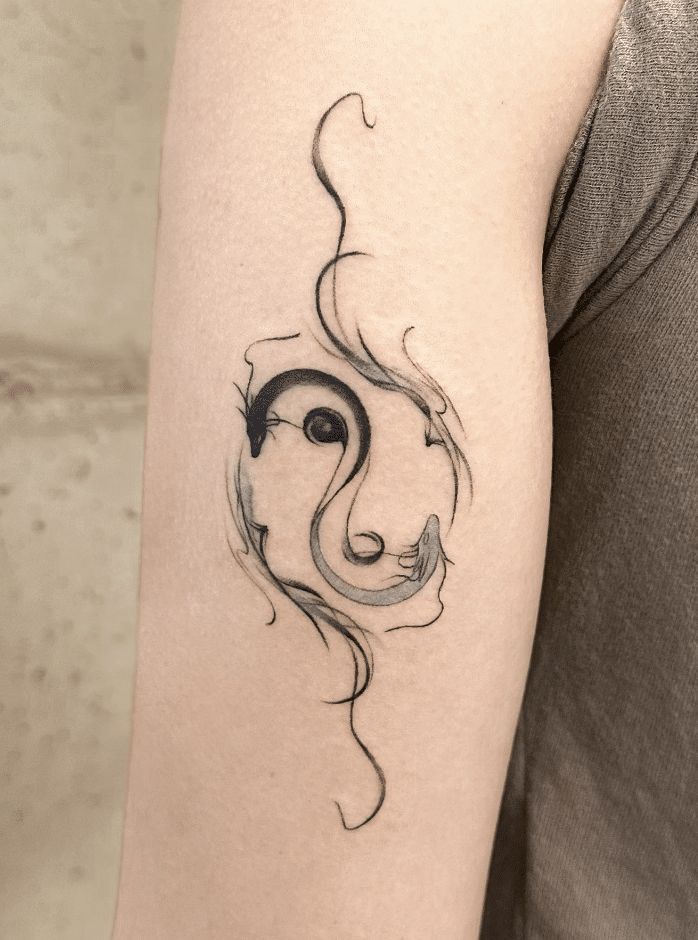
Yin Yang tattoo designs vary widely, from minimalist black-and-white symbols to complex artistic interpretations involving nature, animals, or watercolor effects. The best design depends on personal meaning, placement, and how visibly you want the symbolism expressed in daily life. Modern tattoo culture emphasizes customization over repetition.
Design selection is not just aesthetic—it reflects identity positioning. Artists often advise clients to think of Yin Yang tattoos as “lived philosophy” rather than decoration. This means considering how the design evolves visually over time and how it aligns with personal narrative rather than short-term trends.
Minimalist Yin Yang Tattoos for Subtle Expression
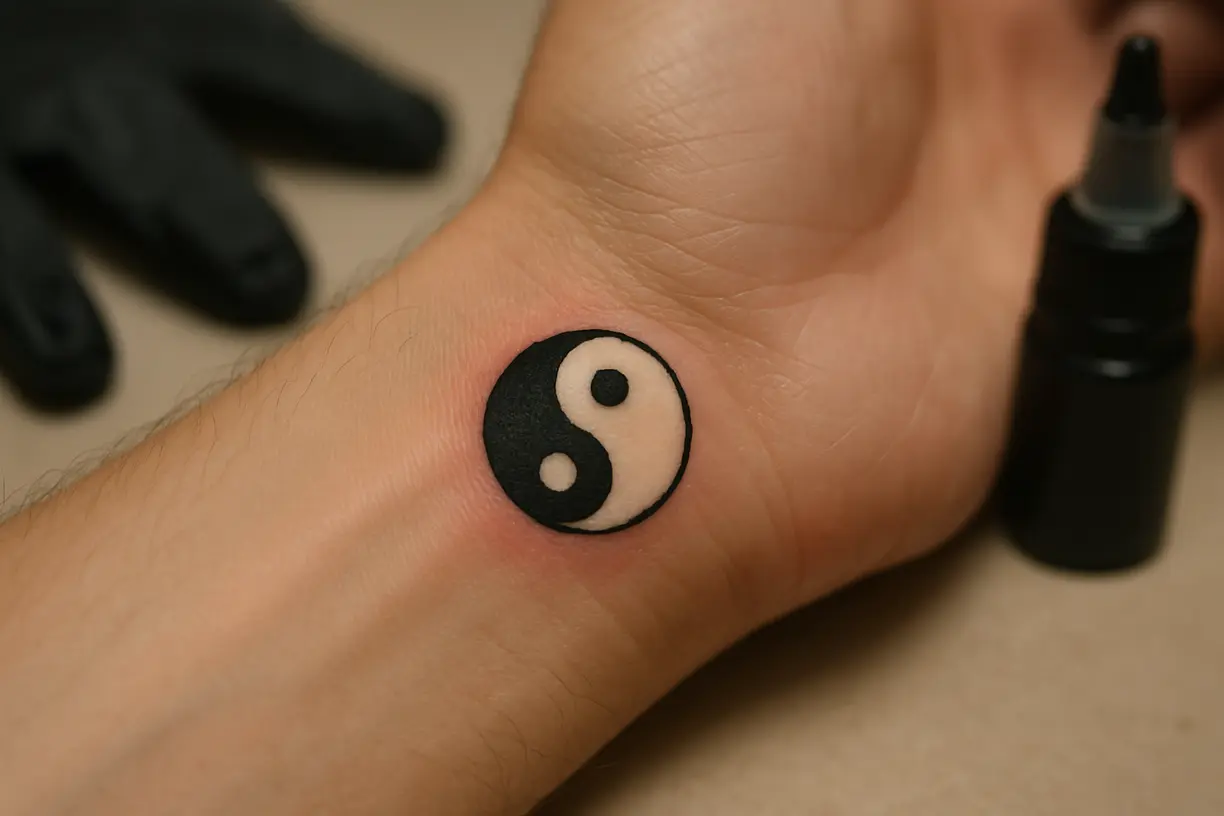
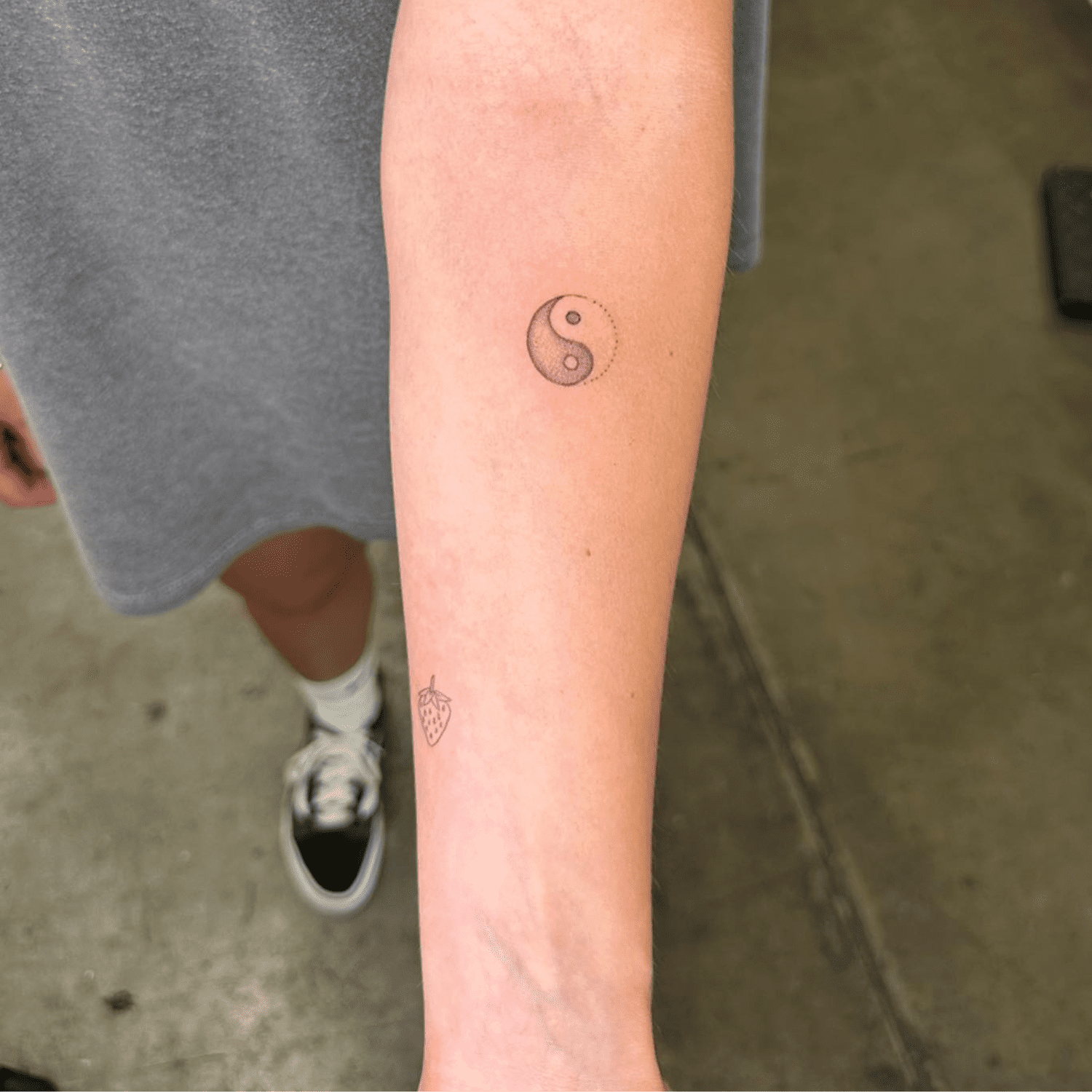
Minimalist Yin Yang tattoos use clean lines and small-scale execution to express balance in a subtle way. These designs are typically placed on wrists, ankles, or behind the ear. They are ideal for individuals who prefer private symbolism rather than highly visible body art.
Minimalist versions are especially popular among first-time tattoo clients because they reduce visual commitment while preserving meaning. However, artists caution that overly simplified designs may lose detail clarity over time as ink spreads slightly during healing and aging.
Information Gain Insight: A growing trend among younger clients is “micro-symbolism”—pairing a tiny Yin Yang tattoo with another discreet mark, such as a date or coordinate. This creates a layered meaning system rather than relying on a single symbol alone.
Watercolor Yin Yang Tattoo Designs
Watercolor Yin Yang tattoos blend soft pigment gradients with the traditional circular structure, creating a more expressive and emotional interpretation. These designs often represent fluidity, emotional healing, or creative identity rather than strict philosophical balance.
While visually striking, watercolor tattoos require experienced artists because pigment diffusion must be controlled carefully. Poor execution can result in blurred edges over time, reducing symbolic clarity.
Matching Couple Yin Yang Tattoos
Matching Yin Yang tattoos are commonly chosen by couples, close friends, or family members to represent complementary emotional roles. Each person typically receives one half of the symbol, reinforcing the idea that balance is achieved through connection rather than isolation.
However, tattoo professionals often advise caution with relationship-based tattoos. Emotional context can change over time, so some clients opt for abstract or nature-based variations instead of literal split designs to maintain long-term relevance.
Yin Yang With Animals, Nature, and Symbol Integrations
Yin Yang tattoos are often combined with koi fish, dragons, lotus flowers, or celestial elements to deepen symbolic meaning. These combinations allow individuals to personalize the philosophy, linking balance with personal traits such as strength, transformation, or spiritual growth.
In professional tattoo practice, these hybrid designs are considered higher-skill compositions because they require spatial balance and cultural coherence. Poor integration can make the design visually cluttered or symbolically inconsistent.
Best Placement Ideas for Yin Yang Tattoos
Placement plays a critical role in how a Yin Yang tattoo is perceived and experienced. It affects visibility, pain level, and symbolic emphasis. Choosing placement should align with personal meaning—whether you want a private reminder or a visible identity statement.
Many clients overlook placement psychology, focusing only on design aesthetics. However, experienced tattoo artists emphasize that placement often determines how frequently the tattoo is “mentally activated” in daily life, reinforcing its symbolic function.
Wrist and Forearm Placement for Visibility
Wrist and forearm placements are among the most common choices for Yin Yang tattoos because they provide frequent visual reminders. These areas are ideal for individuals using the symbol as a grounding tool for emotional regulation or daily mindfulness.
Forearm placements also allow for moderate design scaling, making them suitable for both minimalist and moderately detailed versions. However, these areas are more exposed to sunlight, which may affect long-term ink retention.
Back, Chest, and Shoulder Designs for Larger Art
Back, chest, and shoulder placements allow for larger, more detailed Yin Yang compositions. These placements are often chosen for elaborate designs that include additional symbolic elements such as animals, landscapes, or cosmic imagery.
These areas are ideal for individuals who want the tattoo to function as a personal narrative rather than a daily-visible symbol. The larger canvas allows for stronger storytelling and artistic depth.
Ankle and Neck Small Tattoo Options
Ankle and neck placements are preferred for subtle Yin Yang tattoos that remain discreet in professional or formal environments. These placements are often chosen for personal meaning rather than external expression, making them highly individualized.
However, neck tattoos require careful consideration due to visibility in workplace settings. Artists often recommend starting with ankle or hidden placements for first-time clients seeking low-commitment visibility.
Is this conversation helpful so far?
Explore Yin Yang tattoo meaning, psychology, placements, cultural depth, pain, cost, and expert guidance for informed tattoo decisions and design choices.
Cultural Significance and Respectful Tattoo Practices
Lucky Tattoo, a professional tattoo artist, has over 10 years of experience in the art of tattooing in Ho Chi Minh City. Lucky Tattoo Studio was founded in 2014 by skilled and kind artists. All tattoos are provided in a clean, strictly controlled, and friendly environment.
In modern tattoo culture, the Yin Yang symbol is widely used outside its original philosophical context. While this global adoption reflects cultural appreciation, it also increases the risk of oversimplification. Responsible tattoo choices involve understanding its origins in Taoism and avoiding superficial interpretations that detach the symbol from its historical depth.
Taoism and Cultural Origins of the Yin Yang Symbol
The Yin Yang symbol originates from ancient Taoist philosophy, particularly associated with Laozi and the Tao Te Ching. It represents the interconnectedness of opposing forces in nature, emphasizing transformation rather than conflict. Yin represents receptivity and darkness, while Yang represents activity and light.
In classical Chinese philosophy, these forces are not absolute opposites but dynamic and interdependent. This understanding is essential for accurate interpretation in tattoo art, as it shifts meaning from “good vs bad” to a more nuanced system of balance and continuous change.
Information Gain Insight: Academic studies in Chinese philosophy highlight that Yin Yang is often misinterpreted in Western media as binary dualism. In reality, Taoist thought emphasizes cyclical transformation, where each state naturally evolves into its opposite, a concept rarely explained in mainstream tattoo content.
Avoiding Cultural Misinterpretation and Appropriation
Getting a Yin Yang tattoo is generally accepted globally, but cultural respect requires understanding its philosophical depth. Appropriation concerns arise when symbols are used purely decoratively without awareness of their meaning or origin. Responsible adoption involves learning, acknowledgment, and thoughtful customization.
For example, integrating meaningful elements such as nature cycles, personal philosophy, or balance-related symbolism demonstrates intentionality. Tattoo artists often encourage clients to avoid generic designs copied without context, as this reduces both artistic and cultural integrity.
Pain Level, Cost, and Aftercare Guide
Yin Yang tattoo pain levels, cost, and aftercare depend primarily on placement, size, and artist experience rather than the design itself. Flat, circular designs are generally easier to execute, but sensitive areas like ribs or ankles increase discomfort. Proper aftercare is essential for preserving clarity and long-term ink quality.
Understanding these practical factors helps individuals make informed decisions beyond aesthetics. Many first-time clients underestimate healing requirements, which can significantly affect tattoo appearance if not managed properly during the recovery phase.
How Painful Is a Yin Yang Tattoo by Placement
Pain levels for Yin Yang tattoos vary depending on body location. Areas with thin skin or close to bone—such as wrists, ankles, or ribs—tend to be more sensitive. Fleshier areas like the upper arm or thigh are generally less painful and easier for longer sessions.
Dermatology references from organizations such as the American Academy of Dermatology emphasize that pain perception is subjective and influenced by stress, hydration, and sleep quality before the tattoo session.
Information Gain Insight: Experienced tattoo artists note that circular designs like Yin Yang symbols require consistent hand movement. This can slightly increase discomfort duration compared to linear designs because the needle remains active in a concentrated area for longer periods.
Average Cost of Yin Yang Tattoos Worldwide
The cost of a Yin Yang tattoo varies widely based on geography, studio reputation, and customization level. Minimalist designs may start at lower prices, while detailed or colored compositions with additional symbols significantly increase cost due to complexity and time.
- Minimalist tattoos: lower cost, quick sessions
- Custom artistic designs: mid-range pricing
- Large symbolic compositions: premium pricing
Artists emphasize that price should not be the only factor. Experience and hygiene standards are critical for long-term safety and visual quality.
Tattoo Aftercare Best Practices
Proper aftercare is essential for maintaining clarity, preventing infection, and ensuring long-term color stability. Yin Yang tattoos, especially minimalist ones, require careful healing to preserve sharp contrast between black and white elements.
Medical guidelines from dermatology associations recommend keeping the tattoo clean, avoiding sun exposure, and using approved moisturizing ointments during the healing phase. Scratching or premature peeling removal should be strictly avoided.
Information Gain Insight: A common overlooked issue is over-moisturizing, which can blur fine lines in minimalist Yin Yang tattoos. Artists often recommend a thin layer of ointment rather than heavy application to maintain design precision.
Expert Tips From Tattoo Artists
Professional tattoo artists emphasize that a successful Yin Yang tattoo depends on design clarity, placement intention, and personalization. While the symbol itself is simple, meaningful execution requires thoughtful adaptation to body shape and personal identity.
Experienced artists often report that clients who invest time in concept development tend to be more satisfied long-term. The difference between a generic tattoo and a meaningful one lies in customization and narrative depth.
How to Customize a Unique Yin Yang Tattoo
A unique Yin Yang tattoo should reflect personal identity rather than replicate common designs. Customization can include integrating elements such as animals, landscapes, or abstract patterns that represent personal life experiences or emotional states.
For example, adding a koi fish may represent perseverance, while a lotus flower symbolizes spiritual growth. These integrations transform the tattoo from a universal symbol into a personalized story.
Information Gain Insight: Tattoo professionals often use “symbol layering” techniques, combining multiple micro-symbols inside the Yin Yang structure. This approach increases narrative depth without compromising visual balance.
Mistakes to Avoid When Getting a Yin Yang Tattoo
Common mistakes include choosing overly generic designs, ignoring placement impact, and copying online images without personalization. Another frequent issue is failing to consider how the tattoo will age over time, especially with fine-line minimalist designs.
Experts also warn against choosing inexperienced artists for geometric designs, as symmetry is critical for visual balance. Even slight distortions can reduce symbolic clarity and aesthetic appeal.
Psychological Meaning of Yin Yang Tattoos in Modern Life
Yin Yang tattoos today often function as psychological anchors representing emotional balance, identity stability, and personal transformation. Many individuals choose this symbol during life transitions as a visual reminder of resilience and coexistence of contrasting emotions.
This modern interpretation extends beyond philosophy into mental well-being and self-regulation practices. It reflects how ancient symbols adapt to contemporary emotional needs and identity formation.
Yin Yang as Emotional Balance and Mental Stability Symbol
The Yin Yang tattoo is frequently used as a grounding symbol for emotional regulation. It represents acceptance of both positive and negative experiences as necessary parts of personal growth. This makes it especially meaningful for individuals navigating stress or change.
Psychologists studying symbolic identity suggest that visual anchors like tattoos can reinforce cognitive reframing, helping individuals internalize abstract emotional concepts more effectively.
Identity and Personal Growth Through Duality Symbolism
Yin Yang tattoos often symbolize identity evolution rather than fixed meaning. They reflect the idea that individuals contain multiple emotional states and evolve through contradiction and balance. This makes the symbol highly relevant for personal growth narratives.
For example, individuals recovering from difficult life events often use Yin Yang tattoos to represent integration of past experiences into a balanced self-concept.
Why Millennials and Gen Z Choose Yin Yang Tattoos
Younger generations are increasingly drawn to Yin Yang tattoos due to their minimalist aesthetics and philosophical flexibility. The design aligns with modern values of mindfulness, emotional awareness, and identity fluidity.
Unlike rigid symbolic tattoos, Yin Yang designs allow reinterpretation over time, making them adaptable to evolving personal meaning.
Frequently Asked Questions (FAQ)
What does a Yin Yang tattoo symbolize?
It symbolizes balance, duality, and harmony between opposing forces such as light and dark or emotional contrasts in life.
Is a Yin Yang tattoo culturally appropriate?
Yes, when approached respectfully with awareness of its Taoist origins and philosophical meaning.
Where should I place a Yin Yang tattoo?
Common placements include wrist, forearm, ankle, chest, and back depending on visibility preference.
Are Yin Yang tattoos still popular?
Yes, especially in minimalist, spiritual, and matching tattoo trends worldwide.
Does a Yin Yang tattoo have to be black and white?
No, modern designs often use colors, watercolor effects, or symbolic integrations for personalization.
How long does a Yin Yang tattoo take to heal?
Most tattoos heal within 2–4 weeks for surface healing, while full skin recovery may take longer depending on care.
Can Yin Yang tattoos be customized?
Yes, they are commonly customized with animals, nature, or abstract elements to reflect personal meaning.
Conclusion: Is a Yin Yang Tattoo Right for You?
A Yin Yang tattoo is more than a visual design—it is a philosophical symbol representing balance, transformation, and emotional awareness. When chosen thoughtfully, it becomes a lifelong reminder of personal growth and harmony between life’s contrasting experiences.
For the most meaningful result, focus on personalization, cultural understanding, and expert execution rather than trend-based design choices. This ensures your tattoo remains relevant, visually strong, and personally significant over time.
Lucky Tattoo, a professional tattoo artist, has over 10 years of experience in the art of tattooing in Ho Chi Minh City. Lucky Tattoo Studio was founded in 2014 by skilled and kind artists. All tattoos are provided in a clean, strictly controlled, and friendly environment.
yin-yang-tattoo