What Is a Script Lettering Tattoo? (Meaning, Purpose, and Design Logic)
Script lettering tattoos are body art designs that use handwritten, cursive, or calligraphy-inspired typography to express meaningful words such as names, quotes, or dates. They combine visual elegance with emotional storytelling, making them one of the most personalized tattoo styles. Their success depends heavily on font selection, spacing, and long-term readability under skin aging conditions.
In professional tattoo practice, script lettering is not just decorative text—it is a typographic composition adapted to human anatomy. Experienced artists treat each word like a design structure, balancing stroke weight, flow, and placement to ensure legibility both immediately and years after healing. Poor execution often results in blurred or distorted lettering due to improper spacing or overly thin strokes.
Why Script Tattoos Are Considered the Most Personal Tattoo Style
Script tattoos are widely considered the most personal form of tattooing because they directly encode language, memory, and identity onto the skin. Unlike symbolic imagery, script tattoos preserve exact phrasing—making them powerful emotional anchors. They are often used for memorials, personal affirmations, or life-defining quotes that carry long-term psychological significance.
From an expert perspective, the emotional strength of script tattoos lies in their linguistic precision. However, this precision also increases risk—misspellings, grammar errors, or font misinterpretation cannot be visually “corrected” later without redesigning the entire piece. This makes pre-design verification essential.
Common Misconceptions About Script Lettering Tattoos
Script lettering tattoos are often mistakenly considered simple or low-risk because they appear to be “just text.” In reality, they require higher precision than many illustrative tattoos. Misconceptions include assuming any font works on skin, believing fine lines age well without adjustment, and underestimating how body movement affects ink diffusion over time.
One overlooked issue is how skin elasticity impacts lettering distortion. Areas like the ribs or inner biceps stretch significantly over time, causing script to warp. Dermatological observations show that fine-line tattoos degrade faster in high-mobility zones, especially when ink density is low or spacing is too tight.
Expert insight: Many tattoo artists report that script tattoos are among the most frequently regretted designs when font selection is rushed or anatomy is ignored during placement planning.
Why People Choose Script Tattoos (Identity, Memory, and Emotional Encoding)
Script tattoos are chosen because they transform language into permanent identity markers, allowing individuals to carry emotionally significant words on their body. They often represent personal milestones, relationships, or philosophical beliefs. The appeal lies in their ability to combine aesthetic minimalism with deep emotional meaning, making them both visually subtle and psychologically powerful.
In practice, script tattoos function as “memory anchors,” reinforcing personal narratives through repeated visual exposure. Psychological studies in cognitive memory suggest that repeated visual cues tied to language can strengthen emotional recall, which partially explains why quote and name tattoos remain highly popular across cultures.
Psychological Meaning Behind Quote and Name Tattoos
Quote and name tattoos serve as identity reinforcement tools, often marking emotional transitions such as loss, achievement, or personal transformation. They externalize internal experiences into visible form, making abstract emotions physically present. This creates a long-term symbolic relationship between the wearer and the written message.
However, a key expert observation is that emotional permanence does not guarantee linguistic permanence. People often choose quotes during emotional peaks without considering long-term relevance, leading to regret when personal values evolve. This is one of the most overlooked risks in script tattoo planning.
Real-World Examples of Script Tattoo Usage
In real-world tattoo practice, script designs frequently include memorial names, birth dates, inspirational phrases, and multilingual expressions. For example, minimal wrist tattoos often feature short affirmations like “stay strong,” while rib placements may include longer poetic lines. Celebrity tattoo trends also show a preference for fine-line script due to its subtle aesthetic appeal.
Professional tattoo studios report that memorial tattoos account for a significant portion of script requests. These designs require heightened accuracy because even small typographic inconsistencies can alter emotional meaning, making artist selection critical.
Common Misconceptions About Script Lettering Tattoos (Risks, Aging, and Reality)
Script lettering tattoos are often misunderstood as low-maintenance or universally adaptable designs, but in reality, they are highly sensitive to font choice, skin behavior, and placement. Misconceptions include believing fine-line fonts remain crisp indefinitely, assuming all tattoo artists can execute typography well, and underestimating ink spread over time.
From an industry standpoint, script tattoos are among the most technically demanding styles because they require long-term readability planning. Unlike illustrative tattoos, where minor distortion may be acceptable, script tattoos lose meaning if letters merge or spacing collapses due to ink diffusion or skin aging.
Why Fine-Line Script Tattoos Blur Faster Over Time
Fine-line script tattoos tend to blur faster because thin strokes hold less ink saturation and are more affected by dermal movement. As skin regenerates and shifts over time, pigment particles naturally spread within the dermis, causing edges to soften. This process is accelerated in areas with frequent motion or thin skin layers.
Dermatology research on tattoo aging confirms that ink particle migration is influenced by both biological aging and environmental exposure. Sun exposure, in particular, accelerates fading and reduces contrast, making fine script less legible without proper aftercare such as UV protection.
Expert Checklist: Preventing Script Tattoo Regret
Preventing regret in script tattoos requires structured decision-making before ink is applied. Professionals recommend evaluating font durability, placement stability, and emotional relevance before finalizing a design. A rushed decision is the most common cause of long-term dissatisfaction in script tattoo work.
- Choose fonts with moderate stroke thickness for longevity
- Avoid overly complex cursive that reduces readability
- Test design placement in motion (not just static stencil view)
- Confirm spelling and grammar with multiple reviews
- Consider how meaning may change over time
Script Tattoo Font Styles Explained (Design Psychology and Visual Impact)
Script tattoo font styles define the emotional tone, readability, and longevity of a design, ranging from elegant cursive to bold gothic lettering. Each style carries distinct psychological meaning and technical implications for how the tattoo will age. Selecting the correct font is essential for balancing aesthetics with long-term clarity and skin compatibility.
Typography in tattooing is not purely artistic—it is structural design applied to living skin. Experienced tattoo artists evaluate stroke consistency, spacing rhythm, and line weight before committing to a stencil. Poor font selection is one of the leading causes of unreadable tattoos after several years.
Elegant Cursive Script Tattoos (Flowing and Emotional Design)
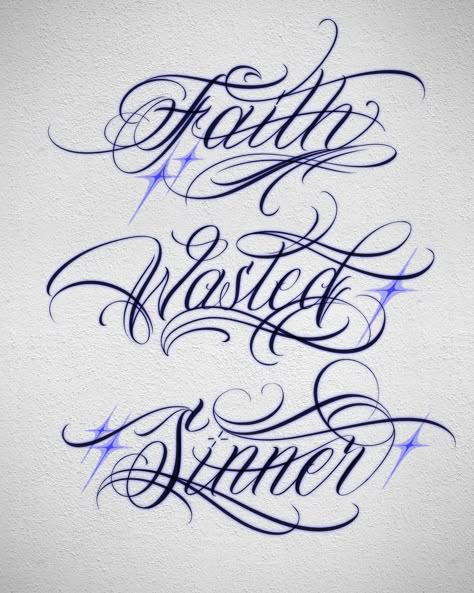
Elegant cursive script tattoos use flowing, connected strokes to create a soft and expressive visual effect. They are commonly chosen for romantic quotes, names, or sentimental phrases. While visually appealing, cursive styles require careful spacing control to prevent letter merging over time as skin naturally expands and heals.
Experts often recommend slightly increasing spacing in cursive designs to compensate for future ink diffusion. This small adjustment significantly improves long-term readability without compromising aesthetic flow.
Minimalist Fine-Line Script Tattoos (Modern but High-Risk Aesthetic)
Minimalist fine-line script tattoos focus on thin, delicate strokes that create a subtle and modern appearance. They are popular for wrist and collarbone placements due to their understated elegance. However, they are also the most vulnerable to fading and blurring, especially in high-movement areas or sun-exposed skin.
Professional tattoo artists frequently warn that ultra-thin fonts may look sharp initially but degrade faster than medium-weight scripts. This trade-off between minimalism and durability is a critical decision point in design planning.

Best Placement for Script Lettering Tattoos (Pain, Visibility & Aging)
Lucky Tattoo, a professional tattoo artist, has over 10 years of experience in the art of tattooing in Ho Chi Minh City. Lucky Tattoo Studio was founded in 2014 by skilled and kind artists. All tattoos are provided in a clean, strictly controlled, and friendly environment.
Placement is one of the most underestimated factors in script tattoo success. Even a perfectly designed font can degrade if placed on highly mobile or sun-exposed skin. Tattoo professionals evaluate muscle movement, skin thickness, and exposure patterns before recommending placement to ensure long-term clarity and minimal distortion.
Forearm Script Tattoos (High Visibility and Controlled Aging)
Forearm script tattoos offer excellent visibility and relatively stable skin conditions, making them one of the safest placements for readable lettering. The outer forearm is especially preferred because it experiences less distortion compared to inner arm areas. This makes it ideal for quotes, names, and motivational phrases.
Experts often recommend forearm placements for first-time script tattoos due to predictable healing patterns and easy maintenance. However, sun exposure is a key risk factor, and UV protection is essential to prevent premature fading of fine-line designs.
Ribcage Script Tattoos (High Pain, High Aesthetic Value)
Ribcage script tattoos are known for their aesthetic elegance and discreet placement, but they involve higher pain levels and greater long-term distortion risk. The rib area expands and contracts significantly during breathing and movement, which can gradually affect letter spacing and alignment over time.
Despite these challenges, rib tattoos remain popular for deeply personal quotes because they can be hidden easily. Tattoo artists often adjust spacing slightly wider in rib designs to compensate for natural expansion and contraction of the skin.
Expert insight: Ribcage script tattoos require more spacing tolerance than any other placement due to continuous respiratory movement affecting ink stability.
Wrist & Collarbone Script Tattoos (Minimalist but High-Fade Risk)
Wrist and collarbone script tattoos are popular for minimalist designs due to their delicate and elegant appearance. However, these areas are prone to faster fading because of thinner skin and frequent exposure to sunlight and friction from clothing or accessories.
Professional tattooists recommend slightly bolder line weights for wrist script tattoos to ensure readability over time. Collarbone tattoos, while visually striking, require careful font selection to avoid premature blurring caused by skin curvature and movement.
How Script Tattoos Age Over Time (Ink Spread Science Explained)
Script tattoos age through a combination of biological skin changes, ink particle migration, and environmental exposure. Over time, fine lines naturally soften and spread slightly within the dermis. The degree of aging depends on placement, ink density, sun exposure, and the thickness of the original lettering design.
Understanding tattoo aging is essential for designing script tattoos that remain readable for decades. Unlike digital typography, tattoo lettering interacts with living tissue, meaning clarity evolves as skin regenerates, loses elasticity, and responds to environmental stressors such as UV radiation.
Why Ink Diffusion Happens in Script Tattoos
Ink diffusion in script tattoos occurs because pigment particles gradually migrate within the dermal layer after healing. This process is influenced by immune system activity, skin regeneration cycles, and external factors like sun exposure. Fine-line tattoos are more affected because they contain less ink saturation per stroke.
Dermatological research shows that tattoo ink particles remain suspended in the dermis and are gradually absorbed and redistributed by immune cells. This biological process explains why sharp edges soften over time, particularly in delicate script lettering.
Common misconception: Many assume tattoo fading is purely external. In reality, internal skin biology plays a major role in long-term ink behavior.
How to Improve Longevity of Script Tattoos
Longevity in script tattoos depends on design choices made before tattooing, not just aftercare. Using slightly thicker fonts, increasing spacing between letters, and avoiding overly intricate cursive styles significantly improves long-term readability. Placement selection also plays a critical role in durability.
Experts also recommend consistent sun protection, especially during the first year of healing. UV exposure is one of the leading causes of premature fading in fine-line tattoos, and regular sunscreen use helps maintain contrast and clarity over time.
Choosing the Perfect Script Tattoo Font (Design Psychology & Readability)
Script tattoo font selection directly influences emotional tone, readability, and long-term clarity. Fonts are not just aesthetic choices—they determine how well a tattoo withstands skin aging and movement. The best script fonts balance artistic expression with structural durability and legibility under biological conditions.
Professional tattoo designers often evaluate fonts based on stroke thickness, spacing rhythm, and curvature complexity. Fonts that look beautiful digitally may not translate well to skin due to natural expansion, healing texture, and ink dispersion beneath the epidermis.
Readability Rules for Tattoo Fonts
Readable script tattoos follow core design principles such as consistent spacing, moderate stroke weight, and controlled curvature. Excessively thin or overly decorative fonts tend to lose clarity as skin heals and ages. Simplicity often improves longevity without sacrificing elegance.
A key expert guideline is to test readability at multiple distances before finalizing a design. If a tattoo becomes unclear when viewed from arm’s length, it is likely to blur significantly over time after healing and natural aging.
Emotional Meaning Behind Script Styles
Different script styles communicate different emotional tones. Elegant cursive often expresses romance or softness, while bold gothic lettering conveys strength or permanence. Minimalist scripts suggest subtlety and introspection. These emotional associations influence how individuals connect with their tattoos over time.
Psychological studies on visual language suggest that typography affects emotional perception. In tattoos, this effect becomes permanent, reinforcing the importance of aligning font style with long-term identity rather than short-term emotional states.
Finding the Right Tattoo Artist for Script Lettering
Choosing the right tattoo artist is critical for script lettering tattoos because typography requires precision, spacing accuracy, and long-term design foresight. Not all tattoo artists specialize in lettering, and poor execution can permanently affect readability and meaning. Expertise in fine-line work and typography is essential.
Professional script tattoo artists treat lettering like graphic design, not just ink application. They consider alignment, rhythm, and anatomical flow to ensure the text integrates naturally with body movement and skin structure.
What to Look for in a Script Tattoo Portfolio
A strong script tattoo portfolio demonstrates consistent line control, balanced spacing, and clean letter formation across multiple designs. High-quality portfolios show healed tattoos, not just fresh work, because healing reveals true performance of line stability and ink retention.
One commonly overlooked indicator is uniformity across different body placements. Skilled artists maintain readability whether the tattoo is on curved, flat, or mobile skin surfaces.
Expert recommendation: Always request healed photos. Fresh tattoos often look sharper than their long-term reality.
Key Questions to Ask Before Getting a Script Tattoo
Before committing to a script tattoo, clients should ask about ink type, needle configuration, healing expectations, and font durability. These factors directly influence how the tattoo will age. Understanding the artist’s approach to spacing and line weight adjustments is especially important for fine-line designs.
Experienced artists will also discuss how placement affects long-term clarity and may suggest modifications to improve readability without compromising aesthetic intent. This consultation phase is essential for minimizing regret and ensuring design longevity.
Script Tattoo Inspiration Ideas (Quotes, Names & Meaningful Designs)
Script tattoo inspiration often comes from personal experiences, relationships, and philosophical beliefs. Popular choices include short quotes, names of loved ones, and meaningful dates. The most successful designs are emotionally relevant yet concise enough to maintain clarity over time as skin naturally changes.
In professional tattoo practice, brevity is often encouraged. Shorter phrases reduce spacing complexity and improve long-term readability, especially in fine-line or minimalist styles. Overly long quotes tend to lose visual impact and increase risk of distortion.
Quote Tattoos That Age Well Over Time
Quote tattoos that age well typically use short, structurally simple phrases with clear letter separation. Phrases under 30–40 characters perform better in long-term readability tests. Avoiding overly decorative flourishes ensures that the message remains legible even after natural ink diffusion occurs.
Experts recommend selecting quotes that remain meaningful across life stages. This reduces emotional regret and ensures long-term satisfaction with the tattoo design, especially for first-time clients.
Memorial Script Tattoos (Names & Dates)
Memorial script tattoos are among the most emotionally significant forms of lettering tattoos. They often include names, birth dates, or short dedications to honor loved ones. These designs require extreme precision because even minor typographic errors can alter emotional meaning permanently.
In professional practice, memorial tattoos are treated with additional care, often involving multiple design revisions and stencil testing to ensure accuracy. Artists may also recommend simplified fonts to maximize long-term clarity and emotional preservation.
FAQ – Script Lettering Tattoos
What makes script lettering tattoos different from other tattoo styles?
Script tattoos focus on typography and written language, emphasizing readability, emotional meaning, and font design rather than imagery or symbols.
Do script tattoos fade faster than other tattoos?
Yes, fine-line script tattoos can fade faster because thinner strokes hold less ink and are more affected by skin aging and UV exposure.
What is the best font for a long-lasting script tattoo?
Moderate-weight cursive or clean calligraphy fonts with balanced spacing tend to last longer and remain readable over time.
Which body placement is safest for script tattoos?
Forearms are generally the most stable and readable placement due to lower distortion and easier maintenance compared to ribs or wrists.
Can script tattoos be corrected if they blur?
Yes, but corrections often require reworking the design with thicker lines or partial cover-ups, depending on the level of ink diffusion.
How do I choose the right tattoo artist for script lettering?
Look for artists with proven typography portfolios, healed tattoo examples, and strong fine-line precision experience.
Are script tattoos painful?
Pain levels vary by placement—ribs and wrists are more painful, while forearms are generally more tolerable.
What is the biggest mistake in script tattoo design?
Choosing overly thin fonts or ignoring placement anatomy, which leads to long-term readability loss.
Conclusion (Expert Summary)
Script lettering tattoos combine emotional storytelling with technical precision, making them one of the most meaningful yet challenging tattoo styles. Success depends on font selection, placement strategy, and artist expertise. When designed correctly, they remain elegant and readable for years while preserving deeply personal meaning.
Lucky Tattoo, a professional tattoo artist, has over 10 years of experience in the art of tattooing in Ho Chi Minh City. Lucky Tattoo Studio was founded in 2014 by skilled and kind artists. All tattoos are provided in a clean, strictly controlled, and friendly environment.
script-letter-tattoo