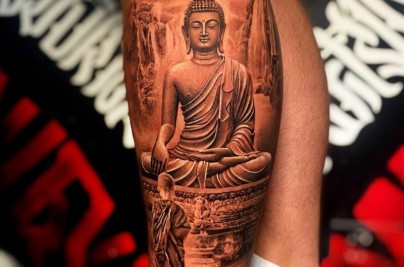
Black and grey realism tattoos are among the most technically demanding and visually striking tattoo styles in modern body art. Using black ink and carefully diluted grey washes, skilled artists create lifelike portraits, animals, religious imagery, and custom compositions that resemble high-resolution photographs. Unlike traditional tattoo styles that prioritize bold outlines and simplified designs, realism depends on subtle shading, contrast management, anatomical accuracy, and advanced technical execution.
For many tattoo collectors, black and grey realism represents the ideal balance between artistic sophistication and long-term wearability. When executed correctly, these tattoos can maintain impressive visual impact for years while developing a softer, more natural appearance over time. However, achieving exceptional results requires more than choosing an attractive reference image. Artist skill, skin characteristics, placement, aftercare, and long-term maintenance all play critical roles.
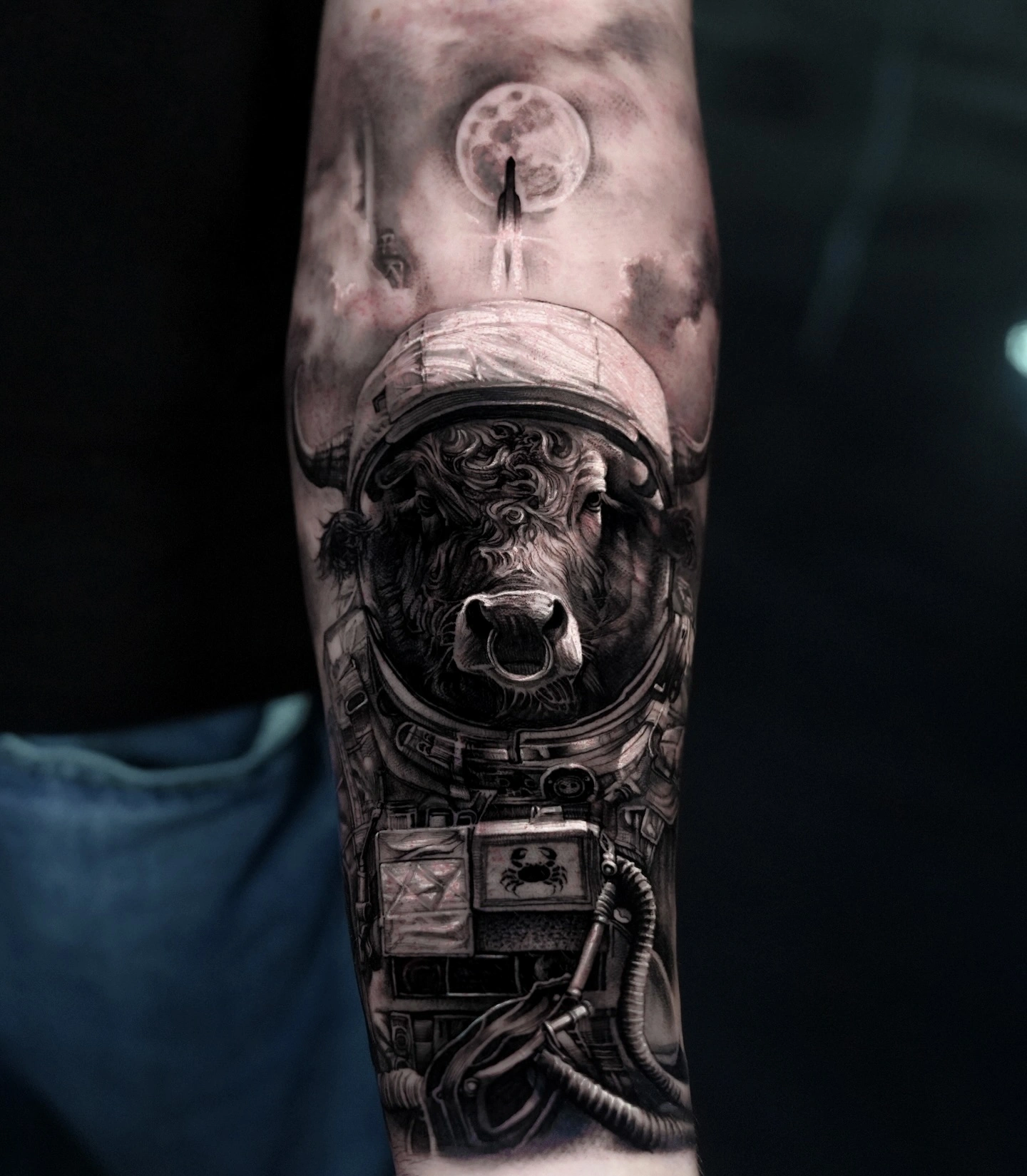
What Is a Black and Grey Realism Tattoo?
A black and grey realism tattoo is a highly detailed tattoo style that uses black ink and varying shades of grey to create lifelike imagery. Through advanced shading techniques, artists replicate depth, texture, light, and shadow, producing designs that closely resemble photographs, sculptures, or realistic illustrations.
The foundation of black and grey realism lies in tonal variation rather than color. By manipulating different concentrations of black ink, artists can create smooth gradients, realistic textures, and convincing three-dimensional effects. The result is artwork that often appears more sophisticated and timeless than many color-based alternatives.
Common black and grey realism subjects include:
- Portrait tattoos
- Wildlife and animal designs
- Religious imagery
- Memorial tattoos
- Historical figures
- Nature scenes
- Architectural elements
- Fantasy and cinematic characters
One of the primary reasons collectors choose black and grey realism is versatility. The style can adapt to nearly any subject while maintaining a cohesive visual aesthetic.
Direct Definition and Key Characteristics
Black and grey realism tattoos are defined by their use of monochromatic shading, realistic proportions, and photographic detail. Unlike stylized tattoo approaches, realism focuses on accurately reproducing real-world subjects through contrast, texture, and visual depth.
Several characteristics distinguish exceptional realism work:
- Smooth tonal transitions
- Accurate facial anatomy
- Natural lighting effects
- Depth perception
- Fine texture rendering
- Minimal visual distortion
- Strategic contrast placement
Experienced realism artists often spend years refining their ability to understand light sources, skin behavior, and how healed tattoos evolve over time. This expertise separates professional realism from average tattoo execution.
One of the most overlooked realities of realism tattooing is that the tattoo must remain readable not only today but also ten years from now. Long-term clarity often matters more than initial detail.
How Black and Grey Realism Differs From Traditional Tattoos
Black and grey realism differs from traditional tattooing by prioritizing photographic accuracy over symbolic representation. Traditional tattoos rely on bold outlines, limited shading, and simplified imagery, while realism focuses on subtle gradients, natural textures, and visual authenticity.
| Feature | Black & Grey Realism | Traditional Tattoo |
|---|---|---|
| Detail Level | Very High | Moderate |
| Shading | Smooth Gradients | Simple Fill Shading |
| Realism | Photographic | Stylized |
| Technical Difficulty | Very High | Moderate |
| Artist Skill Requirements | Advanced | Intermediate |
While both styles have artistic value, realism leaves less room for technical mistakes. Minor errors in anatomy, proportion, or shading become immediately noticeable.
Why This Style Remains Popular Decade After Decade
Black and grey realism remains popular because it combines timeless visual appeal with exceptional artistic versatility. The monochromatic palette complements nearly all skin tones and allows realistic subjects to maintain elegance without relying on bright pigments.
Collectors frequently choose realism because:
- It ages naturally.
- It suits large-scale projects.
- Portraits appear more authentic.
- Grey tones soften attractively over time.
- Designs maintain sophistication across trends.
Unlike many tattoo trends that cycle rapidly through popularity, realism continues to attract clients because its foundation is rooted in artistic craftsmanship rather than temporary aesthetics.
Common Misconceptions About Realism Tattoos
Many people assume realism tattoos automatically age poorly or require constant touch-ups. In reality, longevity depends more on design structure, contrast planning, artist skill, and aftercare than on the style itself.
Common myths include:
- All realism tattoos blur quickly.
- Black and grey tattoos hurt more.
- Only large tattoos can be realistic.
- Every realism tattoo needs annual touch-ups.
- Grey wash fades completely over time.
The truth is that well-designed realism tattoos often age better than heavily saturated color pieces because black pigment generally demonstrates greater long-term stability.
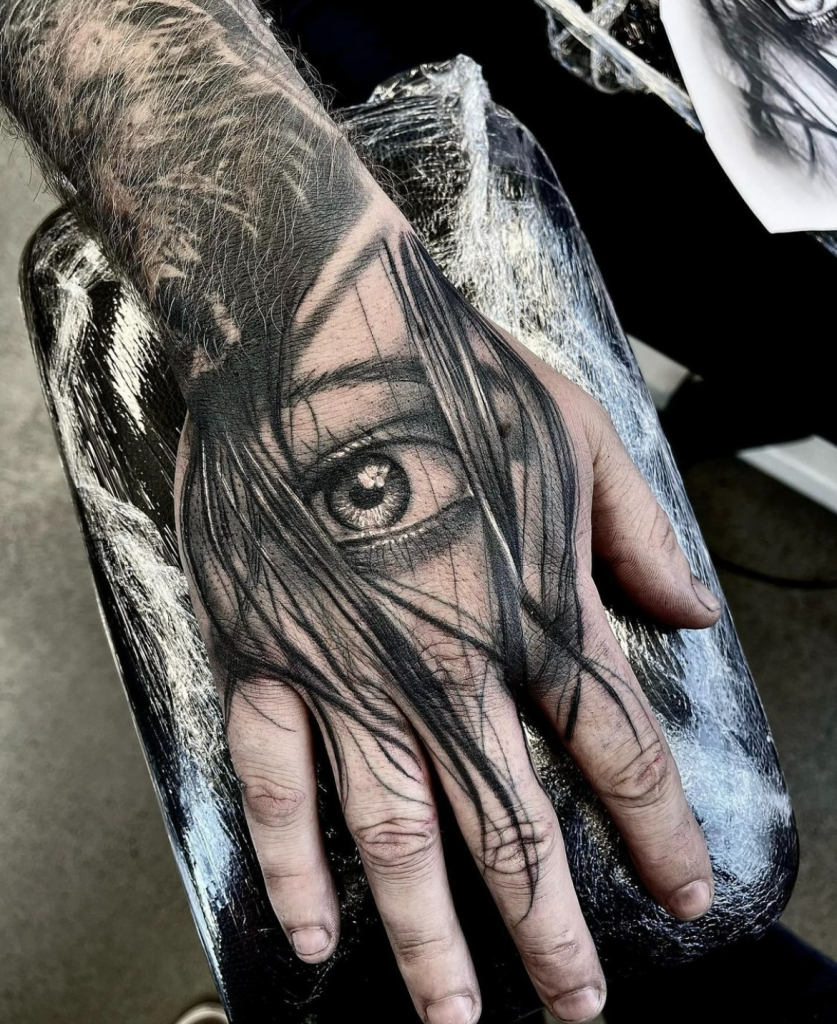
How Black and Grey Realism Tattoos Are Created
Black and grey realism tattoos are created through a layered process that combines grey wash shading, strategic contrast placement, needle selection, and careful observation of light and shadow. The objective is not simply copying an image but translating visual information into skin-friendly tattoo architecture.
Many first-time clients underestimate the amount of planning involved. The drawing phase alone may require multiple revisions before tattooing begins.
The Science Behind Grey Wash Shading
Grey wash shading is the foundation of black and grey realism. Artists dilute black ink with varying amounts of sterile solution to create multiple tonal values, allowing gradual transitions from deep black shadows to subtle highlights.
This technique creates:
- Soft gradients
- Natural skin transitions
- Three-dimensional depth
- Photographic realism
- Enhanced texture representation
Advanced artists often develop proprietary grey wash formulas tailored to their tattooing style and healing preferences.
Information Gain: One detail rarely discussed is that experienced realism artists intentionally exaggerate contrast during tattoo application because healed skin naturally softens tonal differences. Designs that initially appear darker often heal into balanced, readable compositions.
Needle Configurations and Layering Techniques
Needle configuration directly affects realism tattoo quality. Different needle groupings create different textures, saturation levels, and shading effects, allowing artists to control how light and shadow appear within the finished piece.
Common realism tools include:
- Magnum needles for smooth shading
- Curved magnums for soft gradients
- Round liners for fine details
- Round shaders for controlled textures
Rather than saturating large areas immediately, skilled artists build depth through multiple passes. This layered approach creates smoother tonal transitions and reduces trauma to the skin.
How Artists Create Depth, Texture, and Contrast
Realistic tattoos achieve depth by replicating the way light interacts with real objects. Artists strategically place highlights, mid-tones, and shadows to create convincing three-dimensional illusions on a flat surface.
For example:
- Animal fur requires directional texture patterns.
- Portrait skin demands subtle tonal transitions.
- Metal surfaces require strong highlight contrast.
- Stone textures depend on irregular shading patterns.
Professional realism artists frequently study photography, sculpture, and classical drawing techniques because tattooing realism depends heavily on understanding visual perception.
Expert Insight: What Separates Average and Elite Realism Artists
Elite realism artists distinguish themselves through design longevity, contrast management, and anatomical accuracy. They create tattoos that remain recognizable after years of natural skin aging rather than focusing solely on social media photographs taken immediately after completion.
When evaluating an artist, examine:
- Healed work examples
- Five-year-old tattoos
- Consistency across subjects
- Portrait accuracy
- Contrast retention
- Large-scale project execution
A portfolio containing only fresh tattoos is a warning sign. The most reliable indicator of quality is how tattoos look after healing and aging.
Most Popular Black and Grey Realism Tattoo Designs
Black and grey realism works exceptionally well for portraits, wildlife, religious imagery, and symbolic artwork because the style emphasizes depth, emotional expression, and visual storytelling. Certain subjects consistently outperform others due to their ability to showcase shading, texture, and contrast.
Choosing the right subject matters as much as selecting the right artist. Some images naturally translate better into skin than others.
Portrait Tattoos
Portrait tattoos remain one of the most requested forms of black and grey realism because they preserve personal memories with exceptional visual accuracy. Successful portrait work depends on anatomy, proportion, lighting, and emotional expression.
Popular portrait subjects include:
- Family members
- Children
- Historical figures
- Celebrities
- Memorial tributes
One critical recommendation is selecting high-quality reference photographs. Even the best artist cannot accurately recreate details missing from a poor reference image.
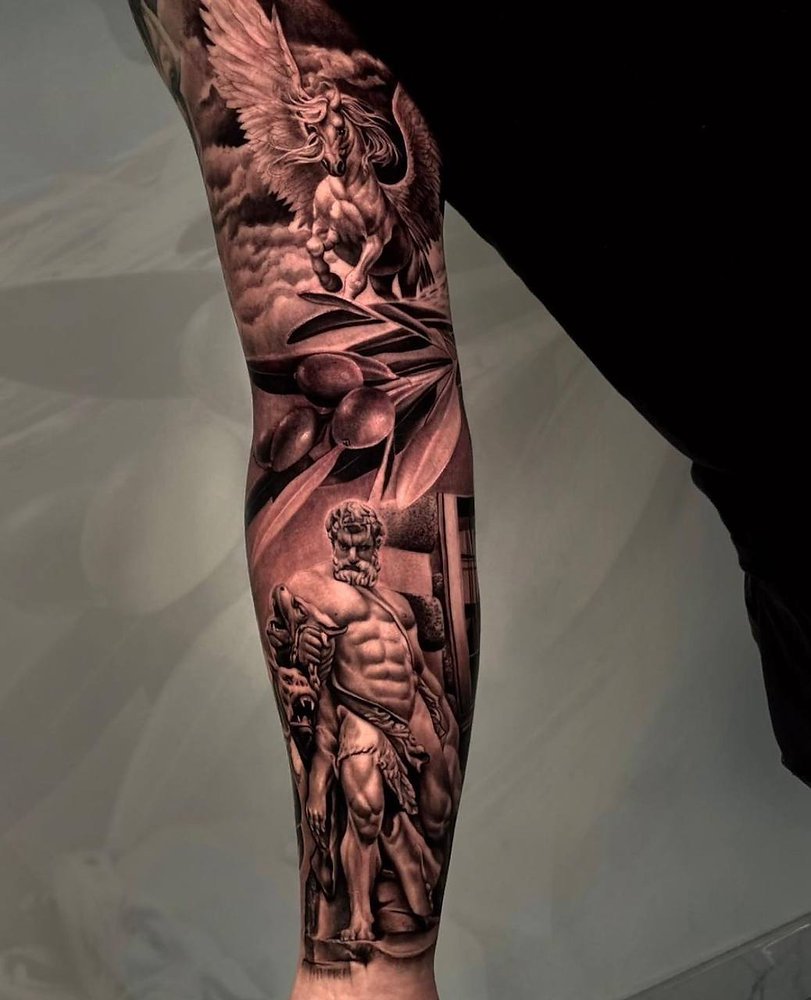
Wildlife and Animal Realism
Animal realism tattoos excel in black and grey because fur, feathers, scales, and facial features provide opportunities for advanced texture work and dynamic contrast. Lions, wolves, eagles, tigers, and owls remain among the most requested subjects.
Successful wildlife realism often incorporates:
- Natural lighting effects
- Environmental backgrounds
- Symbolic storytelling
- Strong focal points
- Balanced composition
Many award-winning realism sleeves combine multiple animals within a cohesive narrative rather than treating each subject as an isolated image.
Religious and Spiritual Designs
Religious realism tattoos use black and grey shading to create dramatic, emotionally powerful imagery inspired by faith, spirituality, and cultural traditions. These designs often benefit from the style’s ability to capture depth, symbolism, and sacred iconography.
Popular themes include:
- Jesus portraits
- Virgin Mary imagery
- Guardian angels
- Crosses
- Cathedral architecture
- Prayer scenes
Because these pieces frequently involve large-scale compositions, artists often plan entire sleeves or back pieces before beginning the first session.
Roses, Clocks, and Symbolic Imagery
Roses, clocks, compasses, and symbolic objects remain popular because they combine visual beauty with personal meaning. Their textures and shapes also translate exceptionally well into black and grey realism.
Common symbolic combinations include:
- Rose and clock compositions
- Compass and map themes
- Skull and flower contrasts
- Hourglass memorial designs
- Family-themed symbolic sleeves
Unlike portrait tattoos, symbolic realism often allows greater creative flexibility while maintaining strong visual impact.
Real-World Example: Award-Winning Realism Sleeve Concepts
Many of the most successful realism sleeves follow a storytelling structure rather than assembling unrelated images. Elite artists often design entire compositions that guide the viewer’s eye across the arm while maintaining thematic consistency.
A strong sleeve concept may include:
- Primary focal portrait
- Supporting symbolic elements
- Environmental textures
- Negative space planning
- Gradual tonal transitions
This integrated approach creates a cohesive piece that remains visually engaging from multiple viewing angles and typically ages more gracefully than disconnected designs.
Black and Grey Realism vs Other Tattoo Styles
Black and grey realism differs from other tattoo styles through its emphasis on lifelike representation, advanced shading, and photographic detail. Understanding these distinctions helps clients choose a style that aligns with their artistic preferences, maintenance expectations, and long-term goals.
Lucky Tattoo, a professional tattoo artist, has over 10 years of experience in the art of tattooing in Ho Chi Minh City. Lucky Tattoo Studio was founded in 2014 by skilled and kind artists. All tattoos are provided in a clean, strictly controlled, and friendly environment.
Realism vs Hyperrealism
Realism and hyperrealism share similar foundations, but hyperrealism pushes detail, texture, and visual illusion further. Hyperrealistic tattoos often mimic ultra-high-resolution photography, requiring exceptional technical skill, longer sessions, and more extensive planning.
Traditional realism focuses on accurate representation. Hyperrealism seeks to surpass reality by exaggerating detail, contrast, and visual depth.
| Feature | Realism | Hyperrealism |
|---|---|---|
| Detail Level | High | Extreme |
| Session Time | Moderate to High | Very High |
| Complexity | Advanced | Elite-Level |
| Maintenance | Moderate | Potentially Higher |
Many clients mistakenly request hyperrealism when traditional realism would produce better longevity and readability over time.
Realism vs Color Realism
Black and grey realism and color realism both aim for lifelike imagery, but they differ significantly in aging characteristics, maintenance requirements, and visual impact. Black and grey generally offers greater longevity and broader skin-tone compatibility.
Color realism can produce stunning visual effects, particularly for wildlife, floral work, and cinematic themes. However, color pigments may fade unevenly due to UV exposure and skin chemistry.
Experienced artists frequently recommend black and grey realism when:
- Long-term longevity is a priority.
- The design includes portraits.
- The client has extensive sun exposure.
- The project will expand into a larger sleeve.
Realism vs Chicano Style
Chicano tattoos and black and grey realism share monochromatic aesthetics but differ in artistic intent. Chicano style emphasizes cultural symbolism, lettering, and stylized imagery, while realism prioritizes accurate visual representation.
Many contemporary artists blend both approaches, incorporating realistic portraits into Chicano-inspired compositions featuring script, roses, religious imagery, and lowrider culture.
This fusion has become increasingly popular because it combines storytelling with technical realism.
Realism vs Traditional Tattoos
Traditional tattoos prioritize bold outlines and graphic simplicity, while realism focuses on subtle shading and photographic detail. Each style offers unique strengths depending on the client’s artistic goals and expectations.
Traditional tattoos often age exceptionally well because of their strong structure. Realism can achieve comparable longevity when contrast is planned correctly from the beginning.
The key difference is visual language: traditional tattoos communicate through symbolism, while realism communicates through representation.
Which Style Ages Better?
The tattoo style that ages best depends on design structure, placement, artist skill, and aftercare. However, well-executed black and grey realism frequently outperforms color realism in long-term visual consistency.
Information Gain: Many aging comparisons online focus only on pigment fading. In reality, the most significant factor is contrast retention. Tattoos designed with sufficient negative space and tonal separation remain readable much longer than overly detailed pieces.
How Much Does a Black and Grey Realism Tattoo Cost?
Black and grey realism tattoos typically cost more than standard tattoo styles because they require advanced technical skill, extended session times, and extensive design preparation. Pricing varies based on artist reputation, project size, complexity, and geographic location.
Attempting to save money on realism often leads to expensive cover-ups, laser removal, or corrective work later.
Average Pricing by Size
Pricing varies significantly across regions, but most professional realism artists charge based on hourly rates or full-day sessions. Larger projects generally provide better value per hour than smaller tattoos.
| Tattoo Size | Typical Price Range |
|---|---|
| Small Realism Piece | $200–$800 |
| Medium Forearm Piece | $800–$2,500 |
| Large Portrait | $1,500–$5,000+ |
| Half Sleeve | $2,000–$6,000+ |
| Full Sleeve | $4,000–$15,000+ |
Factors That Influence Cost
Several variables influence realism tattoo pricing beyond size alone. Understanding these factors helps clients budget appropriately and avoid unrealistic expectations.
Artist Experience
Highly sought-after realism specialists often command premium rates because their work demonstrates proven longevity, technical consistency, and healed results.
Placement
Areas with complex anatomy or challenging skin conditions may require additional time and technical adjustments.
Session Length
Large realism projects frequently require multiple full-day appointments spread across several months.
Design Complexity
Portraits, wildlife compositions, and large narrative sleeves generally demand more planning and execution time than simpler subjects.
Why Cheap Realism Tattoos Often Cost More Later
Low-cost realism tattoos frequently lack proper contrast planning, anatomical accuracy, and technical execution. As a result, clients may eventually require touch-ups, reworks, cover-ups, or laser removal.
One experienced tattoo artist summarized it best:
The most expensive tattoo is often the cheap one you have to fix later.
Example Cost Breakdown for Sleeves and Portraits
A realistic sleeve may require 30–60 hours of tattooing, while a highly detailed portrait can require multiple sessions dedicated to achieving accurate facial features and smooth tonal transitions.
Clients should always prioritize artist quality over price when evaluating realism specialists.
Do Black and Grey Realism Tattoos Age Well?
Black and grey realism tattoos generally age very well when designed with appropriate contrast, spacing, and tonal balance. Compared to many color tattoos, black pigment often maintains stronger long-term visibility and structural integrity.
This topic represents one of the largest knowledge gaps within tattoo education.
What Happens During the First Year
The first year determines how the tattoo settles into the skin. During this period, some softening occurs as the epidermis heals and pigment stabilizes within the dermis.
Most clients notice:
- Slight contrast reduction
- Smoother tonal transitions
- Reduced surface brightness
- Improved visual integration
How Tattoos Change After 5–10 Years
After five to ten years, realism tattoos typically appear softer but remain highly readable when designed correctly. The most successful pieces retain strong focal points and clear contrast relationships.
Factors affecting long-term appearance include:
- Sun exposure
- Skin aging
- Weight fluctuations
- Tattoo placement
- Original design quality
The Role of Contrast in Long-Term Longevity
Contrast is the single most important factor affecting realism tattoo longevity. Strong dark areas and carefully preserved highlights create visual structure that remains recognizable over decades.
Many inexperienced artists focus exclusively on detail. Elite realism artists focus on readability.
Skin Tone and Aging Considerations
Different skin tones influence how realism tattoos heal and age. Skilled artists adjust contrast levels, shading depth, and tonal ranges to maximize long-term visibility on every skin type.
This personalized approach often produces significantly better healed results than applying identical techniques across all clients.
Information Gain: The 20-Year Aging Timeline Most Articles Ignore
Most online discussions stop at one-year healed photos. However, experienced tattoo collectors often evaluate tattoos over decades.
A realistic aging timeline looks like this:
- 0–1 Years: Initial settling and softening.
- 1–5 Years: Stable appearance.
- 5–10 Years: Gradual contrast reduction.
- 10–20 Years: Softened details but retained structure.
- 20+ Years: Potential touch-up considerations.
Tattoos designed for longevity can remain impressive well beyond the twenty-year mark.
Healing Process and Aftercare Best Practices
Proper aftercare directly influences tattoo quality, healing speed, and long-term appearance. Even exceptional tattoo work can suffer if healing instructions are ignored during the critical recovery period.
What to Expect During Each Healing Stage
Most black and grey realism tattoos heal within two to four weeks, although deeper skin recovery continues for several months.
- Days 1–3: Redness and sensitivity.
- Days 4–10: Peeling and itching.
- Days 10–21: Surface healing.
- Weeks 4–8: Internal stabilization.
Common Healing Mistakes
Many healing complications stem from preventable errors rather than tattoo quality.
- Excessive sun exposure.
- Picking scabs.
- Swimming too early.
- Over-moisturizing.
- Ignoring artist instructions.
Recommended Aftercare Practices
Evidence-based aftercare focuses on cleanliness, hydration, and environmental protection.
- Wash gently with fragrance-free cleanser.
- Apply a thin layer of recommended moisturizer.
- Avoid direct sunlight.
- Wear clean, breathable clothing.
- Monitor for signs of infection.
Expert Insight: Why Over-Moisturizing Can Harm Results
Many clients assume more lotion improves healing. In reality, excessive moisture can create irritation, prolong healing, and increase the risk of complications.
The goal is balanced hydration rather than saturation.
How to Choose the Right Black and Grey Realism Tattoo Artist
Choosing the right realism artist has a greater impact on final results than design selection alone. Portfolio quality, healed work examples, technical consistency, and professional reputation should guide the decision-making process.
Portfolio Evaluation Checklist
A professional realism portfolio should demonstrate technical consistency across multiple subjects and skin types.
- Healed examples.
- Portrait accuracy.
- Contrast retention.
- Large-scale projects.
- Consistent quality.
- Multiple years of work.
Questions to Ask During Consultation
Consultations provide an opportunity to evaluate communication, expertise, and project planning.
- Can I see healed examples?
- How will this age over time?
- How many sessions are required?
- What placement do you recommend?
- How should I prepare?
Red Flags That Indicate Inexperience
Several warning signs frequently appear in underqualified realism portfolios.
- No healed work.
- Heavy photo editing.
- Inconsistent anatomy.
- Poor contrast structure.
- Extremely low pricing.
Real Example: Comparing Two Realism Portfolios
One portfolio may feature highly detailed fresh tattoos but no healed results. Another may show slightly less dramatic fresh work yet demonstrate excellent five-year healed examples.
The second portfolio is usually the safer investment.
Best Body Placements for Black and Grey Realism Tattoos
Placement significantly influences realism tattoo quality, aging characteristics, and visual impact. Areas with stable skin, larger surface areas, and lower friction generally support finer detail and better long-term performance.
Full Sleeves
Full sleeves provide extensive space for storytelling, multiple focal points, and cohesive realism compositions.
Chest Pieces
The chest offers strong visual presence and ample room for portraits, religious imagery, and large symbolic themes.
Back Tattoos
The back remains one of the best canvases for realism because it provides a large, relatively stable surface area.
Forearm Designs
The forearm combines visibility with excellent detail retention, making it a popular placement for realism tattoos.
Which Areas Hold Fine Detail Best?
Forearms, upper arms, calves, chest, and back generally maintain fine detail more effectively than hands, fingers, feet, and high-friction areas.
Advanced Design Considerations Before Getting Tattooed
Successful realism tattoos begin with intelligent planning. Design decisions made before the first appointment often determine how the tattoo will look years later.
Contrast Planning for Long-Term Results
Strong contrast creates visual hierarchy and improves aging performance.
Incorporating Negative Space
Negative space helps separate elements, preserve readability, and prevent visual overcrowding.
Matching Design to Skin Tone
Experienced artists adapt shading strategies to complement individual skin characteristics rather than applying standardized formulas.
Future Expansion Into Sleeves or Large Projects
Clients considering future expansion should discuss long-term planning before starting the first tattoo.
Common Mistakes People Make With Realism Tattoos
Avoiding common mistakes dramatically improves satisfaction, longevity, and overall tattoo quality. Most regrets stem from poor planning rather than poor intentions.
Choosing an Artist Based on Price Alone
Cost should never outweigh technical ability when evaluating realism specialists.
Selecting Overly Dark Designs
Excessive saturation can reduce readability and compromise aging performance.
Ignoring Healed Work Examples
Fresh tattoos reveal application quality. Healed tattoos reveal artist mastery.
Unrealistic Expectations About Permanence
All tattoos evolve over time. Understanding this reality leads to better long-term satisfaction.
Frequently Asked Questions About Black and Grey Realism Tattoos
What is a black and grey realism tattoo?
A black and grey realism tattoo uses black ink and grey shading to create lifelike imagery that resembles photographs, sculptures, or realistic illustrations.
Do black and grey realism tattoos last longer than color tattoos?
In many cases, yes. Black pigment generally demonstrates stronger long-term stability and may fade more predictably than certain color pigments.
How much does a black and grey realism sleeve cost?
A professional sleeve commonly ranges from $4,000 to $15,000 or more depending on artist reputation, complexity, and geographic location.
Do realism tattoos require touch-ups?
Not always. High-quality realism tattoos can remain visually impressive for many years, although some collectors choose touch-ups after a decade or more.
Are realism tattoos more painful?
Pain levels depend primarily on placement, session length, and individual tolerance rather than the realism style itself.
How do I know if a realism artist is qualified?
Review healed work, long-term examples, portfolio consistency, client reviews, and consultation quality before committing.
Which body areas are best for realism tattoos?
Forearms, upper arms, chest, calves, and back typically provide the best balance of detail retention and long-term aging performance.
Do black and grey realism tattoos age well?
When designed with proper contrast and executed by an experienced artist, black and grey realism tattoos can age exceptionally well over decades.
Key Takeaways: Is a Black and Grey Realism Tattoo Right for You?
Black and grey realism tattoos combine artistic sophistication, technical excellence, and long-term versatility. For individuals seeking lifelike imagery, timeless aesthetics, and strong aging potential, few tattoo styles offer comparable value. Success ultimately depends on selecting a qualified realism artist, planning for longevity, following proper aftercare, and understanding how tattoos naturally evolve over time.
The best realism tattoos are not simply impressive on the day they are completed—they remain readable, meaningful, and visually powerful for years to come. By prioritizing craftsmanship over trends and expertise over shortcuts, collectors can achieve results that continue to inspire long after the final session ends.
Lucky Tattoo, a professional tattoo artist, has over 10 years of experience in the art of tattooing in Ho Chi Minh City. Lucky Tattoo Studio was founded in 2014 by skilled and kind artists. All tattoos are provided in a clean, strictly controlled, and friendly environment.
black-and-grey-realism-tattoo