A Buddha tattoo is more than body art. For many people, it represents a personal commitment to mindfulness, inner peace, wisdom, and spiritual growth. Unlike trend-based tattoo designs that rise and fall in popularity, Buddha imagery has remained meaningful across generations because it carries deep philosophical and cultural significance.
However, choosing a Buddha tattoo requires more consideration than selecting a visually appealing design. The image of Buddha holds sacred importance across many Buddhist traditions, and its symbolism can vary depending on posture, artistic style, placement, and cultural context. Understanding these nuances helps ensure that your tattoo reflects genuine meaning rather than becoming a misunderstood aesthetic choice.
This guide explores the meaning behind Buddha tattoos, the symbolism of different designs, modern interpretations, cultural considerations, and practical advice for selecting artwork that aligns with your personal values while respecting the traditions from which these symbols originate.
What Does a Buddha Tattoo Mean?
A Buddha tattoo typically symbolizes enlightenment, wisdom, compassion, mindfulness, and spiritual awakening. While the exact meaning depends on the design, most Buddha tattoos represent a person’s pursuit of inner peace, self-improvement, and a deeper understanding of life beyond material success.
The image of Buddha originates from Siddhartha Gautama, a spiritual teacher whose teachings became the foundation of Buddhism. Over centuries, Buddha’s image evolved into one of the world’s most recognized symbols of peace, meditation, and self-awareness.
Unlike religious tattoos that primarily signify faith affiliation, Buddha tattoos often carry both spiritual and personal meanings. Some wearers identify with Buddhist teachings, while others connect with universal concepts such as resilience, balance, emotional control, and personal growth.
An important insight often overlooked by tattoo guides is that many people choose Buddha tattoos during major life transitions. Experienced tattoo artists frequently report clients seeking Buddha imagery after overcoming addiction, recovering from trauma, navigating grief, or completing significant personal transformations.
The Historical Origin of Buddha Imagery
Buddha imagery developed centuries after Siddhartha Gautama’s lifetime. Early Buddhist traditions often avoided direct depictions, instead using symbols such as footprints, lotus flowers, and the Bodhi tree. Later artistic traditions created the recognizable Buddha image seen in temples, artwork, and modern tattoos.
Historically, representations of Buddha emerged across India before spreading throughout Asia. Different regions developed distinct artistic interpretations:
- Indian Buddha imagery emphasized spiritual authority and serenity.
- Thai depictions often feature elongated facial structures and elegant details.
- Tibetan styles incorporate elaborate symbolic elements.
- Chinese Buddhist art emphasizes compassion and wisdom.
- Japanese interpretations often blend Buddhist symbolism with traditional artistic aesthetics.
Understanding these artistic origins can help tattoo enthusiasts choose designs that reflect specific traditions rather than generic interpretations.
Core Meanings: Enlightenment, Wisdom, and Inner Peace
The most widely recognized meanings of a Buddha tattoo revolve around enlightenment, wisdom, mindfulness, and emotional balance. These symbolic associations make Buddha imagery particularly appealing to individuals seeking a permanent reminder of personal values and spiritual growth.
At its core, enlightenment represents awakening from confusion, fear, and attachment. For tattoo wearers, this symbolism often translates into:
- Greater self-awareness
- Emotional resilience
- Personal growth
- Inner calm during challenges
- Commitment to lifelong learning
Many people mistakenly assume a Buddha tattoo automatically represents religious devotion. In reality, modern interpretations frequently focus on philosophical values rather than formal religious identity.
“The strongest Buddha tattoo concepts are often rooted in a person’s life story rather than simply visual preference.”
How Modern Tattoo Wearers Interpret Buddha Tattoos
Today, Buddha tattoos are often interpreted as symbols of self-improvement, emotional healing, mindfulness, and personal transformation. While traditional meanings remain influential, many modern wearers connect the imagery to individual life experiences rather than organized religious practice.
Contemporary interpretations commonly include:
- Recovery from adversity
- Mental wellness journeys
- Meditation practice
- Personal transformation
- Freedom from negative habits
- Pursuit of balance in a stressful world
For example, someone who overcame years of anxiety may choose a meditating Buddha tattoo as a reminder of the mindfulness practices that improved their life. Another individual might select a Buddha and lotus composition to symbolize growth through difficult circumstances.
Why Are Buddha Tattoos So Popular Today?
Buddha tattoos have become increasingly popular because they combine visual beauty with powerful symbolism. In an era where many people seek mindfulness, emotional well-being, and purpose-driven living, Buddha imagery resonates as a timeless representation of inner peace and personal growth.
The popularity of Buddha tattoos extends beyond Buddhist communities. Many people are drawn to the universal themes embedded within Buddhist philosophy:
- Compassion
- Self-awareness
- Emotional balance
- Acceptance
- Personal growth
- Mindfulness
Unlike trend-focused tattoo designs that may lose relevance over time, spiritual symbolism often retains meaning throughout different stages of life.
The Rise of Spiritual and Mindfulness Tattoos
Spiritual tattoos have grown in popularity alongside increased interest in meditation, mindfulness, wellness practices, and mental health awareness. Buddha tattoos are among the most recognizable symbols within this broader movement toward meaning-centered body art.
Over the past decade, meditation apps, wellness retreats, yoga culture, and mindfulness education have introduced Buddhist concepts to wider audiences. As a result, many individuals seek visual reminders of the principles they practice daily.
A Buddha tattoo can function as a personal anchor, reminding the wearer to remain calm, present, and grounded during difficult situations.
One overlooked factor is that mindfulness-focused tattoos often age well emotionally. Unlike tattoos tied to short-term trends, symbols connected to personal values frequently maintain significance decades later.
Personal Transformation and Self-Discovery Symbolism
Buddha tattoos are frequently chosen during periods of major personal transformation. Many wearers view the design as a visual representation of growth, healing, resilience, and the pursuit of a more meaningful life.
Common life experiences associated with Buddha tattoos include:
- Overcoming addiction
- Recovering from loss
- Career reinvention
- Personal development journeys
- Mental health recovery
- Spiritual exploration
Experienced tattoo artists often note that clients selecting Buddha designs usually arrive with deeply personal stories rather than purely aesthetic motivations.
| Life Event | Common Buddha Tattoo Interpretation |
|---|---|
| Recovery from hardship | Inner strength and resilience |
| Spiritual awakening | Enlightenment and self-discovery |
| Mindfulness practice | Present-moment awareness |
| Major life transition | Growth and transformation |
Celebrity and Social Media Influence
Celebrity culture and social media have significantly increased visibility for Buddha tattoo designs. Platforms like Instagram and Pinterest expose millions of users to intricate Buddha sleeves, realistic portraits, and spiritual tattoo compositions that inspire future tattoo projects.
However, social media also contributes to a common mistake: selecting a Buddha tattoo based solely on appearance without understanding its symbolism or cultural significance.
The most successful Buddha tattoos combine aesthetic excellence with meaningful intent. Individuals who invest time in understanding symbolism often report greater long-term satisfaction with their tattoos than those who choose designs purely because they are visually impressive.
Buddha Tattoo Symbolism Explained by Design Type
Different Buddha tattoo designs communicate different meanings. The posture, facial expression, accompanying symbols, and artistic style can significantly influence the tattoo’s symbolism. Understanding these distinctions helps create a design that accurately reflects your intended message.
One major gap in many tattoo guides is the assumption that all Buddha tattoos symbolize the same thing. In reality, different depictions often emphasize specific spiritual qualities, life lessons, or philosophical concepts.
Meditating Buddha Tattoo Meaning
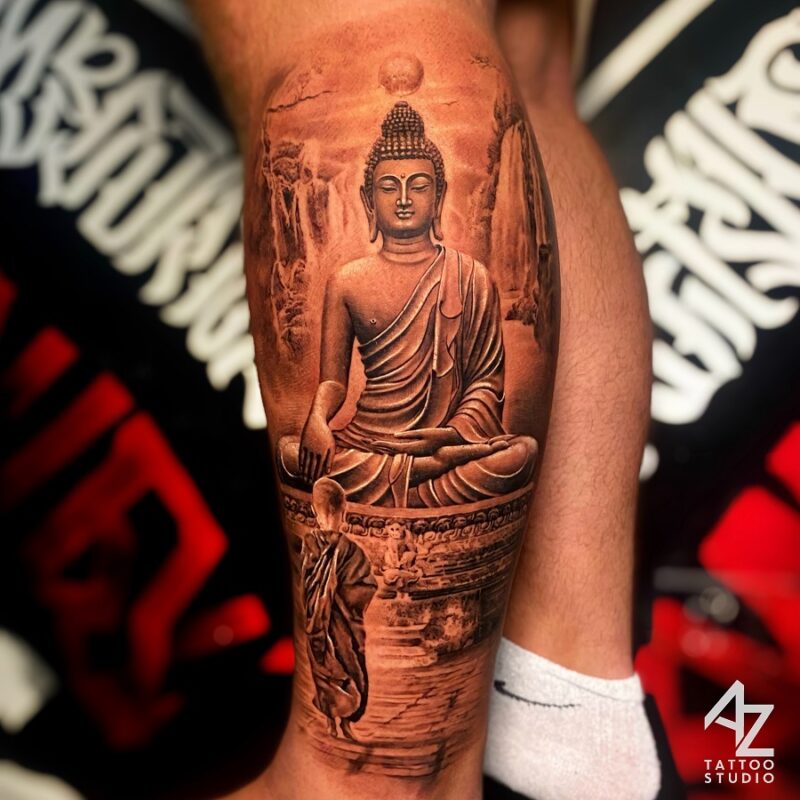
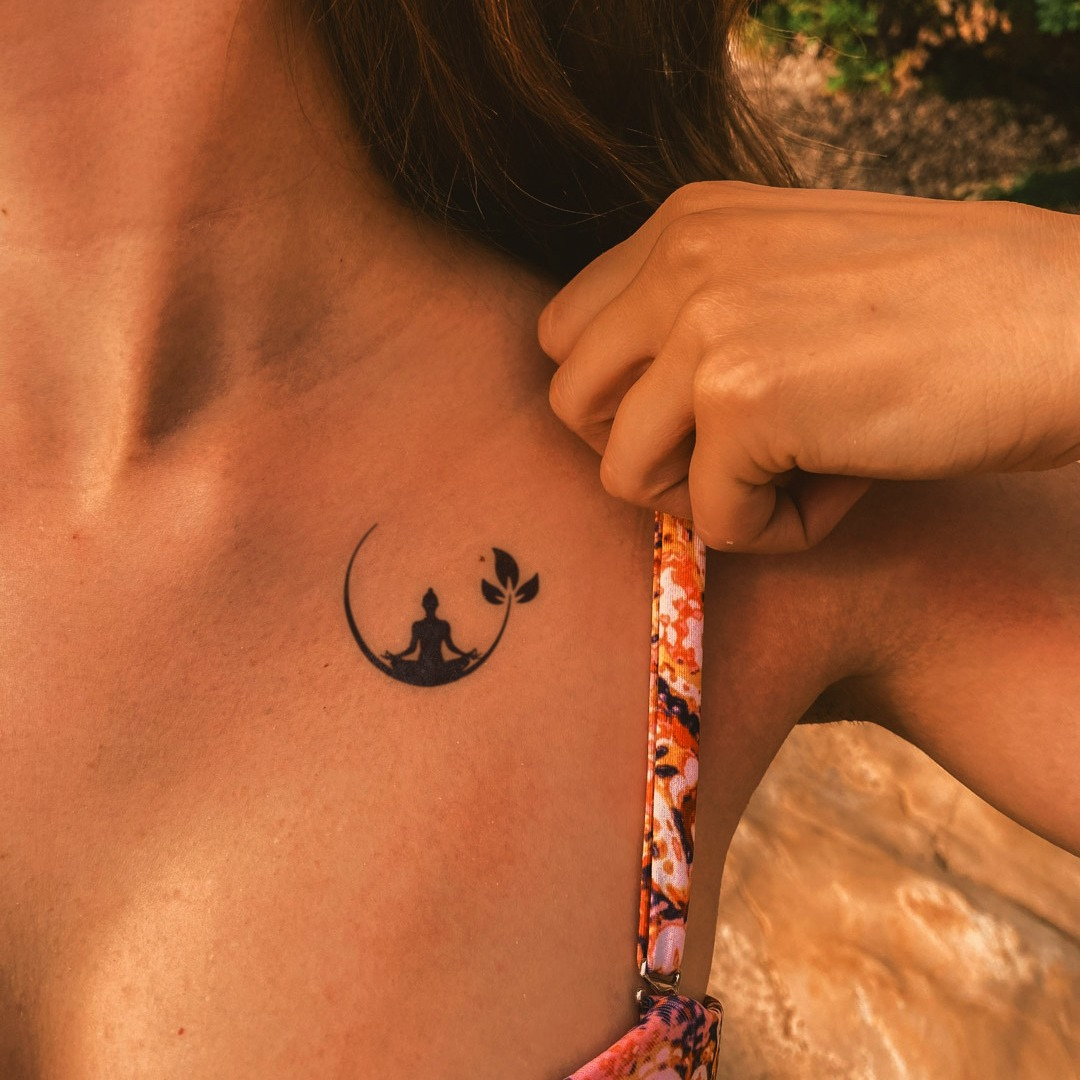
A meditating Buddha tattoo primarily symbolizes mindfulness, inner peace, self-discipline, and spiritual awakening. It is among the most popular Buddha tattoo designs because it directly reflects meditation and the pursuit of mental clarity.
Typically depicted with crossed legs and calm facial expressions, meditating Buddha imagery represents:
- Focus
- Self-control
- Emotional stability
- Spiritual practice
- Inner harmony
This design is especially meaningful for individuals who regularly practice meditation or mindfulness techniques.
Laughing Buddha Tattoo Meaning
A Laughing Buddha tattoo symbolizes happiness, abundance, prosperity, generosity, and positive energy. Although commonly associated with Buddhism, the Laughing Buddha actually represents Budai, a folkloric figure distinct from Siddhartha Gautama.
This distinction is frequently overlooked by tattoo websites.
Individuals choose Laughing Buddha tattoos to represent:
- Joyful living
- Optimism
- Financial success
- Good fortune
- Generosity toward others
Because of its uplifting symbolism, the Laughing Buddha is often incorporated into larger prosperity-themed tattoo compositions.
Buddha Head Tattoo Meaning
A Buddha head tattoo is generally associated with wisdom, awareness, enlightenment, and intellectual growth. The focus on facial expression draws attention to qualities such as calmness, insight, and emotional mastery.
Many realistic Buddha head tattoos emphasize:
- Serene facial features
- Closed eyes
- Peaceful expression
- Meditative presence
However, cultural sensitivity becomes particularly important with Buddha head imagery. In some Buddhist traditions, isolated Buddha heads can be viewed differently than complete Buddha representations, making design consultation especially valuable.
Reclining Buddha Tattoo Meaning
A reclining Buddha tattoo symbolizes peace, acceptance, spiritual completion, and liberation from suffering. The pose traditionally represents the Buddha entering Parinirvana, marking the completion of the earthly journey toward enlightenment.
This design often appeals to individuals who value:
- Acceptance
- Wisdom gained through experience
- Life perspective
- Emotional maturity
- Spiritual fulfillment
Because of its profound symbolism, reclining Buddha artwork is often selected for larger tattoo placements that allow intricate storytelling and detailed composition.
Sleeping Buddha Tattoo Meaning
A sleeping Buddha tattoo often represents tranquility, surrender of stress, inner contentment, and trust in life’s natural flow. Although visually similar to reclining Buddha imagery, modern tattoo interpretations sometimes emphasize relaxation and peace rather than formal religious symbolism.
Individuals attracted to this design frequently seek a reminder to release anxiety, reduce overthinking, and embrace a more balanced approach to life.
This concludes approximately the first half of the article. The next section would continue with Buddha Face, Lotus, Mandala, Bodhi Tree symbolism, placement guidance, cultural considerations, and advanced design selection strategies.
Lucky Tattoo, a professional tattoo artist, has over 10 years of experience in the art of tattooing in Ho Chi Minh City. Lucky Tattoo Studio was founded in 2014 by skilled and kind artists. All tattoos are provided in a clean, strictly controlled, and friendly environment.
Buddha Face Tattoo Meaning
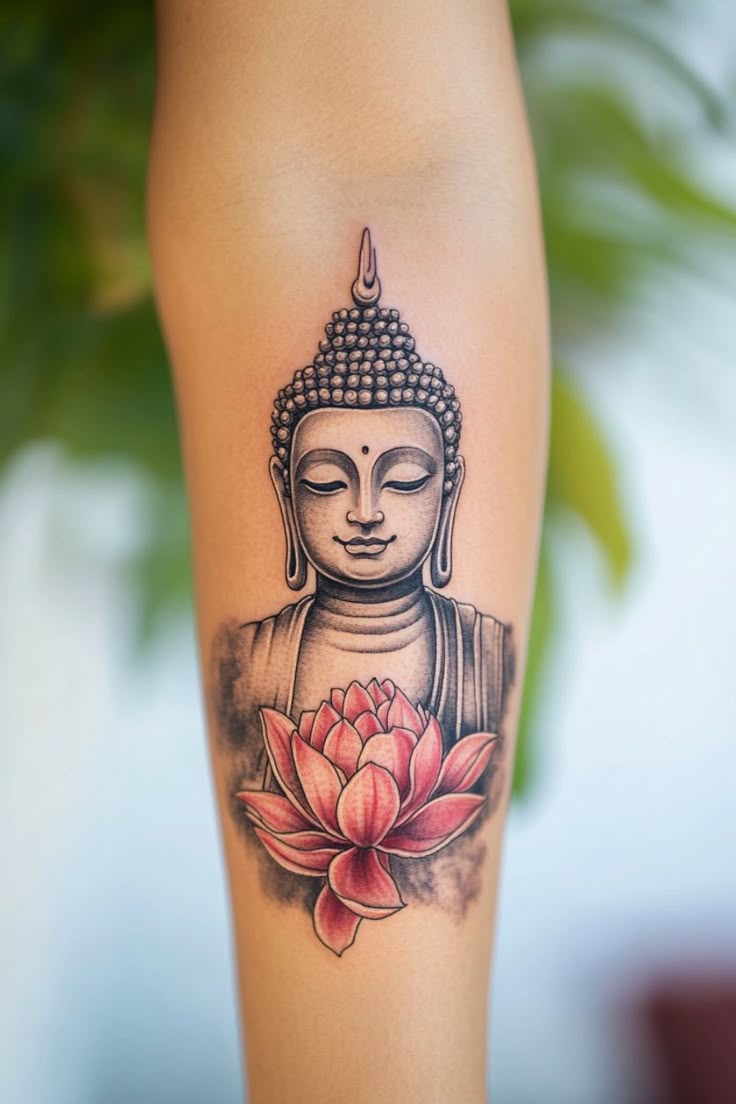
A Buddha face tattoo primarily symbolizes serenity, wisdom, mindfulness, and emotional balance. The calm expression often serves as a visual reminder to remain centered during life’s challenges while pursuing personal growth and self-awareness.
The face is often the emotional focal point of a Buddha tattoo. Small adjustments in expression can dramatically change the symbolism conveyed by the artwork.
- Closed eyes often represent meditation and inner reflection.
- Slight smiles symbolize compassion and contentment.
- Detailed facial features emphasize wisdom and experience.
- Minimalist faces focus on simplicity and mindfulness.
Professional tattoo artists frequently recommend spending significant time refining facial details because expression is often the most important element determining the tattoo’s emotional impact.
Buddha and Lotus Tattoo Meaning
A Buddha and lotus tattoo symbolizes spiritual awakening, personal growth, purity, and enlightenment. Together, these two powerful Buddhist symbols represent the journey of rising above adversity to achieve greater wisdom and inner peace.
The lotus flower holds special significance because it grows from muddy water yet blooms into something beautiful and pure. This symbolism resonates with individuals who have overcome hardship, trauma, addiction, or major life obstacles.
An often-overlooked design strategy is matching lotus color symbolism to personal meaning:
| Lotus Color | Common Symbolism |
|---|---|
| White | Purity and enlightenment |
| Pink | Traditional Buddhist symbolism |
| Blue | Wisdom and knowledge |
| Purple | Spiritual growth |
| Red | Compassion and love |
Why the Lotus Is One of Buddhism’s Most Powerful Symbols
The lotus flower is considered one of Buddhism’s most powerful symbols because it demonstrates how growth and beauty can emerge from difficult circumstances. This metaphor aligns closely with the teachings of mindfulness, resilience, and self-transformation.
For many tattoo collectors, the lotus creates a more personal narrative than Buddha imagery alone because it visually represents their own life journey.
Buddha and Mandala Tattoo Designs
A Buddha and mandala tattoo combines enlightenment symbolism with sacred geometric patterns representing harmony, balance, and the interconnected nature of existence. This pairing is particularly popular among individuals interested in meditation and spiritual development.
Mandalas create visual depth while reinforcing themes of:
- Unity
- Balance
- Focus
- Personal evolution
- Spiritual awareness
Artists often use mandalas as background elements to create larger sleeve or back-piece compositions while preserving the Buddha image as the central focal point.
Buddha with Bodhi Tree Tattoos
A Buddha and Bodhi tree tattoo symbolizes awakening, wisdom, learning, and personal transformation. The Bodhi tree is traditionally associated with the location where Siddhartha Gautama attained enlightenment.
This design is often chosen by individuals who view education, self-development, or life experience as key components of their personal growth journey.
Unlike some spiritual tattoo designs that focus solely on inner peace, the Bodhi tree introduces themes of perseverance, patience, and continuous learning.
Best Buddha Tattoo Placement Ideas and Their Meanings
Buddha tattoo placement affects symbolism, visibility, artistic detail, and cultural perception. Choosing the right location requires balancing personal preference, design size, professional considerations, and respect for the sacred nature of Buddha imagery.
Many tattoo guides focus exclusively on aesthetics. However, experienced artists often emphasize that placement carries symbolic and cultural significance, particularly for religious imagery.
Forearm Buddha Tattoos
Forearm Buddha tattoos offer excellent visibility while providing sufficient space for detailed artwork. They are commonly associated with mindfulness, daily inspiration, and personal commitment to spiritual values.
Advantages include:
- Easy visibility for personal reflection
- Suitable for medium-sized designs
- Good detail retention over time
- Flexible styling options
Forearm placements work particularly well for meditating Buddha and Buddha face designs.
Sleeve Buddha Tattoos
Buddha sleeve tattoos allow for extensive storytelling through multiple Buddhist symbols, including lotus flowers, mandalas, Dharma wheels, and Bodhi trees. They are ideal for individuals seeking a highly detailed spiritual narrative.
Full sleeves provide opportunities to create cohesive symbolic journeys rather than isolated images.
A common expert recommendation is to map the entire sleeve concept before beginning the first session to maintain artistic consistency.
Chest Buddha Tattoos
Chest Buddha tattoos symbolize deeply personal beliefs, values, and emotional significance. Because of their proximity to the heart, many wearers associate chest placements with compassion, mindfulness, and personal transformation.
These designs are often selected by individuals who want the symbolism to remain intimate rather than highly visible.
Back Buddha Tattoos
Back Buddha tattoos provide the largest canvas for intricate artwork and complex storytelling. They are commonly chosen for detailed compositions featuring temples, lotus flowers, mandalas, and landscape elements.
Large-scale back pieces allow artists to achieve extraordinary levels of realism and symbolic detail.
Leg Buddha Tattoos
Leg Buddha tattoos offer flexibility in design size and visibility. However, they require additional cultural consideration because lower-body placement may be viewed as disrespectful in some Buddhist traditions.
This cultural nuance is frequently overlooked by online tattoo galleries.
Individuals planning international travel should be particularly aware of how lower-body Buddha imagery may be perceived in certain Buddhist-majority countries.
Hand and Neck Buddha Tattoos
Hand and neck Buddha tattoos are highly visible and often carry strong personal meaning. However, these placements can present cultural, professional, and social considerations that should be carefully evaluated before proceeding.
Experienced tattoo artists frequently recommend waiting until later in one’s tattoo journey before choosing highly visible sacred imagery.
Small Buddha Tattoos vs Large Buddha Tattoos
Small Buddha tattoos emphasize simplicity and subtle symbolism, while larger designs provide space for artistic detail and complex storytelling. The best choice depends on personal goals, placement, and desired visual impact.
| Small Designs | Large Designs |
|---|---|
| Minimalist aesthetic | High artistic detail |
| Lower cost | Greater visual impact |
| Faster completion | Expanded symbolism |
| Discreet placement options | Complex storytelling potential |
Cultural and Religious Considerations Before Getting a Buddha Tattoo
Buddha tattoos can be deeply meaningful, but they also carry cultural and religious significance that deserves careful consideration. Understanding these perspectives helps individuals make informed decisions that balance personal expression with cultural respect.
This section represents one of the most overlooked areas in competitor content despite being among the most important factors influencing long-term satisfaction.
Is It Disrespectful to Get a Buddha Tattoo?
A Buddha tattoo is not automatically considered disrespectful, but opinions vary widely among Buddhist communities, practitioners, and cultural groups. Context, placement, intent, and design execution all influence how the tattoo may be perceived.
Many Buddhists appreciate sincere admiration of Buddhist teachings, while others believe sacred imagery should not be used as body decoration.
The key distinction often lies in intention and respectful representation.
Buddhist Perspectives on Sacred Imagery
Buddhist views on tattoos vary significantly across cultures and traditions. Some communities view Buddha imagery as an expression of reverence, while others consider it inappropriate for placement on the human body.
There is no universal Buddhist position on tattoos. Perspectives differ among:
- Theravada traditions
- Mahayana traditions
- Vajrayana traditions
- Regional cultural interpretations
This diversity highlights the importance of cultural awareness rather than relying on simplistic assumptions.
Countries Where Buddha Tattoos May Be Sensitive
Several Buddhist-majority countries maintain strong cultural expectations regarding Buddha imagery. Travelers with Buddha tattoos should understand local customs to avoid misunderstandings or unintended offense.
Thailand
Thailand places significant cultural importance on Buddha images. Tattoos depicting Buddha, especially on lower-body areas, may be viewed as disrespectful by some locals.
Sri Lanka
Sri Lanka has historically demonstrated sensitivity regarding visible Buddha tattoos. Travelers should exercise awareness and respect local cultural expectations.
Myanmar
Myanmar’s Buddhist traditions often emphasize reverence toward sacred imagery. Placement and visibility may influence local reactions.
Cambodia
Cambodia generally maintains strong respect for Buddhist symbols, making thoughtful design choices particularly important.
Respectful Placement Guidelines
Respectful Buddha tattoo placement typically avoids areas traditionally considered culturally inappropriate, particularly lower-body locations. Thoughtful placement demonstrates awareness of the sacred nature of the imagery.
- Research regional cultural perspectives.
- Avoid impulsive design decisions.
- Consult experienced tattoo artists.
- Consider travel implications.
- Prioritize meaningful symbolism.
Common Cultural Mistakes to Avoid
Many cultural issues arise not from bad intentions but from lack of awareness. Understanding common mistakes helps create a more respectful and meaningful tattoo experience.
- Choosing designs without understanding symbolism.
- Using sacred imagery purely as decoration.
- Ignoring cultural context.
- Selecting inappropriate placements.
- Copying social media designs without research.
Buddha Tattoo Styles: Which Artistic Approach Fits Your Meaning?
Different tattoo styles communicate different emotional tones and symbolic messages. Selecting the right artistic approach helps ensure the final design accurately reflects both personal meaning and visual preferences.
Realism Buddha Tattoos
Realism Buddha tattoos focus on lifelike detail, facial expression, and emotional depth. They are often chosen by individuals seeking a powerful visual representation of wisdom and mindfulness.
Black and Grey Buddha Tattoos
Black and grey Buddha tattoos emphasize contrast, texture, and timeless aesthetics. This style remains one of the most popular choices for spiritual tattoo imagery.
Blackwork Buddha Tattoos
Blackwork Buddha tattoos use bold lines and strong contrast to create striking visual impact. They are particularly effective for modern interpretations of traditional Buddhist symbolism.
Geometric Buddha Tattoos
Geometric Buddha tattoos combine sacred imagery with mathematical precision, often appealing to individuals who appreciate balance, structure, and symbolic harmony.
Watercolor Buddha Tattoos
Watercolor Buddha tattoos introduce vibrant artistic expression while maintaining spiritual symbolism. These designs often emphasize creativity and individuality.
Japanese-Inspired Buddha Tattoos
Japanese-inspired Buddha tattoos blend Buddhist imagery with traditional Japanese tattoo artistry, creating dynamic compositions rich in symbolism and cultural heritage.
Fine-Line Buddha Tattoos
Fine-line Buddha tattoos focus on subtle detail, elegance, and minimalist aesthetics. They are increasingly popular among individuals seeking understated spiritual symbolism.
What Tattoo Artists Recommend Before Choosing a Buddha Tattoo
Experienced tattoo artists consistently emphasize research, personal meaning, and long-term satisfaction over trends. The most successful Buddha tattoos are usually those connected to authentic personal values rather than temporary inspiration.
Questions to Ask Yourself First
Before committing to a Buddha tattoo, evaluate your motivations, symbolism preferences, placement goals, and long-term expectations.
- Why does this symbol resonate with me?
- What specific meaning do I want it to represent?
- How might my interpretation evolve over time?
- Am I aware of cultural considerations?
Design Consultation Checklist
A thorough consultation helps prevent common tattoo regrets and ensures alignment between symbolism and artwork.
- Review artist portfolio.
- Discuss symbolism.
- Confirm placement suitability.
- Evaluate long-term aging.
- Consider future expansions.
Long-Term Meaning Considerations
Buddha tattoos often maintain relevance because they are tied to enduring values such as wisdom, mindfulness, and personal growth rather than temporary trends.
Aftercare and Preservation Tips
Proper aftercare protects both artistic quality and symbolic investment. Following professional aftercare instructions significantly improves long-term tattoo appearance.
- Follow artist recommendations.
- Avoid excessive sun exposure.
- Use appropriate skincare products.
- Stay hydrated during healing.
- Monitor for signs of infection.
Real-Life Buddha Tattoo Examples and Symbolic Interpretations
Real-world examples demonstrate how Buddha tattoos can carry unique personal meanings while still reflecting broader spiritual symbolism.
Example: Meditation Journey Tattoo
A meditation practitioner chose a forearm Buddha tattoo to represent a decade-long mindfulness journey that helped reduce stress and improve emotional resilience.
Example: Recovery and Personal Growth Tattoo
An individual recovering from addiction selected a Buddha and lotus composition symbolizing transformation, healing, and a renewed sense of purpose.
Example: Mindfulness and Balance Tattoo
A business executive incorporated a meditating Buddha and mandala into a sleeve design as a daily reminder to maintain balance in a demanding professional environment.
Frequently Asked Questions About Buddha Tattoos
Are Buddha tattoos disrespectful in Buddhism?
Not necessarily. Opinions vary among Buddhist traditions and cultures. Respectful intent, thoughtful placement, and understanding of symbolism are important considerations.
What is the most popular Buddha tattoo meaning?
The most common meanings include enlightenment, wisdom, mindfulness, inner peace, and personal growth.
Can Buddhists get Buddha tattoos?
Many Buddhists choose tattoos, while others prefer not to use sacred imagery on the body. Perspectives vary by tradition and individual belief.
Where should a Buddha tattoo not be placed?
Some Buddhist cultures consider lower-body placements inappropriate because Buddha imagery is regarded as sacred.
What does a Buddha and lotus flower tattoo mean?
It symbolizes spiritual awakening, resilience, purity, personal transformation, and the ability to grow through adversity.
Are Buddha tattoos lucky?
Many people associate Buddha tattoos with positive energy, wisdom, and good fortune, although interpretations vary by culture and individual belief.
Which Buddha pose is best for a tattoo?
The best pose depends on intended symbolism. Meditating Buddha designs are commonly chosen for mindfulness and inner peace, while reclining Buddha designs often symbolize acceptance and enlightenment.
How do I choose a meaningful Buddha tattoo design?
Start by identifying the values or experiences you want to represent, research Buddhist symbolism, consult an experienced artist, and consider cultural implications before finalizing the design.
Final Thoughts: Choosing a Buddha Tattoo with Meaning and Respect
A Buddha tattoo can serve as a powerful symbol of enlightenment, mindfulness, compassion, resilience, and personal growth. Its enduring popularity stems from the universal values associated with Buddhist philosophy and the deeply personal stories many wearers connect to the imagery.
The most meaningful Buddha tattoos are rarely chosen on appearance alone. They emerge from thoughtful reflection, cultural awareness, and a genuine connection to the symbolism being represented. By understanding the meanings behind different Buddha poses, accompanying symbols such as the lotus flower and Bodhi tree, placement considerations, and cultural perspectives, individuals can create artwork that remains meaningful for decades.
Whether your goal is to commemorate a personal transformation, celebrate mindfulness, honor spiritual beliefs, or simply carry a daily reminder of wisdom and inner peace, a carefully considered Buddha tattoo can become far more than body art—it can become a lifelong reflection of the values that guide your journey.