A pagoda tattoo is far more than an architectural illustration. It represents spiritual growth, wisdom, resilience, balance, and the lifelong pursuit of enlightenment. Inspired by sacred East Asian temple structures, pagoda tattoos combine deep cultural symbolism with striking visual storytelling, making them one of the most meaningful choices in Asian-inspired tattoo art.
While many people are drawn to the aesthetic beauty of multi-tiered pagodas, experienced tattoo artists understand that the strongest designs tell a story. A pagoda can symbolize a personal journey through hardship, a connection to Buddhist philosophy, reverence for cultural heritage, or the pursuit of inner peace. The meaning often becomes even richer when paired with elements such as lotus flowers, koi fish, mountains, dragons, or cherry blossoms.
What Does a Pagoda Tattoo Mean?
A pagoda tattoo typically symbolizes wisdom, spiritual growth, enlightenment, harmony, protection, and personal transformation. Rooted in Buddhist architectural traditions, the design often reflects an individual’s journey toward self-discovery while representing resilience, patience, and balance during life’s challenges.
Unlike many modern tattoo trends that focus primarily on aesthetics, pagoda tattoos carry layers of symbolic meaning that have evolved across centuries of East Asian history. The pagoda itself serves as a sacred structure designed to preserve religious relics and create a connection between the earthly and spiritual realms.
Today, tattoo enthusiasts choose pagoda imagery for various personal reasons:
- Overcoming significant life challenges
- Pursuing personal growth and self-improvement
- Expressing spiritual beliefs or mindfulness practices
- Honoring East Asian cultural heritage
- Representing inner peace and emotional stability
- Commemorating transformative life experiences
Professional tattoo artists frequently observe that clients selecting pagoda tattoos often prioritize meaning over trends. The design tends to attract individuals seeking a visual reminder of their values, personal growth, or spiritual aspirations.
Why Pagodas Represent Wisdom, Balance, and Enlightenment
Pagodas symbolize wisdom, balance, and enlightenment because their architectural purpose has historically been tied to Buddhist teachings, sacred relics, and spiritual contemplation. Their upward-reaching structure visually represents personal growth and the pursuit of higher understanding.
One overlooked aspect of pagoda symbolism is the significance of vertical progression. Each level of a pagoda can represent stages of personal development, similar to how individuals advance through challenges, learning experiences, and periods of self-reflection.
Many tattoo collectors intentionally incorporate this symbolism into custom designs. For example, a seven-tier pagoda may be chosen to represent seven major life milestones, while a mountain-top pagoda may symbolize reaching a hard-earned state of clarity after years of struggle.
From an artistic perspective, the pagoda’s symmetry also reinforces concepts of balance and harmony. This visual stability resonates strongly with individuals pursuing emotional equilibrium, mindfulness, or meditation practices.
Common Misconceptions About Pagoda Tattoo Symbolism
Many people mistakenly assume that pagoda tattoos are purely decorative or exclusively religious. In reality, their symbolism varies widely and can represent cultural appreciation, personal resilience, philosophical beliefs, or spiritual growth without requiring formal religious affiliation.
Several misconceptions frequently appear online:
- Myth: Only Buddhists can wear a pagoda tattoo.
- Reality: Many people appreciate the symbolism of wisdom and growth regardless of religion.
- Myth: Every pagoda tattoo has identical meaning.
- Reality: Design elements dramatically influence symbolism.
- Myth: Pagodas are exclusively Japanese.
- Reality: Pagodas exist throughout China, Korea, Vietnam, Japan, and other regions of Asia.
Understanding these distinctions allows individuals to create designs that are both respectful and personally meaningful.
Real-World Example: How Wearers Personalize Pagoda Meanings
Many pagoda tattoo owners personalize their designs by incorporating symbols that reflect specific life experiences, beliefs, or achievements. This transforms the tattoo from a beautiful image into a visual autobiography.
Consider three common examples:
| Design Combination | Potential Meaning |
|---|---|
| Pagoda + Lotus Flower | Spiritual awakening after hardship |
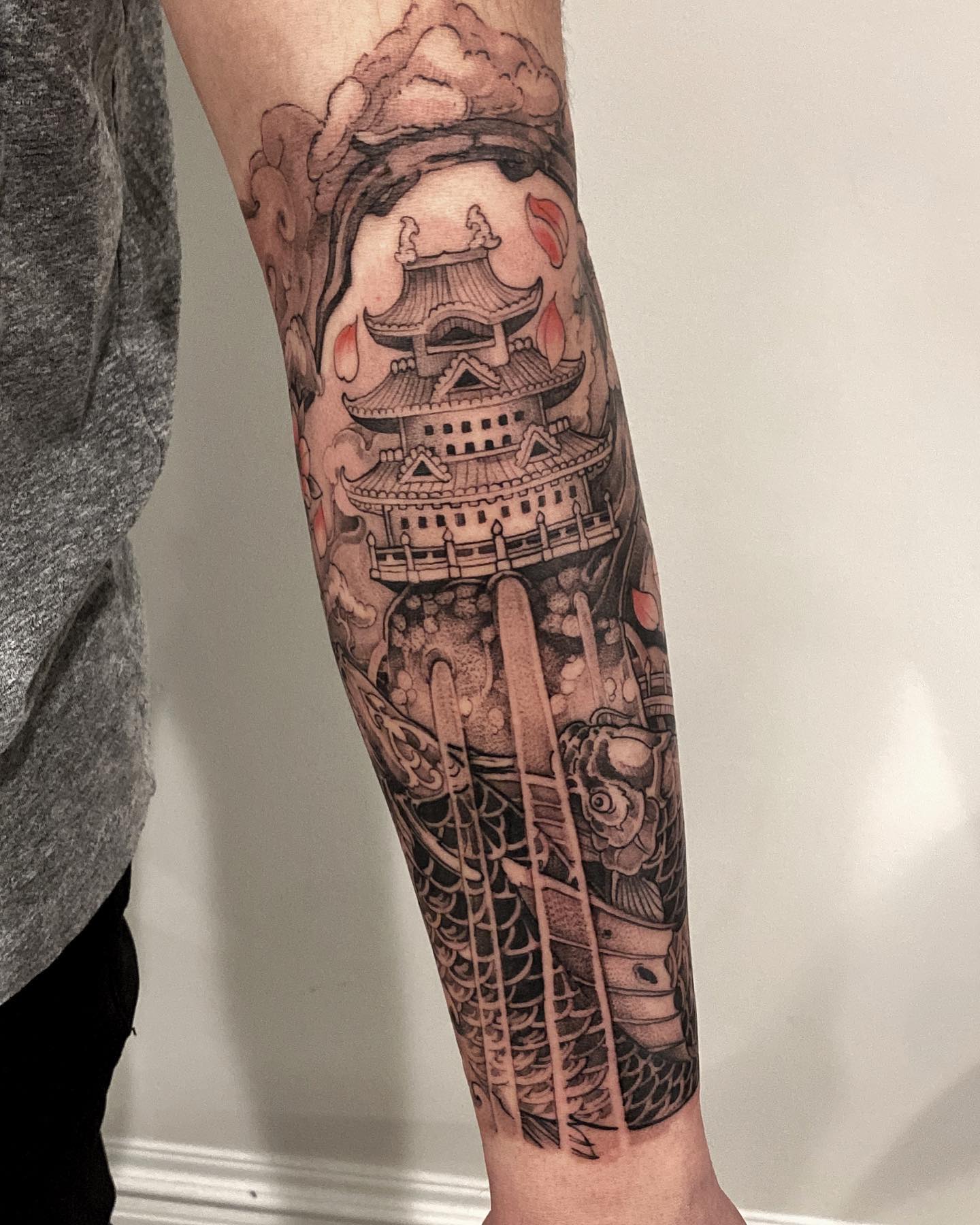
| Pagoda + Koi Fish | Perseverance through adversity |
| Pagoda + Mountain Landscape | Personal growth through life’s challenges |
The strongest designs emerge when symbolism aligns with genuine personal experiences rather than simply following visual trends.
What Is a Pagoda? Understanding the Architectural and Spiritual Origins
A pagoda is a multi-tiered tower structure historically associated with Buddhist temples and sacred sites throughout East Asia. Originally developed to house religious relics, pagodas evolved into powerful symbols of spiritual aspiration, cultural identity, and architectural excellence.
Understanding the origins of pagodas provides essential context for anyone considering this tattoo style. Many articles discuss symbolism without explaining the structure’s historical significance, creating a gap in understanding that often leads to generic designs.
The Historical Origins of Pagodas in Buddhism
Pagodas originated from ancient Indian stupas, which were sacred monuments built to preserve relics associated with the Buddha and important religious figures. As Buddhism spread across Asia, the architectural form evolved into the pagodas recognized today.
In early Buddhist traditions, these structures served multiple purposes:
- Protecting sacred relics
- Providing places for pilgrimage
- Representing spiritual enlightenment
- Demonstrating devotion and faith
Over centuries, local cultures adapted the original stupa design, resulting in distinctive regional architectural styles that continue to influence tattoo art today.
How Pagodas Spread Across China, Japan, Korea, and Southeast Asia
As Buddhism expanded across Asia, each region developed unique pagoda designs reflecting local architecture, cultural values, and artistic traditions. These differences continue to influence modern tattoo interpretations.
| Region | Architectural Characteristics | Tattoo Influence |
|---|---|---|
| China | Tall structures with ornate roofs | Detailed realism and historical themes |
| Japan | Elegant symmetry and minimalist balance | Irezumi and traditional Japanese tattooing |
| Korea | Refined simplicity and stone pagodas | Clean architectural compositions |
| Southeast Asia | Regional temple influences | Spiritual and cultural fusion designs |
This regional diversity provides tattoo collectors with numerous opportunities to create highly personalized and culturally informed artwork.
Information Gain: Architectural Features That Change Tattoo Meaning
Specific architectural details within a pagoda tattoo can significantly alter its symbolism. Experienced tattoo artists often use these elements intentionally, yet many online resources overlook their importance.
Number of Tiers and Their Symbolism
The number of visible levels may represent stages of personal growth, spiritual progression, or important life milestones. Taller pagodas often communicate ambition, perseverance, and long-term development.
Roof Shapes, Height, and Sacred Geometry
Curved roofs frequently symbolize protection and harmony, while dramatic vertical structures emphasize aspiration and enlightenment. Symmetrical layouts often reinforce themes of balance and emotional stability.
Expert Insight: Architectural accuracy becomes increasingly important in large-scale tattoos. Skilled artists often study reference photographs and historical structures before creating custom pagoda designs.
What Does a Pagoda Tattoo Symbolize Across Different Cultures?
Pagoda tattoo symbolism varies across cultures, with each region emphasizing different values such as enlightenment, harmony, protection, wisdom, ancestral reverence, or spiritual discipline. Understanding these cultural distinctions creates more meaningful and authentic tattoo designs.
One of the biggest mistakes tattoo enthusiasts make is assuming all pagodas carry identical symbolism. In reality, the cultural context behind the structure can dramatically influence the story your tattoo tells.
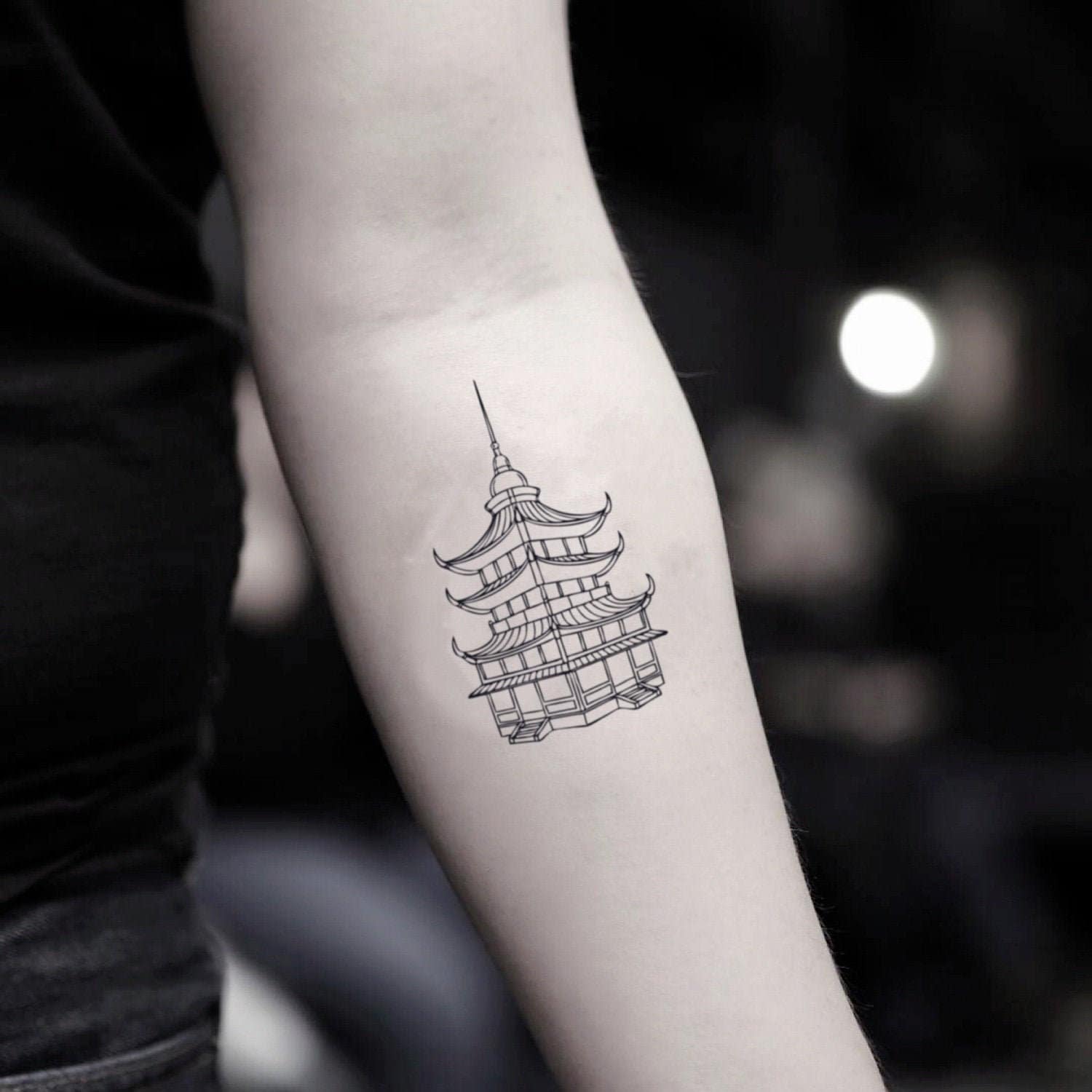
Japanese Pagoda Tattoo Meaning
Japanese pagoda tattoos commonly symbolize spiritual balance, harmony with nature, self-discipline, and the pursuit of enlightenment. They are frequently incorporated into larger Irezumi compositions featuring mountains, koi fish, dragons, or cherry blossoms.
Within Japanese tattoo traditions, the pagoda rarely exists in isolation. Instead, it often functions as part of a larger narrative scene that communicates life’s challenges, achievements, and philosophical lessons.
Common symbolic associations include:
- Inner peace
- Mindfulness
- Personal transformation
- Respect for tradition
- Connection with nature
Chinese Pagoda Tattoo Meaning
Chinese pagoda tattoos often emphasize wisdom, protection, longevity, and reverence for historical and spiritual traditions. Their symbolism frequently reflects the relationship between human achievement and higher knowledge.
Architecturally detailed Chinese pagoda tattoos are particularly popular among collectors who appreciate historical realism and cultural heritage. These designs often feature elaborate roof structures, intricate carvings, and scenic landscapes.
Many Chinese-inspired designs incorporate:
- Cloud formations
- Dragons
- Phoenix imagery
- Mountain scenery
- Traditional calligraphy
Korean and Southeast Asian Interpretations
Korean and Southeast Asian pagoda tattoos often emphasize simplicity, contemplation, community values, and spiritual devotion. While less frequently discussed online, these interpretations offer unique artistic opportunities.
Stone pagodas found throughout Korea often inspire minimalist architectural tattoos focused on balance and understated beauty. In Southeast Asia, temple-inspired compositions may incorporate regional artistic influences, creating visually distinct alternatives to Japanese and Chinese designs.
Expert Insight: Cultural Context Matters More Than Style Alone
The most meaningful pagoda tattoos are informed by both visual preference and cultural understanding. Choosing a design solely because it looks attractive may overlook opportunities for deeper personal connection and storytelling.
Before committing to a design, consider:
- Which culture’s architectural style resonates most with you?
- Are you drawn to spiritual symbolism, cultural heritage, or personal transformation?
- Will additional elements enhance the narrative?
- Does your artist understand the cultural references being incorporated?
Collectors who invest time in researching these questions often end up with tattoos that remain meaningful decades after the initial session.
Which Elements Pair Best With a Pagoda Tattoo?
Pagoda tattoos become more meaningful when paired with complementary symbols that create a cohesive narrative. Popular combinations include lotus flowers, koi fish, dragons, cherry blossoms, mountains, and clouds, each adding unique layers of symbolism while enhancing visual balance.
One major competitor gap in tattoo content is the lack of discussion about storytelling composition. Professional tattoo artists rarely build large pagoda tattoos around the structure alone. Instead, they use supporting elements to create emotional depth and symbolic complexity.
Pagoda and Lotus Flower Symbolism
A pagoda paired with a lotus flower typically symbolizes spiritual growth, purity, enlightenment, and the ability to rise above adversity. This combination is among the most meaningful designs within Buddhist-inspired tattoo art.
The lotus grows through muddy water before blooming beautifully above the surface. Combined with a pagoda, it creates a powerful metaphor for personal transformation and inner development.
Many individuals choose this pairing after overcoming major life obstacles, addiction recovery, grief, or significant personal challenges.
Continued in Part 2: The next section explores pagoda and koi fish symbolism, dragon combinations, popular tattoo styles, placement strategies, artist selection, costs, aging considerations, and expert recommendations for designing a meaningful pagoda tattoo.
Lucky Tattoo, a professional tattoo artist, has over 10 years of experience in the art of tattooing in Ho Chi Minh City. Lucky Tattoo Studio was founded in 2014 by skilled and kind artists. All tattoos are provided in a clean, strictly controlled, and friendly environment.
Pagoda and Koi Fish Meaning
A pagoda paired with a koi fish symbolizes perseverance, determination, and personal growth. The koi represents overcoming obstacles, while the pagoda serves as the destination of wisdom and enlightenment, creating a visual story of progress through adversity.
This combination is particularly popular among individuals who have faced major life challenges such as career setbacks, health struggles, financial difficulties, or significant personal transformations.
In East Asian symbolism, koi fish are often associated with ambition and resilience. When integrated into a pagoda scene, the design suggests that success is achieved through patience, discipline, and continuous self-improvement.
- Koi swimming upward: determination and progress
- Koi beneath a pagoda: seeking wisdom
- Multiple koi: family, support, and shared growth
- Koi with water currents: navigating life’s uncertainties
An overlooked design consideration is movement. Professional tattoo artists frequently use the koi’s flowing body to guide the viewer’s eye toward the pagoda, improving composition and storytelling.
Pagoda and Dragon Combinations
A pagoda and dragon tattoo commonly represents protection, strength, wisdom, and mastery over life’s challenges. The dragon embodies power and transformation, while the pagoda represents spiritual discipline and enlightenment.
Unlike purely decorative dragon tattoos, a pagoda-centered composition often creates a balance between external strength and internal wisdom.
This contrast makes the pairing particularly compelling:
| Element | Primary Symbolism |
|---|---|
| Dragon | Power, courage, protection |
| Pagoda | Wisdom, spirituality, balance |
| Combined Design | Strength guided by wisdom |
Artists specializing in Japanese Irezumi frequently use cloud formations, waves, and wind bars to connect the dragon and pagoda into a unified narrative scene.
Pagoda With Cherry Blossoms
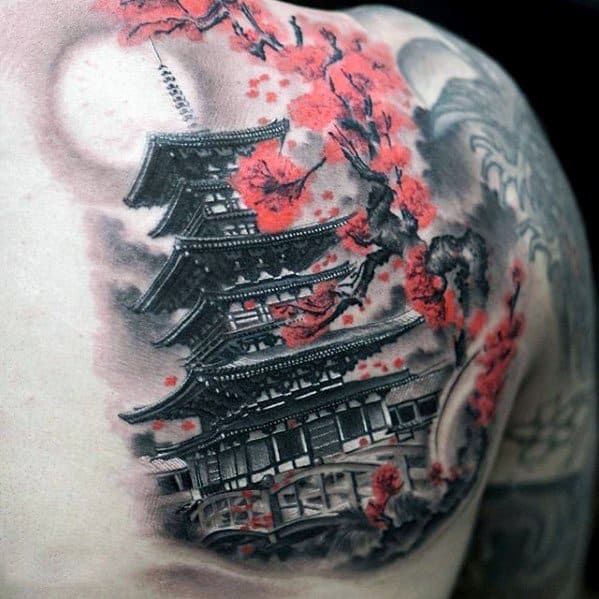
A pagoda with cherry blossoms symbolizes the beauty of impermanence, personal growth, and appreciation for life’s fleeting moments. This combination draws heavily from Japanese cultural symbolism and philosophical concepts.
Cherry blossoms remind viewers that beauty is temporary and that life’s most meaningful experiences often exist for only a brief period.
For many tattoo collectors, this symbolism resonates during major life transitions such as:
- Graduation
- Career changes
- Marriage
- Parenthood
- Recovery from loss
The visual contrast between a permanent stone structure and delicate blossoms creates both artistic balance and emotional depth.
Information Gain: Creating a Storytelling Tattoo Composition
The strongest pagoda tattoos function like visual narratives rather than isolated symbols. Professional tattoo artists often build compositions around a central life theme, ensuring every element contributes to a unified message.
Enlightenment Journey Theme
Combine a pagoda with lotus flowers, mountain paths, clouds, and sunlight to represent personal growth and spiritual awakening.
Perseverance and Growth Theme
Pair a pagoda with koi fish, waterfalls, rocky landscapes, and flowing currents to symbolize resilience through adversity.
Heritage and Spiritual Connection Theme
Incorporate region-specific architecture, cultural motifs, calligraphy, and temple landscapes that reflect personal ancestry or cultural appreciation.
What Are the Most Popular Pagoda Tattoo Styles?
Pagoda tattoos can be executed in several artistic styles, including traditional Japanese Irezumi, black and grey realism, fine-line tattooing, watercolor techniques, and modern geometric designs. The ideal style depends on symbolism, placement, desired longevity, and overall visual impact.
One of the most overlooked aspects of tattoo planning is understanding how different styles age over time. A visually impressive design today may lose clarity years later if the style is not suited to the chosen placement or level of detail.
Traditional Japanese Irezumi Style
Traditional Japanese Irezumi pagoda tattoos emphasize bold outlines, dynamic compositions, and storytelling through supporting elements such as dragons, koi fish, waves, and cherry blossoms.
This style remains one of the most respected forms of large-scale tattoo art because it prioritizes longevity and readability.
Benefits include:
- Strong visual impact
- Excellent aging characteristics
- Rich symbolism
- Large-scale storytelling potential
Black and Grey Realism
Black and grey realism focuses on architectural precision, depth, texture, and dramatic lighting. This style is ideal for individuals who appreciate historical structures and detailed craftsmanship.
Realistic pagoda tattoos often require highly skilled artists with experience in architectural rendering.
Common features include:
- Detailed roof structures
- Stone textures
- Atmospheric landscapes
- Photorealistic shading
Fine Line Pagoda Tattoos
Fine-line pagoda tattoos offer a minimalist and elegant interpretation of sacred architecture. They are popular among individuals seeking subtle symbolism and smaller tattoo placements.
However, fine-line work requires careful planning.
Important consideration: Research and long-term tattoo industry observations indicate that extremely thin lines may blur or fade more quickly than bold-line designs, especially in high-friction areas.
For improved longevity, experienced artists often increase line weight slightly while maintaining a delicate appearance.
Watercolor Temple Tattoos
Watercolor pagoda tattoos combine architectural imagery with painterly effects that create movement, emotion, and artistic individuality. They prioritize expression over realism.
These designs frequently incorporate:
- Cherry blossom colors
- Sunrise gradients
- Abstract skies
- Flowing brushstroke effects
Although visually striking, watercolor tattoos typically require a highly experienced artist to ensure the structure remains recognizable as colors soften over time.
Geometric and Modern Interpretations
Geometric pagoda tattoos use symmetry, sacred geometry, and contemporary design principles to create modern interpretations of traditional symbolism.
This style appeals to individuals seeking a balance between spirituality and contemporary aesthetics.
Popular design features include:
- Mandala-inspired frameworks
- Negative space compositions
- Symmetrical layouts
- Minimalist architectural silhouettes
Expert Advice: Which Styles Age Best Over Time?
Traditional Japanese and well-executed black and grey realism generally age better than highly intricate fine-line or watercolor designs because they rely on stronger visual contrast and more durable line structures.
When planning a long-term tattoo investment, consider:
- Line thickness
- Placement exposure to sunlight
- Skin type
- Artist specialization
- Expected maintenance needs
Where Should You Place a Pagoda Tattoo?
Popular placements for pagoda tattoos include the forearm, sleeve, chest, back, and thigh. The best location depends on design complexity, desired visibility, pain tolerance, and the amount of architectural detail required.
Placement dramatically affects both aesthetics and longevity. Highly detailed pagodas often require larger canvas areas to preserve clarity over decades.
Forearm Placement
Forearm pagoda tattoos offer excellent visibility and sufficient space for medium-detail architectural designs while remaining easy to showcase or cover when necessary.
This placement works especially well for:
- Single pagoda structures
- Minimalist compositions
- Fine-line artwork
- Vertical architectural layouts
Sleeve Designs
Sleeve tattoos provide the space needed for comprehensive storytelling compositions involving pagodas, koi fish, dragons, clouds, and landscape elements.
Many master tattoo artists view the sleeve as the ideal format for narrative-driven pagoda tattoos because it allows visual movement across the arm.
Chest Placement
Chest placements create a highly personal and symbolic location for pagoda tattoos, often reserved for deeply meaningful designs connected to personal beliefs or life experiences.
The broad surface allows for balanced symmetry and detailed architectural rendering.
Full Back Piece Designs
Large back-piece pagoda tattoos offer maximum artistic freedom and allow for highly detailed landscapes, temple scenes, and traditional Japanese storytelling compositions.
These projects frequently require multiple sessions but often produce the most visually impressive results.
Information Gain: Matching Placement to Architectural Detail
The more architectural detail included, the larger the placement should be. Attempting to compress complex pagoda structures into very small areas often leads to visual degradation over time.
Small Tattoos
Best for silhouettes, geometric interpretations, and minimalist pagoda concepts.
Medium Designs
Ideal for forearms, calves, and upper arms with moderate architectural detail.
Large Narrative Pieces
Recommended for sleeves, backs, and thighs where multiple symbolic elements can coexist without overcrowding.
How Tattoo Artists Design High-Quality Pagoda Tattoos
High-quality pagoda tattoos combine architectural accuracy, balanced composition, strong line structure, and meaningful symbolism. Skilled artists prioritize readability, storytelling, and longevity rather than simply copying reference images.
Many disappointing tattoos result from focusing solely on aesthetics while ignoring technical design fundamentals.
Building Depth and Perspective
Professional artists create depth through layering, atmospheric perspective, shading, and strategic placement of foreground and background elements.
This approach prevents the pagoda from appearing flat and enhances realism.
Balancing Architectural Accuracy With Artistic Freedom
The best pagoda tattoos maintain recognizable architectural characteristics while adapting proportions and details to suit the body’s contours and artistic goals.
Successful designs often blend historical inspiration with personal symbolism.
Common Design Mistakes to Avoid
Common mistakes include excessive detail in small spaces, poor perspective, overcrowded compositions, and selecting artists without architectural tattoo experience.
- Overly small structures
- Unbalanced supporting imagery
- Weak line hierarchy
- Ignoring long-term aging
- Using low-quality references
Real Consultation Example From Concept to Final Design
A client seeking a tattoo representing recovery and personal growth might begin with a pagoda concept. Through consultation, the artist could add a koi fish for perseverance, lotus flowers for transformation, and mountain scenery to represent life’s challenges.
The result becomes a personalized narrative rather than a generic architectural illustration.
Are Pagoda Tattoos Religious or Cultural?
Pagoda tattoos can be religious, cultural, spiritual, artistic, or deeply personal depending on the wearer’s intentions and design elements. Their meaning is shaped by context rather than a single universal interpretation.
Respectful Use of Buddhist Imagery
Respectful use of Buddhist-inspired imagery involves understanding symbolism, avoiding inappropriate placement of sacred figures, and appreciating cultural significance rather than treating religious elements as decoration.
Researching cultural context demonstrates respect and often leads to more meaningful designs.
Cultural Appreciation vs Cultural Misappropriation
Cultural appreciation involves learning, understanding, and respectfully engaging with cultural traditions, while appropriation often occurs when symbols are used without context or sensitivity.
Consulting knowledgeable artists and studying the symbolism behind chosen imagery can help avoid misunderstandings.
Expert Insight From Cultural Historians and Tattoo Artists
Experts consistently emphasize that intention, understanding, and respectful execution matter far more than ethnicity alone. Meaningful engagement with symbolism often results in authentic and culturally respectful artwork.
Frequently Asked Questions About Pagoda Tattoos
What does a pagoda tattoo symbolize?
A pagoda tattoo commonly symbolizes wisdom, enlightenment, spiritual growth, balance, resilience, and personal transformation.
Is a pagoda tattoo considered a Buddhist tattoo?
It can be, but not always. While pagodas have Buddhist origins, many people choose them for architectural beauty, cultural appreciation, or personal symbolism.
What symbols pair best with a pagoda tattoo?
Popular companions include lotus flowers, koi fish, dragons, cherry blossoms, mountains, clouds, and traditional East Asian landscapes.
Where should a detailed pagoda tattoo be placed?
Large areas such as the back, sleeve, chest, or thigh generally provide sufficient space to preserve architectural detail and long-term clarity.
Do pagoda tattoos age well?
Yes, especially when designed with appropriate line weight, sufficient spacing, and placement on areas with lower friction and sun exposure.
How much does a pagoda tattoo cost?
Costs vary based on size, complexity, artist expertise, and geographic location. Detailed architectural tattoos typically require a larger investment than simpler designs.
Can non-Buddhists get a pagoda tattoo?
Yes. Many individuals choose pagoda tattoos for cultural appreciation, personal growth symbolism, or artistic reasons while remaining respectful of their origins.
What tattoo style works best for pagoda designs?
Traditional Japanese Irezumi and black-and-grey realism are widely considered the strongest choices for combining symbolism, detail, and long-term durability.
Key Takeaways About Pagoda Tattoo Meaning and Design
A pagoda tattoo represents far more than a beautiful building. It embodies wisdom, spiritual growth, resilience, balance, and the pursuit of personal transformation. Whether inspired by Buddhist architecture, East Asian cultural traditions, or an individual’s unique life journey, the pagoda remains one of the most meaningful symbols in tattoo art.
The most successful designs combine thoughtful symbolism, cultural understanding, skilled artistic execution, and long-term planning. By selecting the right style, placement, supporting elements, and experienced artist, you can create a tattoo that remains visually impressive and personally significant for decades.
Expert Recommendation: Before finalizing your design, identify the specific story you want your pagoda tattoo to tell. The strongest tattoos are not merely seen—they are understood, remembered, and lived with meaning.
Lucky Tattoo, a professional tattoo artist, has over 10 years of experience in the art of tattooing in Ho Chi Minh City. Lucky Tattoo Studio was founded in 2014 by skilled and kind artists. All tattoos are provided in a clean, strictly controlled, and friendly environment.
pagoda-tattoo