An Asian tiger dragon sleeve tattoo is one of the most respected large-scale concepts in Eastern-inspired body art. Combining the tiger’s raw physical strength with the dragon’s spiritual power creates a design that goes beyond aesthetics. In Japanese and Chinese traditions, these creatures represent complementary forces rather than simple opposites, making the sleeve both visually dramatic and deeply symbolic.
Unlike trend-driven tattoo designs that rise and fall in popularity, tiger and dragon sleeves have remained relevant for generations because they tell a story. The most successful sleeves are not simply collections of images; they are carefully planned compositions that use anatomy, movement, symbolism, and cultural storytelling to create a cohesive work of art.
What Does an Asian Tiger Dragon Sleeve Tattoo Mean?
An Asian tiger dragon sleeve tattoo symbolizes balance between physical power and spiritual wisdom. The tiger traditionally represents courage, determination, protection, and earthly authority, while the dragon symbolizes intelligence, prosperity, supernatural strength, and higher consciousness. Together, they create a visual representation of harmony between opposing yet interconnected forces.
Many people mistakenly assume the tiger and dragon symbolize conflict. In reality, traditional Eastern philosophy often interprets them as complementary energies that exist together in balance. This concept closely aligns with Yin and Yang principles, where apparent opposites create harmony rather than competition.
For tattoo collectors, the meaning can become highly personal. Some choose the design to represent balancing ambition with wisdom. Others use it to symbolize overcoming adversity while maintaining self-control. The versatility of the symbolism explains why tiger and dragon sleeves remain among the most requested large-scale Asian tattoo concepts.
Tiger Symbolism in Asian Tattoo Culture
In Asian tattoo traditions, the tiger symbolizes courage, protection, resilience, and mastery over physical challenges. It is often associated with warriors, guardians, and individuals who have overcome significant obstacles through determination and strength.
The tiger occupies a unique place in Eastern mythology. While Western cultures often emphasize the tiger’s predatory nature, Asian traditions frequently portray it as a protective force capable of warding off evil spirits and misfortune.
Common symbolic meanings include:
- Personal strength during hardship
- Protection from negative influences
- Leadership and confidence
- Fearlessness in uncertain situations
- Perseverance through adversity
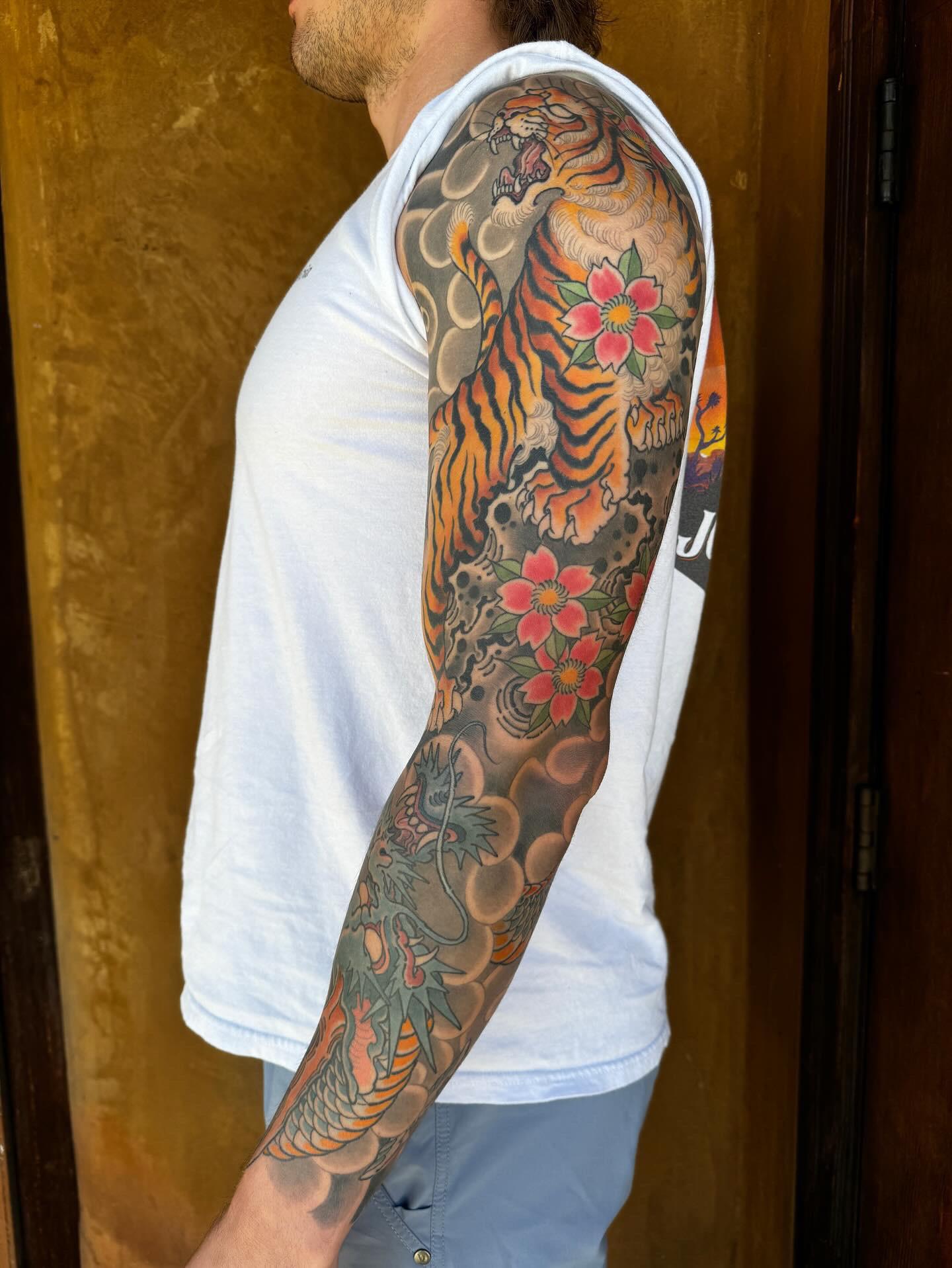
In Japanese-inspired tattooing, the tiger is often depicted moving through wind, mountains, or storm clouds. These environmental elements are not decorative filler. They reinforce the animal’s ability to remain powerful and composed despite challenging conditions.
Expert Observation: Experienced Irezumi artists often position the tiger in a way that suggests forward movement, symbolizing progress, determination, and active energy rather than static strength.
Dragon Symbolism in Eastern Traditions
Eastern dragons symbolize wisdom, prosperity, spiritual authority, protection, and supernatural power. Unlike many Western dragons that are portrayed as destructive creatures, Asian dragons are commonly viewed as benevolent beings connected to natural forces and divine guidance.
In Chinese mythology, dragons are associated with rainfall, abundance, and imperial authority. In Japanese art, dragons often represent transformation, knowledge, and mastery over powerful natural elements.
Popular dragon symbolism includes:
- Wisdom gained through experience
- Spiritual growth and transformation
- Prosperity and good fortune
- Leadership through intelligence
- Connection to higher purpose
A well-designed dragon sleeve section often utilizes the arm’s natural curves to create movement. The dragon’s body can wrap around the shoulder, bicep, forearm, and wrist, producing a dynamic composition that appears alive from multiple viewing angles.
Why Tiger and Dragon Are Paired Together
The tiger and dragon are paired because they represent two powerful forces that achieve balance through coexistence. Rather than depicting a winner and loser, traditional Eastern artwork uses the pair to illustrate harmony between instinct and wisdom, earth and sky, action and strategy.
This relationship is one of the most misunderstood aspects of tiger dragon tattoo symbolism. Many online galleries focus only on visual impact while overlooking the deeper philosophical foundation behind the pairing.
Traditional interpretations often compare the tiger and dragon in the following ways:
| Tiger | Dragon |
|---|---|
| Earthly power | Celestial power |
| Physical strength | Mental wisdom |
| Instinct | Strategy |
| Action | Vision |
| Courage | Authority |
Information Gain Insight: Elite Asian-style tattoo artists frequently design the tiger and dragon so their visual movement interacts across the sleeve. The tiger may climb upward while the dragon descends through clouds, creating a balanced narrative that follows the arm’s anatomy and reinforces the symbolic relationship between the two creatures.
The Cultural Origins of Tiger and Dragon Tattoos
Tiger and dragon tattoos originated from centuries of artistic, spiritual, and mythological traditions throughout East Asia. Their meanings vary between Japanese and Chinese interpretations, making cultural understanding essential when creating an authentic sleeve design.
One of the biggest mistakes collectors make is treating all Asian-inspired tattoo art as a single style. While Japanese and Chinese influences overlap in some areas, each tradition has distinct artistic conventions, symbolism, and visual storytelling methods.

Japanese Irezumi Interpretations
In traditional Japanese Irezumi, tiger and dragon imagery often reflects balance, perseverance, protection, and personal transformation. The artwork emphasizes movement, storytelling, and harmony between the main subjects and supporting background elements.
Irezumi sleeves are rarely designed around isolated figures. Instead, artists create a complete composition that integrates:
- Cloud formations
- Wind bars
- Water patterns
- Peonies
- Cherry blossoms
- Maple leaves
- Lightning motifs
The result is a sleeve that feels unified rather than fragmented.
Experienced Japanese-style tattoo artists typically consider how the sleeve will appear when the arm is relaxed, extended, and viewed from multiple angles. This level of planning separates authentic Irezumi-inspired work from generic tattoo designs assembled from reference images.
Chinese Mythology and Symbolic Meanings
Chinese interpretations of tiger and dragon imagery often emphasize cosmic balance, prosperity, authority, and protection. Both creatures hold prominent positions within Chinese folklore, astrology, and traditional symbolism.
The dragon has historically been associated with emperors and heavenly authority, while the tiger symbolizes military strength, guardianship, and earthly power. Together they create a representation of complete power balanced between heaven and earth.
Many Chinese-inspired sleeves feature:
- Flowing cloud formations
- Mountain landscapes
- Traditional architectural elements
- Fire and lightning effects
- Detailed scales and fur textures
Collectors seeking cultural authenticity should research the symbolism behind these elements rather than selecting them solely for appearance.
Common Cultural Misunderstandings to Avoid
Many tattoo enthusiasts unintentionally dilute the meaning of tiger and dragon sleeves by mixing incompatible symbols, ignoring cultural context, or relying exclusively on online reference photos. Understanding these mistakes can improve both authenticity and long-term satisfaction.
Common misconceptions include:
- Assuming all Asian tattoo styles are identical
- Treating the tiger and dragon as enemies rather than balanced forces
- Copying another person’s sleeve exactly
- Overcrowding the design with unrelated symbols
- Ignoring traditional background composition
Practical Recommendation: During consultations, ask artists to explain why specific elements are included in the design. Skilled artists can articulate how symbolism, anatomy, and composition work together. If an artist cannot explain these decisions, it may indicate limited experience with authentic Asian-style tattooing.
How a Tiger and Dragon Sleeve Is Designed
A successful tiger and dragon sleeve is designed as a complete visual narrative rather than two separate images placed on an arm. Professional artists use anatomy, movement, negative space, and symbolic balance to create a composition that flows naturally across the entire sleeve.
One of the largest differences between average sleeves and exceptional sleeves is planning. Experienced artists often spend hours developing composition sketches before any tattooing begins.
Traditional Sleeve Composition Principles
Traditional sleeve composition focuses on movement, balance, readability, and harmony between primary subjects and supporting elements. Every section of the arm contributes to the overall story, ensuring the tattoo remains visually effective from every angle.
The best tiger dragon sleeves typically follow three core principles:
- Clear focal points
- Balanced visual weight
- Continuous directional flow
Artists often use clouds, waves, wind bars, and negative space to guide the viewer’s eye naturally through the composition.
Upper Arm Placement Strategy
The shoulder and upper arm provide space for larger focal points. Many artists position either the tiger’s face or the dragon’s head here because these areas remain highly visible and allow for greater detail.
Large focal imagery placed too low on the sleeve can weaken overall visual impact, a mistake commonly seen in inexperienced sleeve planning.
Forearm Placement Strategy
The forearm is ideal for movement-based elements such as a dragon’s body, flowing clouds, or a tiger moving through wind patterns. Because the forearm rotates frequently during everyday movement, dynamic imagery performs particularly well in this area.
Professional artists often use the forearm to connect major subjects while maintaining visual flow throughout the entire sleeve.
Information Gain Insight: Many collectors focus exclusively on front-facing photographs during the design phase. Experienced sleeve artists evaluate the tattoo from at least four major viewing angles to ensure the composition remains balanced throughout natural arm movement.
How Artists Create Energy and Motion
Lucky Tattoo, a professional tattoo artist, has over 10 years of experience in the art of tattooing in Ho Chi Minh City. Lucky Tattoo Studio was founded in 2014 by skilled and kind artists. All tattoos are provided in a clean, strictly controlled, and friendly environment.
One of the defining characteristics of high-level Asian tattooing is movement. Dragons rarely appear motionless. Their bodies twist through clouds, wind bars, waves, and negative space to create a sense of progression throughout the sleeve.
Similarly, tigers are often positioned climbing, stalking, leaping, or emerging from environmental elements. These poses naturally communicate strength and purpose.
Professional artists commonly use:
- Cloud formations to connect major focal points
- Wind bars to establish directional flow
- Waves to create visual contrast
- Negative space for readability
- Layering techniques to build depth
A common mistake is overcrowding every section of the sleeve with detail. Experienced artists understand that visual breathing room often enhances impact more than additional imagery.
Expert Insight: The most memorable tiger dragon sleeves guide the viewer’s eye through the entire arm. Every element serves a compositional purpose rather than acting as filler.
Balancing Yin and Yang Across the Sleeve
Balancing Yin and Yang across a tiger dragon sleeve involves distributing visual weight, symbolic meaning, and movement evenly throughout the design. This approach creates harmony while preserving the distinct identities of both creatures.
Many tattoo galleries showcase impressive artwork but fail to explain why certain compositions feel balanced. Traditional Asian art principles emphasize equilibrium rather than symmetry.
Examples include:
- Large tiger focal point balanced by a flowing dragon body
- Dense detail offset by open negative space
- Warm colors contrasted with cooler tones
- Earth-based imagery paired with celestial elements
Information Gain Element: Master artists often evaluate the sleeve as a complete visual ecosystem. Instead of asking whether the tiger or dragon is more dominant, they focus on whether the overall composition feels harmonious from every viewing angle.
Popular Asian Tiger Dragon Sleeve Tattoo Styles
Asian tiger dragon sleeve tattoos can be executed in several distinct styles, each offering unique visual characteristics, symbolism, and aging properties. Choosing the right style depends on personal preferences, cultural influences, and long-term tattoo goals.
Traditional Japanese Irezumi Sleeves
Traditional Japanese Irezumi sleeves prioritize bold composition, strong symbolism, flowing movement, and harmonious backgrounds. They remain the benchmark for collectors seeking authentic Asian-inspired tattoo work.
Key characteristics include:
- Bold outlines
- Large-scale composition
- Traditional color palettes
- Integrated backgrounds
- Story-driven visual structure
Irezumi sleeves often age exceptionally well because their designs emphasize readability and strong contrast rather than excessive micro-detail.
Neo-Traditional Asian Sleeves
Neo-traditional Asian sleeves combine traditional Eastern symbolism with modern tattoo techniques, offering greater flexibility in color, detail, and artistic interpretation.
Collectors who appreciate traditional themes but want a contemporary appearance often choose this approach.
Popular enhancements include:
- Enhanced color saturation
- Realistic textures
- Modern shading techniques
- Custom narrative elements
- Expanded color palettes
The key is maintaining respect for the original symbolism while introducing creative personalization.
Black-and-Grey Tiger Dragon Sleeves
Black-and-grey tiger dragon sleeves emphasize contrast, texture, and longevity. They provide a timeless appearance and often require fewer touch-ups than highly saturated color designs.
Advantages include:
- Classic aesthetic
- Strong aging characteristics
- Exceptional texture detail
- Lower maintenance requirements
Artists frequently use black-and-grey approaches when creating highly detailed dragon scales, tiger fur, and atmospheric backgrounds.
Full Color Tiger Dragon Sleeves
Full color tiger dragon sleeves maximize visual impact through vibrant pigments and dramatic contrast. They are particularly effective for showcasing traditional Japanese and Chinese artistic influences.
Popular color choices include:
- Red dragons for power and prosperity
- Blue dragons for wisdom and protection
- Orange tigers for strength and courage
- Green accents for balance and nature
While visually stunning, color sleeves typically require more diligent sun protection and occasional touch-ups over time.
Best Supporting Elements for a Tiger Dragon Sleeve
Supporting elements enhance storytelling, symbolism, and visual cohesion within a tiger dragon sleeve. The most effective backgrounds are not decorative additions but essential components that strengthen the overall composition.
Waves, Clouds, and Wind Bars
Waves, clouds, and wind bars are foundational elements in Asian tattoo design because they create movement, depth, and continuity throughout the sleeve.
Each serves a distinct purpose:
- Clouds connect heavenly symbolism to the dragon
- Waves represent resilience and life’s challenges
- Wind bars create directional flow and energy
These elements help transform separate images into a unified sleeve composition.
Cherry Blossoms and Peonies
Cherry blossoms and peonies add symbolic depth while providing visual contrast to the powerful imagery of dragons and tigers. They are among the most frequently used floral motifs in Japanese tattoo art.
Cherry blossoms often symbolize:
- The fleeting nature of life
- Personal growth
- Beauty and impermanence
Peonies commonly represent:
- Prosperity
- Honor
- Abundance
The combination of powerful animals and delicate flowers creates an appealing symbolic balance.
Koi Fish, Samurai, and Temple Motifs
Koi fish, samurai, and temple motifs can expand the narrative of a tiger dragon sleeve when incorporated thoughtfully. These additions should complement the primary symbolism rather than compete with it.
Examples include:
- Koi fish representing perseverance
- Samurai symbolizing discipline and honor
- Temple architecture reflecting spirituality
Information Gain Insight: One of the most overlooked sleeve design principles is narrative consistency. Every supporting element should contribute to a unified story rather than functioning as a standalone visual attraction.
How Much Does an Asian Tiger Dragon Sleeve Tattoo Cost?
An Asian tiger dragon sleeve tattoo typically costs anywhere from several thousand dollars to well over five figures depending on artist reputation, geographic location, complexity, and total hours required. Custom sleeves represent significant artistic investments.
Factors Affecting Price
The final cost depends on multiple variables beyond tattoo size alone. Artist expertise and design complexity often have the greatest impact on pricing.
- Artist experience
- Custom design development
- Color versus black-and-grey execution
- Geographic market demand
- Detail density
- Session duration
Choosing a highly experienced Asian-style specialist may involve higher upfront costs but frequently results in superior long-term outcomes.
Number of Sessions Required
Most full tiger dragon sleeves require multiple sessions completed over several months. Healing periods between appointments are necessary to maintain skin health and achieve optimal results.
Typical sleeve projects may require:
- Initial consultation
- Outline session
- Multiple shading sessions
- Color application sessions
- Final refinement session
Rushing the process often compromises quality and healing.
Long-Term Maintenance Costs
Long-term maintenance includes skincare, sun protection, and occasional touch-ups. Proper aftercare can significantly extend the life and vibrancy of the tattoo.
Evidence-based recommendations include:
- Using broad-spectrum sunscreen
- Maintaining skin hydration
- Avoiding excessive UV exposure
- Scheduling touch-ups when necessary
Neglecting aftercare remains one of the leading causes of premature fading.
How to Choose the Right Tattoo Artist
Selecting the right tattoo artist is often more important than selecting the design itself. An experienced Asian-style specialist can elevate a concept into a cohesive masterpiece while preserving cultural authenticity and technical quality.
Portfolio Signs of a Skilled Asian-Style Artist
A strong portfolio demonstrates mastery of composition, anatomy, symbolism, and long-term tattoo performance. Look beyond social media highlights and evaluate complete healed sleeves whenever possible.
- Consistent line quality
- Strong composition
- Balanced use of negative space
- Healed tattoo examples
- Cultural understanding
Questions to Ask During Consultation
Consultations provide valuable insight into an artist’s expertise and design process. Asking thoughtful questions can prevent costly mistakes later.
- How would you structure the sleeve composition?
- Which cultural influences are reflected in the design?
- How many sessions should I expect?
- What healing challenges are common?
- Can you show healed examples?
Red Flags That Signal Inexperience
Several warning signs may indicate limited experience with large-scale Asian tattoo projects. Identifying these issues early can save significant time and money.
- No healed work available
- Heavy reliance on copied designs
- Poor understanding of symbolism
- Overcrowded compositions
- Inability to explain design decisions
Common Mistakes People Make With Tiger Dragon Sleeves
Many sleeve regrets stem from poor planning rather than poor intentions. Understanding common mistakes helps ensure the final result remains visually effective, culturally respectful, and personally meaningful for decades.
Copying Designs Without Customization
Copying existing sleeves often produces generic results and limits personal meaning. Custom design development creates a more authentic and memorable tattoo experience.
Experienced artists use reference material for inspiration rather than duplication.
Ignoring Symbolic Balance
Overemphasizing one creature at the expense of the other can weaken the sleeve’s symbolic foundation. Balanced storytelling remains central to traditional tiger dragon imagery.
Composition should support harmony rather than visual competition.
Prioritizing Price Over Expertise
Choosing the cheapest option frequently leads to higher long-term costs through cover-ups, corrections, or complete redesigns. Quality large-scale tattooing requires significant technical skill and planning.
Information Gain Insight: The most expensive tattoo is often the one that must be fixed later. Investing in expertise typically produces better artistic, cultural, and financial outcomes.
Frequently Asked Questions
What does an Asian tiger dragon sleeve tattoo symbolize?
It symbolizes balance between physical strength and spiritual wisdom, often reflecting harmony between opposing yet complementary forces.
Is a tiger and dragon sleeve more Japanese or Chinese?
Both traditions use tiger and dragon imagery, but symbolism, artistic conventions, and composition methods vary between Japanese Irezumi and Chinese-inspired styles.
How long does a tiger dragon sleeve take to complete?
Most full sleeves require multiple sessions spread across several months, depending on complexity, healing time, and artist availability.
Do tiger dragon tattoos have religious meanings?
While not inherently religious, they often draw from Buddhist, Taoist, Shinto, and broader East Asian philosophical influences.
Are color or black-and-grey sleeves better?
Neither is universally better. Color offers greater visual impact, while black-and-grey often provides superior longevity and lower maintenance.
Can I combine a tiger dragon sleeve with other Asian symbols?
Yes, provided the additional elements support a cohesive narrative and maintain cultural consistency.
How painful is a full sleeve tattoo?
Pain levels vary by individual and body area. Inner arm, elbow, and wrist regions are generally more sensitive than outer arm sections.
How do I know if an artist specializes in Asian-style tattoos?
Review healed portfolio work, examine composition quality, and ask detailed questions about symbolism, sleeve flow, and traditional influences.
Final Thoughts: Is an Asian Tiger Dragon Sleeve Tattoo Right for You?
An Asian tiger dragon sleeve tattoo remains one of the most powerful and meaningful concepts in large-scale body art. Its enduring appeal comes from the combination of compelling symbolism, visual impact, and deep cultural roots. Whether inspired by Japanese Irezumi, Chinese mythology, or a contemporary interpretation, the strongest sleeves balance artistic excellence with authentic storytelling.
Collectors who invest time in understanding symbolism, selecting an experienced artist, and developing a custom composition are far more likely to achieve a sleeve that remains meaningful for decades. The tiger represents courage, resilience, and earthly strength. The dragon embodies wisdom, transformation, and higher power. Together, they create a timeless representation of balance that continues to resonate across cultures and generations.