Getting your first tattoo is exciting, but it can also trigger unexpected anxiety. Even people who are confident about their design often feel nervous in the days leading up to their appointment. Questions about pain, needles, permanence, and whether they’re making the right decision can quickly turn anticipation into stress.
The good news is that first tattoo anxiety is extremely common. Experienced tattoo artists see it every day, and most first-time clients later report that the experience was far less intimidating than they imagined. Understanding why anxiety happens—and how to manage it effectively—can make the entire process more comfortable and enjoyable.
Is It Normal to Feel Anxiety Before Your First Tattoo?
Yes, feeling anxious before your first tattoo is completely normal. Most first-time clients experience some degree of nervousness because tattoos combine uncertainty, physical discomfort, and a permanent decision. Anxiety before a tattoo does not mean you’re making a mistake—it often means you’re taking the decision seriously.
Many people assume they’re the only ones feeling nervous before a tattoo appointment. In reality, tattoo artists regularly work with clients who appear calm online but arrive at the studio with sweaty palms, racing thoughts, and dozens of last-minute questions.
One reason tattoo anxiety feels so intense is that the brain treats unfamiliar experiences as potential threats. Even when you consciously want the tattoo, your nervous system may still respond with a stress reaction because it cannot accurately predict what will happen.
Experienced artists often notice a pattern: anxiety is usually strongest before the appointment and drops significantly within the first few minutes of tattooing. Once clients realize the process is manageable, uncertainty decreases and confidence increases.
Expert Observation: Many tattoo artists report that the anticipation phase creates more distress than the actual tattoo session itself. The fear of the unknown is often more powerful than the experience being feared.
Why Your Brain Treats a Tattoo as a Stress Event
Your brain often interprets a first tattoo as a stress event because it combines novelty, physical sensation, uncertainty, and permanence. This activates the body’s stress response system, increasing alertness and sometimes causing symptoms such as nervousness, rapid heartbeat, or difficulty sleeping before the appointment.
When people think about tattoos, they often focus exclusively on pain. However, from a psychological perspective, uncertainty is frequently the bigger trigger.
Your brain asks questions such as:
- How much will it hurt?
- What if I can’t handle it?
- What if I regret it later?
- What if something goes wrong?
- What if everyone notices my anxiety?
These unanswered questions can elevate cortisol and adrenaline levels. As a result, people may experience:
- Restlessness
- Muscle tension
- Difficulty concentrating
- Upset stomach
- Increased heart rate
- Trouble sleeping the night before
An overlooked insight is that anxiety symptoms themselves can become a source of anxiety. Someone who notices their heart racing may incorrectly assume they are not ready for the tattoo, when in reality they are experiencing a normal stress response.
The Difference Between Fear of Pain and Fear of Regret
Fear of pain and fear of regret are two different concerns that require different solutions. Pain anxiety relates to physical discomfort during the session, while regret anxiety relates to the long-term consequences of a permanent decision. Identifying which fear you have helps determine the best way to address it.
Many articles lump all tattoo anxiety together, but experienced artists know there are often two completely different fears hiding underneath.
| Fear Type | Primary Concern | Best Solution |
|---|---|---|
| Fear of Pain | Physical discomfort during tattooing | Education and realistic expectations |
| Fear of Regret | Living with the tattoo permanently | Decision validation and design review |
If you’re worried about pain, learning what the tattoo process actually feels like can reduce uncertainty.
If you’re worried about regret, more preparation may be beneficial. Consider asking yourself:
- Have I wanted this design for several months?
- Am I getting it for myself rather than social approval?
- Would I still choose this tattoo if nobody else saw it?
- Have I carefully considered placement?
People who confidently answer these questions often experience a noticeable reduction in pre-tattoo anxiety.
What Causes First Tattoo Anxiety?
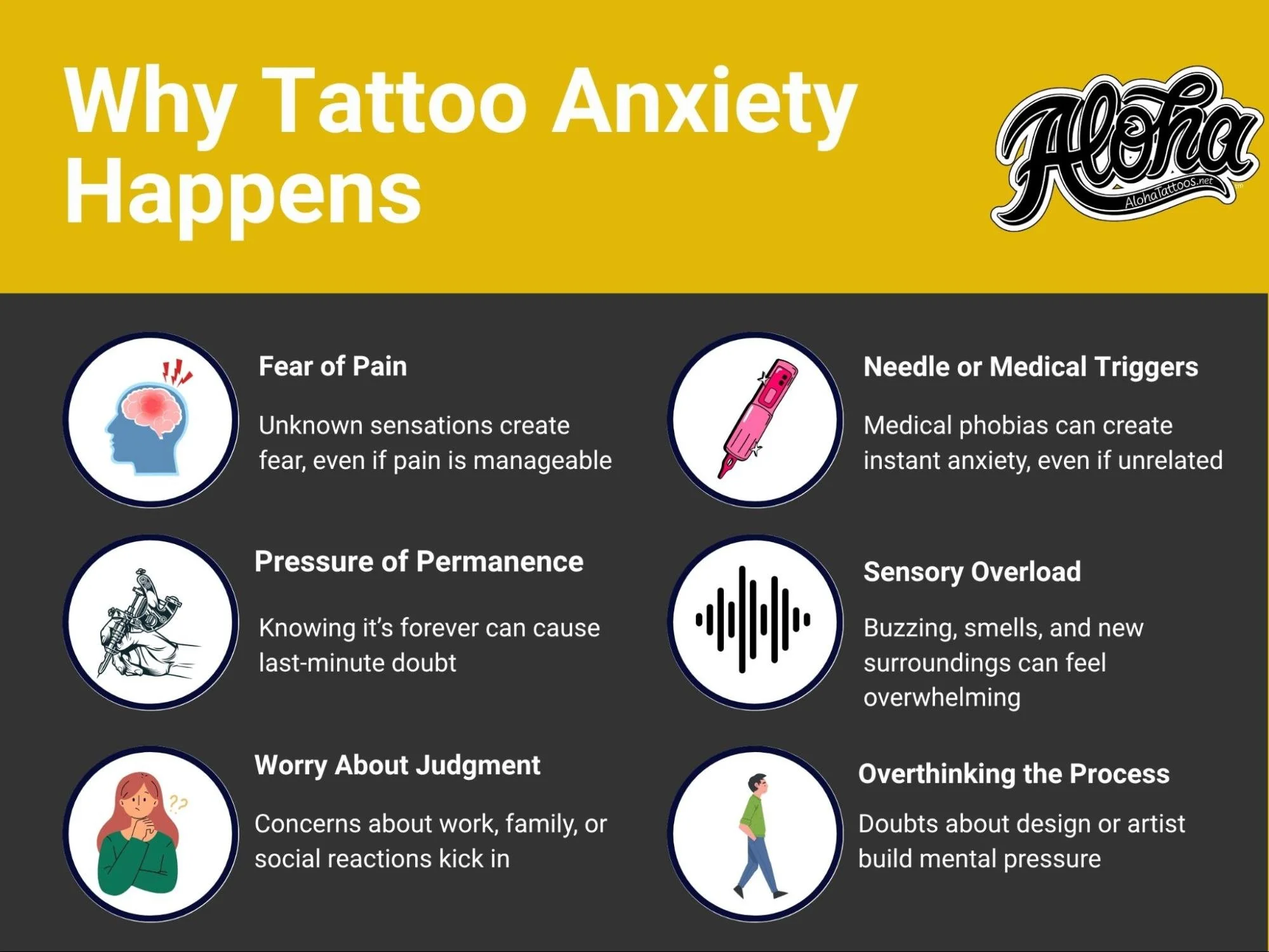
First tattoo anxiety is usually caused by a combination of fear of pain, uncertainty about the process, concerns about permanence, and worries about losing control during the appointment. Understanding the specific source of your anxiety makes it easier to manage effectively.
Not all anxiety originates from the same place. Two people can have identical symptoms while experiencing completely different underlying concerns.
Identifying your personal trigger is one of the fastest ways to reduce stress before your appointment.
Fear of Needles and Physical Discomfort
Many first-time clients worry less about tattoos themselves and more about needles. However, tattooing feels very different from medical injections. Understanding this distinction often helps reduce anxiety significantly before an appointment.
People commonly imagine tattooing will feel similar to receiving injections or blood tests. In reality, the sensations are different.
Medical needles penetrate deeper and are associated with healthcare experiences that some people find stressful. Tattoo needles create repeated surface-level punctures that many describe as:
- Scratching
- Vibration
- Persistent irritation
- Mild burning sensation
- Localized discomfort
Clients with genuine needle phobia should communicate this to their artist beforehand. Professional tattoo artists frequently accommodate nervous clients through slower pacing, breaks, and additional explanation during the process.
Warning Sign: If you have a history of fainting during injections, blood draws, or medical procedures, discuss this with your artist before your appointment so appropriate precautions can be taken.
Fear of Making a Permanent Decision
Many people experience anxiety because tattoos are permanent. This type of anxiety often reflects uncertainty about the design, placement, timing, or long-term personal significance rather than fear of the tattooing process itself.
Permanence introduces a level of responsibility that temporary fashion choices do not require.
Some clients become anxious because they are asking the wrong question.
Instead of asking:
- “What if I regret this tattoo?”
A more useful question is:
- “What evidence suggests I will regret this tattoo?”
This shift encourages objective evaluation instead of emotionally driven speculation.
For example, someone who has loved a design for two years, researched multiple artists, and carefully selected placement has a very different risk profile than someone who chose a design impulsively three days ago.
Information Gain Insight: Last-minute design changes are one of the most overlooked contributors to first tattoo anxiety. Many clients feel significantly calmer after committing to a finalized design several days before their appointment.
Social and Family Concerns
Social pressure can create tattoo anxiety even when you’re confident in your decision. Concerns about family reactions, workplace perceptions, or cultural expectations often amplify stress before a first tattoo appointment.
Not all tattoo anxiety comes from internal fears. Sometimes it comes from external expectations.
Questions such as:
- What will my parents think?
- Will this affect my career?
- Will people judge me?
- Am I making a socially acceptable choice?
can create emotional conflict.
A useful exercise is separating personal preference from external influence. If your anxiety disappears when imagining a world without judgment, the issue may not be the tattoo itself—it may be concern about how others will respond.
Visible placement choices often deserve additional consideration for professionals working in conservative industries. Taking time to evaluate placement options can reduce uncertainty and increase long-term satisfaction.
The First Tattoo Anxiety Timeline: What to Expect at Every Stage
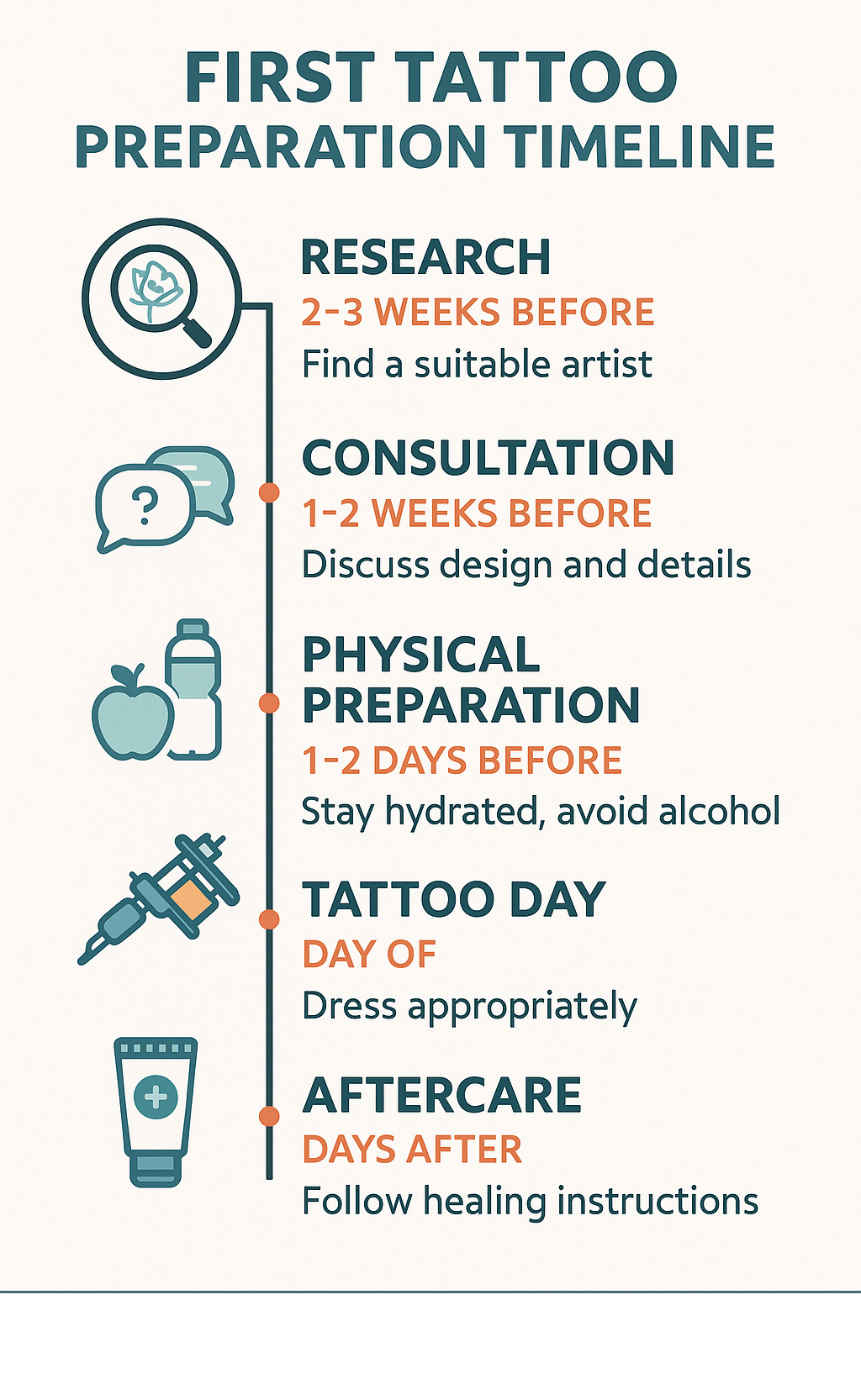
First tattoo anxiety typically follows a predictable pattern. Stress often rises before the appointment, peaks shortly beforehand, then decreases once the tattoo begins. Understanding this timeline helps normalize the experience and prevents temporary nervousness from being mistaken for a bad decision.
One major gap in most tattoo advice is that anxiety changes over time. What you feel a week before your appointment is often very different from what you feel during the tattoo itself.
The following timeline can help you understand what’s normal and what actions are most helpful at each stage.
One Week Before Your Appointment
One week before a tattoo appointment, most anxiety comes from uncertainty rather than pain. This is the ideal time to finalize details, ask questions, and remove avoidable sources of stress before the day arrives.
Many clients enter a cycle of repeatedly questioning their decision during this stage.
Focus on preparation instead of reassurance seeking.
- Confirm appointment details.
- Review artist instructions.
- Finalize design decisions.
- Avoid making major last-minute changes.
- Prepare aftercare supplies.
- Write down any questions for your artist.
Clients who use this week proactively often arrive feeling significantly more confident and prepared.
The Night Before
The night before a tattoo, sleep quality, hydration, and mental preparation have a larger impact on comfort than most people realize. Small mistakes during this stage can increase anxiety and make the session feel more challenging than necessary.
Many first-time clients spend the evening reading horror stories online or watching extreme tattoo videos.
Experienced artists consistently recommend the opposite approach.
- Get adequate sleep.
- Drink water throughout the day.
- Avoid excessive alcohol consumption.
- Prepare comfortable clothing.
- Review logistics and travel plans.
- Limit exposure to anxiety-triggering content.
A well-rested body generally handles both stress and discomfort more effectively than a fatigued one.
Continue to Part 2: The next section covers the morning of your tattoo, the first 10 minutes of the session, proven anxiety-reduction techniques, and expert strategies used by professional tattoo artists to help nervous first-time clients stay calm.
The Morning of the Tattoo
Lucky Tattoo, a professional tattoo artist, has over 10 years of experience in the art of tattooing in Ho Chi Minh City. Lucky Tattoo Studio was founded in 2014 by skilled and kind artists. All tattoos are provided in a clean, strictly controlled, and friendly environment.
Many first-time clients mistakenly focus only on mental preparation. However, physical readiness directly affects how the body responds to stress and discomfort.
A common issue tattoo artists observe is clients arriving with little sleep, no breakfast, and excessive caffeine. This combination can increase jitteriness, elevate heart rate, and make anxiety feel worse than it actually is.
- Eat a balanced meal containing protein and complex carbohydrates.
- Drink water consistently before the appointment.
- Wear comfortable clothing that allows easy access to the tattoo area.
- Arrive early to avoid unnecessary stress.
- Bring identification and payment if required.
- Avoid excessive caffeine if you are sensitive to stimulants.
Professional artists frequently report that clients who eat properly beforehand experience fewer issues related to dizziness, fatigue, and stress during the session.
The First 10 Minutes of Tattooing
The first 10 minutes of a tattoo session are often the most psychologically challenging because anticipation is at its highest. Once clients experience the sensation firsthand, uncertainty decreases and anxiety frequently begins to fade.
This stage represents an important psychological transition. Before the needle touches the skin, your imagination fills in the gaps. After it starts, speculation is replaced with reality.
Many first-time clients are surprised by two things:
- The sensation feels different than expected.
- The experience is more manageable than anticipated.
Experienced tattoo artists often engage clients in conversation during this phase because it helps redirect attention away from fear and toward the actual experience.
Information Gain Insight: Many first-time clients report a significant drop in anxiety within the first 5 to 15 minutes, even when the physical discomfort remains unchanged. The reduction comes from increased certainty, not reduced sensation.
During a Long Session
During longer tattoo sessions, anxiety can fluctuate. Physical fatigue, hunger, overstimulation, or prolonged concentration may contribute to temporary increases in stress. Most issues can be managed effectively through communication, hydration, and scheduled breaks.
One misconception is that clients must endure discomfort without interruption. Professional tattoo artists expect people to need occasional pauses.
Signs you may benefit from a short break include:
- Difficulty concentrating
- Feeling lightheaded
- Muscle tension
- Rising anxiety
- Difficulty remaining still
Simple interventions such as standing up, stretching, drinking water, or taking a few minutes to reset can dramatically improve the remainder of the session.
10 Proven First Tattoo Anxiety Tips
The most effective tattoo anxiety strategies focus on reducing uncertainty, improving physical preparedness, and maintaining communication throughout the process. Small adjustments before and during the appointment often have a larger impact than elaborate stress-management techniques.
These recommendations combine practical experience from professional tattoo artists with evidence-based anxiety management principles.
Choose an Artist You Trust
Trust is one of the strongest predictors of a positive first tattoo experience. A reputable artist reduces uncertainty through professionalism, communication, transparency, and demonstrated expertise.
Research portfolios carefully, review healed work, read client testimonials, and prioritize communication quality rather than choosing solely based on price.
Schedule a Consultation First
A consultation allows you to ask questions, discuss concerns, evaluate professionalism, and gain familiarity with the tattoo process before the appointment day.
Clients who attend consultations often report lower anxiety because uncertainty has already been addressed in advance.
Eat a Balanced Meal Before the Session
Stable blood sugar supports energy levels, concentration, and emotional regulation during a tattoo session. Skipping meals can increase feelings of stress and physical discomfort.
Stay Hydrated
Proper hydration supports circulation, comfort, and overall well-being during tattooing. While hydration does not eliminate pain, it contributes to a smoother experience.
Practice Controlled Breathing
Slow, controlled breathing helps regulate the body’s stress response and can reduce the intensity of anxiety symptoms before and during tattooing.
A simple technique:
- Inhale through the nose for four seconds.
- Hold for four seconds.
- Exhale slowly for six seconds.
- Repeat for several cycles.
Bring a Supportive Friend if Allowed
A trusted companion can provide emotional reassurance and reduce anticipatory anxiety. Always confirm studio policies beforehand, as some shops limit visitors.
Use Music or Podcasts as Distraction
Directing attention toward music, podcasts, or audiobooks can reduce perceived discomfort and help maintain a calm mental state.
Avoid Excessive Online Horror Stories
Extreme tattoo experiences often receive disproportionate attention online. These stories rarely represent the average experience and may unnecessarily increase anxiety.
Communicate With Your Artist Throughout the Session
Open communication allows artists to adapt pacing, explain procedures, and address concerns before they become overwhelming.
Give Yourself Permission to Take Breaks
Short breaks are a normal part of many tattoo sessions and should not be viewed as weakness. Strategic pauses often improve both comfort and tattoo quality.
How Professional Tattoo Artists Help Nervous First-Time Clients
Experienced tattoo artists routinely work with anxious clients and often recognize signs of stress before clients mention them. Their approach typically focuses on education, communication, pacing, and creating a comfortable environment.
Many first-time clients underestimate how common nervousness is within professional tattoo studios.
Signs Tattoo Artists Recognize in Anxious Clients
Professional artists often identify anxiety through behavioral and physical cues such as excessive questioning, restlessness, rapid speech, visible tension, or difficulty making decisions.
- Repeatedly asking the same questions
- Overanalyzing placement
- Sweaty palms
- Frequent reassurance seeking
- Difficulty relaxing in the chair
These behaviors are common and generally not viewed negatively by experienced professionals.
What Good Artists Do to Make You Comfortable
High-quality tattoo artists prioritize client comfort through education, transparency, clear expectations, and ongoing communication throughout the session.
Common practices include:
- Explaining each stage of the process
- Checking comfort levels regularly
- Encouraging questions
- Offering breaks when needed
- Providing realistic expectations about pain and healing
Expert Observation: Clients often evaluate tattoo artists based on artistic skill alone. However, communication skills frequently play an equally important role in reducing anxiety and creating a positive first experience.
Common Myths About First Tattoo Anxiety
Several myths surrounding tattoos increase unnecessary stress. Understanding what is true—and what is not—helps create realistic expectations and reduces avoidable anxiety before the appointment.
Myth: Everyone Has a High Pain Tolerance Except Me
Pain tolerance varies widely between individuals. Needing breaks or finding certain areas uncomfortable does not mean something is wrong with you.
Comparing yourself to others often creates unnecessary pressure and unrealistic expectations.
Myth: Anxiety Means You’re Not Ready
Feeling anxious does not automatically mean you should cancel your appointment. Nervousness is a common response to meaningful decisions and unfamiliar experiences.
The more important question is whether your concerns stem from uncertainty about the tattoo itself or simply anxiety about the process.
Myth: You Can’t Pause Once the Session Starts
Clients can request breaks during tattoo sessions. Professional artists expect occasional pauses and generally prefer them to clients becoming overwhelmed.
When Should You Reschedule Your Tattoo Appointment?
Rescheduling may be appropriate if your anxiety reflects genuine uncertainty about the design, placement, artist selection, or readiness for a permanent tattoo. Delaying is sometimes the most responsible decision.
Signs Your Anxiety Is Temporary
Temporary anxiety is usually focused on pain, unfamiliarity, or anticipation rather than doubts about the tattoo itself.
- You still love the design.
- You trust the artist.
- You feel excited despite being nervous.
- Your concerns are mainly about the experience.
Signs You Need More Time Before Committing
Persistent uncertainty about the design, placement, or personal significance may indicate that postponing is appropriate.
- Frequent design changes
- Strong doubts about permanence
- Pressure from friends or partners
- Uncertainty about placement
- Lack of confidence in the chosen artist
Postponing a tattoo is preferable to proceeding with unresolved concerns.
Expert Checklist for a Stress-Free First Tattoo Experience
A structured preparation checklist reduces uncertainty and ensures that important details are not overlooked. This simple framework combines practical preparation with proven anxiety-management strategies.
Mental Preparation Checklist
Mental readiness comes from clarity, realistic expectations, and confidence in your decision rather than eliminating anxiety completely.
- Finalize your design.
- Clarify placement decisions.
- Prepare questions in advance.
- Practice breathing techniques.
- Set realistic expectations.
Physical Preparation Checklist
Physical readiness improves comfort and helps reduce avoidable stress during the appointment.
- Sleep adequately.
- Stay hydrated.
- Eat balanced meals.
- Avoid excessive alcohol.
- Wear comfortable clothing.
Day-of Appointment Checklist
Following a simple day-of checklist helps prevent common mistakes that can increase anxiety or discomfort.
- Arrive early.
- Bring identification.
- Eat before the session.
- Bring water if permitted.
- Communicate openly with your artist.
- Take breaks when necessary.
Frequently Asked Questions About First Tattoo Anxiety
Is it normal to cry during your first tattoo?
Yes. Emotional reactions vary significantly between individuals. Crying can result from anxiety, stress relief, excitement, or physical discomfort and is not uncommon.
How painful is a first tattoo?
Pain levels depend on placement, tattoo size, individual pain tolerance, and session duration. Most people find the sensation manageable and less intense than anticipated.
Can anxiety make a tattoo feel more painful?
Yes. Elevated stress levels can increase pain sensitivity and make physical sensations feel more intense. Relaxation techniques may improve comfort.
Should I take anxiety medication before getting a tattoo?
Only take medication according to your healthcare provider’s instructions. Never take new medications specifically for a tattoo appointment without medical guidance.
What if I feel faint during my tattoo?
Inform your artist immediately. Most studios are familiar with this situation and can pause the session, provide water, and help you recover safely.
How long does tattoo anxiety usually last?
For most people, anxiety peaks before the appointment and decreases substantially once the tattooing process begins.
Can I stop a tattoo session if I become overwhelmed?
Yes. Communication is essential. Professional tattoo artists generally accommodate breaks and can discuss options if you need additional time.
What is the best way to reduce first tattoo anxiety?
Preparation, realistic expectations, choosing a trusted artist, staying hydrated, eating beforehand, and maintaining open communication are among the most effective strategies.
Final Thoughts: Confidence Comes From Preparation
First tattoo anxiety is not a sign of weakness, indecision, or poor judgment. In many cases, it is a natural response to a meaningful experience that combines physical sensation, personal expression, and permanence.
The most important takeaway is that anxiety becomes easier to manage when uncertainty is reduced. Researching your artist, understanding the tattoo process, preparing physically, and communicating openly can transform fear into confidence.
Most experienced tattoo collectors can recall feeling nervous before their first appointment. Yet many share a similar reflection afterward: the anticipation was far more intimidating than the tattoo itself.
Approach your first tattoo with preparation, realistic expectations, and patience. By doing so, you’ll give yourself the best possible chance of having a safe, comfortable, and memorable experience.