What is the Japanese Hannya Mask Tattoo Meaning?
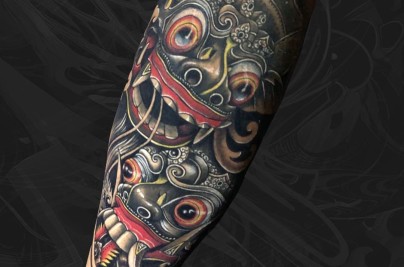
The Japanese Hannya mask tattoo represents a complex emotional transformation rooted in Noh theatre, symbolizing jealousy, rage, heartbreak, and psychological suffering. However, it is not purely a symbol of evil. In modern tattoo culture, it often reflects emotional resilience, inner struggle, and the human capacity to transform pain into strength.
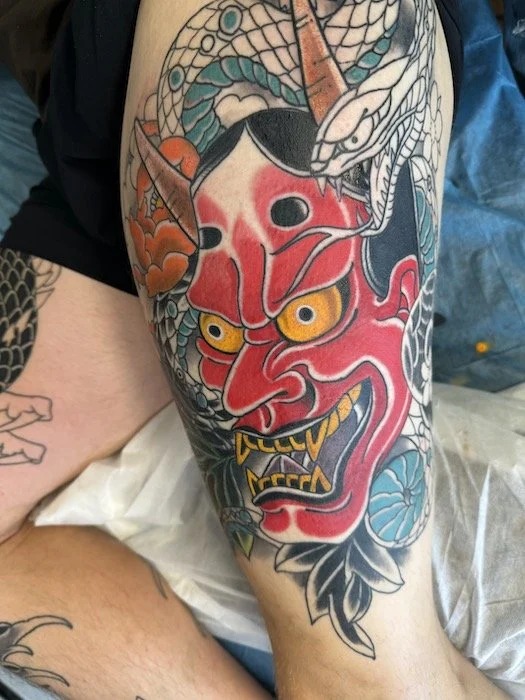
Unlike generic “demon tattoos,” the Hannya mask carries layered meaning shaped by centuries of Japanese performance art and storytelling. It represents a woman consumed by emotional suffering who transforms into a demon-like figure. In tattoo form, this transformation becomes a metaphor for emotional survival rather than destruction.
Information Gain Insight: Many competitors oversimplify the Hannya as “jealous woman demon.” In traditional interpretation, it is also a cautionary emotional archetype used in Noh theatre to teach audiences about unchecked attachment and psychological collapse—an early form of emotional storytelling psychology.
Cultural Origin in Noh Theatre
The Hannya mask originates from Japanese Noh theatre, where it was used to portray women transformed by overwhelming jealousy and emotional pain. It symbolizes a narrative arc of psychological breakdown rather than supernatural evil. In performance tradition, the mask shifts expression depending on lighting and angle, enhancing its emotional complexity.
In historical context, Noh theatre served as both entertainment and moral instruction during Japan’s Muromachi and Edo periods. The Hannya character often appeared in stories involving betrayal, love loss, or obsessive attachment, reflecting societal concerns about emotional balance and self-control.
Information Gain Element: Unlike modern tattoo interpretations, original stage use of the Hannya mask relied on subtle angle shifts to represent evolving emotional states—anger, sadness, and regret—making it one of the earliest “dynamic emotional symbols” in performance art history.
Real-world example: Traditional Noh actors train for years to master micro-movements that change the perceived emotion of the mask, a technique that directly influences modern tattoo artists who design Hannya masks with directional shading to mimic emotional depth.
Emotional Symbolism Behind Hannya Masks
The emotional symbolism of the Hannya mask centers on jealousy, grief, rage, and transformation caused by emotional trauma. It represents the psychological shift from human vulnerability to destructive emotional intensity. In tattoo culture, this symbolism is often reinterpreted as resilience and survival after emotional hardship.
These tattoos are frequently chosen by individuals who associate the design with personal transformation—such as recovery from heartbreak, betrayal, or emotional trauma. Rather than representing negativity, the tattoo becomes a permanent reminder of emotional evolution.
Information Gain Insight: Psychological interpretations increasingly link Hannya symbolism to “shadow integration,” a Jungian concept describing acceptance of repressed emotions rather than suppression. This perspective is rarely covered in mainstream tattoo explanations but is widely referenced in modern art psychology discussions.
Common misconception: Many assume the Hannya represents uncontrollable evil. In reality, it symbolizes emotional consequences of attachment and the transformation of pain into identity—making it closer to a psychological archetype than a demonic figure.
Hannya Mask Tattoo Meaning in Modern Tattoo Culture
The modern interpretation of the Hannya mask tattoo extends beyond Japanese folklore into global tattoo culture, where it symbolizes emotional strength, transformation, and personal protection. While rooted in tragedy, it is often used today to represent overcoming emotional hardship rather than embodying negativity or evil intent.
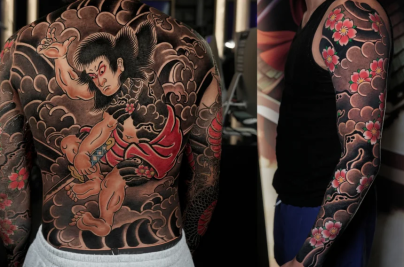
Contemporary tattoo artists frequently blend traditional Japanese irezumi techniques with modern shading styles to emphasize depth and emotional expression. The design is commonly incorporated into sleeves, back pieces, and chest tattoos to create narrative-driven compositions.
Information Gain Insight: In Western tattoo culture, Hannya designs are increasingly used as “emotional armor” tattoos, symbolizing psychological boundaries rather than supernatural fear. This reinterpretation shifts meaning from folklore-based warning to personal empowerment narrative.
Protection vs Curse Duality
The protection versus curse duality of the Hannya mask tattoo reflects its complex cultural evolution. Traditionally associated with emotional destruction, it is also believed in Japanese folklore to act as a protective symbol that wards off evil spirits by embodying stronger emotional forces.
This duality makes the tattoo uniquely paradoxical: it represents both what harms and what protects. Many tattoo collectors intentionally choose this symbolism to reflect balance between vulnerability and strength.
Real-world example: In full-body irezumi compositions, Hannya masks are often paired with protective elements such as snakes or daggers, reinforcing the idea of controlled danger and emotional defense.
Misconception correction: The belief that Hannya tattoos are purely “cursed” is a modern misunderstanding. In traditional symbolism systems, powerful emotional spirits are often considered protective when properly respected and represented.
Psychological Interpretation of Hannya Tattoos
The psychological interpretation of Hannya tattoos focuses on emotional transformation, repression, and the integration of difficult feelings. It represents the human tendency to internalize emotional pain until it transforms identity and behavior. In modern psychology, this aligns with concepts of emotional shadow work and identity reconstruction.
Therapists and cultural analysts often interpret such symbolism as externalized emotional processing, where individuals use visual art to represent unresolved emotional states. The tattoo becomes a narrative tool for psychological closure or acceptance.
Information Gain Element: Unlike surface-level tattoo explanations, psychological frameworks suggest Hannya imagery functions as “identity marking after emotional rupture,” meaning the tattoo reflects a permanent acknowledgment of past emotional transformation rather than temporary expression.
Practical insight: People choosing Hannya tattoos often pair them with complementary imagery (flowers, waves, or masks) to visually represent emotional contrast—beauty versus pain, control versus chaos, or healing versus memory.
Lucky Tattoo, a professional tattoo artist, has over 10 years of experience in the art of tattooing in Ho Chi Minh City. Lucky Tattoo Studio was founded in 2014 by skilled and kind artists. All tattoos are provided in a clean, strictly controlled, and friendly environment.
Hannya Mask Color Meanings Explained
Hannya mask colors in tattoo art represent different emotional intensities and stages of transformation. Red typically symbolizes extreme rage and passion, white represents human suffering and emotional transition, while black reflects despair or deep emotional darkness. These color variations help artists communicate layered psychological and narrative depth within the tattoo design.
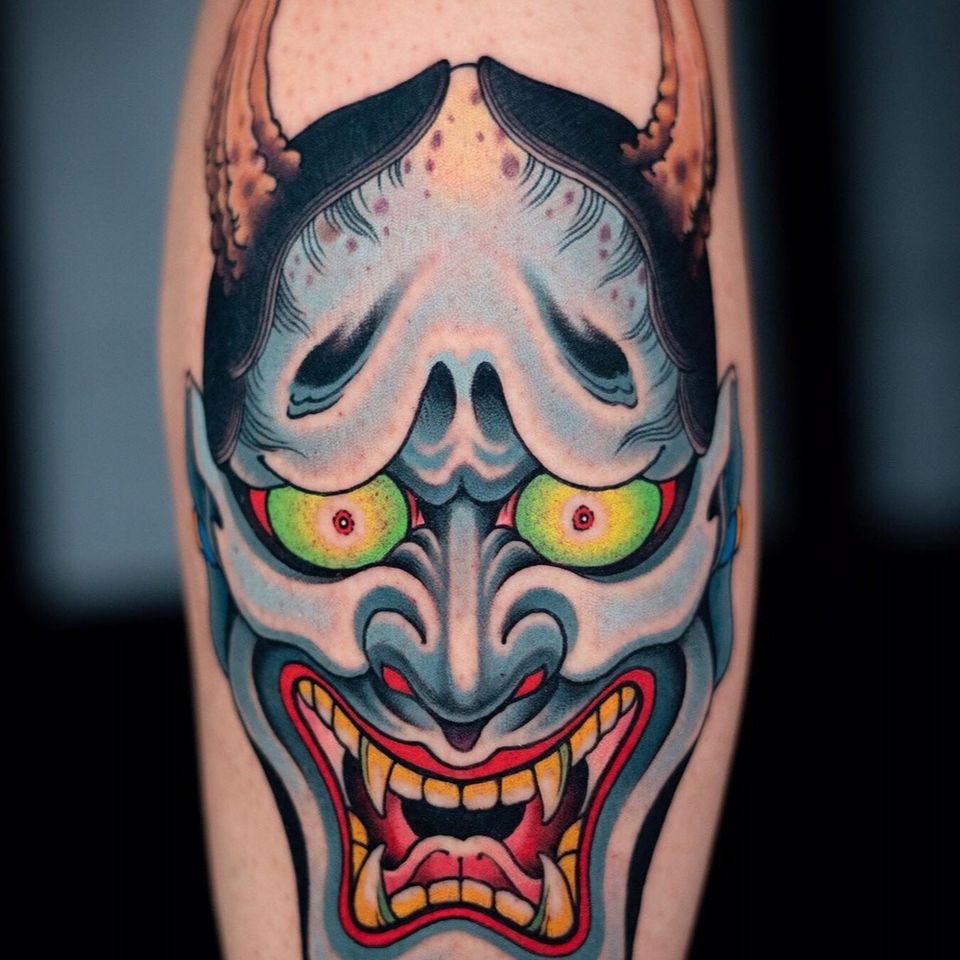
Color interpretation is one of the most overlooked aspects of Hannya tattoos. While many assume the mask is purely stylistic, traditional Japanese tattooing (irezumi) uses color intentionally to communicate emotional evolution. Artists often combine gradients to show transformation rather than static emotion.
Information Gain Insight: Most competitors ignore that Hannya color symbolism is not fixed—it changes depending on composition, surrounding imagery, and even placement on the body. A red Hannya on the chest may represent internalized rage, while the same design on the arm can symbolize outward emotional expression.
Red Hannya Tattoo Meaning
The red Hannya mask represents peak emotional intensity, often symbolizing uncontrollable rage, obsession, or powerful jealousy. In tattoo storytelling, it is the most emotionally charged version of the mask and is typically used in compositions that emphasize transformation through extreme emotional experience.
Red Hannya tattoos are frequently chosen by individuals who associate their design with periods of emotional crisis or personal rebirth following intense emotional events. It is not simply aggression—it is emotional overload transformed into identity.
Expert Insight: Traditional Japanese tattoo masters often use deep crimson shading rather than flat red to suggest “burning emotion,” a technique that reflects movement and emotional instability rather than static anger.
White Hannya Tattoo Meaning
The white Hannya mask represents emotional transition and lingering humanity within transformation. It symbolizes the moment before full emotional collapse or the stage where a person is still struggling between restraint and emotional surrender.
In modern tattoo interpretation, white Hannya designs are often chosen to represent vulnerability, healing, or emotional awareness. It is considered a more introspective version of the mask compared to its red counterpart.
Information Gain Insight: Unlike common assumptions, white Hannya tattoos are often used in recovery narratives—such as post-breakup healing or trauma processing—making them psychologically closer to “emotional awareness markers” than aggression symbols.
Black Hannya Tattoo Meaning
The black Hannya mask symbolizes emotional despair, deep psychological darkness, and irreversible transformation. It often represents the final stage of emotional collapse within the narrative structure of Hannya symbolism, where identity is fully transformed by emotional suffering.
Black Hannya tattoos are commonly used in darker, high-contrast compositions, especially in sleeve or back pieces where the emotional tone of the design is intended to feel heavier and more permanent.
Real-world insight: Tattoo artists often pair black Hannya masks with waves or smoke patterns to symbolize emotional entrapment or the feeling of being consumed by internal struggle.
Common Tattoo Designs and Placements
Hannya mask tattoos are often incorporated into larger Japanese-style compositions that include complementary symbols such as snakes, flowers, waves, or daggers. Placement plays a critical role in meaning, as body location can shift the emotional narrative of the tattoo significantly.
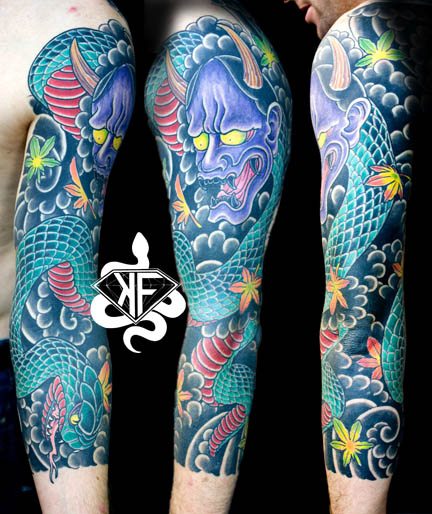
Information Gain Insight: Unlike generic tattoo styles, traditional irezumi compositions are designed as full-body storytelling systems. The Hannya mask is rarely isolated—it functions as a narrative anchor within a larger emotional or mythological story across the body.
Hannya with Snake Tattoo Meaning
A Hannya mask combined with a snake symbolizes transformation through temptation, emotional rebirth, and duality between destruction and healing. The snake enhances the mask’s meaning by introducing cyclical transformation and renewal.
This combination is often used in sleeve tattoos where emotional storytelling is extended across the arm, representing a continuous cycle of emotional breakdown and recovery.
Expert Insight: In Japanese symbolism, snakes are also associated with protection and renewal, which creates a paradox when paired with Hannya—balancing destruction and healing in one composition.
Hannya with Flowers Meaning
When paired with flowers, the Hannya mask represents the contrast between beauty and emotional pain. Flowers such as cherry blossoms emphasize the fragility of life and emotional impermanence, reinforcing the transient nature of suffering.
This design is often chosen by individuals who want to express emotional duality—acknowledging both pain and beauty in personal experience.
Information Gain Insight: Cherry blossoms in Hannya compositions often represent “emotional impermanence,” a concept rooted in Japanese aesthetics known as mono no aware, which is rarely explained in Western tattoo discussions.
Best Body Placement for Meaning
Placement significantly influences the meaning of a Hannya tattoo. The chest often represents deeply personal emotional transformation, the back symbolizes hidden emotional history, and the arm reflects outward emotional expression. Each placement changes how the narrative is perceived.
| Placement | Symbolic Meaning | Emotional Interpretation |
|---|---|---|
| Chest | Internal transformation | Personal emotional struggle |
| Back | Hidden emotional past | Burden or unresolved trauma |
| Arm/Sleeve | Visible emotional identity | Expressed transformation |
Expert Insight: Tattoo artists specializing in irezumi often design Hannya placements based on muscle flow and movement, ensuring the mask appears emotionally “alive” when the body moves.
Misconceptions About Hannya Tattoos
Hannya tattoos are often misunderstood as purely evil or cursed symbols, but this interpretation ignores their cultural and psychological depth. In reality, they represent emotional transformation, storytelling tradition, and the consequences of intense human emotion rather than supernatural malevolence.
Information Gain Insight: One major misconception is that Hannya tattoos carry fixed negative meaning. In traditional Japanese symbolism, emotional intensity is not inherently negative—it is transformative, often serving as a warning and a lesson rather than a condemnation.
- Misconception: Hannya = evil demon only
- Reality: Emotional transformation archetype
- Misconception: Always represents hatred
- Reality: Includes grief, loss, and healing narratives
Is a Hannya Mask Tattoo Disrespectful?
A Hannya mask tattoo is not inherently disrespectful when understood and used with cultural awareness. In Japan, it originates from respected theatrical tradition and is part of historical storytelling. However, cultural sensitivity matters, especially when using sacred or symbolic imagery outside its original context.
Responsible tattoo adoption involves understanding origin, meaning, and intent. Many Japanese tattoo artists emphasize respect for irezumi traditions, where symbolism is treated as narrative art rather than decoration.
Expert Insight: Cultural respect is demonstrated not by avoiding the symbol, but by understanding its narrative depth and avoiding trivial or purely aesthetic misuse.
FAQ About Japanese Hannya Mask Tattoos
What does a Japanese Hannya mask tattoo mean?
It represents jealousy, rage, heartbreak, and emotional transformation rooted in Japanese Noh theatre, often reinterpreted today as resilience and personal growth.
Is the Hannya mask tattoo evil?
No. It symbolizes emotional suffering and transformation rather than pure evil, serving as a psychological and cultural archetype.
What is the origin of the Hannya mask?
It originates from Japanese Noh theatre during the Muromachi and Edo periods, used to portray women transformed by emotional turmoil.
What does a red Hannya tattoo mean?
Red represents intense rage, obsession, and peak emotional transformation within the Hannya symbolism system.
Are Hannya tattoos disrespectful?
Not when used with cultural understanding. They are part of traditional Japanese storytelling and symbolism.
What is the difference between Oni and Hannya?
Oni are general demons in Japanese folklore, while Hannya specifically represents a woman transformed by emotional suffering.
Why do people get Hannya tattoos today?
People choose them to represent emotional transformation, personal resilience, and overcoming intense life experiences.
Conclusion: The Deeper Meaning of Hannya Tattoos
The Hannya mask tattoo is not simply a demonic image—it is a layered cultural symbol representing emotional transformation, psychological struggle, and personal resilience. From its origins in Noh theatre to modern tattoo studios, it continues to evolve as a powerful expression of human emotional complexity.