What Is Japanese Irezumi Tattoo in Vietnam?
Direct Answer (40–60 words): Japanese Irezumi tattooing in Vietnam refers to the adaptation of traditional Japanese full-body tattoo art by local and international artists working in Vietnamese studios. It blends symbolic Japanese motifs like dragons and koi fish with modern tattoo techniques, while raising important considerations about authenticity, hygiene standards, and climate-related healing challenges.
In Vietnam, Irezumi is no longer limited to Japan’s cultural boundaries. Skilled tattoo artists in cities like Ho Chi Minh City and Hanoi reinterpret traditional Japanese body art using modern tattoo machines while preserving symbolic structure. However, the quality varies widely, making artist selection critical for both aesthetic and medical safety outcomes.
Origin of Irezumi in Japan
Direct Answer (40–60 words): Irezumi originates from Japan’s Edo period, where it evolved from spiritual protection markings into elaborate full-body compositions. Historically associated with both folklore and social identity, it features mythological creatures, nature elements, and narrative storytelling that extends across the body as a unified visual system rather than isolated tattoos.
Traditional Irezumi was often applied using tebori hand-poking techniques, a labor-intensive process that creates deep pigment saturation and long-lasting visual texture. Unlike modern machine tattoos, tebori produces softer gradients and a distinctive organic flow highly valued in classical Japanese tattoo artistry.
Expert Insight: One overlooked distinction is that Irezumi is not just “design-based body art”—it is compositionally structured like a painting. Each element must align with body movement, muscle flow, and symbolic hierarchy, something many modern adaptations in Vietnam fail to fully replicate.
How Vietnam Adapted Irezumi Art
Direct Answer (40–60 words): Vietnamese tattoo studios have adapted Irezumi by combining Japanese-inspired motifs with Western machine tattooing techniques. While some artists train abroad or study Japanese composition principles, most studios reinterpret designs for broader accessibility, faster execution, and affordability, resulting in varying levels of authenticity across the market.
This adaptation is particularly visible in urban creative hubs like Ho Chi Minh City, where international clients seek large-scale Japanese-inspired tattoos at significantly lower costs than in Japan. However, this accessibility introduces a gap between authentic cultural execution and aesthetic imitation.
Information Gain: A key factor rarely discussed is that many “Japanese-style” tattoos in Vietnam are actually hybrid compositions influenced more by Western neo-traditional tattooing than classical Japanese Irezumi structure. This affects symmetry, flow, and long-term visual coherence.
Popular Japanese Tattoo Designs in Vietnam
Direct Answer (40–60 words): The most common Japanese tattoo designs in Vietnam include koi fish, dragons, samurai warriors, phoenixes, and oni masks. These motifs carry deep symbolic meaning tied to strength, transformation, protection, and resilience, and are often reinterpreted by Vietnamese artists using modern shading and color techniques.
These designs are popular because they combine strong visual identity with narrative symbolism. However, many clients choose them without fully understanding their cultural depth, which can lead to mismatched design intent and aesthetic inconsistency.
Koi Fish Symbolism
Direct Answer (40–60 words): Koi fish tattoos represent perseverance, transformation, and overcoming adversity in Japanese culture. In Vietnam, they are often chosen for their visual elegance, but the deeper meaning is rooted in folklore where koi swim upstream and transform into dragons, symbolizing personal struggle and achievement.
In professional Japanese composition, koi fish are not isolated elements—they are directional symbols that guide the viewer’s eye across the body. Poorly executed designs often ignore flow, resulting in visually fragmented tattoos that lose narrative coherence over time.
Dragon Irezumi Meaning
Direct Answer (40–60 words): Japanese dragons in Irezumi symbolize wisdom, protection, and balance between natural forces. Unlike Western dragons, they are not destructive creatures but guardians of water and spiritual energy, often designed to wrap dynamically around the body to represent movement and strength.
Common misconception: Many clients assume dragon tattoos are purely aggressive symbols. In authentic Japanese tradition, dragons are protective entities associated with rainfall, agriculture, and cosmic harmony.
Phoenix & Oni Masks
Direct Answer (40–60 words): Phoenix tattoos represent rebirth and renewal, while Oni masks symbolize protection and the duality of human nature. In Vietnam, these designs are often stylized for visual impact, but traditional Japanese interpretations require careful balance between fear, respect, and spiritual storytelling.
These motifs are frequently chosen for large back pieces due to their dramatic visual structure. However, improper scaling or over-stylization can dilute their symbolic meaning.
Real Examples of Japanese Tattoo Work in Vietnam
Direct Answer (40–60 words): In Vietnam, Japanese-style tattoos are commonly executed as full sleeves or back pieces by independent studios in Hanoi and Ho Chi Minh City. These works range from highly authentic compositions influenced by Japanese training to hybrid designs blending modern shading techniques and local artistic interpretation.
Below are real-world examples of large-scale Japanese-inspired tattoo work seen in Vietnamese tattoo culture, demonstrating both technical skill and stylistic variation across artists.
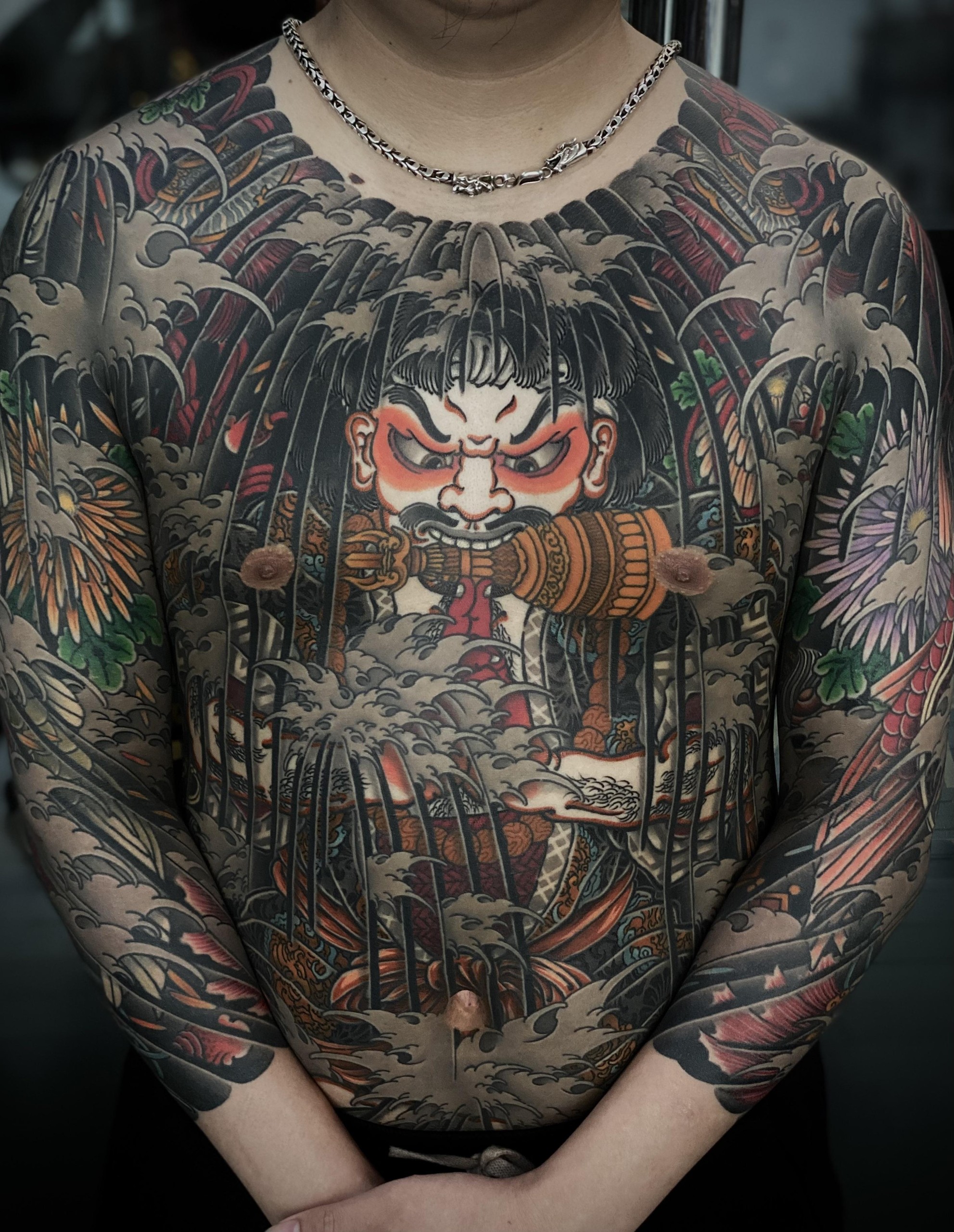
Large-scale body compositions like this demonstrate how Vietnamese artists interpret Japanese narrative tattooing. While the visual impact is strong, experts often evaluate whether flow, symmetry, and mythological coherence align with traditional Irezumi structure.
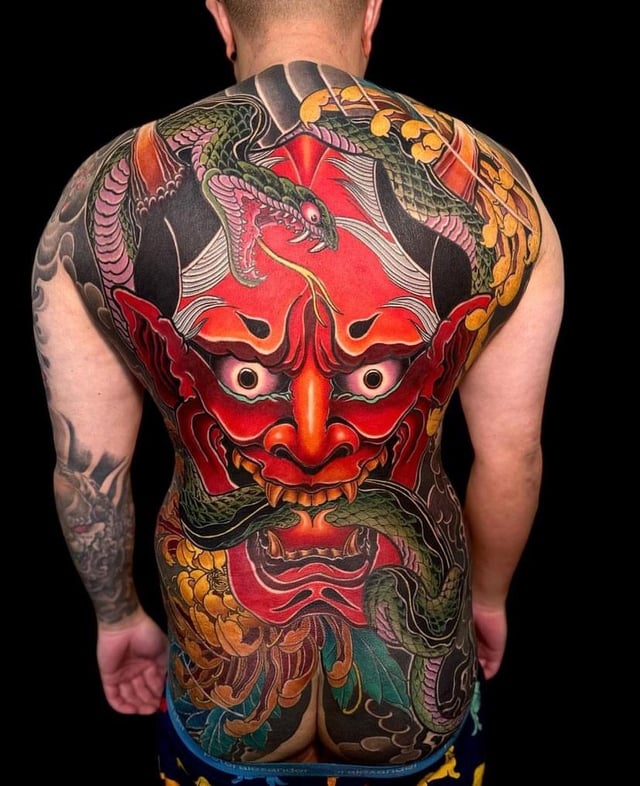
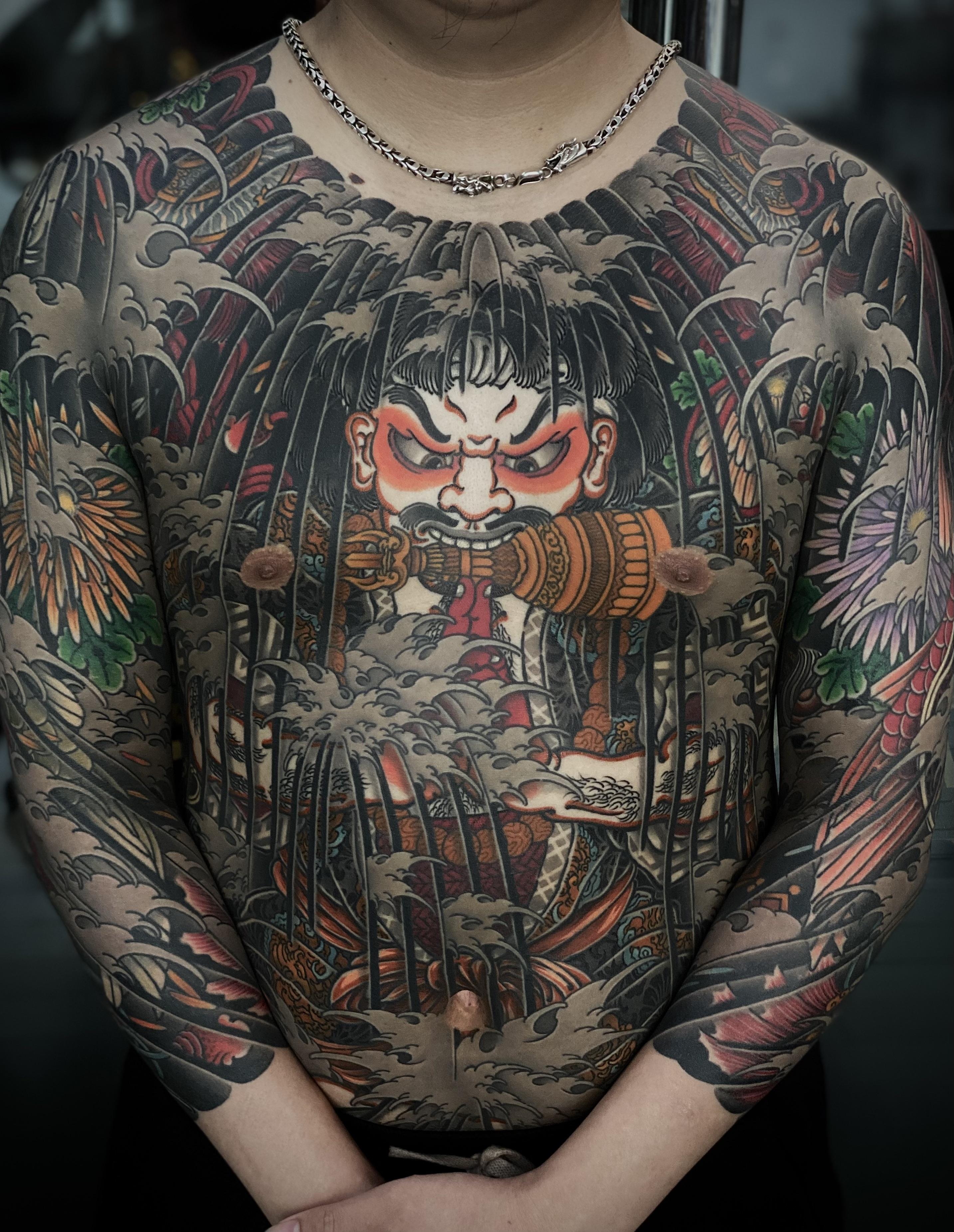
This example reflects a more stylized adaptation, often seen in modern Vietnamese studios. While visually striking, such works may prioritize aesthetics over traditional compositional rules, which affects long-term cultural authenticity.
Expert Observation: One recurring issue in Vietnam’s Japanese tattoo scene is inconsistent scaling. Many artists excel in shading but struggle with full-body narrative planning, which is critical in authentic Irezumi design systems.
Finding Authentic Irezumi Artists in Vietnam
Direct Answer (40–60 words): Finding an authentic Irezumi artist in Vietnam requires evaluating portfolio consistency, understanding of Japanese composition principles, and hygiene standards. Clients should prioritize artists with international training, documented healed work, and experience in full-body design planning rather than isolated tattoo pieces.
Authenticity in tattooing is not defined by style alone but by structural discipline. True Irezumi work requires mastery of flow, balance, and symbolic sequencing across the body.
Signs of a Skilled Japanese-Style Tattoo Artist
Direct Answer (40–60 words): A skilled Japanese-style tattoo artist demonstrates consistent line work, strong compositional flow, and deep understanding of symbolic meaning. They can explain design choices clearly, show healed work over time, and adapt motifs to body anatomy rather than simply copying reference images.
- Strong portfolio of full sleeve or back pieces
- Evidence of healed tattoos (not just fresh ink)
- Understanding of Japanese symbolism, not just aesthetics
- Clean, professional studio hygiene standards
Information Gain: One overlooked indicator of quality is “negative space control.” Authentic Japanese tattooing uses empty space strategically to create balance, while many beginner studios overfill designs, reducing visual clarity over time.
Finding Authentic Irezumi Artists in Vietnam (Continued)
Direct Answer (40–60 words): Authentic Japanese-style tattoo artists in Vietnam are identified through their ability to design full-body compositions with coherent flow, cultural understanding of symbolism, and strict hygiene compliance. The most reliable professionals in cities like Hanoi and Ho Chi Minh City typically show healed work, Japanese-inspired structure, and documented apprenticeship or international training.
Lucky Tattoo, a professional tattoo artist, has over 10 years of experience in the art of tattooing in Ho Chi Minh City. Lucky Tattoo Studio was founded in 2014 by skilled and kind artists. All tattoos are provided in a clean, strictly controlled, and friendly environment.
Red Flags to Avoid When Choosing a Studio
Direct Answer (40–60 words): Common red flags include lack of healed portfolio images, over-reliance on copied stencil designs, poor hygiene practices, and inability to explain symbolism. Studios that rush consultations or offer unusually low pricing often compromise on sterilization protocols and design originality, increasing both infection risk and long-term visual degradation.
One of the most frequent mistakes clients make is prioritizing speed over design integrity. In traditional Irezumi, design planning alone can take weeks, especially for full sleeve or back pieces. Studios that skip this phase typically produce fragmented compositions that lose meaning over time.
- No visible sterilization equipment or autoclave use
- Only fresh tattoo photos (no healed work)
- Overuse of Pinterest or copied Japanese templates
- No explanation of symbolic meaning or flow structure
Information Gain: A key industry insight is that poorly trained artists often underestimate “healing distortion”—how ink spreads under skin regeneration. This becomes especially visible in Vietnam’s humid climate, where improper aftercare can amplify blurring and pigment migration.
Tattoo Safety & Hygiene Standards in Vietnam
Direct Answer (40–60 words): Tattoo safety in Vietnam varies widely depending on studio standards. Reputable studios follow international sterilization protocols, including disposable needles, disinfected workstations, and medical-grade equipment. However, inconsistency across smaller shops makes hygiene verification essential before committing to any Japanese-style tattoo procedure.
Professional studios increasingly adopt global hygiene benchmarks aligned with medical standards such as autoclave sterilization and single-use cartridges. These practices significantly reduce the risk of infections and long-term complications when applied correctly.
Sterilization Protocols Explained
Direct Answer (40–60 words): Sterilization protocols in professional tattooing involve eliminating all microbial contamination using autoclaves, disinfectants, and single-use instruments. Proper studios ensure every tool touching the skin is either disposable or sterilized according to medical-grade standards, reducing risks of infection and cross-contamination during tattoo procedures.
In high-quality studios, sterilization is not optional—it is a structured workflow. Needles, grips, and ink caps are always single-use, while reusable equipment is processed through high-pressure steam sterilization cycles. These steps are critical in preventing bloodborne diseases and bacterial infections.
Expert Insight: Many clients incorrectly assume visible cleanliness equals safety. However, true hygiene depends on behind-the-scenes sterilization processes that are not always visible during the tattoo session.
Infection Risks in Tropical Climates
Direct Answer (40–60 words): Tropical climates like Vietnam increase tattoo infection risks due to high humidity, heat, and slower skin recovery. Moist environments promote bacterial growth, making aftercare discipline essential. Without proper cleaning and protection, freshly inked skin is more vulnerable to infections and pigment disruption during healing stages.
In cities such as Ho Chi Minh City, sweat and humidity can interfere with scab formation, leading to uneven healing. Artists often recommend stricter aftercare routines, including controlled moisture exposure and reduced sun contact during the first two weeks.
Medical Insight: Dermatological studies on :contentReference[oaicite:0]{index=0} show that wound healing speed is significantly influenced by environmental humidity, making aftercare in Vietnam more demanding than in temperate regions like Japan or Europe.
Healing Irezumi Tattoos in Humid Weather
Direct Answer (40–60 words): Healing Irezumi tattoos in Vietnam’s humid climate requires controlled cleaning routines, sun protection, and moisture management. Excess humidity can slow scab formation and increase infection risk, making disciplined aftercare essential to preserve ink clarity and prevent long-term fading or pigment distortion.
Unlike dry climates, Vietnam’s environment creates constant exposure to sweat and airborne bacteria. This requires clients to adjust traditional Japanese aftercare methods to local environmental conditions.
Why Humidity Affects Ink Stability
Direct Answer (40–60 words): Humidity affects tattoo ink stability by interfering with skin regeneration and scab formation. Excess moisture can cause pigment dispersion, leading to blurred lines and uneven saturation. This is especially important for large-scale Japanese tattoos, where precision and gradient consistency are essential for visual integrity.
Ink behavior is directly influenced by the body’s healing process. When the skin remains overly moist, pigment particles may migrate beyond intended layers, weakening design sharpness over time.
Information Gain: Many artists in Vietnam now adjust ink depth and shading density specifically for tropical climates—an adaptation rarely documented in traditional Japanese tattoo literature.
Aftercare Routine for Vietnam Climate
Direct Answer (40–60 words): Proper aftercare in Vietnam includes gentle cleansing, avoiding prolonged sweating, using breathable coverings, and limiting sun exposure. Clients should follow structured routines for at least 2–3 weeks to ensure stable healing, particularly for large Japanese-style tattoos with heavy shading and color saturation.
- Clean tattoo with mild antibacterial soap twice daily
- Avoid direct sunlight and swimming pools
- Wear loose, breathable clothing
- Apply artist-recommended healing ointment sparingly
Tebori vs Machine Tattooing in Vietnam
Direct Answer (40–60 words): Tebori is a traditional Japanese hand-poked tattoo technique, while machine tattooing uses electric devices for precision and speed. In Vietnam, machine tattooing dominates due to efficiency, but Tebori remains rare and highly specialized, often reserved for artists trained in Japan or deeply committed to traditional methods.
The difference is not only technical but philosophical. Tebori emphasizes rhythm and hand control, creating softer gradients, while machines prioritize consistency and speed for larger client demand.
What Is Tebori Hand-Poked Tattooing
Direct Answer (40–60 words): Tebori is a traditional Japanese tattooing method where ink is manually inserted into the skin using a hand-held rod. This technique produces unique shading textures and deeper cultural authenticity but requires significantly more time, skill, and physical endurance compared to modern electric tattoo machines.
In Vietnam, only a small number of artists practice or understand Tebori principles. It is often used selectively for specific shading effects rather than full-body execution due to its time-intensive nature.
Modern Machine Techniques
Direct Answer (40–60 words): Modern machine tattooing uses electric devices to deliver consistent needle penetration, allowing faster execution and precise detailing. In Vietnam, this method dominates Japanese-style tattoos, enabling complex designs like dragons and koi fish to be completed efficiently while maintaining acceptable levels of detail and shading depth.
While machine techniques lack the organic variation of Tebori, they offer accessibility and scalability. Many Vietnamese artists blend both approaches to balance tradition and practicality.
Pricing of Japanese Tattoos in Vietnam
Direct Answer (40–60 words): Japanese-style tattoos in Vietnam vary in price depending on size, complexity, and artist expertise. Small designs may cost modestly, while full sleeves or back pieces require significant investment due to detailed shading, planning time, and multiple sessions required for proper execution and healing.
Pricing is often misunderstood by clients who compare Vietnam directly with Western markets. While lower costs are common, high-end artists charge premium rates reflecting international training and specialized design capability.
| Type | Estimated Cost | Time Required |
|---|---|---|
| Small motif | Budget-friendly | 1 session |
| Full sleeve | Mid to high range | Multiple sessions |
| Full body suit | Premium investment | Months to years |
FAQ: Japanese Irezumi Tattoo in Vietnam
Direct Answer (40–60 words): Below are the most common questions about Japanese Irezumi tattoos in Vietnam, covering safety, cost, meaning, and artist selection. These answers help users quickly understand key risks, cultural context, and practical considerations before choosing a tattoo studio in Hanoi or Ho Chi Minh City.
- Is it safe to get an Irezumi tattoo in Vietnam? Yes, if done in a professional studio following sterilization protocols and hygiene standards.
- How long does a full Japanese tattoo take? Full sleeves can take several sessions over weeks or months depending on complexity.
- Are Japanese tattoos culturally sensitive? Yes, they carry deep symbolism and should be designed with cultural understanding.
- Does humidity affect tattoo healing? Yes, high humidity can slow healing and increase infection risk if aftercare is poor.
- What is the meaning of koi fish tattoos? They symbolize perseverance, transformation, and overcoming adversity.
- How do I find a good tattoo artist in Vietnam? Look for healed portfolios, international training, and strong composition skills.
- Is Tebori available in Vietnam? It is rare and usually limited to highly specialized or internationally trained artists.
Conclusion: Choosing the Right Irezumi Experience in Vietnam
Direct Answer (40–60 words): Choosing a Japanese Irezumi tattoo in Vietnam requires balancing artistic authenticity, hygiene standards, and environmental awareness. The best outcomes come from experienced artists who understand both traditional Japanese composition and the challenges of tattoo healing in tropical climates, ensuring long-term visual and physical integrity.
The decision goes beyond aesthetics—it is a long-term commitment involving skin health, cultural appreciation, and technical precision. Clients who invest time in research and artist selection consistently achieve more meaningful and durable results.