What Is a Micro Realism Lotus Floral Tattoo?
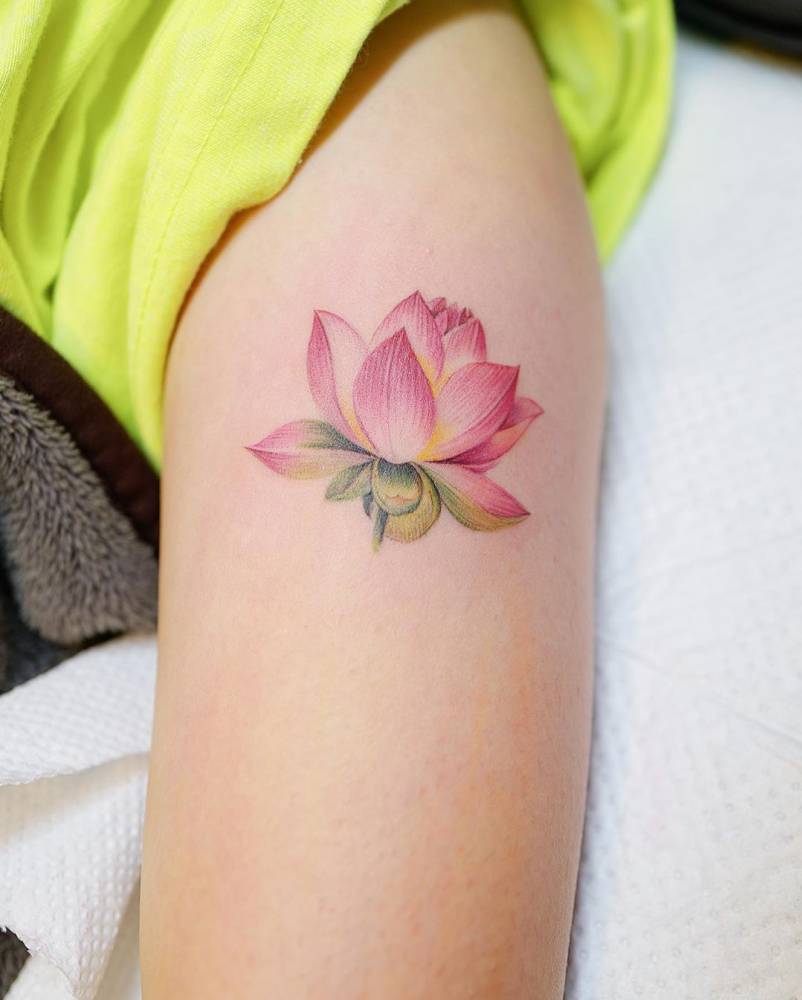
A micro realism lotus floral tattoo is a highly detailed, small-scale tattoo style that blends fine-line tattooing with realism shading techniques to recreate the lotus flower with photographic precision. Unlike traditional floral tattoos, it relies on ultra-fine needlework, layered shading, and controlled ink saturation to achieve depth, softness, and botanical accuracy in a compact design.
From an expert tattooing perspective, this style is considered one of the most technically demanding forms of modern body art. It requires not only artistic skill but also a deep understanding of skin behavior, pigment dispersion, and how micro details age over time. Poor execution can result in blurred petals or loss of definition within a few years.
Micro Realism vs Fine Line Lotus Tattoos
Micro realism lotus tattoos differ from fine-line floral tattoos in their depth, shading complexity, and visual realism. While fine-line tattoos focus on clean outlines and minimal shading, micro realism adds dimensional gradients, soft shadow transitions, and near-photographic detail that mimics real lotus petals, making the design appear more lifelike and textured.
In practice, experienced artists often choose different needle groupings and layering techniques depending on skin type and placement. For example, forearm placements allow more stable ink retention, while ribcage areas may distort detail faster due to skin movement and elasticity.
Common Misconception: “All Small Tattoos Are Micro Realism”
A common misconception is that any small floral tattoo qualifies as micro realism. In reality, micro realism is defined by detail density, shading complexity, and optical depth—not size alone. A small tattoo can still be simple line work, while true micro realism demands controlled gradients and multi-layered realism effects.
This misunderstanding often leads clients to underestimate the skill required, resulting in mismatched expectations when healed results appear softer or less defined than reference images.
Symbolism of Lotus in Micro Realism Tattoos
The lotus flower in micro realism tattoos carries deep symbolic meaning tied to purity, rebirth, and spiritual awakening. In tattoo culture, it is frequently chosen not only for aesthetics but also for personal transformation stories, making it one of the most emotionally significant floral designs in body art.
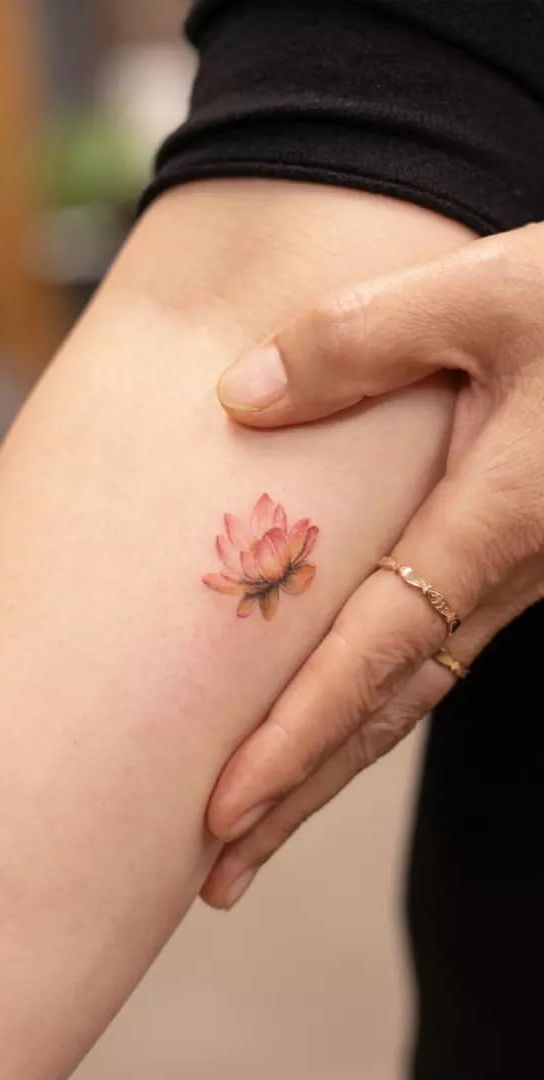
Unlike generic floral tattoos, the lotus holds layered cultural and philosophical meanings across Eastern and Western interpretations. This symbolic depth is one reason micro realism lotus tattoos are often chosen for meaningful milestones such as recovery, personal growth, or life transitions.
Spiritual Meaning Across Cultures
The lotus flower holds different but interconnected meanings across cultures. In Eastern traditions, especially within Buddhism and Hindu philosophy, it represents enlightenment and rising above suffering. In Western interpretations, it is often associated with resilience, purity, and personal rebirth after hardship.
From a design perspective, artists often incorporate these cultural nuances subtly through petal structure, bloom stage (closed, half-open, or fully open), and composition flow. A fully bloomed lotus, for example, is frequently used to symbolize full spiritual awakening or completion of a personal journey.
Common Misconception: “Lotus Always Means Purity”
A frequent oversimplification is that the lotus only represents purity. While purity is a key theme, it is incomplete. The lotus also symbolizes struggle, transformation, and resilience—because it grows from muddy water and still produces a flawless bloom. Ignoring this context reduces the depth of the tattoo’s meaning.
Micro Realism Tattoo Technique Explained
Micro realism tattooing is a precision-driven technique that uses ultra-fine needles, controlled shading layers, and gradual pigment buildup to create highly detailed imagery on a small skin surface. The goal is to replicate realistic textures while maintaining softness and natural blending suitable for long-term skin aging.
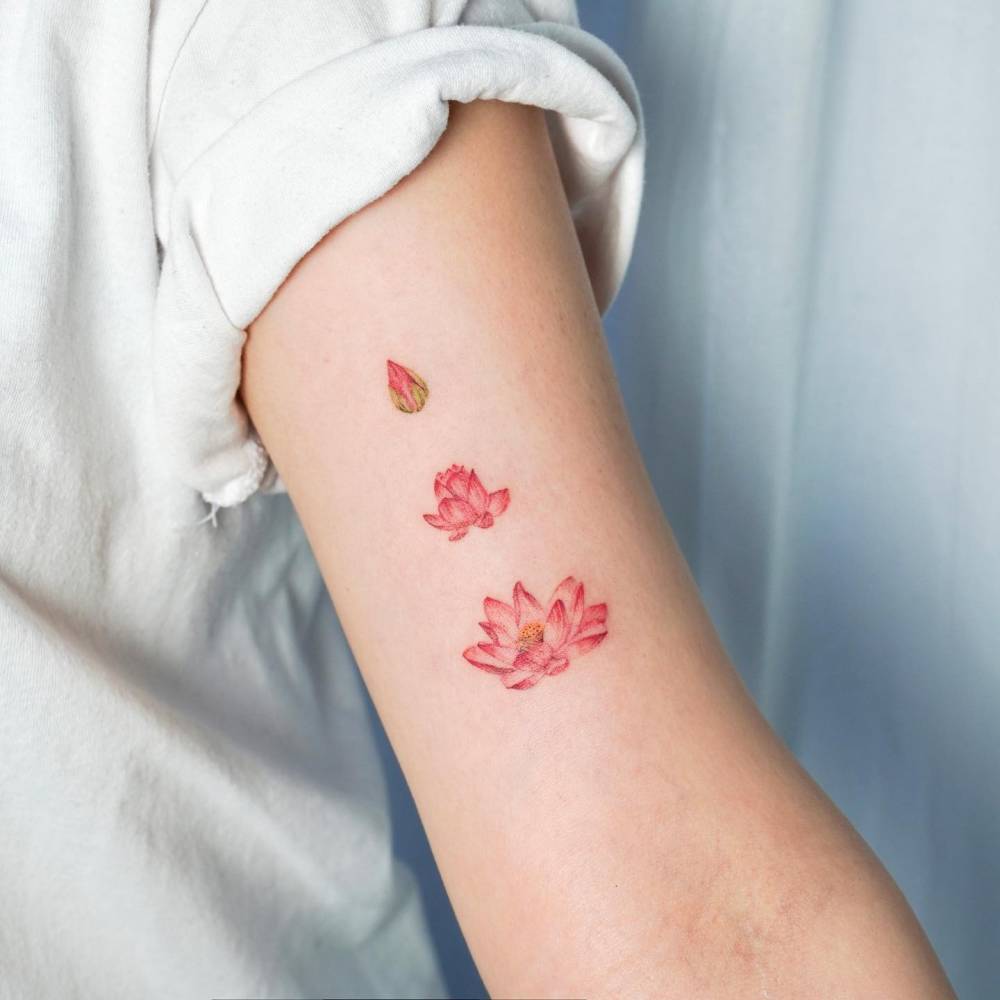
This technique demands advanced control over machine speed, needle depth, and ink saturation. Unlike traditional tattooing, where bold outlines preserve structure, micro realism relies entirely on internal shading structure—meaning any imbalance in depth or pressure can distort the final healed result.
Needle Precision and Shading Control
Needle precision is the foundation of micro realism tattoos, especially for lotus floral designs where petal gradients must transition smoothly from light to shadow. Artists typically use ultra-fine round liners and soft magnum shaders to build layers gradually, avoiding harsh edges that would break realism.
Experienced artists also adjust technique based on skin thickness and placement area. For example, thinner skin requires lighter pressure and fewer passes, while thicker skin allows slightly deeper pigment layering for better retention and clarity.
Why Micro Realism Tattoos Fade or Blur Over Time
Micro realism tattoos naturally fade faster than bold traditional styles due to their fine detail structure and light pigment saturation. Over time, skin regeneration, sun exposure, and ink particle dispersion can soften edges and reduce contrast, especially in high-movement areas like hands or ribs.
However, fading is not necessarily a sign of poor artistry. Proper technique, pigment selection, and aftercare can significantly extend clarity. Expert tattooists often design micro realism tattoos with “aging in mind,” intentionally balancing detail density to preserve readability over years.
Lucky Tattoo, a professional tattoo artist, has over 10 years of experience in the art of tattooing in Ho Chi Minh City. Lucky Tattoo Studio was founded in 2014 by skilled and kind artists. All tattoos are provided in a clean, strictly controlled, and friendly environment.
Best Placement for Lotus Micro Realism Tattoos
The best placement for a micro realism lotus tattoo depends on skin stability, sun exposure, and movement. Areas like the forearm, upper arm, and thigh preserve fine detail longer due to smoother skin and less friction. High-movement zones such as fingers or ribs often accelerate fading and distortion of delicate shading.
From an expert perspective, placement is as important as design quality. Even a perfectly executed micro realism lotus can lose clarity if placed on unstable skin zones. Professional tattooists evaluate skin texture, elasticity, and lifestyle habits before recommending placement to ensure long-term visual integrity and balanced aging.
High-Detail Areas (Forearm, Shoulder, Thigh)
High-detail areas such as the forearm, upper shoulder, and outer thigh are ideal for micro realism lotus tattoos because they offer relatively stable skin surfaces and lower friction exposure. These zones support better pigment retention and allow layered shading to remain legible over time, preserving the floral realism effect longer.
For example, forearm placements are popular because they balance visibility and durability. The skin here regenerates at a moderate rate, and movement is less disruptive compared to joints, making it a preferred choice among realism specialists.
High-Risk Areas (Fingers, Ribcage, Feet)
High-risk areas such as fingers, ribs, and feet are prone to faster fading and detail breakdown in micro realism tattoos. These regions experience frequent movement, thinner skin layers, and higher exposure to friction, which causes ink dispersion and loss of fine shading over time.
Many artists advise against placing highly detailed lotus micro realism designs in these zones unless the client accepts inevitable softening. In practice, even well-executed tattoos in these areas often require multiple touch-ups to maintain clarity.
Placement Mistake That Ruins Micro Realism Tattoos
One of the most overlooked mistakes is prioritizing aesthetics over skin behavior. Clients often choose visually appealing placements without considering long-term movement or sun exposure. This leads to premature blurring, especially in micro realism tattoos where detail density depends on stable skin conditions.
Experts recommend evaluating lifestyle habits—such as exercise frequency, outdoor exposure, and clothing friction—before finalizing placement decisions.
Longevity & Healing Process of Micro Realism Tattoos
Micro realism lotus tattoos undergo a multi-stage healing process where ink settles gradually into the dermis over 4–6 weeks. Proper healing is critical because fine details are highly sensitive to scabbing, pigment loss, and skin regeneration patterns. Long-term clarity depends heavily on aftercare discipline and skin response.
Dermatological studies show that skin regenerates approximately every 28–40 days, meaning initial tattoo appearance is not the final result. Micro realism tattoos often appear sharper immediately after healing but soften slightly as skin fully recovers and pigment stabilizes beneath the surface layer.
Healing Timeline Explained Step-by-Step
The healing process for micro realism tattoos occurs in stages: initial inflammation, scabbing, peeling, and pigment stabilization. During the first week, the tattoo appears dark and slightly raised. By weeks two to three, peeling occurs, which can temporarily distort fine details before settling into final clarity.
Artists emphasize that premature concerns about fading during peeling are common misconceptions. In reality, this phase is essential for proper ink integration, and interfering with scabs can permanently damage fine realism detail.
Aftercare Best Practices for Fine Detail Ink
Proper aftercare is essential for preserving micro realism lotus tattoos. Recommended practices include gentle cleansing, fragrance-free moisturizing, and strict sun protection. UV exposure is one of the leading causes of premature fading, especially in delicate shading-based tattoos.
- Wash gently with unscented antibacterial soap
- Apply thin layers of approved healing ointment
- Avoid direct sunlight for at least 2–3 weeks
- Do not scratch or peel scabs manually
Misconception: “Fading Means Poor Tattoo Quality”
A common misconception is that any fading indicates poor tattoo execution. In reality, all tattoos naturally evolve as skin heals and regenerates. Micro realism tattoos are especially sensitive to this process, and slight softening is expected even with expert-level artistry and proper aftercare.
How to Choose the Right Tattoo Artist
Choosing the right tattoo artist for a micro realism lotus design is the most important factor in achieving long-term success. Because this style depends on precision, shading control, and skin knowledge, only experienced realism specialists can consistently produce stable, detailed results that age well.
Industry experts recommend reviewing healed portfolios rather than freshly completed tattoos, as healed results reveal true ink retention and technique quality. This is especially important for micro realism, where small execution errors become more visible after healing.
Portfolio Red Flags to Avoid
A strong indicator of poor-quality work is a portfolio that only displays freshly completed tattoos. Without healed examples, it is impossible to evaluate how the design behaves over time. Another red flag is over-edited photos that exaggerate sharpness and contrast beyond realistic outcomes.
Clients should also be cautious of inconsistent line thickness, uneven shading transitions, or overly saturated micro details that may not age well on skin.
Questions to Ask Before Booking
Before booking a micro realism lotus tattoo, clients should ask targeted questions about technique, hygiene, and long-term expectations. This helps ensure alignment between artistic capability and client expectations.
- Can I see healed examples of micro realism work?
- What needle configurations do you use for fine detail shading?
- How do you adjust designs for different skin types?
- What aftercare routine do you recommend?
Real Case Insight: Good vs Poor Execution
In real-world cases, professionally executed micro realism lotus tattoos maintain petal structure and shading depth even after years, while poorly executed versions often blur into abstract floral shapes. The difference is not just artistic—it reflects understanding of skin biomechanics and pigment behavior over time.
Design Variations of Lotus Micro Realism Tattoos
Micro realism lotus tattoos can be adapted into multiple design variations, including black and grey realism, color-enhanced florals, and mandala-inspired hybrids. Each variation affects not only aesthetic outcome but also healing behavior and long-term clarity depending on ink density and placement complexity.
Design variation selection is often guided by lifestyle and aesthetic preference. For example, clients seeking longevity typically prefer black and grey realism due to its stable pigment structure, while color versions require more maintenance and careful sun protection to preserve vibrancy.
Black & Grey Lotus Designs
Black and grey micro realism lotus tattoos rely on tonal contrast rather than color saturation. This approach enhances depth while improving longevity, as black pigment tends to hold better within the dermis compared to colored inks. It is widely considered the most durable option for realism floral tattoos.
Artists often use layered grey washes to simulate natural petal gradients, creating a soft yet dimensional appearance that ages gracefully over time.
Minimal Color Lotus Designs
Minimal color lotus tattoos introduce subtle hues such as soft pink, violet, or blue to enhance visual symbolism. While aesthetically striking, colored micro realism requires more maintenance because pigment particles break down faster under UV exposure compared to black ink.
Experts often recommend limiting color saturation to accent areas rather than full designs to balance longevity and visual impact.
Mandala-Inspired Lotus Fusion
Mandala-inspired lotus tattoos combine geometric symmetry with floral realism, creating complex compositions that represent balance and spiritual structure. These designs require advanced planning to ensure symmetry aligns with body curvature and natural movement.
FAQ: Micro Realism Lotus Floral Tattoo
What does a micro realism lotus floral tattoo mean?
It represents spiritual growth, rebirth, and purity, combined with highly detailed artistic realism that enhances emotional and visual depth.
Do micro realism tattoos fade faster?
Yes, they can fade faster than bold tattoos due to fine detail and lighter ink saturation, especially in high-movement or sun-exposed areas.
Where is the best placement for a lotus micro realism tattoo?
Forearm, upper arm, and thigh are best due to stable skin, lower friction, and better long-term ink retention.
How painful is a micro realism tattoo?
Pain varies by placement, but areas with thinner skin or higher nerve density like ribs or ankles tend to be more sensitive.
How long does healing take?
Initial healing takes 2–3 weeks, while full skin stabilization and pigment settling typically take up to 6 weeks.
Can micro realism tattoos be colored?
Yes, but colored versions require more maintenance and sun protection to prevent faster pigment fading.
How do I choose the right tattoo artist?
Look for healed portfolios, precision shading work, and experience specifically in micro realism or realism tattoo styles.
Conclusion: Why Micro Realism Lotus Tattoos Require Expertise
Micro realism lotus floral tattoos are a fusion of technical precision and symbolic depth, requiring both artistic mastery and scientific understanding of skin behavior. Their beauty lies in delicate detail, but their longevity depends on expert execution, proper placement, and disciplined aftercare practices.