What Does a Water Buffalo Tattoo Mean in Vietnam?
A water buffalo tattoo in Vietnam represents endurance, humility, and deep cultural connection to rice farming life. It is not just an animal symbol but a reflection of rural identity, human labor, and resilience shaped by generations of agricultural dependence and harmony with nature in Vietnamese society.
Core Symbolism of Strength, Patience, and Endurance
The water buffalo is widely interpreted as a symbol of quiet strength rather than aggression. In Vietnamese culture, it represents patience through long labor in rice fields, emotional stability under pressure, and the ability to sustain hardship. Unlike Western “power animal” tattoos, its meaning is grounded in slow, consistent survival rather than dominance or conquest.
Expert insight: In traditional Vietnamese rural communities, strength is not measured by force but by reliability and endurance. The buffalo embodies this philosophy, making it a deeply respected cultural icon rather than a decorative motif.
- Represents slow, sustainable strength over time
- Symbolizes harmony between humans and nature
- Reflects rural discipline and agricultural survival
Information Gain: Many tattoo interpretations outside Vietnam oversimplify the buffalo as “just strength.” In reality, Vietnamese symbolism ties it to emotional restraint, agricultural responsibility, and intergenerational labor systems that shaped rural economies for centuries.
Connection to Vietnamese Rice Farming Culture
The water buffalo is central to Vietnam’s rice cultivation system, especially in regions like the Mekong Delta, where wet-rice farming depends heavily on animal labor. This connection transforms the tattoo into a cultural marker of agricultural identity, not just an aesthetic choice.
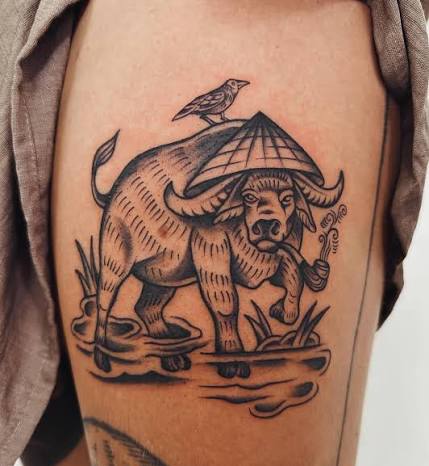
Historically, buffaloes were considered a family asset in rural Vietnam. Losing one could significantly impact a household’s livelihood. This economic dependency elevated the buffalo into a symbol of survival, prosperity, and agricultural continuity.
Real-world example: In many Mekong Delta villages today, older farmers still describe buffaloes as “silent family members” due to their emotional and economic importance in traditional rice production.
Common misconception: Many assume buffalo tattoos are purely aesthetic or generic “Asian animal tattoos.” In Vietnam, however, the symbol is tightly bound to lived agricultural experience and rural memory.
Why the Water Buffalo Is Respected in Vietnamese Culture
The water buffalo is deeply respected in Vietnam because it represents survival, cooperation, and agricultural prosperity. It is not viewed as ordinary livestock but as a working partner in rice farming systems. Its cultural importance extends into folklore, rural identity, and collective memory of traditional village life.
Role in Traditional Rural Life and Daily Survival
In Vietnamese rural communities, the buffalo historically served as a primary source of labor for plowing fields, transporting goods, and supporting rice cultivation cycles. Its presence shaped daily life rhythms, making it an essential part of survival infrastructure rather than a symbolic afterthought.
Expert perspective: Anthropological studies of Southeast Asian agrarian societies consistently highlight the buffalo as a “co-laborer species,” meaning it actively participated in shaping human settlement patterns and food systems.
- Used for plowing flooded rice fields
- Supported rural transport and logistics
- Central to seasonal agricultural cycles
Information Gain: Unlike many symbolic animals in tattoo culture, the buffalo in Vietnam is not mythologized in isolation—it is embedded in practical economic survival systems that define rural identity across generations.
Symbol of Post-War Resilience and Reconstruction
After periods of conflict and economic hardship, especially in rural Vietnam, the buffalo became a symbol of rebuilding and resilience. Its return to fields marked the restoration of agricultural stability and the re-establishment of village life.
In post-war contexts, the buffalo also came to represent patience in recovery, reflecting how communities slowly rebuilt food systems, infrastructure, and livelihoods through collective labor and natural cycles.
Common misconception: Some modern interpretations reduce this symbolism to “peace and prosperity,” but historically it also reflects endurance through scarcity, reconstruction, and intergenerational effort.
Water Buffalo Tattoo Design Interpretations in Modern Tattoo Art
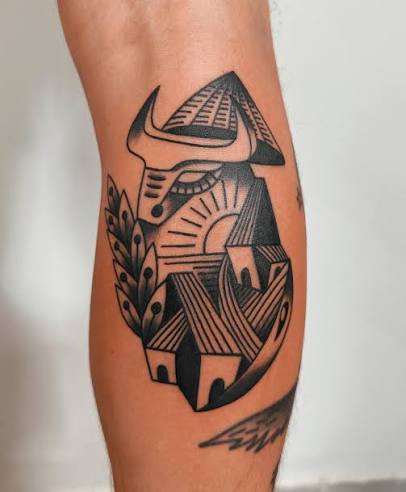
A modern water buffalo tattoo combines traditional Vietnamese symbolism with contemporary tattoo styles such as realism, blackwork, and minimalism. While the meaning remains rooted in agriculture and resilience, artists today reinterpret it through composition, shading, and placement to suit personal identity and aesthetic expression.
Expert observation: Tattoo artists specializing in Asian realism often emphasize anatomical accuracy and environmental context—such as rice fields or water landscapes—to preserve cultural authenticity within modern design frameworks.
- Realism emphasizes emotional depth and cultural accuracy
- Blackwork highlights strength and symbolic contrast
- Minimalist designs focus on identity and subtle meaning
Information Gain: A growing trend among collectors is combining buffalo imagery with rice terrace landscapes, linking personal identity tattoos to broader ecological and cultural narratives rather than standalone animal symbolism.
Cultural Sensitivity: Can You Get a Water Buffalo Tattoo?
Lucky Tattoo, a professional tattoo artist, has over 10 years of experience in the art of tattooing in Ho Chi Minh City. Lucky Tattoo Studio was founded in 2014 by skilled and kind artists. All tattoos are provided in a clean, strictly controlled, and friendly environment.
A culturally appropriate water buffalo tattoo requires understanding its role in Vietnamese life beyond aesthetics. It is not a mystical or exotic symbol but a representation of labor, survival, and agricultural identity. Misinterpretation often occurs when the design is removed from its historical and socio-economic context.
When the Tattoo Is Respectful vs Misleading
A water buffalo tattoo is respectful when it acknowledges its connection to Vietnamese rice farming culture and rural identity. It becomes misleading when used purely as a decorative “Asian animal tattoo” without understanding its agricultural and historical significance or when combined with inaccurate cultural stereotypes.
Expert insight: Cultural anthropologists emphasize that respectful use of agricultural symbols requires contextual awareness. In Vietnam, the buffalo is not mythologized like dragons or lions in Western traditions—it is a lived, working presence tied to survival.
- Respectful use: references Vietnamese agriculture or rural life
- Respectful use: includes rice fields, farming scenes, or cultural storytelling
- Misleading use: purely aesthetic without meaning context
- Misleading use: mixing unrelated “tribal” motifs inaccurately
Information Gain: Unlike many tattoo symbols that originate from mythology, the buffalo is rooted in economic survival systems. Ignoring this context reduces it to aesthetic consumption, which can unintentionally erase cultural labor history.
How Foreigners Should Approach This Symbol
Foreigners can respectfully adopt the water buffalo tattoo by engaging with its cultural background, understanding its agricultural importance, and consulting artists familiar with Vietnamese or Southeast Asian symbolism. This ensures the tattoo reflects appreciation rather than appropriation or superficial styling.
Practical recommendation: Before choosing the design, research Vietnamese rural traditions or discuss with a tattoo artist experienced in cultural realism to ensure accuracy and respect.
- Study Vietnamese rice farming culture and buffalo roles
- Work with artists specializing in Asian realism or cultural tattoos
- Avoid combining unrelated symbolic systems without context
Common mistake: Many clients request buffalo tattoos based on Pinterest visuals without understanding the agricultural or historical meaning, leading to designs that lose cultural integrity.
Best Placement Ideas for Water Buffalo Tattoos
Water buffalo tattoos work best on larger body areas such as the back, chest, or upper arm due to their detailed structure and cultural storytelling potential. Placement should reflect both visibility preferences and symbolic meaning, with larger areas allowing for landscapes like rice fields or water environments.
Placement is not only an aesthetic decision but also a narrative one. In Vietnamese-inspired tattooing, composition matters as much as symbolism. A buffalo facing forward may represent resilience, while a buffalo in motion can symbolize progress and life continuity.
Arm, Back, and Chest Placements Explained
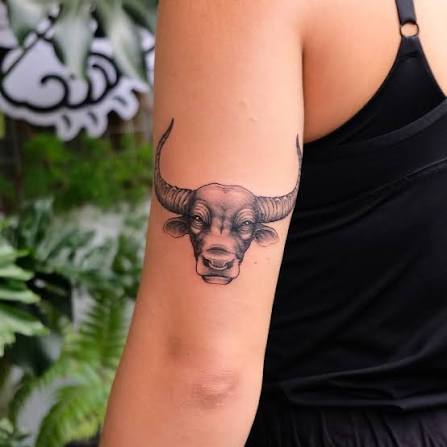
The arm is often chosen for medium-sized buffalo tattoos that emphasize strength and visibility. The back allows for detailed storytelling compositions, such as buffaloes working in rice fields. The chest placement is more personal, symbolizing inner strength and emotional grounding.
Expert insight: Tattoo artists often recommend the back for cultural realism designs because it provides space for environmental context, which is essential for preserving the buffalo’s agricultural meaning.
- Arm: visible, compact strength symbolism
- Back: full storytelling composition with environment
- Chest: personal meaning and emotional connection
Information Gain: Many designs lose cultural depth when compressed into small placements. In Vietnamese-inspired tattoo art, environmental context (fields, water, labor scenes) is essential to preserve symbolic integrity.
Symbolic Meaning of Placement Choices
Placement can alter meaning in tattoo interpretation. A buffalo placed on the upper back often symbolizes carrying responsibility, while one on the forearm emphasizes visible resilience in daily life. These interpretations are subtle but meaningful in cultural tattoo frameworks.
Common misconception: Many assume placement is purely aesthetic, but in symbolic tattoo traditions, placement often reinforces narrative meaning and personal identity alignment.
- Upper back: responsibility and endurance
- Forearm: visible strength and daily resilience
- Chest: emotional grounding and identity
Common Misconceptions About Buffalo Tattoos
Many misconceptions about water buffalo tattoos arise from oversimplified interpretations of Asian symbolism. The most common errors include treating the buffalo as a generic strength symbol or assuming it has universal spiritual meaning across all cultures without considering Vietnam’s specific agricultural context.
“It Only Means Strength” Myth
The belief that a buffalo tattoo only represents strength is incomplete. In Vietnamese culture, it represents endurance, patience, agricultural cooperation, and survival within rice farming systems. Strength is only one layer of a much broader socio-cultural meaning structure.
Expert insight: Cultural symbolism in Vietnam is often relational rather than individualistic. The buffalo symbolizes collective survival, not individual dominance.
- Includes patience and long-term resilience
- Represents agricultural interdependence
- Reflects rural community survival systems
Information Gain: Western tattoo interpretations often emphasize individual power, while Vietnamese symbolism emphasizes collective ecological and labor relationships.
“It Has No Spiritual Meaning” Myth
While not a primary religious symbol, the water buffalo carries spiritual resonance in rural Vietnamese belief systems. It is often associated with protection, stability, and harmony between humans and nature rather than formal religious worship.
In some rural traditions, the buffalo is treated with ritual respect during farming seasons, reinforcing its symbolic role in maintaining balance and prosperity within agricultural cycles.
Frequently Asked Questions About Water Buffalo Tattoos
Water buffalo tattoos raise common questions about meaning, cultural respect, and design choices. These FAQs address practical concerns, symbolism clarity, and cultural interpretation to help users make informed tattoo decisions aligned with Vietnamese heritage and modern artistic practices.
What does a water buffalo tattoo symbolize in Vietnam?
It symbolizes endurance, patience, and deep connection to rice farming culture, representing rural resilience and agricultural life.
Is a water buffalo tattoo culturally appropriate?
Yes, if used respectfully and with understanding of its Vietnamese agricultural and cultural significance rather than as a generic symbol.
What style works best for a buffalo tattoo?
Realism and blackwork are most effective because they preserve anatomical detail and cultural storytelling elements.
Does the buffalo have spiritual meaning?
It is not a religious symbol but holds cultural and spiritual resonance linked to harmony, protection, and agricultural balance.
Where should I place a buffalo tattoo?
Common placements include the back, chest, and arm, depending on desired detail, symbolism, and visibility.
Why is the buffalo important in Vietnam?
It is essential to traditional rice farming and represents survival, prosperity, and rural community identity.
Is it okay for foreigners to get this tattoo?
Yes, if they understand its cultural background and approach the design with respect and contextual awareness.
Conclusion: The Cultural Depth Behind the Water Buffalo Tattoo
The water buffalo tattoo in Vietnam goes far beyond aesthetic appeal. It reflects centuries of agricultural tradition, rural resilience, and human connection to the land. Understanding its cultural depth ensures the tattoo remains meaningful, respectful, and grounded in the lived realities of Vietnamese rural life rather than surface-level symbolism.