What is a watercolor Asian art travel tattoo?
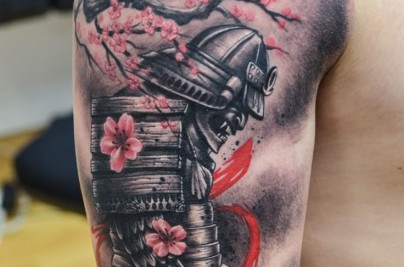
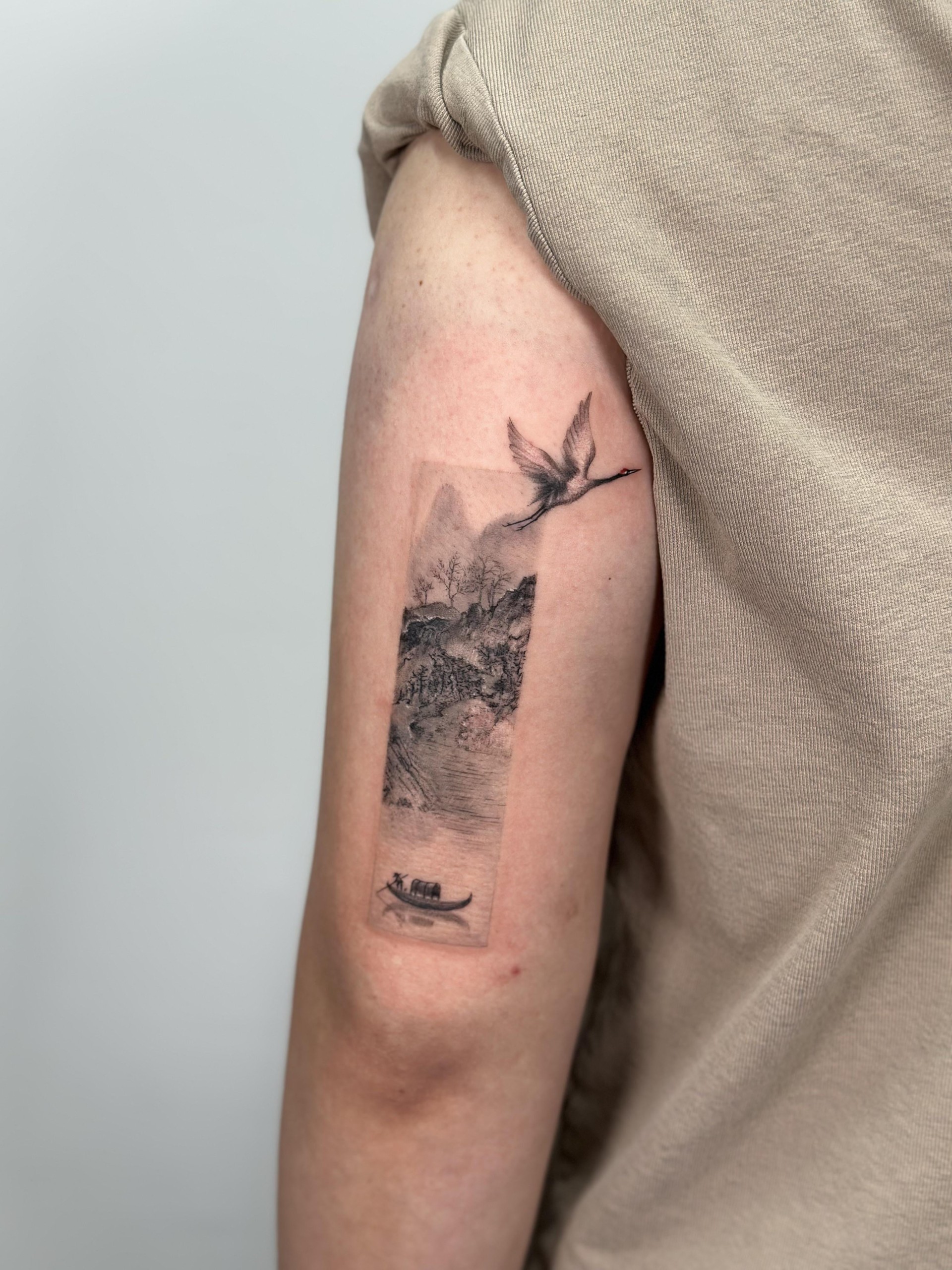
A watercolor Asian art travel tattoo is a hybrid tattoo style that combines fluid watercolor techniques with traditional Asian visual symbolism such as ink wash painting, mythological creatures, and floral motifs. It is often chosen by travelers to permanently express cultural experiences, emotional memories, and artistic interpretations gathered across destinations in Asia.
This style is not simply decorative; it represents a layered intersection of fine art, cultural storytelling, and modern tattoo innovation. Artists intentionally mimic brushstroke irregularity and pigment diffusion to create a painted-on-skin effect that resembles traditional East Asian ink art while maintaining contemporary watercolor softness.
How watercolor tattoo technique works on skin
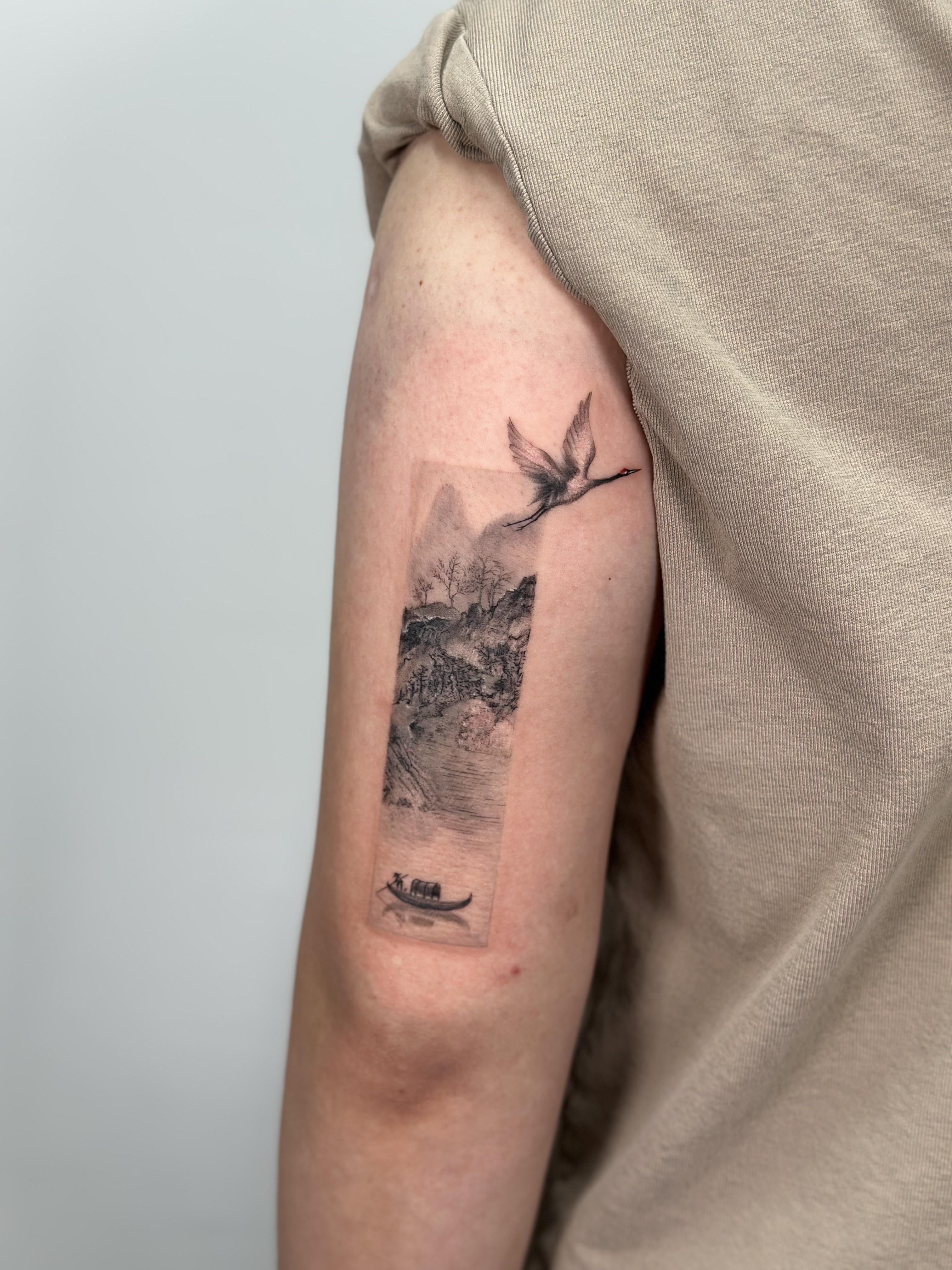
Watercolor tattoo technique uses diluted pigments, gradient layering, and controlled diffusion to simulate brush-painted effects on skin. Unlike traditional bold-outline tattoos, this method relies on shading transitions rather than rigid contours, requiring advanced control of ink saturation and skin depth to prevent premature fading or blurring over time.
From a professional standpoint, experienced tattoo artists compensate for watercolor fragility by subtly reinforcing structural areas with micro-line foundations. Dermatologically, pigment dispersion behaves differently in softer skin layers, meaning placement, skin type, and aftercare significantly influence long-term visual stability and color retention.
Expert insight: Watercolor tattoos without structural anchoring tend to fade unevenly within 3–5 years, especially in high-friction skin areas like wrists or ankles.
Why Asian art styles are used in travel tattoos
Asian art styles are widely used in travel tattoos because they offer rich symbolic systems that connect visual aesthetics with philosophy, spirituality, and nature. Travelers are drawn to motifs like koi fish, lotus flowers, and dragons because they encode meaning about resilience, transformation, and personal journey experiences.
Unlike generic decorative tattoos, Asian-inspired designs provide narrative depth rooted in centuries-old artistic traditions such as Japanese ink painting and Chinese brush calligraphy. This makes them especially appealing for individuals who want their tattoos to reflect not just places visited, but also internal transformation during travel.
Common misconceptions about watercolor tattoos
Watercolor tattoos are often misunderstood as purely aesthetic designs that fade quickly or lack structure. In reality, when executed by skilled artists, they incorporate layered pigment strategies and skin-adaptive composition techniques that significantly improve longevity while maintaining artistic fluidity and softness.
A frequent mistake among clients is assuming watercolor tattoos require less precision. In practice, they demand higher technical expertise than traditional styles because errors in saturation or gradient control are far more visible once healed.
Popular Asian motifs used in travel tattoos
Popular Asian motifs in watercolor travel tattoos are deeply symbolic designs drawn from Japanese, Chinese, Vietnamese, and broader Southeast Asian cultural traditions. These motifs are chosen not only for visual beauty but also for their layered meanings connected to luck, transformation, spirituality, and life journeys.
Travelers often select these motifs after visiting culturally significant locations, turning personal experiences into permanent visual narratives. Each symbol carries historical depth, making design selection an important cultural decision rather than a purely aesthetic one.
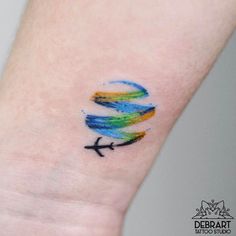
Koi fish and journey symbolism
Koi fish tattoos symbolize perseverance, transformation, and overcoming obstacles, rooted in Japanese mythology where koi swim upstream against strong currents. In watercolor Asian travel tattoos, koi often represent personal journeys through different countries or life transitions experienced during travel.
Designers frequently pair koi with flowing waterbrush effects to amplify motion and emotional storytelling. A lesser-known insight is that koi direction (upstream vs downstream) changes symbolic meaning—something many travelers overlook when selecting designs impulsively.
Lotus flower transformation meaning
The lotus flower represents purity, rebirth, and spiritual awakening, especially in Chinese and Buddhist traditions. In watercolor tattoo art, it is often depicted emerging from ink-like washes to symbolize rising above hardship or emotional transformation experienced during travel or life change.
Unlike simplified Western interpretations, Asian cultural contexts emphasize the lotus as a philosophical symbol of enlightenment rather than just beauty. This distinction is often missed in mass-market tattoo inspiration content.
Dragon and power symbolism in East Asia
Asian dragons in watercolor tattoos symbolize wisdom, protection, and elemental power rather than destruction. Chinese dragons emphasize authority and balance, while Japanese interpretations often highlight spiritual guardianship and natural harmony.
Watercolor rendering softens the traditionally intense imagery, making dragons appear more fluid and expressive. This artistic transformation allows travelers to connect with cultural strength symbolism in a visually modern and emotionally personal way.
Misinterpretations of Asian symbols
Many travelers unintentionally misuse Asian symbols by selecting designs based on aesthetics alone without understanding cultural context. This can lead to inaccurate representations or unintended meanings, particularly with sacred or region-specific imagery.
Experts recommend researching cultural origins or consulting artists familiar with East Asian iconography to ensure respectful and accurate design interpretation. This step significantly improves both authenticity and artistic integrity.
Why travelers choose watercolor Asian tattoos
Travelers choose watercolor Asian tattoos because they function as emotional memory markers that combine visual beauty with cultural storytelling. These tattoos often represent lived experiences in Asia, transforming travel moments into permanent, symbolic artwork that reflects personal identity and transformation.
Unlike standard souvenir tattoos, watercolor Asian designs integrate psychological memory encoding principles—where visual art becomes a trigger for recalling specific life events, emotions, and cultural encounters tied to travel experiences.
Information Gain Insight: Emerging tattoo psychology research suggests that visually symbolic tattoos can strengthen autobiographical memory recall by anchoring experiences to emotionally charged imagery.
Many tattoo artists report that clients increasingly request destination-based designs after immersive travel experiences in Japan, Thailand, and Vietnam. This trend reflects a shift from decorative body art to experiential storytelling, where tattoos function as personal cultural archives.
In the next section, we will explore how placement, artist selection, and design composition further influence the longevity and meaning of watercolor Asian travel tattoos.
Lucky Tattoo, a professional tattoo artist, has over 10 years of experience in the art of tattooing in Ho Chi Minh City. Lucky Tattoo Studio was founded in 2014 by skilled and kind artists. All tattoos are provided in a clean, strictly controlled, and friendly environment.
Best placement ideas for watercolor Asian travel tattoos
Watercolor Asian travel tattoos are best placed on body areas that support fluid composition, minimal friction, and long-term pigment stability. Common placements include the forearm, upper arm, shoulder, and back, where larger compositions and gradient effects can be preserved with less distortion and slower fading over time.
Placement is not just an aesthetic decision—it directly impacts healing quality, ink diffusion behavior, and visibility of fine watercolor gradients. Experienced tattoo artists often recommend matching placement with design flow, ensuring motifs like koi fish or dragons follow natural muscle movement for visual harmony.
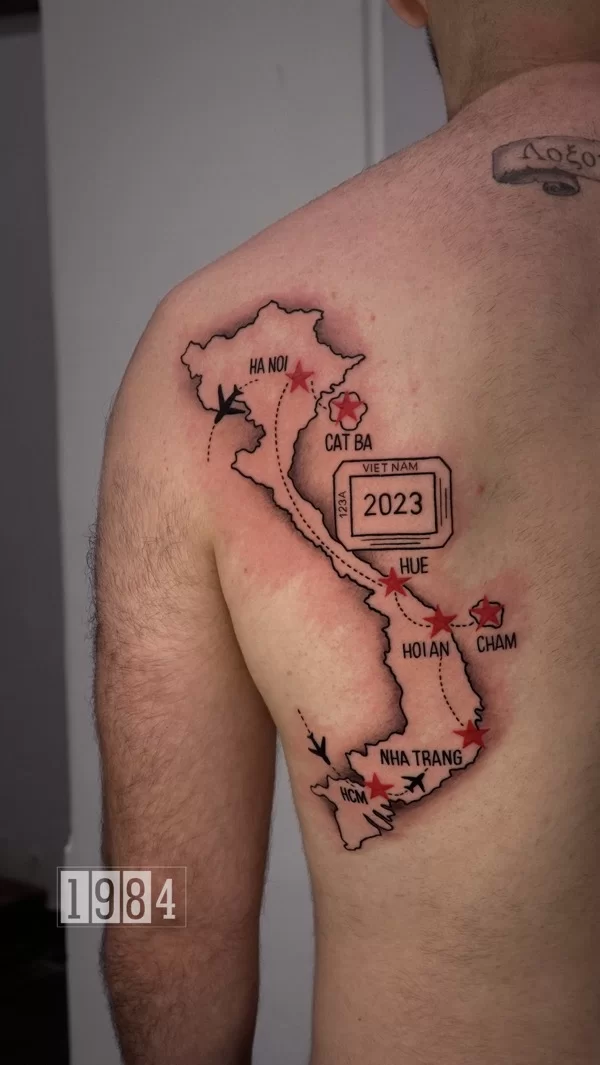
Forearm and visibility for storytelling
The forearm is one of the most popular placements for watercolor Asian travel tattoos because it allows high visibility and narrative expression. It is often chosen by travelers who want their tattoo to function as a conversational artifact, sharing travel memories and cultural symbolism in daily interactions.
However, forearm tattoos are exposed to sunlight and friction, which can accelerate watercolor fading. Experts recommend UV protection strategies and periodic touch-ups to maintain pigment vibrancy, especially for lighter ink tones used in watercolor compositions.
Shoulder and back for larger compositions
Shoulder and back placements are ideal for large-scale watercolor Asian designs because they provide broad, uninterrupted canvas space for complex storytelling elements. These areas support layered compositions such as dragons intertwined with clouds or koi fish flowing through ink wash waves.
A key advantage is reduced exposure to environmental wear, which improves pigment longevity. Professional tattoo artists often use these areas for museum-style compositions inspired by Japanese Irezumi and Chinese ink painting traditions.
Pain level and healing differences by placement
Pain perception and healing time vary significantly depending on tattoo placement. Areas with thinner skin or closer bone proximity, such as ribs or wrists, tend to be more painful and slower to heal. In contrast, shoulders and outer arms generally offer more comfort and stable healing conditions.
Dermatological studies on tattoo healing indicate that blood circulation and skin thickness play critical roles in pigment stabilization, which is especially important for watercolor tattoos due to their reliance on gradient integrity.
How to choose the right tattoo artist abroad
Choosing the right tattoo artist for watercolor Asian travel tattoos is essential for ensuring both technical precision and cultural authenticity. Travelers should evaluate portfolios, specialization in watercolor techniques, and understanding of Asian symbolism before committing to an artist, especially when booking tattoos during international trips.
Unlike standard tattoos, watercolor Asian designs require advanced control of pigment layering and cultural composition knowledge. Poor execution can lead to visual distortion, misinterpretation of symbols, and faster ink degradation, making artist selection a critical decision factor.
Portfolio evaluation checklist
A strong tattoo portfolio should demonstrate healed watercolor work, not just fresh tattoos. Healed examples reveal how pigments settle over time and whether gradients maintain clarity. Artists specializing in Asian-inspired designs should also show consistency in cultural motifs and composition balance.
- Look for healed watercolor examples (not only fresh ink)
- Check consistency in Asian symbolism accuracy
- Evaluate gradient smoothness and pigment control
- Review linework integration with watercolor effects
Many travelers make the mistake of judging only Instagram-perfect fresh tattoos, which do not reflect long-term quality. This is one of the most common misjudgments in tattoo tourism.
Red flags in Asian-style tattoo design
Warning signs include repeated misuse of cultural symbols, generic “Asian-inspired” artwork without regional specificity, and lack of explanation about motif meaning. These issues often indicate superficial understanding of Asian art traditions.
Experts recommend avoiding artists who cannot explain cultural references such as koi symbolism variations or differences between Chinese ink wash and Japanese sumi-e traditions. This knowledge gap often leads to inaccurate or disrespectful designs.
Questions to ask before booking
Asking the right questions ensures both technical quality and cultural respect in your tattoo design process. Travelers should engage artists in discussions about technique, symbolism, and aftercare expectations before committing to a session.
- How do you ensure watercolor tattoos maintain structure over time?
- Do you specialize in specific Asian art traditions?
- Can you show healed examples of similar designs?
- How do you adapt designs for different skin types?
Tattoo aftercare for watercolor Asian designs
Aftercare for watercolor Asian tattoos is essential for preserving pigment clarity, preventing premature fading, and ensuring proper skin healing. Because watercolor tattoos rely on subtle gradients rather than bold outlines, improper aftercare can significantly affect final visual quality and long-term durability.
Proper healing involves controlled moisture balance, UV protection, and avoiding friction during the first few weeks. Artists often emphasize aftercare as equally important as the tattooing process itself due to the delicate nature of watercolor pigment dispersion.
Healing timeline and pigment fading science
Watercolor tattoos typically go through a multi-stage healing process involving initial inflammation, scabbing, and pigment settling. During this period, color intensity may appear uneven before stabilizing after approximately 3–6 weeks, depending on skin type and placement.
Dermatology research shows that pigment particles migrate slightly within skin layers during healing, which can cause natural softening of watercolor edges. This is expected and part of the intended artistic effect, though poor aftercare can exaggerate fading.
Information Gain Insight: Studies on tattoo pigment retention indicate that UV exposure is the primary external factor accelerating watercolor tattoo fading, more than skin type or ink quality alone.
How to preserve watercolor vibrancy longer
Preserving watercolor tattoo vibrancy requires a combination of skincare discipline and environmental protection. High-SPF sunscreen, hydration maintenance, and avoiding prolonged sun exposure are key factors in maintaining color clarity over time.
- Apply SPF 30+ sunscreen regularly on exposed tattoos
- Avoid soaking in pools or saltwater during early healing
- Use fragrance-free moisturizers to support skin recovery
- Minimize friction from clothing during healing phase
Travelers often overlook UV exposure during vacations, ironically accelerating fading of tattoos meant to represent those same travel experiences.
Common aftercare mistakes
Frequent mistakes include over-moisturizing, premature exfoliation, and ignoring sun protection. These errors can distort watercolor gradients and reduce long-term clarity of Asian-inspired motifs.
Artists consistently report that improper aftercare is responsible for more pigment loss than technique flaws, highlighting the importance of client education in tattoo outcomes.
Cultural respect and symbolism accuracy in Asian tattoos
Cultural respect in watercolor Asian tattoos involves understanding the origins, meanings, and regional differences of symbolic motifs. Responsible tattoo design ensures that cultural elements are used accurately and respectfully rather than purely for aesthetic appeal.
This is particularly important because Asian art traditions often carry spiritual, historical, and philosophical significance that extends beyond visual design, requiring thoughtful interpretation in modern tattoo contexts.
Understanding sacred vs aesthetic symbols
Some Asian symbols, such as certain Buddhist imagery or mythological guardians, hold sacred meanings that should be treated with respect. In tattoo art, misusing these symbols can unintentionally diminish their cultural significance or distort their intended meaning.
Professional tattoo artists often collaborate with cultural consultants or conduct research to ensure symbolic accuracy when integrating elements from traditions like Japanese Irezumi or Chinese ink painting.
Avoiding cultural appropriation mistakes
Cultural appropriation in tattoos occurs when symbols are used without understanding or acknowledgment of their origin. This is a common issue in travel tattoos where aesthetic appeal is prioritized over cultural context.
Responsible design practice includes learning the meaning of chosen motifs, consulting knowledgeable artists, and avoiding random combination of unrelated cultural elements in a single composition.
Examples of respectful design choices
Respectful watercolor Asian tattoos often include coherent storytelling, such as pairing koi fish with water elements or lotus flowers with Buddhist-inspired themes. These combinations reflect cultural consistency rather than visual randomness.
Travelers who engage deeply with cultural meaning often create more authentic and personally significant tattoos that remain meaningful long after their journeys end.
Frequently Asked Questions (FAQs)
What makes watercolor Asian tattoos different from regular tattoos?
They combine soft watercolor blending techniques with Asian-inspired symbolism, creating a painted, fluid visual style focused on storytelling rather than bold outlines.
Do watercolor tattoos fade faster than traditional tattoos?
Yes, they can fade faster due to lighter pigment structure, but proper aftercare and UV protection significantly improve longevity.
Is it disrespectful to get Asian-inspired tattoos?
It is not disrespectful if the symbols are researched and used correctly with cultural understanding and appropriate artistic context.
What is the best placement for watercolor tattoos?
Forearm, shoulder, and back placements are ideal due to reduced friction and better support for gradient-based designs.
How long does a watercolor tattoo take to heal?
Most watercolor tattoos heal within 3–6 weeks, though full pigment stabilization may take slightly longer depending on skin type and care.
Can watercolor tattoos be touched up later?
Yes, many artists recommend periodic touch-ups to maintain vibrancy, especially for lighter color gradients.
Are watercolor tattoos safe for all skin types?
Generally yes, but skin sensitivity and healing response vary, so consultation with a professional tattoo artist is recommended before application.
Conclusion: Turning travel into lasting cultural art
Watercolor Asian art travel tattoos represent more than aesthetic expression—they function as personal archives of cultural experiences, emotional transformation, and artistic appreciation gathered through travel. When designed and executed responsibly, they bridge fine art, storytelling, and cultural heritage into a permanent, meaningful form.
For travelers, the most valuable tattoos are not only visually striking but also culturally informed, professionally executed, and carefully maintained over time. This combination ensures that each design remains both artistically powerful and personally significant long after the journey ends.