What Is a Roman Numeral Tattoo? Meaning & Symbolism Explained
A Roman numeral tattoo is a form of body art that encodes meaningful dates, numbers, or life milestones using the ancient Roman numeral system. It is widely chosen for its timeless aesthetic and emotional symbolism, often representing birthdays, anniversaries, or memorial dates that the wearer wants to preserve permanently on the skin.
In professional tattoo practice, Roman numerals are valued not just for aesthetics but for their psychological depth. They transform personal memory into a coded visual language, making the meaning less obvious to outsiders while remaining deeply significant to the wearer.
Why People Choose Roman Numerals Over Standard Numbers
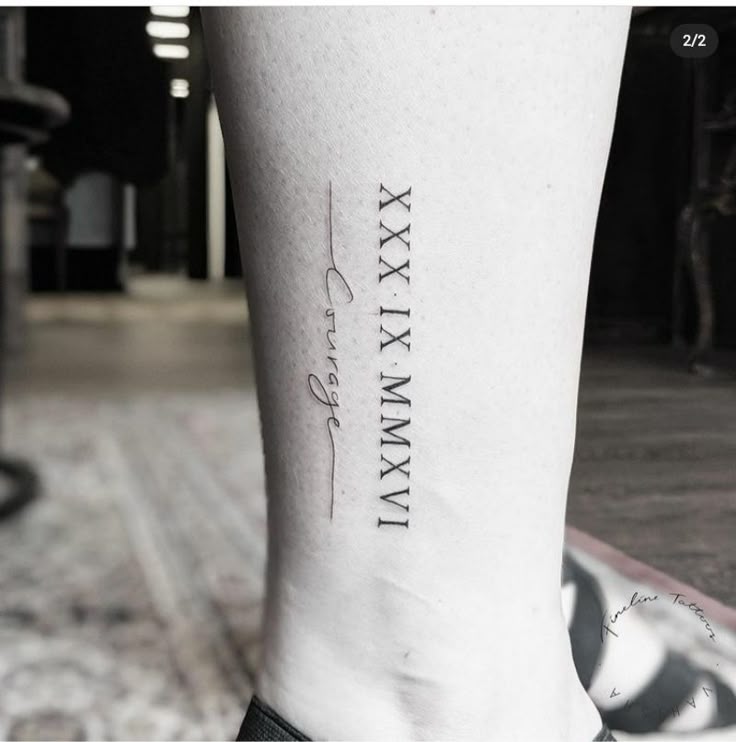
People choose Roman numeral tattoos because they offer a more abstract and elegant way to represent personal dates or numbers. Unlike Arabic numerals, Roman numerals create a visual barrier that turns simple information into symbolic design, enhancing emotional privacy while maintaining aesthetic balance on the body.
From a design psychology perspective, tattoo artists often note that clients prefer Roman numerals because they feel more “permanent” and ceremonial, especially for life-defining moments like marriage dates or memorial tributes.
Expert Insight: Tattoo artists frequently report that Roman numeral designs are chosen for emotional compression—where complex life events are distilled into a single, structured visual code.
Historical Origins and Cultural Context of Roman Numerals
Roman numerals originated in the Roman Empire as a standardized counting system used for trade, architecture, and record-keeping. Today, they survive as a cultural artifact that blends historical legacy with modern design, making them a powerful bridge between ancient structure and personal storytelling.
This historical depth is one reason tattoo professionals recommend Roman numerals for clients seeking designs that feel timeless rather than trend-dependent.
Most Popular Roman Numeral Tattoo Ideas (With Real Meaning)
Roman numeral tattoo ideas typically revolve around deeply personal milestones such as birthdays, anniversaries, and memorial dates. These designs are popular because they combine simplicity with emotional depth, allowing individuals to permanently encode meaningful life events in a subtle, minimalist visual form that fits nearly any body placement or style preference.
Industry observations show that date-based tattoos remain one of the most requested categories in tattoo studios worldwide. However, the real value lies not in the design itself but in the personal narrative behind the numbers being converted into Roman format.
Information Gain: Many people overlook that Roman numeral tattoos are often used as “identity anchors”—visual reminders of defining life transitions rather than just decorative date markers.
Birthdate Roman Numeral Tattoos
A birthdate Roman numeral tattoo encodes the wearer’s date of birth or that of a loved one using Roman numerals, creating a permanent identity marker. This style is especially common among first-time tattoo clients because it carries strong personal meaning while maintaining a minimalist and elegant appearance.
Tattoo professionals often recommend double-checking numeral conversion accuracy, as even small formatting errors can permanently alter the meaning of the tattoo.
Anniversary & Relationship Roman Numeral Tattoos
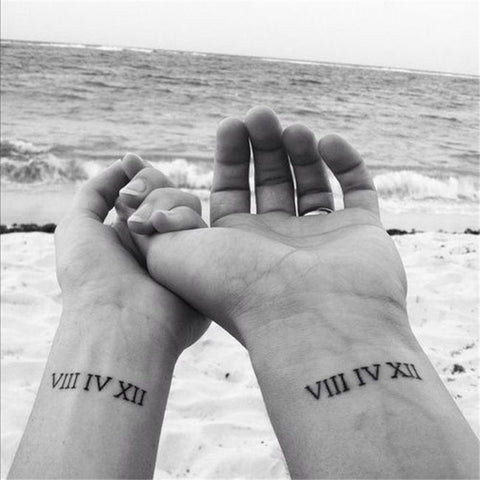
Anniversary Roman numeral tattoos are designed to commemorate relationship milestones such as wedding dates or first meetings. These tattoos are commonly shared between couples, serving as a subtle yet permanent symbol of shared experience and emotional commitment.
In practice, tattoo artists often suggest placing these designs in symmetrical or mirrored positions when done as couple tattoos, reinforcing visual balance and emotional connection.
Memorial Roman Numeral Tattoos
Memorial Roman numeral tattoos are used to honor the date of a loved one’s passing, transforming grief into a structured and meaningful visual tribute. This type of tattoo is particularly significant in therapeutic contexts, where symbolic remembrance can support emotional processing and healing.
Experts in memorial tattoo design emphasize the importance of placement discretion, allowing the wearer to control when and how the memory is visually present in daily life.
Best Placement Ideas for Roman Numeral Tattoos
Placement is a critical factor in Roman numeral tattoo design because it affects visibility, aging, and emotional privacy. The most effective placements are areas with flat skin surfaces and minimal distortion, such as the wrist, forearm, and collarbone, which allow numerals to remain legible and aesthetically balanced over time.
Tattoo specialists often evaluate placement not just for style but for long-term clarity, since fine-line numeral tattoos can blur if placed on high-movement or high-friction areas of the body.
Information Gain: One commonly overlooked factor is skin elasticity differences across body zones, which directly impacts how cleanly Roman numerals age after 5–10 years.
Wrist & Forearm Roman Numeral Tattoos
Wrist and forearm placements are among the most popular choices for Roman numeral tattoos because they offer high visibility and a naturally linear surface. These areas are ideal for minimalist designs, allowing dates or numbers to be easily read while maintaining a clean aesthetic appearance.
However, tattoo artists often warn that wrist tattoos may fade faster due to frequent exposure to sunlight and movement.
Ribcage & Collarbone Placement Considerations
Ribcage and collarbone placements are chosen for their intimate and discreet nature, making them ideal for personal or emotionally significant Roman numeral tattoos. These areas allow for larger or more stylized numeral arrangements while keeping the design hidden from casual view.
From an expert perspective, rib tattoos can be more painful due to lower fat coverage, but they offer excellent long-term visual preservation when properly healed.
How to Convert Dates Into Roman Numerals (Without Mistakes)
Lucky Tattoo, a professional tattoo artist, has over 10 years of experience in the art of tattooing in Ho Chi Minh City. Lucky Tattoo Studio was founded in 2014 by skilled and kind artists. All tattoos are provided in a clean, strictly controlled, and friendly environment.
Roman numeral conversion is not just mechanical; it is a precision-based design step that tattoo artists treat as part of the final artwork. Even small errors like incorrect subtraction rules can lead to irreversible mistakes, making validation a critical part of the design workflow.
Information Gain: Many tattoo regrets stem not from aesthetics but from incorrect numeral structuring—especially misuse of subtractive notation (e.g., “IIII” vs “IV” inconsistencies).
Common Conversion Mistakes to Avoid
Correct Roman numeral tattoos depend on strict adherence to numeral rules, and mistakes often occur when users rely on guesswork or unverified online converters. The most common issues include incorrect subtraction logic, misplaced digits, and inconsistent spacing that reduces readability and long-term clarity of the tattoo design.
Tattoo professionals strongly recommend cross-checking conversions using multiple sources or consulting an artist before finalizing the stencil.
- Using incorrect subtractive notation (IV vs IIII misuse)
- Misplacing year components (splitting digits incorrectly)
- Ignoring spacing rules between numeral groups
- Copying unverified online conversion results
Roman Numeral Tattoo Design Styles & Trends (2026)
Roman numeral tattoo design trends in 2026 emphasize minimalism, fine-line precision, and personalized integration with other symbolic elements. Modern tattoo culture favors subtle, clean typography that blends numerals with emotional storytelling rather than overly decorative or complex designs.
Design evolution in this niche reflects a broader shift toward personalization and identity-based tattoos, where meaning outweighs visual complexity.
Information Gain: A growing trend is the integration of Roman numerals into “hybrid identity tattoos,” combining dates with coordinates, initials, or symbolic linework for layered meaning.
Minimalist Fine-Line Roman Numeral Tattoos
Minimalist fine-line tattoos are currently the most requested Roman numeral style due to their subtle aesthetic and modern appearance. These designs use thin, precise strokes to create clean numerals that fit naturally on small areas like wrists, fingers, and collarbones.
However, tattoo experts caution that ultra-thin lines may fade faster over time, especially in high-exposure areas, requiring careful aftercare and occasional touch-ups.
Bold vs Thin Ink Styles
Bold and thin Roman numeral tattoo styles serve different purposes depending on visibility, longevity, and aesthetic preference. Bold ink ensures long-term readability and durability, while thin ink emphasizes elegance and subtlety, often preferred for intimate or hidden placements.
Tattoo artists often recommend bold styles for areas exposed to sunlight and friction, while fine-line designs work best in protected areas of the body.
Do Roman Numeral Tattoos Age Well? Longevity & Aftercare
Roman numeral tattoos generally age well when properly designed, placed, and maintained, but fine-line variations may soften over time due to natural skin regeneration and environmental exposure. Longevity depends on ink depth, placement area, and aftercare consistency during the healing phase.
Dermatology research shows that tattoo clarity decreases gradually over time due to pigment dispersion in the dermal layer, making initial technique and aftercare essential for preserving design integrity.
Information Gain: One overlooked factor affecting tattoo aging is UV exposure—sunlight accelerates pigment breakdown even in high-quality ink formulations.
Aftercare Tips for Long-Lasting Roman Numeral Tattoos
Proper aftercare significantly improves the longevity and clarity of Roman numeral tattoos. The healing phase typically lasts 2–4 weeks, during which skin protection and moisture balance are critical to prevent fading, scabbing, or ink loss.
Tattoo professionals emphasize consistency in aftercare routines, especially for fine-line numeral tattoos that rely on precision for readability.
- Keep tattoo clean and lightly moisturized
- Avoid direct sunlight for at least 2 weeks
- Do not pick or scratch healing skin
- Avoid swimming pools and saltwater exposure early
Expert Tips from Tattoo Artists Before Getting One
Experienced tattoo artists recommend careful planning, precise numeral verification, and thoughtful placement selection before committing to a Roman numeral tattoo. These designs may appear simple but require high accuracy because errors are permanent and difficult to correct without cover-ups or laser removal.
Professionals also emphasize the importance of scaling design size appropriately to ensure long-term legibility, especially for fine-line styles that can blur over time.
Information Gain: Many artists now use stencil simulation tools to preview how Roman numerals will distort over time based on body movement and skin curvature.
Professional Checklist Before Tattooing Roman Numerals
Before finalizing a Roman numeral tattoo, professionals follow a structured checklist to minimize errors and improve design longevity. This includes verifying numerical accuracy, testing font readability, and evaluating placement dynamics on moving skin areas.
- Double-check numeral conversion accuracy
- Confirm spacing and alignment consistency
- Test design visibility in mirror and motion
- Evaluate long-term aging potential
Roman Numeral Tattoo Inspiration Gallery Ideas
Roman numeral tattoo inspiration often draws from minimalist design trends, emotional storytelling, and placement creativity. The most effective designs balance simplicity with meaning, ensuring the tattoo remains visually clean while preserving deep personal significance over time.
Modern tattoo culture increasingly integrates Roman numerals into hybrid compositions that include fine-line art, coordinates, or symbolic shapes for layered storytelling.
Frequently Asked Questions (FAQ)
What is the meaning behind Roman numeral tattoos?
Roman numeral tattoos represent meaningful life events such as birthdays, anniversaries, or memorial dates using the ancient Roman numbering system, turning personal milestones into permanent symbolic body art.
Are Roman numeral tattoos a good choice for first tattoos?
Yes, they are popular for first tattoos because they are simple, meaningful, and visually minimal, making them less overwhelming while still deeply personal.
Where do Roman numeral tattoos last the longest?
Areas with low friction and sun exposure, such as the upper arm or collarbone, tend to preserve Roman numeral tattoos better over time compared to wrists or hands.
How painful are Roman numeral tattoos?
Pain levels depend on placement. Ribcage and spine areas are more painful, while forearm and upper arm placements are generally less uncomfortable.
Can Roman numeral tattoos be corrected if wrong?
Minor errors may be covered or corrected with redesigns, but significant mistakes often require cover-ups or laser removal due to their permanent nature.
Do Roman numeral tattoos fade quickly?
Fine-line Roman numeral tattoos may fade faster than bold designs, especially in sun-exposed areas, but proper aftercare significantly improves longevity.
What makes Roman numeral tattoos so popular?
They combine emotional meaning, minimalist aesthetics, and timeless design, making them one of the most versatile and widely chosen tattoo styles worldwide.
Conclusion: Why Roman Numeral Tattoos Remain Timeless
Roman numeral tattoos continue to dominate modern tattoo culture because they merge emotional storytelling with minimalist design principles. Their ability to encode meaningful life moments into a timeless visual system ensures lasting relevance across trends and generations.
As tattoo artistry evolves, Roman numerals remain a foundational choice for individuals seeking both aesthetic simplicity and deep personal significance in their body art.