What Is a Full Backpiece Tattoo?
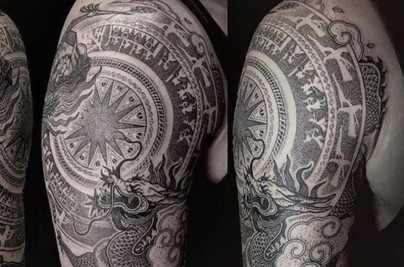
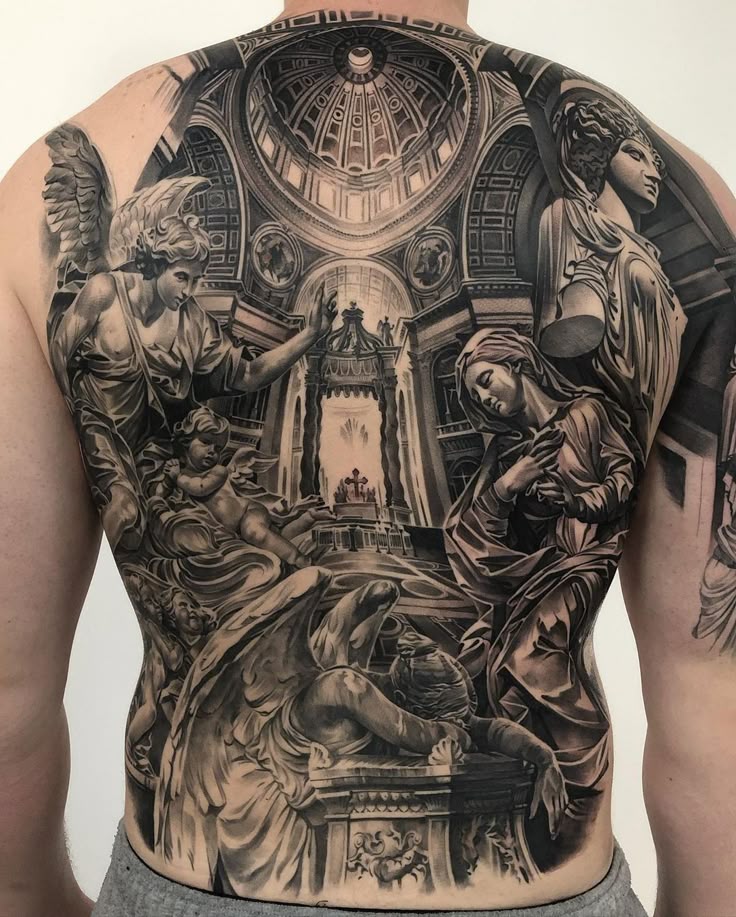
A full backpiece tattoo is a large-scale body art composition that covers the entire back, from shoulders to lower spine and sometimes extending to upper arms or buttocks. It is designed as a unified visual narrative rather than isolated tattoos, requiring strategic planning, anatomical flow awareness, and multi-session execution.
Anatomy of a Full Back Canvas
A full back canvas refers to the entire posterior torso, including scapulae, spine, latissimus dorsi, and lower lumbar region. Artists use these anatomical zones to guide composition flow, ensuring the tattoo aligns with natural muscle movement and body symmetry for long-term visual balance and aging stability.
Why Full Backpieces Are the Most Complex Tattoo Projects
Full backpieces are complex because they demand large-scale composition control, multi-session consistency, and adaptation to body movement over time. Unlike smaller tattoos, they must remain visually coherent across shifting muscle groups and skin elasticity, requiring advanced planning and experienced artists to avoid distortion or thematic imbalance.
Information Gain Insight: Many clients underestimate how posture changes and spinal curvature affect tattoo symmetry over time. Expert artists often pre-map designs in standing, seated, and flexed positions to prevent long-term visual distortion.
Full Backpiece Tattoo Styles & Design Choices
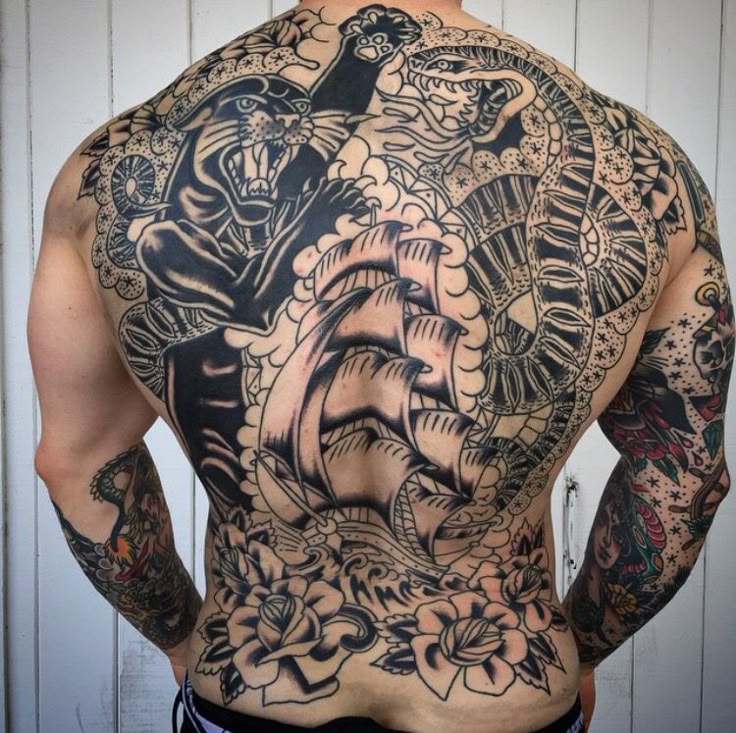
Full backpiece tattoo styles vary widely, but each requires strong visual hierarchy and flow to work across a large anatomical surface. The most successful designs integrate cultural symbolism, realism depth, or abstract structure while maintaining directional movement that complements the spine and shoulder blade transitions.
Japanese Irezumi and Symbolic Backpieces
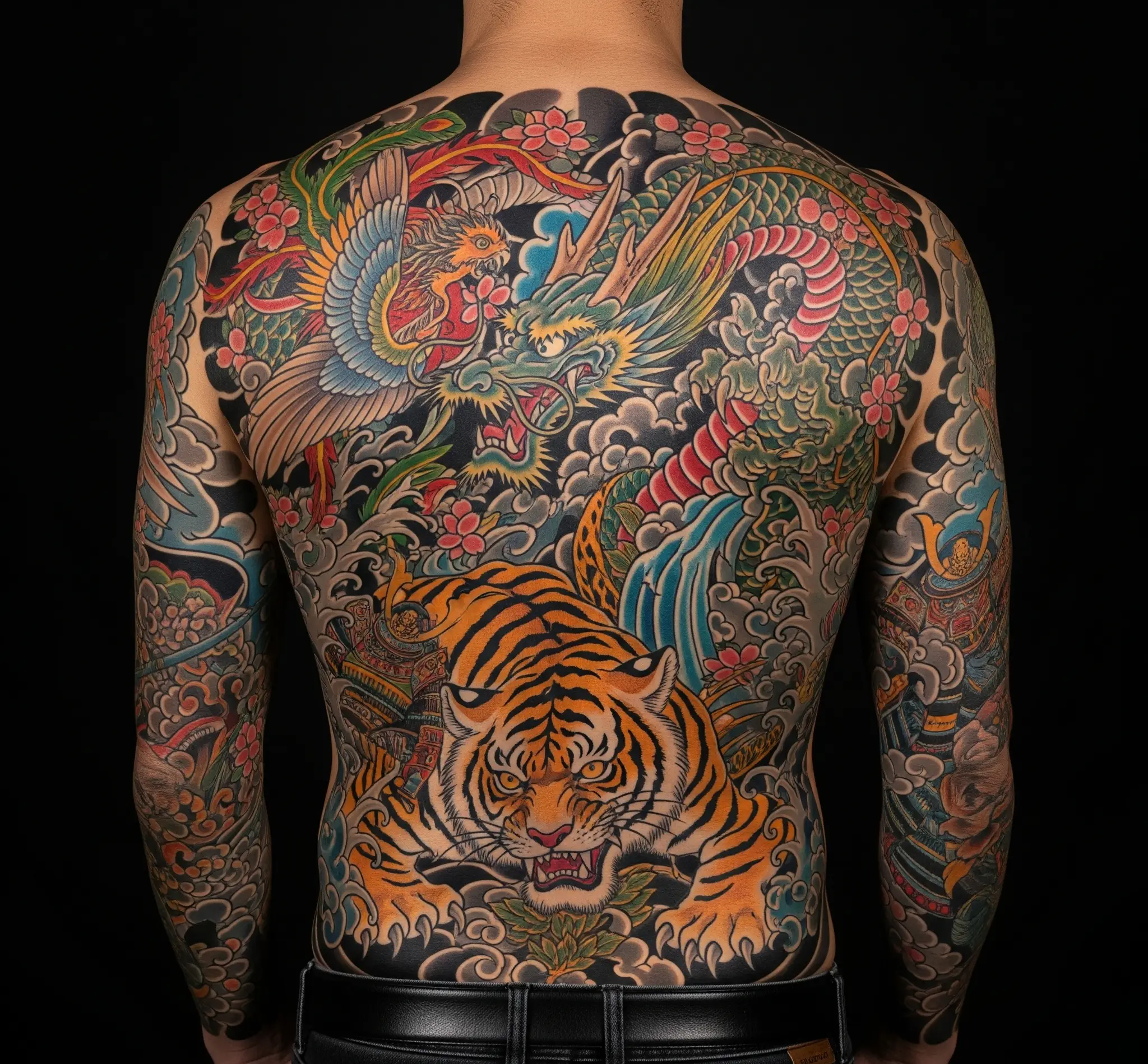
Japanese irezumi is a traditional full-body tattoo style that uses mythological creatures, waves, and floral motifs arranged in flowing compositions. It is designed specifically for large body areas like the back, emphasizing storytelling, spiritual symbolism, and harmony with human anatomy rather than isolated imagery.
Realism, Black & Grey, and Biomechanical Styles
Realism and black-and-grey backpieces focus on lifelike shading, depth gradients, and photographic detail, while biomechanical designs integrate mechanical structures with anatomy. These styles rely heavily on tonal balance and light sourcing to maintain clarity across large skin surfaces and prevent visual overcrowding over time.
Information Gain Insight: Realism backpieces often fail when artists ignore “visual rest zones.” Experienced tattooists intentionally leave negative space to prevent long-term ink blending, especially in high-mobility areas like shoulders and lower back.
Pain Level of Full Back Tattoos (What It Feels Like)
The pain level of a full backpiece tattoo varies significantly depending on location, with the spine, ribs, and shoulder blades being the most sensitive areas. Pain is typically described as layered discomfort rather than constant intensity, increasing during shading and long sessions due to nerve density and skin thinness.
Spine, Rib, and Shoulder Blade Sensitivity Explained
The spine and ribs are highly sensitive due to minimal fat cushioning and dense nerve networks, making these areas more painful during tattooing. Shoulder blades vary depending on muscle mass, while the lower back is generally more tolerable. Pain also increases with session duration and fatigue levels.
Pain Management Strategies Used by Professionals
Professional tattoo artists recommend hydration, controlled breathing, and structured session breaks to manage pain effectively. Some studios also schedule heavy-detail work in shorter intervals to reduce nerve overload. Avoiding caffeine and alcohol before sessions significantly improves pain tolerance and healing response.
Information Gain Insight: Most pain breakdown guides overlook “session stacking fatigue,” where pain sensitivity increases dramatically after the third consecutive hour due to nervous system saturation rather than skin trauma alone.
Full Backpiece Tattoo Cost, Time & Session Breakdown
A full backpiece tattoo typically requires multiple sessions over several months, with total costs ranging from a few thousand to over ten thousand dollars depending on artist expertise, geographic location, and design complexity. Pricing is usually hourly, reflecting the long-term commitment and precision required for large-scale body art.
Hourly Pricing vs Full Project Pricing Models
Most professional tattoo artists charge hourly rates for backpieces, though some offer project-based pricing for cohesive designs. Hourly rates ensure flexibility for adjustments, while project pricing provides budget predictability. High-demand artists often require deposits and structured scheduling to secure long-term commitment slots.
Typical Timeline: Sessions, Duration, and Completion
A full backpiece typically takes 5 to 20 sessions, depending on detail level and healing intervals. Each session ranges from 3 to 8 hours. Completion can span 3 months to over a year, especially when allowing proper healing between shading and layering stages to preserve skin integrity.
Information Gain Insight: Many clients underestimate healing delays between sessions. Overlapping sessions too quickly can cause ink rejection or patchy healing, forcing costly rework and extending overall project timelines significantly.
Lucky Tattoo, a professional tattoo artist, has over 10 years of experience in the art of tattooing in Ho Chi Minh City. Lucky Tattoo Studio was founded in 2014 by skilled and kind artists. All tattoos are provided in a clean, strictly controlled, and friendly environment.
Healing Process & Aftercare for Full Backpiece Tattoos
A full backpiece tattoo healing process typically takes 2–6 weeks per session and requires strict hygiene, controlled moisture balance, and protection from friction and UV exposure. Proper aftercare prevents infection, ink fading, and scarring while ensuring consistent pigment retention across large and sensitive skin zones.
First 72 Hours: Critical Recovery Window
The first 72 hours after a tattoo session are the most vulnerable period for infection and ink displacement. During this time, the skin is essentially an open wound, requiring gentle cleaning, breathable wrapping, and minimal physical disturbance. Proper fluid management and avoiding pressure on the back are essential for early-stage healing stability.
Information Gain Insight: Most healing failures in large tattoos occur within the first 72 hours due to unnoticed friction from clothing or sleeping positions. Professional artists often recommend side-sleeping or prone padding adjustments to prevent uneven scabbing on the spine and shoulder blade areas.
Long-Term Healing: 2–6 Week Skin Regeneration Cycle
Full back tattoos heal in layers, with surface scabbing resolving in 10–14 days and deeper dermal recovery continuing for up to 6 weeks. Each session contributes to cumulative skin stress, meaning repeated healing cycles must be spaced properly to avoid pigment rejection or uneven saturation across different back zones.
Infection Risks and Prevention Strategies
Large-scale tattoos carry moderate infection risk due to extended exposure and surface area. Common risks include bacterial contamination, over-moisturizing, and improper wound care. Prevention requires sterile environments, antibacterial cleansing routines, and avoiding pools, gyms, and direct sun exposure during early healing stages.
Information Gain Insight: Dermatological studies show that over-moisturizing is nearly as damaging as under-care. Excess ointment traps bacteria and slows epidermal regeneration, increasing the likelihood of pustule formation in dense ink regions.
How to Choose the Right Tattoo Artist for a Backpiece
Choosing the right tattoo artist for a full backpiece is critical because this type of work requires advanced composition skills, anatomical awareness, and multi-session consistency. The ideal artist specializes in large-scale designs and demonstrates proven experience in cohesive body flow and long-term visual storytelling.
Evaluating Portfolios for Large-Scale Consistency
A strong portfolio for backpieces should show complete healed projects, not just fresh tattoos. Look for consistent shading, smooth transitions across body curvature, and balanced negative space. Artists experienced in large-scale work demonstrate control over visual hierarchy and avoid overcrowded or fragmented compositions.
Style Consistency and Long-Term Design Integrity
Style consistency ensures that the tattoo remains visually unified over multiple sessions. Mixing incompatible styles, such as realism with traditional Japanese motifs, can lead to visual dissonance. Professional artists plan entire backpieces as a single composition rather than incremental additions.
Information Gain Insight: One of the most common mistakes clients make is selecting artists based on individual tattoo images rather than full-body projects. Backpieces require “composition literacy,” not just technical shading ability.
Full Backpiece Tattoo Ideas & Inspiration Concepts
Full backpiece tattoo ideas are typically based on narrative storytelling, cultural symbolism, or natural flow compositions that complement the body’s structure. The best designs integrate movement, contrast, and focal hierarchy to ensure long-term visual impact across a large anatomical canvas.
Japanese Dragons, Koi Fish, and Mythological Themes
Japanese-inspired backpieces often feature dragons, koi fish, tigers, and waves, symbolizing strength, perseverance, and transformation. These designs are structured using flow principles that align with muscle direction, ensuring the tattoo moves naturally with the body during motion.
Realism, Nature, and Abstract Flow Designs
Realism backpieces often include portraits, wildlife, or natural landscapes such as forests, oceans, and celestial scenes. Abstract designs focus on geometric flow and negative space usage. Both styles rely heavily on gradient control and spatial balance to avoid visual overload across large skin surfaces.
Custom Narrative Backpieces (Personal Story Designs)
Custom narrative tattoos combine multiple symbolic elements into a cohesive story across the back. These designs often represent personal transformation, milestones, or philosophical themes. They require deep collaboration between artist and client to ensure symbolism is translated visually without overcrowding the composition.
Information Gain Insight: Narrative tattoos often fail when clients attempt to include too many life events. Expert artists typically recommend limiting core themes to 2–3 central ideas to maintain clarity and long-term visual readability.
Common Myths About Full Back Tattoos
Full back tattoos are surrounded by misconceptions regarding pain, aging, and design limitations. Many assume they fade quickly or must follow rigid stylistic rules, but in reality, longevity depends more on execution quality, aftercare discipline, and skin health than on design choice alone.
Myth: Back Tattoos Always Fade Poorly
Back tattoos do not inherently fade faster than other areas. Fading is influenced by sun exposure, skin care habits, and ink quality. Proper UV protection and hydration significantly extend the vibrancy and clarity of large-scale tattoos over time.
Myth: You Must Stick to One Style Only
While stylistic consistency is important, skilled artists can blend complementary styles if planned correctly. The key is maintaining unified flow and tonal harmony rather than rigidly restricting artistic variation across the entire backpiece.
Information Gain Insight: Studies in dermatological ink retention show that deeper dermal layers hold pigment more consistently in low-friction zones like the upper back, contradicting the belief that all tattoo regions age uniformly.
Frequently Asked Questions (FAQ)
How long does a full backpiece tattoo take to complete?
A full backpiece tattoo usually takes 3 to 12 months depending on complexity, with 5–20 sessions required for completion.
Is a full back tattoo very painful?
Pain is moderate to high, with the spine and ribs being the most sensitive areas due to low fat and high nerve density.
What is the average cost of a full back tattoo?
Costs typically range from $2,000 to over $15,000 depending on artist experience, detail level, and geographic location.
Can I work out after getting a backpiece tattoo?
Strenuous exercise should be avoided for at least 7–14 days after each session to prevent irritation and infection.
What is the best style for a full back tattoo?
Japanese irezumi, realism, and black-and-grey styles are most commonly used due to their adaptability to large-scale composition.
How do I prevent infection during healing?
Keep the area clean, avoid swimming and sweating, use recommended ointments sparingly, and follow strict aftercare instructions from your artist.
Do back tattoos age well over time?
Yes, if properly executed and cared for, back tattoos can age well, especially in low-sun exposure areas with high-quality ink and proper hydration.
Lucky Tattoo, a professional tattoo artist, has over 10 years of experience in the art of tattooing in Ho Chi Minh City. Lucky Tattoo Studio was founded in 2014 by skilled and kind artists. All tattoos are provided in a clean, strictly controlled, and friendly environment.
full-backpiece-tattoo