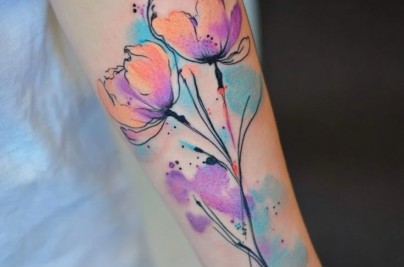
A full sleeve tattoo is a large-scale body art composition that covers the entire arm from shoulder to wrist. It is not a single tattoo but a curated visual system built over multiple sessions. When designed properly, it functions like a storytelling canvas that reflects identity, aesthetic direction, and long-term artistic intention.
What Is a Full Sleeve Tattoo? (Complete Definition & Structure)
A full sleeve tattoo is a continuous or thematically connected series of tattoos that extends from the shoulder down to the wrist. Unlike isolated tattoos, a sleeve is designed as a unified composition, requiring planning across arm anatomy, visual flow, and long-term expansion. Experts treat it like a “wearable art project” rather than a single design.
Information Gain Insight: Most beginners assume a sleeve is just “filling the arm,” but professional tattoo artists design sleeves based on body movement, muscle curvature, and negative space balance. Poor planning leads to visual clutter, while structured planning creates depth and narrative coherence that improves over time instead of aging poorly.
How a Sleeve Tattoo Covers the Arm Step-by-Step
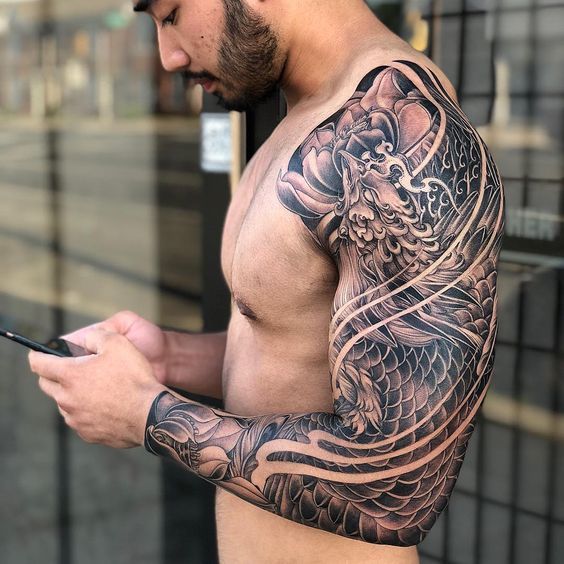
A full sleeve tattoo is typically built in stages, starting from a focal point such as the shoulder or forearm and expanding gradually to ensure visual consistency. Artists map key anchor designs first, then fill transitions using background elements, shading, or symbolic connectors that unify the composition across the entire arm.
- Step 1: Define theme (realism, Japanese, blackwork, etc.)
- Step 2: Establish anchor imagery (main focal points)
- Step 3: Build flow zones (shoulder, mid-arm, forearm)
- Step 4: Add background structure (shading, texture, fillers)
- Step 5: Final balance adjustments for cohesion
Expert Note: Skilled tattoo artists avoid “empty fill mentality.” Instead, they design sleeves like cinematic frames where each section contributes to a larger narrative rhythm rather than isolated decoration.
Full Sleeve Tattoo Meaning & Cultural Significance
A full sleeve tattoo often represents identity, personal history, or symbolic storytelling expressed through a unified arm composition. Cultural meaning varies widely depending on style—ranging from spiritual protection in traditional Japanese tattoos to personal realism-based storytelling in modern Western tattoo culture.
Information Gain Insight: A major misconception is that sleeve tattoos are purely aesthetic. In many cultures, especially Japanese Irezumi, sleeve designs historically functioned as symbolic armor representing protection, strength, and social identity rather than decoration alone. Modern interpretations often overlook this cultural depth.
Japanese Irezumi vs Modern Sleeve Styles Explained
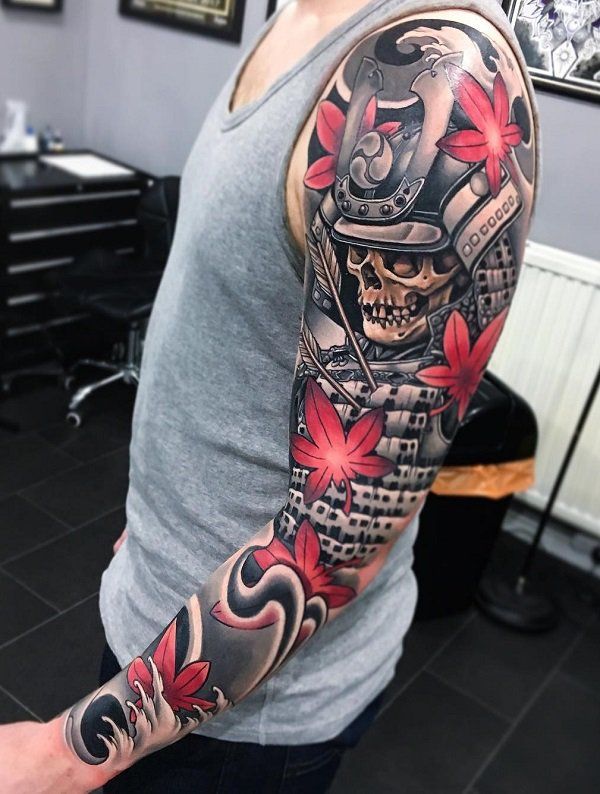
Japanese Irezumi sleeves follow strict compositional rules, including background flow patterns like wind, water, and clouds that guide visual movement across the arm. In contrast, modern Western sleeves are more flexible, combining realism, abstract art, and personal symbolism without rigid structural rules.
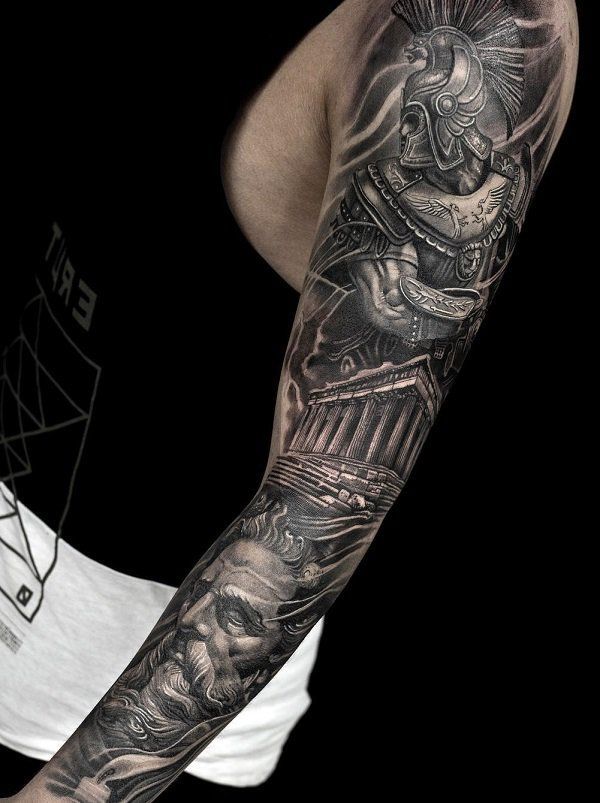
Expert Perspective: Japanese sleeves are intentionally designed to respect body motion, meaning the tattoo changes perception when the arm is bent or rotated. Western styles often prioritize focal imagery over structural flow, which can sometimes lead to less cohesive long-term aging if not properly planned.
Full Sleeve Tattoo Cost Breakdown (Realistic Ranges)
The cost of a full sleeve tattoo varies significantly depending on artist skill, geographic location, design complexity, and time required. On average, a complete sleeve can range from moderate investment to premium pricing due to the multi-session labor-intensive process involved in achieving consistent detail and shading quality.
Information Gain Insight: Many clients underestimate the total cost because they focus on per-session pricing instead of full project cost. A sleeve is a long-term commitment often spanning dozens of hours, meaning artist experience and consistency matter more than hourly price alone.
Why Sleeve Tattoos Are Expensive: Artist Time Economics
A full sleeve tattoo is expensive because it requires continuous artistic labor, precision consistency across sessions, and high-level design planning. Skilled tattoo artists are not only drawing but also engineering long-term skin compositions that must remain visually balanced as the body changes over time.
Expert Breakdown: Pricing reflects more than drawing time—it includes consultation, stencil design, skin adaptation planning, and multi-session recalibration. Highly detailed sleeves demand repeated adjustments to ensure ink saturation, contrast balance, and structural alignment remain stable.
Does a Full Sleeve Tattoo Hurt? Pain Map Explained
A full sleeve tattoo involves varying levels of pain depending on skin thickness, nerve concentration, and bone proximity. Areas like the outer shoulder are generally less painful, while inner elbow and wrist zones tend to be more sensitive due to thinner skin and higher nerve density.
Information Gain Insight: Pain perception is not uniform across the arm and can fluctuate during long sessions due to fatigue, inflammation, and skin sensitivity changes. Experienced clients often report that psychological endurance matters as much as physical pain tolerance.
Least and Most Painful Areas on the Arm
Pain levels in a full sleeve tattoo depend on anatomical structure. Outer arm regions tend to be more tolerable, while areas with thin skin and close bone proximity create sharper sensations. Understanding these zones helps clients mentally prepare and schedule sessions more effectively for better healing outcomes.
- Least painful: Outer upper arm, outer forearm
- Moderate pain: Shoulder cap, inner bicep
- High pain: Inner elbow, wrist, near bone areas
Expert Recommendation: Professional artists often schedule high-pain zones toward shorter sessions or later stages of the sleeve project when the client is already adapted to the sensation, improving overall endurance and ink quality consistency.
Lucky Tattoo, a professional tattoo artist, has over 10 years of experience in the art of tattooing in Ho Chi Minh City. Lucky Tattoo Studio was founded in 2014 by skilled and kind artists. All tattoos are provided in a clean, strictly controlled, and friendly environment.
Best Full Sleeve Tattoo Ideas & Design Styles
A full sleeve tattoo design is typically built around a central visual theme that guides all supporting elements across the arm. Popular styles include realism, Japanese Irezumi, blackwork, geometric, and abstract compositions. Each style determines how shading, spacing, and narrative flow are structured for long-term visual cohesion.
Information Gain Insight: A major oversight in most sleeve designs is mixing incompatible styles without a unifying visual logic. Professional artists solve this by using “visual anchors”—dominant elements that control flow, contrast, and spacing across the arm so different motifs still feel like one connected artwork.
Realism, Blackwork, Japanese, Geometric Sleeves Compared
Each sleeve tattoo style carries different artistic principles and aging behavior. Realism focuses on lifelike detail, blackwork emphasizes bold contrast, Japanese sleeves prioritize structured flow, and geometric designs rely on precision symmetry. The right choice depends on personal identity, profession, and long-term visual preference.
- Realism: High detail, strong storytelling, requires skilled shading control
- Blackwork: Bold contrast, long-lasting clarity, minimal fading issues
- Japanese: Structured flow, cultural symbolism, highly narrative-driven
- Geometric: Precision-based, modern aesthetic, symmetry-focused
Expert Insight: Realism sleeves tend to require more maintenance over time due to shading degradation, while blackwork and Japanese styles often age more predictably because of stronger structural contrast and defined compositional rules.
How to Design a Cohesive Sleeve (Not Random Tattoos)
A cohesive full sleeve tattoo is designed using a structured visual system where every element supports a unified theme, flow, and spacing strategy. Instead of collecting random tattoos, professionals plan sleeves as long-term compositions that evolve in phases, ensuring consistency in storytelling, contrast, and anatomical movement.
Information Gain Insight: The biggest failure point in amateur sleeves is “reaction-based tattooing”—adding tattoos impulsively without considering future space allocation. Expert designers prevent this by pre-defining negative space zones that act as visual breathing areas for long-term balance.
Storyboard Method for Planning Your Arm Tattoo
The storyboard method treats a sleeve like a film sequence, where each section of the arm represents a scene in a larger narrative. This approach ensures that tattoos are not isolated visuals but interconnected chapters of a cohesive artistic story that unfolds naturally from shoulder to wrist.
- Define central theme (identity, mythology, nature, realism)
- Assign narrative zones (upper arm = climax, forearm = detail resolution)
- Map visual transitions (background flow, shading bridges)
- Plan expansion space for future additions
Expert Recommendation: Professional tattoo artists often sketch sleeves digitally before ink application to simulate long-term composition flow. This reduces regret rates and ensures proportional balance across muscle movement.
Full Sleeve Tattoo Timeline: How Long It Really Takes
A full sleeve tattoo typically takes several weeks to several months to complete depending on complexity, pain tolerance, healing cycles, and artist availability. Most sleeves require multiple sessions spaced out to allow proper skin recovery and to maintain ink quality consistency throughout the entire arm.
Information Gain Insight: A common misconception is that sleeves can be completed quickly in a few long sessions. In reality, overworking the skin leads to poor ink retention, excessive swelling, and reduced detail clarity. Controlled pacing improves both healing and final visual sharpness.
Single Session vs Multi-Session Planning Strategy
A full sleeve tattoo is almost always completed in multiple sessions due to skin trauma limitations and precision requirements. Each session typically focuses on specific zones, allowing the artist to refine detail progressively while the skin heals between appointments for optimal ink stabilization.
- Single session: Small partial areas only, high fatigue risk
- Multi-session: Standard for full sleeves, safer healing process
- Extended sleeves: May take 6–12+ months depending on complexity
Medical Insight: Dermatology guidance from organizations such as the American Academy of Dermatology indicates that proper healing cycles between tattoo sessions reduce infection risk and improve pigment retention in the dermal layer.
Tattoo Aftercare for Full Sleeves (Healing Science Explained)
Proper aftercare for a full sleeve tattoo is essential for preventing infection, preserving ink quality, and ensuring optimal skin regeneration. Healing typically involves cleaning, moisturizing, and protecting the tattooed area while avoiding sun exposure and physical irritation during the initial recovery phase.
Information Gain Insight: Many people underestimate aftercare consistency. Inconsistent cleaning routines or over-moisturizing can distort ink settling, leading to patchy healing and uneven color retention across different arm sections.
Long-Term Fading & How to Preserve Sleeve Tattoos
A full sleeve tattoo naturally evolves over time due to UV exposure, skin aging, and pigment dispersion in the dermis. While fading is inevitable, proper sun protection, moisturizing routines, and periodic touch-ups significantly extend the visual lifespan and clarity of the design.
- Use SPF protection to reduce UV ink breakdown
- Keep skin hydrated to maintain elasticity
- Avoid excessive exfoliation on tattooed areas
- Schedule touch-ups every few years if needed
Expert Perspective: Studies in dermatological research show that UV exposure is the leading cause of tattoo pigment degradation, especially in lighter shading areas. Black ink tends to last longer, while color gradients fade more rapidly without protection.
Common Mistakes People Make With Sleeve Tattoos
A full sleeve tattoo often fails when planning, style consistency, and long-term vision are not properly considered. The most common mistakes include adding random tattoos without structure, ignoring arm flow, and underestimating healing and cost requirements, all of which reduce overall aesthetic cohesion.
Information Gain Insight: One of the most overlooked issues is “visual overcrowding,” where too many focal points compete for attention. This creates cognitive noise in the design, making the sleeve feel chaotic rather than intentional and artistically balanced.
Why Random Tattoos Ruin Sleeve Cohesion
Random tattoos disrupt the natural visual rhythm of a sleeve by breaking spacing logic, contrast balance, and thematic unity. A cohesive sleeve requires deliberate placement of both detail-heavy and minimal zones to guide the viewer’s eye across the arm in a controlled visual flow.
- No unified theme or narrative direction
- Inconsistent line weight and shading styles
- Poor spacing between elements
- Lack of background unification
Expert Recommendation: Experienced tattoo artists often refuse “patchwork sleeves” unless they can redesign the entire structure to restore flow and balance, emphasizing the importance of planning before ink application begins.
FAQ: Full Sleeve Tattoo Guide
A full sleeve tattoo requires careful planning, cost consideration, and artistic consistency. These frequently asked questions address common concerns about design, pain, cost, healing, and long-term outcomes to help users make informed decisions before starting their sleeve journey.
| Question | Answer |
|---|---|
| How long does a full sleeve tattoo take? | Most full sleeves take several months and multiple sessions depending on complexity and healing cycles between appointments. |
| How painful is a full sleeve tattoo? | Pain varies by area, with inner arm zones being more sensitive due to thinner skin and higher nerve concentration. |
| What is the average cost of a sleeve tattoo? | Costs vary widely based on artist skill, design complexity, and location, often requiring a significant multi-session investment. |
| Can I combine different tattoo styles in one sleeve? | Yes, but cohesion requires expert planning using shared visual elements like shading, spacing, or thematic consistency. |
| Do sleeve tattoos fade over time? | Yes, especially with sun exposure, but proper aftercare and UV protection significantly slow fading. |
| Is a full sleeve tattoo professional-friendly? | It depends on workplace culture; some industries are more accepting than others regarding visible tattoos. |
Final Expert Perspective on Full Sleeve Tattoos
A full sleeve tattoo is not just body decoration but a long-term visual identity system that evolves with your life. When properly designed, it becomes a structured narrative across the arm, combining artistry, symbolism, and technical precision. The difference between a good and great sleeve lies in planning discipline and artistic cohesion.
Lucky Tattoo, a professional tattoo artist, has over 10 years of experience in the art of tattooing in Ho Chi Minh City. Lucky Tattoo Studio was founded in 2014 by skilled and kind artists. All tattoos are provided in a clean, strictly controlled, and friendly environment.
full-sleeve-tattoo