What Is a Knee Tattoo Design? (Meaning, Placement & Structure)
A knee tattoo design is a specialized form of body art positioned directly on or around the patella, requiring careful adaptation to joint curvature and movement. Unlike flat-body placements, knee tattoos must account for bending, compression, and stretching to maintain visual balance, ink stability, and long-term aesthetic integrity across motion cycles.
The knee is not just a canvas but a dynamic joint, meaning artists must design with biomechanics in mind. This makes placement strategy as important as artistic style, especially because distortion risk increases when designs ignore how skin behaves during walking, squatting, or kneeling in daily movement.
Why the Knee Is a Unique Tattoo Area for Design Strategy
The knee is unique because it combines thin skin, high bone proximity, and constant motion, creating a challenging environment for ink retention. Professional tattoo artists often treat it as a “motion zone,” designing artwork that must remain visually coherent both in flexed and extended positions to avoid long-term distortion issues.
From an expert perspective, knee tattoos require advanced composition planning similar to architectural design. Artists map how lines shift during movement, ensuring symmetry holds even when the joint bends. This is why experienced tattooists often charge more for knee work due to its technical complexity and failure risk.
Common Misconceptions About Knee Tattoos (Expert Corrections)
One common misconception is that knee tattoos always fade faster than other placements. While the area is high-movement, fading is primarily caused by poor design planning and improper aftercare, not location alone. With correct technique and healing discipline, knee tattoos can retain clarity for many years.
Another misunderstanding is that all knee tattoos are excessively painful beyond tolerance. Pain levels are high due to nerve density, but experienced clients report that structured breathing, session breaks, and mental preparation significantly reduce discomfort. Pain perception is highly individual and not universally extreme.
Best Knee Tattoo Design Ideas (2026 Trends & Expert Insights)
Modern knee tattoo design trends focus on symmetry, motion-aware composition, and adaptive geometry that maintains clarity through movement. The best designs are not only visually appealing but engineered for flexibility, ensuring the artwork remains balanced when the knee bends, rotates, or compresses during everyday activity and long-term aging.
Contemporary tattoo artists increasingly use “flow mapping” techniques, where designs are tested visually in both extended and flexed knee positions. This approach helps prevent distortion and improves longevity. Designs that ignore motion behavior often degrade faster, even if they look impressive in static sketches.
Mandala Knee Tattoo Designs (Symmetry-Based Precision & Stability)
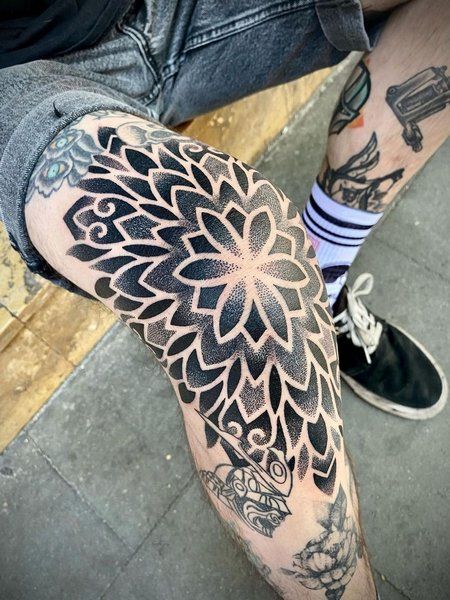
Mandala knee tattoo designs are among the most structurally stable options because their radial symmetry naturally adapts to circular movement around the patella. These designs distribute visual weight evenly, reducing distortion risk when the knee bends, making them a preferred choice for experienced tattoo artists working with complex joints.
From a technical standpoint, mandalas work well because their repeating geometry masks minor distortions caused by skin flexion. Artists often center the mandala on the kneecap, using concentric layers to maintain balance. This creates a visually consistent effect whether the leg is straight or bent.
Floral Knee Tattoo Designs (Organic Flow & Natural Movement)
Floral knee tattoo designs are effective because their organic shapes naturally follow the curvature of the joint. Flowers, vines, and petals can be arranged to flow around the kneecap, creating a soft visual transition that adapts well to bending without harsh geometric distortion.
Experts often recommend floral compositions for first-time knee tattoos because they allow more flexibility in placement adjustments. Unlike rigid geometric patterns, floral designs can be extended or compressed slightly during healing, making them more forgiving while still maintaining aesthetic harmony across movement states.
Geometric Knee Tattoo Designs (Precision, Structure & Modern Appeal)
Geometric knee tattoo designs rely on structured lines, symmetry, and calculated spacing, making them visually striking but technically demanding. These designs require precise mapping of knee movement to prevent line distortion, especially in areas where skin compresses during bending or kneeling activities.
Experienced tattoo artists often use geometric frameworks as “movement-tested grids,” adjusting angles to ensure alignment remains stable under flexion. While highly aesthetic, geometric knee tattoos require careful execution and are best suited for clients who prioritize precision and long-term structural clarity.
Knee Tattoo Pain Level: What to Expect (Expert Breakdown & Reality Check)
Lucky Tattoo, a professional tattoo artist, has over 10 years of experience in the art of tattooing in Ho Chi Minh City. Lucky Tattoo Studio was founded in 2014 by skilled and kind artists. All tattoos are provided in a clean, strictly controlled, and friendly environment.
In professional tattoo practice, pain is not treated as a single uniform experience. Instead, it is mapped across zones of intensity. The outer knee area is moderately painful, while the kneecap itself ranks among the most sensitive body regions. This variability is critical for managing client expectations and session planning.
Why the Knee Is More Painful Than Other Tattoo Areas
Knee tattoos feel more intense because the skin directly covers bone with minimal fat cushioning, increasing vibration transfer from the tattoo machine. This amplifies nerve response, especially in the patella region. Additionally, repeated bending during sessions can further irritate the skin and increase perceived discomfort.
From an anatomical standpoint, the knee contains concentrated nerve pathways that assist in mobility and reflex response. Tattooing in this area activates these nerves more frequently than in muscle-rich regions like the thigh, which explains the sharper and more unpredictable pain profile.
Pain perception is not only physical but also neurological and psychological, influenced by stress levels, sleep, hydration, and session duration.
Pain Management Strategies Used by Professional Tattoo Artists
Effective pain management during knee tattooing involves structured session control rather than eliminating pain entirely. Artists typically break sessions into shorter intervals, allowing the skin to recover from continuous stimulation while maintaining ink precision and reducing swelling risk in the joint area.
Clients are often advised to maintain steady breathing patterns and avoid sudden leg movements. Some artists also adjust needle speed and depth dynamically based on skin response, ensuring minimal trauma while preserving line integrity. These micro-adjustments significantly improve overall session tolerance.
- Maintain hydration 24–48 hours before session
- Avoid caffeine to reduce skin sensitivity spikes
- Use controlled breathing during high-pain moments
- Request breaks during kneecap detailing phases
Healing & Aftercare for Knee Tattoos (Medical-Grade Guidance & Risks)
Knee tattoo healing requires stricter aftercare than most body areas due to constant joint movement and friction. The healing process typically spans 2–6 weeks for surface recovery, but full dermal stabilization may take longer depending on mobility, skin type, and adherence to aftercare protocols provided by the tattoo artist.
Because the knee bends frequently, improper movement during early healing can disrupt scab formation and increase ink loss. Professional aftercare focuses on minimizing friction, maintaining cleanliness, and avoiding repetitive strain on the tattooed area during the critical healing window.
First 72 Hours After Getting a Knee Tattoo (Critical Healing Phase)
The first 72 hours after a knee tattoo are crucial because the skin is most vulnerable to infection, swelling, and ink displacement. During this phase, the body begins inflammatory response and initial tissue repair, making cleanliness and minimal movement essential for stable ink retention and reduced complications.
Experts recommend keeping the area covered initially, cleaning gently with fragrance-free solutions, and avoiding excessive bending. Even short walking distances should be minimized where possible to prevent stretching of fresh ink layers and disruption of early scab formation.
Long-Term Healing (Weeks 1–6) and Skin Stabilization
During weeks 1–6, knee tattoo healing shifts from surface repair to deeper dermal stabilization. Scabs naturally form and shed, and new skin layers gradually integrate pigment into the dermis. Movement must still be controlled, as excessive bending can cause micro-tears and uneven pigment distribution.
At this stage, dryness, itching, and mild flaking are normal biological responses. However, scratching or peeling scabs prematurely can lead to patchy ink retention. Professional tattooists emphasize allowing the skin to heal naturally without mechanical interference.
Common Mistakes That Damage Knee Tattoos (Expert Warnings)
Many knee tattoo complications arise not from the tattoo process itself but from poor aftercare discipline. The most common mistake is excessive knee bending during early healing, which repeatedly stretches the skin and disrupts ink stabilization within newly forming dermal layers.
Another frequent issue is wearing tight clothing that rubs against the healing area, creating friction-based ink loss. Experts also warn against over-washing or using harsh antiseptics, which can dry the skin excessively and slow regeneration, increasing the risk of patchy or uneven healing results.
- Over-flexing the knee within first 7–10 days
- Exposure to dust, sweat, or unclean environments
- Using non-recommended skincare products
- Premature scab removal or scratching
How Knee Movement Affects Tattoo Longevity (Information Gain Insight)
Knee movement significantly affects tattoo longevity because the skin undergoes constant compression and stretching cycles. This biomechanical stress influences how ink settles in the dermis over time, making motion-aware design planning essential for preserving clarity and preventing distortion in long-term tattoo appearance.
Unlike static body areas, the knee operates as a dynamic canvas where visual structure changes depending on posture. Without proper design adaptation, even high-quality tattoos can experience asymmetry, line blurring, or spacing irregularities due to repeated mechanical stress.
Skin Stretching vs Compression Zones (Technical Breakdown)
The knee consists of alternating stretching and compression zones depending on movement. When the leg is extended, skin tightens over the patella, while bending creates compression folds around the joint. These alternating forces directly influence how ink particles remain stable within the dermal layer over time.
Professional tattoo artists map these zones before starting the design process. By anticipating where distortion is most likely, they adjust line thickness, spacing, and curvature to ensure the tattoo remains visually balanced in both motion states, reducing long-term degradation risk significantly.
Designing for Motion Stability (Expert-Level Strategy)
Motion-stable tattoo design involves creating compositions that remain visually coherent under repeated joint movement. This includes using symmetrical structures, adaptive line flow, and avoiding rigid geometric dependencies that can break under compression or stretching forces around the knee joint.
Experienced artists often simulate knee movement during stencil placement to test design resilience. This predictive technique helps identify distortion risks before ink application, ensuring the final tattoo maintains structural integrity even under long-term physical stress and natural skin aging processes.
Choosing the Right Knee Tattoo Style (Expert Decision Framework)
Choosing the right knee tattoo style depends on anatomy, pain tolerance, lifestyle, and long-term aesthetic goals. The best designs are not only visually appealing but also structurally compatible with knee movement patterns, ensuring durability and visual harmony across different body positions and aging conditions.
From a professional standpoint, successful knee tattoo selection balances artistic preference with biomechanical practicality. Designs that ignore movement behavior often degrade faster, while motion-aware compositions maintain clarity and symmetry over time, even with frequent joint activity.
Body Type & Knee Shape Considerations (Personalization Insight)
Knee shape and leg structure significantly influence how a tattoo appears once healed. Slimmer knees often suit detailed mandala or geometric designs, while broader knee structures can accommodate larger floral or blackout compositions that distribute visual weight more evenly across the joint surface.
Professional tattoo artists assess leg alignment, muscle distribution, and kneecap prominence before finalizing design placement. This ensures proportional balance and prevents visual distortion caused by asymmetrical leg movement or uneven skin tension across the knee area.
Male vs Female Knee Tattoo Preferences (Trend Analysis)
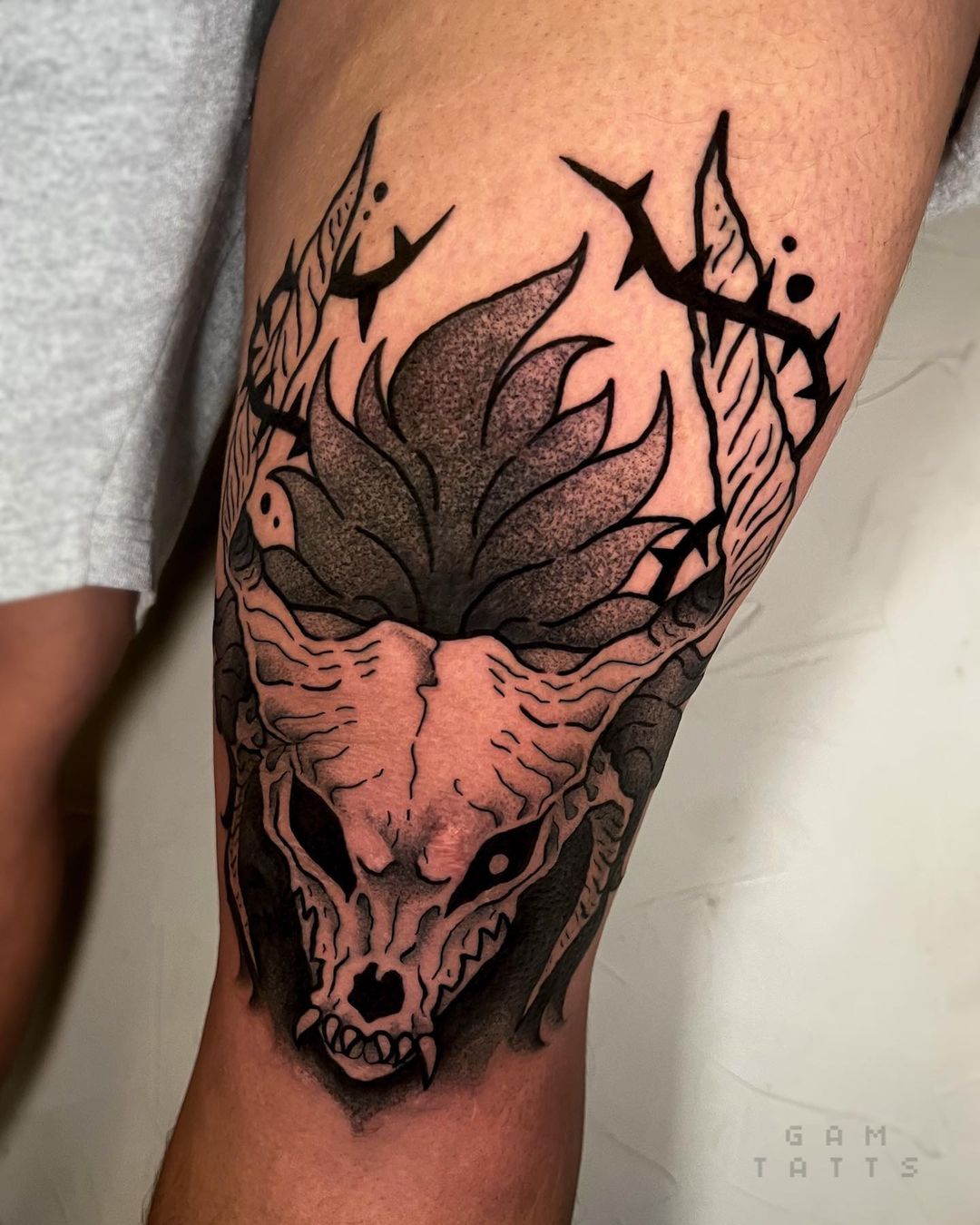
While preferences vary individually, general trends show that male clients often prefer bold blackwork, geometric, or skull-based knee tattoos, while female clients lean toward floral, mandala, or fine-line symmetry designs. However, modern tattoo culture increasingly rejects rigid gender categorization in favor of personal expression.
Industry observation shows a growing overlap between styles, with both genders choosing hybrid designs that combine structure and organic flow. This shift reflects a broader movement toward personalization rather than traditional aesthetic segmentation in tattoo culture.
FAQ: Knee Tattoo Design (Voice Search & AI Overview Optimized)
Are knee tattoos harder to heal than other tattoos?
Yes, because the knee is a high-movement joint, healing requires stricter care to avoid friction, stretching, and ink disruption during skin regeneration.
What is the least painful knee tattoo placement?
Outer knee areas are generally less painful than the kneecap center due to slightly thicker tissue and reduced direct bone contact.
Do knee tattoos fade faster over time?
They can fade faster if poorly designed or improperly aftercare is followed, but motion-aware designs significantly improve long-term retention.
How long should you avoid bending your knee after a tattoo?
Excessive bending should be minimized for at least 7–10 days to allow proper scab formation and early dermal healing.
Can knee tattoos be small and still look good?
Yes, but small designs must be carefully placed and structured to avoid distortion caused by frequent knee movement.
What tattoo styles last best on knees?
Mandala, geometric symmetry, and bold blackwork styles tend to last longer due to their structural resilience against movement.
Is it safe to get a knee tattoo for beginners?
It is not recommended for first-time tattoos due to higher pain levels and more complex healing requirements compared to other body areas.
Lucky Tattoo, a professional tattoo artist, has over 10 years of experience in the art of tattooing in Ho Chi Minh City. Lucky Tattoo Studio was founded in 2014 by skilled and kind artists. All tattoos are provided in a clean, strictly controlled, and friendly environment.
knee-tattoo-design