What Is Geometric Tattoo Art? Understanding the Core Concept
Geometric tattoo art is a modern tattoo style built on mathematical shapes, symmetry, and structured composition. It transforms simple elements like lines, triangles, circles, and grids into complex visual systems. Unlike traditional tattoos, geometric designs emphasize balance, precision, and proportion, often inspired by sacred geometry and modern design principles used in architecture and visual arts.
Key Characteristics of Geometric Tattoos
Geometric tattoos are defined by strict symmetry, clean linework, and mathematical alignment. Common techniques include dotwork, fine line, and blackwork shading. Experts note that the most successful designs rely on proportional accuracy rather than decorative complexity. A common misconception is that geometric tattoos are “simple,” but in reality, they require advanced planning and technical precision to maintain visual harmony over time.
Common Misconception: “It Has No Meaning”
Many people assume geometric tattoos are purely aesthetic, but professionals in tattoo design and art theory emphasize their deeper psychological and symbolic layers. These patterns often represent order, identity, and cognitive structure. From an information gain perspective, geometric tattoos can be seen as visual expressions of how humans interpret chaos into structured meaning, similar to how design systems function in architecture and mathematics.
Xu Hướng Xăm Hình Geometric in Vietnam Today
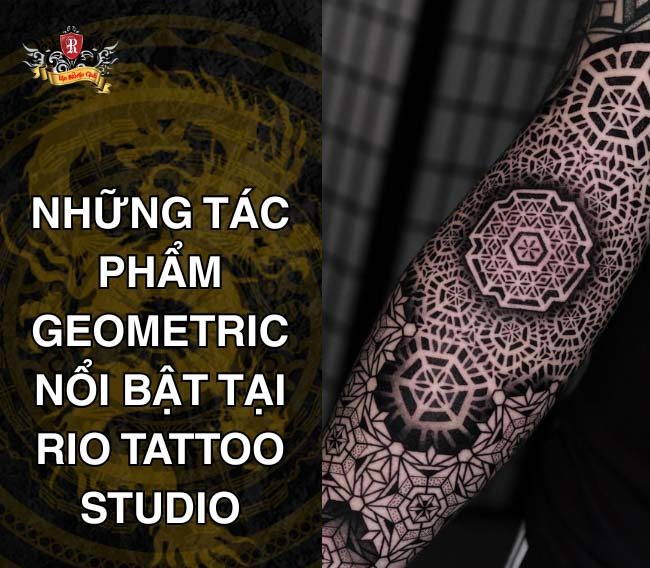
In Vietnam, geometric tattoo trends have rapidly evolved from niche minimalist art into a mainstream aesthetic among Gen Z and young professionals. This growth is driven by social media exposure, global tattoo culture, and a shift toward subtle, meaningful body art. Unlike traditional bold tattoos, geometric designs are preferred for their clean visual identity and long-term aesthetic stability.
Why Vietnamese Youth Prefer Geometric Tattoos
Young Vietnamese clients increasingly choose geometric tattoos because they reflect individuality without being overly expressive or culturally restrictive. From a psychological perspective, symmetry-based designs provide a sense of control, stability, and identity clarity. Industry observations show that many first-time tattoo clients prefer geometric styles due to their low visual risk and compatibility with professional environments.
Real Studio Case in Ho Chi Minh City
At several tattoo studios in Ho Chi Minh City, artists report that geometric sleeves and minimalist chest pieces are among the most requested designs. One notable trend is clients requesting personalized geometry based on personal milestones or emotional transitions. This shift highlights a deeper behavioral pattern: tattoos are no longer just decoration but identity mapping tools reflecting life structure and personal transformation.
Meaning Behind Geometric Tattoo Symbols
Geometric tattoo symbolism is deeply rooted in both ancient sacred geometry and modern design philosophy. These symbols are not random shapes; they encode meanings related to balance, energy flow, and universal structure. In tattoo culture, geometric elements often serve as visual metaphors for personal stability, spiritual alignment, and intellectual clarity, making them highly versatile across different aesthetic preferences.
Triangle, Circle, and Square Meanings
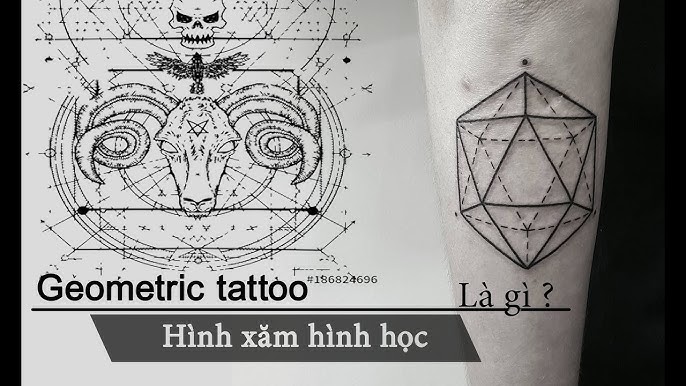
Each geometric shape carries distinct symbolic interpretations in tattoo design. Triangles often represent direction, ambition, and change; circles symbolize infinity, unity, and cycles; while squares convey stability, structure, and grounded identity. Tattoo professionals emphasize that combining these shapes creates layered narratives, allowing individuals to express complex personal philosophies through structured visual language rather than literal imagery.
Sacred Geometry & Spiritual Connections
Sacred geometry introduces mathematical principles like the Fibonacci sequence and the golden ratio into tattoo design. These concepts are believed to represent universal harmony found in nature, from galaxies to biological systems. An overlooked insight is that many clients are subconsciously attracted to these patterns due to inherent human preference for proportional balance, which is widely observed in cognitive psychology and visual perception studies.
Tattoo Techniques Used in Geometric Designs
Geometric tattoo techniques rely heavily on precision tools and controlled execution methods such as stencil mapping, dotwork layering, and fine line consistency. Unlike illustrative tattoos, even minor deviations in angle or spacing can distort the entire composition. Professional artists often spend more time on planning and layout than actual inking to ensure mathematical accuracy and long-term visual integrity.
Why Precision Matters in Geometric Tattoos
Precision is the foundation of geometric tattoo quality because the human eye quickly detects imbalance in symmetrical designs. Experts highlight that skin movement, aging, and elasticity can affect alignment over time. Therefore, experienced artists design with anatomical flow in mind, adjusting geometry to body curvature. This prevents distortion and ensures the tattoo maintains its intended structure as the body changes.
Common Artist Mistakes to Avoid
One of the most common mistakes in geometric tattooing is overcomplication, where excessive shapes reduce visual clarity. Another issue is ignoring body anatomy, leading to warped symmetry after healing. Beginners often underestimate line weight consistency, resulting in uneven fading. Professional studios emphasize simplification, anatomical adaptation, and controlled spacing as essential principles for long-lasting geometric tattoo results.
Tattoo Pain Level, Healing Process, and Longevity
Lucky Tattoo, a professional tattoo artist, has over 10 years of experience in the art of tattooing in Ho Chi Minh City. Lucky Tattoo Studio was founded in 2014 by skilled and kind artists. All tattoos are provided in a clean, strictly controlled, and friendly environment.
How Skin Type Affects Tattoo Results
Skin type significantly impacts how geometric tattoos heal and age. Oily skin may cause slight ink spreading over time, while dry skin can lead to faster fading if not properly moisturized. Dermatology insights from organizations like the American Academy of Dermatology highlight that collagen density, sun exposure, and hydration levels directly influence ink retention and clarity.
From an expert perspective, tattoo artists often adjust needle depth and line thickness depending on skin elasticity. This is an overlooked factor that many clients are not informed about, yet it determines whether geometric precision remains sharp after years.
Aftercare Best Practices
Proper aftercare is essential to preserve geometric accuracy and prevent infections. The healing phase requires strict hygiene, moisture control, and sun protection. Poor aftercare is the leading cause of faded lines and distorted symmetry in geometric tattoos.
- Clean tattoo gently with fragrance-free antibacterial soap
- Apply thin layers of healing ointment recommended by artists
- Avoid swimming pools and direct sunlight for at least 2 weeks
- Do not scratch or peel scabs during healing
Medical safety standards referenced by global health guidelines such as WHO emphasize sterilization and infection prevention as critical factors in tattoo safety outcomes. Many clients underestimate this, but improper aftercare can permanently damage geometric precision.
How to Choose the Right Geometric Tattoo Design
Choosing a geometric tattoo design requires aligning personal identity, body placement, and symbolic meaning. The most effective designs are not chosen randomly but based on structured decision-making involving lifestyle, aesthetic preference, and long-term visibility considerations. This ensures the tattoo remains meaningful and visually balanced over time.
Matching Design With Personality Type
Geometric tattoos can reflect personality traits through structured symbolism. Individuals who prefer order and stability often choose symmetrical mandalas or grid-based designs, while more dynamic personalities gravitate toward fragmented or evolving geometric forms. Psychological studies in visual cognition suggest that humans are naturally drawn to shapes that reflect their internal preference for order versus complexity.
From a real-world studio perspective, experienced tattoo artists often conduct informal consultations to map client personality traits to design complexity. This reduces regret rates and improves long-term satisfaction.
Placement Guide (Arm, Back, Chest)
Tattoo placement plays a crucial role in maintaining geometric integrity. Flat surfaces like the back or chest are ideal for large symmetrical designs, while arms and forearms work better for linear or modular geometry. Poor placement can distort symmetry as muscles move or skin stretches over time.
- Forearm: Best for minimalist geometric lines and symbols
- Chest: Suitable for symmetrical sacred geometry designs
- Back: Ideal for large mandala or full geometry compositions
Common Misconceptions About Geometric Tattoos
Geometric tattoos are often misunderstood as purely decorative or trend-driven designs. In reality, they carry structural, psychological, and cultural depth. Many misconceptions arise from social media simplification, where only visual aesthetics are shown without explaining symbolic or technical complexity behind the artwork.
“They Are Just Trendy Designs”
While geometric tattoos are currently popular, their foundation is rooted in ancient mathematical principles and sacred geometry. The misconception that they are “temporary trends” ignores their historical continuity in art, architecture, and spiritual symbolism. Experts in design theory note that geometric systems have existed for thousands of years, far beyond modern tattoo culture.
“They Don’t Have Cultural Value”
Another common misunderstanding is that geometric tattoos lack cultural depth. In reality, many cultures—from ancient Greece to Eastern spiritual traditions—used geometry to represent cosmic order and philosophical concepts. This makes geometric tattooing a cross-cultural visual language rather than a superficial aesthetic style.
Expert Insights From Tattoo Artists
Professional tattoo artists emphasize that geometric tattooing requires both artistic skill and mathematical thinking. Unlike freehand styles, geometric work depends on structured planning, stencil accuracy, and controlled execution. Experts also highlight that client education is essential, as many first-time clients underestimate the importance of design simplification and anatomical adaptation.
What Professionals Recommend for First-Time Clients
For beginners, artists recommend starting with simple geometric compositions rather than highly complex sacred geometry pieces. This allows better adaptation to pain tolerance, healing response, and aesthetic expectations. Experts also advise avoiding overly dense patterns in small body areas, as this often leads to visual clutter after healing.
Experienced tattoo professionals consistently note that the success of a geometric tattoo depends 50% on design planning and 50% on execution precision. Poor planning cannot be corrected during tattooing without compromising symmetry.
Real Client Transformation Stories
In real studio environments, clients often report that geometric tattoos represent major life transitions such as career changes, personal growth, or emotional resets. One common case involves individuals choosing mandala-based designs after overcoming stressful life periods, symbolizing restored balance and inner structure. These narratives reinforce the psychological depth behind geometric tattoo choices.

FAQ – Geometric Tattoo Trends
1. What does a geometric tattoo symbolize?
Geometric tattoos symbolize balance, structure, and personal identity. They often reflect harmony between order and creativity through mathematical shapes and symmetry.
2. Are geometric tattoos more painful than other styles?
Pain levels depend on placement, not style. However, geometric tattoos may take longer sessions due to precision work, which can increase discomfort duration.
3. Do geometric tattoos fade faster over time?
Not necessarily. Blackwork geometric tattoos often age well if properly executed and cared for, especially when sun exposure is minimized.
4. What is sacred geometry in tattoo design?
Sacred geometry refers to mathematical patterns like the golden ratio and Fibonacci sequence, believed to represent universal harmony and natural order.
5. How much does a geometric tattoo cost in Vietnam?
Costs vary based on size, complexity, and artist experience. Minimal designs are affordable, while large geometric sleeves require higher investment due to precision work.
6. What is the best placement for geometric tattoos?
Flat areas like the back and chest are ideal for symmetrical designs, while arms suit linear or minimal geometric compositions.
7. Are geometric tattoos still trending in 2026?
Yes. Geometric tattoos remain highly popular due to their minimalist aesthetics, symbolic depth, and adaptability across personal styles.
Conclusion: Is Geometric Tattoo Right for You?
Geometric tattoos are more than visual trends—they are structured expressions of identity, balance, and personal philosophy. Choosing this style requires understanding both its aesthetic precision and symbolic depth. When designed correctly and executed professionally, geometric tattoos offer long-lasting visual harmony and meaningful self-expression that evolves with the wearer over time.
Final Checklist Before Getting Inked
Before committing to a geometric tattoo, ensure your design aligns with your personality, lifestyle, and long-term aesthetic goals. Verify artist expertise in geometric precision, review healed work samples, and consider placement carefully. Proper planning significantly reduces regret and ensures your tattoo remains visually balanced and meaningful for years.