The koi fish tattoo is one of the most recognizable and meaningful designs in tattoo culture. Rooted in Japanese folklore and traditional Irezumi art, it symbolizes perseverance, resilience, transformation, prosperity, and personal achievement. While many people choose koi tattoos for their visual appeal, the deeper symbolism often becomes the true reason the design remains timeless across generations.
Unlike trend-driven tattoo concepts, koi fish imagery carries centuries of cultural significance. The design can represent overcoming hardship, pursuing ambitious goals, honoring family values, or celebrating personal growth. The exact meaning changes depending on factors such as color, swimming direction, placement, and accompanying symbols.
What Does a Koi Fish Tattoo Mean?
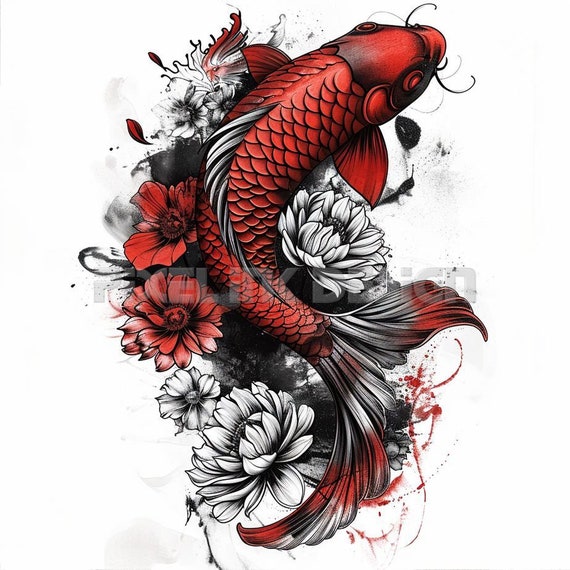
A koi fish tattoo generally symbolizes perseverance, determination, resilience, and transformation. Inspired by Japanese legends, the koi represents a person who continues moving forward despite challenges. Depending on the design and color, it can also signify prosperity, love, ambition, courage, spiritual growth, and life-changing achievements.
At its core, the koi fish represents the human ability to overcome obstacles. This symbolism originates from ancient East Asian folklore in which koi fish swim against powerful currents to reach a sacred destination. As a result, many people choose koi tattoos during periods of personal transition, recovery, or achievement.
Professional tattoo artists often note that clients rarely select koi designs purely for aesthetics. In consultation sessions, the symbolism frequently aligns with significant life experiences such as:
- Recovering from illness or trauma
- Building a successful career
- Completing a major life goal
- Overcoming addiction
- Personal spiritual growth
- Starting a new chapter after hardship
The Core Symbolism of Koi Fish Tattoos
Koi fish tattoos traditionally symbolize strength, persistence, prosperity, courage, and personal transformation. The fish’s legendary journey upstream represents enduring adversity and continuing toward meaningful goals despite challenges, setbacks, or external pressures.
Several symbolic themes consistently appear across traditional and modern koi tattoo interpretations:
| Symbol | Meaning |
|---|---|
| Perseverance | Continuing despite obstacles |
| Strength | Mental and emotional resilience |
| Success | Achievement after effort |
| Transformation | Personal evolution and growth |
| Prosperity | Abundance and good fortune |
| Courage | Facing difficult circumstances |
An overlooked insight is that many traditional Japanese tattoo masters view the koi not as a symbol of victory itself, but of the willingness to continue the journey. This distinction explains why koi tattoos resonate so strongly with individuals still working toward major life goals rather than those celebrating completed success.
Why Koi Represent Transformation
The koi fish became associated with transformation because of the legendary belief that a koi capable of swimming upstream and passing the Dragon Gate would transform into a dragon. This powerful story connects koi tattoos with personal evolution, ambition, and extraordinary achievement.
Transformation is one of the most meaningful aspects of koi symbolism because it reflects change earned through persistence rather than luck. In tattoo culture, this makes the koi especially popular among people who have undergone significant life transitions.
Examples include:
- Weight loss transformations
- Career advancement after years of effort
- Recovery from personal hardship
- Spiritual awakening journeys
- Major lifestyle changes
Many experienced tattoo artists describe the koi fish as a visual representation of becoming a stronger version of yourself through struggle rather than avoiding struggle altogether.
Common Misconceptions About Koi Symbolism
Many people incorrectly assume that all koi fish tattoos have the same meaning. In reality, factors such as color, direction, accompanying imagery, and cultural context can dramatically change the symbolism behind the design.
- Misconception: All koi tattoos mean good luck.
- Reality: Perseverance and transformation are often more central themes.
- Misconception: Color choices are purely decorative.
- Reality: Different colors carry unique symbolic meanings.
- Misconception: Direction does not matter.
- Reality: Upstream and downstream koi often symbolize different life stages.
- Misconception: Koi tattoos are exclusively masculine.
- Reality: They are highly adaptable and popular across all genders.
The Japanese Legend Behind Koi Fish Tattoos
The symbolism of koi fish tattoos originates from a famous East Asian legend in which koi fish swim upstream against powerful currents. Those strong enough to reach and pass the Dragon Gate are rewarded by transforming into dragons, representing extraordinary achievement through perseverance.
Understanding this story is essential because nearly every modern koi tattoo meaning traces back to this legend. Without the Dragon Gate myth, the koi would likely be viewed simply as a decorative fish rather than a powerful symbol of personal achievement.
The Dragon Gate Myth Explained
The Dragon Gate legend tells the story of koi fish swimming against dangerous currents to reach a sacred waterfall. According to folklore, any koi that successfully passed through the Dragon Gate would transform into a mighty dragon, symbolizing reward through persistence and courage.
The myth contains several symbolic layers:
- The river represents life’s challenges.
- The current symbolizes adversity.
- The Dragon Gate represents a major goal.
- The dragon symbolizes ultimate transformation.
This narrative has endured for centuries because it reflects a universal human experience: success often requires sustained effort against resistance.
How the Legend Influences Modern Tattoo Designs
Modern koi fish tattoos frequently incorporate visual elements inspired by the Dragon Gate legend. Artists use composition, direction, water flow, and accompanying imagery to represent different stages of the symbolic journey.
Some examples include:
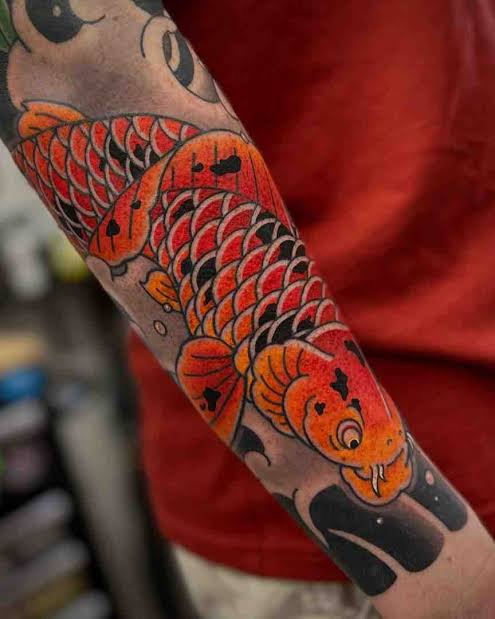
- Koi swimming upward through waves representing active struggle.
- Koi near a waterfall symbolizing major life challenges.
- Koi transforming into a dragon symbolizing achievement.
- Koi paired with clouds representing ascension and growth.
An important design insight competitors rarely discuss is that experienced Japanese-style tattoo artists often treat the surrounding environment as equally important as the fish itself. Waves, wind bars, waterfalls, lotus flowers, and clouds help tell the story of the koi’s journey.
Koi Fish Tattoo Color Meanings Explained
Koi fish tattoo colors significantly influence symbolism. While all koi generally represent perseverance and growth, black koi often symbolize overcoming hardship, red koi represent passion and family, blue koi suggest tranquility, and gold koi are associated with prosperity and abundance.
Choosing the right color should be based on personal meaning rather than aesthetics alone. Many clients later regret selecting colors solely because they looked attractive without understanding their symbolic significance.
Black Koi Tattoo Meaning
A black koi tattoo commonly represents overcoming adversity, resilience, strength, and personal victory after difficult life experiences. It is often chosen by individuals who have endured major challenges and emerged stronger.
Black koi designs are frequently selected by:
- Survivors of serious illness
- Individuals recovering from addiction
- People overcoming financial hardship
- Those rebuilding after personal setbacks
Because black ink typically ages well and maintains strong contrast over time, black koi designs are also popular from a practical tattoo longevity perspective.
Red Koi Tattoo Meaning
Red koi tattoos traditionally symbolize love, courage, passion, family devotion, and strong emotional connections. In Japanese symbolism, red koi are often associated with powerful relationships and heartfelt commitment.
Common motivations include:
- Honoring a spouse or partner
- Celebrating family bonds
- Representing passionate ambition
- Commemorating meaningful relationships
Red koi are especially effective in large Japanese-style compositions because they create strong visual contrast against waves and darker background elements.
Blue Koi Tattoo Meaning
Blue koi tattoos generally symbolize tranquility, masculinity, calm determination, and emotional stability. They are often selected by individuals who value balance and steady progress rather than dramatic transformation.
A blue koi may represent:
- Inner peace
- Maturity
- Patience
- Controlled strength
- Consistency
Unlike black or red koi, blue koi symbolism tends to focus on maintaining stability rather than overcoming extreme hardship.
Gold and Yellow Koi Meaning
Gold and yellow koi tattoos are strongly associated with prosperity, abundance, financial success, achievement, and good fortune. They are among the most popular choices for entrepreneurs and business professionals.
However, an overlooked interpretation is that traditional prosperity symbolism often extends beyond money. Gold koi can also represent:
- Personal fulfillment
- Professional accomplishment
- Family success
- Achievement through effort
White Koi Tattoo Meaning
White koi tattoos commonly symbolize purity, spiritual growth, life-changing accomplishments, and significant milestones. They are often associated with achieving goals after years of dedication.
White koi can be particularly meaningful for individuals commemorating:
- Graduation achievements
- Career breakthroughs
- Recovery milestones
- Personal development journeys
How Mixed Colors Change Symbolism
Multi-colored koi tattoos create layered meanings that combine different symbolic themes. Rather than representing a single idea, they often tell a more complete story about a person’s life journey.
Examples include:
| Combination | Possible Meaning |
|---|---|
| Black + Gold | Hardship leading to success |
| Red + Gold | Passion combined with prosperity |
| Blue + White | Peace and spiritual growth |
| Black + Red | Strength through emotional challenges |
Many tattoo portfolios reveal that custom color combinations often carry the deepest personal significance because they reflect multiple chapters of an individual’s story rather than a single symbolic message.
Does the Direction of the Koi Matter?
Yes. The swimming direction of a koi fish tattoo can significantly affect its symbolism. Upstream koi generally represent striving toward goals and overcoming challenges, while downstream koi often symbolize achievement, acceptance, peace, or moving forward after completing a difficult journey.
This is one of the most overlooked design decisions in tattoo planning, yet it can completely change the story your tattoo tells.
Lucky Tattoo, a professional tattoo artist, has over 10 years of experience in the art of tattooing in Ho Chi Minh City. Lucky Tattoo Studio was founded in 2014 by skilled and kind artists. All tattoos are provided in a clean, strictly controlled, and friendly environment.
Upstream Swimming Koi Meaning
An upstream koi tattoo symbolizes determination, perseverance, and the active pursuit of goals. It is commonly chosen by individuals currently facing challenges, building a career, recovering from setbacks, or working toward a meaningful personal transformation.
The visual impact of an upward-swimming koi is powerful because it mirrors the Dragon Gate legend. The fish is shown pushing against currents, waves, and resistance, representing the effort required to achieve success.
People frequently choose upstream koi tattoos when they are:
- Starting a business
- Pursuing a degree or certification
- Recovering from illness
- Training for athletic achievement
- Rebuilding after a major life setback
From a storytelling perspective, upstream koi tattoos often create a stronger narrative because they depict an ongoing journey rather than a completed destination.
Downstream Swimming Koi Meaning
A downstream koi tattoo often symbolizes achievement, peace, acceptance, and personal fulfillment. Rather than representing struggle, it signifies reaching a milestone, finding balance, or entering a new phase of life after overcoming challenges.
Many tattoo enthusiasts mistakenly assume downstream koi carry negative symbolism. In reality, they can represent wisdom, maturity, and earned success.
Examples include:
- Retirement after a successful career
- Recovery after overcoming hardship
- Completion of a major life goal
- Personal acceptance and inner peace
- Celebrating significant achievements
Which Direction Should You Choose?
The best koi fish tattoo direction depends on your personal story. Upstream designs often suit those pursuing goals or overcoming adversity, while downstream designs may better represent completed achievements, peace, or life lessons learned through experience.
Consider asking yourself:
- Am I currently fighting through challenges?
- Am I celebrating a major accomplishment?
- Do I want my tattoo to represent ambition or fulfillment?
- Is my journey ongoing or complete?
An overlooked insight from experienced tattoo artists is that neither direction is objectively better. The strongest designs align with the wearer’s authentic life experience rather than popular trends.
Popular Koi Fish Tattoo Design Ideas
Koi fish tattoos can be customized in countless ways, combining traditional Japanese symbolism with personal storytelling. Popular designs include traditional Irezumi koi, yin-yang compositions, koi-to-dragon transformations, lotus flower pairings, and cherry blossom scenes that add deeper symbolic meaning.
The most memorable tattoos are rarely chosen from flash sheets alone. Instead, they integrate personal experiences, symbolic elements, and artistic composition into a cohesive narrative.
Traditional Japanese Koi Tattoo
Traditional Japanese koi tattoos follow Irezumi principles, emphasizing movement, balance, symbolism, and storytelling. These designs typically include waves, wind bars, water currents, and supporting imagery that create a complete visual narrative.
Characteristics often include:
- Bold outlines
- Large-scale composition
- Symbolic background elements
- Balanced color palettes
- Flow designed around body anatomy
Experts frequently recommend researching artists with proven Japanese tattoo experience because authentic composition differs significantly from generic koi illustrations.
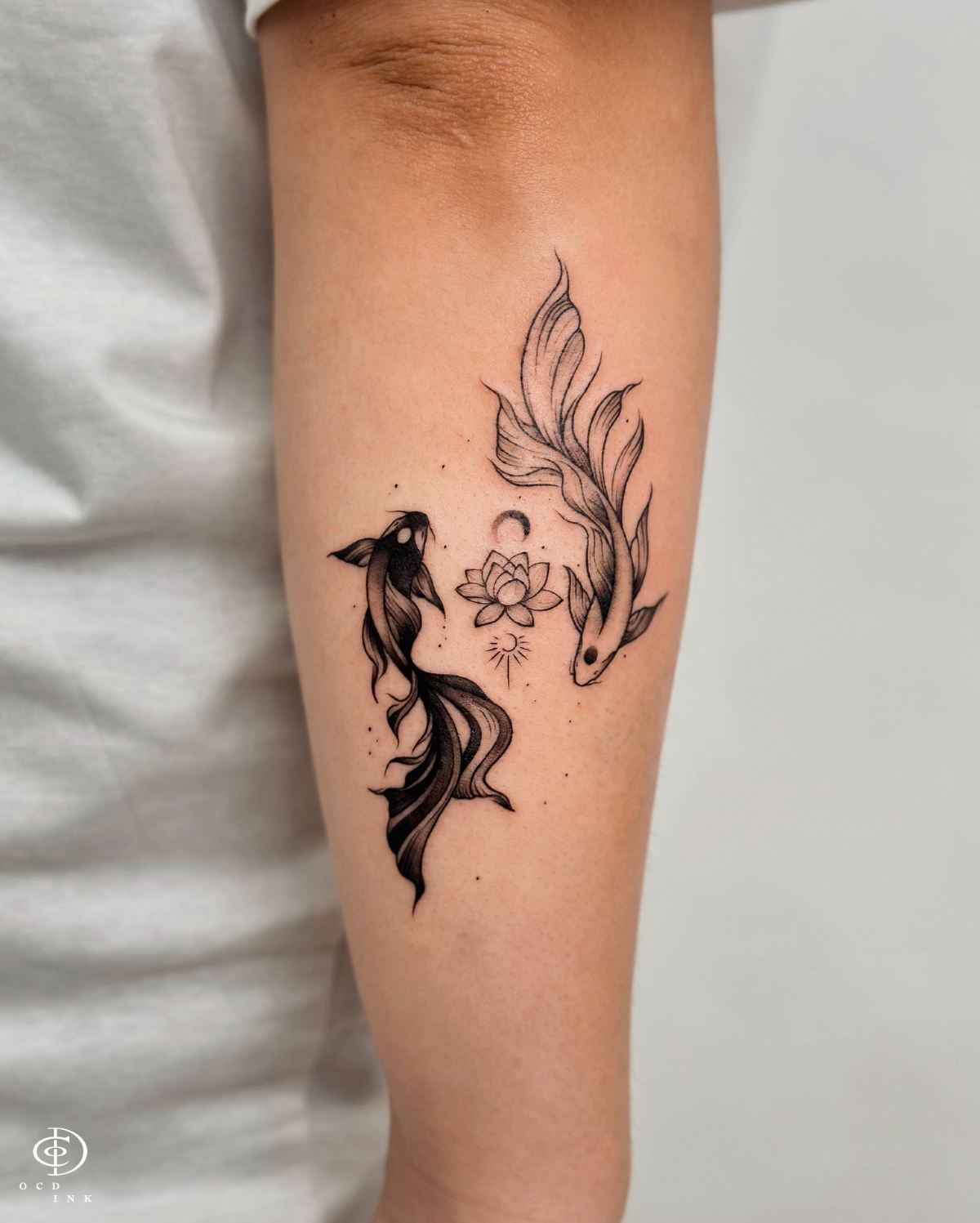
Yin Yang Koi Fish Tattoo
Yin-yang koi tattoos symbolize balance, duality, harmony, and interconnected opposites. The design commonly represents the balance between strength and vulnerability, success and struggle, or masculine and feminine energy.
This design appeals to individuals interested in:
- Eastern philosophy
- Personal balance
- Spiritual development
- Life transitions
- Mindfulness practices
The circular movement created by opposing koi also produces strong visual flow, making it suitable for shoulders, upper backs, and chest placements.
Koi and Dragon Tattoo
A koi and dragon tattoo represents transformation through perseverance. Inspired directly by the Dragon Gate legend, this design symbolizes evolving from struggle into strength, wisdom, and achievement.
Many tattoo collectors consider this one of the most meaningful Japanese tattoo concepts because it visually depicts both the journey and the reward.
Common interpretations include:
- Career success after years of effort
- Personal growth through hardship
- Spiritual evolution
- Mastery of a skill or craft
Koi With Lotus Flower Tattoo
A koi and lotus tattoo combines perseverance with spiritual purity and growth. The lotus flower, which rises clean from muddy water, complements the koi’s symbolism of overcoming adversity.
This combination is particularly meaningful for people who have emerged stronger from difficult circumstances.
Common themes include:
- Healing and recovery
- Spiritual awakening
- Personal growth
- Emotional resilience
Cherry Blossom and Koi Designs
Cherry blossom and koi tattoos symbolize both perseverance and life’s temporary nature. The combination reminds the wearer that success, beauty, and life itself are precious because they are not permanent.
This pairing introduces a deeper philosophical element often overlooked in Western tattoo interpretations.
Best Koi Fish Tattoo Placements
The ideal koi fish tattoo placement depends on design size, body anatomy, symbolism, and long-term visual impact. Larger areas such as the back and sleeve allow detailed storytelling, while smaller placements can focus on simplicity and personal significance.
Placement affects more than appearance. It influences visibility, pain levels, aging, and how effectively the design communicates movement.
Sleeve Tattoos
Koi fish sleeve tattoos offer one of the best canvases for storytelling. The arm naturally supports flowing movement, making it ideal for depicting upstream swimming, waves, waterfalls, and transformation themes.
Benefits include:
- Excellent visual flow
- Large storytelling space
- Strong visibility
- Easy expansion into larger projects
Back Tattoos
Back tattoos provide the largest canvas for koi fish artwork and are often used for elaborate Japanese-style compositions. They allow artists to create highly detailed scenes incorporating dragons, waterfalls, lotus flowers, and environmental symbolism.
Serious collectors frequently choose the back because it accommodates complete narrative designs without compromise.
Chest Tattoos
Chest placements often carry strong emotional significance because of their proximity to the heart. Koi designs placed here frequently symbolize family, love, personal values, and deeply meaningful life experiences.
Chest tattoos can also create dramatic visual impact when integrated into larger Japanese-style body art.
Leg and Calf Tattoos
Leg and calf placements naturally enhance the appearance of movement. The vertical shape works particularly well for koi swimming upstream, creating a dynamic and realistic composition.
Benefits include:
- Good space for medium-to-large designs
- Easy concealment when needed
- Natural directional flow
- Potential for future expansion
Placement Pain Levels Compared
Tattoo pain varies significantly depending on placement. Areas with more muscle and fat generally hurt less, while regions near bones and sensitive nerve endings can be considerably more painful.
| Placement | Pain Level |
|---|---|
| Outer Arm | Low to Moderate |
| Calf | Moderate |
| Upper Back | Moderate |
| Chest | Moderate to High |
| Ribs | High |
Professional artists recommend prioritizing design quality and placement suitability over pain concerns alone because discomfort is temporary while the tattoo remains permanent.
How to Choose the Right Koi Fish Tattoo for Your Life Journey
The best koi fish tattoo reflects your unique experiences, values, and aspirations. Rather than copying popular designs, selecting symbolism that aligns with your personal journey creates a more meaningful and enduring piece of body art.
This personalization framework is frequently missing from competitor content yet often determines long-term satisfaction with a tattoo.
For Overcoming Hardship
Individuals who have faced significant challenges often choose black koi designs, strong wave elements, and upstream movement to symbolize resilience and perseverance.
Consider incorporating:
- Black koi
- Powerful currents
- Waterfall imagery
- Bold traditional styling
For Career Success
Gold koi tattoos frequently symbolize prosperity, ambition, and professional achievement. They are popular among entrepreneurs, executives, and individuals celebrating major milestones.
Many artists recommend balancing prosperity symbolism with personal meaning rather than focusing exclusively on financial success.
For Spiritual Growth
Spiritual growth themes often incorporate lotus flowers, white koi, blue koi, and yin-yang elements. These combinations emphasize inner development, balance, and self-discovery.
Such designs frequently resonate with individuals pursuing mindfulness, meditation, or personal transformation journeys.
For Personal Transformation
Koi-to-dragon designs are among the strongest representations of transformation. They visually communicate the idea that growth occurs through persistence, discipline, and overcoming adversity.
This symbolism is particularly powerful for marking major life transitions and long-term achievements.
Cultural Appreciation vs Cultural Appropriation
Respectfully wearing a koi fish tattoo involves understanding and appreciating its cultural origins. Cultural appreciation focuses on learning the symbolism, history, and artistic traditions behind the design rather than treating it as a purely decorative trend.
Japanese tattoo traditions have deep historical roots, making cultural awareness an important part of responsible tattoo planning.
Respecting Japanese Tattoo Traditions
Respecting Japanese tattoo culture begins with understanding the symbolism and working with knowledgeable artists who appreciate traditional design principles.
Helpful practices include:
- Researching Irezumi history
- Understanding symbolism before choosing imagery
- Avoiding contradictory design elements
- Working with experienced artists
Questions to Ask Your Tattoo Artist
Asking informed questions can improve both artistic quality and symbolic accuracy. Experienced artists appreciate clients who actively participate in the design process.
- What symbolism does this composition communicate?
- Does the design follow Japanese visual flow principles?
- How will the tattoo age over time?
- Are there cultural considerations I should understand?
- Would different colors better fit my intended meaning?
Koi Fish Tattoo Costs, Healing, and Aftercare
Koi fish tattoo costs vary based on size, complexity, artist experience, and geographic location. Proper aftercare is equally important because even exceptional artwork can be compromised by poor healing practices.
Average Pricing by Size and Detail
Pricing depends on design complexity, color saturation, placement, and artist reputation. Larger Japanese-style compositions often require multiple sessions.
| Size | Estimated Cost Range |
|---|---|
| Small | $100–$400 |
| Medium | $400–$1,200 |
| Large | $1,200–$5,000+ |
Choosing solely based on price is a common mistake. Experienced artists often provide better composition, cleaner execution, and superior long-term results.
Healing Timeline Explained
Most tattoos heal on the surface within two to four weeks, although deeper healing can take several months. Following professional aftercare instructions significantly improves outcomes.
- Days 1–3: Initial redness and sensitivity
- Days 4–14: Peeling and itching
- Weeks 2–4: Surface healing
- Months 1–3: Deep skin recovery
Aftercare Mistakes to Avoid
Many tattoo complications result from preventable aftercare errors rather than problems during tattooing itself.
- Picking scabs
- Over-moisturizing
- Ignoring artist instructions
- Excessive sun exposure
- Swimming before healing completes
Warning signs that may require medical attention include excessive swelling, spreading redness, severe pain, fever, or unusual discharge.
Frequently Asked Questions About Koi Fish Tattoos
Is a koi fish tattoo good luck?
Yes. Koi fish are commonly associated with prosperity, good fortune, perseverance, and positive life outcomes in Japanese symbolism.
What does a black koi fish tattoo mean?
A black koi typically represents overcoming hardship, resilience, determination, and personal growth through adversity.
Should a koi fish tattoo face up or down?
Upstream koi usually symbolize striving toward goals, while downstream koi often represent achievement, peace, and fulfillment.
What does a red koi fish tattoo symbolize?
Red koi commonly symbolize love, passion, courage, family devotion, and strong emotional connections.
Are koi fish tattoos considered Japanese tattoos?
Yes. Koi fish are one of the most iconic motifs in traditional Japanese Irezumi tattoo art and folklore.
What symbols pair well with koi fish tattoos?
Popular combinations include dragons, lotus flowers, cherry blossoms, waves, peonies, waterfalls, and yin-yang elements.
Do koi fish tattoo colors change the meaning?
Absolutely. Different colors carry distinct symbolism related to resilience, prosperity, love, tranquility, achievement, and spiritual growth.
How long does a koi fish tattoo take to complete?
Small designs may require a single session, while large sleeves, backs, and traditional Japanese compositions can take multiple sessions over several months.
Final Thoughts: Is a Koi Fish Tattoo Right for You?
A koi fish tattoo remains one of the most enduring and meaningful tattoo designs because it combines artistic beauty with profound symbolism. Whether representing perseverance, transformation, prosperity, spiritual growth, or personal achievement, the koi provides a versatile framework for telling a deeply personal story.
The most successful koi tattoos are those that connect authentic life experiences with thoughtful symbolism. By understanding color meanings, directional symbolism, cultural context, placement considerations, and traditional Japanese influences, you can create a design that remains meaningful long after trends have faded.
Ultimately, a koi fish tattoo is more than body art. It is a visual reminder that growth often comes through challenge, that perseverance can lead to transformation, and that every meaningful journey begins by continuing to swim forward.
Lucky Tattoo, a professional tattoo artist, has over 10 years of experience in the art of tattooing in Ho Chi Minh City. Lucky Tattoo Studio was founded in 2014 by skilled and kind artists. All tattoos are provided in a clean, strictly controlled, and friendly environment.
koi-fish-tattoo