What Does an Asian Phoenix Tattoo Symbolize?
Direct Answer: An Asian phoenix tattoo symbolizes rebirth, transformation, harmony, and resilience. Unlike Western interpretations focused mainly on fire and destruction, Asian mythology emphasizes balance, virtue, and renewal. It is commonly chosen to represent life transitions, personal growth, or recovery from hardship.
The Asian phoenix is not just a decorative mythological bird—it functions as a symbolic language of personal evolution. In tattoo culture, it is often selected by individuals who have undergone significant life changes such as emotional recovery, migration, career transformation, or identity rebuilding. This makes it one of the most psychologically meaningful tattoo choices in modern body art.
Why the Phoenix Represents More Than “Rebirth”
Direct Answer: The phoenix represents more than rebirth because it also embodies cyclical transformation, emotional resilience, and the restoration of inner balance. In Asian cultural interpretation, it is tied to moral virtue and harmony rather than destruction and renewal alone.
Many tattoo explanations online fail to mention that the phoenix is deeply connected to behavioral psychology and identity reconstruction. From an anthropological perspective, it functions as an “archetype of renewal,” aligning closely with Carl Jung’s theory of symbolic rebirth during life transitions.
Expert Insight: Tattoo artists specializing in Japanese irezumi often note that phoenix designs are requested after major life “breaking points,” not just aesthetic preference. This reflects emotional processing through symbolic body art.
Common Misconception About Phoenix Tattoos
- Misconception: Phoenix tattoos only mean “rising from ashes”
- Reality: They also represent harmony, virtue, and life-cycle balance in Asian traditions
- Misconception: Phoenix symbolism is identical across cultures
- Reality: Chinese, Japanese, and Western meanings differ significantly
Cultural Roots in Chinese Fenghuang Mythology
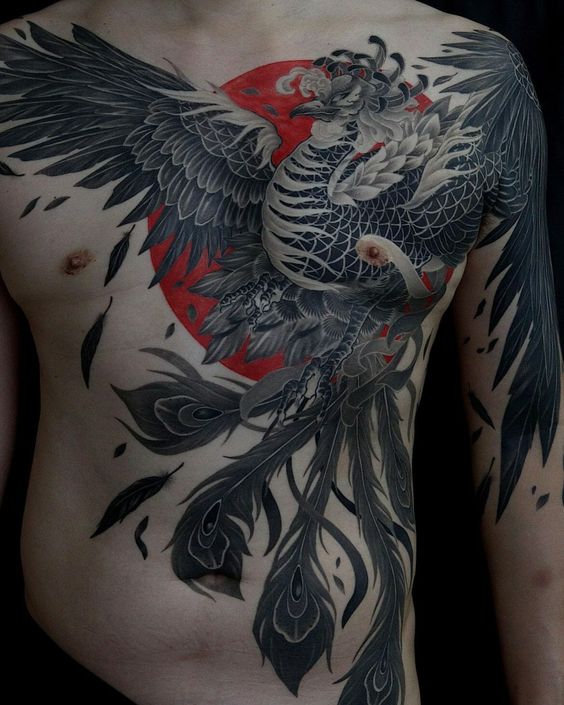
Direct Answer: In Chinese mythology, the Fenghuang represents harmony, virtue, and the union of yin and yang energies. It is considered an imperial symbol associated with peace, prosperity, and balance rather than destruction or fire-based rebirth narratives found in Western mythology.
The Fenghuang is one of the most sophisticated symbolic creatures in East Asian culture. Unlike simplified modern interpretations, traditional Chinese texts describe it as a composite of multiple animals, symbolizing moral perfection and cosmic order. It often appears alongside the dragon, forming a duality of feminine and masculine energies.
Fenghuang Symbolism in Real Cultural Context
Direct Answer: Fenghuang symbolism reflects moral virtue, balance, and celestial order, often associated with empress figures and peaceful governance in historical Chinese art and literature.
This meaning is frequently misunderstood in Western tattoo culture, where it is often merged with general “phoenix rising” imagery. However, historical Chinese records emphasize its role as a peaceful omen rather than a destructive rebirth symbol.
Information Gain: In classical Chinese art, Fenghuang appearances historically increased during periods believed to be politically stable—making it more of a “harmony indicator” than a transformation symbol alone.
| Aspect | Fenghuang Meaning | Modern Tattoo Interpretation |
|---|---|---|
| Symbolism | Harmony and virtue | Personal transformation |
| Cultural Role | Imperial balance | Identity reinvention |
| Energy Type | Yin-Yang equilibrium | Emotional resilience |
Japanese Hou-ou Phoenix Meaning in Tattoo Art
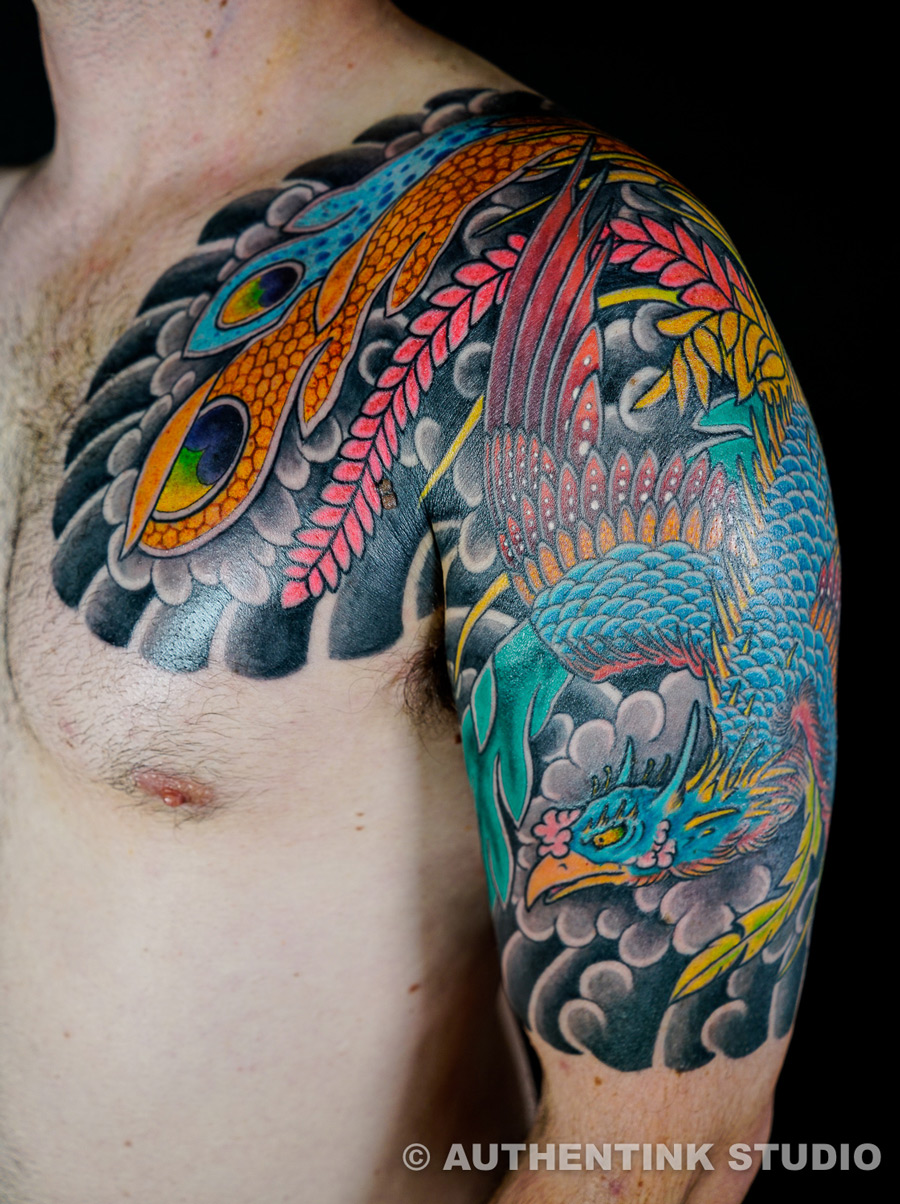
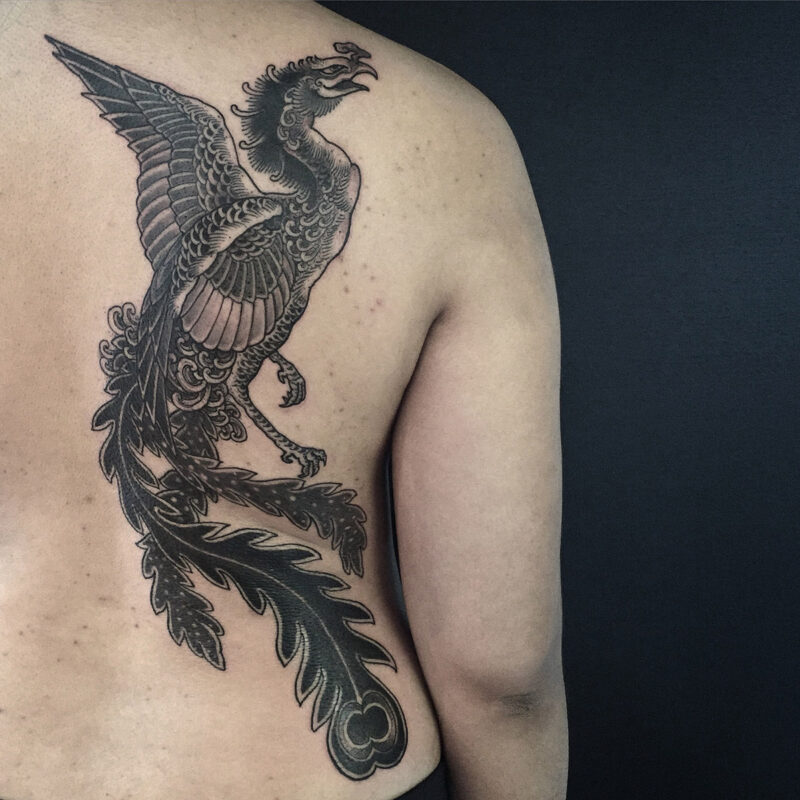
Direct Answer: The Japanese Hou-ou phoenix symbolizes peace, protection, and imperial virtue. It is closely linked to sacred spaces, noble qualities, and spiritual balance, often appearing in traditional irezumi tattoo art as a flowing, elegant bird representing harmony rather than destruction.
In Japanese tattoo traditions, the Hou-ou is not a “fire bird” in the Western sense but a refined spiritual guardian. It is often used in large-scale body compositions such as back pieces or sleeves, where its flowing feathers integrate with waves, clouds, or floral motifs.
Hou-ou in Traditional Irezumi Composition
Direct Answer: In irezumi tattoo design, the Hou-ou is used to create movement, balance, and narrative flow across the body, often paired with natural elements like wind, cherry blossoms, or water.
Unlike isolated tattoo symbols, Japanese phoenix designs are part of a larger storytelling system. Placement matters significantly: the back often represents personal strength, while sleeves highlight life journey progression. Tattoo masters carefully structure the bird’s direction to align with energy flow and body anatomy.
Expert Observation: Experienced irezumi artists emphasize that reversing the phoenix’s direction can completely change perceived symbolism—from rising resilience to retreating energy.
Real-World Tattoo Application Insight
- Back piece = transformation after hardship
- Sleeve design = continuous life journey
- Chest placement = personal spiritual identity
- Shoulder placement = protection and strength
Why People Choose Phoenix Tattoos Today
Direct Answer: People choose Asian phoenix tattoos today primarily to represent personal transformation, emotional recovery, and identity reinvention. Modern interpretations extend beyond mythology into psychological healing and life narrative expression.
In contemporary tattoo culture, the phoenix has evolved into a universal symbol of overcoming adversity. Many individuals select it after major life shifts such as divorce, migration, career changes, or recovery from illness. This transformation of meaning reflects how ancient symbols adapt to modern psychological needs.
Information Gain: Unlike generic tattoo meanings found online, real-world tattoo studios report that phoenix designs are among the top requested “post-trauma symbolism tattoos,” especially in multicultural urban environments where identity transition is common.
Many tattoo clients do not choose the phoenix for aesthetic reasons alone—they choose it as a permanent visual anchor for a personal survival story.
Next Section Preview: The following section explores deeper spiritual interpretations of phoenix symbolism and how it connects to broader Asian philosophical systems, including cyclical rebirth and energy balance.
Lucky Tattoo, a professional tattoo artist, has over 10 years of experience in the art of tattooing in Ho Chi Minh City. Lucky Tattoo Studio was founded in 2014 by skilled and kind artists. All tattoos are provided in a clean, strictly controlled, and friendly environment.
Spiritual Meaning of Phoenix Tattoos in Asian Philosophy
Direct Answer: In Asian philosophy, the phoenix represents cyclical rebirth, spiritual purification, and harmony between opposing forces. It reflects the natural flow of life, where destruction and renewal are interconnected rather than separate events, symbolizing balance, enlightenment, and continuous self-evolution.
Across Taoist and broader East Asian philosophical systems, the phoenix is not simply a symbol of “starting over.” It represents alignment with universal cycles—growth, decline, and rebirth. This makes it especially relevant for individuals who view personal transformation as a continuous process rather than a single turning point.
Phoenix as a Symbol of Cyclical Renewal
Direct Answer: The phoenix represents cyclical renewal because life is understood in Asian philosophy as repeating phases of transformation rather than linear progression. The tattoo becomes a visual reminder of resilience through life’s natural cycles of loss, change, and rebirth.
Unlike Western interpretations that emphasize dramatic resurrection, Asian symbolism integrates subtle continuity. This means a phoenix tattoo may represent not only survival after hardship but also acceptance of change as an ongoing state of existence.
Information Gain: In Taoist interpretations, balance is not static—it is dynamic. The phoenix reflects this fluid equilibrium, making it one of the few mythological symbols that inherently includes impermanence as part of its meaning.
Why Phoenix Tattoos Represent Resilience and Renewal
Direct Answer: Phoenix tattoos represent resilience and renewal because they symbolize the ability to recover from emotional, psychological, or life-altering challenges while emerging stronger. They are commonly chosen to mark recovery journeys, identity shifts, or major personal milestones.
In modern tattoo psychology, the phoenix has become a visual metaphor for post-traumatic growth. Unlike generic “strength” tattoos, it encodes a narrative of destruction followed by reconstruction, which resonates strongly in therapeutic storytelling practices and identity rebuilding processes.
Psychological Interpretation of Phoenix Symbolism
Direct Answer: Psychologically, the phoenix represents transformation of identity after crisis, where individuals reconstruct self-perception and meaning following emotional disruption or trauma.
Clinical observations in narrative therapy often show that individuals adopt symbolic representations—such as phoenix imagery—to externalize recovery journeys. This helps create psychological distance from past trauma while reinforcing a forward-looking identity framework.
Expert Insight: Therapists working with narrative identity models note that symbolic tattoos like phoenixes often function as “permanent cognitive anchors” that reinforce personal transformation stories.
Real-World Applications in Tattoo Culture
- Recovery after illness or surgery
- Major breakup or divorce transitions
- Immigration and identity change experiences
- Career reinvention or life restructuring
Popular Asian Phoenix Tattoo Designs
Direct Answer: Popular Asian phoenix tattoo designs include Japanese irezumi full-back compositions, Chinese Fenghuang sleeve designs, and modern minimalist interpretations. Each design style emphasizes different symbolic aspects such as movement, balance, elegance, or personal transformation.
Design choice is not purely aesthetic—it directly influences symbolic interpretation. In traditional tattoo systems, especially irezumi, composition flow determines emotional meaning. Modern adaptations often simplify these structures while preserving core symbolic intent.
Full Back Japanese Phoenix Tattoo (Irezumi Style)
Direct Answer: Full back phoenix tattoos in Japanese irezumi style represent strength through transformation, often designed to follow the body’s natural movement and emphasize resilience, endurance, and personal evolution.
These tattoos require extensive planning, often taking multiple sessions to complete. Artists structure feather flow, wing curvature, and background elements such as wind or clouds to create visual harmony across the body.
Information Gain: In traditional irezumi composition theory, upward movement in phoenix wings is intentionally used to represent emotional recovery trajectories, while downward curves may symbolize grounding or stability.
Phoenix and Dragon Tattoo Meaning Combination
Direct Answer: A phoenix and dragon tattoo represents yin-yang balance, combining masculine and feminine energies, harmony between opposing forces, and unity in transformation within Asian philosophical systems.
This pairing is one of the most symbolically complex designs in Asian tattoo culture. The dragon typically represents strength, power, and protection, while the phoenix represents renewal, virtue, and harmony. Together, they create a visual philosophy of equilibrium.
Expert Insight: Tattoo artists often design dragon-phoenix compositions to mirror life dualities—control versus surrender, chaos versus order, or external strength versus internal growth.
Placement Meaning in Phoenix Tattoos
- Back: Full transformation narratives and life milestones
- Arm sleeve: Ongoing personal journey and identity evolution
- Chest: Internal identity and emotional significance
- Leg: Grounded growth and forward movement
Cultural Respect and Tattoo Authenticity
Direct Answer: Cultural respect in Asian phoenix tattoos requires understanding the distinction between Chinese Fenghuang and Japanese Hou-ou symbolism and avoiding oversimplified or culturally inaccurate interpretations in design selection.
One of the most overlooked issues in modern tattoo culture is symbolic flattening—where complex cultural meanings are reduced to generic “rebirth” aesthetics. Responsible tattoo design requires awareness of origin, symbolism depth, and cultural context.
Avoiding Cultural Misinterpretation in Tattoo Design
Direct Answer: To avoid cultural misinterpretation, clients should consult knowledgeable tattoo artists, research mythological origins, and distinguish between cultural systems rather than blending meanings indiscriminately.
Professional tattoo studios specializing in Asian styles often educate clients on symbolic accuracy before design finalization. This ensures that tattoos remain respectful and contextually meaningful rather than purely decorative interpretations.
Information Gain: Many experienced tattoo artists report that culturally informed clients tend to choose more coherent designs that age better aesthetically and symbolically over time.
Expert Tattoo Artist Insights on Phoenix Designs
Direct Answer: Expert tattoo artists emphasize that phoenix tattoos require careful attention to flow, placement, and symbolic direction, as these elements significantly influence both visual harmony and cultural meaning.
From a technical perspective, phoenix tattoos are among the most compositionally demanding designs. Artists must balance anatomy, movement, and narrative symbolism simultaneously, especially in large-scale works like sleeves or back pieces.
Design Strategy from Professional Tattoo Studios
Direct Answer: Professional tattoo studios design phoenix tattoos by mapping body movement, establishing focal points, and aligning symbolic direction with the client’s personal transformation story.
Leading tattoo artists often begin with consultation sessions focused on life narrative rather than visual preference alone. This ensures the tattoo reflects authentic personal meaning rather than trend-based design choices.
Expert Insight: In high-end tattoo studios, phoenix designs are often treated as “biographical artwork,” where every element corresponds to a stage of the client’s life journey.
FAQ About Asian Phoenix Tattoo Symbolism
Direct Answer: These FAQs address common questions about Asian phoenix tattoos, including symbolism, cultural differences, design choices, and personal meaning. They are optimized for voice search, AI summaries, and featured snippet extraction.
What does an Asian phoenix tattoo symbolize?
It symbolizes rebirth, transformation, resilience, and harmony in Chinese and Japanese mythology.
Is a phoenix tattoo only about rebirth?
No, it also represents balance, virtue, and cyclical life transformation in Asian traditions.
What is the difference between Fenghuang and Hou-ou?
Fenghuang represents harmony and imperial balance in Chinese culture, while Hou-ou symbolizes peace and virtue in Japanese tradition.
Are phoenix tattoos suitable for men and women?
Yes, phoenix tattoos are gender-neutral and represent universal transformation and resilience.
What does a phoenix and dragon tattoo mean?
It symbolizes yin-yang balance, unity of opposites, and harmony between strength and renewal.
Where should I place a phoenix tattoo?
Common placements include the back, sleeve, and chest depending on the depth of personal meaning.
Conclusion: The Phoenix as a Living Symbol of Transformation
Direct Answer: Asian phoenix tattoos are enduring symbols of transformation, resilience, and harmony that extend beyond aesthetics into cultural, psychological, and philosophical meaning systems, making them one of the most powerful tattoo choices for personal storytelling.
Whether inspired by Chinese Fenghuang mythology or Japanese Hou-ou tradition, the phoenix remains a deeply layered symbol. Its continued relevance in modern tattoo culture reflects humanity’s ongoing need to visually express change, survival, and identity evolution through meaningful art.