For many people, scars tell a story they no longer want to see every day. Whether caused by surgery, burns, accidents, or personal struggles, visible scars can affect confidence and body image long after physical healing is complete. A professionally executed scar cover-up tattoo offers more than cosmetic improvement—it transforms scar tissue into intentional artwork while helping individuals reclaim ownership of their appearance.
In Vietnam, demand for scar cover-up tattoos has grown significantly as artists develop advanced techniques specifically designed for challenging scar tissue. However, successful results depend on factors that many online guides overlook, including scar maturity, tissue texture, pigment retention, and artist specialization.
What Is a Scar Cover-Up Tattoo and How Does It Work?
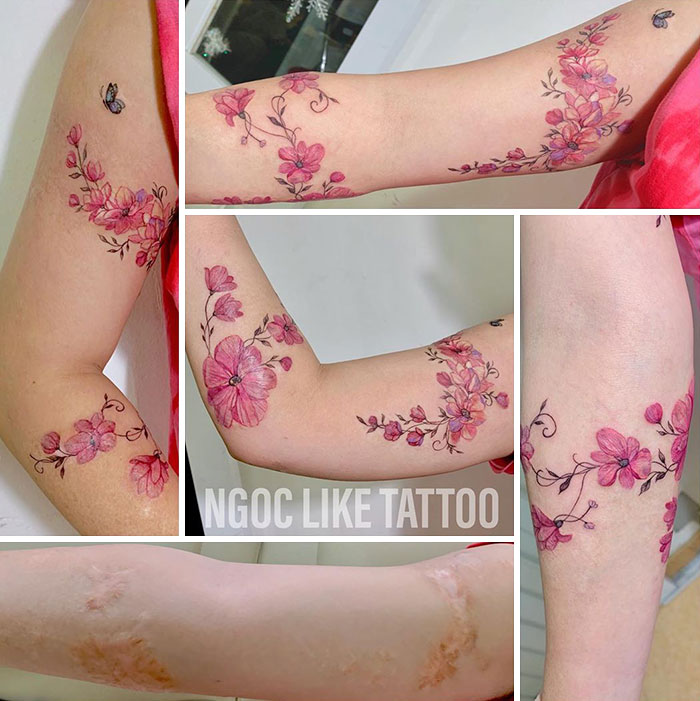
A scar cover-up tattoo is a specialized tattoo designed to reduce the visual appearance of healed scars by integrating custom artwork into the affected area. Rather than hiding scars completely, skilled artists strategically use shapes, shading, color contrast, and composition to make scars significantly less noticeable while creating aesthetically appealing designs.
Unlike traditional tattoos placed on healthy skin, scar cover-up work requires an understanding of how scar tissue behaves. Scar tissue contains altered collagen structures that can absorb pigment differently, heal unpredictably, and present unique texture challenges.
The goal is not simply to place ink over a scar. The goal is to create a visual distraction that shifts attention away from the scar itself and toward the overall artwork.
Experienced tattoo artists often spend more time planning a scar cover-up than performing the tattoo. Every scar has different characteristics that influence design selection, needle depth, and shading techniques.
Can Tattoos Really Hide Scars?
Yes, tattoos can significantly reduce the visibility of many healed scars, but they cannot completely eliminate scar texture. The most successful scar cover-up tattoos redirect visual attention through artistic design while blending the scar into the surrounding composition.
One of the biggest misconceptions is that tattooing “erases” a scar. In reality, scar tissue remains present beneath the artwork. While pigmentation can disguise discoloration and design elements can mask irregular shapes, raised or indented textures may still be detectable under certain lighting conditions.
Clients who understand this distinction typically report higher satisfaction because their expectations align with realistic outcomes.
Expert Observation: The most successful scar cover-up projects focus on visual integration rather than total concealment. When clients pursue improvement instead of perfection, satisfaction rates tend to be substantially higher.
How Scar Tissue Responds to Tattoo Ink
Scar tissue absorbs and retains tattoo ink differently from normal skin because collagen fibers are arranged irregularly during healing. This can affect pigment distribution, color saturation, and long-term appearance.
Several factors influence tattoo performance on scar tissue:
- Scar age and maturity
- Tissue thickness
- Scar flexibility
- Blood circulation within the area
- Scar type and severity
- Previous treatments or surgeries
For example, a mature surgical scar that has softened over several years often accepts ink more predictably than a relatively new burn scar that still exhibits redness and ongoing remodeling.
Professional artists frequently perform conservative test sections on complex scars before committing to large-scale designs.
Common Misconception: Tattoos Do Not Completely Erase Scars
Scar cover-up tattoos improve appearance but do not remove scar tissue. Understanding this distinction helps individuals make informed decisions and avoid unrealistic expectations that often lead to disappointment.
Social media images can sometimes create misleading impressions because photographs rarely capture skin texture accurately. In person, raised or depressed scars may still be visible from certain angles even after excellent tattoo work.
What changes dramatically is visual perception. Most observers notice the artwork first rather than the scar.
Real Example: Surgical Scar Transformation
Consider a patient with a long abdominal surgical scar. Instead of attempting to camouflage the line directly, an artist may incorporate flowing floral elements that naturally follow the scar’s path. The eye focuses on petals, leaves, and shading transitions rather than the original scar line.
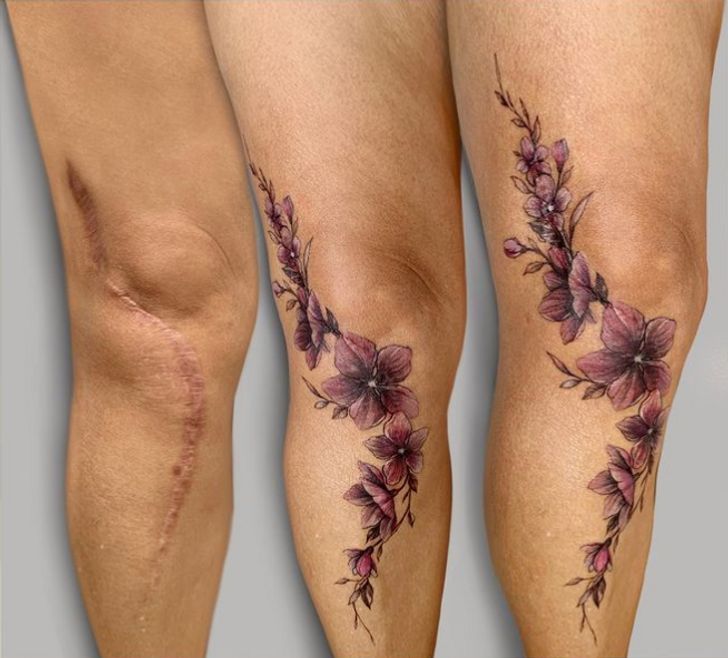
This approach often produces superior results compared to designs that attempt to simply “cover” the scar with dense black ink.
Which Types of Scars Can Be Covered With Tattoos?
Many healed scars can be successfully tattooed, including surgical scars, burn scars, self-harm scars, and accident-related scars. However, suitability depends on scar maturity, texture, flexibility, and overall skin condition rather than scar origin alone.
A common mistake is assuming all scars respond similarly. In reality, two scars of similar size may require completely different tattoo approaches.
Surgical Scars
Surgical scars are often among the best candidates for cover-up tattoos because they tend to follow predictable healing patterns and develop relatively stable scar tissue once fully matured.
Common examples include:
- C-section scars
- Appendectomy scars
- Orthopedic surgery scars
- Cardiac surgery scars
- Plastic surgery scars
Because many surgical scars form straight lines, artists can often integrate them naturally into botanical, ornamental, geometric, or illustrative designs.
Patients should wait until redness has disappeared and tissue has softened significantly before considering tattooing.
Burn Scars
Burn scars can sometimes be covered successfully, but they often present additional challenges due to irregular texture, skin grafting, and altered pigmentation.
Burn scar assessments require careful evaluation because:
- Tissue elasticity may be limited
- Pigment retention can be inconsistent
- Skin thickness varies significantly
- Sensitivity levels may differ across the area
In some cases, artists recommend combining tattoo techniques with medical scar management before proceeding.
This collaborative approach is rarely discussed by competitors but can dramatically improve final outcomes.
Self-Harm Scars
Many individuals choose scar cover-up tattoos to transform self-harm scars into meaningful artwork that reflects personal growth and recovery. Successful outcomes require emotional sensitivity as well as technical expertise.
Experienced artists understand that these projects often carry deep psychological significance. Consultations typically focus not only on design but also on readiness, expectations, and healing history.
Popular design choices include:
- Floral compositions
- Nature-inspired artwork
- Symbolic personal imagery
- Abstract designs
- Custom storytelling pieces
Because self-harm scars frequently appear in clusters, artists often create larger compositions that unify multiple scars into a cohesive visual narrative.
Injury and Accident Scars
Scars resulting from accidents can often be concealed effectively when tissue has stabilized and completed the remodeling process. Success depends largely on scar texture and the amount of surrounding healthy skin available for design integration.
Accident scars may include:
- Vehicle accident injuries
- Sports injuries
- Laceration scars
- Workplace injuries
- Trauma-related scarring
These scars frequently have irregular shapes, which can actually create opportunities for highly creative tattoo designs.
Information Gain: Scar Suitability Assessment Framework
Before scheduling a tattoo consultation, individuals can evaluate their scar using a practical assessment framework. This provides a more reliable starting point than relying solely on scar age.
| Assessment Factor | Good Candidate | Potential Concern |
|---|---|---|
| Scar Age | 12-18+ months healed | Recently healed scar |
| Color | Skin-toned or pale | Red or inflamed |
| Texture | Soft and stable | Raised or changing |
| Flexibility | Moves naturally | Tight or restrictive |
| Sensitivity | Normal sensation | Extreme pain or numbness |
This framework helps identify candidates who may require additional healing time or medical evaluation before tattooing.
Scar Age Evaluation
Scar age is one of the strongest predictors of tattoo success. Mature scars generally exhibit better pigment retention, more predictable healing, and lower complication rates than newer scars.
Many experienced tattoo artists prefer scars that have remained unchanged for several consecutive months before treatment.
Scar Texture Evaluation
Texture often matters more than appearance. A flat scar with slight discoloration may produce excellent results, while a highly raised scar can create significant design limitations regardless of its color.
Scar Flexibility and Pigment Assessment
Flexible tissue tends to accept tattooing more consistently than rigid scar tissue. During consultations, experienced artists frequently assess skin movement and elasticity before recommending specific design approaches.
When Is a Scar Fully Healed Enough for Tattooing?
Most experts recommend waiting at least 12 to 18 months before tattooing over a scar, although some scars require significantly longer healing periods. The safest approach is to evaluate scar maturity rather than relying solely on a fixed timeline.
Timing is one of the most important factors affecting both safety and final appearance.
Direct Answer: Recommended Healing Timeline
While minor scars may stabilize within a year, larger surgical, burn, or traumatic scars often continue remodeling for 18 to 24 months or longer. Tattooing prematurely can increase the risk of poor ink retention, uneven healing, and scar aggravation.
Scar maturation occurs in phases:
- Inflammatory phase
- Proliferative phase
- Remodeling phase
The remodeling phase can continue far longer than most people realize, which explains why scars may continue changing months after they appear healed.
Signs a Scar Is Ready for Tattooing
A mature scar typically appears stable in color, texture, and shape. The tissue should no longer feel inflamed, tight, or actively changing before tattooing is considered.
- Minimal redness
- No active irritation
- Stable appearance for several months
- Improved softness and flexibility
- No ongoing medical treatment
Professional consultation remains essential because some scars appear healed visually while still undergoing internal remodeling.
Dermatologist Recommendations
Dermatologists generally advise allowing scars to complete the healing process before introducing tattoo pigment. For individuals with complex scarring histories, professional medical clearance can reduce risks and improve outcomes.
Medical evaluation may be particularly valuable for:
- Burn survivors
- Keloid-prone individuals
- People with autoimmune conditions
- Recent surgical patients
- Those undergoing scar treatments
In the next section, we will examine who may not be a suitable candidate for scar cover-up tattoos, including elevated-risk scar types that many online guides fail to address adequately.
Lucky Tattoo, a professional tattoo artist, has over 10 years of experience in the art of tattooing in Ho Chi Minh City. Lucky Tattoo Studio was founded in 2014 by skilled and kind artists. All tattoos are provided in a clean, strictly controlled, and friendly environment.
Who Is Not a Good Candidate for Scar Cover-Up Tattoos?
While many healed scars can be tattooed successfully, some conditions make scar cover-up procedures inappropriate or require additional medical evaluation. A professional assessment by an experienced tattoo artist and, when necessary, a dermatologist can help determine whether tattooing is safe and likely to achieve satisfactory results.
Keloid Scars and Elevated Risk
Keloid scars are generally considered poor candidates for tattooing because they represent an overactive healing response that can worsen with additional skin trauma. Tattooing may trigger further scar growth or create unpredictable results.
Keloids differ from standard scars because they extend beyond the original wound boundaries. Unlike mature surgical scars, keloids often remain raised, firm, and biologically active for years.
Warning signs of potential keloid risk include:
- History of abnormal scar growth
- Family history of keloids
- Raised scars that continue expanding
- Persistent itching or discomfort
- Previous piercing-related keloids
Individuals prone to keloids should consult a dermatologist before considering any tattoo procedure.
Active Skin Conditions
People with active skin disorders should postpone scar tattooing until their condition is stabilized. Inflamed or compromised skin increases the likelihood of healing complications and unsatisfactory pigment retention.
Conditions requiring caution may include:
- Eczema
- Psoriasis
- Active dermatitis
- Uncontrolled acne near the treatment area
- Current skin infections
Many artists decline treatment when active inflammation is present because successful tattooing depends on healthy, stable skin.
Medical Conditions Requiring Clearance
Certain medical conditions do not automatically prevent scar cover-up tattoos, but professional medical clearance may reduce risk and improve treatment planning.
Examples include:
- Diabetes affecting wound healing
- Autoimmune disorders
- Blood clotting disorders
- Recent cancer treatments
- Immune suppression therapy
An overlooked consideration is medication use. Blood thinners, corticosteroids, and certain biologic medications may influence healing and tattoo outcomes.
Common Myth: Every Scar Can Be Tattooed
The belief that any scar can be covered with tattoo ink is inaccurate. Scar maturity, tissue quality, and underlying medical factors determine whether tattooing is appropriate and whether results will remain stable over time.
Professional artists often decline projects when risks outweigh potential benefits. This decision reflects expertise rather than a lack of capability.
Information Gain: One of the strongest indicators of a reputable scar cover-up specialist is their willingness to refuse unsuitable cases. Ethical artists prioritize long-term outcomes over short-term bookings.
How Professional Tattoo Artists Design Around Scar Tissue
Successful scar cover-up tattoos rely on strategic design rather than simply placing ink over a scar. Experienced artists use shape, flow, contrast, texture management, and visual hierarchy to redirect attention away from the scar and toward the overall artwork.
Scar cover-up design requires a completely different mindset from conventional tattoo design. The artwork must accommodate tissue limitations while remaining visually balanced.
Design Selection Principles
The best scar cover-up designs work with the scar instead of fighting against it. Artists often use movement, layering, and natural transitions to integrate the scar into the artwork.
Several design factors influence outcomes:
- Scar length and direction
- Tissue elevation or depression
- Skin tone
- Placement on the body
- Future aging of the tattoo
Large scars generally require larger compositions. Attempting to hide significant scar tissue with small designs often draws more attention to the area.
Why Organic Designs Often Work Best
Organic elements such as flowers, leaves, animals, waves, and flowing patterns frequently perform better than rigid geometric designs because they naturally accommodate irregular scar shapes and textures.
Many experienced artists favor:
- Botanical designs
- Japanese-inspired artwork
- Nature themes
- Abstract compositions
- Illustrative realism
Organic designs allow gradual transitions that help disguise variations in scar tissue.
Expert Insight: Using Texture as Part of the Artwork
Elite scar cover-up artists often use scar texture intentionally rather than attempting to hide it completely. This advanced approach creates more natural-looking results and improves long-term visual harmony.
For example, raised scar tissue may be incorporated into flower petals, tree bark, feathers, or wave structures. This transforms a perceived limitation into a design advantage.
Real Example: Floral and Nature-Based Cover-Ups
A client with a prominent forearm scar may achieve better results through a flowing botanical composition than through a solid black cover-up. The natural variation in leaves, petals, and shading creates visual complexity that reduces scar visibility while preserving artistic elegance.
Scar Cover Up Tattoo Cost in Vietnam
Scar cover-up tattoo pricing in Vietnam varies based on scar complexity, design requirements, artist experience, and the amount of customization required. Scar projects often cost more than standard tattoos because they demand specialized planning and technical expertise.
Consumers should evaluate value rather than focusing exclusively on price.
Average Price Ranges
Small scar cover-up tattoos may start at modest rates, while large and technically challenging projects can require multiple sessions and significantly higher investment.
| Project Type | Typical Cost Range |
|---|---|
| Small Scar Cover-Up | Entry-Level Pricing |
| Medium Scar Project | Moderate Investment |
| Large Custom Cover-Up | Premium Pricing |
| Multi-Session Scar Work | Advanced Specialist Rates |
Pricing should always be confirmed during consultation because every scar presents unique challenges.
Factors That Influence Pricing
Several variables affect the final cost of scar tattoo work beyond simple tattoo size. Scar complexity often has a greater impact on pricing than dimensions alone.
- Scar age and condition
- Number of sessions required
- Design complexity
- Artist specialization
- Color versus black-and-grey work
- Placement difficulty
Why Cheaper Is Not Always Better
Low-cost scar cover-up tattoos can become expensive if poor execution requires correction, removal, or additional treatment. Experience and specialization often deliver greater long-term value than the lowest quote.
Unlike conventional tattoos, scar work leaves little margin for error. Pigment placement, pressure control, and tissue assessment directly influence outcomes.
Cost vs. Long-Term Results Analysis
Many clients who initially choose budget providers ultimately spend more correcting unsatisfactory results. Investing in proven expertise often reduces risk, improves aesthetics, and minimizes future expenses.
Choosing the Right Scar Cover-Up Tattoo Artist in Vietnam
The artist selection process is one of the most important determinants of success. Scar cover-up work requires specialized knowledge that many tattoo artists do not routinely practice, making portfolio evaluation and consultation essential.
Not every talented tattoo artist is automatically qualified for scar camouflage work.
Portfolio Evaluation Checklist
A scar-specific portfolio reveals far more than a general tattoo portfolio. Clients should prioritize evidence of healed scar cover-up results rather than freshly completed tattoos.
- Healed scar tattoo photographs
- Before-and-after comparisons
- Multiple scar types represented
- Long-term healed examples
- Consistent artistic quality
Fresh tattoos often look impressive, but healed results provide the most meaningful evaluation standard.
Questions to Ask During Consultation
A thorough consultation helps identify experienced professionals and uncovers potential concerns before treatment begins.
- How many scar cover-up tattoos have you completed?
- Have you worked with this scar type before?
- How will scar tissue affect pigment retention?
- How many sessions may be required?
- What risks should I understand?
Professionals who answer transparently typically inspire greater confidence and trust.
Hygiene and Safety Standards
Proper sterilization and infection control are critical when tattooing over scar tissue. Scarred skin can be more vulnerable to complications if procedures are not performed correctly.
- Single-use needles
- Medical-grade sanitation practices
- Barrier protection systems
- Proper consent procedures
- Detailed aftercare instructions
Clients should never hesitate to ask about hygiene protocols.
Information Gain: 7-Point Artist Selection Framework
A practical framework can simplify artist evaluation and reduce the likelihood of poor outcomes.
| Criteria | Importance |
|---|---|
| Scar Experience | Critical |
| Healed Portfolio | Critical |
| Consultation Quality | High |
| Safety Standards | Critical |
| Client Reviews | High |
| Design Expertise | High |
| Transparency | Critical |
Before-and-After Verification Process
Requesting healed before-and-after examples from actual scar clients remains one of the most reliable methods for assessing artist competency.
Healing and Aftercare for Scar Cover-Up Tattoos
Proper aftercare directly influences pigment retention, healing quality, and long-term scar appearance. Scar tissue may respond differently than healthy skin, making adherence to professional aftercare instructions especially important.
Immediate Aftercare Steps
The first few weeks after tattooing represent the highest-risk period for complications. Cleanliness, moisture balance, and protection from irritation are essential.
- Follow artist instructions precisely
- Keep the area clean
- Avoid scratching
- Limit excessive sweating
- Protect from sun exposure
Long-Term Maintenance
Long-term tattoo quality depends heavily on skin care and ultraviolet protection. Sun exposure remains one of the most common causes of premature fading.
Consistent sunscreen use helps preserve color vibrancy and reduce uneven fading over time.
Common Healing Mistakes
Many tattoo complications result from preventable mistakes rather than artist performance. Understanding common errors can significantly improve healing outcomes.
- Picking scabs
- Over-moisturizing
- Swimming too early
- Ignoring infection signs
- Excessive sun exposure
Real Example: Successful Healing Timeline
A mature surgical scar cover-up may appear largely healed within several weeks, but complete skin recovery and pigment stabilization can continue for several months. Patients who follow aftercare instructions consistently often experience superior color retention and smoother results.
Benefits Beyond Appearance: Emotional and Psychological Impact
Scar cover-up tattoos often provide emotional benefits that extend beyond aesthetics. Many individuals report improved confidence, reduced self-consciousness, and a stronger sense of personal ownership over their bodies following successful treatment.
Confidence Restoration
Transforming a scar into meaningful artwork can help individuals shift focus away from trauma and toward self-expression. This psychological benefit is frequently cited as one of the most valuable outcomes.
Body Positivity and Personal Expression
Many clients choose designs that symbolize recovery, resilience, growth, or personal identity. The resulting artwork becomes part of their story rather than a reminder of an unwanted experience.
Real Client Success Stories
Across surgical recovery patients, burn survivors, and individuals covering self-harm scars, a common theme emerges: the tattoo becomes a source of empowerment rather than concealment alone.
Frequently Asked Questions
Can all scars be covered with tattoos?
No. Flat, mature scars generally respond best. Keloid scars and actively healing scars may not be suitable candidates.
How long should I wait before tattooing over a scar?
Most experts recommend waiting at least 12 to 18 months, although some scars require additional healing time.
Do scar cover-up tattoos hurt more?
Scar tissue can be more sensitive or less sensitive than normal skin. Pain levels vary significantly depending on scar characteristics.
Can tattoo ink behave differently on scar tissue?
Yes. Scar tissue may absorb and retain pigment differently, which is why specialized experience is important.
Are burn scars harder to tattoo than surgical scars?
Often yes. Burn scars frequently involve irregular texture, altered pigmentation, and reduced elasticity.
Can I tattoo over self-harm scars?
Many healed self-harm scars can be covered successfully, provided the tissue is mature and stable.
What is the biggest mistake people make before scar tattooing?
The most common mistake is attempting to tattoo a scar before it has fully matured.
How do I know if an artist specializes in scar cover-up tattoos?
Ask to see healed scar-specific portfolio examples, before-and-after photos, and evidence of previous scar camouflage work.
Scar Cover-Up Tattoo Vietnam: Key Takeaways
Scar cover-up tattoos can dramatically improve the appearance of surgical, burn, accident, and self-harm scars when performed by experienced professionals on fully healed tissue. The best outcomes depend on proper scar assessment, realistic expectations, thoughtful design planning, strict safety standards, and diligent aftercare.
Rather than focusing solely on concealment, successful scar cover-up tattoos transform visible reminders into intentional artwork that reflects personal resilience, confidence, and self-expression. Choosing an artist with proven scar-specific expertise remains the single most important decision in achieving safe, natural-looking, and lasting results.
Quick Summary of Essential Facts
- Most scars require 12–18 months or longer before tattooing.
- Keloid scars may not be suitable candidates.
- Scar tissue affects pigment retention and healing.
- Healed portfolio examples matter more than fresh tattoos.
- Design strategy is more important than simply covering the scar.
- Professional consultation should always precede treatment.
Decision Checklist Before Booking a Consultation
- Confirm the scar is fully matured.
- Evaluate scar flexibility and texture.
- Review healed scar cover-up portfolios.
- Ask detailed consultation questions.
- Verify hygiene and sterilization standards.
- Understand realistic expectations and risks.
- Commit to proper aftercare.