What Is a Dong Son Drum Tattoo?
A Dong Son drum tattoo is a body art design inspired by ancient bronze drums created by the Đông Sơn culture of Vietnam. These tattoos translate archaeological motifs—such as sunbursts, warriors, and birds—into modern ink, symbolizing power, heritage, and spiritual continuity rooted in Southeast Asian Bronze Age civilization.
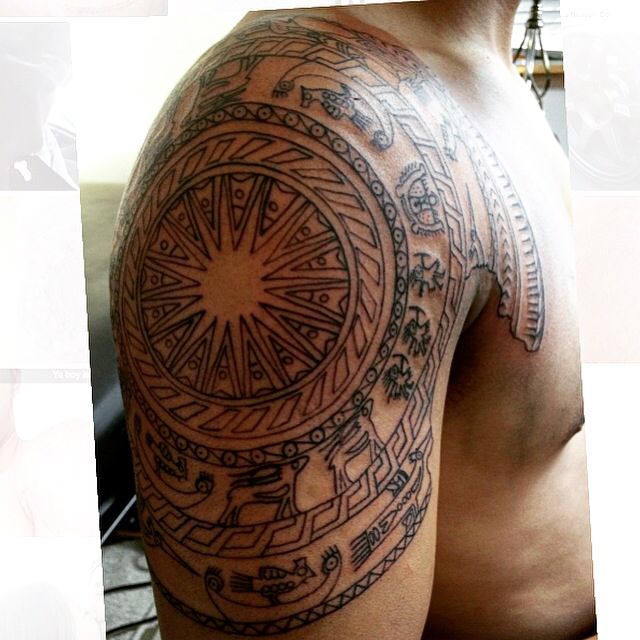
Expert Insight: In practice, tattoo artists who specialize in cultural reconstruction note that Dong Son drum tattoos are not merely decorative. They require careful interpretation of fragmented archaeological patterns, often reconstructed from museum artifacts rather than copied directly, ensuring historical integrity is maintained in modern design work.
Historical Origin of Đông Sơn Culture
The Đông Sơn culture emerged in northern Vietnam’s Red River Delta during the Bronze Age, roughly between 700 BCE and 100 CE. It is best known for producing intricately decorated bronze drums used in rituals, ceremonies, and leadership events, reflecting a highly organized society with advanced metalworking traditions.
Information Gain: Unlike many “tribal tattoo” trends that generalize ancient symbols, Đông Sơn artifacts are region-specific and scientifically cataloged. Over 200 drums have been discovered across Southeast Asia, showing trade and cultural exchange networks that extended beyond modern Vietnam into Laos, Thailand, and southern China.
- Origin period: ~700 BCE – 100 CE
- Core region: Red River Delta, Vietnam
- Key artifact: Bronze ceremonial drums
- Cultural role: Ritual authority and community identity
Why Bronze Drums Became Tattoo Inspiration
Bronze drums became tattoo inspiration because they represent one of the most visually rich and symbolically dense artifacts from ancient Vietnam. Their circular structure and radial engravings naturally translate into tattoo compositions, especially sleeve and back pieces that emphasize symmetry and cosmic balance.
Real-World Application: Tattoo artists often adapt drum motifs into circular mandala-like designs for Western clients while preserving Southeast Asian iconography. However, experienced cultural artists warn that oversimplification can strip the design of its ritual meaning, reducing it to aesthetic “tribal patterns” without historical context.
Dong Son drum tattoos are best understood as cultural translations rather than decorations. Each line and motif originally carried social, spiritual, or political meaning in ancient Vietnamese society.
Dong Son Drum Tattoo Meaning Explained
Dong Son drum tattoos symbolize interconnected themes of power, ancestry, fertility, and spiritual cosmology derived from Bronze Age Vietnamese society. Each motif carved on the original drums represents aspects of daily life, ritual authority, and the ancient worldview that connected humans, nature, and the cosmos.
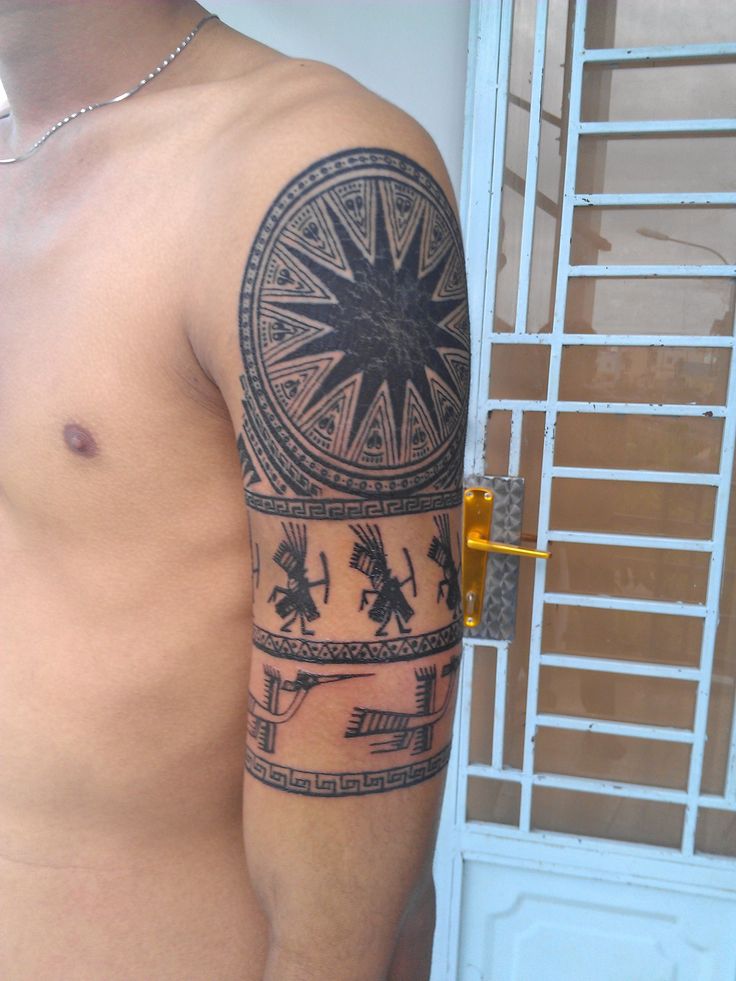
Expert Perspective: Anthropologists emphasize that Đông Sơn symbolism should not be interpreted through modern Western tattoo frameworks alone. Instead, its meaning emerges from communal rituals where drums functioned as both musical instruments and sacred communication tools between leaders and ancestral spirits.
Sunburst Symbol Meaning
The sunburst motif in Dong Son drum tattoos represents cosmic energy, life cycles, and agricultural dependence on solar patterns. It is often placed at the center of the drum design, symbolizing the universe’s organizing force and the spiritual authority of nature over human life in early Vietnamese belief systems.
Information Gain: Archaeological analysis suggests the sunburst was not purely symbolic but also calendrical, possibly linked to seasonal farming cycles. This dual function—spiritual and practical—is rarely highlighted in modern tattoo interpretations, yet it is essential for accurate cultural representation.
- Represents solar cycles and agricultural timing
- Central authority and cosmic order
- Spiritual connection to nature
Warrior & Human Figures Meaning
Human and warrior figures on Dong Son drums depict social hierarchy, community rituals, and ancestral reverence. These figures often appear in procession scenes, suggesting coordinated ceremonies that reinforced leadership structures and collective identity in early Vietnamese societies.
Real-World Insight: Modern tattoo adaptations frequently isolate warrior figures for aesthetic appeal, but historians caution that removing them from context distorts their meaning. These figures were never individualistic—they always represented collective participation and societal cohesion.
Bird Motifs in Drum Designs
Bird motifs in Dong Son drum tattoos symbolize spiritual communication, freedom, and the transition between earthly and ancestral realms. They are commonly interpreted as messengers that connect humans with unseen forces, reflecting early Southeast Asian animistic beliefs.
Common Misconception: Many modern interpretations label these birds as purely decorative. However, ethnographic studies suggest they played a ritual role in representing soul movement and seasonal migration patterns, linking human life cycles to nature’s rhythms.
- Spiritual messengers between realms
- Symbol of freedom and transition
- Connection to ancestral worship systems
Popular Dong Son Drum Tattoo Designs (Introduction)
Dong Son drum tattoo designs vary widely depending on artistic interpretation, ranging from highly detailed archaeological reconstructions to simplified geometric adaptations. The most effective designs balance historical accuracy with modern tattoo readability, ensuring that symbolic depth is not lost during stylistic transformation.
Design Insight: Experienced tattoo artists often recommend starting with structural authenticity—preserving radial symmetry and key motifs—before applying stylistic modifications. This ensures the tattoo remains visually coherent while respecting its cultural origin.
| Design Style | Key Features | Best Placement |
|---|---|---|
| Archaeological Realism | Highly detailed drum engravings | Back, chest |
| Geometric Interpretation | Simplified radial patterns | Forearm, shoulder |
| Hybrid Tribal Style | Mix of ancient motifs and modern ink flow | Sleeve, calf |
Warning from Practitioners: Over-stylization is one of the most common mistakes. When drum motifs lose their radial structure, the design stops reflecting its cultural origin and becomes a generic ornamental tattoo, reducing both historical and symbolic value.
Cultural Respect & Tattoo Ethics
Lucky Tattoo, a professional tattoo artist, has over 10 years of experience in the art of tattooing in Ho Chi Minh City. Lucky Tattoo Studio was founded in 2014 by skilled and kind artists. All tattoos are provided in a clean, strictly controlled, and friendly environment.
Ethical Insight: Tattoo specialists and cultural historians emphasize that Đông Sơn motifs are not “free-use tribal patterns.” They represent documented historical artifacts tied to identity, leadership, and spirituality. Misuse often occurs when designs are copied from internet images without context, stripping them of cultural and archaeological significance.
How to Avoid Misusing Sacred Symbols
Responsible use of Dong Son drum tattoo designs requires research, collaboration with culturally informed tattoo artists, and respect for the artifact’s historical meaning. Clients should understand what each motif represents and avoid combining it with unrelated cultural symbols that distort its original Southeast Asian Bronze Age context.
Practical Guidance: Professional tattoo artists often require clients to discuss meaning before design approval. This ensures that the tattoo is not just visually appealing but culturally grounded. Studios specializing in heritage-inspired tattoos frequently consult museum references or academic publications before finalizing design elements.
- Research historical context before choosing design
- Work with artists experienced in cultural reconstruction
- Avoid mixing unrelated tribal aesthetics
- Prioritize accurate motif placement and symmetry
A culturally informed tattoo is not about restriction—it is about preserving meaning while transforming ancient visual language into modern identity expression.
Real-World Interpretations in Modern Tattoo Art
Modern interpretations of Dong Son drum tattoos combine archaeological accuracy with contemporary tattoo aesthetics. Artists around the world adapt bronze drum motifs into sleeve, chest, and back compositions, often blending traditional Vietnamese symbolism with geometric, realism, or mandala-inspired styles to suit modern body art expectations.
Expert Observation: Vietnamese tattoo studios increasingly report a rise in heritage-inspired requests from both local and international clients. However, experienced artists note that successful designs always preserve radial structure and symbolic hierarchy rather than flattening motifs into purely decorative patterns.
Information Gain: A key trend overlooked in most online content is the “archaeology-to-ink translation process,” where artists reconstruct incomplete drum engravings from museum fragments. This requires interpretive skill similar to restoration art, not just tattoo execution.
Vietnamese Tattoo Studios and Global Adoption
Vietnamese tattoo studios play a central role in preserving authenticity while global artists reinterpret Dong Son motifs through contemporary styles. This cross-cultural exchange has expanded awareness of Đông Sơn heritage, but also increases the risk of oversimplification when designs are replicated without historical grounding.
Real-World Example: Some Hanoi-based studios collaborate with historians to ensure designs reflect actual drum patterns rather than internet-derived interpretations. Meanwhile, international tattoo conventions increasingly feature Southeast Asian heritage themes, reflecting growing global interest in archaeological tattoo art.
- Vietnamese studios prioritize historical accuracy
- Global artists focus on stylistic adaptation
- Collaboration with historians improves authenticity
Common Misconceptions About Dong Son Tattoos
Dong Son drum tattoos are often misunderstood as generic tribal designs, but they are actually derived from specific archaeological artifacts with documented cultural meaning. Misconceptions arise when motifs are copied without context, leading to inaccurate interpretations that disconnect the tattoo from its historical and spiritual origins.
Critical Insight: Many online tattoo galleries incorrectly label Đông Sơn designs as “tribal Asian patterns,” which erases their precise cultural identity. This misclassification is one of the biggest issues in digital tattoo culture representation today.
“Tribal Tattoo” Label Misuse
The term “tribal tattoo” is frequently misapplied to Dong Son drum designs, despite their distinct archaeological origin. Unlike generalized tribal patterns, these motifs come from a documented Bronze Age civilization with identifiable artifacts, making them historically specific rather than abstract cultural symbols.
Correction from Experts: Anthropologists stress that labeling Đông Sơn designs as “tribal” oversimplifies a complex civilization that had metallurgy, trade networks, and structured social hierarchies. Accurate terminology is essential for preserving cultural integrity.
Expert Insights on Cultural Tattoo Design
Dong Son drum tattoos benefit from interdisciplinary interpretation involving archaeologists, anthropologists, and tattoo artists. This ensures that designs reflect both historical authenticity and modern artistic adaptation. Expert collaboration helps prevent cultural distortion while enhancing the depth and accuracy of tattoo symbolism.
Professional Insight: Experienced cultural tattoo artists recommend studying artifact layouts before designing tattoos. Understanding radial symmetry, motif hierarchy, and ceremonial context improves both aesthetic quality and cultural fidelity.
Archaeology-Informed Tattoo Design Approach
An archaeology-informed approach treats Dong Son drum tattoos as reconstructed visual history rather than decorative inspiration. This method emphasizes fidelity to artifact structure, ensuring that tattoo designs respect the original composition logic found in bronze drum engravings.
Information Gain: Unlike standard tattoo design workflows, archaeology-informed design often begins with museum references and academic sketches rather than stylized references. This reverses the typical creative process, prioritizing historical accuracy before aesthetic refinement.
- Start with artifact documentation
- Preserve radial symmetry and hierarchy
- Consult historical sources before stylization
Frequently Asked Questions About Dong Son Drum Tattoos
Dong Son drum tattoo FAQs address meaning, cultural origins, design choices, and ethical considerations. These answers help users quickly understand symbolism, placement options, and historical accuracy. They also clarify misconceptions and provide practical guidance for anyone considering a tattoo inspired by Vietnam’s Đông Sơn Bronze Age civilization.
What does a Dong Son drum tattoo symbolize?
It symbolizes power, unity, ancestry, fertility, and spiritual connection rooted in ancient Vietnamese Bronze Age culture and rituals.
Are Dong Son drum tattoos historically accurate designs?
Yes, when based on archaeological references. However, many modern versions simplify or reinterpret motifs for artistic purposes.
Can I customize a Dong Son drum tattoo?
Yes, but customization should respect radial structure and core symbolism to preserve cultural and historical integrity.
Where is the best placement for this tattoo?
Back and chest placements are ideal due to circular symmetry, while sleeves and forearms suit simplified interpretations.
Is it disrespectful to wear this tattoo?
Not if done with cultural understanding and respect. Research and collaboration with informed artists are essential.
What makes Dong Son tattoos different from tribal tattoos?
They originate from a specific Bronze Age civilization with documented artifacts, unlike generic tribal patterns without defined historical origin.
Final Thoughts on Dong Son Drum Tattoo Meaning
Dong Son drum tattoos represent a rare intersection of archaeology, cultural heritage, and modern body art. When designed responsibly, they preserve the visual language of ancient Vietnam while allowing individuals to express identity through historically grounded symbolism. The key is balancing artistic freedom with cultural and historical respect.
Closing Insight: As global interest in heritage tattoos grows, Dong Son drum designs stand out not just for their beauty but for their deep archaeological roots. Their value lies in preserving ancient narratives through contemporary expression without losing authenticity.