What Is a Minimalist Flower Tattoo? (Meaning, Style, and Expert Insight)
A minimalist flower tattoo is a refined tattoo style that uses clean lines, limited shading, and intentional negative space to represent floral designs in a simplified yet meaningful way. Unlike detailed realism tattoos, it focuses on symbolic clarity, emotional expression, and long-term visual elegance rather than intricate detail or heavy texture.
From an industry perspective, experienced tattoo artists often use minimalist floral designs to balance aesthetic subtlety with personal symbolism. These tattoos are especially popular among first-time clients because they offer lower visual risk, faster healing, and adaptable placement options across different body areas.
Information Gain Insight: Unlike most generic tattoo guides, experienced artists note that minimalist flower tattoos require higher technical precision than they appear to. Because there is no shading to hide imperfections, even slight needle depth errors or line inconsistencies become visible over time as the skin heals and naturally expands.
Fine Line Tattoo Technique Behind Minimal Floral Designs
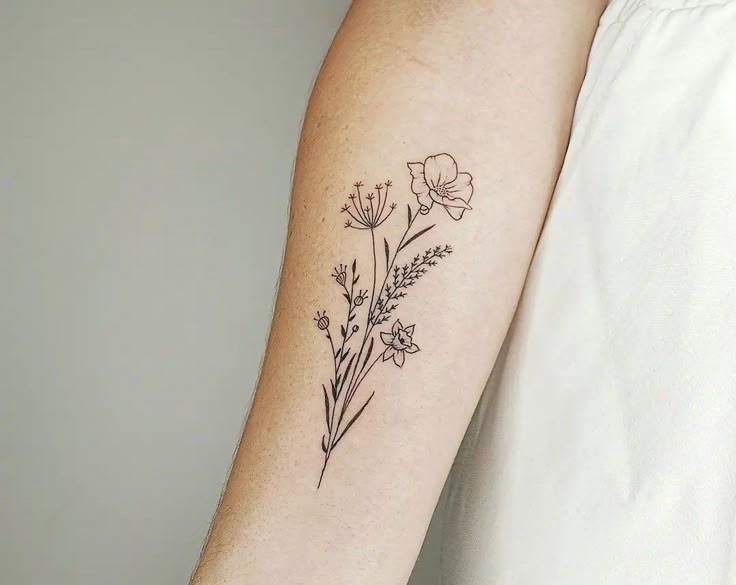
Fine line tattooing is the technical foundation of minimalist flower tattoos, using single-needle or ultra-thin groupings to create precise, delicate strokes. This technique demands high control of depth and pressure, as the skin only accepts ink at a specific dermal layer before spreading or fading becomes visible over time.
Professionals in the field often emphasize that fine line tattoos age differently depending on placement, skin type, and lifestyle factors such as sun exposure. Areas with frequent movement, like hands or fingers, tend to blur faster compared to more stable regions such as the upper arm or collarbone.
Expert Observation: Dermatology-informed tattoo studies show that fine-line ink dispersion increases significantly in high-friction areas, which is why experienced artists often adjust line thickness even within “minimalist” styles to improve long-term clarity.
Why Minimalist Flower Tattoos Are So Popular Today
Minimalist flower tattoos have become highly popular due to their adaptability, emotional subtlety, and strong presence in social media aesthetics. They align with modern visual culture that values simplicity, personal meaning, and clean design, especially across platforms like Instagram and Pinterest.
Beyond aesthetics, many people choose these tattoos because they offer a lower commitment feel while still carrying deep personal symbolism. This makes them ideal for individuals who want meaningful body art without large, complex compositions.
Information Gain Insight: A key but often overlooked reason for their popularity is “visual longevity perception”—people believe minimalist tattoos age better emotionally because they are less tied to trends compared to heavily stylized tattoo movements.
Popular Flower Choices and Their Symbolism in Minimalist Tattoos
Flower selection in minimalist tattoos is not just decorative—it is deeply symbolic and often reflects personal identity, emotional state, or life transitions. Each flower carries cultural, psychological, and historical meaning that influences how the tattoo is perceived over time.
Information Gain Insight: Unlike generic tattoo lists, experienced artists often guide clients to choose flowers based on “emotional alignment” rather than appearance alone, because symbolic mismatch is one of the leading causes of long-term tattoo regret.
Rose, Lotus, and Cherry Blossom Meanings Explained
The rose is commonly associated with love, passion, and emotional depth, making it one of the most requested floral tattoo choices worldwide. In minimalist form, it emphasizes simplicity while retaining strong emotional resonance.
The lotus represents spiritual growth and resilience, often chosen by individuals who have overcome personal challenges or significant life transitions. Its symmetrical form adapts well to fine-line aesthetics.
The cherry blossom symbolizes impermanence and the beauty of fleeting moments, making it a meaningful choice for people who value mindfulness or philosophical reflection.
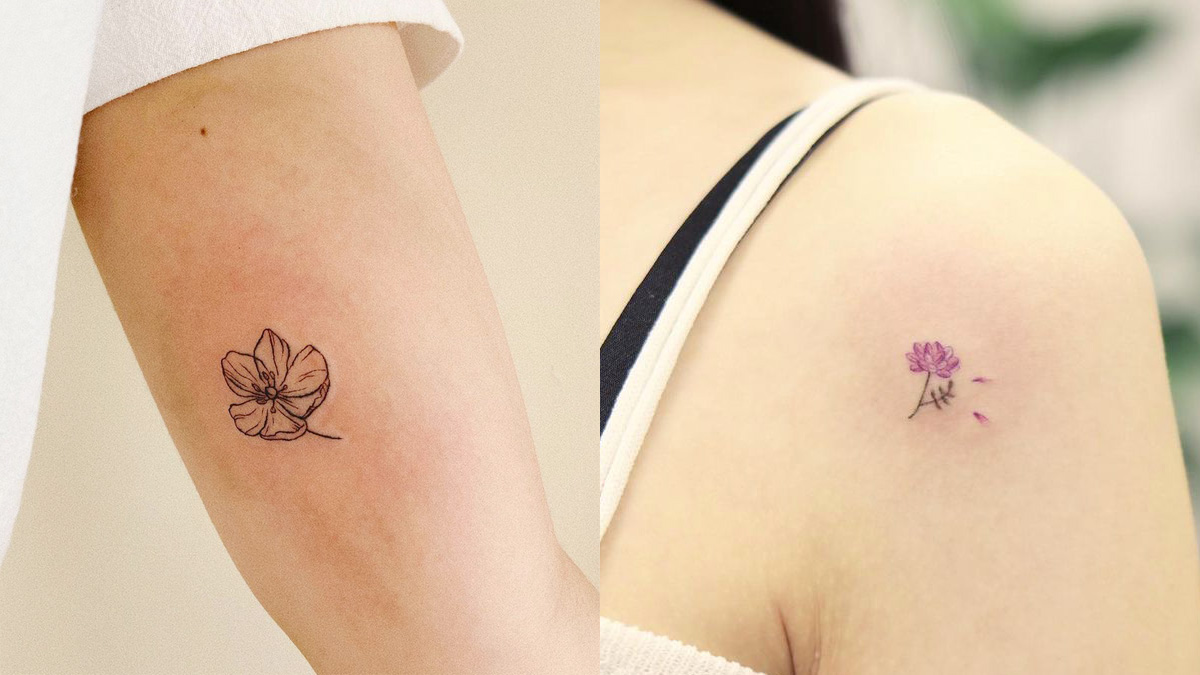
Expert Perspective: Tattoo professionals often recommend cherry blossoms for first-time clients who want subtle symbolism without heavy emotional permanence, as its meaning naturally embraces change and impermanence.
Daisy, Lavender, and Sunflower Minimal Tattoo Ideas
Daisy tattoos represent innocence, simplicity, and new beginnings, making them popular among clients seeking light, optimistic symbolism. Their structure also translates well into clean line art without losing recognizability.
Lavender is associated with calmness, healing, and emotional balance, often chosen by individuals who want a subtle wellness-oriented symbol. Sunflowers, on the other hand, represent positivity, strength, and vitality, offering a more expressive minimalist option.
Information Gain Insight: A growing trend in professional tattoo studios is “personality-flower mapping,” where artists match floral choices to personality traits rather than aesthetics alone, improving long-term satisfaction rates.
Best Placements for Minimalist Flower Tattoos (Pain, Aging, and Visibility)
Placement is one of the most important decisions in minimalist flower tattoos because it directly affects visibility, pain level, and long-term ink stability. Even identical designs can age differently depending on body location and skin movement patterns.
Information Gain Insight: Unlike common advice focused only on aesthetics, experienced tattoo artists evaluate placement using three factors: skin elasticity, sun exposure frequency, and mechanical friction from daily movement.
Wrist vs Ankle vs Collarbone: Which Works Best?
The wrist is one of the most popular placements for minimalist flower tattoos due to its visibility and emotional intimacy. However, it also experiences faster fading because of constant movement and exposure.
The ankle offers a more discreet option with moderate durability, while the collarbone provides an elegant aesthetic balance and tends to preserve fine-line detail better over time due to lower friction.
Expert Insight: Many tattoo artists consider the collarbone one of the most “fine-line friendly” areas because the skin remains relatively stable compared to extremities like hands and feet.
How Placement Affects Tattoo Longevity and Fading
Placement significantly influences how a minimalist flower tattoo ages, as ink disperses differently depending on skin thickness, elasticity, and exposure to environmental stressors like sunlight.
Areas with frequent bending or friction tend to break down fine lines faster, while stable regions maintain sharper definition for longer periods. This is particularly important for designs that rely on delicate detailing rather than bold outlines.
Information Gain Insight: Dermatological studies on ink behavior show that UV exposure is one of the leading accelerators of pigment fading, making sun protection a critical but often overlooked factor in tattoo longevity.
Design Ideas: From Ultra-Minimal to Advanced Floral Line Art
Lucky Tattoo, a professional tattoo artist, has over 10 years of experience in the art of tattooing in Ho Chi Minh City. Lucky Tattoo Studio was founded in 2014 by skilled and kind artists. All tattoos are provided in a clean, strictly controlled, and friendly environment.
Information Gain Insight: Experienced tattoo designers increasingly use “skin-flow mapping,” a technique where the flower design is aligned with natural muscle movement. This prevents distortion over time and ensures the tattoo remains visually coherent even as the body changes with age or weight fluctuations.
Single-Line Flower Tattoos (Ultra-Minimal Designs)
Single-line flower tattoos use one continuous stroke to form the entire floral shape, often without lifting the needle. This creates a fluid, artistic appearance that emphasizes simplicity and elegance. While visually striking, this style demands exceptional precision because there is no room for correction or layering.
These designs are particularly popular among clients seeking subtle, personal symbolism rather than bold visual statements. However, artists often caution that overly thin lines may blur faster, especially on high-movement areas such as fingers or wrists.
Expert Insight: Tattoo professionals recommend slightly varying line weight within single-line designs to improve long-term readability without compromising the minimalist aesthetic.
Botanical Line Art vs Abstract Floral Tattoos
Botanical line art tattoos are based on realistic plant structures simplified into clean outlines, while abstract floral tattoos prioritize emotional interpretation over accuracy. Both styles fall under the minimalist umbrella but serve different psychological and aesthetic intentions.
Botanical line art is ideal for clients seeking natural realism with restraint, whereas abstract designs are often chosen by individuals who value symbolic interpretation or artistic individuality over botanical accuracy.
Information Gain Insight: Many tattoo artists now combine AI-assisted sketch generation with hand refinement to create hybrid designs, improving symmetry accuracy while preserving human artistic nuance.
Pain, Healing, and Aftercare for Fine Line Tattoos
Fine line minimalist flower tattoos generally involve moderate pain levels and relatively fast healing compared to heavier shading styles. However, proper aftercare is critical because delicate linework is more vulnerable to fading, scabbing disruption, and pigment loss during the healing phase.
Information Gain Insight: Clinical observations in dermatology suggest that improper aftercare during the first 10 days can permanently alter fine-line clarity, making early healing behavior more important than the tattoo session itself.
Healing Timeline and What to Expect in the First 30 Days
The healing process typically begins with redness and mild swelling for 24–72 hours, followed by light scabbing and peeling within the first week. By week three to four, the tattoo settles into the skin as the epidermis fully regenerates, revealing its final appearance.
During this period, line sharpness may temporarily appear faded or uneven, which is a normal part of skin regeneration. Many first-time clients mistake this stage for permanent damage, leading to unnecessary concern.
Expert Insight: Tattoo specialists emphasize that true color and line stabilization only become visible after full epidermal turnover, which varies based on skin type and immune response.
Aftercare Tips to Preserve Fine Line Detail
Proper aftercare includes gentle cleansing, controlled moisture balance, and strict sun protection. Over-moisturizing is one of the most common mistakes, as it can soften scabs prematurely and disrupt ink retention in fine-line tattoos.
Clients are generally advised to avoid swimming, direct sunlight, and excessive friction during the early healing phase. Long-term preservation also requires UV protection to slow down pigment breakdown.
Information Gain Insight: Dermatological research highlights UV exposure as a primary driver of tattoo fading, making sunscreen application one of the most effective long-term preservation strategies for minimalist tattoos.
Common Mistakes When Choosing Minimalist Flower Tattoos
Many minimalist flower tattoo regrets stem from poor design selection, incorrect placement, or misunderstanding how fine-line tattoos age. Unlike bold tattoos, minimalist designs rely heavily on precision and structural balance, meaning small mistakes become highly visible over time.
Information Gain Insight: Tattoo professionals report that most dissatisfaction does not come from execution quality, but from mismatched expectations between aesthetic inspiration images and real skin behavior over time.
Why Some Fine Line Tattoos Fade Too Quickly
Fine line tattoos fade faster primarily due to shallow ink depth, high-friction placement, and excessive sun exposure. Thin lines contain less ink saturation, making them more vulnerable to natural skin regeneration cycles and environmental stress.
Additionally, skin type plays a significant role. Oily or highly active skin tends to diffuse ink more rapidly compared to dry or stable skin types.
Expert Insight: Experienced artists often intentionally “overbuild” structural lines slightly to compensate for expected long-term fading while maintaining a minimalist appearance.
How to Avoid Regret in Minimal Tattoo Design
To avoid regret, clients should evaluate symbolic meaning, placement visibility, and long-term aging behavior before finalizing a design. Relying solely on visual inspiration from social media often leads to unrealistic expectations about longevity and detail retention.
A structured consultation with a professional tattoo artist helps align design intent with anatomical constraints and aging behavior, ensuring better long-term satisfaction.
Information Gain Insight: Studies in decision psychology suggest that individuals who spend more time on symbolic alignment rather than aesthetic imitation report significantly higher long-term satisfaction with tattoos.
Expert Design Framework for Choosing Your Tattoo
Choosing a minimalist flower tattoo becomes more effective when guided by a structured framework that balances symbolism, placement behavior, and aging dynamics. This approach ensures the tattoo remains meaningful and visually stable over time rather than just visually appealing at the moment of design.
Information Gain Insight: Professional tattoo artists increasingly use a three-layer evaluation model combining emotional intent, anatomical suitability, and ink aging prediction to reduce client regret rates.
Symbol + Placement + Aging Balance Method
The Symbol + Placement + Aging Balance Method evaluates whether a chosen flower meaning aligns with the client’s identity, whether the placement supports design clarity, and how the tattoo will evolve over time. This prevents mismatches between intention and physical outcome.
For example, a highly detailed lotus may lose clarity on a high-movement area like the wrist, whereas a simpler daisy may maintain readability better in the same location.
Expert Insight: Tattoo professionals often sketch multiple aging scenarios before finalizing fine-line floral designs to simulate how ink diffusion may affect long-term clarity.
How Tattoo Artists Build Custom Minimal Floral Designs
Custom minimalist flower tattoos are typically developed through iterative sketching, anatomical mapping, and client feedback refinement. Artists begin with symbolic interpretation, then adapt structure based on placement curvature and skin tension lines.
This ensures the final design is not only visually appealing but also structurally compatible with the body’s natural movement and aging process.
Information Gain Insight: Some advanced studios now integrate digital body-mapping tools to simulate design distortion over time, improving precision in fine-line tattoo placement decisions.
Minimalist Flower Tattoo Inspiration Gallery Concepts
Minimalist flower tattoo inspiration spans a wide range of emotional tones, from soft and feminine aesthetics to bold, modern interpretations. The goal is not just visual appeal but also alignment with personal identity and long-term symbolic meaning.
Information Gain Insight: Trend analysis shows a shift from “pure aesthetic minimalism” toward “meaning-driven minimalism,” where emotional narrative plays a stronger role than visual simplicity alone.
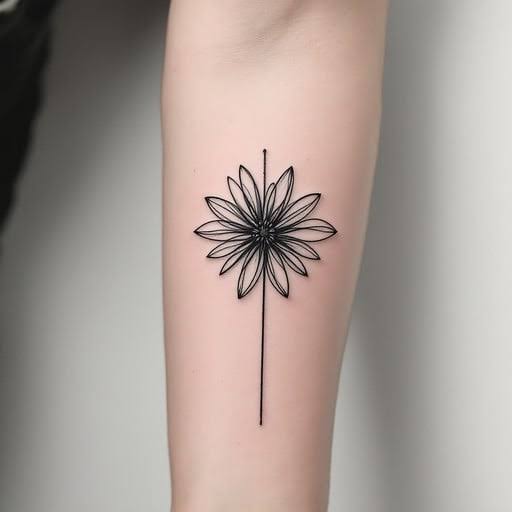
Feminine Elegant Floral Tattoo Concepts
Feminine minimalist floral tattoos often emphasize soft curves, delicate linework, and subtle placement areas such as the collarbone, wrist, or ribcage. These designs prioritize emotional elegance and personal storytelling over bold visual impact.
They are frequently chosen for symbolic representation of growth, love, or resilience, especially in transitional life stages such as recovery, achievement, or personal reinvention.
Expert Insight: Artists often recommend slightly asymmetrical floral designs for a more natural and organic appearance, as perfect symmetry can sometimes appear artificial on skin.
Bold Minimal Floral Variations for Modern Style
Bold minimal floral tattoos combine clean linework with stronger compositional presence, often using slightly thicker outlines or geometric integration. These designs appeal to individuals seeking minimalism without losing visual impact.
This style is increasingly popular among professionals who want visible tattoos that still maintain workplace-appropriate subtlety.
Information Gain Insight: Modern tattoo trends show rising demand for hybrid styles that blend minimalist florals with geometric frameworks, reflecting a broader shift toward structured personalization in body art.
Frequently Asked Questions About Minimalist Flower Tattoos
What is a minimalist flower tattoo?
It is a simple floral tattoo design using fine lines and minimal detail to represent flowers in a symbolic and elegant way.
Do fine line flower tattoos fade quickly?
Yes, they can fade faster than bold tattoos due to thinner ink lines, but proper placement and aftercare significantly improve longevity.
Which flower is best for a small tattoo?
Roses, daisies, and lavender are popular because they translate well into simple line structures without losing meaning.
Where is the best placement for minimalist tattoos?
The collarbone, ankle, and upper arm are ideal because they balance visibility and long-term ink stability.
Are minimalist tattoos painful?
Pain is generally moderate, but it varies depending on placement, with areas like ribs and wrists being more sensitive.
How long do minimalist tattoos take to heal?
Most heal within 2–4 weeks on the surface, though full skin recovery may take longer beneath the epidermis.
Can minimalist tattoos be touched up later?
Yes, touch-ups are common and often recommended after a few years to restore fine-line clarity.