What Are Symmetrical Tattoos?
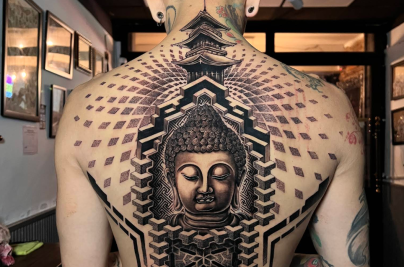
Symmetrical tattoos are body art designs built around a central axis where both sides mirror or harmonize with each other. They rely on geometric precision, anatomical alignment, and visual balance principles. Unlike random tattoo placement, symmetry-based designs are intentionally structured to enhance harmony across the body and maintain aesthetic consistency over time.
From an expert tattoo design perspective, symmetry is not just visual duplication—it is adaptive composition. Skilled artists adjust mirrored elements to fit muscle curvature, bone structure, and skin movement. This ensures the tattoo remains visually stable even as the body changes with age or motion.
How Symmetry Works in Tattoo Design
Symmetry in tattooing is achieved through mirrored composition along a defined body axis, often vertical (spine or sternum). Artists use digital mapping tools or stencil duplication techniques to ensure precision. However, perfect mathematical symmetry is often adjusted to compensate for human anatomy differences and natural body asymmetry.
Information Gain Insight: One overlooked factor is that true bodily symmetry does not exist. Experienced tattooists intentionally “correct” designs by shifting elements slightly so they appear visually balanced when the body is in motion or flexed. This prevents distortion when muscles contract or posture changes.
Common Misconceptions About Symmetrical Tattoos
Many people assume symmetrical tattoos must be perfectly identical on both sides, but this is inaccurate. In professional practice, symmetry is visual rather than mathematical. Small deviations are often necessary to maintain realism and avoid distortion caused by uneven skin tension or curvature differences.
- Misconception: Perfect mirror imaging is always ideal
- Reality: Adjusted symmetry ensures better long-term aesthetics
- Misconception: Symmetry works the same on all body parts
- Reality: Each anatomical zone requires unique mapping
Popular Symmetrical Tattoo Styles (With Real Design Logic)
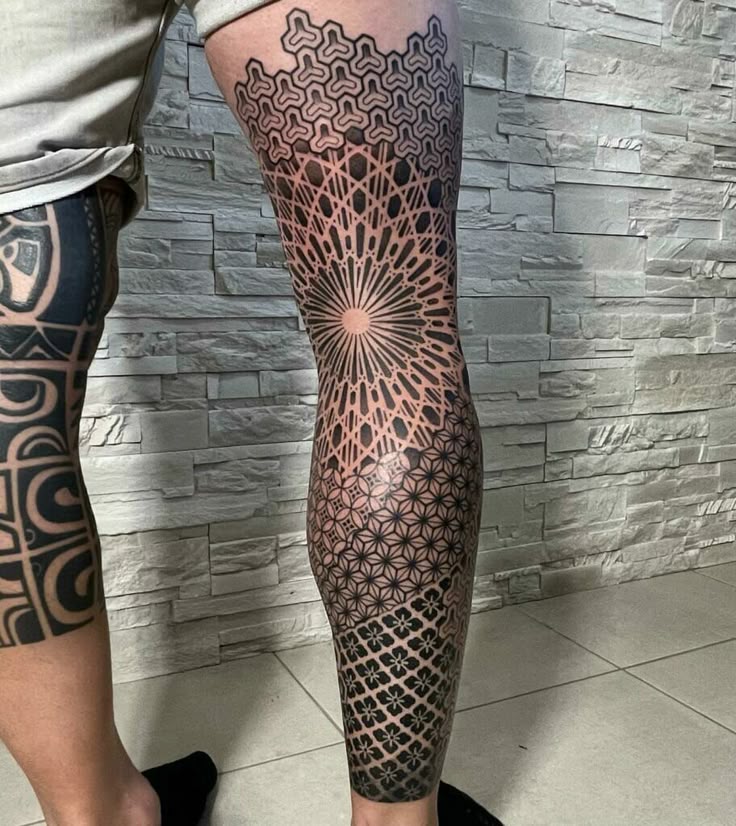
Symmetrical tattoo styles combine geometry, cultural symbolism, and structured composition to create visually balanced artwork. The most effective styles include mandala, geometric blackwork, and ornamental designs. Each style uses different symmetry rules, from radial repetition to mirrored linear structure, to achieve harmony across the body surface.
From an expert standpoint, style selection directly affects healing stability and long-term visual clarity. High-contrast blackwork tends to preserve symmetry better over time compared to fine-line color-heavy designs, which may blur and disrupt alignment as skin ages.
Mandala Symmetry Tattoos
Mandala tattoos use radial symmetry, where patterns expand outward from a central point. This creates a circular balance that symbolizes unity and completeness. They are commonly placed on the chest, back, or shoulders due to their natural central positioning on the body.
Information Gain Insight: Many clients underestimate how mandala tattoos distort when placed on curved surfaces like shoulders. Experienced artists modify radial spacing on outer edges to compensate for skin curvature, ensuring the mandala does not visually “warp” when the body moves.
- Best placement: Chest, upper back, shoulders
- Design strength: Strong spiritual and geometric symbolism
- Risk factor: Distortion on highly mobile skin zones
Geometric Blackwork Designs
Geometric blackwork tattoos rely on sharp lines, repeating shapes, and structured symmetry to create high-contrast visual impact. These designs emphasize precision and are often built using digital stencil systems for accuracy before application.
A key expert observation is that geometric tattoos age better when line weight is slightly varied. Uniform lines may blur evenly over time, while controlled variation preserves visual depth and structural clarity.
Ornamental Symmetrical Tattoos
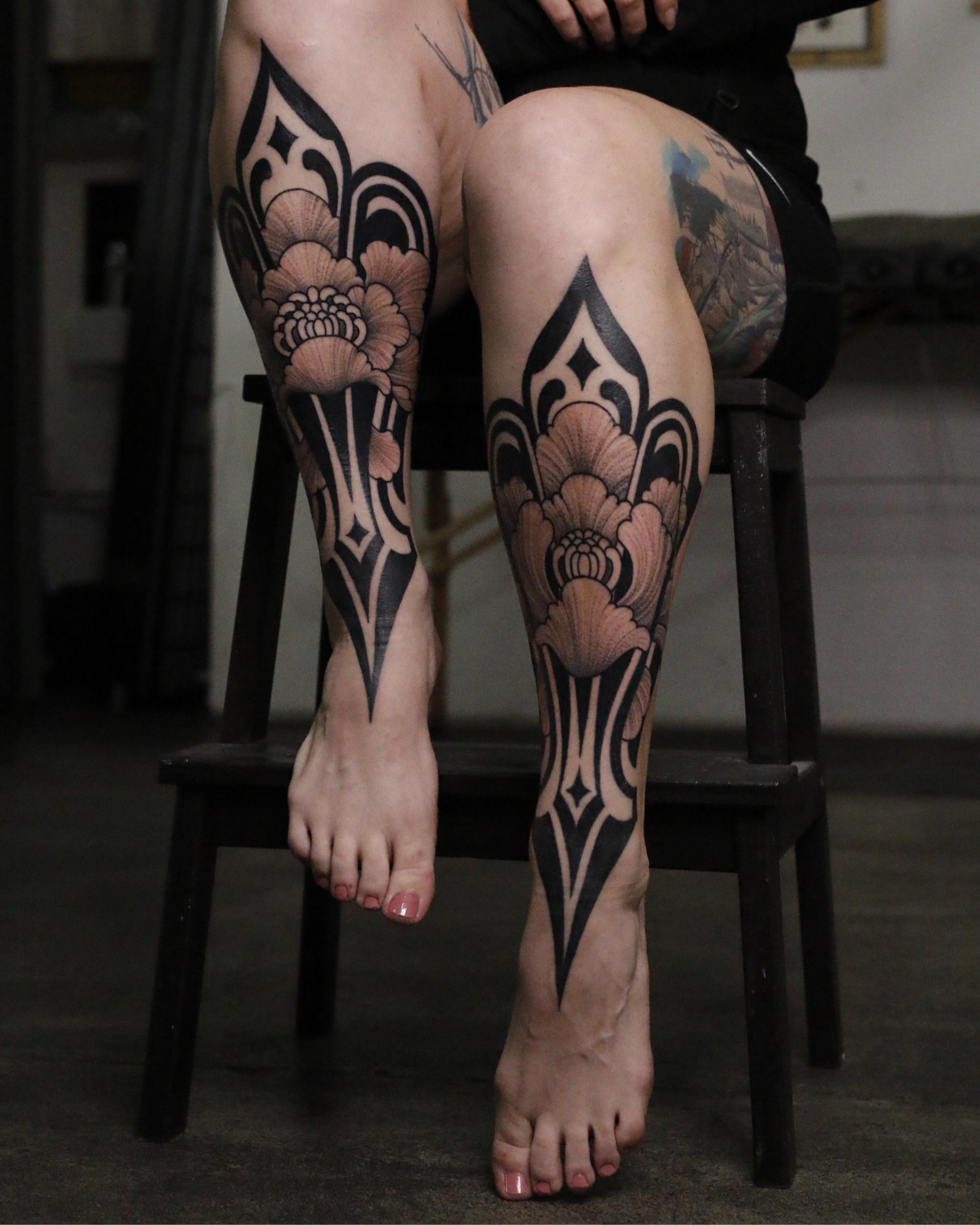
Ornamental tattoos combine decorative patterns with structured symmetry, often inspired by historical art forms such as baroque engraving or tribal adornment systems. These tattoos frame the body rather than dominate it, enhancing natural anatomical flow.
Unlike geometric styles, ornamental symmetry prioritizes aesthetic flow over mathematical precision. Artists intentionally break strict mirroring rules to create elegance and visual softness, especially in areas like ribs or hips where movement is constant.
Best Body Placements for Symmetrical Tattoos
The placement of symmetrical tattoos determines their visual stability, longevity, and anatomical harmony. Ideal locations include central body axes such as the chest, spine, and upper back. These areas provide natural balance points, allowing mirrored designs to remain aligned even during movement and aging.
Expert insight: Placement is more important than design complexity. Even a simple symmetrical tattoo can look powerful if positioned correctly, while a complex design may fail if placed on highly asymmetrical or mobile skin regions.
Chest & Sternum Symmetry Designs
Chest and sternum areas are among the most effective placements for symmetrical tattoos because they provide a clear central axis. Designs placed here naturally align with breathing motion, which enhances the dynamic visual effect of symmetry during expansion and contraction.
However, this region is also highly sensitive and prone to distortion due to chest movement and aging. Artists often adjust lower sternum elements slightly to prevent visual separation when the body is in motion or under tension.
Spine and Back Alignment Tattoos
Spine-based tattoos use the vertebral column as a strict central guide for symmetry. This placement supports vertical designs such as geometric totems, mandalas, or segmented ornamental structures. It is considered one of the most anatomically stable zones for long-term symmetry retention.
Information Gain Insight: The spine is not perfectly straight for most individuals. Skilled tattoo artists account for scoliosis, posture imbalance, and shoulder height differences when designing spinal symmetry, ensuring the final result appears visually straight rather than anatomically literal.
How Tattoo Artists Create Perfect Symmetry
Lucky Tattoo, a professional tattoo artist, has over 10 years of experience in the art of tattooing in Ho Chi Minh City. Lucky Tattoo Studio was founded in 2014 by skilled and kind artists. All tattoos are provided in a clean, strictly controlled, and friendly environment.
From an industry standpoint, symmetry creation is a hybrid process blending art and biomechanics. Artists begin with a central axis reference, then adapt mirrored elements to muscle flow, skin elasticity, and body posture variations. This ensures the design remains visually stable even after healing and natural body changes.
Digital Design Tools for Symmetry
Digital design tools allow tattoo artists to create precise mirrored layouts before applying ink to the skin. Software such as Procreate, Adobe Illustrator, and tattoo-specific stencil programs help simulate symmetry and test composition across different body shapes. This reduces human error during stencil creation and improves alignment accuracy.
Information Gain Insight: Advanced studios now use AI-assisted symmetry mapping that overlays tattoo designs onto 3D body scans. This technology predicts how designs distort across movement zones like shoulders and ribs, significantly improving long-term design integrity compared to traditional flat stencil methods.
- Pre-visualization on 3D body models
- Automatic mirror-axis alignment tools
- Skin curvature simulation systems
Hand-Drawing vs Digital Symmetry
Hand-drawing symmetrical tattoos provides artistic flexibility, while digital methods ensure precision. Many expert tattooists combine both approaches, using digital tools for structure and hand-drawing for refinement. This hybrid workflow balances creativity with anatomical accuracy.
A common misconception is that digital symmetry guarantees perfection. In reality, skin behavior during tattooing can still distort lines slightly. Experienced artists continuously adjust manually during application to maintain balance.
Pain, Healing, and Longevity of Symmetrical Tattoos
Pain levels, healing time, and long-term durability of symmetrical tattoos depend primarily on placement, skin thickness, and ink density. Symmetry itself does not increase pain, but many symmetrical designs are placed on central body zones that tend to be more sensitive, such as the sternum, spine, and ribs.
From a clinical dermatology perspective, healing behavior varies significantly between individuals. Factors such as hydration, immune response, and aftercare compliance directly affect how well symmetrical lines remain sharp and aligned over time.
Healing Timeline by Body Area
Healing timelines differ depending on where the symmetrical tattoo is placed. Areas with thin skin or high movement take longer to stabilize. Chest and spine tattoos may require extended healing due to constant motion and pressure from daily activities.
Information Gain Insight: One overlooked factor is micro-movement during sleep. Side sleepers often experience subtle distortion in fresh sternum or rib tattoos due to pressure. Experts recommend controlled sleeping positions during the first 10–14 days to preserve symmetry integrity.
| Body Area | Healing Time | Risk of Distortion |
|---|---|---|
| Chest/Sternum | 2–3 weeks | High |
| Spine/Back | 2–4 weeks | Medium |
| Arms/Sleeves | 1.5–2 weeks | Low |
How to Choose the Right Symmetrical Tattoo Artist
Choosing the right tattoo artist is critical for symmetrical tattoos because precision, anatomical understanding, and portfolio consistency determine the final outcome. Clients should evaluate not only artistic style but also technical ability in alignment, stencil accuracy, and healed work examples.
From an E-E-A-T perspective, verified experience in geometric or ornamental tattooing is a strong trust signal. Artists specializing in symmetry often demonstrate consistent spacing control, balanced compositions, and long-term healing results across different body types.
Portfolio Red Flags to Avoid
A professional portfolio should show consistent symmetry across multiple healed tattoos. Warning signs include uneven line spacing, misaligned central axes, or designs that look balanced only in staged photographs. Real-world performance is more important than edited images.
Information Gain Insight: Many low-quality portfolios hide distortion by photographing tattoos immediately after completion. Always request healed photos (4–8 weeks post-tattoo) to evaluate true symmetry retention under natural skin recovery conditions.
- Inconsistent mirrored alignment
- No healed tattoo examples
- Over-reliance on digital mockups
Cost of Symmetrical Tattoos (What Affects Pricing)
The cost of symmetrical tattoos varies based on complexity, size, placement difficulty, and artist expertise. Highly detailed geometric or mandala-based symmetry requires extended design time and precision execution, increasing overall pricing compared to simpler tattoo styles.
From an industry perspective, pricing reflects not just tattooing time but also pre-design engineering. Symmetry-based tattoos often require multiple stencil iterations and anatomical testing before application, which contributes significantly to cost.
Key Pricing Factors
Several factors influence symmetrical tattoo pricing, including design complexity, body placement difficulty, and artist specialization. Central body placements like sternum or spine require more precision and therefore higher cost due to increased risk and technical demand.
Information Gain Insight: Some studios now charge based on “symmetry complexity units,” where pricing increases with the number of mirrored elements and required anatomical adjustments rather than just size alone.
- Design complexity level
- Placement difficulty (rib/spine vs arm)
- Artist specialization in symmetry
Expert Tips for Long-Lasting Symmetry
Long-lasting symmetrical tattoos require proper design adaptation, high-quality ink, precise placement, and disciplined aftercare. Experts emphasize that maintaining symmetry over time depends more on anatomical alignment and skin behavior than on initial stencil perfection.
From a professional standpoint, aging skin is the biggest challenge to maintaining symmetry. Strategic line weight variation and adaptive spacing help preserve visual balance even as skin elasticity decreases over time.
Maintenance and Aftercare Strategies
Proper aftercare ensures that symmetrical tattoos heal evenly and maintain alignment. This includes controlled moisture levels, avoiding sun exposure, and preventing uneven stretching during healing. Long-term maintenance also involves periodic skin hydration and UV protection.
Information Gain Insight: UV exposure is one of the most underestimated factors in symmetry degradation. Uneven sun damage can fade one side of a mirrored tattoo faster, subtly breaking visual balance over time.
- Use SPF protection on healed tattoos
- Avoid excessive stretching during healing
- Maintain consistent skin hydration
FAQs About Symmetrical Tattoos
Symmetrical tattoos raise common questions about meaning, pain, placement, cost, and long-term durability. These answers provide concise, expert-backed explanations designed for quick understanding and voice search optimization while addressing real concerns from clients and first-time tattoo users.
Are symmetrical tattoos harder to design than regular tattoos?
Yes, because they require precise alignment across a central axis and must account for body asymmetry and movement distortion, making design and placement more technically demanding.
Do symmetrical tattoos always stay perfectly aligned?
Not always. Skin aging, weight changes, and muscle movement can slightly affect alignment, but proper design planning minimizes visible distortion over time.
What body part is best for symmetrical tattoos?
The chest, spine, and upper back are ideal because they provide natural central axes that support balanced mirrored designs.
Are symmetrical tattoos more expensive than normal tattoos?
Often yes, due to increased design complexity, stencil preparation time, and the need for high precision during application.
Can symmetrical tattoos be customized for different body shapes?
Yes, experienced artists adjust symmetry to match individual anatomy, ensuring the design remains visually balanced across different body structures.
Do symmetrical tattoos hurt more?
Pain depends on placement, not symmetry. Central areas like ribs and spine tend to be more sensitive than arms or legs.
What styles work best for symmetrical tattoos?
Geometric, mandala, blackwork, and ornamental styles are most effective because they naturally support mirrored design structures.
Conclusion: Why Symmetry Matters in Tattoo Design
Symmetrical tattoos represent a fusion of art, anatomy, and precision engineering. When executed correctly, they create lasting visual harmony that adapts to the human body’s natural movement and aging process. Their success depends on expert design adaptation, correct placement, and disciplined aftercare rather than perfect geometric replication alone.
For best results, clients should prioritize experienced artists who understand both artistic symmetry and biomechanical behavior. This ensures the tattoo remains balanced, meaningful, and visually stable over time.
Lucky Tattoo, a professional tattoo artist, has over 10 years of experience in the art of tattooing in Ho Chi Minh City. Lucky Tattoo Studio was founded in 2014 by skilled and kind artists. All tattoos are provided in a clean, strictly controlled, and friendly environment.
symmetrical-tattoos