Ganesh Tattoo Meaning and Spiritual Symbolism Explained
A Ganesh tattoo represents Lord Ganesha, a central deity in Hindu tradition symbolizing wisdom, protection, and the removal of obstacles. In tattoo culture, it is chosen not only for aesthetics but also for spiritual intention, personal transformation, and life guidance. It reflects inner resilience, success after struggle, and a commitment to mindful decision-making rooted in ancient Indian philosophy.
Who is Lord Ganesha in Hinduism
Lord Ganesha is one of the most widely revered deities in Hinduism, recognized as the “remover of obstacles” and patron of beginnings, intellect, and prosperity. Traditionally depicted with an elephant head, he represents wisdom that transcends human limitations. In cultural practice, Ganesha is invoked before new ventures, making his image a powerful symbol of guidance and protection.
Spiritual symbolism behind Ganesh tattoos
A Ganesh tattoo carries layered spiritual meaning beyond visual appeal. It often symbolizes overcoming personal struggles, breaking mental barriers, and aligning with higher purpose. The elephant head represents wisdom and foresight, while Ganesha’s broken tusk reflects sacrifice for knowledge. Many wearers choose this tattoo during life transitions such as recovery, career change, or spiritual awakening.
Common misconceptions about Ganesh tattoos
A frequent misconception is that Ganesh tattoos are purely decorative or culturally neutral. In reality, they hold deep religious significance for many Hindus. Misinterpretation often occurs when design elements are altered without understanding symbolism. Respectful representation requires awareness of posture, iconography, and meaning, especially when the tattoo is worn by individuals outside the Hindu cultural tradition.
Ganesh Tattoo Designs and Styles Explained
Ganesh tattoo designs vary widely, ranging from traditional Indian temple-inspired art to modern geometric interpretations. Each style communicates different emotional and spiritual tones, from devotion and reverence to personal empowerment. Choosing the right design requires understanding both visual impact and symbolic depth, ensuring the tattoo aligns with the wearer’s intention and cultural sensitivity.
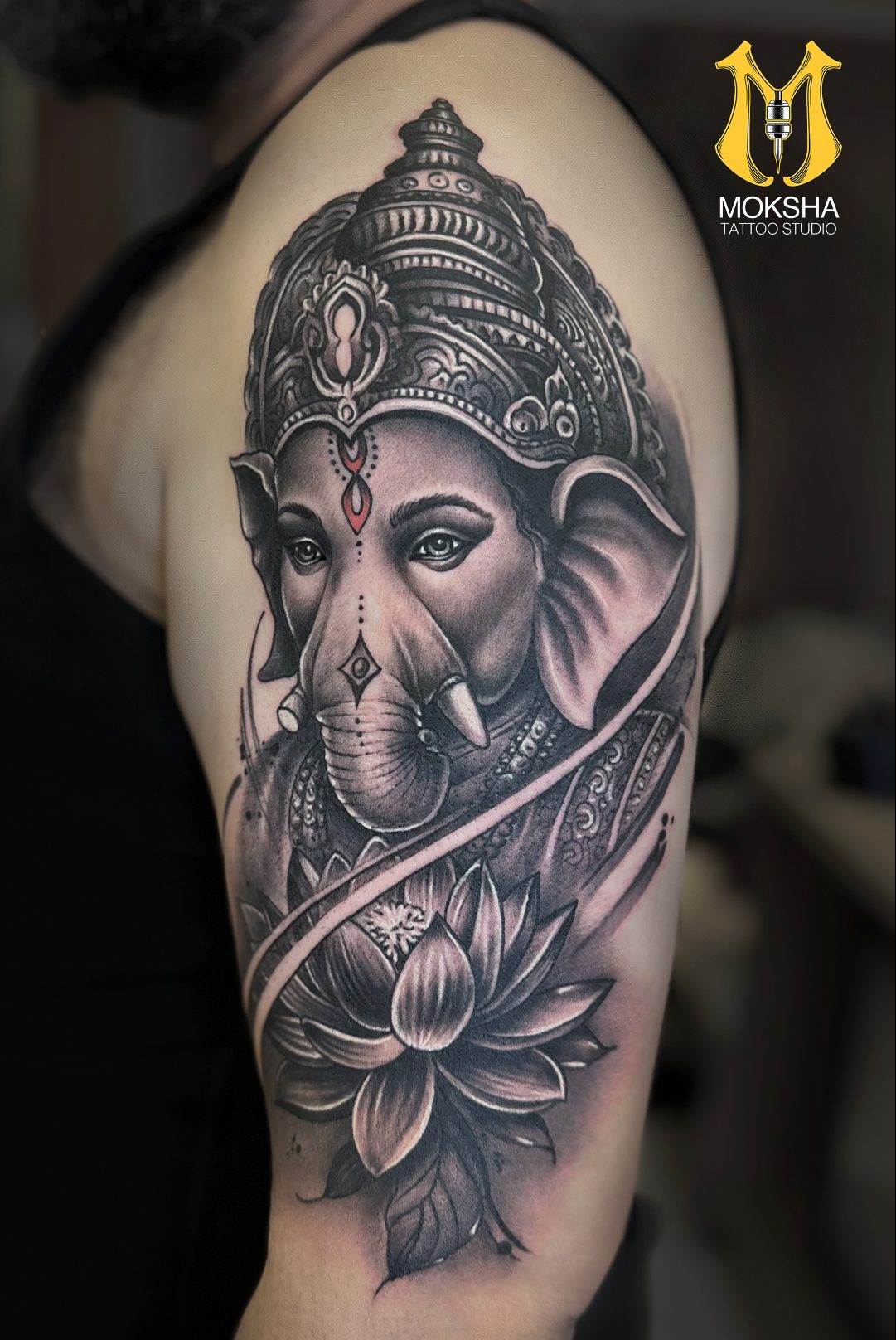
Traditional Indian Ganesh tattoo art
Traditional Ganesh tattoos draw inspiration from ancient Indian temple carvings and classical paintings. These designs emphasize intricate detailing, ornamental patterns, and sacred iconography. Artists often include lotus flowers, divine halos, and symbolic attributes such as modaks and weapons. This style is favored for its cultural authenticity and strong connection to devotional Hindu art history.
Mandala Ganesh tattoo meaning
Mandala Ganesh tattoos combine sacred geometry with spiritual symbolism, creating a visual representation of cosmic balance and unity. The mandala structure emphasizes harmony and inner alignment, while Ganesha remains the focal spiritual guide. This fusion is especially popular among individuals seeking mindfulness, meditation symbolism, and a visually symmetrical tattoo with deep philosophical meaning.
Realism vs geometric Ganesh tattoos
Realism Ganesh tattoos focus on lifelike detail, shading, and expressive depth, often creating a powerful emotional presence on the skin. In contrast, geometric designs simplify Ganesha into structured lines and shapes, emphasizing abstraction and modern spirituality. The choice between these styles reflects whether the wearer prioritizes devotional realism or conceptual interpretation.
Ganesh Tattoo Placement and Body Symbolism
Placement plays a significant role in the meaning of a Ganesh tattoo, as different body areas symbolize varying levels of visibility, intention, and personal significance. Common placements include the forearm, chest, back, and shoulder, each offering unique aesthetic and symbolic interpretations. Thoughtful placement enhances both spiritual expression and visual balance.
Best placements for Ganesh tattoos
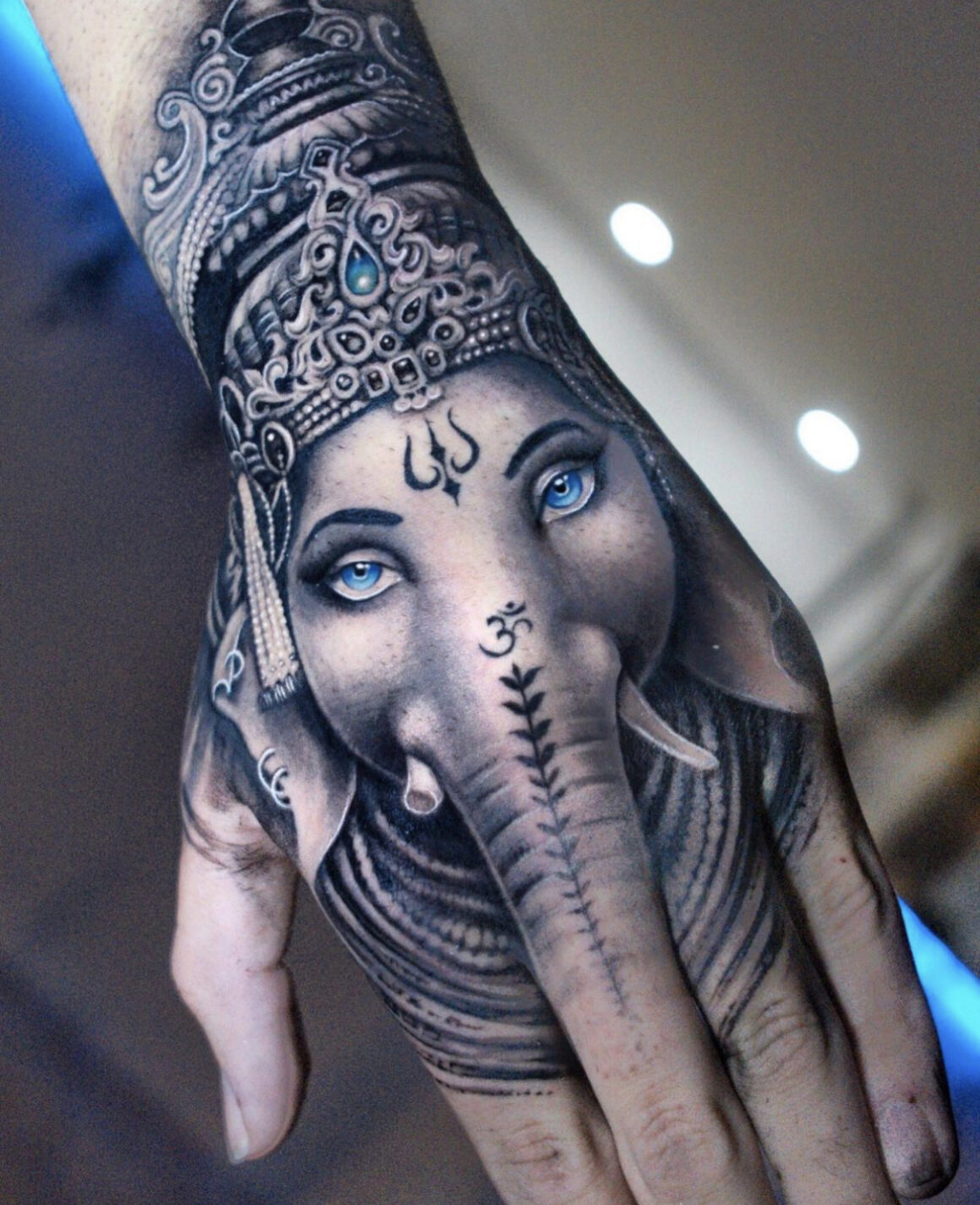
The forearm is one of the most popular placements for Ganesh tattoos due to visibility and daily spiritual reminder. The chest represents emotional and spiritual closeness, while the back allows for larger, more detailed compositions. Shoulder placements balance visibility and discretion, making them ideal for professional environments while still maintaining symbolic presence.
Spiritual meaning of tattoo placement
In spiritual interpretation, tattoo placement is believed to influence energy flow and personal intention. A Ganesh tattoo on the chest symbolizes protection of the heart and emotional strength, while placement on the arm reflects action and life direction. Although not scientifically proven, many wearers choose placement based on symbolic alignment with personal beliefs.
Pain level and practical considerations
Pain levels vary depending on placement, with bony areas such as ribs and hands being more sensitive compared to fleshy regions like the upper arm or thigh. Healing time also differs based on movement and exposure. Experienced tattoo artists recommend considering both comfort and long-term visibility when selecting placement for intricate Ganesh designs.
Cultural Respect and Ethical Considerations
Lucky Tattoo, a professional tattoo artist, has over 10 years of experience in the art of tattooing in Ho Chi Minh City. Lucky Tattoo Studio was founded in 2014 by skilled and kind artists. All tattoos are provided in a clean, strictly controlled, and friendly environment.
Is it respectful to get a Ganesh tattoo?
A Ganesh tattoo can be respectful when approached with genuine understanding of its spiritual meaning within Hinduism. Respect depends on intention, accuracy of depiction, and awareness of cultural significance. Many tattoo artists emphasize that reverence, not trend-following, should guide the decision. Misuse or careless styling may unintentionally diminish its sacred symbolism.
From an expert perspective, cultural respect begins with research. Clients who understand Ganesha’s role as a spiritual guide tend to choose designs that honor traditional proportions, symbolism, and posture. This reduces misinterpretation and ensures the tattoo reflects appreciation rather than appropriation.
Hindu perspective on deity tattoos
In Hindu communities, views on deity tattoos vary widely depending on region, tradition, and personal belief. Some see it as a devotional expression of faith, while others consider it inappropriate to place sacred imagery on the body permanently. This diversity means there is no single universal stance, making personal responsibility and cultural awareness essential.
Religious scholars often note that context matters more than prohibition. For example, temple art and devotional paintings frequently depict Ganesha respectfully, but body placement introduces a different cultural dimension. Understanding this nuance helps avoid oversimplified interpretations.
How to avoid cultural appropriation
Avoiding cultural appropriation in Ganesh tattoos involves more than choosing a visually appealing design. It requires understanding symbolism, consulting knowledgeable artists, and avoiding random modifications that distort meaning. Respectful tattoos preserve key iconographic elements such as the elephant head, broken tusk, and traditional posture.
Experts recommend working with tattoo artists experienced in Hindu or Indian-inspired art styles. This ensures accuracy in sacred geometry, proportion, and symbolism. A well-informed design process demonstrates cultural appreciation and reduces the risk of misrepresentation.
Ganesh Tattoo Ideas for Men and Women
Ganesh tattoo ideas vary based on size, placement, and stylistic preference, but all share a common foundation in spiritual symbolism and artistic expression. Whether minimal or highly detailed, these designs reflect personal meaning, life transitions, and devotion to wisdom and protection represented by Lord Ganesha.
Small Ganesh tattoo ideas
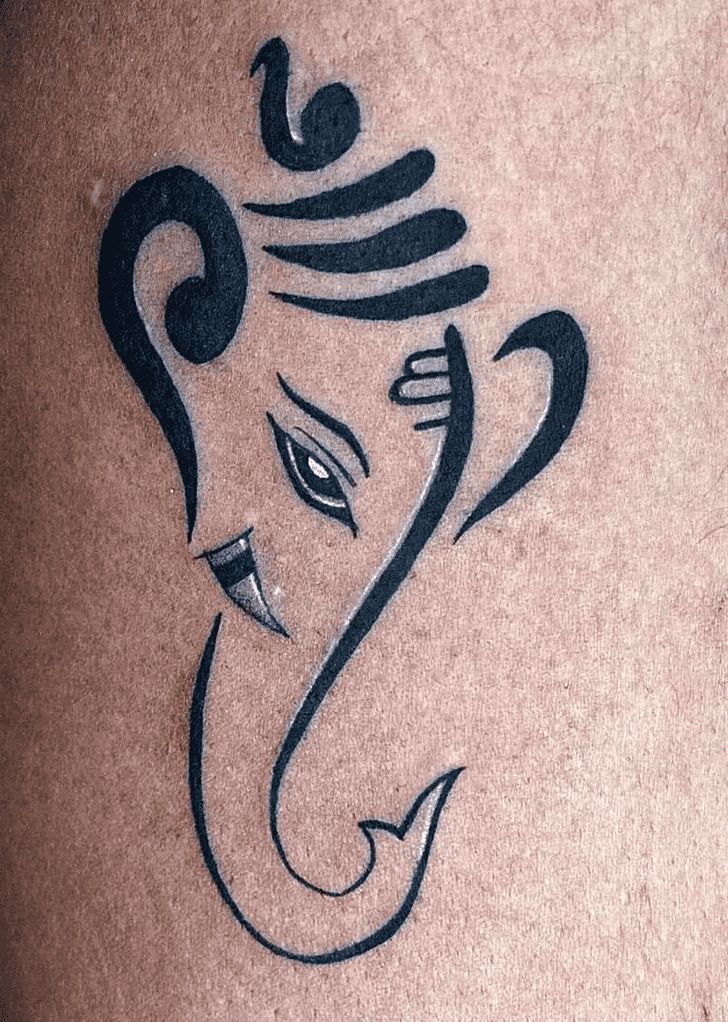
Small Ganesh tattoos are ideal for subtle spiritual expression and are often placed on the wrist, ankle, or behind the shoulder. These minimalist designs focus on simplified outlines or symbolic elements such as the elephant head or “Om”-inspired motifs. They are popular among first-time tattoo wearers seeking discreet spiritual meaning.
A key insight often overlooked is that small designs require highly skilled artists due to limited detail space. Poor execution can distort sacred features, reducing both aesthetic quality and symbolic integrity.
Sleeve Ganesh tattoo concepts
Sleeve Ganesh tattoos are large-scale compositions that integrate storytelling, mythology, and intricate detailing across the arm. These designs often include complementary elements such as lotus flowers, mandalas, and depictions of spiritual journeys, creating a visual narrative of transformation and protection guided by Ganesha.
Experienced tattoo artists emphasize planning sleeve compositions in phases. This ensures balance between negative space, symbolic clarity, and long-term visual coherence as the tattoo evolves over multiple sessions.
Real-life artist examples and inspirations
Professional tattoo artists specializing in spiritual or Indian-inspired designs often showcase Ganesh tattoos as portfolio highlights due to their complexity and cultural depth. These works demonstrate mastery in shading, sacred geometry, and emotional storytelling through ink.
Studying real artist portfolios helps clients understand how variations in posture, ornamentation, and artistic style significantly change meaning and impact. It also provides practical guidance when selecting the right artist for such a meaningful design.
Symbolism Breakdown of Ganesh Iconography
Ganesh iconography is rich in symbolic meaning, where every visual element conveys philosophical and spiritual lessons. Understanding these details is essential for creating an accurate and meaningful tattoo design. Misinterpreting even small elements can significantly alter the intended spiritual message of the artwork.
Meaning of the elephant head
The elephant head symbolizes wisdom, memory, and intellectual strength. In Hindu philosophy, it represents the ability to think beyond ego and perceive deeper truths. This makes it one of the most powerful aspects of Ganesha’s identity and a central reason why his image is chosen for tattoos.
From an interpretive standpoint, the elephant head is not just symbolic of intelligence but also emotional stability, patience, and grounded awareness—qualities often sought by individuals undergoing major life changes.
Meaning of the mouse vehicle
Ganesha’s mouse, known as his vehicle or “vahana,” represents control over desire and ego. Despite its small size, the mouse can travel anywhere, symbolizing how unchecked impulses can influence behavior. Ganesha riding the mouse reflects mastery over inner desires and disciplined living.
This symbolism is frequently overlooked in tattoo design, yet it adds depth by balancing the powerful imagery of the deity with humility and self-control.
Trunk direction symbolism
The direction of Ganesha’s trunk carries subtle but important meaning. A trunk curving left is commonly associated with domestic life, balance, and worldly harmony, while a right-curving trunk is linked to stricter spiritual discipline and ritual purity. These distinctions are often missed in mainstream tattoo interpretations.
Expert tattoo designers emphasize confirming trunk orientation during consultation to ensure alignment with the wearer’s spiritual intention and cultural accuracy.
Cost, Healing, and Tattoo Process Overview
The cost and process of a Ganesh tattoo depend on size, detail complexity, artist expertise, and geographic location. Healing typically takes 2–4 weeks for surface recovery, though full skin regeneration may take longer. Proper aftercare is essential to preserve fine details and maintain long-term visual clarity.
How much does a Ganesh tattoo cost?
Ganesh tattoo pricing varies widely, ranging from small minimalist designs to large-scale sleeve projects requiring multiple sessions. Highly detailed work with cultural or religious precision typically costs more due to artistic complexity and time investment. Skilled artists specializing in spiritual iconography often charge premium rates for accuracy and expertise.
An important insight is that cost should never be the primary deciding factor for religious or symbolic tattoos, as poor execution can permanently distort sacred imagery.
Tattoo healing and aftercare
Proper aftercare is essential for maintaining color vibrancy and detail integrity in Ganesh tattoos. This includes keeping the tattoo clean, avoiding sun exposure, and following artist-recommended healing products. Neglecting aftercare can lead to fading, blurred lines, and long-term damage to intricate designs.
Experts consistently emphasize that healing quality directly impacts how well spiritual tattoos retain their symbolic clarity over time.
Expert aftercare recommendations
Tattoo professionals recommend moisturizing with fragrance-free ointments, avoiding swimming during early healing stages, and refraining from scratching or peeling. For detailed Ganesh tattoos, maintaining sharp line definition is especially important because symbolic clarity depends on precision in facial and ornamental features.
Frequently Asked Questions (FAQ)
Ganesh tattoos raise common questions about meaning, cultural respect, placement, and cost. These FAQs address key concerns using expert insights and practical information to help users make informed and culturally aware decisions before choosing a design.
What does a Ganesh tattoo symbolize?
It symbolizes wisdom, protection, and removal of obstacles, reflecting Lord Ganesha’s role in Hindu tradition as a guide for new beginnings and spiritual growth.
Is it disrespectful to get a Hindu god tattoo?
It depends on intention and understanding. Respectful designs that honor symbolism are generally accepted by many, but opinions vary across Hindu communities.
Which Ganesh tattoo style is most popular?
Mandala and realism styles are most popular due to their detailed symbolism and visual depth, often combining spirituality with modern tattoo artistry.
Where should I place a Ganesh tattoo?
Common placements include the forearm, chest, shoulder, and back, chosen based on visibility, size, and personal symbolic preference.
How much does a Ganesh tattoo cost?
Costs vary depending on size and complexity, ranging from small minimalist tattoos to expensive full-sleeve designs requiring multiple sessions.
Can non-Hindus get a Ganesh tattoo?
Yes, but it is strongly advised to understand the cultural and spiritual meaning to ensure respectful and informed representation.
Conclusion: The Deeper Meaning Behind Ganesh Tattoos
A Ganesh tattoo is more than body art; it is a symbolic expression of wisdom, resilience, and spiritual transformation rooted in Hindu tradition. When designed with cultural respect and informed intention, it becomes a meaningful representation of personal growth, protection, and the journey of overcoming life’s obstacles with clarity and purpose.