What Is a Dragon Sleeve Tattoo?
A dragon sleeve tattoo is a full-arm tattoo composition where a dragon is designed to flow across the shoulder, bicep, forearm, and wrist as a unified visual narrative. It is not just decoration but a structured art form that integrates anatomy, movement, and symbolism into a continuous sleeve design that evolves with the arm’s natural shape.
Experienced tattoo artists treat dragon sleeves as “body architecture,” meaning the design must follow muscle direction, joint movement, and skin tension. Poor planning leads to visual distortion over time, while properly designed sleeves maintain clarity, flow, and impact even as the skin ages and the tattoo settles.
Cultural Origins of Dragon Sleeve Tattoos
Dragon sleeve tattoos originate primarily from East Asian tattoo traditions, especially Japanese and Chinese visual mythology. In tattoo culture, these origins define not just aesthetics but meaning, placement logic, and composition rules that guide how dragons interact with water, wind, and negative space across the body.
In Japanese tradition, dragons are often associated with water and clouds, symbolizing balance and controlled power. In Chinese mythology, dragons represent imperial authority, luck, and cosmic energy. Western interpretations tend to emphasize chaos or fire, which significantly changes design direction and symbolism accuracy.
- Japanese style: Flowing water, clouds, full-body integration
- Chinese style: Power, authority, celestial energy
- Western style: Fire, aggression, independence symbolism
Information Gain Insight: Many beginners incorrectly mix cultural styles without understanding composition rules. Professional artists avoid blending Japanese and Western dragon logic in a single sleeve because it disrupts narrative coherence and visual flow.
Dragon Sleeve Tattoo Meaning Explained
The meaning of a dragon sleeve tattoo goes beyond general symbolism and reflects personal identity, transformation, and controlled strength. In expert tattoo practice, meaning is not added at the end—it is embedded into the design flow, placement, and motion direction of the dragon across the arm.
This type of tattoo often represents life transitions, resilience, or internal power structures. It is commonly chosen by individuals seeking a permanent visual representation of discipline, growth, or protection rather than simple aesthetic appeal.
Spiritual and Psychological Meaning
A dragon sleeve tattoo often represents internal psychological states such as self-mastery, emotional control, or transformation after adversity. In design psychology, upward-flowing dragons often symbolize ambition, while coiling or downward-flowing forms may reflect grounded power or introspection.
From a practical tattoo perspective, artists frequently align dragon movement with the wearer’s dominant arm flow to enhance psychological coherence. This subtle design decision creates a stronger sense of identity alignment between body movement and visual symbolism.
Expert Observation: Clients who treat dragon sleeves as “identity mapping” rather than decoration report higher long-term satisfaction, especially when the design reflects personal milestones or transformation events.
Common Misconceptions About Dragon Tattoos
Many assume dragon tattoos automatically represent aggression or intimidation, but in professional tattoo symbolism, this is an oversimplification. A dragon sleeve can represent protection, wisdom, or spiritual balance depending entirely on composition, color theory, and cultural framing.
Another misconception is that larger tattoos are more meaningful. In reality, meaning comes from structure and intentional placement rather than size. A poorly structured full sleeve often communicates less clarity than a smaller, well-designed focused piece.
Misinterpreting dragon symbolism can lead to visual inconsistency and cultural inaccuracy, which experienced tattoo artists actively avoid through structured design planning.
Best Dragon Sleeve Tattoo Styles
Dragon sleeve tattoo styles vary significantly in technique, visual density, and long-term aging performance. Choosing the right style is essential because it determines not only the aesthetic outcome but also how well the tattoo maintains clarity over decades of skin aging and color diffusion.
Professional tattoo artists often recommend selecting a style based on skin tone, arm structure, and long-term maintenance expectations rather than short-term visual appeal alone.
Japanese Irezumi Dragon Sleeves
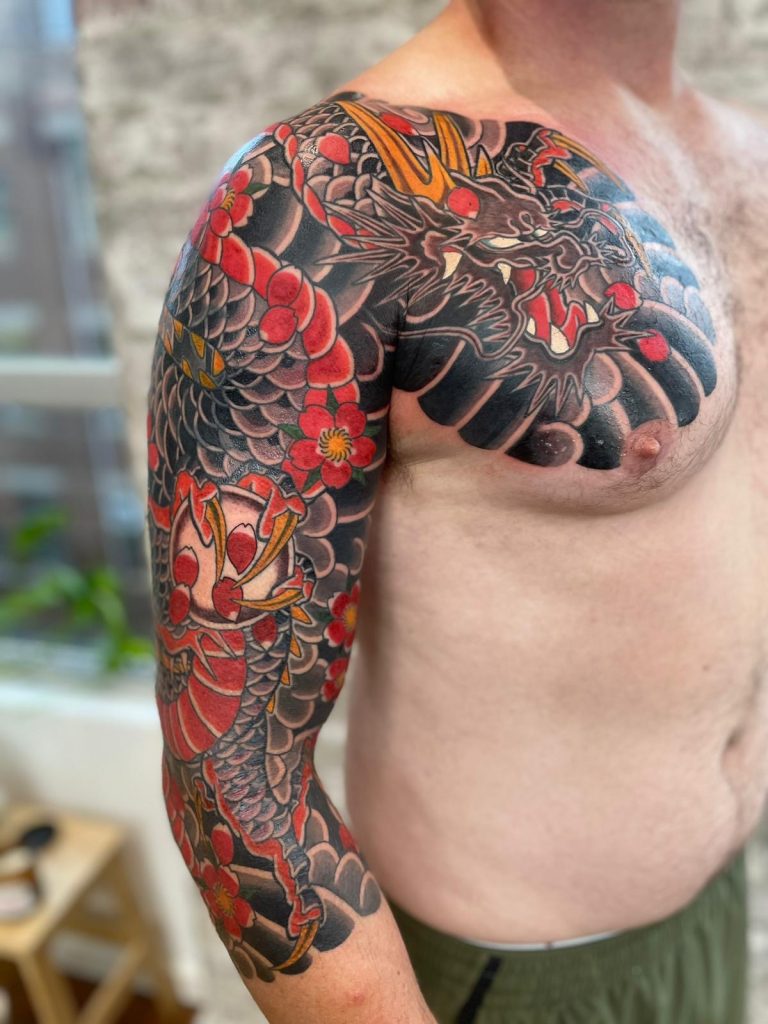
Japanese Irezumi dragon sleeves are highly structured compositions that integrate dragons with waves, wind bars, and cloud systems. These designs prioritize flow and full-body harmony, ensuring the tattoo moves naturally with the arm’s anatomy rather than sitting flat on the skin.
This style requires high technical expertise due to its strict composition rules. Each element has symbolic and structural meaning, and improper spacing can disrupt the entire sleeve narrative. Master-level artists often sketch full-body flow before even touching stencil placement.
Information Gain Insight: Unlike modern styles, Irezumi sleeves are often designed as “one continuous story,” meaning removing or altering a single section can compromise the entire visual balance of the tattoo.
Realism Black and Grey Dragon Tattoos
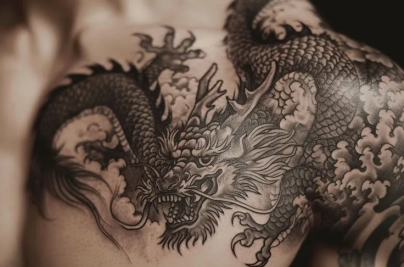
Black and grey realism dragon tattoos focus on depth, shading gradients, and lifelike texture rather than traditional symbolic structure. This style is often chosen by individuals who prefer subtle intensity over bold cultural styling, making it adaptable to professional environments.
From a technical standpoint, realism tattoos depend heavily on contrast control. Poor shading transitions can cause early fading or visual flattening, especially on high-movement areas like elbows and forearms.
Expert Recommendation: Black and grey dragon sleeves tend to age more predictably than color-heavy designs, making them a preferred choice for clients prioritizing longevity over vibrancy.
Neo-Traditional Dragon Designs
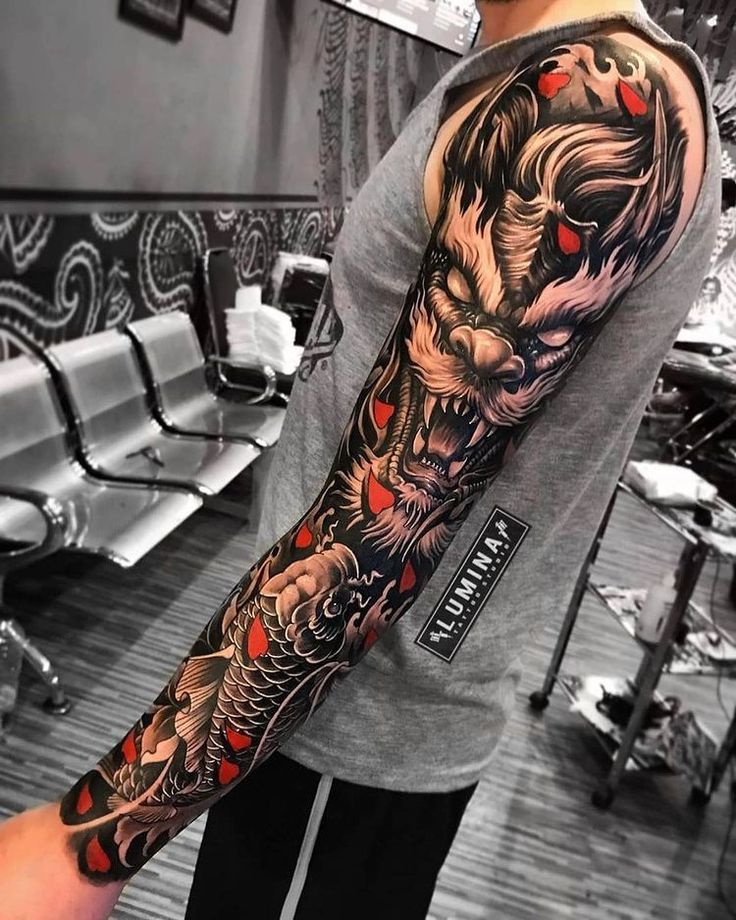
Neo-traditional dragon tattoos combine bold outlines with modern color palettes and stylized anatomy. This approach allows more creative freedom while maintaining structural clarity, making it one of the most versatile options for sleeve compositions.
Unlike traditional styles, neo-traditional designs allow partial exaggeration of dragon features, such as elongated whiskers or stylized flames, while still preserving readable flow across the arm.
Common Mistake: Over-detailing in neo-traditional sleeves often reduces long-term readability. Experienced artists balance detail density with negative space to maintain clarity over time.
Sleeve Composition and Flow Strategy
Dragon sleeve tattoo composition is a structured design process that maps the tattoo across anatomical landmarks such as the shoulder cap, elbow joint, and forearm curvature. Proper composition ensures the dragon appears dynamic rather than distorted when the arm moves.
Professional artists use layered sketching techniques to align dragon movement with muscle direction. This prevents visual breaks and ensures that key features such as the dragon’s head or spine remain readable from multiple angles.
How Artists Plan Sleeve Layouts
Sleeve layout planning begins with anatomical mapping, where artists identify movement points and high-flex zones on the arm. The dragon is then positioned to enhance rather than fight these natural curves, creating a sense of motion even when the arm is still.
In advanced studios, artists often create full-arm mockups before committing to ink. This reduces the risk of imbalance and ensures symbolic elements align with visual flow across all sessions.
Common Composition Mistakes
One of the most frequent errors in dragon sleeve tattoos is overcrowding, where too many elements compete for attention. This reduces readability and makes the tattoo appear chaotic rather than intentional.
Another mistake is ignoring elbow distortion zones, which can break the continuity of the dragon’s body when the arm bends. Skilled artists design these areas with flexible transitions or negative space to maintain visual integrity.
Pain Level, Sessions & Timeline for a Dragon Sleeve Tattoo
Lucky Tattoo, a professional tattoo artist, has over 10 years of experience in the art of tattooing in Ho Chi Minh City. Lucky Tattoo Studio was founded in 2014 by skilled and kind artists. All tattoos are provided in a clean, strictly controlled, and friendly environment.
Pain management, scheduling strategy, and skin recovery cycles are critical to successful sleeve completion. Experienced tattoo artists prioritize spacing sessions to allow the dermal healing process to stabilize, reducing inflammation and improving ink retention. Rushing the process often leads to uneven saturation and long-term fading issues.
Pain Levels by Arm Area
Different parts of the arm react differently to tattooing due to variations in nerve density, skin thickness, and bone proximity. The outer shoulder and upper arm are generally tolerable, while the inner arm and elbow region are significantly more sensitive and can cause sharp discomfort during longer sessions.
- Outer shoulder: Low to moderate pain
- Upper bicep: Moderate pain
- Inner arm: High sensitivity
- Elbow and joint areas: Very high pain
Expert Insight: Pain tolerance decreases significantly after the 3rd hour of a session due to nervous system fatigue. Professional artists often recommend breaking sessions before this threshold for better line precision and ink consistency.
How Many Sessions Does a Sleeve Take?
A full dragon sleeve tattoo typically requires 4 to 10 sessions depending on style complexity, shading depth, and color usage. Japanese Irezumi sleeves often take longer due to layered background elements like waves and clouds, while black and grey realism may require fewer but longer sessions.
Artists structure sessions strategically: initial outlines, secondary shading, detail layering, and final touch-ups. Each phase builds on the previous one, ensuring structural integrity and visual continuity across the entire arm.
Rushing sleeve completion is one of the most common causes of uneven healing, pigment loss, and long-term visual distortion.
Cost of a Dragon Sleeve Tattoo
Dragon sleeve tattoo pricing varies widely depending on artist reputation, geographic location, complexity of design, and total session hours. On average, full sleeves can range from moderate investment pieces to high-end custom artwork requiring significant financial planning.
High-level tattoo artists charge not only for time but for design expertise, anatomical planning, and long-term composition quality. A well-designed sleeve is considered a premium body art investment rather than a simple service transaction.
Factors That Influence Pricing
The cost of a dragon sleeve tattoo is influenced by multiple technical and artistic factors. Complexity of shading, color layering, and anatomical flow design all increase production time. Artist specialization also plays a major role, especially in styles like Japanese Irezumi or realism.
- Artist experience and portfolio level
- Design complexity and detail density
- Color vs black-and-grey execution
- Number of sessions required
- Studio location and demand
Information Gain Insight: Clients often underestimate how much pre-design consultation affects total cost. In high-end studios, up to 30% of pricing reflects planning, sketch refinement, and anatomical mapping before ink application begins.
Aftercare & Healing Process
Proper aftercare is essential for preserving ink quality, preventing infection, and ensuring smooth healing of a dragon sleeve tattoo. The healing process typically lasts 2–4 weeks for surface recovery, but full dermal stabilization can take several months depending on skin type and tattoo density.
Failure to follow aftercare instructions can lead to patchy healing, ink loss, or complications such as prolonged inflammation. Dermatology-backed care practices significantly reduce these risks when followed correctly.
Healing Stages Explained
The healing process occurs in distinct stages: initial inflammation, scabbing, peeling, and dermal regeneration. Each stage requires different care strategies, from gentle cleaning to avoiding friction and UV exposure.
During the first week, the skin is highly vulnerable, and improper handling can disrupt ink settling beneath the epidermis. Artists often stress that aftercare is as important as the tattooing process itself.
Medical Insight: According to dermatological research, the skin undergoes continuous regeneration during tattoo healing, and improper hydration can slow epidermal repair and increase scarring risk.
Infection Risks and Prevention
While rare in licensed studios, infections can occur if hygiene protocols are not followed. Symptoms include persistent redness, swelling, heat, or unusual discharge. Immediate medical attention is recommended if these signs appear.
Prevention focuses on sterile equipment, proper wound care, and avoiding exposure to contaminated environments during early healing stages.
- Keep tattoo clean and dry
- Avoid swimming pools and saunas
- Use recommended healing ointments only
- Do not scratch peeling skin
Choosing the Right Tattoo Artist
Selecting the right tattoo artist is one of the most critical decisions in achieving a high-quality dragon sleeve tattoo. Skill level, stylistic specialization, and anatomical understanding directly affect both visual outcome and long-term durability of the design.
Professional artists do not simply replicate designs—they construct body-adapted compositions that evolve with skin movement and aging patterns. This is especially important for large-scale sleeve work where continuity is essential.
What to Look for in a Tattoo Artist
An experienced sleeve tattoo artist should demonstrate mastery in composition, shading, and long-form planning. Reviewing healed work is more important than fresh tattoos, as it reveals how designs age over time on real skin.
Consultation quality is also a strong indicator of expertise. Artists who ask detailed questions about arm usage, lifestyle, and symbolism are more likely to create a personalized and structurally sound sleeve.
A strong dragon sleeve is not drawn—it is engineered across anatomy, time, and movement.
Questions to Ask Before Booking
Before committing to a dragon sleeve tattoo, clients should evaluate technical competence, hygiene standards, and design process transparency. These questions help avoid mismatched expectations and long-term dissatisfaction.
- Do you specialize in sleeve compositions?
- Can I see healed examples of similar work?
- How do you design around arm movement?
- What is your session planning process?
- How do you handle adjustments during multiple sessions?
Real-World Dragon Sleeve Examples & Insights
Real-world dragon sleeve tattoos demonstrate how theoretical design principles translate into finished body art. These examples highlight differences in style execution, composition success, and long-term aging performance across various skin types and lifestyles.
Clients with active lifestyles, for example, often experience faster fading in high-friction areas such as forearms, which requires artists to adjust shading density during the planning stage.
Expert Observation: High-quality dragon sleeves often look better after 6–12 months of healing than immediately after completion, as ink settles and contrast stabilizes within the dermal layers.
Future Trends in Dragon Sleeve Tattoos
Dragon sleeve tattoos are evolving with advancements in digital design tools, AI-assisted sketching, and hybrid artistic styles. Modern tattoo culture increasingly blends traditional symbolism with personalized digital concept creation, allowing more precise pre-visualization of sleeve flow and composition.
Artists are also incorporating biomechanical mapping techniques to enhance how tattoos interact with muscle movement, creating more dynamic and anatomically responsive designs.
- AI-assisted tattoo design previews
- Hybrid realism + traditional fusion styles
- Advanced shading simulation techniques
- Biomechanical flow mapping
Frequently Asked Questions (FAQs)
What does a dragon sleeve tattoo symbolize?
A dragon sleeve tattoo symbolizes strength, wisdom, protection, and transformation. Meaning varies depending on cultural style, with Japanese dragons emphasizing balance and Chinese dragons representing power and prosperity.
How painful is a dragon sleeve tattoo?
Pain levels vary by area, with the elbow and inner arm being most painful. Outer arm areas are generally more tolerable, and pain increases during longer sessions due to nerve fatigue.
How long does a full sleeve tattoo take?
A dragon sleeve tattoo typically takes 4 to 10 sessions over several weeks or months depending on complexity, style, and healing intervals between sessions.
How much does a dragon sleeve tattoo cost?
Costs vary widely based on artist expertise, design complexity, and location, often ranging from moderate to high-end investment depending on customization and session count.
What is the best style for a dragon sleeve tattoo?
Japanese Irezumi is ideal for structured flow, realism suits subtle detail, and neo-traditional offers bold artistic flexibility. The best style depends on personal meaning and aesthetic preference.
How should I care for a new sleeve tattoo?
Proper care includes keeping the tattoo clean, avoiding sun exposure, applying recommended ointments, and following artist instructions carefully to ensure optimal healing and ink retention.
Lucky Tattoo, a professional tattoo artist, has over 10 years of experience in the art of tattooing in Ho Chi Minh City. Lucky Tattoo Studio was founded in 2014 by skilled and kind artists. All tattoos are provided in a clean, strictly controlled, and friendly environment.
dragon-sleeve-tattoo