Few tattoo traditions in the world carry the cultural depth, personal identity, and ancestral significance of the Maori tattoo. Known traditionally as Ta Moko, these markings are far more than decorative body art. They communicate genealogy, social status, life achievements, tribal affiliations, and personal history through carefully crafted patterns unique to each individual.
As Maori tattoo designs gain global popularity, many people encounter conflicting information about their meanings, cultural boundaries, and appropriate use. Understanding the difference between authentic Ta Moko and Maori-inspired tattoo art is essential for anyone interested in this ancient tradition.

This guide explores the origins, symbolism, cultural significance, and modern evolution of Maori tattoos while addressing common misconceptions and providing practical insights from contemporary tattoo culture.
What Is a Maori Tattoo?
A Maori tattoo, traditionally called Ta Moko, is a sacred form of body art originating from the Indigenous Maori people of New Zealand. Unlike decorative tattoos, Ta Moko represents identity, ancestry, social standing, achievements, and personal history through unique patterns that visually communicate an individual’s whakapapa (genealogy).
Definition of Ta Moko and Why It Is Different from Other Tattoos
Ta Moko differs from conventional tattooing because it functions as a visual identity system rather than purely artistic expression. Each design is deeply connected to the wearer’s lineage, tribal affiliations, and life experiences, making every authentic Ta Moko unique.
Many modern tattoo styles prioritize aesthetics. Ta Moko prioritizes meaning. Historically, the markings acted as a form of social identification, enabling others to understand aspects of a person’s background simply by reading the patterns incorporated into the design.
Traditional Ta Moko was applied using chisels known as uhi, which carved grooves into the skin rather than puncturing it with needles. This technique created distinctive textures that separated Ta Moko from many tattoo traditions worldwide.
One of the most misunderstood aspects of Ta Moko is that the design belongs to the individual and their ancestry—not to the tattoo artist.
The Origins of Māori Tattooing in New Zealand
Ta Moko has existed for centuries within Maori society and developed as an integral part of cultural identity. Oral traditions trace its origins to ancestral narratives and spiritual teachings that connected body markings to personal and communal heritage.
Historically, Ta Moko was worn by both men and women, although placement and symbolism differed. Men often received extensive facial moko alongside markings on the thighs and torso. Women traditionally wore moko kauae, tattoos placed on the chin and lips, symbolizing lineage, authority, and connection to community.
Within Maori communities, receiving Ta Moko represented a significant life event. The process often marked transitions into leadership roles, adulthood, or recognition of personal accomplishments.
Common Misconception: Are Māori Tattoos Just Tribal Tattoos?
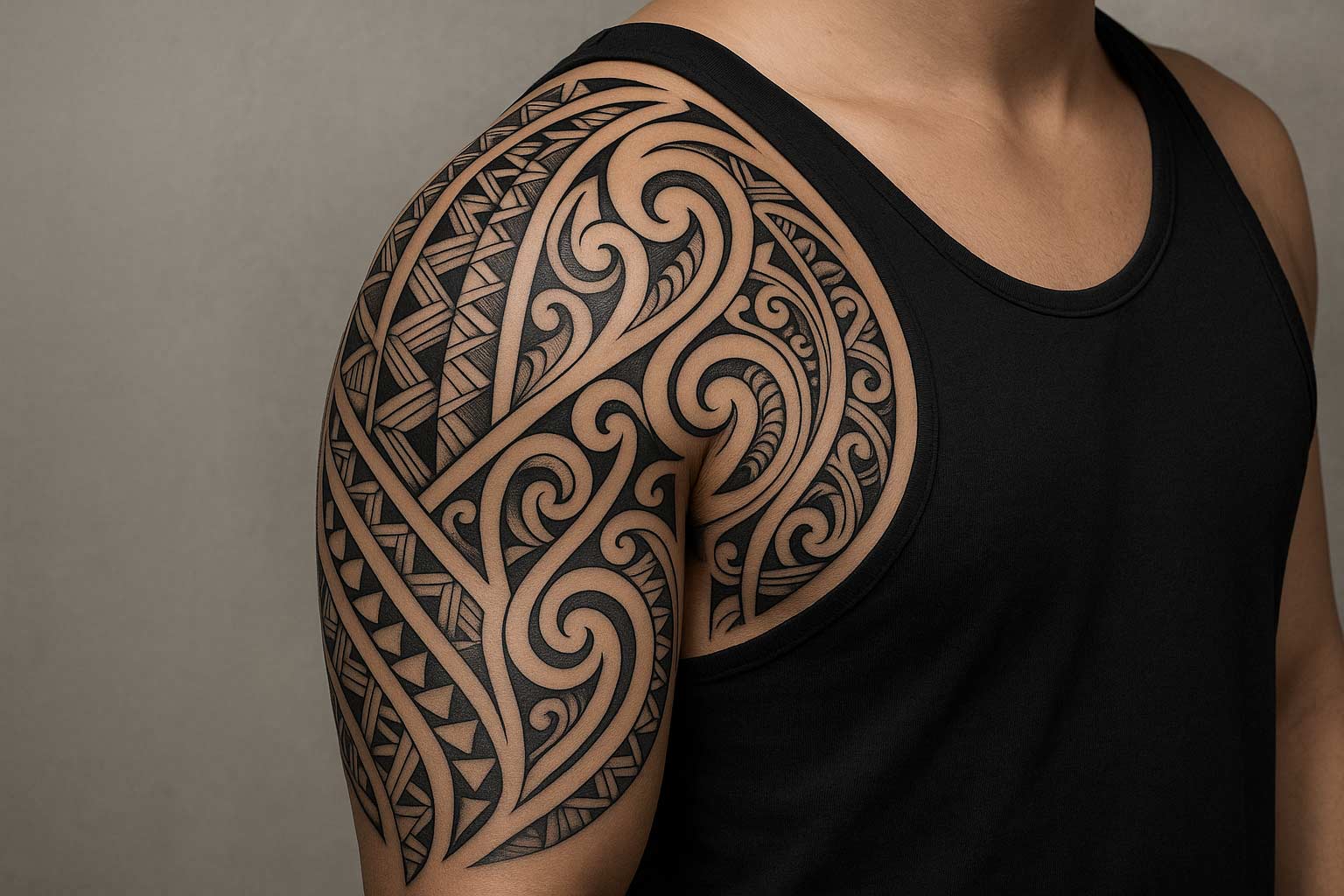
Maori tattoos are often incorrectly grouped under the broad category of tribal tattoos. While Ta Moko includes geometric patterns and bold black motifs, its cultural function and symbolism distinguish it from generic tribal tattoo designs.
The term “tribal tattoo” became popular during the late twentieth century and often refers to stylized blackwork patterns lacking specific cultural context. Ta Moko, however, remains directly connected to Maori identity, ancestral history, and traditional knowledge systems.
Confusing the two can lead to cultural misunderstandings. A design that appears visually similar may carry entirely different meanings depending on its origins and intended purpose.
Information Gain: Why Every Authentic Ta Moko Is Unique
One overlooked fact rarely explained in mainstream tattoo articles is that authentic Ta Moko is not selected from a catalog. It is developed specifically for the individual receiving it.
Traditional and contemporary Maori practitioners often begin with extensive consultation to understand:
- Family history and genealogy
- Tribal affiliations
- Personal achievements
- Life challenges and milestones
- Future aspirations
This individualized approach means two people should never receive identical Ta Moko designs. The uniqueness itself is part of the cultural significance.
What Does a Maori Tattoo Symbolize?
Maori tattoos symbolize identity, ancestry, personal achievements, spiritual beliefs, and family connections. Rather than relying on a single universal meaning, each element contributes to a broader narrative that reflects the wearer’s life journey and cultural heritage.
How Tattoos Reflect Identity and Whakapapa
Whakapapa, often translated as genealogy or ancestral lineage, is among the most important concepts represented within Ta Moko. Maori culture places significant value on understanding one’s connections to ancestors, family, and community.
A person’s whakapapa establishes their place within a wider network of relationships extending across generations. Ta Moko serves as a visual representation of those connections.
Unlike many contemporary tattoos that commemorate isolated experiences, Maori tattoo traditions focus on how an individual fits within a larger ancestral story.
This perspective helps explain why copying traditional Maori designs without understanding their context can be problematic. Specific patterns may represent histories that belong to particular families or tribal groups.
The Role of Mana, Family, and Social Status
Many Ta Moko elements communicate mana, a concept encompassing prestige, authority, respect, and personal power. Historically, tattoos often reflected accomplishments that elevated an individual’s standing within the community.
Examples could include:
- Leadership responsibilities
- Military achievements
- Community service
- Spiritual roles
- Family heritage
Family relationships remain central to Maori tattoo symbolism. Designs may represent parents, children, ancestors, or broader kinship networks that contribute to an individual’s identity.
Modern tattoo clients often focus on personal expression. Traditional Maori perspectives place equal importance on collective identity and familial responsibility.
Real-World Example: Reading Meaning Within a Ta Moko Design
While exact interpretations vary by artist and community, many Ta Moko compositions combine multiple symbolic components to tell a cohesive story. A single design may simultaneously reference ancestry, resilience, leadership, and spiritual guidance.
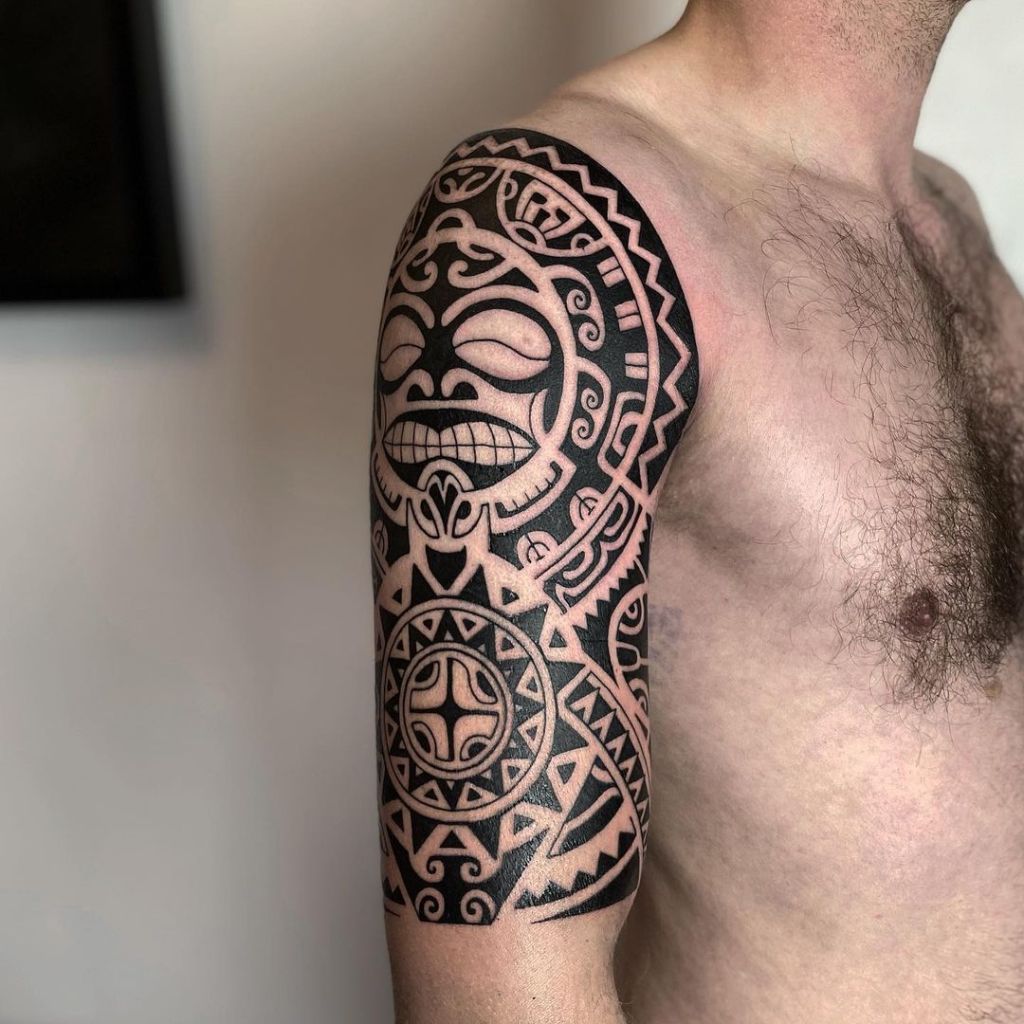
For example, a modern wearer might incorporate motifs representing:
- Family lineage
- Connection to nature
- Personal transformation
- Career achievements
- Cultural identity
When viewed together, these elements create a narrative rather than a collection of separate symbols.
Information Gain: How Genealogy Is Embedded Into Tattoo Patterns
Many articles mention genealogy but fail to explain how it influences design choices. Experienced Maori tattoo practitioners often use composition, placement, flow, and pattern relationships to communicate ancestry.
This means meaning is not always contained within a single symbol. Instead, significance frequently emerges through how multiple components interact within the overall design structure.
This layered storytelling approach is one reason authentic Ta Moko cannot be accurately understood through simple symbol dictionaries found online.
Maori Tattoo History: From Ancient Tradition to Modern Revival
Maori tattoo history reflects both cultural resilience and adaptation. Despite periods of suppression during colonization, Ta Moko survived through community preservation and has experienced a significant revival as a symbol of Indigenous identity and cultural pride.
Traditional Tattooing Methods and Tools
Traditional Ta Moko was created using specialized chisels rather than modern tattoo machines. This process produced distinctive grooves and textures that became a defining characteristic of historical Maori tattooing.
Practitioners used:
- Bone chisels
- Albatross bone tools
- Natural pigments
- Wooden mallets
The procedure was physically demanding and often involved ceremonial practices reflecting the spiritual importance of the process.
Receiving extensive facial moko required endurance, commitment, and social recognition. The experience itself became part of the individual’s identity.
Colonial Influence and Cultural Suppression
European colonization dramatically affected many Indigenous traditions, including Ta Moko. During the nineteenth and early twentieth centuries, social pressures and changing political structures contributed to a decline in traditional tattoo practices.
Some Maori individuals faced discrimination for displaying traditional markings. As a result, participation decreased in certain communities, and cultural knowledge risked being lost.
However, Ta Moko never disappeared entirely. Families, elders, and cultural practitioners continued preserving essential traditions and teachings.
The Modern Renaissance of Ta Moko
The contemporary revival of Ta Moko represents one of the most significant Indigenous cultural resurgence movements in New Zealand. Increasing numbers of Maori individuals are reclaiming traditional tattoo practices as expressions of heritage, identity, and cultural continuity.
Today, Ta Moko appears across diverse professional environments including education, government, sports, healthcare, and business leadership.
The visibility of respected professionals wearing moko has helped challenge outdated stereotypes and promote greater understanding of Maori culture.
Modern practitioners frequently combine traditional cultural knowledge with contemporary tattoo technology, creating designs that honor historical practices while adapting to present-day needs.
Expert Insight: Why Ta Moko Has Become a Symbol of Cultural Reclamation
One critical insight often overlooked by competitors is that modern Ta Moko is not simply a revival of tattooing. It is part of a broader movement focused on language preservation, Indigenous rights, cultural education, and community empowerment.
For many wearers, receiving Ta Moko represents:
- Reconnection with ancestry
- Restoration of cultural identity
- Recognition of family history
- Community belonging
- Personal responsibility to future generations
Understanding this broader context provides a more accurate picture of why Ta Moko remains culturally significant today.
Common Maori Tattoo Symbols and Their Meanings
Maori tattoo symbols often represent growth, protection, ancestry, strength, prosperity, and spiritual guidance. However, meanings are highly contextual, and identical motifs may communicate different messages depending on placement, composition, and cultural interpretation.
Koru Symbol Meaning
The Koru symbolizes growth, renewal, harmony, and new beginnings. Inspired by the unfurling silver fern frond, it is among the most recognizable elements in Maori visual culture.
Connection to Growth and New Beginnings
The spiral form reflects continuous development and the cyclical nature of life. Contemporary tattoo clients frequently choose Koru-inspired elements to represent personal transformation, recovery, parenthood, or major life transitions.
However, traditional interpretations often emphasize ongoing connection to family and ancestry rather than purely individual change.
Hei Matau (Fish Hook) Symbol Meaning
The Hei Matau traditionally represents prosperity, abundance, strength, and safe travel across water. Its significance reflects the importance of fishing and ocean navigation within Polynesian cultures.
Prosperity and Safe Travel
Modern interpretations commonly associate the symbol with resilience, self-sufficiency, and successful journeys. Many ocean enthusiasts, travelers, and individuals with strong coastal connections incorporate Hei Matau-inspired elements into tattoo designs.
Manaia Symbol Meaning
The Manaia is often viewed as a spiritual guardian figure that provides protection and balance between physical and spiritual realms.
Spiritual Protection
Although artistic depictions vary considerably, Manaia motifs are frequently associated with safeguarding individuals against negative influences while maintaining harmony between different aspects of life.
Because interpretations differ among artists and communities, understanding local cultural context remains essential.
Context Matters More Than the Symbol Itself
Lucky Tattoo, a professional tattoo artist, has over 10 years of experience in the art of tattooing in Ho Chi Minh City. Lucky Tattoo Studio was founded in 2014 by skilled and kind artists. All tattoos are provided in a clean, strictly controlled, and friendly environment.
This is why experienced Ta Moko practitioners discourage choosing designs solely from online symbol charts. Contextual storytelling remains central to traditional Maori artistic practice.
Tiki Symbol Meaning
The Tiki is commonly associated with ancestors, spiritual awareness, protection, and the transmission of knowledge across generations. While interpretations vary, Tiki imagery often reflects humanity’s connection to ancestral wisdom.
Ancestral Guidance
In Maori cultural narratives, ancestral knowledge remains a foundational source of identity and belonging. Tiki-inspired elements may symbolize respect for heritage, lineage, and the lessons inherited from previous generations.
Modern tattoo clients often gravitate toward Tiki-inspired motifs after researching family history or reconnecting with cultural roots.
Shark Teeth Patterns
Shark teeth motifs frequently symbolize strength, resilience, adaptability, and protection. Similar themes appear across many Polynesian tattoo traditions, reflecting the shark’s importance within Pacific Island cultures.
Strength and Resilience
These patterns are commonly incorporated into larger compositions to represent overcoming adversity, perseverance, and courage during difficult life experiences.
Many contemporary wearers connect shark-inspired motifs to personal achievements, recovery journeys, military service, athletic accomplishments, or major life transformations.
Information Gain: Symbol Meanings Often Change Based on Context
A major mistake among online tattoo resources is presenting Maori symbols as universal definitions. In reality, meanings frequently evolve depending on:
- Tribal interpretation
- Artist perspective
- Historical context
- Placement on the body
- Relationship to other design elements
- The wearer’s personal story
For this reason, culturally informed consultation remains far more valuable than selecting symbols from generic internet galleries.
Ta Moko vs Kirituhi: What Is the Difference?
Ta Moko and Kirituhi are often confused, but they serve different cultural purposes. Ta Moko is reserved for Maori individuals with genealogical connections to Maori ancestry, while Kirituhi refers to Maori-inspired tattoo art designed for non-Maori individuals.
What Makes Ta Moko Culturally Specific
Ta Moko represents identity, genealogy, and cultural belonging. Because these tattoos communicate whakapapa and ancestral relationships, they hold cultural significance beyond visual aesthetics.
Authentic Ta Moko typically involves consultation regarding family history, tribal affiliations, and personal narratives. The resulting design reflects information unique to the wearer.
This distinction explains why many Maori cultural practitioners emphasize that Ta Moko is not simply a tattoo style but a living cultural practice.
Understanding Kirituhi for Non-Māori Individuals
Kirituhi allows non-Maori individuals to appreciate Maori artistic traditions respectfully without claiming Maori ancestry or cultural identity. The designs may incorporate visual influences from Maori art while avoiding genealogical representation.
Many respected Maori tattoo artists offer Kirituhi as an alternative for international clients who admire Polynesian aesthetics but lack Maori heritage.
This approach helps balance artistic appreciation with cultural respect.
Common Mistake: Assuming Both Styles Are Identical
Although Ta Moko and Kirituhi may appear visually similar, they differ significantly in purpose, meaning, and cultural context. Treating them as interchangeable can lead to misunderstandings regarding cultural identity and ownership.
| Feature | Ta Moko | Kirituhi |
|---|---|---|
| Reserved for Maori | Yes | No |
| Represents genealogy | Yes | No |
| Cultural identity marker | Yes | Generally No |
| Suitable for non-Maori | No | Yes |
| Uses Maori artistic influence | Yes | Yes |
Information Gain: Guidance From Modern Māori Artists
Many leading Maori tattoo practitioners recommend focusing on cultural education before selecting a design. Their advice often includes:
- Learning the difference between Ta Moko and Kirituhi
- Researching Maori cultural values
- Avoiding copied designs
- Working with experienced artists
- Understanding the symbolism behind chosen motifs
This educational approach reduces the risk of unintentionally misrepresenting Maori cultural heritage.
Can Non-Māori Get a Maori Tattoo?
Non-Maori individuals can obtain Maori-inspired tattoos through Kirituhi, but receiving authentic Ta Moko generally requires Maori ancestry and cultural connections. Respectful engagement with Maori artistic traditions begins with understanding these distinctions.
The Cultural Respect Debate Explained
The discussion surrounding Maori-inspired tattoos centers on cultural appreciation versus cultural appropriation. The key issue is not whether someone admires Maori art, but whether they accurately represent its cultural significance.
Problems typically arise when people adopt sacred cultural symbols without understanding their origins, meanings, or social context.
Respectful participation begins with education rather than aesthetics.
When Kirituhi Is the Appropriate Choice
Kirituhi offers a culturally respectful pathway for non-Maori individuals seeking Polynesian-inspired body art. It allows artistic appreciation while avoiding claims to ancestry or identity that do not belong to the wearer.
Individuals who appreciate Maori design traditions often find Kirituhi provides the best balance between personal expression and cultural responsibility.
Questions to Ask Before Getting a Māori-Inspired Tattoo
Asking informed questions before beginning the design process helps ensure both cultural respect and long-term satisfaction with the tattoo.
- Do I understand the cultural significance of this design?
- Am I seeking Ta Moko or Kirituhi?
- Has the artist studied Maori tattoo traditions?
- Can the artist explain the symbolism used?
- Am I avoiding copied or sacred designs?
- Does the design reflect my own story respectfully?
Information Gain: The Cultural Permission Framework
One insight missing from many competing articles is that cultural permission is not always a simple yes-or-no question. Maori artists often evaluate requests based on:
- Intent
- Education level
- Cultural awareness
- Design content
- Respect for traditions
The most successful tattoo experiences occur when clients prioritize understanding over ownership.
Maori Tattoo Placement and Traditional Meanings
Traditional Maori tattoo placement carried specific social and cultural meanings. Different locations on the body communicated information about identity, status, responsibilities, achievements, and ancestry.
Facial Ta Moko and Its Significance
Facial Ta Moko is among the most culturally significant forms of Maori tattooing. Historically, facial markings communicated identity, genealogy, leadership status, and personal achievements.
Because of its importance, facial Ta Moko remains one of the most respected and culturally sensitive expressions of Maori identity today.
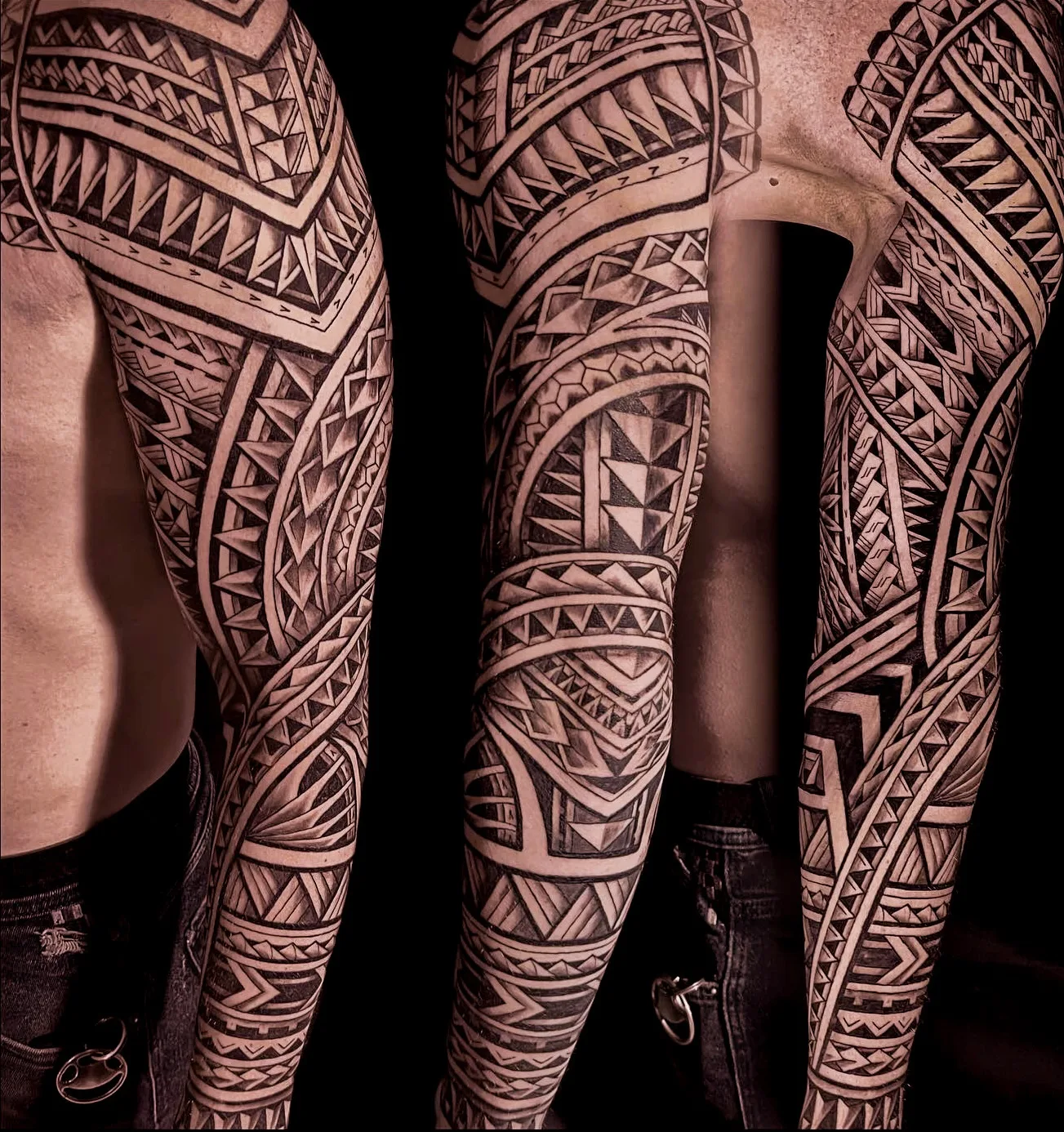
Arm and Sleeve Designs
Arm placements provide a large canvas for storytelling and symbolic representation. Contemporary Maori-inspired sleeves often combine multiple motifs to create a narrative reflecting family, achievements, and personal growth.
These designs remain popular because they balance visibility with flexibility in professional environments.
Chest and Back Tattoos
The chest and back traditionally offered space for extensive storytelling and symbolic integration. These locations continue to be favored for complex compositions incorporating multiple interconnected themes.
Many modern clients use these placements to represent family heritage, major life experiences, and long-term personal values.
Leg and Calf Placements
Leg tattoos have historical significance within Maori traditions and continue to be popular for large-scale designs. Their elongated shape supports flowing patterns and dynamic visual movement.
Many contemporary artists recommend leg placements for individuals seeking substantial artwork without facial or highly visible placement.
Information Gain: How Placement Historically Conveyed Social Information
Historical Ta Moko functioned almost like a visual biography. Placement itself communicated information about:
- Community roles
- Family connections
- Leadership status
- Achievements
- Social responsibilities
This communication function is one reason placement remains important within Maori tattoo traditions today.
How Modern Maori Tattoo Artists Create Meaningful Designs
Contemporary Maori tattoo artists combine cultural knowledge, storytelling, and technical expertise to create designs that reflect individual identity while respecting traditional principles. Consultation remains one of the most important stages of the process.
Consultation and Cultural Storytelling Process
Professional Maori practitioners typically spend significant time learning about a client’s background before creating a design. The consultation often shapes the final artwork more than the drawing process itself.
Topics frequently explored include:
- Family history
- Life experiences
- Values and beliefs
- Personal milestones
- Future aspirations
Incorporating Personal History Into Design
Rather than selecting pre-made templates, experienced artists create personalized compositions reflecting the wearer’s story. This approach aligns with traditional Maori principles emphasizing individuality and identity.
The result is artwork that remains meaningful long after tattoo trends change.
Real-World Example: Modern Custom Ta Moko Development
A contemporary client reconnecting with Maori ancestry might work with a practitioner to incorporate family narratives, tribal affiliations, and life achievements into a cohesive design. The final composition becomes both artwork and cultural documentation.
This storytelling approach differentiates meaningful Maori tattooing from purely decorative body art.
Expert Insight: Why Copying Existing Designs Is Discouraged
One of the strongest recommendations from experienced practitioners is avoiding direct copies of existing Ta Moko. Because designs often represent personal identity, duplication may unintentionally appropriate another person’s cultural story.
Custom design development remains the most respectful and authentic approach.
Choosing a Respectful Maori-Inspired Tattoo Design
Selecting a Maori-inspired tattoo responsibly requires cultural education, thoughtful symbolism, and collaboration with knowledgeable artists. Respectful choices begin with understanding rather than imitation.
Researching Symbolism Before Committing
Individuals considering Maori-inspired tattoos should invest time in learning about symbolism, cultural context, and historical significance before finalizing a design.
Reliable sources include museums, academic publications, Indigenous cultural organizations, and experienced practitioners.
Finding an Experienced Artist
Artist selection significantly influences both tattoo quality and cultural accuracy. A qualified practitioner should be able to explain symbolism, design choices, and cultural considerations clearly.
Warning signs include:
- Offering copied Ta Moko designs
- Inability to explain meanings
- Lack of consultation process
- Using generic tribal templates
- Ignoring cultural concerns
Avoiding Cultural Appropriation Mistakes
Cultural appropriation often occurs when sacred traditions are reduced to aesthetics without understanding their significance. Respectful engagement focuses on education, consultation, and accurate representation.
The goal should be appreciation informed by knowledge rather than imitation driven by trends.
Information Gain: Checklist for Ethical Design Selection
- Research Maori culture thoroughly
- Understand Ta Moko versus Kirituhi
- Choose an experienced practitioner
- Avoid copied designs
- Prioritize personal storytelling
- Respect cultural boundaries
- Ask questions throughout the process
Frequently Asked Questions About Maori Tattoos
Are Māori Tattoos Religious?
Maori tattoos are not strictly religious, but they often incorporate spiritual concepts, ancestral connections, and cultural beliefs that hold deep significance within Maori communities.
Is Ta Moko Reserved Only for Māori People?
Authentic Ta Moko is generally associated with Maori ancestry and identity. Non-Maori individuals are often encouraged to consider Kirituhi instead.
Do Māori Tattoo Symbols Have Universal Meanings?
No. Symbol interpretations frequently vary based on context, placement, artist perspective, tribal traditions, and the wearer’s personal story.
How Painful Is Traditional Ta Moko?
Traditional Ta Moko created using chisels was significantly more physically demanding than modern machine tattooing. Contemporary methods are generally less invasive.
What Is the Difference Between Polynesian and Māori Tattoos?
Maori tattoos represent one distinct tradition within the broader Polynesian cultural world. While visual similarities exist, symbolism and cultural meanings differ among Polynesian societies.
Can Women Receive Ta Moko?
Yes. Women have historically participated in Maori tattoo traditions, particularly through moko kauae, which carries important cultural and ancestral significance.
How Do Maori Tattoo Artists Design a Ta Moko?
Design development usually begins with consultation, storytelling, genealogy discussions, and cultural considerations before artwork is created.
What Should I Know Before Getting a Māori-Inspired Tattoo?
Learn the difference between Ta Moko and Kirituhi, research symbolism carefully, work with experienced practitioners, and prioritize cultural respect throughout the process.
Key Takeaways: Understanding Maori Tattoos with Respect and Accuracy
Maori tattoos represent far more than visual art. They embody identity, genealogy, cultural continuity, ancestral knowledge, and personal storytelling. Understanding these deeper dimensions is essential for appreciating the significance of Ta Moko and related Maori-inspired tattoo traditions.
Essential Facts Readers Should Remember
Ta Moko is a cultural identity practice rooted in Maori ancestry, while Kirituhi provides a respectful alternative for non-Maori individuals. Every authentic Ta Moko is unique and reflects the wearer’s personal and ancestral story.
Cultural Respect Principles
Education, consultation, and respect should guide every decision involving Maori-inspired tattoo designs. Understanding cultural context is just as important as understanding artistic style.
Final Expert Recommendations
Before pursuing a Maori-inspired tattoo, invest time in learning about Maori culture, symbolism, and history. Work with experienced artists who prioritize storytelling and cultural awareness. The most meaningful designs are those created through understanding, respect, and authentic personal connection rather than visual imitation alone.
Lucky Tattoo, a professional tattoo artist, has over 10 years of experience in the art of tattooing in Ho Chi Minh City. Lucky Tattoo Studio was founded in 2014 by skilled and kind artists. All tattoos are provided in a clean, strictly controlled, and friendly environment.
maori-tattoo