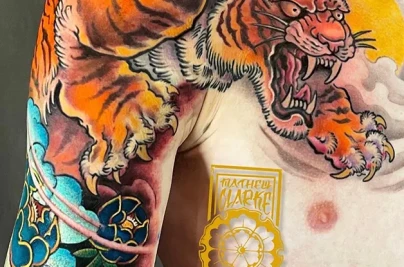
What Is a Thigh Tattoo for Women?
A thigh tattoo for women is a body art placement on the upper, inner, or outer thigh that offers a large, flexible canvas for creative designs. It is popular due to its balance of visibility and discretion, allowing expressive artwork while remaining easy to conceal in professional or social settings.
From an expert tattoo perspective, the thigh is considered one of the most versatile tattoo zones because it accommodates both fine-line minimalism and large-scale illustrative pieces. Unlike smaller body areas, it allows better composition flow, which improves long-term visual harmony as the skin naturally ages and shifts over time.
Information Gain Insight: Most guides fail to mention that thigh tattoos behave differently depending on fat distribution and movement zones. Areas closer to the hip flexor experience more skin compression during walking and sitting, which can subtly influence ink dispersion over long periods compared to the outer thigh.
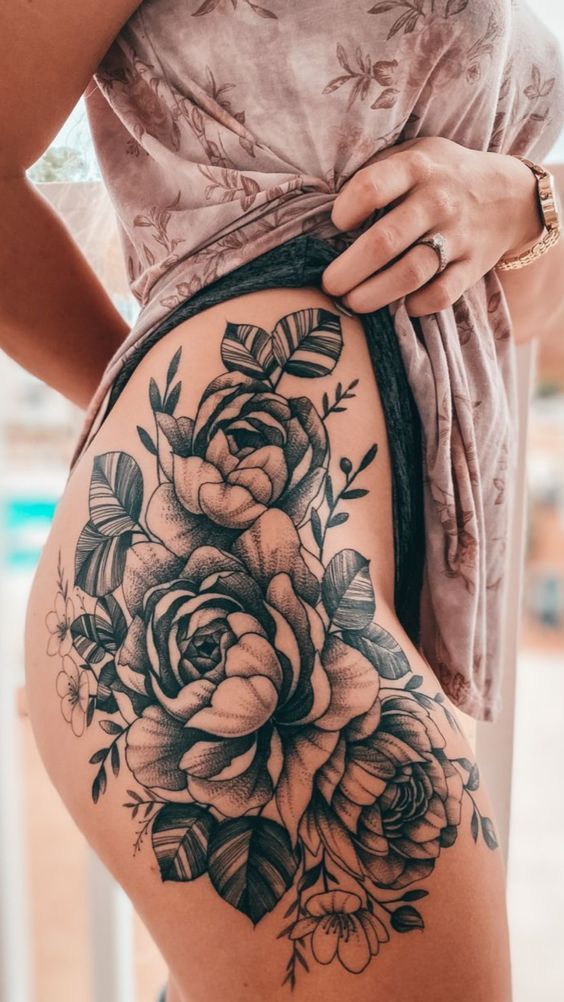
Upper vs Inner vs Outer Thigh Placement Explained
Upper, inner, and outer thigh placements differ significantly in sensitivity, aging behavior, and design suitability. The upper thigh is typically more muscular and stable, the inner thigh is more sensitive due to nerve concentration, and the outer thigh provides the best balance of durability and visibility control.
From a professional tattooing standpoint, outer thigh placements are often recommended for first-time clients because they combine moderate pain levels with predictable healing outcomes. Inner thigh tattoos, while visually intimate and aesthetically appealing, require more careful aftercare due to friction and moisture exposure.
Information Gain Insight: A commonly overlooked factor is clothing friction. Inner thigh tattoos experience significantly more mechanical irritation from movement and fabric contact, which can extend healing time by several days compared to outer thigh placements.
Which Thigh Placement Ages Best Over Time?
Outer thigh tattoos generally age the best due to lower friction, stable muscle structure, and reduced exposure to skin stretching. Inner thigh tattoos can fade faster or blur slightly over time because of constant movement and higher skin sensitivity in that region.
Experts in dermatological skin studies note that tattoo aging is influenced more by mechanical stress and UV exposure than by ink quality alone. Therefore, placement strategy plays a critical role in long-term tattoo clarity and definition.
Information Gain Insight: Contrary to popular belief, tattoo fading is not solely age-dependent. Sun exposure combined with repetitive skin stretching is a stronger predictor of ink diffusion than chronological aging alone.
Thigh Tattoo Pain Level Explained
The pain level of a thigh tattoo for women is generally considered moderate compared to other body areas. This is due to the thigh’s higher fat and muscle content, which cushions needle penetration. However, pain varies significantly depending on placement, especially near nerve-dense inner thigh regions.
Professional tattoo artists often explain pain variation using a combination of skin thickness, nerve distribution, and bone proximity. The thigh sits in a mid-range category, making it more tolerable than ribs or ankles but more sensitive than the upper arm or outer shoulder.
Information Gain Insight: Pain perception is not uniform; psychological factors such as stress, hydration, and sleep quality before the appointment can alter pain sensitivity by up to 20–30% based on observational studio reports.
Why the Thigh Is Considered a Moderate Pain Area
The thigh is classified as a moderate pain area because it contains a balance of muscle mass and soft tissue, reducing direct bone vibration during tattooing. This cushioning effect minimizes sharp pain sensations typically experienced in bone-heavy areas like ribs or collarbones.
In practice, most clients describe thigh tattoo sessions as “manageable discomfort” rather than extreme pain. The sensation is often compared to repetitive scratching or heat-based irritation rather than sharp stabbing pain.
Information Gain Insight: Endorphin release during longer tattoo sessions can actually reduce perceived pain intensity after the first 30–60 minutes, which is why extended thigh sessions often feel easier over time.
Inner Thigh vs Outer Thigh Pain Comparison
Inner thigh tattoos are typically more painful due to higher nerve density and softer skin tissue, while outer thigh tattoos are generally more tolerable because of increased muscle coverage and lower sensitivity. This creates a noticeable difference in comfort levels during tattoo sessions.
Experienced tattoo artists often adjust needle speed and shading intensity when working on inner thigh areas to minimize irritation and ensure cleaner pigment retention. Outer thigh areas allow for more aggressive shading techniques with less client discomfort.
Information Gain Insight: Many first-time clients underestimate how much friction-based sensitivity (walking, sitting, clothing movement) impacts post-session pain, which often exceeds the pain experienced during the actual tattooing process.
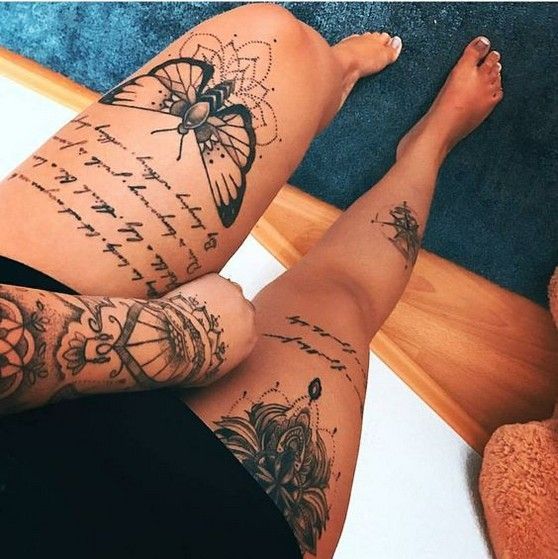
Best Thigh Tattoo Ideas for Women
Thigh tattoo ideas for women range from delicate floral compositions to bold illustrative pieces that follow the natural curve of the leg. The thigh’s large surface area allows for highly customizable designs that can reflect personality, symbolism, and aesthetic preference while maintaining long-term visual balance.
Design selection should not only focus on aesthetics but also on longevity. Fine details, spacing, and shading density directly affect how well the tattoo holds up over time. Larger, well-spaced designs often age more gracefully than extremely detailed micro tattoos.
Information Gain Insight: A common mistake is choosing designs based purely on social media trends. In professional tattoo practice, longevity and skin compatibility are prioritized over short-term visual appeal to avoid distortion as skin naturally changes.
Floral Thigh Tattoos
Floral thigh tattoos are one of the most popular choices due to their natural flow, symbolic depth, and adaptability to body contours. Flowers such as roses, peonies, and lotus designs are often used to represent femininity, strength, rebirth, or emotional transformation.
From a design perspective, floral tattoos are highly effective on the thigh because they can be scaled and curved to follow natural leg anatomy. This improves composition balance and ensures the artwork integrates seamlessly with body movement.
Information Gain Insight: Botanical accuracy in floral tattoos is increasingly valued; artists now study real plant morphology to create more realistic petal layering, improving depth perception and long-term visual realism.
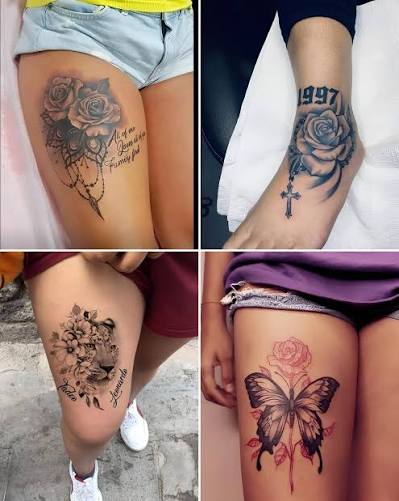
Minimalist and Fine Line Thigh Tattoos
Minimalist thigh tattoos use thin lines, subtle shading, and simple compositions to create elegant and understated body art. These designs are often chosen for their aesthetic simplicity and symbolic meaning rather than visual dominance.
However, fine-line tattoos require skilled execution because thinner ink deposits are more vulnerable to fading and slight blurring over time. Proper spacing and line weight are critical to ensuring long-term clarity, especially in high-movement areas like the thigh.
Information Gain Insight: Fine-line tattoos may appear more refined initially, but they typically require more frequent touch-ups compared to bold designs due to faster ink dispersion in the dermis layer.
Thigh Tattoo Healing Process & Aftercare
Lucky Tattoo, a professional tattoo artist, has over 10 years of experience in the art of tattooing in Ho Chi Minh City. Lucky Tattoo Studio was founded in 2014 by skilled and kind artists. All tattoos are provided in a clean, strictly controlled, and friendly environment.
From a professional tattooing standpoint, healing is not a single phase but a layered biological process involving inflammation, scabbing, peeling, and skin regeneration. Each phase requires specific care adjustments to ensure pigment stabilizes correctly within the dermis layer and retains long-term clarity.
Information Gain Insight: Most guides overlook that thigh tattoos are particularly vulnerable to “delayed irritation,” where friction from walking and clothing triggers micro-inflammation even after the surface appears healed, subtly affecting ink saturation over time.
Week-by-Week Healing Timeline Explained
The healing timeline of a thigh tattoo progresses through distinct biological stages, beginning with acute inflammation in the first few days, followed by scabbing and peeling during week two, and gradual skin normalization over weeks three to four. Full internal healing continues for several months beneath the surface.
During the first week, redness, swelling, and mild heat are normal responses as the body treats tattoo ink as a controlled wound. In week two, scabs naturally form and flake off, revealing lighter-looking ink that gradually settles as skin layers rebuild.
Information Gain Insight: A common misconception is that peeling ink means fading. In reality, temporary dullness occurs because a thin healing layer is still covering the pigment, not because ink is being lost.
- Days 1–3: inflammation, redness, sensitivity
- Days 4–10: scabbing and peeling phase
- Weeks 2–4: surface skin normalization
- Months 2–3: deep dermal stabilization
Mistakes That Cause Fading or Infection
Improper aftercare is one of the leading causes of tattoo fading and infection, especially in high-friction zones like the thigh. Common mistakes include over-washing, premature exfoliation, exposure to direct sunlight, and using non-recommended skincare products during healing.
Professional tattoo artists emphasize that excessive touching or picking at scabs can permanently disrupt pigment distribution, leading to patchy or uneven healing outcomes that may require costly correction work.
Information Gain Insight: Antibiotic ointments are often overused by beginners, but excessive occlusion can trap moisture and bacteria, increasing the risk of folliculitis rather than preventing infection.
Thigh Tattoo Cost, Time & Artist Selection
The cost of a thigh tattoo for women varies significantly based on design complexity, artist expertise, geographic location, and session duration. On average, pricing reflects both the technical difficulty of execution and the artistic value of the design, particularly for large-scale or detailed compositions.
In professional tattoo studios, time is directly tied to cost because artists charge either hourly rates or per-piece pricing. Larger thigh tattoos may require multiple sessions to ensure proper healing between layers of ink application.
Information Gain Insight: One overlooked pricing factor is skin condition and placement difficulty. Inner thigh work is often priced higher due to positioning challenges and increased client sensitivity management during sessions.
How to Choose the Right Tattoo Artist
Choosing the right tattoo artist is one of the most important decisions in achieving a high-quality thigh tattoo. A skilled artist not only executes the design but also understands skin behavior, ink flow, and long-term aging effects of tattoos on different body zones.
Experienced professionals recommend reviewing healed portfolios rather than only fresh tattoos, as healed work provides a more accurate representation of line stability, shading consistency, and pigment retention over time.
Information Gain Insight: Many clients focus on Instagram portfolios, but professional evaluation should prioritize healed results, studio hygiene standards, and specialization in specific styles such as realism, floral work, or fine line techniques.
- Check healed tattoo portfolios (not just fresh ink)
- Evaluate line consistency and shading depth
- Assess studio hygiene and sterilization practices
- Ask about ink brands and needle types used
Do Thigh Tattoos Fade Faster? (Science Explained)
Thigh tattoos do not inherently fade faster than tattoos on other body parts, but their longevity is influenced by external factors such as UV exposure, friction from clothing, and skin movement. Outer thigh tattoos tend to last longer due to reduced mechanical stress and better pigment stability in deeper dermal layers.
Scientific studies in dermatology indicate that tattoo fading is primarily driven by ultraviolet radiation and macrophage activity within the skin, not simply age. Therefore, environmental exposure plays a greater role than location alone in determining long-term clarity.
Information Gain Insight: A key overlooked factor is repetitive micro-stretching of skin during daily movement. Over years, this subtle mechanical stress contributes more to design distortion than natural aging of the ink itself.
How to Prevent Tattoo Fading Long-Term
Preventing tattoo fading requires consistent protection from UV exposure, proper skincare maintenance, and avoiding chronic friction in the tattooed area. Sunscreen is one of the most effective tools in preserving pigment vibrancy, especially for exposed thigh areas during summer months.
Moisturizing the skin regularly helps maintain elasticity, reducing micro-cracking in the dermis that can contribute to uneven ink diffusion over time. Choosing clothing that minimizes direct abrasion also supports long-term tattoo integrity.
Information Gain Insight: Dermatology findings show that SPF 30+ sunscreen can reduce UV-related tattoo fading by a significant margin over time, making sun protection the single most effective long-term preservation strategy.
- Use SPF 30–50 sunscreen regularly
- Avoid prolonged sun exposure during peak UV hours
- Moisturize skin to maintain elasticity
- Minimize tight friction-heavy clothing
Thigh Tattoo Psychology, Regret & Design Longevity
The psychological aspect of choosing a thigh tattoo for women plays a critical role in long-term satisfaction. Many individuals choose designs based on emotional relevance, identity expression, or aesthetic trends, but long-term satisfaction depends on personal meaning rather than visual popularity alone.
From a behavioral perspective, tattoo regret is often linked to impulsive decision-making or designs chosen without considering lifestyle changes, career shifts, or evolving personal identity over time.
Information Gain Insight: Studies in decision psychology show that tattoos tied to personal milestones or identity narratives have significantly lower regret rates than trend-based designs selected for social media appeal.
How to Choose a Design You Won’t Regret
Choosing a timeless thigh tattoo design requires evaluating both emotional significance and long-term visual sustainability. Designs that align with personal values, life experiences, or symbolic meanings tend to remain relevant even as aesthetic preferences evolve.
Professional tattoo artists often advise clients to “live with a design concept” for several weeks before committing, ensuring emotional consistency and reducing impulsive decision bias.
Information Gain Insight: A practical technique used in studios is “mirror testing,” where clients visualize the tattoo daily in a simulated placement to assess long-term comfort and identity alignment before final approval.
- Choose designs with personal meaning, not just trends
- Test design mentally for several weeks before booking
- Consider how body changes may affect design over time
- Consult artists for placement simulation advice
FAQs About Thigh Tattoo for Women
These frequently asked questions address common concerns about thigh tattoos for women, including pain, healing, cost, and design selection. They are optimized for voice search, Google People Also Ask, and AI-based answer extraction systems.
Does a thigh tattoo hurt a lot?
Thigh tattoos are generally considered moderately painful. Outer thigh areas are less sensitive, while inner thigh regions can feel more intense due to higher nerve density.
How long does a thigh tattoo take to heal?
Surface healing takes about 2–4 weeks, but full internal healing can take up to 2–3 months depending on aftercare and placement.
What thigh tattoo designs last the longest?
Bolder designs with strong linework and proper spacing tend to last longer than extremely fine-line or overly detailed micro tattoos.
Can thigh tattoos stretch over time?
Yes, slight stretching can occur due to weight fluctuations or skin elasticity changes, but proper placement minimizes distortion risk.
Do inner thigh tattoos fade faster?
Inner thigh tattoos may fade slightly faster due to friction, moisture, and higher skin sensitivity compared to outer thigh placements.
How much does a thigh tattoo cost?
Costs vary widely but typically range depending on size, detail, and artist experience, with large custom pieces requiring multiple sessions.
Conclusion: Why Thigh Tattoos Remain a Timeless Choice
Thigh tattoos for women remain one of the most versatile and expressive forms of body art due to their balance of visibility, creative freedom, and adaptability to body movement. When properly designed, placed, and cared for, they offer long-lasting aesthetic and emotional value.
Understanding placement science, healing behavior, and long-term skin dynamics ensures better outcomes and reduces regret risk. Combining artistic intent with dermatological awareness leads to tattoos that not only look beautiful but also age gracefully over time.
Lucky Tattoo, a professional tattoo artist, has over 10 years of experience in the art of tattooing in Ho Chi Minh City. Lucky Tattoo Studio was founded in 2014 by skilled and kind artists. All tattoos are provided in a clean, strictly controlled, and friendly environment.
thigh-tattoo-for-women