Traditional Japanese tattooing, known as Irezumi, is one of the world’s most respected and recognizable tattoo traditions. Far more than decorative body art, authentic Japanese tattoos combine mythology, folklore, spiritual beliefs, seasonal symbolism, and artistic composition into a cohesive visual narrative. Whether displayed as a sleeve, back piece, chest panel, or full body suit, every element serves a purpose and contributes to a larger story.
Today, Japanese-inspired tattoos remain among the most requested styles globally. Yet many people understand individual symbols without fully grasping the deeper design philosophy that makes Irezumi unique. This guide explores not only the history and symbolism behind traditional Japanese tattoos but also the overlooked principles of composition, cultural context, and storytelling that separate authentic Irezumi from modern interpretations.
What Is a Traditional Japanese Tattoo?
A traditional Japanese tattoo, or Irezumi, is a large-scale tattoo style rooted in Japanese folklore, mythology, nature, and historical art traditions. Unlike many tattoo styles that focus on individual images, Irezumi creates a connected visual story across the body using symbolic subjects, flowing backgrounds, and carefully balanced composition.
The word Irezumi literally means “inserting ink.” Historically, the practice evolved through centuries of cultural development and became closely associated with Japanese visual arts such as Ukiyo-e woodblock prints.
What distinguishes traditional Japanese tattooing is its emphasis on:
- Large-scale body coverage
- Narrative storytelling
- Symbolic meaning
- Flow with natural body contours
- Harmony between primary and secondary elements
- Seasonal and cultural references
Rather than selecting isolated images, authentic Irezumi often combines multiple motifs that work together to communicate values, experiences, personal struggles, aspirations, or spiritual beliefs.
One of the most misunderstood aspects of Japanese tattooing is that the primary subject is only part of the story. The surrounding waves, clouds, flowers, and wind bars frequently provide just as much symbolic meaning as the central figure.
Direct Answer: The Meaning of Irezumi
Irezumi refers to the traditional Japanese practice of decorative tattooing that uses mythological figures, animals, flowers, and natural elements to create interconnected body art. The purpose extends beyond aesthetics, often expressing identity, perseverance, protection, transformation, courage, or personal philosophy.
Throughout Japanese tattoo history, symbolism has remained central. A dragon may represent wisdom and strength, while a koi fish can symbolize determination and overcoming adversity. Combined together, these elements create narratives that are deeply personal while remaining culturally rooted.
Unlike many contemporary tattoo styles that emphasize trends, authentic Irezumi prioritizes timeless symbolism and artistic continuity.
How Traditional Japanese Tattoos Differ From Modern Japanese-Style Tattoos
Traditional Japanese tattoos follow established compositional principles, symbolic systems, and body-flow techniques that have developed over centuries. Modern Japanese-style tattoos often borrow visual motifs while omitting many of the cultural and artistic foundations that define authentic Irezumi.
Many tattoo enthusiasts assume any tattoo featuring a dragon or koi fish qualifies as traditional Japanese work. In reality, there are significant differences.
| Traditional Irezumi | Modern Japanese-Style Tattoo |
|---|---|
| Large interconnected compositions | Often standalone pieces |
| Deep symbolic structure | Primarily aesthetic focus |
| Body-flow based design | Flexible placement |
| Seasonal and cultural references | May omit cultural context |
| Traditional background elements | Simplified backgrounds |
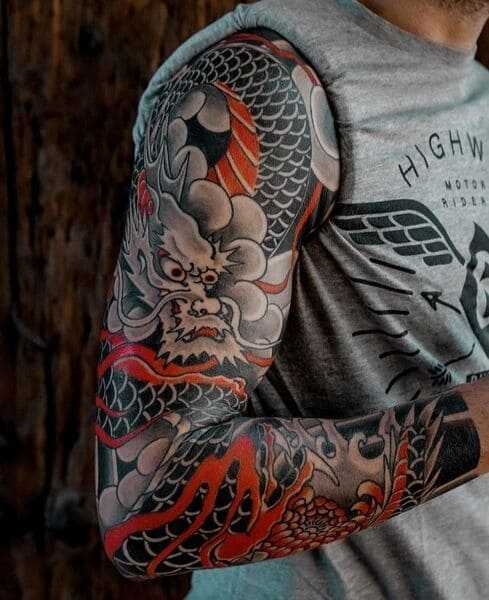
For example, a traditional dragon sleeve typically incorporates clouds, wind bars, seasonal flowers, and directional movement aligned with the body’s anatomy. A modern interpretation may feature only the dragon itself.
This distinction matters because understanding traditional design principles often results in tattoos that age better visually and maintain stronger narrative coherence over time.
The History of Traditional Japanese Tattooing
Traditional Japanese tattooing evolved over centuries through cultural, artistic, and social influences. While modern audiences often associate Irezumi with the Edo period and organized crime, its origins extend much further back into Japan’s early history and indigenous traditions.
Understanding the historical evolution of Japanese tattooing provides valuable insight into why certain symbols, styles, and compositions remain influential today.
Origins Before the Edo Period
Evidence suggests that forms of body marking existed in Japan for thousands of years. Early records indicate tattoos were sometimes used for spiritual protection, tribal identification, or social distinction among indigenous communities.
Historical Chinese writings describing ancient Japan referenced tattooed individuals, suggesting body art played a role in social and cultural identity long before decorative Irezumi emerged.
However, many early tattoo traditions were eventually replaced or transformed as Japanese society evolved and centralized political systems emerged.
The Rise of Irezumi During the Edo Era
The Edo period transformed Japanese tattooing from a localized practice into a sophisticated art form heavily influenced by literature, theater, and Ukiyo-e woodblock prints. Many of today’s iconic tattoo motifs originated during this cultural renaissance.
Between 1603 and 1868, Japan experienced relative stability and economic growth. During this period, artistic expression flourished.
A major influence came from illustrated editions of the Chinese novel Suikoden, whose heroic characters were often depicted with elaborate tattoos. These images inspired artisans and contributed to the development of full-body tattoo compositions.
Artists began adapting visual storytelling techniques from woodblock prints into skin art. This influence remains visible today through:
- Bold outlines
- Dynamic movement
- Layered backgrounds
- Dramatic contrast
- Narrative compositions
Many of the dragons, tigers, koi fish, and warrior figures seen in contemporary Japanese tattoos can trace their visual lineage back to this era.
How Tattoos Became Associated With the Yakuza
The connection between Japanese tattoos and organized crime developed gradually through social and historical circumstances. While this association exists, it represents only one chapter in the much broader history of Irezumi.
During certain periods, tattoos were used as punitive markings for criminals. Later, some criminal groups adopted extensive body tattooing as a symbol of loyalty, resilience, and group identity.
This historical association contributed to the stigma surrounding tattoos in modern Japan. Even today, some public baths, gyms, and hot springs maintain restrictions for tattooed visitors.
However, reducing Irezumi solely to its Yakuza associations overlooks centuries of artistic innovation and cultural significance.
An important modern misconception is that every traditional Japanese tattoo carries criminal connotations. In reality, many contemporary Japanese tattoo collectors, artists, academics, and cultural enthusiasts view Irezumi primarily as an art form.
Core Design Principles Behind Authentic Irezumi
Authentic Irezumi follows compositional rules that prioritize movement, balance, symbolism, and anatomical flow. These principles distinguish traditional Japanese tattooing from many contemporary styles and help explain why classic designs remain visually powerful decades after application.
One of the biggest competitor gaps in tattoo education is the failure to explain how composition influences meaning. Most articles focus exclusively on symbols while ignoring how the symbols interact.
Body Flow and Composition Rules
Traditional Japanese tattoos are designed to move with the body’s natural musculature and contours. This creates visual harmony while enhancing the impact of the imagery from every viewing angle.
Experienced Japanese tattoo artists rarely begin with isolated symbols. Instead, they first evaluate:
- Body proportions
- Movement patterns
- Future expansion possibilities
- Visual balance
- Narrative structure
For example, a dragon wrapping around the arm should appear to naturally climb or descend according to the direction of the design. Incorrect positioning can disrupt the intended symbolism and weaken the overall composition.
Many first-time collectors focus solely on the central image. Experienced artists often spend equal or greater time planning how supporting elements connect the design across the body.
Why Placement Changes Meaning
Placement in traditional Japanese tattooing is not purely aesthetic. The same symbol can communicate different ideas depending on scale, orientation, and location within the overall composition.
For example:
- A dragon ascending upward often symbolizes ambition or achievement.
- A descending dragon may represent wisdom returning from heaven.
- A koi swimming upstream commonly symbolizes perseverance.
- A koi swimming downstream can signify goals already achieved.
This subtle symbolic language is rarely discussed outside specialist tattoo circles but significantly impacts design authenticity.
The Importance of Background Elements
Background elements such as waves, clouds, wind bars, rocks, and smoke are essential components of authentic Irezumi. They create visual flow, establish narrative context, and often carry symbolic meaning equal to the primary subject.
Many people mistakenly view backgrounds as decorative fillers. Traditional artists see them as structural components.
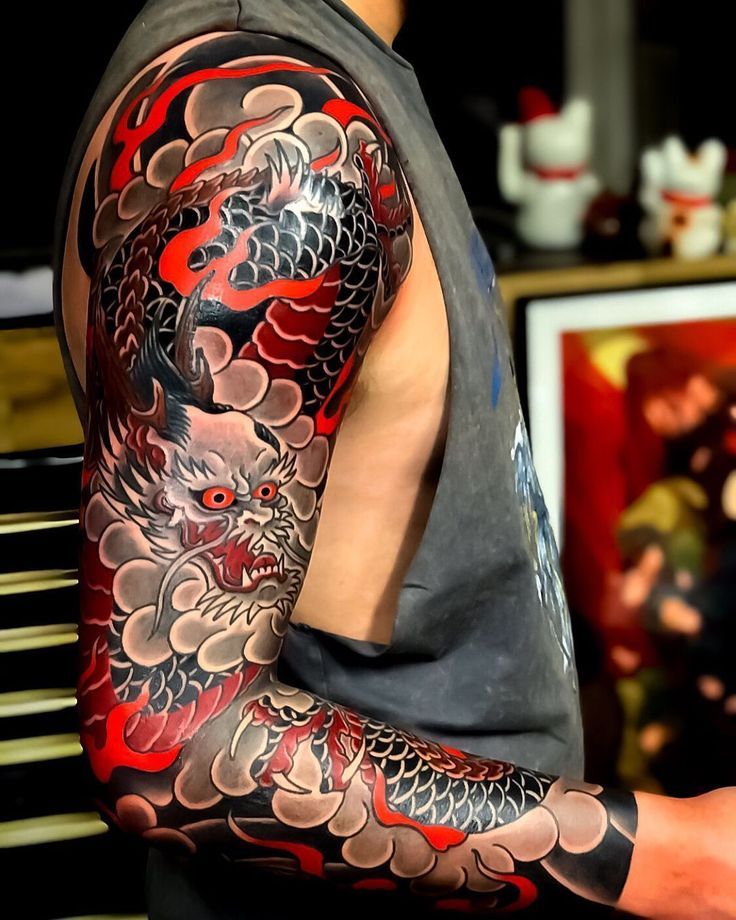
Common background motifs include:
- Waves: resilience, life’s challenges, adaptability
- Clouds: spirituality, transition, divine presence
- Wind bars: movement, energy, continuity
- Water currents: transformation and persistence
- Smoke: mystery, impermanence, transition
One overlooked insight is that background elements often determine whether multiple symbols can coexist harmoniously within the same tattoo.
Without these connecting structures, even beautifully executed individual images may appear fragmented rather than unified.
Master tattooers frequently describe background composition as the “glue” that transforms separate images into a complete Japanese tattoo narrative.
Traditional Japanese Tattoo Meanings Explained
Traditional Japanese tattoo meanings are rooted in mythology, folklore, religion, nature, and cultural symbolism. While individual motifs have established interpretations, their deeper significance often emerges through how they interact with surrounding elements and the wearer’s personal story.
One of the biggest mistakes people make is choosing symbols based solely on appearance. Understanding meaning helps create a tattoo that remains personally relevant for decades.
Dragon Tattoo Meaning
In Japanese tattoo tradition, dragons symbolize wisdom, protection, strength, balance, and benevolent power. Unlike many Western dragons associated with destruction, Japanese dragons are often viewed as guardians connected to water, weather, and divine forces.
Japanese dragons are among the most respected subjects in Irezumi.
Common symbolic associations include:
- Wisdom and intelligence
- Protective energy
- Spiritual growth
- Leadership
- Good fortune
Experienced tattoo artists often recommend dragon imagery for individuals seeking a design that reflects personal evolution, responsibility, or resilience developed through life challenges.
A particularly interesting detail overlooked by many competitors is that the dragon’s direction, expression, claw position, and surrounding environment can all subtly alter interpretation.
Koi Fish Tattoo Meaning
Koi fish tattoos symbolize perseverance, determination, courage, and transformation. Their meaning originates from legends describing koi swimming upstream against powerful currents before transforming into dragons after reaching their destination.
This symbolism makes koi one of the most meaningful choices in Japanese tattoo culture.
People often choose koi imagery to represent:
- Overcoming adversity
- Personal growth
- Recovery from hardship
- Achievement after struggle
- Long-term goals
A common expert recommendation is to think beyond the fish itself. Water direction, surrounding flowers, seasonal references, and placement can strengthen the narrative considerably.
For example, an upstream koi paired with maple leaves tells a very different story than a koi surrounded by spring cherry blossoms.
Continued in Part 2: Phoenix, Samurai, Hannya, Oni, Japanese flowers and nature symbolism, hidden language of symbol combinations, tattoo placements, Tebori vs machine tattooing, costs, artist selection, cultural considerations, and practical tattoo planning.
Lucky Tattoo, a professional tattoo artist, has over 10 years of experience in the art of tattooing in Ho Chi Minh City. Lucky Tattoo Studio was founded in 2014 by skilled and kind artists. All tattoos are provided in a clean, strictly controlled, and friendly environment.
Phoenix Tattoo Meaning
The Japanese phoenix, often called Hou-ou, symbolizes rebirth, renewal, triumph over adversity, and positive transformation. It is commonly chosen by individuals marking major life changes, recovery from hardship, or the beginning of a new chapter.
Unlike Western depictions that focus primarily on resurrection, the Japanese phoenix also represents harmony, justice, and prosperity. Traditionally, the phoenix appears during times of peace and is associated with virtuous leadership.
In tattoo compositions, phoenix imagery is frequently paired with:
- Peonies representing prosperity
- Cherry blossoms representing impermanence
- Clouds symbolizing spiritual ascension
- Flames representing purification and renewal
Experienced tattoo artists often recommend phoenix designs for collectors who want a narrative centered on personal growth rather than raw power.
Samurai Tattoo Meaning
Samurai tattoos symbolize honor, discipline, courage, loyalty, sacrifice, and adherence to personal principles. These designs often appeal to individuals who value resilience, responsibility, and self-mastery.
Historically, samurai followed Bushido, a code emphasizing integrity, respect, and duty. Modern tattoo collectors frequently choose samurai imagery to represent overcoming obstacles while maintaining personal values.
Common design variations include:
- Armored warriors in battle
- Portrait-style samurai
- Samurai with dragons or tigers
- Samurai paired with cherry blossoms
- Legendary historical figures
An overlooked design consideration is facial expression. Calm, composed samurai often communicate wisdom and discipline, while aggressive battle scenes emphasize courage and determination.
Hannya Mask Meaning
The Hannya mask represents intense human emotions, including jealousy, grief, betrayal, obsession, and suffering. Despite its frightening appearance, it often symbolizes emotional complexity rather than evil.
Originating from Japanese Noh theater, the Hannya depicts a woman transformed by overwhelming emotional pain. This symbolism creates one of the most psychologically layered subjects in traditional Japanese tattooing.
Many collectors mistakenly believe Hannya masks represent demons alone. In reality, they often symbolize:
- Emotional transformation
- Lessons learned through suffering
- Protection from negative influences
- Recognition of human vulnerability
- Personal growth through hardship
Artists frequently soften or deepen the meaning through surrounding elements such as flowers, water, or seasonal imagery.
Oni Tattoo Meaning
Oni tattoos represent powerful supernatural beings from Japanese folklore. Depending on context, they can symbolize protection, punishment of wrongdoing, strength, or the struggle between destructive and constructive forces.
Western interpretations often portray Oni as purely demonic. Traditional Japanese folklore presents a more nuanced perspective.
In tattoo art, Oni may symbolize:
- Overcoming inner demons
- Protection from harmful influences
- Discipline through adversity
- Respect for powerful forces
- Transformation through challenge
The symbolism changes dramatically depending on facial expression, posture, weaponry, and accompanying imagery.
Traditional Japanese Flowers and Nature Symbols
Flowers and natural elements play a critical role in traditional Japanese tattooing by adding seasonal symbolism, emotional depth, and narrative balance. These motifs often provide contextual meaning that transforms how primary subjects such as dragons, koi fish, and samurai are interpreted.
One of the most overlooked aspects of Irezumi is the importance of seasonality. Traditional artists frequently design tattoos around seasonal themes that reflect cycles of life, growth, loss, and renewal.
Cherry Blossoms
Cherry blossoms symbolize impermanence, mortality, beauty, and the fleeting nature of life. They are among the most culturally significant symbols in Japanese art and tattoo traditions.
Because cherry blossoms bloom briefly before falling, they remind viewers that life is precious and temporary.
When paired with:
- Samurai: noble acceptance of mortality
- Dragons: wisdom balanced by humility
- Koi fish: perseverance despite life’s uncertainty
- Phoenixes: renewal following endings
This layered symbolism explains why cherry blossoms appear in countless traditional Japanese compositions.
Peonies
Peonies symbolize prosperity, bravery, abundance, and refined strength. Often called the “King of Flowers,” they balance powerful subjects such as dragons, tigers, and lions.
Contrary to common assumptions, peonies do not represent fragility. In Japanese tattoo culture, they often signify confidence, success, and courageous leadership.
Many traditional artists use peonies to create visual balance between strength and elegance.
Maple Leaves
Maple leaves symbolize change, maturity, transitions, and the passage of time. Their association with autumn makes them powerful indicators of life’s evolving seasons.
Maple leaves frequently appear with koi fish and flowing water because both motifs emphasize persistence through change.
Collectors seeking tattoos that reflect personal evolution often incorporate maple leaves into larger compositions.
Lotus Flowers
Lotus flowers represent spiritual awakening, purity, enlightenment, and personal growth. Emerging clean from muddy waters, they symbolize rising above adversity and maintaining integrity through challenges.
Lotus imagery often resonates with individuals who have experienced significant personal transformation.
Popular pairings include:
- Koi fish for perseverance
- Water imagery for transformation
- Dragons for wisdom
- Phoenixes for renewal
The Hidden Language of Symbol Combinations
Traditional Japanese tattoos communicate their deepest meanings through the interaction of multiple symbols rather than individual motifs alone. Understanding these combinations provides insight into the storytelling system that distinguishes authentic Irezumi from decorative body art.
This is one of the most significant information gaps in competing content. Most articles explain symbols separately but rarely explore how combinations create entirely new meanings.
Dragon and Koi Pairings
Combining dragons and koi fish creates a narrative of transformation, achievement, perseverance, and personal evolution. The pairing references legendary stories in which koi become dragons after overcoming immense obstacles.
This composition is especially popular among individuals who view success as the result of sustained effort rather than natural talent.
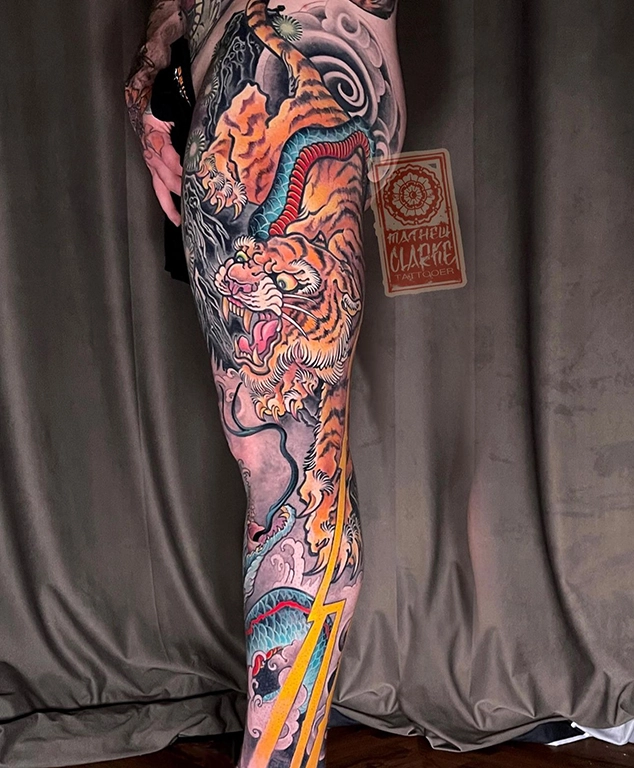
Tiger and Bamboo Pairings
Tigers symbolize strength and courage, while bamboo represents flexibility and resilience. Together, they communicate the ability to remain strong without becoming rigid.
This pairing teaches a powerful lesson often overlooked in modern tattoo discussions: adaptability is a form of strength.
Hannya and Cherry Blossom Pairings
When combined, Hannya masks and cherry blossoms create a sophisticated narrative about emotional pain, personal growth, and life’s impermanence. This pairing transforms a potentially intimidating image into a deeply human story.
Many experienced artists view this combination as one of the most emotionally nuanced compositions in Japanese tattooing.
Popular Traditional Japanese Tattoo Placements
Traditional Japanese tattoo placement is guided by body flow, visual balance, narrative continuity, and future expansion potential. Placement affects not only aesthetics but also symbolic impact and long-term design cohesion.
Full Sleeve Tattoos
Japanese sleeves provide enough space for meaningful storytelling while remaining more accessible than larger body suit projects. They are among the most popular entry points into Irezumi.
Benefits include:
- Strong visual impact
- Flexible clothing coverage
- Expanded narrative opportunities
- Future extension possibilities
Back Pieces
The back is traditionally considered one of the most prestigious canvases in Japanese tattooing because it allows large-scale storytelling and highly detailed compositions.
Dragons, phoenixes, legendary warriors, and mythological scenes are often placed here due to the available space.
Chest Panels and Bodysuits
Chest panels and bodysuits represent some of the most authentic expressions of traditional Japanese tattoo art. These projects emphasize complete visual harmony across multiple body regions.
Full-body compositions may require years of commitment but often result in extraordinary artistic coherence.
Tebori vs Machine Tattooing
Tebori and machine tattooing each offer unique advantages. Tebori preserves a centuries-old hand-poked tradition, while modern tattoo machines provide speed, efficiency, and accessibility. The best choice depends on artistic goals, budget, availability, and personal preferences.
What Is Tebori?
Tebori is the traditional Japanese hand-poking method in which ink is manually inserted using specialized tools rather than electric machines.
Collectors often seek Tebori because of:
- Historical authenticity
- Unique shading qualities
- Traditional craftsmanship
- Cultural significance
Many enthusiasts report that Tebori shading produces exceptionally smooth gradients difficult to replicate with machines.
Advantages and Drawbacks of Each Method
Both Tebori and machine tattooing have strengths and limitations. Understanding these differences helps collectors make informed decisions.
| Tebori | Machine Tattooing |
|---|---|
| Traditional technique | Modern efficiency |
| Exceptional shading | Faster completion |
| Often more expensive | Broader artist availability |
| Longer sessions required | More practical for large projects |
How Much Does a Traditional Japanese Tattoo Cost?
Traditional Japanese tattoo costs vary based on artist expertise, geographic location, project complexity, body placement, and total hours required. Large-scale Irezumi projects often represent significant long-term investments rather than single-session purchases.
Small, Sleeve, Back Piece, and Bodysuit Costs
Pricing varies globally, but approximate ranges include:
- Small piece: $300–$1,000+
- Half sleeve: $1,500–$4,000+
- Full sleeve: $3,000–$10,000+
- Back piece: $5,000–$20,000+
- Body suit: $20,000–$100,000+
Highly respected Irezumi specialists may command substantially higher rates due to demand and expertise.
Factors That Influence Pricing
Several variables affect overall investment:
- Artist reputation
- Design complexity
- Color saturation
- Session duration
- Geographic location
- Tebori versus machine techniques
Choosing an artist solely based on price is one of the most common mistakes among first-time collectors.
How to Choose the Right Japanese Tattoo Artist
Selecting an experienced Japanese tattoo artist is one of the most important decisions in the entire process. Technical skill, cultural understanding, composition expertise, and communication abilities significantly influence the final outcome.
Questions to Ask Before Booking
Qualified artists should comfortably discuss design philosophy, symbolism, composition, and project planning.
- Do you specialize in Japanese tattooing?
- Can you show healed examples?
- How do you approach composition?
- Do you customize designs?
- What is your long-term project process?
Red Flags to Avoid
Certain warning signs may indicate an artist lacks sufficient experience in traditional Japanese work.
- No healed portfolio images
- Poor background integration
- Copied designs
- Limited understanding of symbolism
- Inconsistent line work
- Pressure to rush decisions
Cultural Respect and Common Misconceptions
Traditional Japanese tattoos can be appreciated respectfully by people worldwide when approached with genuine curiosity, cultural awareness, and understanding of their historical significance.
Is Getting an Irezumi Tattoo Cultural Appropriation?
Most cultural experts distinguish respectful appreciation from appropriation based on intent, understanding, and behavior. Learning the history and symbolism behind Irezumi demonstrates respect for the tradition.
Collectors should avoid treating sacred or culturally significant imagery as mere decoration without understanding its meaning.
How Tattoos Are Viewed in Modern Japan
Attitudes toward tattoos in Japan continue to evolve. While younger generations increasingly embrace tattoo culture, some traditional institutions still maintain restrictions due to historical associations.
Visitors with visible tattoos may encounter limitations at certain:
- Onsen (hot springs)
- Gyms
- Swimming pools
- Traditional facilities
Understanding this context helps collectors appreciate the complex social history surrounding Japanese tattooing.
Real-World Example: Building a Meaningful Traditional Japanese Tattoo
Successful Japanese tattoo projects begin with personal storytelling rather than selecting random symbols. The strongest compositions connect individual experiences with traditional symbolism through thoughtful planning and expert artistic guidance.
Symbol Selection Process
A collector recovering from major life adversity might choose:
- Koi fish for perseverance
- Maple leaves for transformation
- Water currents for ongoing growth
- Cherry blossoms for life’s impermanence
Composition Planning
An experienced artist would organize these elements according to body flow, creating movement and visual balance rather than simply placing symbols side by side.
Final Tattoo Narrative
The finished design communicates a complete story of struggle, resilience, change, and achievement. This narrative depth is what separates authentic Irezumi from purely decorative tattooing.
Frequently Asked Questions About Traditional Japanese Tattoos
What is the meaning of a traditional Japanese tattoo?
Traditional Japanese tattoos symbolize values, life experiences, spiritual beliefs, and personal narratives through mythological, historical, and natural imagery.
What is the difference between Irezumi and Japanese-style tattoos?
Irezumi follows traditional compositional rules, symbolism systems, and body-flow principles, while Japanese-style tattoos may borrow visual elements without adhering to traditional conventions.
Are traditional Japanese tattoos still taboo in Japan?
Some social stigma remains due to historical associations, but attitudes are gradually becoming more accepting, particularly among younger generations.
How much does a full Japanese sleeve tattoo cost?
A professionally executed full sleeve typically ranges from $3,000 to $10,000 or more depending on artist reputation, complexity, and location.
What does a koi fish tattoo symbolize?
Koi fish symbolize perseverance, determination, transformation, and success achieved through overcoming obstacles.
Is Tebori better than machine tattooing?
Neither method is universally better. Tebori offers traditional craftsmanship and unique shading, while machine tattooing provides speed and broader accessibility.
Can foreigners get authentic traditional Japanese tattoos?
Yes. Many respected Japanese tattoo artists work with international clients who approach the art form respectfully and thoughtfully.
How do I choose symbols for a meaningful Japanese tattoo?
Start with your personal experiences, values, and goals, then work with an experienced artist to translate those themes into culturally appropriate symbolism.
Key Takeaways About Traditional Japanese Tattoos
Traditional Japanese tattoos represent one of the most sophisticated body art traditions in the world. Rooted in mythology, folklore, history, nature, and artistic composition, authentic Irezumi goes far beyond visual appeal. Every dragon, koi fish, phoenix, samurai, Hannya mask, flower, and background element contributes to a larger story.
The most meaningful Japanese tattoos are
Lucky Tattoo, a professional tattoo artist, has over 10 years of experience in the art of tattooing in Ho Chi Minh City. Lucky Tattoo Studio was founded in 2014 by skilled and kind artists. All tattoos are provided in a clean, strictly controlled, and friendly environment.
traditional-japanese-tattoo