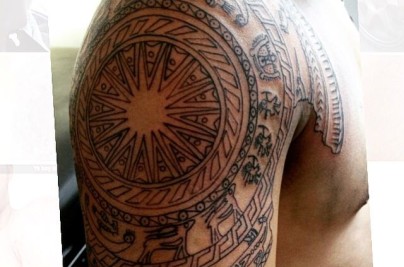
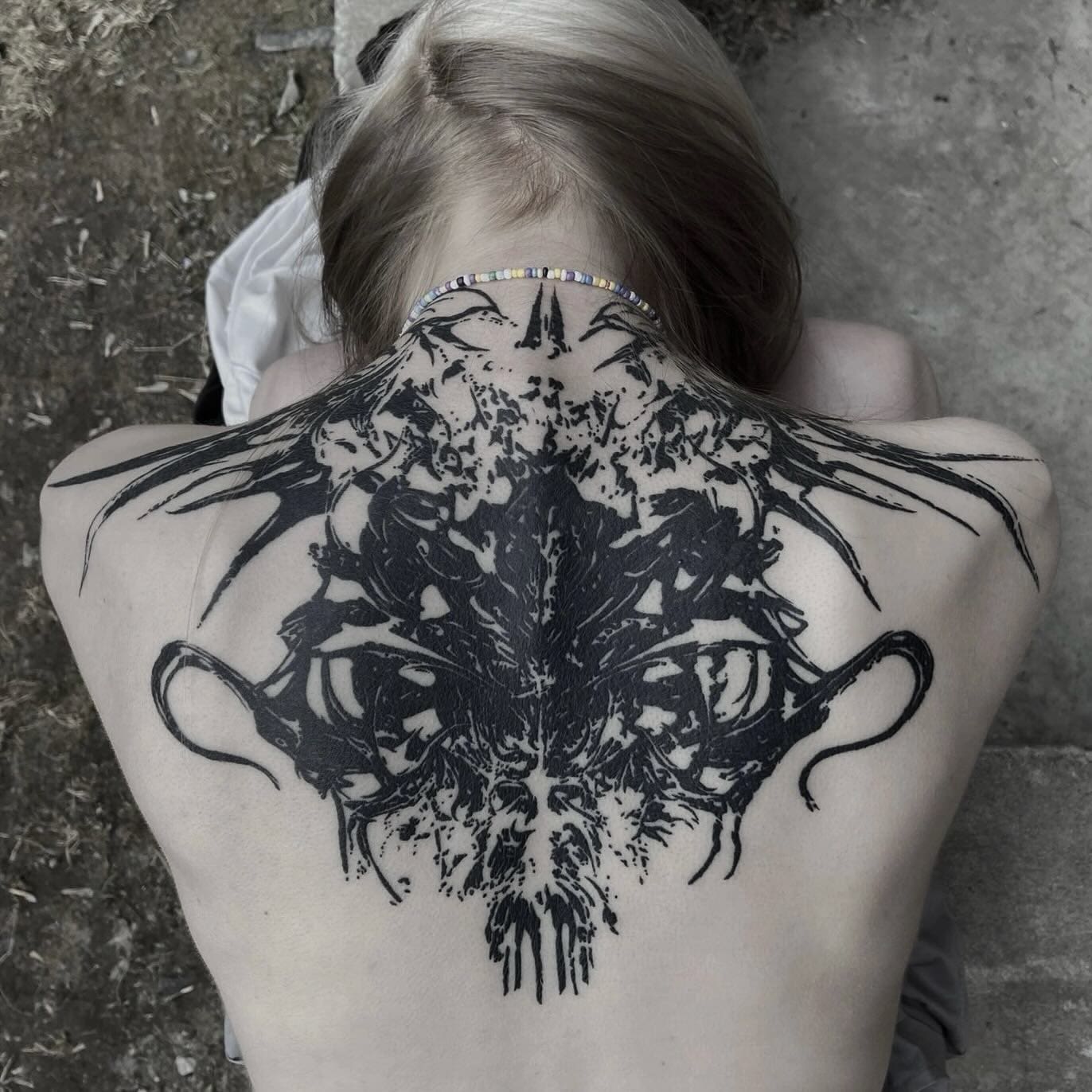
A heavy blackwork tattoo is a tattoo style characterized by extensive use of densely packed black ink to create bold visual impact, dramatic contrast, and long-lasting body art. Unlike traditional tattoos that rely heavily on color gradients and fine linework, heavy blackwork emphasizes saturation, negative space, geometric composition, and large-scale coverage.
Over the last decade, heavy blackwork has evolved from a niche subculture into one of the most recognizable modern tattoo movements. From blackout sleeves and geometric body suits to neo-tribal compositions and abstract negative-space designs, this style attracts people seeking powerful visual statements that age remarkably well when executed correctly.
However, achieving a successful heavy blackwork tattoo involves far more than simply filling skin with black pigment. Artist experience, saturation technique, skin tolerance, healing practices, and long-term maintenance all play critical roles in the final result.

What Is a Heavy Blackwork Tattoo?
A heavy blackwork tattoo uses large concentrations of saturated black ink to create striking designs that emphasize contrast, depth, and visual impact. The style can range from geometric patterns and ornamental motifs to full blackout sleeves, body suits, and large-scale tribal-inspired compositions.
At its core, blackwork is not simply “more black ink.” The defining characteristic is intentional use of black as the dominant design element rather than as an outline or shading component.
Modern heavy blackwork draws inspiration from multiple traditions:
- Ancient tribal tattooing practices
- Polynesian body art
- Contemporary geometric design
- Sacred symbolism
- Minimalist aesthetics
- Architectural pattern work
One reason blackwork has gained significant popularity is its ability to remain visually strong for decades. While highly detailed color tattoos may lose clarity as skin naturally ages, bold black shapes often maintain readability and impact over time.
Expert Observation: Many experienced tattoo artists report that clients increasingly choose blackwork because it prioritizes longevity over trend-driven aesthetics. This shift reflects a growing awareness that tattoos must look good not only today but also ten or twenty years into the future.
How Heavy Blackwork Differs From Traditional Tattoos
Heavy blackwork tattoos differ from traditional tattoos primarily through saturation density, scale, and visual philosophy. Traditional designs often rely on color palettes, gradients, and illustrative details, while blackwork prioritizes solid black fields, contrast, and structural composition.
The differences become especially apparent during both application and healing.
| Factor | Traditional Tattoo | Heavy Blackwork Tattoo |
|---|---|---|
| Ink Coverage | Moderate | Extensive |
| Color Usage | Multiple Colors | Predominantly Black |
| Healing Stress | Moderate | Higher Due to Saturation |
| Visual Impact | Detail Focused | Bold Contrast Focused |
| Longevity | Varies | Often Excellent |
A common misconception is that blackwork is easier to execute because it appears visually simple. In reality, achieving smooth, uniform saturation across large areas requires significantly more technical skill than many traditional tattoos.
Poor saturation often creates patchy healing, uneven texture, and inconsistent coloration that may require expensive touch-up sessions.
Blackwork vs Blackout vs Tribal Tattoos
Blackwork, blackout, and tribal tattoos are closely related but not identical styles. Blackout tattoos represent a subset of blackwork, while tribal tattoos can either fall within blackwork or exist independently depending on design execution.
Confusion between these terms is extremely common among first-time clients.
| Style | Primary Feature | Coverage Level |
|---|---|---|
| Blackwork | Heavy use of black ink | Moderate to Extensive |
| Blackout | Solid black coverage | Extremely High |
| Tribal | Cultural pattern structures | Variable |
Many modern designs blend all three approaches. A sleeve may incorporate tribal-inspired geometry while utilizing blackout sections and blackwork contrast techniques.
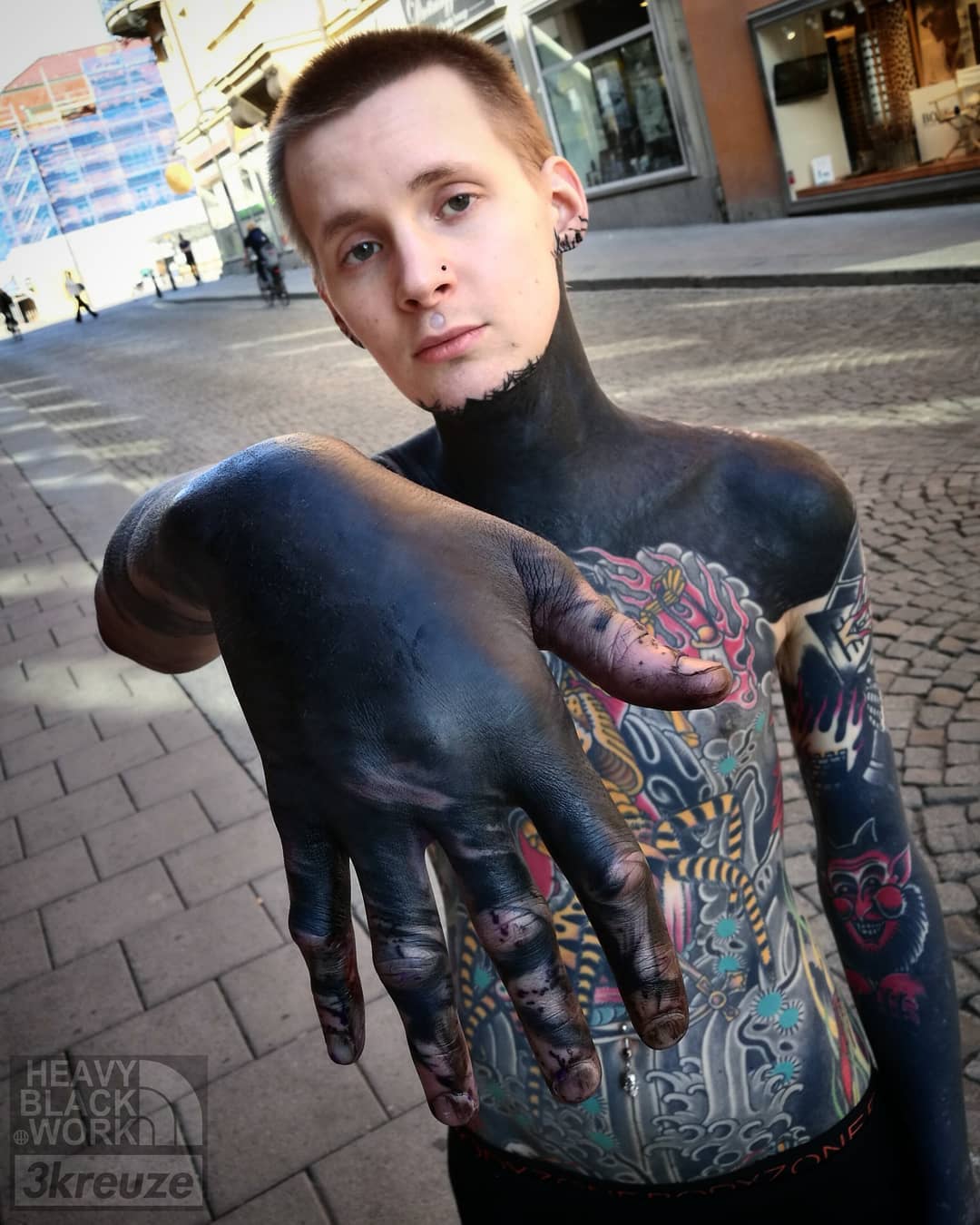
Why Are Heavy Blackwork Tattoos Becoming So Popular?
Heavy blackwork tattoos have become increasingly popular because they combine visual longevity, artistic versatility, strong personal symbolism, and high-impact aesthetics. Modern tattoo collectors often view blackwork as both a fashion statement and a long-term investment in durable body art.
The growth of blackwork is not simply a social media trend. Several deeper cultural shifts have contributed to its rise.
- Demand for timeless tattoo styles
- Growing appreciation for minimalist aesthetics
- Increased popularity of body suit projects
- Desire for meaningful symbolic designs
- Cover-up solutions for older tattoos
- Influence of contemporary tattoo artists
Platforms such as Instagram and Pinterest have certainly accelerated exposure, but experienced artists note that many clients arrive after years of considering large-scale blackwork projects rather than making impulsive decisions.
The Rise of Modern Minimalist Blackwork
Modern blackwork aligns closely with contemporary minimalist design principles by reducing visual noise and emphasizing structure, balance, and contrast. This approach appeals to individuals who prefer bold visual statements without excessive complexity.
Unlike highly detailed realism tattoos that demand constant visual attention, blackwork often creates impact through simplicity.
Architects, designers, and creative professionals frequently gravitate toward geometric blackwork because it mirrors principles found in modern design disciplines:
- Negative space utilization
- Structural balance
- Symmetry
- Repetition
- Pattern consistency
Information Gain Insight: Tattoo studios specializing in blackwork increasingly report that clients bring references from architecture, industrial design, and graphic design rather than from traditional tattoo imagery.
Why Clients Choose Large Black Designs
People choose heavy blackwork tattoos for aesthetic, emotional, symbolic, and practical reasons. Beyond appearance, many clients view blackwork as a transformative experience that represents personal growth, identity, or life transitions.
Several motivations repeatedly appear during artist consultations:
- Creating a strong visual identity
- Covering old tattoos
- Achieving body symmetry
- Expressing cultural influences
- Representing personal transformation
- Building cohesive large-scale collections
One overlooked factor is confidence. Large blackwork pieces often create a sense of intentionality and commitment that smaller tattoos may not convey.
Types of Heavy Blackwork Tattoo Styles
Heavy blackwork encompasses multiple artistic approaches, each using black ink differently to achieve unique visual effects. Understanding these styles helps clients choose designs that align with their aesthetic preferences, pain tolerance, and long-term goals.
The most successful projects begin with selecting a style that complements both the individual’s anatomy and lifestyle.
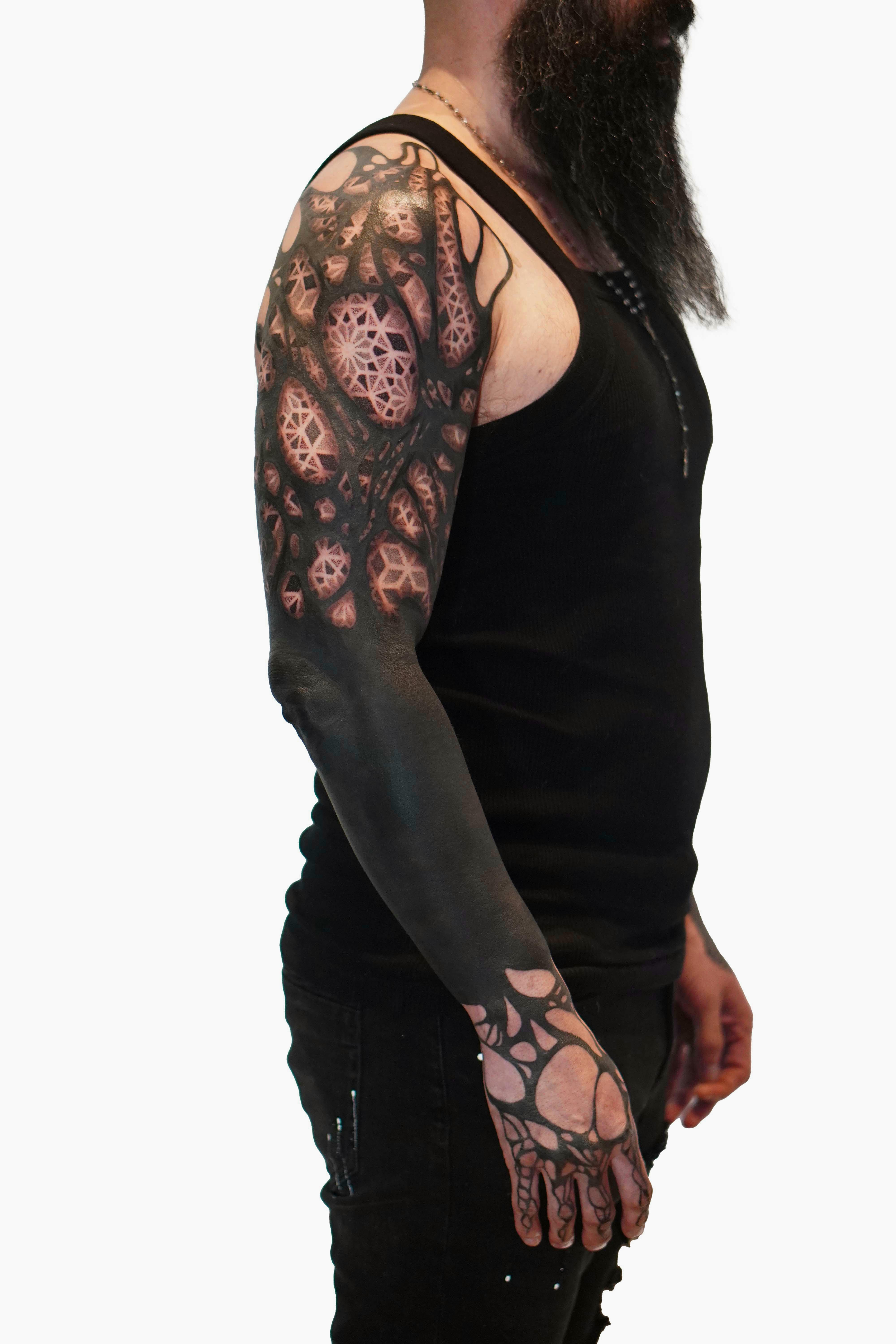
Blackout Tattoos
Blackout tattoos involve covering substantial areas of the body with solid black ink. They represent the most extreme form of blackwork and require exceptional technical execution to achieve uniform saturation and smooth healing.
While some people pursue blackout tattoos purely for aesthetics, others use them to conceal older tattoos that cannot be effectively covered through traditional methods.
Common blackout applications include:
- Full sleeves
- Half sleeves
- Leg coverage
- Chest panels
- Back pieces
Common Misconception: Many people assume blackout tattoos are completed in a single session. In reality, large projects often require multiple appointments to protect skin integrity and improve healing outcomes.
Geometric Blackwork
Geometric blackwork combines mathematical precision with high-contrast black saturation to create visually striking patterns. These tattoos often feature repeating structures, sacred geometry, tessellations, and symmetrical compositions.
Successful geometric work demands exceptional stencil placement and technical consistency.
Popular motifs include:
- Mandalas
- Sacred geometry
- Hexagonal structures
- Fractal-inspired patterns
- Architectural symmetry
The challenge lies in maintaining visual balance across moving body parts such as shoulders, elbows, and knees.
Tribal and Neo-Tribal Blackwork
Tribal and neo-tribal blackwork draw inspiration from indigenous tattoo traditions while incorporating contemporary design influences. Neo-tribal styles often expand beyond historical references to create entirely modern visual languages.
Traditional tribal tattooing carries deep cultural significance in many communities. Respecting these origins remains important when developing contemporary interpretations.
Neo-tribal designs frequently feature:
- Abstract organic shapes
- Flow-based composition
- Body-contouring patterns
- Aggressive black contrast
- Futuristic influences
Expert Perspective: The strongest neo-tribal projects are designed specifically around the client’s anatomy rather than copied from flat reference images.
Negative Space Blackwork
Negative space blackwork creates imagery by preserving untouched skin within heavily saturated black areas. This technique produces dramatic visual contrast while allowing artists to create highly recognizable imagery without relying on traditional outlines.
The approach requires advanced planning because mistakes cannot easily be corrected once surrounding areas are saturated.
Common applications include:
- Animal silhouettes
- Sacred symbols
- Portrait outlines
- Geometric patterns
- Lettering compositions
Ornamental Blackwork
Ornamental blackwork focuses on decorative aesthetics inspired by jewelry, architecture, textiles, and ceremonial artwork. These designs emphasize elegance, flow, and body harmony rather than heavy symbolism alone.
Many ornamental projects combine:
- Dotwork
- Filigree elements
- Geometric structures
- Mandala influences
- Decorative symmetry
When executed properly, ornamental blackwork can enhance natural body contours while maintaining strong visual presence.
How Artists Create Perfect Black Saturation
Perfect black saturation occurs when pigment is evenly deposited throughout the target skin layer without overworking tissue. Achieving this balance requires advanced technical skill, machine control, proper needle selection, and deep understanding of skin behavior during tattooing.
This is one of the least discussed yet most important aspects of successful blackwork tattooing.
Many clients evaluate blackwork solely by appearance immediately after the session. Experienced artists evaluate saturation months later after the skin has fully healed.
Understanding saturation science helps explain why some tattoos heal beautifully while others become patchy, uneven, or scarred.
Information Gain Section: In the next section, we’ll examine the science of tattoo saturation, why some heavy blackwork tattoos heal inconsistently, and the critical factors that determine long-term color retention.
Lucky Tattoo, a professional tattoo artist, has over 10 years of experience in the art of tattooing in Ho Chi Minh City. Lucky Tattoo Studio was founded in 2014 by skilled and kind artists. All tattoos are provided in a clean, strictly controlled, and friendly environment.
What Tattoo Saturation Actually Means
Tattoo saturation refers to how consistently pigment is deposited into the correct skin layer. In heavy blackwork, complete saturation creates smooth, uniform black areas without patchiness, visible skin gaps, or inconsistent healing.
Professional blackwork artists often describe saturation as a balance between efficiency and restraint. The goal is to maximize pigment retention while minimizing unnecessary skin damage.
Several factors influence successful saturation:
- Needle configuration
- Machine stroke length
- Hand speed
- Skin elasticity
- Pigment quality
- Client hydration
- Session duration
A common mistake among inexperienced artists is assuming darker immediate results indicate better saturation. In reality, excessive trauma can create temporary darkness that later heals unevenly.
Why Some Blackwork Tattoos Heal Patchy
Patchy healing occurs when black pigment is inconsistently implanted, skin becomes overworked, or aftercare practices interfere with normal recovery. Uneven healing is one of the most common reasons clients require touch-up sessions.
Even technically skilled artists occasionally encounter challenging healing outcomes due to individual skin differences.
Common causes include:
- Insufficient saturation
- Overworking the skin
- Poor aftercare compliance
- Premature scab removal
- Excessive sun exposure
- High-friction clothing
- Long sessions without proper skin management
Overlooked Insight: Areas with naturally thinner skin—such as elbows, wrists, and ankles—often heal differently than flatter body regions, requiring modified application techniques.
Ink Quality vs Artist Technique
Artist technique plays a far greater role in long-term blackwork quality than ink brand alone. While reputable pigments matter, technique ultimately determines saturation consistency, healing performance, and visual longevity.
Many clients spend significant time researching ink brands while overlooking the artist’s healed portfolio.
Experienced collectors know that healed results reveal more than fresh photographs.
Factors Affecting Long-Term Color Retention
Several variables influence how well a heavy blackwork tattoo retains its visual impact over time.
- Sun exposure habits
- Skin type
- Aftercare quality
- Artist technique
- Tattoo location
- Overall health
- Hydration levels
Research within dermatology consistently shows ultraviolet exposure remains one of the leading causes of tattoo fading. Daily sunscreen use significantly improves long-term pigment preservation.
How Painful Is a Heavy Blackwork Tattoo?
Heavy blackwork tattoos are generally more painful than many traditional tattoos because they require extensive saturation and repeated passes over larger skin areas. Pain levels vary based on body location, session length, individual tolerance, and artist technique.
Many clients describe blackwork pain as a cumulative experience rather than an immediate intense sensation. As sessions progress, inflammation and skin sensitivity increase.
Pain Levels by Body Area
Pain intensity varies significantly depending on anatomy. Areas with thin skin, prominent bones, and dense nerve concentrations typically produce stronger sensations during heavy blackwork sessions.
| Body Area | Typical Pain Level |
|---|---|
| Outer Arm | Moderate |
| Forearm | Moderate |
| Chest | High |
| Ribs | Very High |
| Knee | Very High |
| Shin | High |
Individual experiences vary considerably, making personal pain tolerance one of the most important variables.
Why Blackwork Sessions Often Feel More Intense
Blackwork sessions feel more intense because large areas require repeated pigment packing. Unlike linework-focused tattoos, saturation work continuously stresses the same region of skin for extended periods.
The sensation often shifts from sharp discomfort to a persistent burning feeling as inflammation increases.
Long sessions can also contribute to:
- Physical fatigue
- Muscle tension
- Reduced concentration
- Blood sugar fluctuations
- Emotional exhaustion
Pain Management Strategies
Proper preparation can significantly improve comfort during heavy blackwork sessions. Nutrition, hydration, sleep quality, and stress management often influence pain perception more than people realize.
- Sleep at least 7–8 hours
- Eat a substantial meal beforehand
- Stay hydrated
- Avoid alcohol
- Wear comfortable clothing
- Communicate openly with your artist
Professional Recommendation: Avoid relying solely on numbing products without discussing them with your artist, as some formulations may alter skin texture and affect tattoo application.
Heavy Blackwork Tattoo Healing Process
Most heavy blackwork tattoos require approximately two to six weeks for surface healing, although deeper skin recovery may continue for several months. Proper aftercare directly influences pigment retention, comfort, and overall appearance.
Healing timelines vary based on project size, skin type, immune response, and environmental factors.
Healing Stages Week by Week
Blackwork tattoos generally progress through predictable healing phases. Understanding these stages helps clients distinguish normal healing from potential complications.
- Days 1–3: Redness, swelling, sensitivity.
- Days 4–10: Peeling and mild itching.
- Days 10–21: Surface recovery continues.
- Weeks 3–6: Skin stabilizes and appearance improves.
Many clients mistakenly believe their tattoo is fully healed once peeling stops. In reality, deeper recovery often continues beneath the surface.
Common Healing Challenges
Most healing issues stem from excessive moisture, friction, poor hygiene, or unrealistic expectations regarding the recovery process. Early intervention helps prevent long-term complications.
- Heavy scabbing
- Excessive dryness
- Patchy healing
- Localized irritation
- Prolonged redness
Minor flaking and itching are generally normal. However, increasing redness, severe swelling, or unusual discharge may indicate infection and warrant medical evaluation.
Signs of Healthy vs Problematic Healing
Healthy healing typically involves gradual improvement in comfort, reduced inflammation, and consistent pigment appearance. Problematic healing often shows worsening symptoms rather than steady recovery.
| Healthy Healing | Potential Warning Signs |
|---|---|
| Mild peeling | Increasing redness |
| Reduced swelling | Pus formation |
| Moderate itching | Severe pain |
| Consistent recovery | Fever symptoms |
Safety Note: Seek professional medical advice if infection symptoms develop. Tattoo artists provide aftercare guidance but are not substitutes for medical professionals.
Heavy Blackwork Tattoo Aftercare Best Practices
Effective aftercare protects saturation quality, minimizes healing complications, and supports long-term tattoo longevity. Consistent aftercare often determines whether a blackwork piece heals evenly or requires costly corrective work.
First 48 Hours
The first two days are critical because the tattoo functions similarly to a controlled skin wound. Cleanliness and protection significantly influence recovery outcomes.
- Follow artist instructions precisely
- Wash with mild fragrance-free cleanser
- Avoid soaking
- Keep hands clean
- Limit unnecessary contact
First Two Weeks
During the peeling phase, maintaining moisture balance becomes the primary objective. Over-moisturizing and excessive dryness can both create healing problems.
- Apply recommended moisturizer sparingly
- Avoid scratching
- Wear breathable clothing
- Limit gym friction
- Avoid swimming pools and hot tubs
Long-Term Maintenance
Long-term maintenance focuses on preserving contrast, minimizing fading, and protecting skin health. Even perfectly executed blackwork can deteriorate without proper care.
- Use sunscreen regularly
- Maintain skin hydration
- Monitor fading patterns
- Schedule touch-ups when necessary
Information Gain: Many experienced collectors report that consistent sunscreen use provides more noticeable long-term preservation than occasional touch-up sessions alone.
How Much Does a Heavy Blackwork Tattoo Cost?
Heavy blackwork tattoo costs vary widely based on artist expertise, project size, location, complexity, and session length. Large-scale work typically represents a significant financial investment because of the technical demands involved.
Average Price Ranges
Pricing depends heavily on geography and artist reputation. Experienced blackwork specialists generally command higher rates due to the complexity of saturation-focused projects.
| Project Type | Typical Cost Range |
|---|---|
| Small Piece | $150–$500 |
| Forearm Project | $500–$2,000+ |
| Half Sleeve | $1,500–$4,000+ |
| Full Sleeve | $3,000–$10,000+ |
Factors That Influence Cost
Multiple variables determine final pricing beyond simple tattoo size.
- Artist demand
- Project complexity
- Body placement
- Session count
- Studio location
- Custom design development
Why Cheap Blackwork Can Become Expensive Later
Low-cost blackwork often results in uneven saturation, excessive fading, or poor composition that later requires touch-ups, cover-ups, or complete redesigns.
Corrective work frequently costs more than investing in a qualified artist from the beginning.
Can Heavy Blackwork Tattoos Be Removed or Covered Up?
Heavy blackwork tattoos can sometimes be removed or modified, but they are among the most challenging tattoo styles to alter due to the sheer volume of pigment deposited into the skin.
Laser Removal Challenges
Black pigment generally responds better to laser technology than some colors, but dense blackwork often requires significantly more treatment sessions because of saturation depth and coverage area.
Clients should expect:
- Multiple treatments
- Higher overall costs
- Extended timelines
- Potential skin texture changes
Cover-Up Possibilities
Covering heavy blackwork is possible in some situations, particularly when negative space, layering techniques, or advanced design strategies are incorporated into future work.
However, options become increasingly limited as saturation density increases.
What Most People Regret About Blackout Tattoos
The most common regrets involve underestimating permanence, lifestyle implications, and future design limitations rather than dissatisfaction with appearance itself.
Experienced artists often encourage clients to wait several months before committing to extremely large blackout projects.
Choosing the Right Heavy Blackwork Tattoo Artist
Selecting an experienced artist is the single most important decision affecting the outcome of a heavy blackwork tattoo. Technical expertise, healed portfolio quality, and communication skills should outweigh convenience or pricing alone.
Portfolio Red Flags to Watch For
Portfolio quality reveals far more than social media popularity. Healed results provide the most reliable indication of technical competence.
- Only fresh tattoos shown
- Inconsistent saturation
- Limited large-scale projects
- Heavy photo editing
- Poor line consistency
Questions to Ask During a Consultation
Strong consultations help establish expectations, assess expertise, and identify potential concerns before tattooing begins.
- Can I see healed examples?
- How many sessions are required?
- What healing challenges should I expect?
- Do you specialize in blackwork?
- How are touch-ups handled?
How to Evaluate Healed Work
Healed work demonstrates true technical ability because it reveals how pigment settled after recovery. Experienced collectors prioritize healed examples over fresh tattoos whenever possible.
Information Gain: Many elite blackwork artists maintain dedicated healed galleries because healed results remain the most accurate measure of long-term quality.
Real-World Heavy Blackwork Tattoo Examples
Real-world examples demonstrate how design planning, artist skill, and long-term commitment influence outcomes. Studying completed projects helps prospective clients set realistic expectations.
Full Sleeve Transformation
A full sleeve transformation often requires multiple sessions spread across several months. Successful projects balance composition, anatomy, and long-term wearability.
Blackout Cover-Up Case Study
Many clients use blackout techniques to conceal previous tattoos that cannot be effectively reworked through traditional cover-up methods.
Geometric Blackwork Success Story
Geometric blackwork projects frequently demonstrate how precision, symmetry, and careful body mapping create visually cohesive large-scale artwork.
Expert Tips Before Getting a Heavy Blackwork Tattoo
Preparation dramatically improves outcomes. Successful clients invest time researching artists, understanding healing requirements, and evaluating long-term implications before committing to major blackwork projects.
Who Is an Ideal Candidate?
Ideal candidates appreciate bold aesthetics, understand the permanence of extensive black coverage, and are willing to follow aftercare recommendations consistently.
Who Should Reconsider?
Individuals seeking highly flexible future design options or those uncomfortable with significant visual commitment should carefully evaluate alternatives before proceeding.
Final Checklist Before Booking
Use this checklist before scheduling your appointment:
- Review healed portfolios
- Verify studio hygiene standards
- Understand healing expectations
- Budget appropriately
- Confirm project scope
- Plan recovery time
Frequently Asked Questions About Heavy Blackwork Tattoos
What is the difference between blackwork and blackout tattoos?
Blackout tattoos are a specific subtype of blackwork that focuses on large areas of solid black coverage. Blackwork is a broader category that includes geometric, ornamental, tribal, and negative-space designs.
Are heavy blackwork tattoos more painful than regular tattoos?
In many cases, yes. Extensive saturation requires repeated passes over larger areas, which often increases discomfort compared to linework-focused tattoos.
How long does a heavy blackwork tattoo take to heal?
Surface healing generally takes two to six weeks, although deeper skin recovery can continue for several months.
Do blackwork tattoos fade?
All tattoos fade to some degree over time, but well-executed blackwork often retains visual strength better than highly detailed color tattoos.
Can blackwork tattoos be removed?
Removal is possible but often requires numerous laser sessions due to the amount of pigment involved.
How much does a full blackwork sleeve cost?
Costs commonly range from several thousand dollars to over ten thousand dollars depending on artist reputation, location, and complexity.
What is the biggest mistake people make before getting blackwork?
The most common mistake is choosing an artist based on price rather than healed portfolio quality and proven blackwork experience.
Are heavy blackwork tattoos safe?
When performed by qualified professionals using proper hygiene standards and followed by appropriate aftercare, heavy blackwork tattoos are generally considered safe for healthy individuals.
Conclusion: Is a Heavy Blackwork Tattoo Right for You?
Heavy blackwork tattoos represent one of the boldest and most technically demanding forms of modern body art. Their visual power comes from expert saturation, strategic composition, and thoughtful use of contrast rather than complexity alone.
Whether you’re considering a geometric sleeve, ornamental composition, blackout project, or neo-tribal design, success ultimately depends on choosing an experienced artist, understanding the healing process, and committing to long-term maintenance. The strongest blackwork tattoos are not simply dark—they are intentional, technically refined, and designed to remain impactful for decades.
For individuals seeking durable visual impact, strong artistic identity, and timeless aesthetic appeal, a professionally executed heavy blackwork tattoo can become one of the most striking and enduring forms of personal expression available.
Lucky Tattoo, a professional tattoo artist, has over 10 years of experience in the art of tattooing in Ho Chi Minh City. Lucky Tattoo Studio was founded in 2014 by skilled and kind artists. All tattoos are provided in a clean, strictly controlled, and friendly environment.
heavy-blackwork-tattoo