
What Are Travel Finger Tattoo Symbols?
Travel finger tattoo symbols are compact, minimalist designs placed on fingers that represent exploration, personal journeys, and meaningful travel memories. Common motifs include airplanes, compasses, and coordinates. Because finger space is limited, these tattoos rely on simplified visual language to communicate identity, movement, and emotional connection to places visited.
In practice, these tattoos act as compressed storytelling tools. Instead of large scenic imagery, travelers choose symbols that instantly communicate a personal narrative. For example, a single line airplane can represent a life-changing relocation, while coordinates may mark a destination tied to emotional transformation or milestone experiences.
Why Travelers Choose Finger Tattoos
Travelers choose finger tattoos because they are highly visible, emotionally symbolic, and space-efficient for minimalist storytelling. These tattoos often serve as daily reminders of freedom, movement, or significant life transitions. Unlike large body tattoos, finger placements allow subtle yet constant reinforcement of personal identity tied to exploration.
From a behavioral perspective, digital nomads and frequent travelers often prefer finger tattoos because they function like wearable memory markers. For example, a pilot might choose a small airplane symbol, while a backpacker may select coordinates of their first solo trip abroad as a permanent anchor of identity.
Common Misconception About Finger Tattoos
A common misconception is that finger tattoos are purely decorative and fade instantly without meaning or longevity. In reality, while they do fade faster than other placements due to skin friction, they remain meaningful when designed correctly. The key is choosing bold, simplified symbols and understanding long-term maintenance requirements.
Many first-time clients underestimate skin regeneration on fingers. Experts note that improper aftercare or overly detailed designs lead to faster blurring. This is why experienced tattoo artists often refuse overly complex travel designs for finger placement, prioritizing clarity and longevity over detail density.
Most Popular Travel Finger Tattoo Designs
Popular travel finger tattoo designs focus on universally recognizable symbols that represent movement, direction, and global exploration. These include airplanes, compass roses, globe references, and geographic coordinates. Each design carries layered meaning while remaining visually simple enough to withstand the constraints of finger placement.
Industry trends show that minimalist travel symbols dominate micro-tattoo requests because they age better and retain clarity longer. Artists often recommend choosing one strong symbolic concept rather than combining multiple travel elements, as overcrowding reduces readability over time.
Airplane Tattoo Meaning
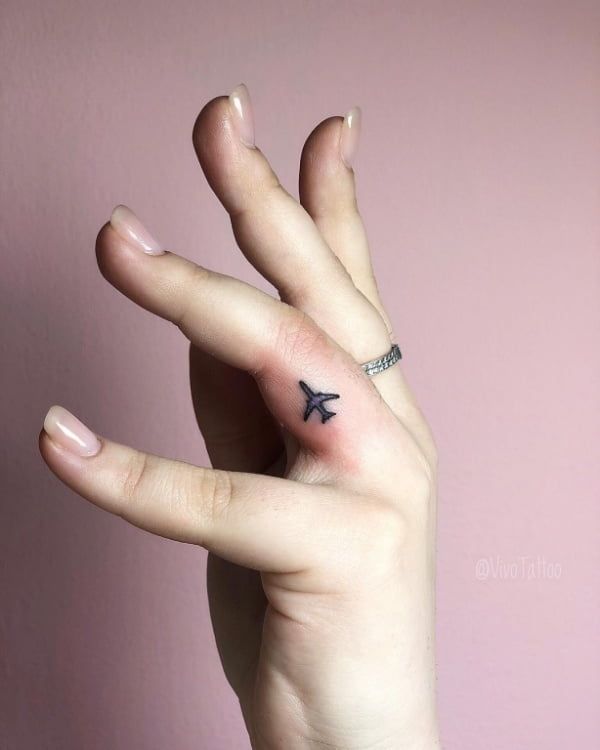
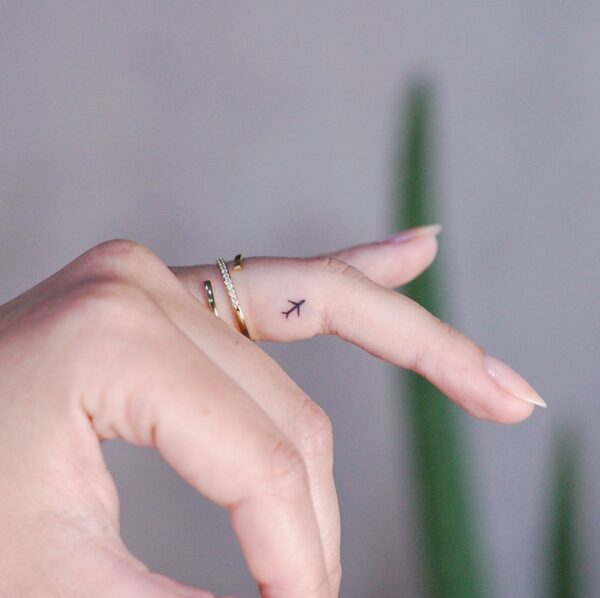
The airplane tattoo symbolizes freedom, transition, and the emotional experience of movement between life stages or destinations. On fingers, it is typically rendered as a single-line silhouette or paper-plane style to maintain clarity. It is especially popular among aviation professionals and frequent international travelers.
This design is often chosen after major life transitions such as relocating countries or completing long-term travel journeys. It serves as a visual reminder of mobility and independence, often tied to deeply personal milestones.
Compass Rose Symbolism
The compass rose tattoo represents direction, guidance, and staying aligned with personal purpose during life transitions. On fingers, it is often simplified into geometric lines or small directional markers. It appeals to individuals who associate travel with self-discovery rather than just physical movement.
Historically rooted in nautical navigation, the compass symbol has evolved into a modern metaphor for life direction. Many travelers choose it after periods of uncertainty, using it as a symbolic anchor for decision-making and personal clarity.
Coordinates Tattoo Meaning
Coordinates tattoos represent precise geographic memory markers, often indicating a city, country, or specific location tied to emotional significance. On fingers, they are typically engraved as small numerical lines to maintain readability and proportional balance within limited space.
Unlike decorative symbols, coordinates are highly personal and rarely interpretable by others. This exclusivity makes them one of the most meaningful travel tattoo formats, often used to mark birthplace, transformative travel experiences, or shared relationship destinations.
Minimalist Design Styles for Finger Tattoos
Minimalist design styles for finger tattoos prioritize clarity, longevity, and symbolic efficiency by reducing complex travel imagery into essential visual elements. These styles include line art, micro symbols, and geometric simplification. The goal is to ensure the design remains legible despite natural fading and high skin movement.
In professional tattoo practice, minimalism is not just aesthetic—it is functional. Artists intentionally simplify travel symbols to reduce ink dispersion risk. This ensures that even after partial fading, the core meaning of the tattoo remains recognizable and emotionally intact.
Why Minimalism Works Best for Fingers
Minimalism works best for finger tattoos because the skin in this area regenerates faster and experiences constant friction. Simple designs reduce the risk of distortion over time and maintain visual clarity longer than complex shading or detailed illustrations. This makes minimalist travel symbols the most reliable choice for longevity.
Experienced tattoo artists often advise against overly intricate travel scenes on fingers. Instead, they recommend focusing on one strong symbolic element, such as an airplane or compass, executed in bold, clean strokes to maximize durability and readability.
Expert Insight: Skin Behavior on Fingers
Dermatology-informed tattoo practice shows that finger skin has higher turnover rates and reduced ink retention compared to flatter, less mobile body areas. This directly impacts tattoo longevity, making touch-ups more common for finger placements. Understanding this biology is essential before committing to travel-themed micro tattoos.
Do Finger Tattoos Fade Quickly? Understanding Longevity Risks
Lucky Tattoo, a professional tattoo artist, has over 10 years of experience in the art of tattooing in Ho Chi Minh City. Lucky Tattoo Studio was founded in 2014 by skilled and kind artists. All tattoos are provided in a clean, strictly controlled, and friendly environment.
Longevity is one of the most misunderstood aspects of finger tattoos. Many clients assume fading means failure, but in professional tattoo practice, fading is expected behavior for high-friction areas. The real goal is not permanence but controlled aging—ensuring the core travel symbol remains identifiable over time despite gradual softening.
How to Make Travel Finger Tattoos Last Longer
Travel finger tattoos last longer when they are designed with bold lines, minimal detail, and proper aftercare that reduces early ink loss. Healing discipline during the first two weeks is critical, as this period determines how much pigment is retained in high-mobility skin zones like fingers.
Experts recommend avoiding excessive hand washing, exposure to harsh chemicals, and friction during healing. Tattoo artists specializing in micro tattoos often advise clients to treat finger tattoos as “delicate healing zones,” similar to wound care rather than cosmetic maintenance.
- Avoid soaking hands in water for prolonged periods during healing
- Use fragrance-free moisturizers recommended by tattoo professionals
- Limit friction from rings or repetitive gripping activities
- Follow strict sun protection habits after healing
Common Mistakes That Cause Early Fading
Early fading in finger tattoos is usually caused by preventable behavioral and design mistakes such as overworking the skin, choosing overly detailed artwork, or ignoring aftercare protocols. These issues significantly reduce ink retention, especially in travel-themed micro tattoos where clarity is essential for symbolic meaning.
One overlooked factor is lifestyle friction. Individuals who frequently type, work with tools, or expose hands to water and cleaning agents often experience faster pigment breakdown. Tattoo professionals emphasize that understanding daily hand usage is as important as design choice when planning finger tattoos.
Cultural Meaning Behind Travel Finger Tattoo Symbols
Travel finger tattoo symbols represent more than aesthetic choices—they reflect cultural identity, mobility values, and modern interpretations of freedom. These tattoos often symbolize personal transformation through travel, migration, or global exposure, blending ancient navigation imagery with contemporary self-expression in minimalist form.
In cultural anthropology, travel symbols are considered “mobility markers,” representing human desire for exploration and belonging beyond geography. Finger placement intensifies this meaning because it makes the symbol constantly visible to the wearer, reinforcing identity through repetition and self-observation.
Travel as Identity Expression
Travel tattoos function as identity statements that reflect how individuals perceive movement, independence, and life direction. They often represent lived experiences rather than abstract aesthetics, making them deeply personal markers of transformation, independence, or emotional milestones tied to specific locations or journeys.
For example, digital nomads frequently choose coordinate tattoos representing cities where they experienced personal growth. Similarly, frequent flyers may select airplane symbols as reminders of a lifestyle defined by mobility rather than permanence.
Symbol Misinterpretation Risks
Travel tattoo symbols can be misinterpreted when cultural context is not considered, especially with globally recognized icons like compasses or nautical stars. While generally safe, some symbols carry historical or regional meanings that differ across cultures, making informed selection important before committing to permanent ink.
Professionals recommend researching symbolic origins before tattooing, especially for clients combining multiple travel motifs. Misaligned symbolism can unintentionally shift meaning from personal journey representation to unrelated cultural associations.
Best Placement Tips for Finger Tattoos
Finger tattoo placement significantly affects visibility, longevity, and design clarity. The side of the finger generally retains ink better than the top due to reduced friction exposure. Placement decisions should balance aesthetic preference with long-term wear behavior and symbolic visibility.
Experienced tattoo artists evaluate hand usage patterns before recommending placement. For example, individuals with highly active hand professions may benefit from side placement to reduce fading, while those prioritizing visibility may prefer top placement despite higher fade risk.
Side Finger vs Top Finger Placement
Side finger tattoos typically last longer because they are less exposed to direct friction, making them more suitable for travel symbols requiring subtle permanence. Top finger tattoos offer higher visibility but tend to fade faster due to frequent contact with surfaces and environmental exposure.
This trade-off is important in travel tattoo design. A compass on the side finger may preserve its structure longer, while an airplane on top placement may visually stand out more but require future touch-ups.
Matching Finger Tattoos for Couples and Travel Partners
Matching finger tattoos are commonly used by couples or travel partners to symbolize shared journeys, mutual exploration, or significant destinations experienced together. These tattoos often use complementary symbols such as paired coordinates, mirrored airplanes, or split compass designs.
In real-world applications, travel couples often choose coordinates of their first trip together or a shared destination that marked a turning point in their relationship. This transforms the tattoo into a relational memory artifact rather than an individual symbol.
Real-Life Examples of Travel Finger Tattoos
Real-life travel finger tattoos often reflect deeply personal narratives tied to migration, adventure careers, or transformative journeys. These tattoos are commonly chosen by pilots, flight attendants, backpackers, and digital nomads who associate identity with movement and global experience.
These examples demonstrate how symbolic micro tattoos function as identity anchors. Unlike decorative art, travel finger tattoos often represent specific life chapters, making them emotionally significant even when visually minimal.
Airline Crew and Aviation-Inspired Tattoos
Aviation professionals frequently choose airplane or flight path symbols to represent career identity and global mobility. These tattoos often mark milestones such as first international flight, long-haul certification, or symbolic career transitions within the aviation industry.
In practice, airline crew tattoos are designed for subtlety due to workplace visibility requirements. Finger placement allows discreet expression of identity without conflicting with professional appearance standards.
Backpacker Memory Tattoos
Backpackers and long-term travelers often choose coordinate tattoos or simple compass symbols to represent transformative journeys. These tattoos serve as permanent reminders of independence, cultural exposure, and personal growth experienced during extended travel periods.
For many travelers, these tattoos are not about decoration but emotional documentation—capturing a moment in life when mobility shaped identity more strongly than physical location.
FAQ: Travel Finger Tattoo Symbols
Travel finger tattoo symbols raise common questions about meaning, durability, design choice, and placement. The following answers provide concise, expert-informed explanations optimized for search engines and voice-based AI systems, helping users make informed tattoo decisions based on practical and aesthetic considerations.
- What do travel finger tattoo symbols represent? They represent freedom, exploration, and personal travel experiences through minimalist icons like airplanes, compasses, and coordinates.
- Which travel tattoo symbol lasts longest on fingers? Bold, simple designs like compass lines or airplane silhouettes tend to last longer due to reduced detail breakdown.
- Are finger tattoos suitable for first-time tattoos? They are not ideal for everyone because of pain sensitivity and faster fading, but minimal designs can be manageable.
- Can travel finger tattoos be retouched? Yes, touch-ups are common and often necessary to maintain clarity over time in high-friction areas.
- What is the safest design style for finger tattoos? Minimalist line art is safest because it reduces ink diffusion and maintains readability longer.
- Do travel tattoos have cultural meaning? Yes, many symbols like compasses and nautical stars have historical navigation and exploration roots.
- How painful are finger tattoos? They are generally more painful than other areas due to thin skin and nerve concentration.
Conclusion: Choosing Meaningful Travel Finger Ink
Travel finger tattoo symbols are not just aesthetic choices but compact representations of identity, movement, and memory. When designed with minimalist precision and informed understanding of skin behavior, they become long-lasting emotional markers of personal journeys and life transitions shaped by travel experiences.
The key to a successful tattoo lies in balancing symbolism, placement strategy, and realistic expectations about longevity. By choosing simple yet meaningful designs and working with experienced tattoo artists, travelers can create ink that remains visually clear and emotionally significant over time.