
Old school tattoos, also known as American traditional tattoos, are among the most recognizable tattoo styles in the world. Defined by bold black outlines, limited yet vibrant color palettes, and iconic imagery such as anchors, swallows, roses, eagles, and ships, these tattoos have remained relevant for more than a century. Their enduring popularity is not simply a matter of nostalgia. Traditional tattooing was designed for visibility, symbolism, and longevity—qualities that continue to resonate with modern tattoo collectors.
Whether you’re researching your first tattoo, exploring traditional symbolism, or comparing tattoo styles, understanding the origins and principles behind old school tattoos can help you make a more informed decision. This guide explores their history, design philosophy, cultural significance, and the reasons they remain one of the best-aging tattoo styles available today.
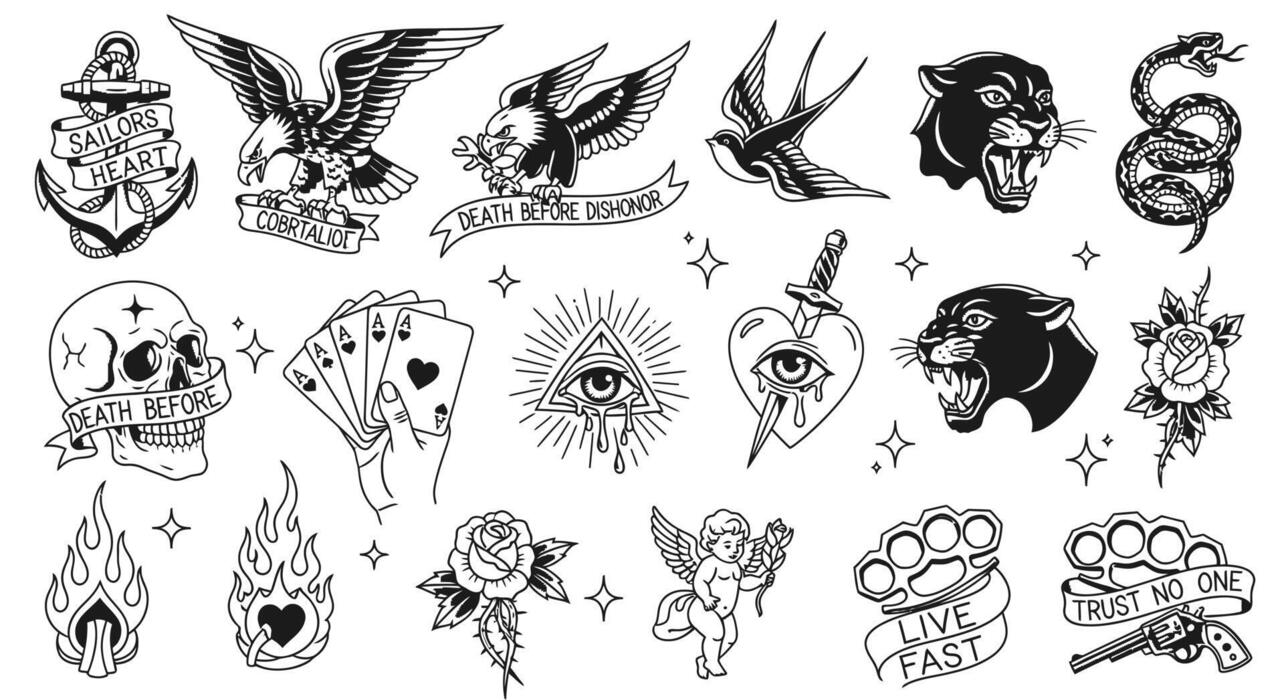
What Is an Old School Tattoo?
Old school tattoos are a traditional tattoo style characterized by thick black outlines, simplified imagery, strong contrast, and a limited color palette. Originating in the early twentieth century, the style emphasizes readability, symbolism, and durability, making it one of the most enduring forms of tattoo art worldwide.
Direct Definition of American Traditional Tattoos
American traditional tattoos emerged as a distinct artistic movement that prioritized clarity over complexity. Unlike highly detailed realism or fine-line tattoos, traditional designs rely on bold visual impact and instantly recognizable imagery that remains legible even decades after application.
The term “old school tattoo” is often used interchangeably with “American traditional tattoo.” The style developed primarily in the United States during the early twentieth century and became closely associated with sailors, military personnel, travelers, and working-class communities.
Core design characteristics include:
- Heavy black outlines
- Solid color fills
- Minimal shading
- Limited color palettes
- Iconic symbolic imagery
- High visual contrast
- Strong long-term readability
Traditional tattoo artists intentionally avoided excessive detail because early tattoo equipment made intricate work difficult. Ironically, this limitation helped create one of the most durable tattoo aesthetics ever developed.
Key Characteristics That Define the Style
The defining elements of old school tattoos serve both artistic and practical purposes. Every design choice—from line thickness to color selection—contributes to visibility, longevity, and symbolic storytelling.
Traditional tattoos commonly feature:
| Characteristic | Purpose |
|---|---|
| Bold Outlines | Maintain clarity over time |
| Limited Colors | Create strong contrast |
| Simple Shapes | Improve long-term readability |
| Symbolic Imagery | Communicate personal stories |
| Minimal Detail | Reduce visual degradation |
Popular color combinations include red, yellow, green, blue, and black. These pigments create striking visual contrast while preserving the unmistakable traditional aesthetic.
Common Misconceptions About Traditional Tattoos
Many people mistakenly assume old school tattoos are outdated or simplistic. In reality, traditional tattooing requires precise execution, strong composition skills, and deep understanding of symbolism and longevity.
Several misconceptions persist:
- Myth: Traditional tattoos lack artistic complexity.
- Reality: Simplicity requires exceptional design discipline.
- Myth: Modern styles have replaced traditional tattoos.
- Reality: Traditional tattooing remains one of the most requested styles globally.
- Myth: Traditional tattoos are only for sailors.
- Reality: Contemporary collectors come from every background and profession.
Why Traditional Tattoos Remain Relevant Today
One overlooked reason for the continued popularity of old school tattoos is their adaptability. Traditional principles can be applied to modern themes, allowing artists to create contemporary designs while preserving classic readability and longevity.
Many leading tattoo artists report that clients increasingly seek tattoos that will still look recognizable twenty or thirty years later. This growing focus on longevity has renewed interest in traditional design principles.
“The best tattoo is often not the most detailed one—it’s the one that remains readable for life.”
The History of Old School Tattoos
Old school tattoos evolved from maritime traditions, military culture, and early American tattoo shops. Their history reflects migration, exploration, identity, and personal storytelling, making them one of the most culturally significant tattoo movements ever created.
Early Maritime and Military Origins
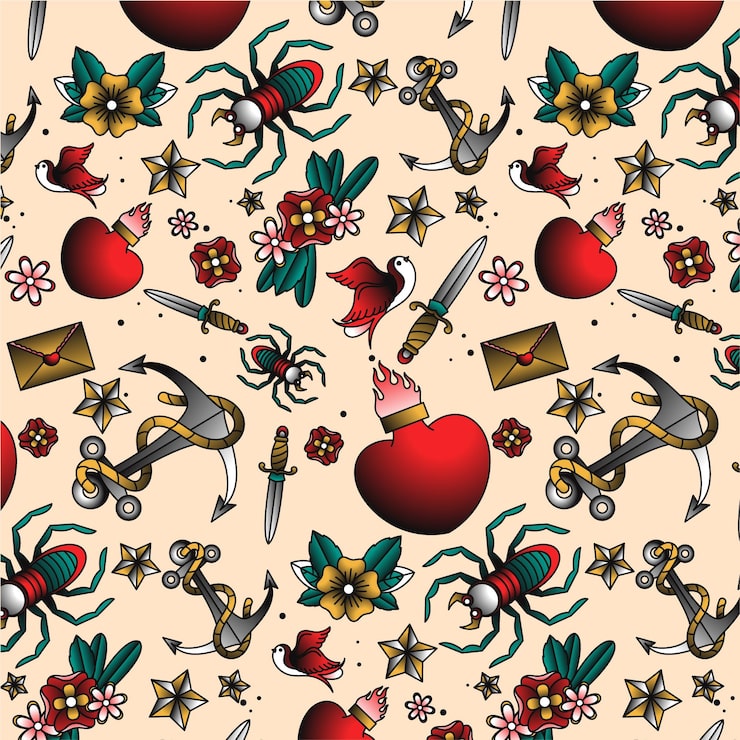
The roots of traditional tattooing can be traced to sailors who traveled across the Pacific and encountered tattoo traditions in Polynesia and Asia. These seafarers returned home carrying both tattoos and knowledge of tattooing techniques.
Throughout the nineteenth and early twentieth centuries, tattoos became closely associated with:
- Naval service
- Merchant mariners
- Long-distance travelers
- Military personnel
- Adventure seekers
Tattoos often served as visual records of personal achievements, journeys, and milestones. A sailor’s tattoos could communicate years of maritime experience without a single spoken word.
How Sailors Shaped Tattoo Culture
Sailors played a crucial role in transforming tattooing from a niche practice into a recognizable cultural tradition. Many of the symbols still used today originated from maritime folklore and nautical achievements.
For example:
- An anchor symbolized stability and safe passage.
- A swallow often represented extensive sea travel.
- A ship reflected adventure and exploration.
- A compass symbolized guidance and direction.
These images functioned as both personal mementos and social identifiers within maritime communities.
The Influence of Sailor Jerry
Few individuals have influenced traditional tattooing as profoundly as Norman Collins, better known as Sailor Jerry. His innovations in design, pigment use, and technical execution helped define modern American traditional tattooing.
Operating in Honolulu during the mid-twentieth century, Sailor Jerry developed flash designs that combined military imagery, nautical symbolism, pin-up art, and Asian artistic influences.
His contributions included:
- Cleaner stencil methods
- Improved tattoo pigments
- More durable application techniques
- Iconic flash sheet development
- Enhanced color saturation practices
Many motifs associated with old school tattooing today can be traced directly to his influence.
The Global Spread of Traditional Tattooing
A commonly overlooked aspect of tattoo history is how American traditional tattooing influenced artists far beyond the United States. By the late twentieth century, traditional tattoo conventions and international artist exchanges had spread the style worldwide.
Today, traditional tattoo studios can be found across:
- North America
- Europe
- Australia
- Japan
- South America
- Southeast Asia
Although regional interpretations vary, the core principles remain remarkably consistent: bold lines, strong symbolism, and timeless visual impact.
What Makes Old School Tattoos Different From Other Styles?
Old school tattoos differ from modern styles by prioritizing readability, longevity, and symbolic communication over photorealistic detail. Their design principles were developed to withstand decades of skin aging, making them one of the most durable tattoo formats available.
Comparing Traditional vs Neo-Traditional Tattoos
Traditional and neo-traditional tattoos share common roots, but neo-traditional work introduces expanded color palettes, greater detail, and more complex compositions.
| Feature | Traditional | Neo-Traditional |
|---|---|---|
| Line Weight | Very Bold | Moderately Bold |
| Detail Level | Simple | Complex |
| Color Range | Limited | Expanded |
| Longevity | Excellent | Very Good |
Collectors seeking classic aesthetics often prefer traditional tattoos, while those wanting greater artistic complexity may gravitate toward neo-traditional designs.
Traditional vs Realism Tattoos
Realism tattoos aim to reproduce photographs and lifelike imagery, while traditional tattoos focus on symbolic representation. The difference affects not only appearance but also long-term aging performance.
Realism tattoos often rely on:
- Fine details
- Soft shading transitions
- High-density textures
- Subtle tonal variations
As skin changes over time, some of these details can become less distinct. Traditional tattoos, by contrast, were intentionally designed to remain visually clear under the same conditions.
Traditional vs Fine-Line Tattoos
Fine-line tattoos emphasize delicate aesthetics and minimalism, whereas traditional tattoos prioritize durability and visual strength. Both styles can be beautiful, but they serve different goals.
One of the most important considerations for prospective clients is aging. Fine lines may gradually soften or blur over decades, particularly in high-movement areas. Traditional tattoos were built around thicker lines specifically to minimize this effect.
Which Style Ages Best and Why?
One of the biggest misconceptions in modern tattoo culture is that more detail automatically means a better tattoo. Experienced artists frequently argue the opposite when discussing long-term aging.
Several factors contribute to the longevity of traditional tattoos:
- Bold outlines resist visual breakdown.
- Simple shapes remain recognizable.
- High contrast improves visibility.
- Limited detail reduces visual clutter.
- Strategic spacing prevents design collapse.
This is why many tattoo professionals still use traditional design principles as a benchmark when evaluating whether a tattoo will stand the test of time.
Core Elements of Old School Tattoo Design
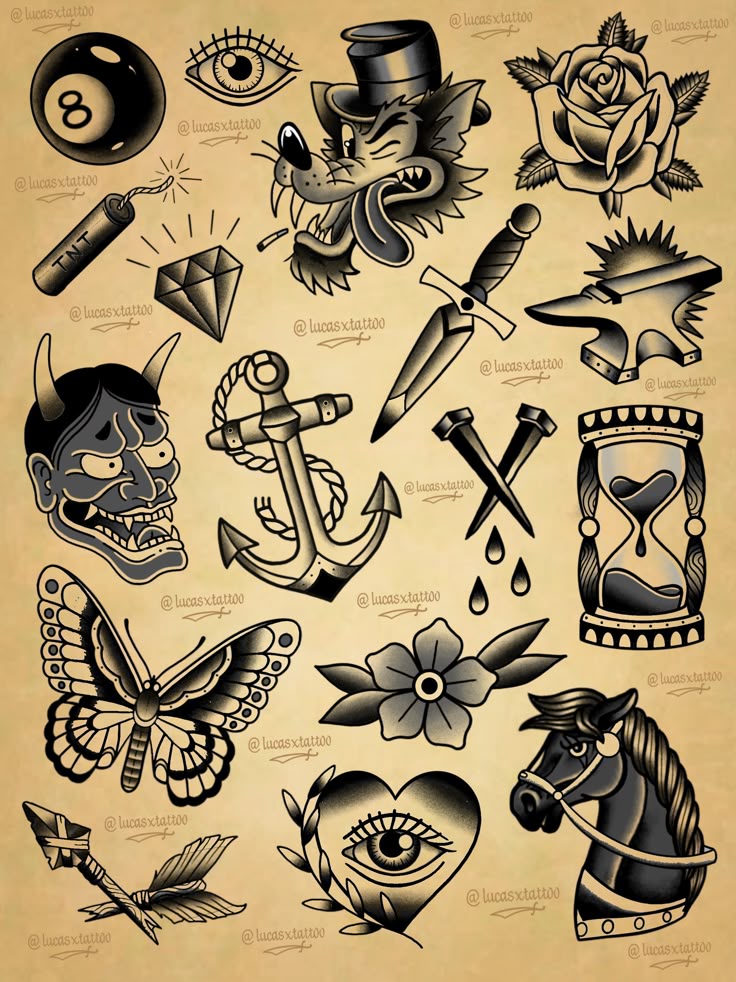
Old school tattoo design is built on a small set of powerful artistic principles that maximize visibility, symbolism, and longevity. Understanding these principles helps explain why traditional tattoos continue to outperform many modern styles over time.
Bold Black Outlines
Bold outlines are the foundation of traditional tattooing. Thick lines create structure, improve visibility, and help preserve a tattoo’s shape as skin naturally changes with age.
Traditional artists use outlines not merely as borders but as architectural frameworks that hold the entire composition together. This design strategy explains why even century-old traditional tattoos often remain recognizable.
Limited but Powerful Color Palettes
Traditional tattoo color palettes are intentionally restricted to maximize contrast and visual impact. Rather than relying on hundreds of subtle shades, artists focus on strong, proven combinations.
Common colors include:
- Red
- Yellow
- Green
- Blue
- Black
These colors create immediate visual recognition while maintaining harmony across large collections of tattoos.
Strong Contrast and Readability
Readability is one of the most overlooked principles in tattoo design. A tattoo should be recognizable from both close range and several feet away.
Traditional tattoos achieve this through:
- High contrast
- Strategic negative space
- Simplified imagery
- Bold silhouettes
- Balanced composition
Many experienced collectors evaluate designs by viewing them from a distance before approving a stencil, a practical technique that highlights potential readability issues.
Information Gain: The Science Behind Tattoo Longevity
While many articles discuss traditional aesthetics, few explain why these tattoos often age so well. Research on tattoo aging suggests that pigment particles gradually shift and disperse within the skin over time. Designs with excessive detail can lose definition as this occurs.
Traditional tattoos counteract this challenge through larger visual elements, stronger outlines, and intentional spacing. These design decisions act as built-in safeguards against the natural aging process.
Up Next: The most popular old school tattoo symbols and meanings, including anchors, swallows, roses, eagles, daggers, and ships, along with their historical origins and modern interpretations.
Most Popular Old School Tattoo Symbols and Meanings
Lucky Tattoo, a professional tattoo artist, has over 10 years of experience in the art of tattooing in Ho Chi Minh City. Lucky Tattoo Studio was founded in 2014 by skilled and kind artists. All tattoos are provided in a clean, strictly controlled, and friendly environment.
Anchor Tattoos
Anchor tattoos traditionally symbolize stability, strength, grounding, and safe passage through difficult times. Originally associated with sailors, they remain one of the most enduring old school tattoo motifs because they represent resilience and reliability across generations.
Symbolism and Historical Meaning
Historically, sailors often earned anchor tattoos after crossing the Atlantic Ocean or completing significant maritime journeys. The anchor represented security amid uncertainty and became a visual reminder of surviving dangerous voyages.
Today, many people choose anchor tattoos to represent:
- Personal stability
- Family connections
- Faith and hope
- Mental resilience
- Life balance
Modern Interpretations
Contemporary artists frequently combine anchors with roses, compasses, ships, or banners to personalize the symbolism while maintaining traditional aesthetics.
Swallow Tattoos
Swallow tattoos traditionally symbolize safe return, loyalty, freedom, and perseverance. Their origins in maritime culture make them one of the most recognizable symbols in American traditional tattooing.
Sailor Traditions and Navigation Symbolism
Sailors believed seeing swallows indicated proximity to land. Because these birds eventually return home, they became symbols of safe travel and successful journeys.
In traditional tattoo folklore, swallows were often earned after accumulating significant nautical mileage.
Modern Cultural Meaning
Modern collectors often interpret swallow tattoos as symbols of:
- Personal growth
- Freedom from adversity
- Returning home
- Loyalty to loved ones
- New beginnings
Rose Tattoos
Traditional rose tattoos represent love, beauty, sacrifice, and emotional depth. Their versatility allows them to function as standalone pieces or complementary elements within larger traditional tattoo compositions.
Love, Beauty, and Sacrifice
One reason roses remain popular is their ability to represent contrasting emotions. The bloom symbolizes beauty and love, while thorns suggest hardship, sacrifice, and personal growth.
This duality creates a powerful visual metaphor that resonates across cultures.
Popular Rose Design Variations
- Red rose tattoos for love and passion
- Yellow roses for friendship
- Black roses for remembrance
- Rose and dagger combinations for strength through adversity
- Rose and skull designs for mortality themes
Eagle Tattoos
Eagle tattoos symbolize strength, courage, freedom, and determination. As one of the most iconic American traditional designs, the eagle continues to represent personal power and national identity.
Patriotism and Strength
The eagle became popular among military members and veterans because it reflected bravery, leadership, and service. Traditional tattoo flash sheets frequently featured eagles clutching banners, flags, or snakes.
Modern Design Applications
Contemporary traditional artists often adapt eagle designs into chest pieces, back pieces, and sleeve projects while preserving their classic structure and symbolism.
Dagger Tattoos
Dagger tattoos traditionally represent courage, protection, sacrifice, and overcoming challenges. Their sharp visual impact makes them one of the strongest symbolic elements in traditional tattooing.
Courage and Survival
Historically, dagger imagery reflected both conflict and survival. The symbol often represented a person’s ability to overcome adversity or defend important values.
Combining Daggers with Other Symbols
Popular traditional combinations include:
- Dagger through a rose
- Dagger and heart
- Dagger and snake
- Dagger and eagle
- Dagger with banners or script
Ship Tattoos
Ship tattoos symbolize exploration, ambition, adventure, and life’s journey. They are among the oldest and most respected motifs in traditional tattoo culture.
Maritime Heritage
For sailors, ships represented livelihood, survival, and identity. Tattooing a vessel often commemorated important voyages or years spent at sea.
Modern Adventure Symbolism
Today, ship tattoos frequently symbolize:
- Life transitions
- Personal ambition
- Exploration
- Independence
- Moving forward through uncertainty
Why Old School Tattoos Age Better Than Many Modern Tattoos
Old school tattoos often age better because their design principles prioritize readability, contrast, and structural integrity. Thick outlines, intentional spacing, and simplified imagery help traditional tattoos remain recognizable even as skin naturally changes over decades.
How Ink Settles Under Skin
All tattoos experience gradual pigment migration over time. Understanding how ink behaves beneath the skin explains why some tattoos remain clear while others lose definition.
Tattoo ink resides within the dermis. As the skin ages, microscopic changes occur that can soften edges and reduce clarity. Designs with excessive detail are more vulnerable to these changes.
Traditional tattoo artists historically accounted for this reality by creating larger shapes and stronger outlines.
Why Thick Lines Resist Blurring
Bold outlines act as visual anchors that preserve a tattoo’s overall shape. Even when minor pigment movement occurs, thicker lines maintain readability far better than delicate linework.
This is one of the main reasons experienced artists often recommend traditional techniques for clients seeking maximum longevity.
| Design Feature | Long-Term Benefit |
|---|---|
| Bold outlines | Maintains shape clarity |
| Negative space | Prevents visual crowding |
| Simple imagery | Improves readability |
| High contrast | Preserves visibility |
Dermatologist Perspectives on Tattoo Aging
Dermatology research consistently shows that sun exposure, skin elasticity changes, and pigment migration influence tattoo appearance over time. While no tattoo remains completely unchanged, design choices significantly impact aging outcomes.
Evidence-based recommendations include:
- Use broad-spectrum sunscreen regularly
- Maintain skin hydration
- Avoid excessive UV exposure
- Choose experienced artists
- Select designs with adequate spacing
Information Gain: 10-Year, 20-Year, and 30-Year Aging Comparisons
An overlooked insight within tattoo culture is that many traditional tattoos actually become more visually unified over time. While hyper-detailed tattoos may lose micro-details, traditional designs often retain their overall composition remarkably well.
Experienced artists frequently use decades-old traditional tattoos as educational examples when explaining design longevity to new clients.
Choosing the Right Old School Tattoo Design
Choosing the right traditional tattoo requires balancing personal meaning, artistic quality, body placement, and long-term aging considerations. The best designs combine strong symbolism with practical design principles that preserve clarity throughout life.
Matching Designs to Personal Meaning
The most successful tattoos are personally significant rather than trend-driven. Traditional imagery offers centuries of symbolism that can be adapted to individual experiences and values.
Before selecting a design, consider:
- What personal story it represents
- Whether the symbolism will remain meaningful
- How it complements existing tattoos
- Its visual impact from a distance
Selecting Appropriate Placement
Placement affects visibility, pain levels, aging, and overall design performance. Certain locations naturally support traditional tattoos better than others.
Popular traditional tattoo placements include:
- Forearms
- Upper arms
- Chest
- Back
- Calves
- Thighs
Areas with excessive friction or significant skin movement may require additional design considerations.
Size Considerations for Longevity
Size plays a critical role in tattoo longevity. Designs that are too small may lose definition over time, particularly when they contain intricate details.
Many professional artists recommend slightly larger designs to preserve visual integrity over decades.
Common Mistakes First-Time Tattoo Clients Make
First-time collectors often focus heavily on aesthetics while overlooking technical factors that influence long-term results.
Common mistakes include:
- Choosing designs that are too small
- Prioritizing trends over meaning
- Selecting inexperienced artists
- Ignoring aftercare instructions
- Overcrowding future tattoo space
How to Find an Authentic Traditional Tattoo Artist
Finding the right traditional tattoo artist is often more important than selecting the design itself. Skilled artists understand historical symbolism, technical execution, and the design principles that make traditional tattoos age successfully.
Portfolio Evaluation Checklist
A strong portfolio should demonstrate consistency, clean execution, and mastery of traditional design fundamentals. Looking beyond social media popularity helps identify genuine expertise.
- Crisp linework
- Consistent saturation
- Balanced compositions
- Traditional flash experience
- Healed tattoo examples
Questions to Ask During Consultation
Consultations provide valuable insight into an artist’s experience and professionalism. Asking the right questions can prevent costly mistakes.
- How long have you specialized in traditional tattoos?
- Can I see healed examples?
- How will this design age?
- What size do you recommend?
- What aftercare protocol should I follow?
Red Flags to Avoid
Several warning signs may indicate inadequate experience or poor professional standards.
- Inconsistent linework
- No healed tattoo portfolio
- Unclear hygiene practices
- Reluctance to discuss aging
- Overly discounted pricing
Information Gain: Signs of True Traditional Tattoo Expertise
One overlooked indicator of expertise is an artist’s understanding of historical flash design. Many highly respected traditional artists can explain the origins, symbolism, and technical reasoning behind classic motifs rather than simply reproducing them.
Modern Trends in Old School Tattoos
Although traditional tattooing is rooted in history, it continues to evolve. Modern artists are adapting classic principles to contemporary themes while preserving the characteristics that made traditional tattooing successful for generations.
Neo-Traditional Influences
Neo-traditional tattooing expands upon classic American traditional foundations by incorporating richer colors, more complex shading, and broader artistic influences.
Many artists blend traditional structure with contemporary creativity to create highly personalized work.
Color Revival Techniques
Advances in pigments and tattoo equipment have enhanced color saturation and consistency. However, experienced artists still rely on traditional principles of contrast and composition to maximize longevity.
AI-Generated Tattoo Concepts and Traditional Art
Artificial intelligence is increasingly used to generate tattoo concepts and visual references. While AI can assist brainstorming, experienced tattoo artists remain essential for creating technically sound designs that translate effectively to skin.
One common mistake is assuming an AI-generated image automatically functions as a tattoo design. Professional adaptation is often necessary.
Future of Traditional Tattoo Culture
Industry trends suggest that traditional tattooing will remain influential because its core strengths—clarity, symbolism, and longevity—continue to align with collector priorities.
As awareness of tattoo aging increases, many experts predict renewed appreciation for traditional design principles.
Old School Tattoo Aftercare and Maintenance
Proper aftercare significantly affects healing quality, color retention, and long-term appearance. Even the best tattoo can experience preventable fading if aftercare recommendations are ignored.
Immediate Aftercare Best Practices
The first few weeks are critical. Following professional aftercare guidance reduces infection risk and supports optimal healing.
- Keep the tattoo clean
- Follow artist instructions precisely
- Avoid swimming during healing
- Do not pick scabs
- Use approved aftercare products
Long-Term Color Preservation
Long-term maintenance focuses primarily on protecting the skin from environmental damage, particularly ultraviolet radiation.
Daily sunscreen use remains one of the most effective ways to preserve tattoo appearance.
Preventing Premature Fading
Fading occurs naturally, but lifestyle choices can accelerate the process. Limiting excessive sun exposure and maintaining healthy skin habits can substantially improve tattoo longevity.
Expert Advice for Decades-Long Longevity
Many veteran tattoo artists recommend viewing tattoo care as a lifelong commitment. Consistent protection often produces better long-term results than periodic touch-ups alone.
Frequently Asked Questions About Old School Tattoos
What is the meaning of an old school tattoo?
Old school tattoos typically represent personal values, life experiences, achievements, relationships, or cultural traditions through highly symbolic imagery such as anchors, roses, eagles, ships, and swallows.
Are old school tattoos still popular?
Yes. American traditional tattooing remains one of the most requested tattoo styles globally due to its timeless aesthetics, symbolism, and proven longevity.
Do traditional tattoos age better than fine-line tattoos?
In many cases, yes. Traditional tattoos use thicker lines, stronger contrast, and simpler compositions that generally maintain readability more effectively over decades.
What colors are commonly used in old school tattoos?
Traditional tattoos typically use black, red, yellow, green, and blue. These colors create strong contrast and contribute to the style’s distinctive appearance.
Who was Sailor Jerry?
Sailor Jerry, born Norman Collins, was one of the most influential tattoo artists in history. His innovations helped define modern American traditional tattooing.
How much does an old school tattoo cost?
Pricing varies based on artist experience, location, design complexity, and tattoo size. Quality traditional work should be viewed as a long-term investment rather than a short-term expense.
What are the most popular traditional tattoo symbols?
Popular motifs include anchors, swallows, roses, eagles, ships, daggers, snakes, hearts, compasses, and nautical stars.
How do I choose the right traditional tattoo artist?
Review healed portfolio work, evaluate line quality, verify hygiene practices, and choose an artist with demonstrated experience in traditional tattooing rather than general tattoo styles.
Conclusion
Old school tattoos have endured for more than a century because they combine powerful symbolism, artistic discipline, and exceptional longevity. From maritime roots and military traditions to modern tattoo studios worldwide, American traditional tattooing continues to influence the broader tattoo industry through its timeless design principles.
The most successful traditional tattoos are not chosen solely for appearance. They reflect personal meaning, respect proven design fundamentals, and are executed by skilled artists who understand how tattoos age. Whether you are considering an anchor, swallow, rose, eagle, dagger, or ship, investing in thoughtful design and professional craftsmanship will help ensure your tattoo remains meaningful and visually strong for decades to come.
Traditional tattooing is more than a style—it is a living art form built on symbolism, craftsmanship, and designs created to stand the test of time.
Lucky Tattoo, a professional tattoo artist, has over 10 years of experience in the art of tattooing in Ho Chi Minh City. Lucky Tattoo Studio was founded in 2014 by skilled and kind artists. All tattoos are provided in a clean, strictly controlled, and friendly environment.
old-school-tattoo