Few tattoo styles generate as much attention as the Trash Polka tattoo. Instantly recognizable through its dramatic black-and-red color palette, chaotic brush strokes, realistic imagery, and graphic overlays, this contemporary tattoo movement has become one of the most distinctive forms of body art in the world.
Unlike traditional tattoo styles that follow established visual rules, Trash Polka embraces contrast, disruption, and emotional storytelling. It combines realism with abstraction, creating designs that often feel more like modern art installations than conventional tattoos.
For people considering a Trash Polka tattoo, understanding the style goes far beyond choosing a striking design. Long-term aging, artist specialization, body placement, symbolism, and design planning all play a major role in the final outcome.
What Is a Trash Polka Tattoo?
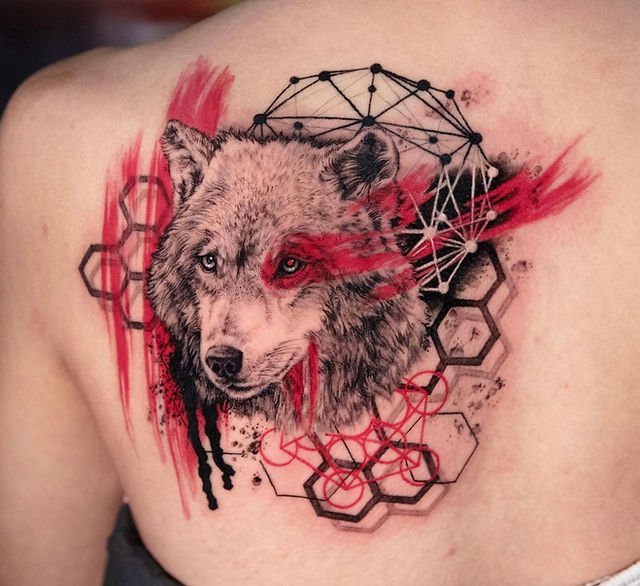
A Trash Polka tattoo is a modern tattoo style originating in Germany that combines realistic imagery, abstract graphic elements, typography, brush strokes, splatter effects, and predominantly black-and-red ink. The style intentionally blends order and chaos to create visually striking compositions that tell complex personal stories.
At first glance, Trash Polka tattoos appear rebellious and unstructured. However, experienced artists know that the style is highly calculated. Every abstract splash, geometric mark, and realistic image serves a purpose within a carefully balanced composition.
The style often includes:
- Photorealistic portraits
- Animals and wildlife imagery
- Clock and time symbolism
- Typography and quotes
- Paint splatters and brush effects
- Geometric overlays
- Distressed graphic textures
- High-contrast black-and-red compositions
One of the biggest misconceptions is that Trash Polka is simply a “messy tattoo style.” In reality, poorly planned chaos looks cluttered, while authentic Trash Polka uses controlled visual tension to guide the viewer’s eye across the design.
Information Gain Insight: Many competing guides focus exclusively on visual appearance. What they often overlook is that successful Trash Polka designs are built around visual hierarchy. Experienced artists intentionally create focal points using realism while using abstract elements to generate movement and emotional intensity.
Core Characteristics of the Style
Trash Polka tattoos are defined by the combination of realism and abstraction. The realistic components establish recognizable subjects, while graphic overlays introduce contrast, emotion, and artistic tension that distinguish the style from traditional tattooing.
The defining characteristics include:
- Large-scale compositions
- Photorealistic focal subjects
- Abstract brush and ink effects
- Intentional asymmetry
- Typography integration
- Strong visual contrast
- Negative space utilization
Most professional artists recommend medium-to-large body placements because the style relies heavily on layering multiple visual elements. Small designs often lose the complexity that makes Trash Polka distinctive.
For example, a sleeve featuring a wolf portrait, fragmented typography, red paint splashes, and geometric overlays creates multiple layers of storytelling. Compressing those same elements into a small wrist tattoo typically reduces readability and visual impact.
Why Red and Black Ink Dominate Trash Polka Designs
Black and red inks are used because they create maximum contrast while reinforcing the dramatic visual language that defines Trash Polka. The combination draws attention, enhances readability, and produces emotional intensity unmatched by most tattoo color schemes.
Black serves as the structural foundation of the design. It provides depth, realism, and long-term durability.
Red functions differently. It acts as a visual accent that creates movement and emotional energy throughout the composition.
| Color | Primary Function | Visual Effect |
|---|---|---|
| Black | Structure and realism | Depth and permanence |
| Red | Accent and contrast | Energy and attention |
From a design psychology perspective, red naturally attracts human attention faster than most colors. This makes it ideal for highlighting focal areas and creating directional movement within complex compositions.
How Trash Polka Differs from Traditional Tattoo Styles
Trash Polka differs from traditional tattoo styles by prioritizing artistic expression, abstraction, and visual storytelling over fixed design conventions. It intentionally breaks established tattoo rules while maintaining strong compositional structure.
| Style | Main Characteristics | Visual Approach |
|---|---|---|
| Traditional | Bold outlines and limited colors | Structured and iconic |
| Realism | Photographic detail | Highly realistic |
| Blackwork | Black-only imagery | Graphic and bold |
| Trash Polka | Realism plus abstraction | Controlled chaos |
This hybrid nature explains why finding a specialized artist is significantly more important than with many other tattoo styles.
The Origin and History of Trash Polka Tattoos
Trash Polka tattoos originated in Germany and were developed by tattoo artists Simone Pfaff and Volko Merschky. The style emerged from their desire to combine realism, graphic design, photography, typography, and fine art into a completely new form of tattoo expression.
Today, the style is recognized globally and has influenced countless contemporary tattoo artists. However, understanding its origins helps explain why authentic Trash Polka remains difficult to replicate successfully.
Simone Pfaff and Volko Merschky’s Influence
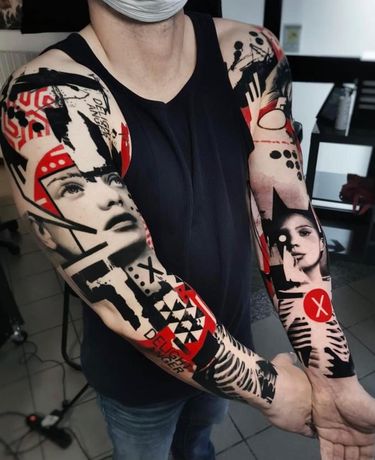
Trash Polka was created by Simone Pfaff and Volko Merschky at Buena Vista Tattoo Club in Germany. Their artistic backgrounds in graphic design, photography, and visual arts significantly shaped the style’s development.
Rather than following conventional tattoo traditions, they approached tattooing as a mixed-media art form.
Their designs integrated:
- Photographic realism
- Collage techniques
- Typography
- Fine art principles
- Graphic design theory
This interdisciplinary approach is one reason authentic Trash Polka tattoos often resemble contemporary gallery artwork more than traditional tattoo compositions.
Many modern artists imitate the visual appearance of Trash Polka but fail to understand the artistic framework behind it. The result often looks chaotic without achieving the intentional balance present in original works.
How the Style Spread Worldwide
Trash Polka gained international popularity through tattoo conventions, social media exposure, artist collaborations, and the growing demand for highly personalized body art. Its unique appearance made it especially shareable on visual platforms.
The rise of Instagram, Pinterest, and digital tattoo portfolios accelerated global awareness of the style.
Several factors contributed to its growth:
- Demand for unique custom tattoos
- Increased appreciation for artistic tattooing
- Social media visibility
- Growth of realism tattoo techniques
- Cross-pollination between graphic design and tattoo art
Information Gain Insight: A recent trend many articles overlook is the influence of AI-generated artwork. The dramatic contrast and layered visual complexity of Trash Polka make it one of the most frequently recreated tattoo aesthetics in AI image-generation platforms. This has introduced the style to entirely new audiences who may never have encountered it through traditional tattoo channels.
What Does a Trash Polka Tattoo Mean?
Trash Polka tattoos do not have a universal meaning. Instead, they use symbolism, imagery, typography, and visual contrast to express deeply personal narratives. Each design is typically custom-built around the wearer’s experiences, beliefs, memories, or emotional journey.
Unlike traditional tattoo symbols with widely accepted interpretations, Trash Polka encourages individual storytelling.
A single composition may combine:
- Loss and resilience
- Transformation and growth
- Mortality and time
- Freedom and rebellion
- Love and remembrance
- Achievement and ambition
The abstract components often represent emotions or concepts that cannot be expressed through realism alone.

Common Symbols and Their Interpretations
Trash Polka artists frequently incorporate recognizable symbols to anchor personal narratives. While interpretations vary, certain motifs consistently appear because of their strong emotional and visual impact.
| Symbol | Common Meaning |
|---|---|
| Clock | Time, mortality, life milestones |
| Wolf | Strength, loyalty, independence |
| Raven | Transformation and mystery |
| Rose | Beauty, love, sacrifice |
| Lion | Courage and leadership |
| Skull | Mortality and acceptance |
The most compelling Trash Polka tattoos combine multiple symbols into a larger narrative rather than relying on a single visual element.
Typography and Text Elements Explained
Typography plays a unique role in Trash Polka tattoos by adding explicit meaning to otherwise visual compositions. Quotes, dates, coordinates, names, and fragmented phrases often serve as narrative anchors within the design.
Unlike standard script tattoos, Trash Polka typography is intentionally disruptive.
Artists may:
- Distort letters
- Overlay text across imagery
- Fragment phrases
- Mix fonts and scales
- Integrate text into abstract elements
This technique creates additional layers of interpretation and visual intrigue.
Common Misconceptions About Meaning
One of the most persistent myths is that Trash Polka tattoos are purely aesthetic and lack symbolic depth. In reality, many of the most respected pieces are among the most personally meaningful tattoos ever created.
Another misconception is that the abstract elements are random. Skilled artists use every visual component intentionally, whether to direct attention, create emotion, or reinforce narrative themes.
Information Gain Insight: During consultations, experienced Trash Polka artists often spend significantly more time discussing personal stories than design details. The strongest compositions emerge when the artwork reflects a coherent narrative rather than simply combining visually attractive elements.
Most Popular Trash Polka Tattoo Designs
Popular Trash Polka tattoo designs combine realistic subjects with abstract overlays to create dramatic, story-driven compositions. Sleeves, chest pieces, portraits, animals, and symbolic imagery remain the most requested categories because they provide enough visual space for the style’s layered complexity.
Choosing a design should involve more than aesthetic preference. The most successful pieces align visual impact with personal meaning while respecting the body’s natural anatomy and movement.
Most Popular Trash Polka Tattoo Designs
Lucky Tattoo, a professional tattoo artist, has over 10 years of experience in the art of tattooing in Ho Chi Minh City. Lucky Tattoo Studio was founded in 2014 by skilled and kind artists. All tattoos are provided in a clean, strictly controlled, and friendly environment.
One reason Trash Polka continues to attract tattoo enthusiasts worldwide is its versatility. Unlike traditional flash-based tattoo styles, nearly every design is custom-built around the wearer’s story, allowing artists to create highly individualized compositions.
Trash Polka Sleeve Tattoos
Trash Polka sleeves are among the most sought-after applications of the style because the arm provides ample space for visual flow, symbolism, typography, and realistic focal points. A well-planned sleeve allows the narrative to unfold naturally from shoulder to wrist.
Experienced artists often design sleeves around a primary subject such as:
- Wolves
- Lions
- Portraits
- Skulls
- Military themes
- Timepieces and clocks
The supporting elements then reinforce the central narrative through brush strokes, distressed textures, fragmented text, and geometric accents.
Expert Observation: The highest-rated Trash Polka sleeves typically maintain one dominant focal point. Overloading the design with multiple competing subjects often weakens visual hierarchy and long-term readability.
Trash Polka Chest Tattoos
Chest placements work exceptionally well for Trash Polka because the broad canvas supports symmetrical or asymmetrical compositions while providing enough room for large-scale realism and dramatic graphic overlays.
Popular chest concepts include:
- Birds in flight
- Religious symbolism
- Portrait compositions
- Memorial pieces
- Warrior-themed artwork
Because the chest naturally moves with breathing and posture changes, skilled artists account for anatomy when positioning focal imagery.
A common mistake is centering text directly over the sternum without considering distortion caused by body movement over time.
Trash Polka Back Tattoos
Back pieces offer the largest uninterrupted canvas for Trash Polka storytelling. This allows artists to integrate multiple symbolic layers, larger realistic elements, and advanced compositional techniques that are impossible on smaller body areas.
Full-back designs often include:
- Large animal portraits
- Mythological imagery
- Memorial themes
- Historical references
- Complex abstract structures
Many award-winning convention pieces use the back specifically because it permits true large-scale visual storytelling.
Animal-Themed Trash Polka Tattoos
Animal imagery remains one of the most requested categories because animals naturally carry symbolic meaning while translating exceptionally well into realism-based compositions.
| Animal | Common Symbolism |
|---|---|
| Wolf | Loyalty and independence |
| Lion | Courage and leadership |
| Raven | Transformation and mystery |
| Eagle | Freedom and vision |
| Tiger | Strength and determination |
The strongest animal-based compositions connect symbolism directly to the client’s personal story rather than relying solely on aesthetics.
Portrait-Based Trash Polka Tattoos
Portrait-focused Trash Polka tattoos combine photorealistic faces with abstract overlays to create highly emotional and visually impactful artwork. These pieces are often chosen for memorials, family tributes, or life-changing experiences.
Portrait work requires exceptional technical skill. Not every tattoo artist who offers realism is qualified to execute advanced Trash Polka compositions.
Information Gain Insight: During artist selection, evaluate healed portrait work rather than freshly completed tattoos. Healed results reveal whether the artist understands long-term contrast retention and detail preservation.
Best Body Placements for Trash Polka Tattoos
Trash Polka tattoos perform best on medium-to-large body areas where artists can create visual depth, maintain readability, and preserve intricate details. Placement directly affects both immediate appearance and long-term aging.
Many people focus exclusively on aesthetics while ignoring anatomical considerations. However, skin elasticity, sun exposure, and movement all influence how a tattoo evolves over time.
Areas That Showcase Contrast Best
The upper arm, forearm, chest, back, thigh, and calf generally provide the best balance of visibility, skin stability, and available space for complex Trash Polka compositions.
- Upper arm: excellent for sleeves
- Chest: ideal for large focal subjects
- Back: maximum storytelling potential
- Thigh: strong detail retention
- Calf: high visibility with good longevity
Professional artists often recommend larger placements because abstract overlays require room to breathe visually.
Placements to Avoid for Fine Detail
Small or high-friction areas can compromise the clarity of detailed Trash Polka work. Hands, fingers, feet, and certain neck placements may experience faster fading and distortion.
Risk factors include:
- Frequent sun exposure
- Constant friction
- Thin skin
- Rapid skin regeneration
- High movement zones
Clients seeking highly detailed realism should carefully discuss placement limitations during consultations.
How Much Does a Trash Polka Tattoo Cost?
Trash Polka tattoos are generally more expensive than standard tattoo styles because they require advanced artistic skill, extensive design preparation, and longer session times. Costs vary based on size, complexity, artist reputation, and geographic location.
Budget-conscious shoppers sometimes underestimate the planning involved in authentic Trash Polka work. Design development alone can require multiple consultation sessions before tattooing begins.
Factors Affecting Price
Several variables influence pricing, but artist specialization remains the most significant factor. Paying more for an experienced Trash Polka specialist often results in better long-term value.
Artist Experience
Specialists who regularly create Trash Polka compositions command higher rates due to their understanding of realism, graphic design, composition, and long-term aging principles.
Warning signs include:
- Very limited Trash Polka portfolio examples
- No healed work available
- Heavy reliance on copied designs
- Lack of custom consultation process
Tattoo Size and Complexity
Larger designs require more hours, more planning, and greater technical execution. A full sleeve or chest piece may involve multiple sessions spread across several months.
Geographic Location
Major metropolitan areas typically have higher hourly rates due to demand, operating costs, and concentration of elite artists.
Sample Cost Ranges by Tattoo Size
While prices vary significantly, the following estimates provide a general benchmark.
| Size | Estimated Cost Range |
|---|---|
| Small | $300–$800 |
| Medium | $800–$2,000 |
| Large | $2,000–$5,000+ |
| Full Sleeve | $3,000–$10,000+ |
Information Gain Insight: The cheapest quote is rarely the best value. Correcting poorly executed Trash Polka tattoos often costs substantially more than investing in a qualified artist initially.
Does a Trash Polka Tattoo Age Well?
Trash Polka tattoos can age exceptionally well when designed correctly and executed by skilled artists. Long-term performance depends on contrast management, ink saturation, body placement, sun protection, and ongoing maintenance.
This is one of the most overlooked topics in the industry and an area where many online guides provide incomplete information.
How Black Ink Ages Over Time
Black pigment generally remains the most stable tattoo color over decades. It retains visibility, contrast, and structural integrity better than most colored inks.
This durability is one reason black serves as the foundation of nearly every successful Trash Polka composition.
Factors supporting longevity include:
- Strong saturation
- Deep contrast
- Clear visual boundaries
- Resistance to fading
How Red Pigment Fades Compared to Other Colors
Red pigment often fades faster than black ink due to ultraviolet exposure, skin characteristics, and pigment chemistry. However, modern professional pigments generally perform much better than earlier formulations.
Research in dermatology and tattoo science suggests that UV exposure remains one of the strongest predictors of color degradation.
Best practices include:
- Daily sunscreen use
- Moisturizing healed skin
- Avoiding excessive tanning
- Periodic artist evaluations
Overlooked Insight: In well-designed Trash Polka tattoos, red functions primarily as an accent rather than a structural component. Even if some fading occurs over time, the design often remains visually effective because the black framework continues to carry the composition.
Touch-Ups and Long-Term Maintenance
Periodic touch-ups help restore contrast and preserve visual impact. Most high-quality Trash Polka tattoos do not require frequent maintenance, but occasional refinement may improve long-term appearance.
Factors affecting touch-up frequency include:
- Sun exposure habits
- Skin type
- Placement location
- Ink quality
- Artist technique
Real-World Aging Examples
Experienced artists consistently report that compositions built around strong black foundations maintain readability better than designs that rely heavily on intricate red details.
This reinforces an important principle: long-term success begins during the design phase rather than years later during touch-ups.
How to Choose the Right Trash Polka Tattoo Artist
Choosing the right artist is the single most important decision in the entire tattoo process. Trash Polka requires expertise in realism, graphic design, composition, typography, and advanced tattoo execution techniques.
Portfolio Evaluation Checklist
A quality portfolio should demonstrate technical consistency, strong composition, healed examples, and original creative work rather than copied designs.
- Healed tattoos available
- Multiple Trash Polka examples
- Strong realism skills
- Custom design work
- Consistent contrast management
- Positive client outcomes
Questions to Ask During Consultation
Effective consultations reveal whether an artist understands both artistic and practical considerations.
- How many Trash Polka tattoos have you completed?
- Can I see healed examples?
- How do you approach design planning?
- How will this tattoo age over time?
- Do you customize every composition?
Warning Signs of Inexperienced Artists
Several red flags frequently appear when artists attempt styles beyond their expertise.
- No healed portfolio photos
- Heavy use of copied artwork
- Unrealistically low pricing
- Poor contrast management
- Minimal consultation process
Healing and Aftercare Tips
Proper aftercare directly influences healing quality, color retention, and long-term appearance. Following professional aftercare instructions reduces complications while maximizing visual longevity.
Healing Timeline Explained
Most tattoos complete surface healing within several weeks, while deeper skin recovery can continue for months. Understanding this timeline helps manage expectations.
- Days 1–7: Initial healing
- Weeks 2–4: Peeling and settling
- Months 1–3: Deeper recovery
Common Healing Mistakes
Many complications result from avoidable mistakes rather than poor tattoo execution.
- Picking scabs
- Excessive sun exposure
- Swimming too early
- Over-moisturizing
- Ignoring artist instructions
Maintaining Long-Term Color Vibrancy
Long-term maintenance depends heavily on UV protection and skin care habits.
Consistent sunscreen use remains one of the most evidence-supported strategies for preserving tattoo appearance over time.
Pros and Cons of Trash Polka Tattoos
Trash Polka tattoos offer exceptional artistic expression and visual impact but require thoughtful planning, larger placements, and highly skilled artists. Understanding both advantages and limitations helps ensure realistic expectations.
Advantages
Key benefits include:
- Highly distinctive appearance
- Strong storytelling potential
- Excellent customization
- High visual impact
- Blend of realism and abstraction
Potential Drawbacks
Potential challenges include:
- Higher cost
- Limited qualified artists
- Need for larger placement areas
- Complex design planning
- Possible future touch-ups
Is a Trash Polka Tattoo Right for You?
Trash Polka is best suited for individuals seeking bold, highly personalized body art that combines artistic expression with meaningful storytelling. It may be less suitable for those preferring subtle, minimalist, or traditional tattoo aesthetics.
Personality and Lifestyle Considerations
The style often appeals to people who appreciate modern art, graphic design, symbolism, and unconventional visual expression.
Consider whether you prefer:
- Bold versus subtle artwork
- Large-scale versus small tattoos
- Custom storytelling versus simple symbolism
- Contemporary versus traditional aesthetics
Design Planning Checklist
Before booking an appointment, review the following:
- Define your story and symbolism
- Research specialist artists
- Choose an appropriate placement
- Establish a realistic budget
- Plan for long-term maintenance
- Review healed portfolio examples
Frequently Asked Questions
What is the meaning of a Trash Polka tattoo?
Trash Polka tattoos typically represent personal stories, emotions, experiences, and symbolic narratives rather than a single universal meaning.
Why are Trash Polka tattoos usually red and black?
Black provides structure and longevity, while red creates visual energy, contrast, and emotional intensity.
Who invented the Trash Polka tattoo style?
The style was developed by Simone Pfaff and Volko Merschky at Buena Vista Tattoo Club in Germany.
How much does a Trash Polka tattoo cost?
Prices vary widely but generally range from several hundred dollars for small pieces to several thousand dollars for sleeves and large custom projects.
Do Trash Polka tattoos fade faster?
The black components typically age very well. Red accents may fade more quickly but can often be refreshed through touch-ups.
What body placement is best for Trash Polka?
Arms, chest, back, thighs, and calves are among the most effective placements because they provide adequate space for complex compositions.
How do I find a qualified Trash Polka artist?
Look for artists with extensive Trash Polka portfolios, healed examples, strong realism skills, and a proven custom design process.
Are Trash Polka tattoos suitable for small tattoos?
While possible, the style generally performs best in medium-to-large formats where detail, contrast, and storytelling can be fully developed.
Expert Takeaways and Final Recommendations
Trash Polka tattooing represents one of the most innovative developments in contemporary body art. By combining realism, abstraction, typography, and graphic design, the style creates deeply personal compositions capable of conveying stories that traditional tattoo formats often cannot.
The key to success lies in choosing an experienced specialist, prioritizing thoughtful design planning, understanding long-term aging considerations, and viewing the tattoo as a collaborative artistic project rather than a simple image placed on skin.
For individuals seeking a bold, meaningful, and visually unforgettable tattoo, Trash Polka remains one of the most powerful and expressive styles available today.
Lucky Tattoo, a professional tattoo artist, has over 10 years of experience in the art of tattooing in Ho Chi Minh City. Lucky Tattoo Studio was founded in 2014 by skilled and kind artists. All tattoos are provided in a clean, strictly controlled, and friendly environment.
trash-polka-tattoo