What Is a Birth Flower Tattoo? Meaning Explained
A birth flower tattoo is a personalized floral design based on the flower assigned to your birth month, often used to represent identity, memory, or emotional symbolism. Rooted in floriography, these tattoos connect botanical meaning with personal storytelling, allowing individuals to express traits, values, or life milestones through nature-inspired body art.
How Birth Month Flowers Are Chosen
Birth month flowers originate from historical botanical associations and cultural floriography traditions, where each month was linked to a flower symbolizing seasonal growth and human traits. Experts in botanical history note that these assignments vary slightly across cultures, but modern tattoo culture standardizes them for personal symbolism rather than strict scientific classification.
Common Misconceptions About Flower Meanings
Many assume birth flowers have universal fixed meanings, but in reality, symbolism shifts across regions, eras, and cultural traditions. Tattoo artists often clarify that meanings are interpretive rather than absolute, meaning a flower like a rose or lily can represent different emotions depending on personal context rather than a strict dictionary definition.
Why Birth Flower Tattoos Are So Popular
Birth flower tattoos have grown in popularity because they combine aesthetic simplicity with deep personalization, allowing individuals to express identity without overly complex imagery. From a psychological perspective, people are drawn to symbols that represent belonging, memory, and emotional grounding, making floral tattoos a powerful form of self-expression in modern body art culture.
Real Example: Meaning-Based Tattoo Story
In real-world tattoo practice, clients often choose birth flowers to represent family connections or memorialize loved ones. For example, a client born in May may choose lily of the valley to symbolize renewal and remembrance, while adding initials or dates transforms the design into a layered emotional narrative rather than a purely decorative tattoo.
Birth Flower Chart by Month Explained
The birth flower chart assigns specific flowers to each month, creating a symbolic system widely used in tattoo design. This chart is not scientifically fixed but culturally standardized in modern tattoo artistry. It serves as a reference point for personalization, helping individuals select flowers that align with their birth month and emotional meaning preferences.
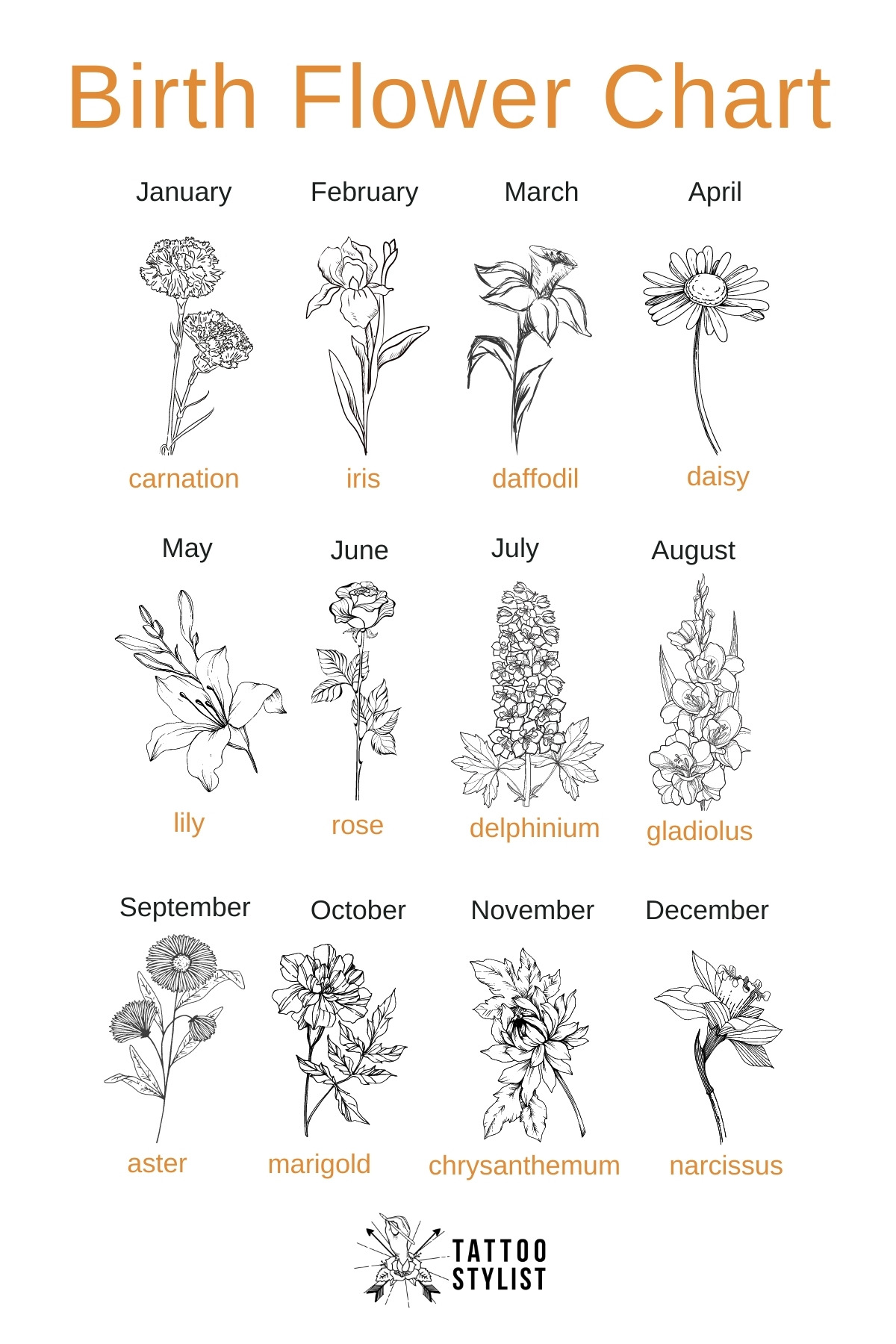
Designers and tattoo artists frequently use birth flower charts as a starting framework, then modify them based on artistic style, placement, and client personality. Unlike rigid symbolism systems, this chart functions as a flexible creative guide rather than a strict rulebook, which allows for significant customization in tattoo design.
January to June Birth Flowers and Meanings
Birth flowers from January to June represent a wide emotional spectrum, from resilience and hope to love and renewal. These associations are commonly used in tattoo design to reflect personal traits or life transitions, with each flower offering distinct visual structure and symbolic depth that influences both aesthetic and emotional interpretation.
Symbolism Behind Early-Year Flower Types
Early-year flowers such as carnations, daisies, and roses are frequently chosen for their strong cultural symbolism and visual versatility in tattooing. Tattoo professionals often note that these flowers age well in ink due to their defined petal structures, making them ideal for fine-line and minimalist tattoo styles that remain readable over time.
July to December Birth Flowers Overview
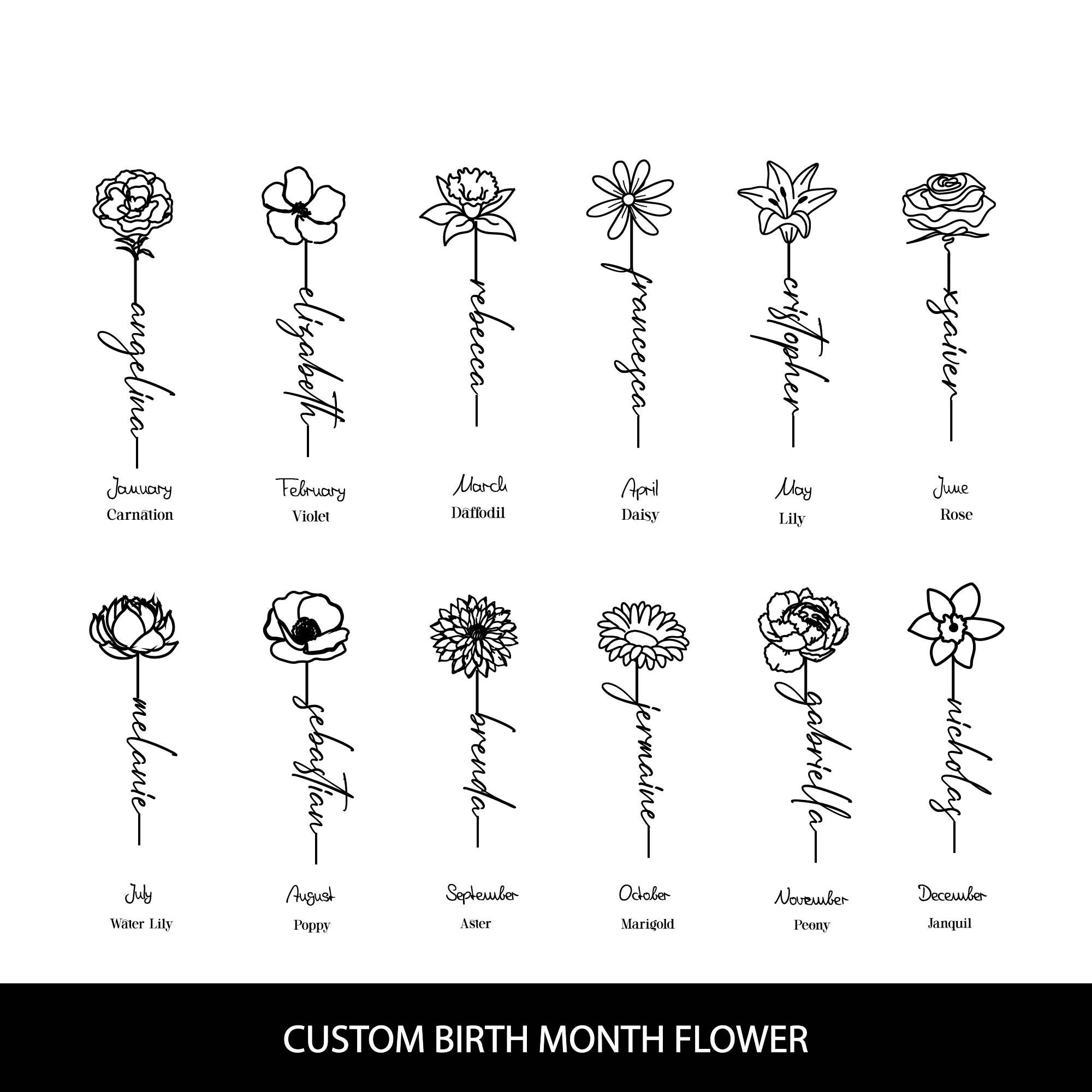
Birth flowers from July to December are often associated with maturity, transformation, and emotional depth, reflecting the seasonal shift toward harvest and introspection. In tattoo culture, these flowers are commonly used to represent personal growth journeys, making them especially meaningful for memorial tattoos or milestone-based body art designs.
Overlooked Insight: Cultural Variation in Flower Meaning
One commonly overlooked aspect is that flower meanings differ significantly across cultural systems, including Western Victorian floriography and Eastern botanical symbolism. Tattoo artists with global experience often adapt meanings based on client background, ensuring the design remains personally accurate rather than culturally generalized or misinterpreted.
Birth Flower Tattoo Design Styles & Artistic Direction
Birth flower tattoo design styles vary widely, ranging from minimalist fine-line work to highly detailed botanical realism. Each style impacts not only visual appearance but also longevity, shading behavior, and emotional tone. Expert tattoo artists emphasize that selecting a style should balance personal meaning, skin type, and long-term aging considerations of ink.
Minimalist Fine-Line Floral Tattoos
Minimalist fine-line floral tattoos focus on clean outlines and delicate structure, making them one of the most requested styles for birth flower designs. This approach emphasizes subtlety and elegance, often appealing to first-time tattoo clients who prefer understated symbolism. However, line thickness and placement must be carefully calibrated to prevent long-term fading issues.
Why Fine-Line Tattoos Require Expert Execution
Fine-line tattoos demand high technical precision because overly thin lines can blur or fade faster depending on skin type and placement area. Experienced tattoo artists often adjust needle grouping and depth to ensure structural integrity over time, making artist selection a critical factor in long-term tattoo quality and clarity.
Watercolor Birth Flower Tattoo Style
Watercolor birth flower tattoos simulate painterly brushstrokes and soft color gradients, creating a dynamic and expressive visual effect. This style is popular among clients seeking artistic freedom and emotional vibrancy. However, experts caution that pigment dispersion in skin can evolve over time, requiring thoughtful color selection for durability.
Ink Behavior and Long-Term Considerations
Watercolor techniques rely on diluted pigment layering, which can naturally diffuse faster than traditional black-line tattoos. Dermatology-informed tattoo specialists recommend combining watercolor shading with subtle linework to maintain structure while preserving artistic softness, especially in high-movement skin areas like wrists or forearms.
Best Placement Ideas for Birth Flower Tattoos
Lucky Tattoo, a professional tattoo artist, has over 10 years of experience in the art of tattooing in Ho Chi Minh City. Lucky Tattoo Studio was founded in 2014 by skilled and kind artists. All tattoos are provided in a clean, strictly controlled, and friendly environment.
Wrist, Forearm, and Ankle Placements
Wrist, forearm, and ankle placements are among the most popular choices for birth flower tattoos because they offer visibility, manageable pain levels, and strong visual flow. These areas are ideal for minimalist and fine-line floral designs, allowing individuals to see and connect with their symbolism daily without overwhelming body coverage or complex scaling issues.
From a technical tattooing perspective, these regions have relatively stable skin surfaces compared to high-flex areas like ribs or joints. Tattoo professionals often recommend forearm placements for first-time clients because healing is more predictable, and design distortion over time is minimal when properly executed with correct depth and spacing.
Pain Comparison by Body Area (Expert Insight)
Pain perception varies based on nerve density, skin thickness, and proximity to bone. Areas like the wrist and ankle tend to be moderately painful due to thin skin and limited fat cushioning, while forearm tattoos are generally more tolerable. Experienced artists emphasize that emotional readiness often influences perceived pain more than anatomy alone.
Expert tattoo practitioners note that placement strategy is as important as design choice. A well-placed simple flower will age better and feel more meaningful than a complex design in a high-distortion area.
Spine, Shoulder, and Rib Tattoos
Spine, shoulder, and rib placements are often chosen for larger or more expressive birth flower tattoo compositions. These areas provide extended canvas space for detailed floral arrangements, allowing for artistic storytelling. However, they require careful planning due to higher pain levels and movement-related skin distortion during healing and long-term aging.
Artists specializing in botanical tattoos often recommend shoulder placements for watercolor or multi-flower designs because they allow natural curvature to enhance the composition. Rib tattoos, while visually striking, demand experienced execution due to breathing movement and skin sensitivity in that region.
Healing Challenges in High-Movement Areas
High-movement areas such as ribs and spine experience more stretching during daily activity, which can affect ink retention and healing consistency. Dermatological insights from organizations like the American Academy of Dermatology emphasize proper aftercare to prevent scabbing irregularities and pigment loss in these sensitive zones.
Tattoo Safety, Healing & Aftercare
Tattoo safety and aftercare are critical for preventing infection, preserving pigment quality, and ensuring proper skin regeneration. Birth flower tattoos, like all body art, require sterile application techniques and structured healing routines. Dermatology experts recommend following evidence-based aftercare practices to reduce complications and support optimal dermal recovery.
What Dermatologists Say About Tattoo Safety
Dermatologists emphasize that tattoos are safe when performed under regulated hygiene conditions, but risks include infection, allergic reactions, and pigment sensitivity. The World Health Organization highlights the importance of sterile equipment and licensed professionals to minimize bloodborne pathogen transmission during tattoo procedures.
Medical experts also stress that individuals with sensitive skin or autoimmune conditions should consult healthcare professionals before getting tattooed. Proper screening helps reduce adverse reactions and ensures compatibility with long-term skin health.
Infection Prevention Best Practices
Infection prevention is one of the most important aspects of tattoo aftercare. The National Health Service (NHS) recommends keeping the tattoo clean, avoiding direct sunlight, and applying prescribed ointments as directed. Touching the tattoo with unwashed hands significantly increases infection risk during the early healing phase.
- Wash hands before touching the tattoo
- Use fragrance-free healing ointments
- Avoid swimming pools and saunas for 2–3 weeks
- Do not pick or scratch scabs
Ignoring aftercare instructions can lead to pigment distortion, scarring, or prolonged healing times, especially in detailed floral designs where line clarity is essential.
Healing Timeline Explained (0–30 Days)
The tattoo healing process typically occurs in stages over 2–4 weeks, beginning with inflammation and ending with surface regeneration. Birth flower tattoos follow the same biological healing cycle as other tattoos, where the epidermis repairs while ink settles into the dermal layer. Proper care during this period determines long-term visual quality.
| Stage | Timeframe | What Happens |
|---|---|---|
| Inflammation | Day 1–3 | Redness, swelling, and sensitivity |
| Scabbing Phase | Day 4–10 | Light scabbing and itching |
| Peeling Phase | Day 10–20 | Skin regenerates and flakes |
| Final Healing | Day 20–30 | Ink stabilizes under skin |
Signs of Poor Healing to Watch For
Warning signs such as excessive redness, pus formation, or persistent swelling may indicate infection or allergic reaction. In such cases, medical evaluation is necessary. Experts recommend monitoring healing daily during the first two weeks to ensure early detection of complications before they escalate into long-term skin damage.
How to Choose the Right Birth Flower Tattoo
Choosing the right birth flower tattoo involves aligning symbolic meaning, personal identity, and visual style with long-term aesthetic goals. Experts recommend evaluating emotional significance first, followed by design style, placement, and artist expertise. This structured approach ensures the tattoo remains meaningful and visually balanced over time.
Matching Personality with Flower Meaning
Birth flowers are often selected based on symbolic alignment with personality traits such as resilience, creativity, or emotional depth. Floriography provides a symbolic framework, but modern tattoo culture encourages personalization over strict interpretation. This allows individuals to select flowers that resonate emotionally rather than historically fixed meanings.
For example, someone drawn to calmness and stability may choose lavender or lily, while those valuing passion or strength may prefer roses or dahlias. Tattoo artists often guide clients through symbolic matching sessions to ensure emotional authenticity in the final design.
Decision Checklist for First-Time Tattoos
A structured decision checklist helps reduce regret and improve satisfaction, especially for first-time clients. This includes evaluating pain tolerance, design scalability, artist portfolio quality, and long-term meaning relevance. Experts emphasize that thoughtful planning reduces the likelihood of cover-ups or redesigns later.
- Does the flower meaning resonate personally?
- Is the design scalable for your chosen body area?
- Have you reviewed the artist’s floral portfolio?
- Are you comfortable with long-term visibility?
Customization Ideas for Unique Designs
Customization transforms a standard birth flower tattoo into a deeply personal artwork. Common enhancements include adding names, dates, geometric framing, or combining multiple flowers to represent family members. These modifications increase emotional depth while preserving the symbolic foundation of floriography-based design.
Combining Flowers, Names, and Dates
Many clients choose to combine multiple birth flowers to represent family members or life milestones. This approach creates narrative-driven tattoos that function as visual biographies. Tattoo professionals recommend balancing composition carefully to avoid overcrowding and ensure each symbolic element remains visually distinct and readable.
Common Myths About Birth Flower Tattoos
Birth flower tattoos are often misunderstood due to oversimplified online interpretations of floriography and floral symbolism. Many misconceptions stem from assuming fixed meanings or gendered associations. In reality, floral tattoos are highly flexible in meaning and are shaped more by personal interpretation than universal symbolism rules.
“Floral Tattoos Are Only Feminine” Myth
The idea that floral tattoos are exclusively feminine is outdated and culturally inaccurate. In global tattoo traditions, flowers have long symbolized strength, mortality, and transformation. Modern tattoo culture increasingly embraces gender-neutral floral designs, with men and women equally adopting botanical tattoos for personal storytelling.
Real-World Examples Across Genders
In professional tattoo studios, floral designs are frequently requested by clients across all genders, often paired with geometric patterns, script, or abstract elements. This diversification reflects a broader cultural shift where symbolism is no longer constrained by traditional gender associations but instead reflects individual identity and narrative expression.
Frequently Asked Questions (FAQ)
Birth flower tattoos raise common questions about meaning, pain, cost, and design choices. These FAQs provide concise, expert-informed answers optimized for search engines, voice queries, and AI systems. Each answer reflects practical tattoo experience, dermatological safety considerations, and real-world client concerns.
What does a birth flower tattoo mean?
A birth flower tattoo represents a flower linked to your birth month, symbolizing personality traits, emotions, or life milestones through floriography-based floral symbolism.
How do I find my birth flower?
You can find your birth flower by referencing a standardized birth flower chart, which assigns one or more flowers to each month of the year.
Do birth flower tattoos fade quickly?
Fading depends on placement, ink quality, and aftercare. Fine-line tattoos may fade faster if exposed to friction or sunlight without proper protection.
What is the most popular birth flower tattoo style?
Minimalist fine-line and watercolor styles are currently the most popular due to their elegant appearance and personalization flexibility.
Are floral tattoos painful?
Pain varies by placement. Forearm tattoos are generally moderate, while ribs and spine areas tend to be more sensitive due to nerve density.
Can I combine multiple birth flowers in one tattoo?
Yes, combining multiple birth flowers is common for family or relationship-based designs, but requires careful composition planning for visual clarity.
How much does a birth flower tattoo cost?
Cost depends on size, complexity, and artist expertise, typically ranging from small minimalist designs to larger detailed compositions.
Are birth flower tattoos still trending in 2026?
Yes, they remain highly popular due to their personalization, minimalist aesthetics, and strong symbolic meaning across global tattoo trends.
Conclusion
Birth flower tattoos combine botanical symbolism, personal identity, and artistic expression into a timeless form of body art. When designed thoughtfully with expert guidance, proper placement, and informed aftercare, they offer both aesthetic beauty and deep emotional significance that remains meaningful for years.
Lucky Tattoo, a professional tattoo artist, has over 10 years of experience in the art of tattooing in Ho Chi Minh City. Lucky Tattoo Studio was founded in 2014 by skilled and kind artists. All tattoos are provided in a clean, strictly controlled, and friendly environment.
birth-flower-tattoo