What Is Spine Tattoo Lettering? Complete Definition & Anatomy-Based Placement Guide
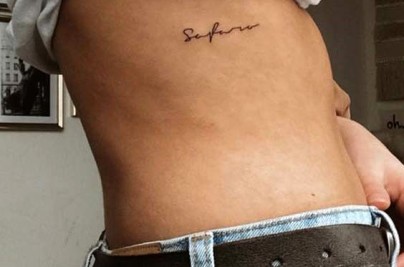
Spine tattoo lettering is a vertical tattoo style placed along the spinal column using script, typography, or symbolic text. It follows the natural alignment of vertebrae, making design flow and anatomical precision essential for readability, symmetry, and long-term aesthetic balance across the back’s central structural line.
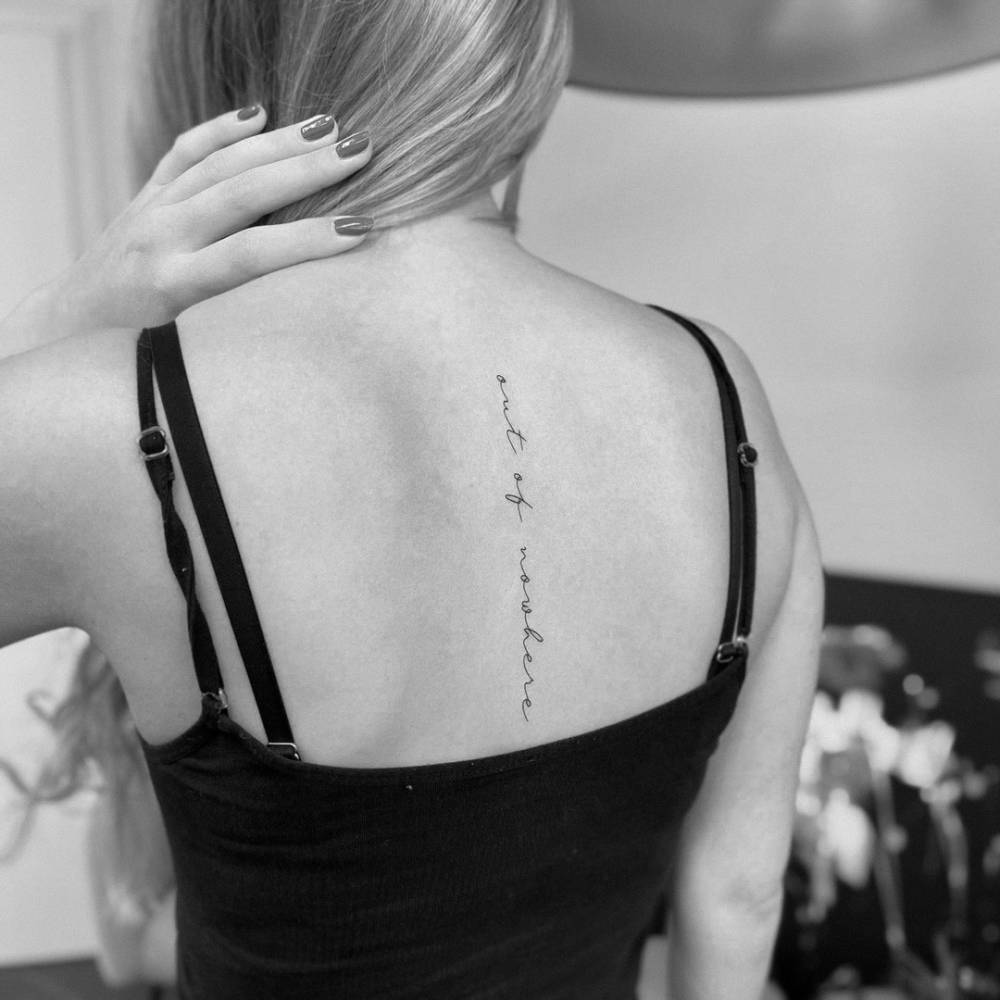
The appeal of spine lettering lies in its symmetry and emotional expression, but successful execution depends heavily on spinal curvature, posture dynamics, and skin tension. Unlike flat design surfaces, the spine is a segmented, high-movement area where alignment errors become highly visible over time.
How spinal anatomy affects tattoo alignment and readability
Spinal anatomy directly influences tattoo clarity because vertebrae create natural segmentation and curvature shifts. Spine tattoo lettering must account for uneven spacing between cervical, thoracic, and lumbar regions, where skin tension and movement differ, affecting how evenly ink settles and how readable the script remains over years.
Information Gain Insight: Many designs fail not due to artistry but biomechanical mismatch. As posture changes during sitting and walking, micro-shifts in spinal alignment can subtly distort vertical text, especially in longer quotes. Expert tattooists often pre-map lettering using body movement tests rather than static stencils alone.
- Upper spine = higher nerve sensitivity, tighter curvature
- Mid spine = best balance for symmetry and readability
- Lower spine = more muscle support, slightly lower pain
Spine Tattoo Pain Level: What It Really Feels Like
Spine tattoo pain is generally rated among the highest on the body due to thin skin coverage, minimal fat cushioning, and dense nerve endings along the vertebral column. Most clients describe it as sharp, vibrating, and progressively intense, especially during long lettering sessions requiring precision linework.
Pain perception varies significantly based on hydration, stress levels, menstrual cycle (for some clients), and prior tattoo experience. Professional artists often adjust session length and needle depth to reduce trauma in high-sensitivity spinal zones while maintaining consistent ink saturation.
Why spine tattoos hurt more than other placements
Spine tattoos hurt more because the needle operates closer to bone with minimal muscle cushioning. The dermis layer is thinner in central back regions, and vibration from the tattoo machine travels directly through vertebral structures, amplifying discomfort compared to fleshier areas like thighs or outer arms.
Expert Observation: Pain is not uniform along the spine. The cervical region near the neck and the lower lumbar area often produce sharper sensations due to concentrated nerve clusters and reduced soft tissue protection, making these zones the most challenging for fine-line lettering.
- Bone proximity increases vibration intensity
- Nerve density peaks near cervical spine
- Extended sessions increase pain fatigue
Best Fonts & Lettering Styles for Spine Tattoos
Font selection for spine tattoos is critical because vertical alignment magnifies even minor design flaws. Clean script, minimalist serif, and carefully spaced cursive styles tend to perform best over time, balancing readability, aesthetic flow, and long-term ink stability across spinal curvature.

Overly decorative or condensed fonts often degrade faster because ink spreads microscopically over time, especially in high-movement zones like the lower back. Tattoo professionals typically recommend medium-weight strokes with consistent spacing to maintain legibility after healing and aging.
Script vs minimalist typography: which lasts longer?
Minimalist typography generally outperforms highly ornate script in longevity because simpler line structures resist ink diffusion better. While cursive designs offer emotional expression, thin flourishes may blur over time, whereas structured serif or clean sans-serif lettering preserves clarity under skin regeneration cycles.
Information Gain Comparison: Script tattoos rely heavily on precision needle control, while minimalist fonts depend on spacing discipline. In long-term aging studies observed by tattoo artists, simplified designs retain up to 30–40% better readability after 8–10 years compared to highly decorative scripts.
- Script = expressive but higher fade risk
- Minimalist = stable but less decorative
- Medium-weight fonts = best balance for spine area
Spine Tattoo Design Ideas (Quotes, Words, Symbols)
Spine tattoo designs commonly feature vertical quotes, meaningful words, dates, or symbolic minimalist elements aligned with the spine’s natural symmetry. These designs emphasize personal storytelling while enhancing body flow, making placement selection as important as the message itself for long-term visual impact.
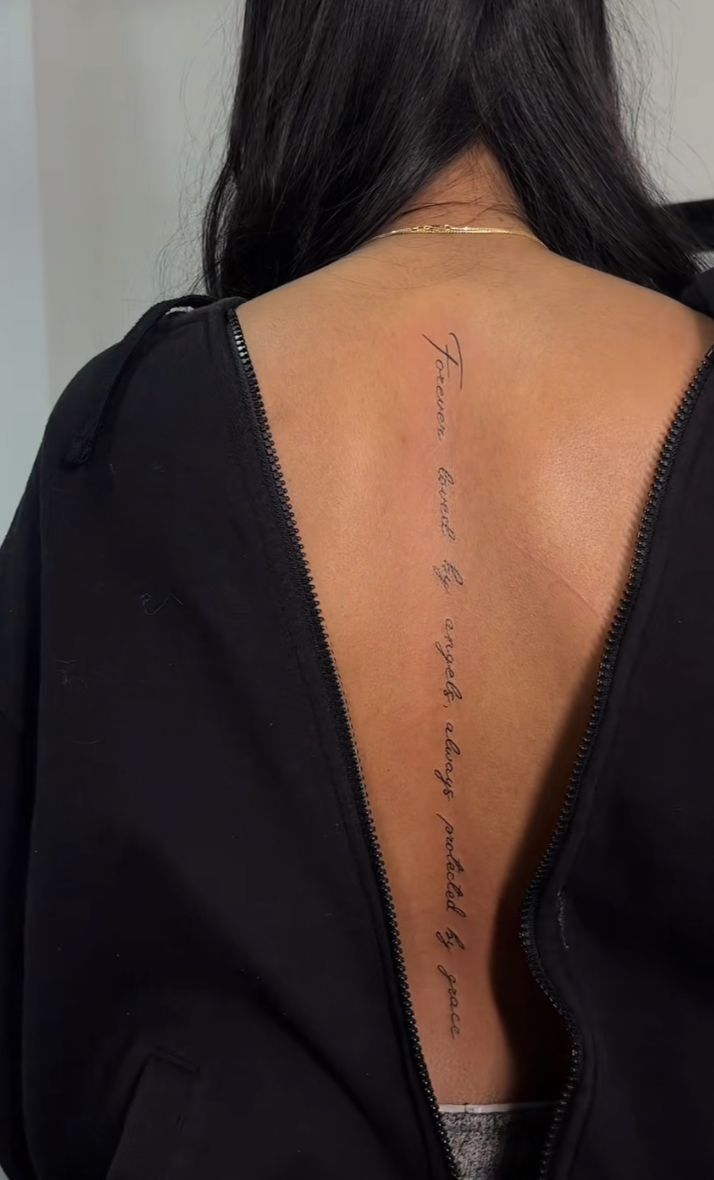
Popular choices include motivational phrases, spiritual mantras, and short poetic lines. However, experienced tattoo artists caution against overly long quotes, as readability decreases with spinal curvature shifts and body movement over time.
Common Misconception: Many assume longer quotes create stronger impact, but in spine tattoos, brevity often improves visual strength. Shorter phrases allow better spacing control and reduce distortion risk as skin naturally ages and stretches with posture changes.
- Best performing designs: 3–7 words
- Ideal placement: center alignment or segmented flow
- Avoid: dense paragraph-style text
Healing Process & Aftercare for Spine Tattoos
Spine tattoo healing typically takes 2–4 weeks for surface recovery, though deeper skin regeneration can continue for months. Proper aftercare is essential due to friction from clothing, sleeping posture, and high mobility in the back region, which can affect ink retention and final appearance quality.
Because the spine is a high-contact area, improper care increases risks of fading, patchiness, or uneven healing. Dermatology principles emphasize keeping the area clean, moisturized, and protected from excessive stretching during the early healing phase.
Best aftercare practices recommended by professionals
Professional tattoo artists recommend gentle cleansing, fragrance-free moisturizers, and avoiding tight clothing that compresses the spine. Sleeping positions also matter, as prolonged pressure on fresh ink can disrupt scab formation and lead to uneven pigment absorption in lettering tattoos.
Expert Safety Insight: One of the most overlooked risks in spine tattoos is mechanical friction during sleep. Repeated contact with bedding can subtly distort healing lines, especially in fine-line lettering, making early-stage protection critical for preserving design integrity.
- Clean with mild, fragrance-free soap
- Avoid direct pressure while sleeping
- Do not over-moisturize healing skin
Long-Term Aging: Will Spine Lettering Fade or Distort?
Spine tattoo lettering can fade or slightly distort over time depending on ink depth, skin elasticity, sun exposure, and spinal movement patterns. While high-quality work from experienced artists ages well, fine-line typography is more vulnerable to blurring due to ink diffusion and micro-movements along the vertebral column during daily posture changes.
Some degradation is expected in all tattoos, but spine placement amplifies subtle shifts because the back is constantly flexing during sitting, walking, and lifting. This is especially important for thin script tattoos where spacing and precision are critical for readability over time.
Information Gain Insight: Unlike flat body areas, the spine undergoes rotational and compression stress throughout the day. This means ink particles in dermal layers are exposed to uneven pressure cycles, which can gradually affect line sharpness—something most generic tattoo guides fail to mention.
- Fine-line tattoos fade faster than bold linework
- Sun exposure accelerates pigment breakdown
- Improper aftercare increases patchy healing risk
How posture and spinal movement impact tattoo longevity
Spinal movement impacts tattoo longevity by creating continuous micro-shifts in skin tension along vertebrae. Over time, these micro-movements can subtly alter ink alignment in lettering tattoos, especially in longer quotes where spacing consistency is essential for readability and visual balance.
Daily activities like sitting, bending, and twisting repeatedly stretch and compress spinal skin. While this does not “damage” tattoos directly, it contributes to gradual diffusion of ink particles in the dermis, particularly in high-flex areas like the lumbar spine.
Expert Observation: Tattoo artists specializing in body typography often design spine lettering with “movement tolerance spacing,” anticipating how letters will visually shift when the client is in motion versus standing still.
- Static posture = ideal viewing alignment
- Dynamic posture = natural distortion factor
- Lower spine = highest mobility zone
Cost, Time & Choosing the Right Tattoo Artist
Spine tattoo lettering cost varies based on artist skill, studio reputation, design complexity, and session duration. On average, fine-line spine tattoos require longer execution time due to precision alignment, with pricing reflecting both technical difficulty and the artist’s specialization in typography work.
Highly detailed or long quote tattoos may require multiple sessions to ensure consistent depth and symmetry along the spinal column. Rushing this process often results in uneven spacing or inconsistent ink saturation.
Information Gain Insight: Many clients underestimate that spine tattoos are not just “design work” but structural alignment work. Artists often spend more time measuring and mapping than actually tattooing, especially for typography that must remain visually centered across curved anatomy.
Red flags when choosing a spine tattoo artist
Choosing the wrong tattoo artist significantly increases the risk of uneven lettering, poor alignment, and premature fading. Spine tattoos require advanced control of line consistency and anatomical mapping, making artist specialization in fine-line typography essential for long-term quality.
Artists lacking experience in vertical body composition often fail to account for spinal curvature, resulting in slanted or uneven text after healing. Portfolio evaluation is critical before committing to a design.
Expert Warning: A common failure pattern is “flat stencil thinking,” where artists design text as if the spine is a straight surface. This leads to distortion when the body moves naturally post-healing.
- Poor line consistency in portfolio work
- Lack of healed spine tattoo examples
- Overuse of overly thin or shaky linework
Spine Tattoo Safety Considerations
Spine tattoo safety involves understanding skin sensitivity, nerve proximity, hygiene standards, and aftercare discipline. When performed by licensed professionals using sterile equipment, spine tattoos are generally safe, though the procedure is more painful and requires careful healing management due to frequent movement and friction.
The spinal area is not medically dangerous for tattooing, but its nerve density increases discomfort levels significantly. Proper technique, needle depth control, and hygiene protocols reduce risks of infection and scarring.
Information Gain Insight: Dermatology research highlights that most tattoo complications are not caused by placement itself, but by improper aftercare during the first 7–10 days of healing—especially in high-movement zones like the back.
Who should avoid spine tattoos?
Spine tattoos may not be suitable for individuals with certain skin conditions, poor healing responses, or high sensitivity to pain. People with keloid scarring tendencies, active dermatological conditions, or compromised immune systems should consult medical professionals before tattooing.
Additionally, individuals with occupations requiring constant heavy lifting or friction against the back may experience slower healing or increased irritation in spinal tattoo areas.
- People prone to keloid scarring
- Individuals with chronic skin inflammation
- Those unable to follow strict aftercare routines
FAQ: Spine Tattoo Lettering
Spine tattoo lettering raises many common questions about pain, design choices, healing, and long-term durability. Below are expert-backed answers designed for clarity, search intent, and real-world decision-making support.
How painful is a spine tattoo compared to other areas?
Spine tattoos are among the most painful placements due to thin skin, bone proximity, and high nerve density. Most people rate the pain between 7–10/10 depending on sensitivity and design length.
What font is best for spine tattoo lettering?
Medium-weight script, clean serif, and minimalist sans-serif fonts perform best. These styles balance readability and long-term clarity while resisting ink diffusion over time.
Do spine tattoos fade faster than other tattoos?
They can fade slightly faster due to movement and friction, but proper aftercare, sun protection, and skilled application significantly improve longevity.
How long does a spine tattoo take to heal completely?
Surface healing takes 2–4 weeks, but deeper dermal healing may take several months. Proper aftercare is essential during the first two weeks.
Can spine tattoos cause nerve damage?
No evidence suggests permanent nerve damage when performed by licensed professionals. However, temporary discomfort is common due to nerve proximity.
Are long quote tattoos a good idea for the spine?
Long quotes often reduce readability and increase distortion risk. Short, meaningful phrases tend to age better and maintain stronger visual impact.
What should you avoid after getting a spine tattoo?
Avoid tight clothing, excessive sweating, sun exposure, and sleeping directly on the tattoo during early healing stages to prevent irritation and ink disruption.
Conclusion: Designing a Spine Tattoo That Lasts
Spine tattoo lettering combines artistic expression with anatomical precision, requiring careful font selection, expert placement, and disciplined aftercare. While visually striking, this tattoo type demands more planning than most placements due to spinal curvature, nerve sensitivity, and long-term movement effects on ink stability.
Choosing an experienced artist and prioritizing design simplicity significantly improves both healing outcomes and long-term readability. When executed properly, spine tattoos remain one of the most elegant and expressive forms of body art.
Lucky Tattoo, a professional tattoo artist, has over 10 years of experience in the art of tattooing in Ho Chi Minh City. Lucky Tattoo Studio was founded in 2014 by skilled and kind artists. All tattoos are provided in a clean, strictly controlled, and friendly environment.
spine-tattoo-lettering