What Is a Cloud Filler Tattoo?
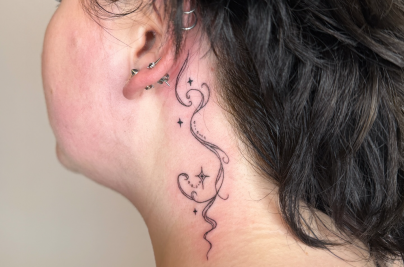
A cloud filler tattoo is a background design technique used in tattooing to fill empty skin space between primary subjects. It typically uses soft shading shaped like clouds, smoke, or mist. Rather than acting as the main focus, it enhances composition, improves flow, and visually connects separate tattoo elements into a unified design.
How Cloud Fillers Improve Tattoo Composition
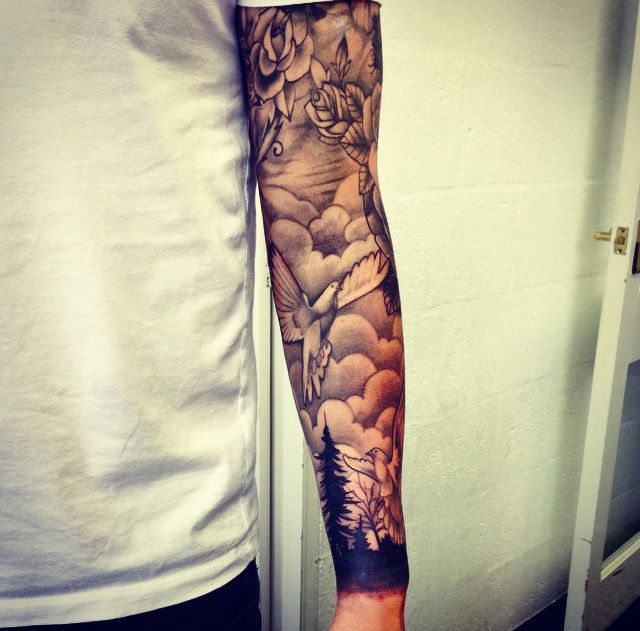
Cloud fillers improve tattoo composition by guiding the viewer’s eye across the body in a continuous visual flow. They reduce harsh gaps between tattoo elements and create depth perception. In professional tattoo design, they act as “visual bridges,” allowing dragons, florals, or figures to feel connected rather than isolated on the skin.
Information Gain Insight: Most guides ignore that cloud fillers are not decorative by default—they are structural tools used by experienced artists to control motion, depth layering, and negative space distribution across large-scale tattoos like sleeves and bodysuits.
- Improves continuity between multiple tattoo subjects
- Balances negative space for visual stability
- Enhances 3D depth perception on curved body surfaces
- Helps plan future tattoo expansion without redesigning existing work
Origins of Cloud Tattoo Backgrounds in Japanese Irezumi
Cloud filler tattoos have deep roots in traditional Japanese tattooing, known as irezumi. Historically, clouds were used to frame mythological figures, dragons, and deities, symbolizing movement between earthly and spiritual realms. Over time, this background technique became a foundational structure in large-scale Japanese-style body art.
Symbolism of Clouds in East Asian Art
In East Asian visual traditions, clouds represent transition, energy flow, and the boundary between physical and spiritual worlds. In tattooing, this symbolism evolved into a compositional device that enhances storytelling. Clouds are not random fillers—they guide narrative direction and emphasize motion in mythological scenes.
Information Gain Insight: Unlike Western tattoo backgrounds that often prioritize decorative shading, Japanese cloud structures are intentionally directional. They follow body anatomy, emphasizing movement along muscle groups rather than filling space uniformly.
- Clouds symbolize transformation and spiritual transition
- They align with mythological storytelling in Japanese art
- They are used to emphasize motion, not decoration
- They follow anatomical flow lines of the human body
Cloud Filler Tattoo Styles (Traditional, Neo-Traditional, Modern)
Cloud filler tattoos vary significantly depending on artistic style. Traditional Japanese cloud work uses bold black and grey gradients, while neo-traditional versions may incorporate color transitions. Modern interpretations often simplify cloud shapes into abstract smoke or mist effects, adapting the technique for minimalist or contemporary tattoo compositions.
Traditional Black and Grey Cloud Shading
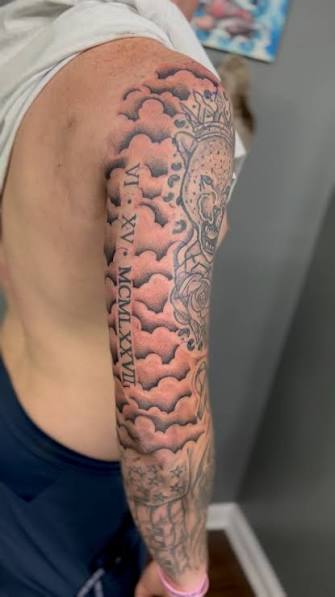
Traditional cloud shading relies on smooth gradients created with magnum needles and layered ink saturation. Artists carefully control pressure and spacing to create soft transitions between light and dark areas. This method is commonly used in Japanese-inspired sleeves where clouds act as structural background elements supporting dragons, koi, or samurai figures.
Information Gain Insight: Master-level tattoo artists often design cloud density based on future healing changes. Since ink spreads slightly under the skin over time, skilled shading anticipates softening, ensuring the composition remains balanced years after application.
- Uses magnum needles for smooth gradient shading
- Requires controlled ink saturation for depth control
- Often paired with bold foreground subjects
- Designed to age gracefully with controlled fading
Smoke vs Cloud vs Mist: Key Differences
Although often used interchangeably, smoke, cloud, and mist fillers differ in structure and visual density. Clouds are rounded and layered, smoke is more fluid and directional, and mist is lighter with minimal contrast. Each style influences how movement and depth are perceived within the tattoo composition.
Information Gain Insight: Many beginners mistake smoke-style tattoos for cloud fillers, but professionals treat them as separate design systems. Smoke is typically used for dynamic motion effects, while clouds are used for structural framing in large-scale tattoo architecture.
- Clouds: structured, rounded, and layered forms
- Smoke: fluid, directional, and high-motion design
- Mist: light, subtle, and low-contrast background filler
- Each affects visual hierarchy differently in composition
How Cloud Fillers Affect Tattoo Aging Over Time
Lucky Tattoo, a professional tattoo artist, has over 10 years of experience in the art of tattooing in Ho Chi Minh City. Lucky Tattoo Studio was founded in 2014 by skilled and kind artists. All tattoos are provided in a clean, strictly controlled, and friendly environment.
Ink Spread, Fading, and Skin Elasticity
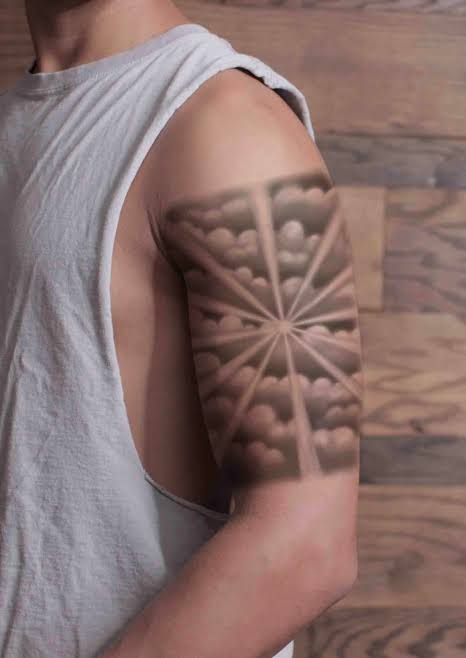
Cloud filler tattoos evolve over time due to natural ink dispersion and skin aging. Areas with heavy saturation may expand slightly, while lighter gradients can fade, creating softer transitions. Skin elasticity, sun exposure, and placement on high-movement areas like elbows or ribs significantly influence how cloud backgrounds mature visually.
Information Gain Insight: Unlike line-based tattoos, cloud fillers are intentionally designed to tolerate visual softening. Experienced artists often “over-structure” contrast knowing that healed tattoos will lose 10–30% of sharpness within the first few years.
- High-mobility areas fade and blur faster
- Sun exposure accelerates ink breakdown
- Proper shading compensates for long-term softening
- Black and grey clouds age more predictably than color gradients
How to Maintain Clarity in Cloud Background Tattoos
Cloud filler tattoos can remain visually strong over time with proper aftercare and maintenance. Key practices include sun protection, moisturizing, and occasional touch-ups. A well-planned sleeve design also reduces the need for correction by ensuring that cloud density is balanced from the beginning.
Information Gain Insight: Many people assume fading is purely a failure of ink quality, but in reality, poor aftercare—especially UV exposure in the first 6–8 weeks—has the most significant long-term impact on cloud filler clarity.
- Use SPF protection on healed tattoos
- Avoid excessive sun exposure during healing
- Follow strict aftercare for first 30 days
- Schedule touch-ups every 3–7 years if needed
Designing a Sleeve with Cloud Filler Tattoos
Designing a sleeve with cloud filler tattoos requires strategic planning of composition, flow, and subject hierarchy. Cloud backgrounds are not added randomly; they are mapped to guide the eye, connect multiple tattoo elements, and maintain visual balance across curved anatomy such as arms, shoulders, and forearms.
Placement Strategy for Flow and Balance
Cloud placement determines how the tattoo moves visually across the body. Artists use cloud density gradients to direct attention toward focal points like dragons, koi fish, or portraits. Proper spacing prevents overcrowding while ensuring that no section of skin feels visually disconnected from the overall composition.
Information Gain Insight: Advanced tattoo designers often use anatomical muscle mapping rather than flat sketches. This ensures cloud flow aligns with natural body movement, making the tattoo appear dynamic even when the body is at rest.
- Dense clouds highlight focal tattoo subjects
- Light clouds preserve negative space breathing room
- Flow direction follows muscle orientation
- Joint areas require softer gradients for flexibility
How Cloud Fillers Connect Multiple Tattoo Elements
Cloud fillers act as connective tissue in large-scale tattoo compositions. They unify unrelated elements such as flowers, animals, or mythological figures into a single visual narrative. Without them, sleeves often appear fragmented or incomplete, especially when inked over multiple sessions.
Information Gain Insight: Professional tattoo artists often delay final cloud layering until all main subjects are completed. This prevents compositional imbalance and allows the filler to adapt organically to the finished structure.
- Unifies separate tattoo elements into one theme
- Prevents visual fragmentation across sessions
- Enhances storytelling coherence in sleeves
- Allows flexible expansion for future additions
Choosing the Right Tattoo Artist for Cloud Fillers
Choosing the right tattoo artist for cloud filler work is essential because this technique requires advanced shading control and composition understanding. Not all tattooists specialize in background work. The best artists demonstrate mastery in gradient transitions, large-scale design planning, and Japanese or neo-traditional composition systems.
Portfolio Signs of a Skilled Background Artist
A skilled cloud filler artist will show consistency in shading smoothness, composition balance, and healed work examples. Their portfolio should include full sleeves or bodysuits rather than isolated small tattoos, as cloud fillers require understanding of large-scale visual flow rather than standalone imagery.
Information Gain Insight: One major mistake clients make is choosing artists based only on linework quality. Cloud fillers depend more on tonal control and spatial design than sharp outlines or illustrative precision.
- Smooth gradient transitions without patchiness
- Strong healed tattoo examples in portfolio
- Experience in large-scale compositions
- Understanding of Japanese or neo-traditional structure
Questions to Ask Before Getting a Cloud Tattoo
Before committing to a cloud filler tattoo, clients should ask specific questions about design strategy, healing expectations, and future expansion possibilities. This ensures the tattoo remains flexible and visually balanced over time, especially for sleeves intended to be completed in stages.
- How will cloud density affect future tattoo additions?
- What shading technique do you use for gradients?
- How do you design for long-term aging?
- Can the sleeve be expanded later without redesigning clouds?
Common Mistakes in Cloud Filler Tattoo Design
Common mistakes in cloud filler tattoo design include overcrowding, inconsistent flow direction, and ignoring long-term composition planning. Many people treat cloud fillers as decorative extras rather than structural elements, which leads to visual confusion and reduced impact in the final tattoo.
Overcrowding and Poor Flow Issues
Overcrowding occurs when too many cloud layers are added without spacing consideration. This blocks visual hierarchy and makes the tattoo appear heavy or cluttered. Poor flow happens when cloud direction does not align with body movement, reducing the natural aesthetic of the design.
Information Gain Insight: Experienced tattoo artists intentionally leave “visual rest zones” in cloud designs to prevent fatigue in large sleeves. Without these breaks, even technically well-executed tattoos can feel visually overwhelming.
- Too many overlapping cloud layers reduce clarity
- Inconsistent direction breaks visual flow
- Lack of spacing reduces subject emphasis
- Poor planning limits future tattoo expansion
Ignoring Future Tattoo Expansion
One of the most overlooked mistakes is failing to plan for future tattoos. Cloud fillers should be designed with modular flexibility so additional elements can be added later without disrupting the composition. Without this foresight, sleeves often require costly reworking or full redesigns.
- Design cloud structure with expansion gaps
- Avoid locking key areas with dense shading
- Plan subject hierarchy before filler application
- Ensure adaptability for bodysuit progression
FAQ: Cloud Filler Tattoo Explained
Cloud filler tattoos are commonly misunderstood, especially regarding their purpose, longevity, and cultural origins. The following FAQs provide concise, expert-level answers optimized for search engines and voice assistants.
- What is a cloud filler tattoo used for? It is used to fill background space, connect tattoo elements, and improve overall visual flow in large compositions.
- Do cloud filler tattoos hurt more than regular tattoos? Pain levels are similar, but shading-heavy areas may feel more uncomfortable due to repeated passes.
- Are cloud tattoos only part of Japanese-style tattoos? No, they are widely used in neo-traditional and modern tattoo styles as well.
- How long do cloud filler tattoos last? With proper care, they last a lifetime but naturally soften and fade over time.
- Can cloud fillers be added to an existing tattoo? Yes, skilled artists can integrate them into existing work to improve composition.
- What is the difference between smoke and cloud fillers? Clouds are structured and rounded, while smoke is more fluid and directional.
- Do cloud filler tattoos age well? Yes, they generally age better than fine-line tattoos because they rely on gradients instead of sharp outlines.