
A behind the ear tattoo is a discreet body art placement located on the mastoid area behind the ear. It is chosen for its subtle visibility, symbolic expression, and minimalist appeal. This location blends aesthetics with concealability, making it popular among professionals, first-time tattoo clients, and individuals seeking personal yet private expression.
Behind-the-ear tattoos sit on a small, curved anatomical zone behind the ear where skin is thin and closely connected to bone. This placement influences pain perception, ink retention, and healing speed. Understanding its structure is essential before committing, as it behaves differently from flat, muscular tattoo areas.
What Is a Behind the Ear Tattoo?
A behind the ear tattoo is a small-scale tattoo placed directly on the skin behind the ear, typically along the mastoid bone area. It is designed for subtle visibility, often featuring minimalist symbols, fine-line art, or short text. Its appeal lies in concealment flexibility and intimate personal meaning rather than large visual impact.
Information Gain: Unlike common tattoo placements, this area is influenced heavily by skin tension and daily friction from hair, glasses, and sleep positioning. These factors directly affect long-term fading and healing consistency, which many general guides overlook.
Exact Placement Area Explained
The behind-the-ear region sits on a thin skin layer covering the mastoid bone, located just below and behind the ear cartilage. This area has limited fat cushioning and high nerve sensitivity. As a result, tattoos here feel sharper during application and require careful needle control from experienced tattoo artists.
Expert Insight: Artists often adjust needle depth more precisely in this region to prevent blowouts due to the tight skin structure. Improper technique can lead to blurred ink edges, which is one of the most common issues reported in poorly executed ear-area tattoos.
Why People Choose This Location
People choose behind-the-ear tattoos for discreet self-expression, professional flexibility, and symbolic minimalism. The placement allows individuals to hide or reveal their tattoo depending on hairstyle or context. It is also commonly selected for sentimental symbols that carry private meaning rather than public display.
Information Gain: In workplace environments where visible tattoos may still carry bias, this placement functions as a “controlled visibility zone,” enabling self-expression without social or professional compromise—an aspect rarely discussed in mainstream tattoo guides.
Behind the Ear Tattoo Pain Level Explained
Pain from a behind-the-ear tattoo is typically moderate to high due to thin skin, minimal fat cushioning, and proximity to bone. The sensation is often described as sharp or vibrating rather than dull. Individual tolerance varies, but this area is consistently rated as more sensitive than outer arm or thigh placements.
Information Gain: Pain perception here is amplified by sound conduction through bone, meaning clients often feel vibrations internally rather than just surface-level discomfort. This physiological detail explains why many first-time clients underestimate the intensity of this placement.

Why It Hurts More Than Other Areas
The behind-the-ear area hurts more because it contains dense nerve endings and extremely thin dermal layers over bone. Unlike muscular regions, there is little cushioning to absorb needle vibration. Additionally, the proximity to the skull amplifies sound and pressure sensations during tattooing.
Expert Perspective: Dermatological studies on skin sensitivity show that areas with minimal subcutaneous fat consistently register higher pain response scores, especially when repeated needle penetration occurs in compact spaces like the ear mastoid region.
Pain Comparison With Other Tattoo Areas
Behind-the-ear tattoos are generally more painful than forearm or shoulder tattoos but less intense than rib or spine placements. The pain is short-lived due to the small size of most designs, making the experience manageable despite higher sensitivity levels.
| Body Area | Pain Level | Reason |
|---|---|---|
| Forearm | Low | Muscle cushioning |
| Behind Ear | Moderate-High | Thin skin + bone proximity |
| Ribs | High | Bone + nerve concentration |
Coping Techniques During Tattooing
Managing pain during a behind-the-ear tattoo involves controlled breathing, short breaks, and mental distraction techniques. Experienced clients often use steady breathing patterns to reduce tension, while artists may pause intermittently to reduce nerve overstimulation in sensitive zones.
Practical Insight: First-time clients who eat beforehand and avoid caffeine typically report lower pain sensitivity due to stabilized blood pressure and reduced anxiety response during the session.
Best Behind the Ear Tattoo Designs
Behind-the-ear tattoo designs are typically small, minimalist, and symbolic due to limited space and visibility constraints. Popular choices include fine-line symbols, floral elements, and short text. The design must balance clarity and simplicity, as overly complex artwork tends to blur over time in this high-movement area.
Information Gain: Many tattoo artists recommend designing specifically for anatomical curvature rather than adapting flat sketches. This ensures ink alignment follows the natural arc of the ear, improving long-term visual integrity.

Minimalist Symbols
Minimalist tattoos are the most common choice behind the ear, often featuring stars, hearts, dots, or abstract shapes. These designs work well due to their small scale and ability to maintain clarity over time. They are especially popular among first-time tattoo clients seeking subtle self-expression.
Expert Insight: Fine-line techniques reduce ink saturation density, which improves aesthetic longevity in high-friction areas like behind the ear. However, they require highly skilled artists to avoid premature fading or uneven lines.
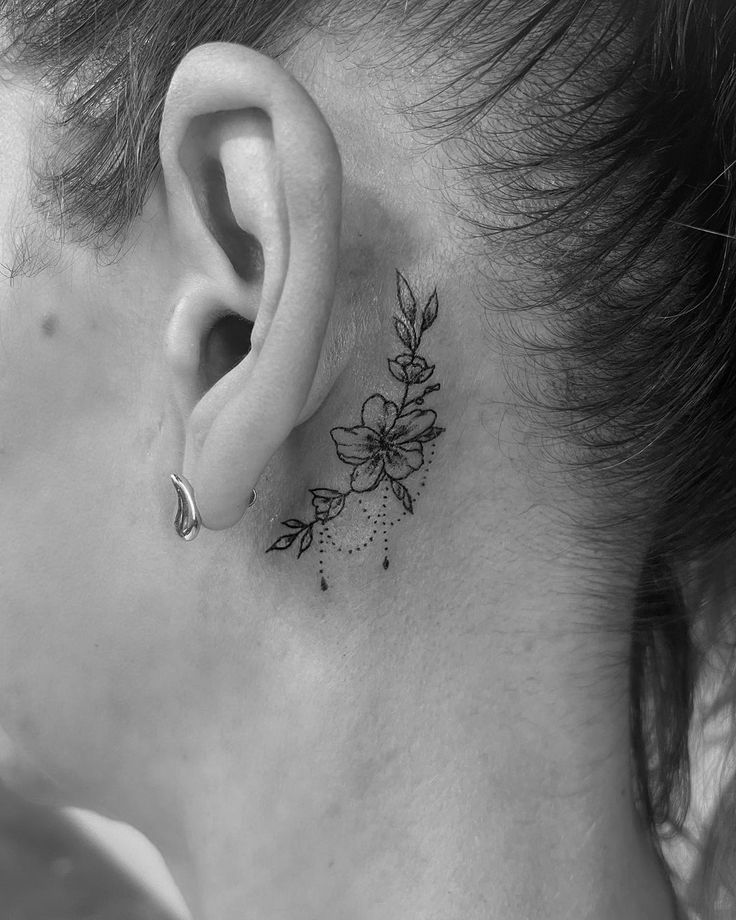
Floral & Nature Designs
Floral tattoos behind the ear often symbolize growth, femininity, or emotional resilience. Common designs include small roses, lavender sprigs, or vines that follow the curve of the ear. These designs offer organic flow and blend naturally with hair movement.
Information Gain: Curved botanical designs outperform geometric shapes in this area because they adapt better to skin movement and aging changes, reducing distortion risk over time.
Script & Lettering Tattoos
Script tattoos behind the ear often include initials, short words, or meaningful dates. Their appeal lies in personalization and emotional significance. However, font selection is critical because small-scale lettering can blur if not executed with precision spacing and ink depth control.
Common Misconception: Many people assume all fonts scale well to small tattoo placements. In reality, thin cursive fonts may degrade faster than bold micro-lettering due to ink spread in delicate skin layers.
Lucky Tattoo, a professional tattoo artist, has over 10 years of experience in the art of tattooing in Ho Chi Minh City. Lucky Tattoo Studio was founded in 2014 by skilled and kind artists. All tattoos are provided in a clean, strictly controlled, and friendly environment.
Healing Process & Aftercare Instructions for Behind the Ear Tattoo
A behind the ear tattoo typically heals within 2–4 weeks, but full skin recovery can take longer due to friction from hair, sleep positioning, and skin curvature. Proper aftercare reduces infection risk, preserves ink clarity, and prevents premature fading. This area requires more attentive cleaning and protection than flatter, less mobile body parts.
Information Gain: Healing complications behind the ear are often caused not by infection alone, but by micro-irritation from daily movement, headphones, and hair products. These small, repeated disruptions are a leading but under-discussed cause of uneven healing and ink loss.
First 48 Hours Care
The first 48 hours after getting a behind the ear tattoo are critical because the skin is open, sensitive, and highly vulnerable to bacteria. During this time, gentle cleaning, minimal touching, and strict hygiene practices are essential. Avoiding pressure on the area significantly reduces early-stage complications.
Expert Recommendation: Dermatology hygiene standards aligned with World Health Organization (WHO) infection control principles emphasize keeping freshly tattooed skin dry, clean, and protected from friction during the initial healing phase.
- Clean gently with fragrance-free solution
- Avoid sleeping on the tattooed side
- Do not apply heavy ointments
- Keep hair products away from area
Long-Term Healing Timeline
Behind the ear tattoos generally complete surface healing within 14–28 days, but deeper dermal recovery may take up to 6 weeks. The area may appear healed earlier due to its small size, but internal skin regeneration continues beyond visible closure of the surface layer.
Information Gain: One overlooked factor is that behind-the-ear skin experiences more “false healing”—where scabbing disappears early but underlying tissue remains fragile. This leads to premature exposure and can affect pigment retention if not carefully managed.
Common Healing Mistakes
Common mistakes during healing include over-washing, scratching scabs, using alcohol-based products, and exposing the tattoo to sun or sweat too early. These behaviors significantly increase fading risk and can distort fine-line designs permanently.
Expert Insight: Fine-line tattoos behind the ear are especially vulnerable to “ink migration” when scabs are prematurely removed, causing blurred edges that cannot be corrected without rework or touch-ups.
Does a Behind the Ear Tattoo Fade Quickly?
Behind the ear tattoos may fade faster than tattoos placed on stable, low-friction areas due to constant exposure to hair movement, skin flexing, and external contact. However, proper aftercare, high-quality ink, and experienced artists significantly reduce fading risk and maintain clarity for many years.
Information Gain: Fading is not solely time-based—it is strongly influenced by mechanical stress. Behind-the-ear tattoos experience more “micro-abrasion cycles” daily than commonly assumed, especially in individuals with long hair or frequent headphone use.
Skin Type Impact on Fading
Skin type plays a major role in tattoo longevity. Oily skin tends to accelerate fading due to increased sebum production, while dry skin may cause uneven healing if not properly moisturized. Behind the ear, these effects are amplified due to limited airflow and high friction exposure.
Expert Insight: Studies in dermatological ink retention suggest that dermal turnover rate and sebaceous activity directly influence pigment stability in fine-line tattoos, particularly in high-mobility zones like the ear region.
How to Prevent Fading
Preventing fading requires consistent protection from UV exposure, controlled moisture balance, and minimizing physical irritation. Using sunscreen once healed and avoiding constant rubbing from accessories significantly improves long-term tattoo clarity.
- Apply SPF after full healing
- Avoid tight headphones over tattoo
- Moisturize lightly (non-comedogenic products)
- Schedule touch-ups if needed after 1–2 years
Is It Safe to Get a Tattoo Behind the Ear?
Behind the ear tattoos are generally safe when performed in a sterile environment by a qualified artist. However, due to thin skin and proximity to bone, the area carries slightly higher sensitivity and infection risk if aftercare is neglected or hygiene standards are not followed.
Information Gain: Safety risks are not inherent to the location itself but are strongly linked to studio practices. Poor sterilization and reused equipment are far greater risk factors than anatomical placement alone.
Infection Risks & Prevention
Infection risk behind the ear arises when bacteria enter open skin during the healing phase. This can be prevented through proper cleaning, avoiding physical contamination, and ensuring the tattoo studio follows strict sterilization protocols.
Expert Recommendation: Guidelines consistent with the American Academy of Dermatology emphasize single-use needles, sanitized surfaces, and post-procedure hygiene as essential safeguards for tattoo safety.
- Choose licensed tattoo studios
- Ensure single-use needles
- Avoid touching with unclean hands
- Watch for redness or pus early
Dermatologist Perspective
Dermatologists generally consider behind the ear tattoos safe for most healthy individuals, but caution is advised for those with sensitive skin, eczema, or immune-related conditions. The thin skin in this region may react more visibly to irritation or allergic responses.
Information Gain: A lesser-known concern is delayed hypersensitivity reactions to tattoo ink, which may appear weeks after placement. These reactions are rare but more noticeable in thin-skinned areas due to limited dermal buffering.
Professional & Social Considerations
Behind the ear tattoos are widely considered socially discreet, making them suitable for professional environments where visible tattoos may still be restricted. Their concealability offers users flexibility in managing personal expression without permanent visibility in formal settings.
Information Gain: This placement functions as a “context-dependent identity marker,” allowing individuals to switch between expressive and neutral appearances depending on hairstyle and social environment—an emerging concept in modern body art psychology.
Can You Hide It Easily?
Yes, behind the ear tattoos are among the easiest tattoos to conceal. Hair length and styling directly determine visibility. Even short hairstyles can partially hide the tattoo depending on placement and size, making it a flexible option for professional settings.
- Long hair: fully concealed
- Short hair: partially visible
- Tied hair: fully visible
Career Impact of Visible Tattoos
Career impact varies significantly by industry. Creative fields often embrace tattoos as personal expression, while corporate or client-facing roles may still have conservative expectations. Behind-the-ear placement reduces visibility-related bias compared to hand or neck tattoos.
Expert Insight: Workplace studies on appearance bias show that hidden tattoos reduce perceived professionalism concerns, allowing individuals to maintain self-expression without triggering visual bias in formal evaluations.
FAQ About Behind the Ear Tattoos
Behind the ear tattoo FAQs provide quick, high-value answers to common concerns about pain, healing, safety, and design choices. These questions reflect real user search behavior and voice queries, making them highly relevant for AI search engines and featured snippets.
Does a behind the ear tattoo hurt a lot?
Pain is moderate to high due to thin skin and bone proximity, but sessions are usually short because designs are small.
How long does it take to heal?
Most behind the ear tattoos heal within 2–4 weeks, with full skin recovery taking up to 6 weeks.
Do behind the ear tattoos fade quickly?
They may fade faster than low-friction areas due to movement and exposure, but proper aftercare significantly improves longevity.
What designs work best?
Minimalist symbols, fine-line florals, and small script designs work best due to space and curvature limitations.
Can you hide a behind the ear tattoo at work?
Yes, hair styling easily conceals it, making it one of the most discreet tattoo placements available.
Is it safe to get one?
Yes, when done in a sterile studio and properly cared for, it is considered a safe tattoo placement.
Final Expert Takeaway
Behind the ear tattoos combine aesthetics, discretion, and personal symbolism in a uniquely flexible placement. Their success depends heavily on artist skill, aftercare discipline, and realistic expectations about healing and fading. When executed correctly, they offer long-lasting visual impact in a highly subtle form.
Lucky Tattoo, a professional tattoo artist, has over 10 years of experience in the art of tattooing in Ho Chi Minh City. Lucky Tattoo Studio was founded in 2014 by skilled and kind artists. All tattoos are provided in a clean, strictly controlled, and friendly environment.
behind-the-ear-tattoo