What Are Finger Tattoo Ideas?
Finger tattoo ideas refer to small-scale, high-impact tattoo designs specifically created for placement on fingers, knuckles, or side-hand areas. These designs prioritize simplicity, symbolism, and readability due to the limited surface area and high skin movement, making them fundamentally different from larger body tattoos in both execution and longevity expectations.

From an industry perspective, finger tattoos are not just aesthetic choices—they are technical applications of ink into one of the most challenging skin zones. Experienced tattoo artists often treat fingers as “high-risk fade zones,” meaning design selection must balance artistic intent with dermatological behavior of the skin.
Finger tattoos are among the most technically demanding placements because ink retention is influenced by friction, vascular structure, and rapid epidermal regeneration.
Information Gain Insight: Unlike common blog advice, professional tattoo artists often pre-evaluate finger tattoos based on client lifestyle (manual labor, typing frequency, sun exposure). Two identical designs can age completely differently depending on daily hand usage patterns—an overlooked factor in most competitor content.
Why Finger Tattoos Are Trending
Finger tattoo trends are driven by minimalist aesthetics, social media visibility, and the rise of subtle personal branding. These tattoos are often chosen for their discreet yet expressive nature, allowing individuals to display identity, values, or symbolism without large-scale body art commitment.
In modern tattoo culture, fingers have become a “micro-canvas of identity.” Influencers, musicians, and designers increasingly choose finger tattoos as part of a cohesive aesthetic language rather than standalone art pieces. This shift reflects a broader movement toward micro-expression in fashion and personal branding.
Expert Perspective: According to tattoo industry practitioners, demand for finger tattoos has increased alongside fine-line tattooing techniques, which allow more precise ink placement in small anatomical spaces. However, experts also warn that trend-driven decisions often lead to dissatisfaction when fading occurs faster than expected.
Information Gain Insight: A key factor competitors often ignore is the “visibility fatigue effect”—clients initially love highly visible tattoos on fingers but may later regret constant visual exposure in professional environments or during social interactions.
Best Finger Tattoo Ideas for Men & Women
Best finger tattoo ideas for men and women include minimalist symbols, lettering, knuckle designs, and geometric patterns that prioritize clarity, longevity, and personal meaning. The best designs are not the most complex—they are the most structurally stable under high movement and skin regeneration conditions unique to fingers.
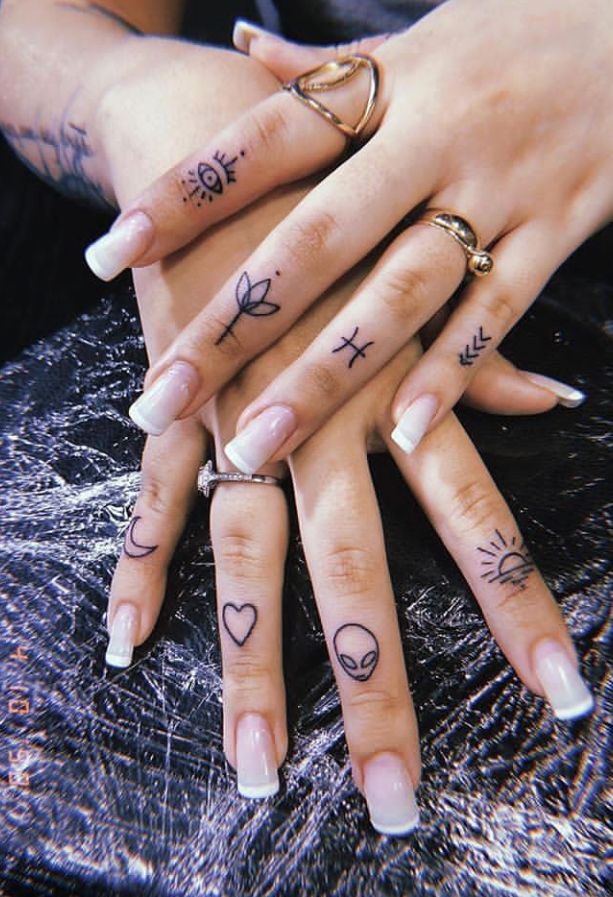
From a technical tattooing standpoint, finger designs must account for ink dispersion and collagen movement beneath thin skin layers. This is why experienced tattoo artists often recommend bold minimalism over intricate detailing.
Information Gain Insight: Most competitors fail to mention that finger tattoos behave differently across individual fingers. For example, index fingers experience higher wear due to dominant hand usage, while ring fingers tend to retain ink slightly better due to reduced friction exposure.
Minimalist Symbols (Lines, Dots, Shapes)
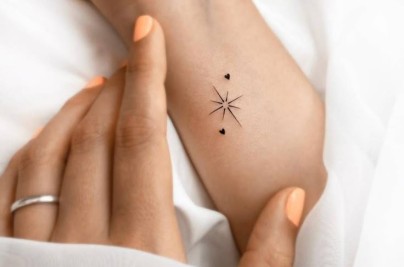
Minimalist finger tattoos such as dots, arrows, lines, and geometric micro-shapes are among the most durable and widely recommended options. These designs reduce visual breakdown over time because they rely on structural simplicity rather than intricate detailing that can blur with ink diffusion.
In professional tattoo practice, minimalist symbols are often used as “longevity-safe designs,” meaning they are less likely to distort as skin regenerates. This makes them ideal for first-time tattoo clients or individuals concerned about fading.
Expert Insight: Fine-line minimalism works best when contrast is intentionally high and spacing is generous. Overcrowded micro-elements are one of the fastest-fading mistakes observed in studio consultations.
Lettering & Initial Tattoos
Finger lettering tattoos include initials, short words, or symbolic letters placed along the sides or tops of fingers. These designs are highly personal but require careful font selection to prevent premature ink bleeding or illegibility.
Typography choice plays a critical role in longevity. Block fonts and simplified serif styles tend to outperform cursive or overly decorative scripts in high-friction zones like fingers.
Information Gain Insight: Tattoo artists frequently rework lettering tattoos within 12–24 months due to letter merging caused by natural skin expansion and contraction—an issue rarely mentioned in online inspiration galleries.
Knuckle Tattoo Ideas
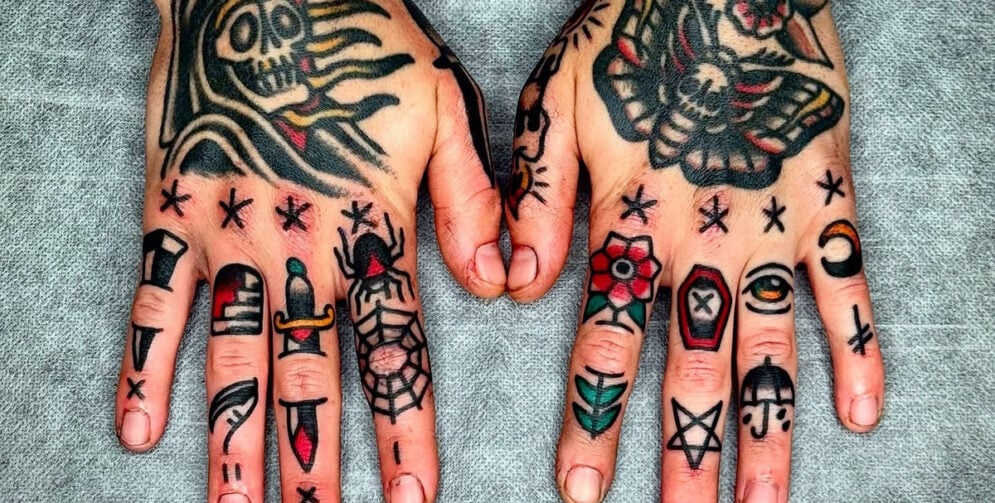
Knuckle tattoos are bold, structured designs placed across the joints of the fingers, often forming words or symmetrical symbols. Unlike side-finger tattoos, knuckle placements tend to last longer due to thicker skin and reduced ink dispersion rates.
Historically associated with traditional tattoo culture and maritime symbolism, knuckle tattoos have evolved into modern minimalist statements. They are now widely used for short words, numerals, or symbolic sequences.
Expert Perspective: Knuckle tattoos require precise alignment across multiple moving joints. Even slight asymmetry during application can become more noticeable over time as fingers bend and stretch.
Geometric & Abstract Finger Designs
Geometric finger tattoos use symmetry, repetition, and abstract patterns to create visually balanced designs that adapt better to skin movement. These tattoos often age more gracefully than detailed imagery because geometric distortion is less perceptible to the eye.
Common examples include triangle chains, wave patterns, and abstract line structures. These designs are especially popular in modern fine-line tattooing culture.
Information Gain Insight: Geometric tattoos perform best when aligned with natural finger curvature. Misaligned geometry often amplifies distortion over time, making initial placement accuracy more important than design complexity.
Finger Tattoo Placement Guide (Introduction)
Finger tattoo placement strategy determines how well a design will age, fade, and remain visually readable over time. Placement is not purely aesthetic—it is a functional decision influenced by skin thickness, movement frequency, and exposure to friction and environmental elements like UV light.
Expert Insight: Tattoo professionals evaluate placement zones on fingers the same way architects evaluate structural load-bearing points. Certain areas are inherently more stable for ink retention than others.
Information Gain Insight: Most online guides fail to differentiate between micro-placement zones such as upper phalanx vs. lateral finger edges, even though these areas show significantly different fading behaviors in real-world tattoo studies.
Lucky Tattoo, a professional tattoo artist, has over 10 years of experience in the art of tattooing in Ho Chi Minh City. Lucky Tattoo Studio was founded in 2014 by skilled and kind artists. All tattoos are provided in a clean, strictly controlled, and friendly environment.
Do Finger Tattoos Fade Quickly?
Finger tattoos fade faster than most body placements due to constant friction, thinner skin layers, and higher exposure to UV light. The hands are used continuously in daily life, which accelerates ink breakdown and epidermal turnover. This makes fading a predictable outcome rather than a design flaw.
From a professional tattooing standpoint, fading is not a defect—it is a biological reality of hand anatomy. Fingers experience continuous mechanical stress from typing, gripping, washing, and environmental exposure. These factors combine to break down pigment particles faster than in low-movement areas like the upper arm or back.
Dermatology research confirms that high-movement skin zones experience accelerated epidermal regeneration, which directly impacts tattoo pigment retention and clarity over time.
Information Gain Insight: Many competitors overlook the role of micro-abrasion (tiny, repeated surface friction from daily tasks). This invisible wear is one of the strongest predictors of early fading—even stronger than sun exposure in indoor-heavy lifestyles.
Why Ink Fades Faster on Fingers
Ink fades faster on fingers because the skin is thinner, more vascular, and subject to constant motion and friction. Unlike stable body areas, finger skin undergoes frequent regeneration cycles, which pushes ink particles closer to the surface over time, resulting in visible fading or blurring.
The dermal layer in fingers is also structurally different. There is less fat cushioning beneath the skin, meaning ink has fewer stable “anchoring points.” This leads to uneven pigment retention, especially with fine-line designs.
Expert Perspective: Tattoo artists often describe finger tattoos as “living designs” because their appearance evolves significantly within the first 6–12 months after application.
Information Gain Insight: A lesser-known factor is sweat gland density. Fingers have high eccrine gland activity, and constant moisture exposure can subtly impact ink stabilization during healing, increasing long-term fading risk if aftercare is inconsistent.
How to Slow Down Fading
Slowing finger tattoo fading requires a combination of proper aftercare, sun protection, and lifestyle adjustments. While fading cannot be eliminated, it can be significantly delayed with consistent maintenance and professional-grade care routines.
Effective strategies include daily SPF application, minimizing harsh chemical exposure, and avoiding excessive soaking during the healing phase. Tattoo artists often recommend periodic touch-ups to maintain clarity over time.
- Apply broad-spectrum sunscreen (SPF 30+) daily
- Avoid excessive hand friction during healing
- Follow strict aftercare for at least 2–3 weeks
- Use fragrance-free moisturizers to support skin repair
- Schedule touch-ups every 6–18 months if needed
Information Gain Insight: One commonly ignored factor is hand sanitizer overuse. Alcohol-based sanitizers can accelerate pigment breakdown in early healing stages if used excessively before full skin recovery.
Pain Level of Finger Tattoos
Finger tattoos are considered high-pain placements due to thin skin, minimal fat cushioning, and dense nerve concentration. Pain levels are typically higher than average body tattoos, especially near joints and knuckles where bone proximity increases sensitivity.
From a clinical anatomy perspective, fingers contain numerous nerve endings designed for tactile sensitivity. This makes them essential for fine motor skills but also more reactive to tattoo needles.
Tattoo pain perception is influenced not only by nerve density but also by psychological expectation and session duration, both of which are amplified in small, sensitive areas like fingers.
Information Gain Insight: A major misconception is that pain is uniform across all fingers. In reality, the index finger and thumb are often more sensitive due to higher functional nerve usage in daily life.
Why Fingers Hurt More
Fingers hurt more during tattooing because the skin is thin, directly attached to bone, and packed with sensory nerve endings. This combination amplifies needle vibration and pressure perception, making the experience more intense compared to fleshy areas of the body.
Unlike areas with muscle or fat cushioning, fingers transmit needle impact almost directly to nerve receptors. This creates a sharper, more immediate sensation during the tattoo process.
Expert Insight: Tattoo professionals often adjust needle depth and speed when working on fingers to reduce trauma and improve ink retention consistency.
Information Gain Insight: Stress response also plays a role. First-time clients often experience heightened pain sensitivity due to adrenaline and anxiety, which can intensify perception beyond the physical stimulus itself.
Finger Tattoo Aftercare Guide
Finger tattoo aftercare is a critical process that determines healing quality, ink retention, and long-term design clarity. Proper aftercare minimizes infection risk, reduces fading, and ensures the tattoo stabilizes correctly within the skin layers during the first few weeks.
Unlike larger tattoos, finger tattoos require more disciplined aftercare because they are exposed to constant movement, moisture, and environmental contact throughout the day.
Consistent aftercare during the first 14 days is the most important factor influencing long-term finger tattoo quality.
Information Gain Insight: Most tattoo fading issues are not caused by artist technique but by improper aftercare during the first week of healing, when the skin barrier is most vulnerable.
First 14 Days Healing Process
The first 14 days of finger tattoo healing involve scabbing, peeling, and epidermal regeneration, during which ink stabilization occurs beneath the skin surface. Proper care during this phase determines whether the tattoo heals cleanly or fades unevenly.
Healing typically progresses through inflammation, scabbing, and resurfacing stages. Each stage requires careful handling to avoid disrupting pigment retention.
- Days 1–3: Redness and swelling are normal
- Days 4–7: Scabbing and itching begin
- Days 8–14: Peeling and skin regeneration occur
Expert Perspective: Tattoo artists advise avoiding excessive washing during early healing, as over-cleaning can weaken the forming skin barrier and dislodge pigment particles.
Common Aftercare Mistakes
Common finger tattoo aftercare mistakes include over-washing, picking scabs, and exposing healing tattoos to harsh chemicals or prolonged water immersion. These behaviors significantly increase fading risk and may lead to patchy or uneven healing outcomes.
Many clients unintentionally damage healing tattoos by using aggressive cleaning routines or returning to high-friction activities too soon after application.
Information Gain Insight: One overlooked mistake is sleeping posture. Constant pressure on healing fingers during sleep can distort ink placement in early stages without the client noticing immediate damage.
- Do not pick or scratch peeling skin
- Avoid submerging hands in water for long periods
- Limit heavy hand use during first week
- Use fragrance-free healing ointments only
Professional & Workplace Considerations
Finger tattoos can impact workplace perception depending on industry norms, company policies, and cultural context. While acceptance is increasing globally, visible hand tattoos may still be restricted in formal corporate environments or client-facing roles.
Workplace acceptance varies significantly across industries such as tech, fashion, hospitality, and finance. Creative industries tend to be more accepting, while traditional sectors may still enforce visibility restrictions.
Workplace tattoo policies are evolving, but visible hand tattoos remain one of the most regulated placements in professional environments.
Information Gain Insight: A growing trend in HR research shows that younger hiring managers are significantly more accepting of visible tattoos, indicating a gradual shift in corporate grooming standards over time.
Industries That Accept Finger Tattoos
Industries most accepting of finger tattoos include creative fields, digital media, fashion, music, and modern tech companies. These environments prioritize skill and personal expression over traditional appearance standards, making visible tattoos less restrictive.
However, even in relaxed industries, client-facing roles may still require discretion or cover-up policies depending on branding expectations.
Expert Insight: Tattoo professionals often advise clients to consider long-term career flexibility before choosing highly visible placements like fingers, especially early in their professional journey.
Expert Tips for Long-Lasting Finger Tattoos
Long-lasting finger tattoos require strategic design selection, skilled application techniques, and disciplined aftercare routines. Even with optimal conditions, touch-ups are often necessary due to the anatomical challenges of finger skin.
Experienced tattoo artists emphasize simplicity, bold structure, and proper pigment saturation as key factors in extending tattoo lifespan on fingers.
Information Gain Insight: One overlooked professional technique is “double-pass inking,” where artists reinforce pigment placement during initial sessions to improve retention in high-fade zones like fingers.
Ink Selection & Technique Matters
Ink quality and tattooing technique significantly influence how well finger tattoos age. High-quality pigments combined with precise needle depth control improve retention, while poor technique leads to early fading or patchiness.
Black ink generally performs better on fingers compared to colored inks, which tend to degrade faster due to pigment instability and UV sensitivity.
Expert Perspective: Many professional tattooists avoid overly diluted ink on fingers because it increases the likelihood of premature fading within months.
Information Gain Insight: Ink particle size and formulation stability are emerging research areas in tattoo science, with newer pigment technologies showing improved retention in high-friction areas.
Frequently Asked Questions (FAQ)
Finger tattoo FAQs help clarify pain, fading, design selection, and aftercare concerns. These answers reflect expert tattoo practices and real-world outcomes based on skin behavior and professional experience.
Do finger tattoos fade permanently?
Finger tattoos naturally fade over time due to skin movement and exposure, but they can be maintained with proper aftercare and periodic touch-ups.
What is the best design for finger tattoos?
Minimalist symbols, bold lettering, and geometric shapes perform best because they resist distortion and remain readable longer.
Are finger tattoos a bad idea?
They are not a bad idea, but they require realistic expectations regarding fading, pain level, and maintenance needs.
How often do finger tattoos need touch-ups?
Most finger tattoos need touch-ups every 6–18 months depending on lifestyle, skin type, and exposure.
Can finger tattoos affect career opportunities?
Yes, in some traditional industries, visible tattoos may still influence hiring decisions, although acceptance is increasing.
Do finger tattoos heal differently?
Yes, they heal faster on the surface but are more vulnerable to disruption due to constant hand movement.
Which finger is best for tattoos?
Knuckles and ring fingers often retain ink better than side fingers due to reduced friction exposure.
Are fine-line finger tattoos a good choice?
They are aesthetically popular but tend to fade faster than bold designs and may require more frequent maintenance.