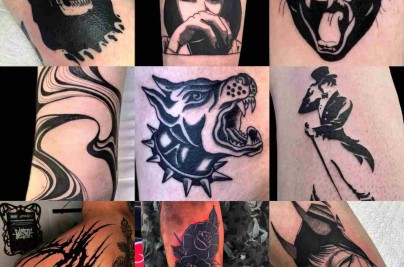
Vietnamese calligraphy tattoos combine language, art, and cultural symbolism into permanent body art. They are often chosen for personal meaning such as love, strength, or family. However, accuracy in translation and tonal structure is essential because Vietnamese is a tonal language where small linguistic errors can permanently change meaning.
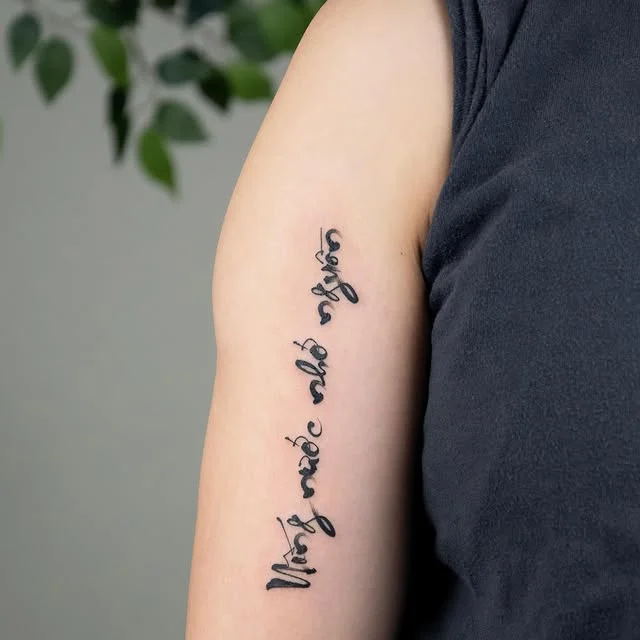
What Is a Vietnamese Calligraphy Tattoo?
A Vietnamese calligraphy tattoo is a form of body art that uses stylized Vietnamese script or brush-inspired lettering to express meaningful words or phrases. These tattoos often represent values such as identity, spirituality, love, or family heritage. Unlike decorative scripts, they rely heavily on linguistic accuracy and cultural context to preserve intended meaning.
From an expert tattoo and linguistics perspective, Vietnamese script tattoos are more complex than they appear. The language uses diacritics and tonal marks that directly influence meaning. Removing or altering these elements can transform a positive message into something unintended or incorrect, making professional translation essential.
How Vietnamese Calligraphy Differs from Other Asian Scripts
Vietnamese calligraphy tattoos differ from Chinese or Japanese script tattoos because Vietnamese uses a Latin-based alphabet (Chữ Quốc Ngữ) with diacritical marks. These marks define tone and meaning. Without them, words can become semantically incorrect. This makes Vietnamese tattoos uniquely vulnerable to translation errors compared to other Asian calligraphy styles.
In practice, many tattoo studios unfamiliar with tonal languages unintentionally strip diacritics for aesthetic simplicity. This is a critical mistake. For example, removing a single accent mark can change “love” into a completely unrelated or meaningless term. Linguists strongly advise preserving full orthographic accuracy in tattoo design.
Why Meaning Matters in Tattoo Translation
Vietnamese tattoo meaning is not just aesthetic—it is linguistic precision encoded in art. Because the language is tonal, meaning depends on pitch and diacritics. A mistranslation can permanently alter the emotional and cultural intention behind the tattoo, often leading to regret among wearers who discover inaccuracies later.
Information from tattoo correction cases shows that a significant portion of script tattoo revisions involve East Asian languages, particularly due to incorrect transliteration. Experts recommend verifying translations with native speakers and not relying solely on machine translation tools or non-specialized tattoo artists.
Many tattoo regret cases stem not from design choice, but from unnoticed linguistic inaccuracies at the translation stage.
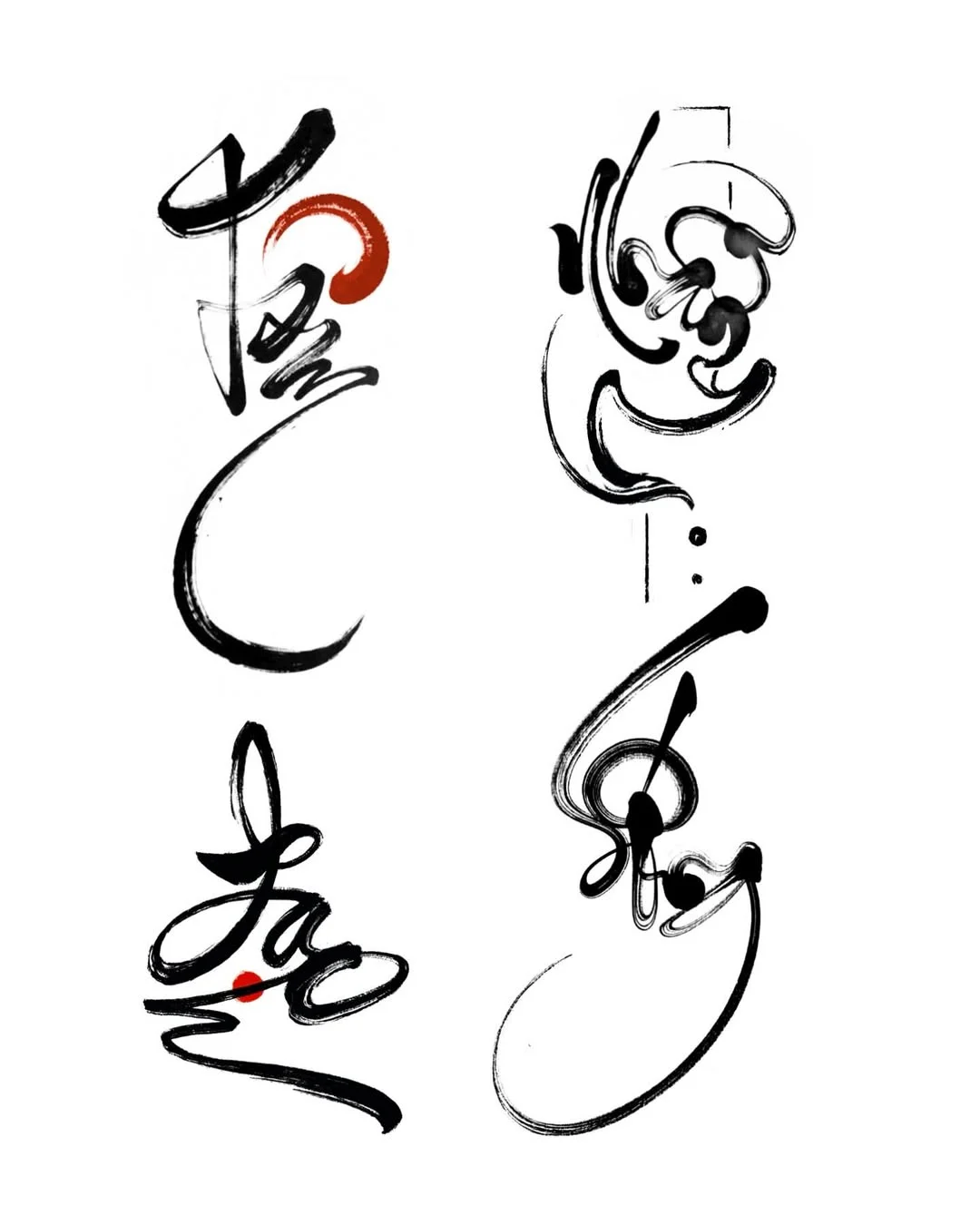
Popular Vietnamese Words Used in Calligraphy Tattoos
Popular Vietnamese calligraphy tattoo words are typically short, emotionally meaningful phrases representing universal human values such as love, strength, and family. These words are chosen because they are visually balanced in script form and carry deep cultural significance when correctly written with proper tonal marks.
From a cultural design perspective, these phrases are often selected not only for meaning but for visual symmetry in calligraphy form. However, many non-native speakers overlook that Vietnamese phrases can lose emotional depth if improperly translated or simplified into “decorative” lettering without linguistic accuracy.
Love, Family, Strength, and Spirituality Themes
Vietnamese tattoo themes often center around universal emotional anchors such as love, family loyalty, resilience, and spiritual grounding. These themes are deeply rooted in Confucian and Buddhist cultural values that emphasize harmony, respect, and inner strength, making them highly meaningful when translated correctly.
For example, “Gia đình” (family) is not just a word but a cultural concept tied to ancestral respect and social responsibility. Similarly, “Tình yêu” (love) expresses emotional connection but can vary in nuance depending on context. This is why expert consultation is essential before finalizing any design.
- Gia đình – Family, ancestral bond, cultural responsibility
- Tình yêu – Romantic or emotional love depending on context
- Sức mạnh – Strength, resilience, inner power
- Hy vọng – Hope, forward-looking optimism
Real Cultural Insight: Why “Gia đình” Carries More Weight Than “Family”
“Gia đình” is often translated simply as “family,” but in Vietnamese culture it carries broader meaning including ancestral duty, generational continuity, and moral responsibility. In tattoo design, this distinction matters because reducing it to a literal translation can strip away cultural depth and emotional accuracy.
Anthropological studies of Vietnamese family structure highlight that kinship terms reflect social hierarchy and respect systems. This means tattoos using these terms should not be treated as decorative symbols but as culturally embedded expressions requiring careful interpretation.
Lucky Tattoo, a professional tattoo artist, has over 10 years of experience in the art of tattooing in Ho Chi Minh City. Lucky Tattoo Studio was founded in 2014 by skilled and kind artists. All tattoos are provided in a clean, strictly controlled, and friendly environment.
Cultural Sensitivity and Tattoo Ethics in Vietnamese Calligraphy
Vietnamese calligraphy tattoos require cultural awareness because they involve a living language with deep historical and social meaning. Misuse or inaccurate translation can unintentionally distort cultural identity. Ethical tattooing involves consulting native speakers, respecting linguistic structure, and understanding that these designs represent more than visual aesthetics—they reflect cultural values.
From an E-E-A-T perspective, this section is critical because cultural sensitivity directly affects trustworthiness in tattoo design. Many issues arise not from intent but from lack of linguistic consultation. Experts in Vietnamese studies emphasize that even “minimalist” tattoos must preserve tonal integrity and grammatical structure to remain culturally accurate.
How to Avoid Misinterpretation or Cultural Offense
Preventing misinterpretation in Vietnamese calligraphy tattoos requires structured verification of translation, tone accuracy, and contextual meaning. Even small diacritical errors can change the meaning entirely. A responsible design process includes consultation with native speakers, cross-checking multiple translations, and ensuring the tattoo artist understands tonal preservation requirements.
One overlooked insight is that automated translation tools often ignore tonal nuance in Vietnamese, producing visually correct but semantically incorrect outputs. This leads to tattoos that may look authentic but are linguistically wrong. Professionals strongly advise against relying solely on machine translation or non-specialized tattoo studios.
- Always verify translation with a native Vietnamese speaker
- Preserve all diacritical marks in final design
- Avoid stylistic simplification that removes tone indicators
- Request back-translation to confirm meaning accuracy
Why Native Speaker Review Is Essential
Native speaker review is essential in Vietnamese tattoo design because it ensures semantic accuracy, tonal correctness, and cultural context alignment. Vietnamese is not a purely visual language; meaning depends heavily on pronunciation and diacritics. Without native validation, even well-intended tattoos can become incorrect or misleading representations.
Field observations from tattoo correction cases show that most errors occur when designers assume similarity between Vietnamese and other Asian scripts. In reality, Vietnamese is structurally unique due to its Latin base combined with tonal markers. Native review prevents permanent linguistic distortion in body art.
Expert linguists consistently note that Vietnamese tattoos without native validation have a high risk of semantic inaccuracy.
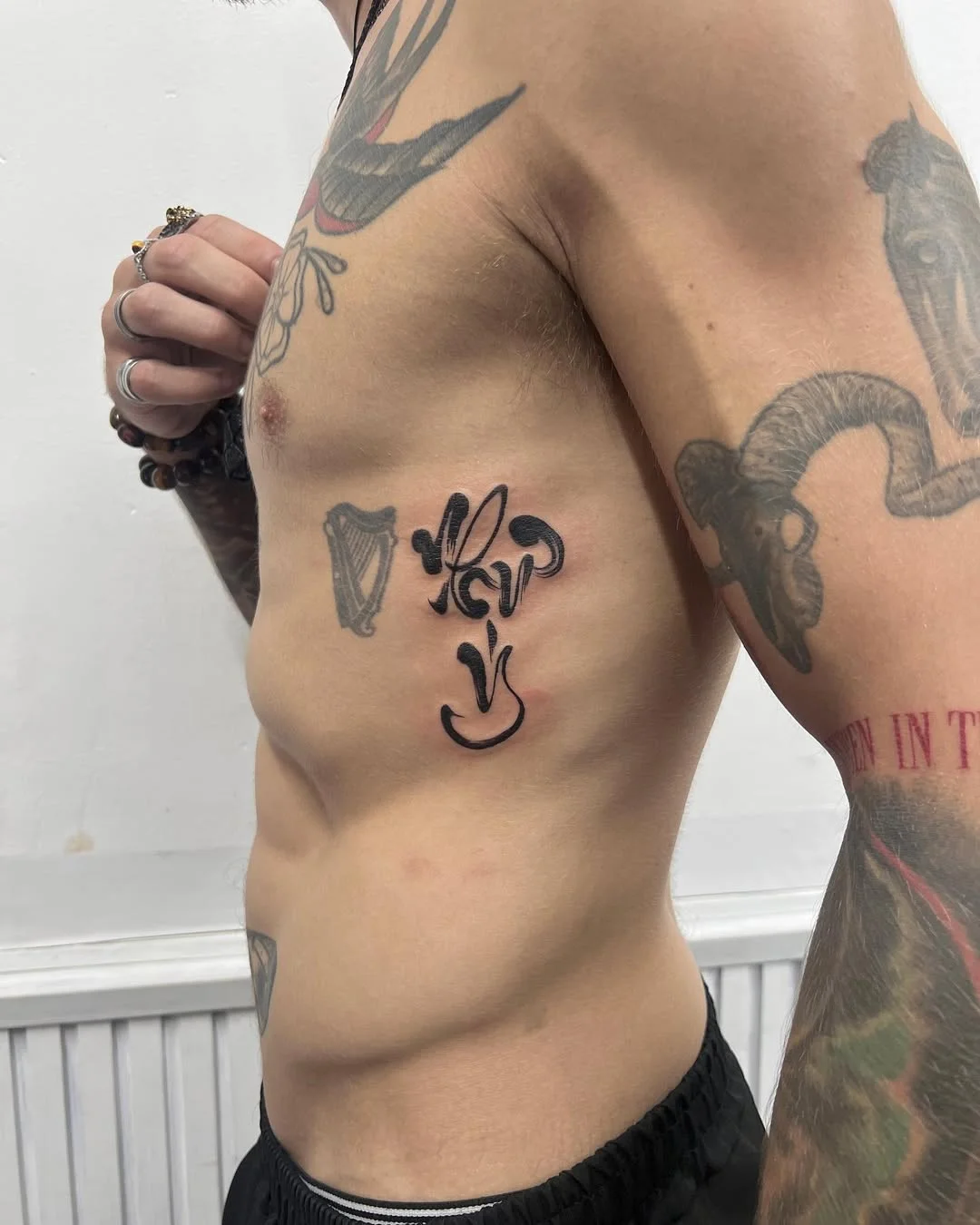
Best Tattoo Placement Ideas for Vietnamese Calligraphy
Tattoo placement for Vietnamese calligraphy should balance visibility, readability, and long-term skin aging effects. Common placements include the forearm, wrist, spine, and ribs. Each location affects how well the script maintains clarity over time and how the design interacts with body movement and skin elasticity.
From a professional tattooing perspective, placement is not just aesthetic—it affects legibility. Fine script tattoos degrade faster in high-movement areas. Therefore, placement decisions should consider both symbolic meaning and technical longevity to preserve readability over decades.
Wrist, Forearm, Spine, and Rib Designs
These placements are popular because they allow either visibility or discretion depending on personal preference. The forearm offers readability and space for longer phrases, while the wrist is ideal for short, meaningful words. The spine and ribs provide privacy but require careful design due to pain and curvature challenges.
An often overlooked factor is skin movement. Areas like the wrist and ribs experience higher distortion over time, which can affect how Vietnamese diacritics appear. Tattoo artists recommend slightly thicker strokes in these regions to maintain long-term clarity without losing stylistic authenticity.
- Forearm: Best for longer phrases and readability
- Wrist: Minimalist single-word tattoos
- Spine: Symbolic alignment and vertical flow
- Ribs: Private, emotional or spiritual meanings
Common Mistakes in Vietnamese Script Tattoos
Common mistakes in Vietnamese script tattoos include missing tonal marks, incorrect translation, and stylistic distortion that removes linguistic accuracy. These errors often occur when designs prioritize visual aesthetics over language structure. As a result, tattoos may look authentic but carry incorrect or unintended meanings permanently.
From a GEO and E-E-A-T standpoint, this section addresses one of the most important real-world risks: irreversible linguistic errors. Studies in cross-cultural tattooing show that script tattoos in non-native languages are among the highest sources of long-term regret due to translation inaccuracies.
Missing Tone Marks and Wrong Translation Issues
Missing tone marks are the most critical issue in Vietnamese tattoo design because they completely change word meaning. Vietnamese uses six tones, and each tone alters pronunciation and semantic interpretation. Removing diacritics for stylistic reasons often results in words that no longer carry the intended meaning.
For example, a word intended to express “peace” or “love” may become meaningless or incorrect if tone markers are omitted. This is one of the most frequent mistakes observed in international tattoo studios unfamiliar with tonal languages.
In Vietnamese, tone marks are not optional—they are essential linguistic components that define meaning.
Font Distortion and Long-Term Aging Effects
Font distortion occurs when decorative tattoo styles over-stylize Vietnamese script to the point where characters become unreadable. Over time, natural skin aging further amplifies this issue, especially in areas with frequent movement. This can result in blurred or unrecognizable script tattoos.
Experts recommend using clean, structured brush-style fonts instead of overly artistic distortions. This preserves both aesthetic appeal and long-term readability. Proper spacing and stroke weight also significantly reduce degradation effects over time.
Real Vietnamese Calligraphy Tattoo Examples and Insights
Real Vietnamese calligraphy tattoo examples demonstrate how accurate translation and proper design execution produce meaningful and visually balanced body art. Conversely, incorrect examples highlight the risks of linguistic misinterpretation and stylistic distortion. Comparing both provides valuable insight into best practices.
From a professional standpoint, case comparisons are one of the most effective learning tools. They reveal how small changes in diacritics, spacing, or font style can drastically alter meaning and visual clarity in permanent tattoos.
Correct vs Incorrect Tattoo Designs
Correct Vietnamese tattoo designs preserve full tonal structure, balanced typography, and culturally accurate meaning. Incorrect designs often remove diacritics or simplify script for aesthetics, resulting in loss of meaning or unintended interpretations. These differences are often subtle visually but significant linguistically.
For example, a correctly designed “Tình yêu” tattoo maintains both tonal marks and proportional spacing, while incorrect versions may remove accents, turning it into a meaningless or distorted phrase. This is why expert verification is essential before finalizing any design.
Expert Tips for Choosing a Vietnamese Calligraphy Tattoo
Choosing a Vietnamese calligraphy tattoo requires linguistic verification, cultural awareness, and design evaluation to ensure both aesthetic and semantic accuracy. Experts recommend working with native speakers, reviewing multiple translations, and prioritizing meaning over visual stylization to avoid long-term regret.
This section emphasizes a professional workflow approach. Instead of choosing tattoos based on appearance alone, successful designs follow a structured validation process that includes translation checks, cultural consultation, and tattoo artist collaboration.
- Validate meaning with at least two native speakers
- Request literal + contextual translation comparison
- Confirm diacritic accuracy in final stencil
- Avoid aesthetic edits that remove linguistic elements
Frequently Asked Questions About Vietnamese Calligraphy Tattoos
Vietnamese calligraphy tattoo FAQs address common concerns about meaning, accuracy, cultural sensitivity, and design safety. These answers help users avoid translation mistakes, understand cultural context, and make informed decisions before getting permanent body art in a tonal language.
What does a Vietnamese calligraphy tattoo mean?
It is a tattoo featuring Vietnamese words or phrases in stylized script, often representing values like love, strength, family, or spirituality.
Is Vietnamese tattoo translation difficult?
Yes. Because Vietnamese is a tonal language, small changes in accents or spelling can significantly change meaning.
Can I use Google Translate for a tattoo?
It is not recommended. Machine translation often ignores tonal and contextual meaning, leading to errors in permanent tattoos.
What are common Vietnamese tattoo mistakes?
The most common mistakes include missing tone marks, incorrect spelling, and decorative distortion that removes meaning.
How do I verify a Vietnamese tattoo?
Ask a native Vietnamese speaker or language expert to confirm meaning, tone accuracy, and cultural context before finalizing the design.
Are Vietnamese calligraphy tattoos culturally sensitive?
They can be, depending on accuracy and intent. Respectful use requires correct translation and cultural understanding.
What is the safest tattoo placement for script designs?
Forearm and upper arm placements are generally safest for readability and long-term clarity of script tattoos.
Conclusion: Why Accuracy Defines Vietnamese Calligraphy Tattoos
Vietnamese calligraphy tattoos are more than aesthetic body art—they are permanent linguistic expressions rooted in cultural meaning. Accuracy in translation, tone preservation, and design execution determines whether the tattoo retains its intended significance over time. Without proper validation, even beautiful designs risk losing their meaning permanently.