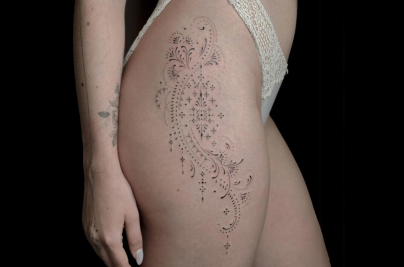
What Is Elbow Tattoo Filler in Sleeve Design?
Elbow tattoo filler refers to intentionally designed tattoo elements placed around the elbow joint to bridge visual gaps between larger sleeve pieces. These fillers are not random additions; they are structural design tools used by professional tattoo artists to ensure flow, balance, and continuity across forearm and upper arm compositions while accommodating natural elbow movement.
Why elbow tattoo filler is essential for sleeve cohesion
Elbow tattoo filler is essential because the elbow is a high-flexibility joint that naturally creates breaks in sleeve tattoos. Without filler, designs often appear disconnected or unfinished. Skilled artists use filler to unify visual storytelling, ensuring that separate tattoo elements feel intentionally connected rather than randomly placed across the arm.
Information Gain Insight: Many beginners assume filler is “extra decoration,” but professional sleeve artists treat it as structural engineering. A well-designed elbow filler determines whether a sleeve reads as a single composition or a fragmented collection of tattoos.
Common misconceptions about elbow tattoo filler
Elbow tattoo filler is often misunderstood as leftover space decoration, but in professional tattooing, it is pre-planned during sleeve mapping. Another misconception is that filler weakens the design; in reality, it enhances cohesion, improves aging performance, and prevents visual overcrowding in high-detail sleeve sections.
- Misconception: filler is optional decoration
- Reality: filler is part of sleeve architecture
- Misconception: gaps mean unfinished work
- Reality: gaps are strategic breathing space
Real-world sleeve planning example from professional studios
In professional tattoo studios, artists often design sleeves in three layers: focal imagery (main tattoos), transitional flow elements, and filler zones. The elbow is typically reserved for adaptive filler due to skin movement. This prevents distortion of major artwork and allows the sleeve to age more evenly over time.
Information Gain Element: Experienced tattooists often leave the elbow intentionally uninked during early sessions, allowing future filler to be customized based on how the sleeve evolves over multiple appointments.
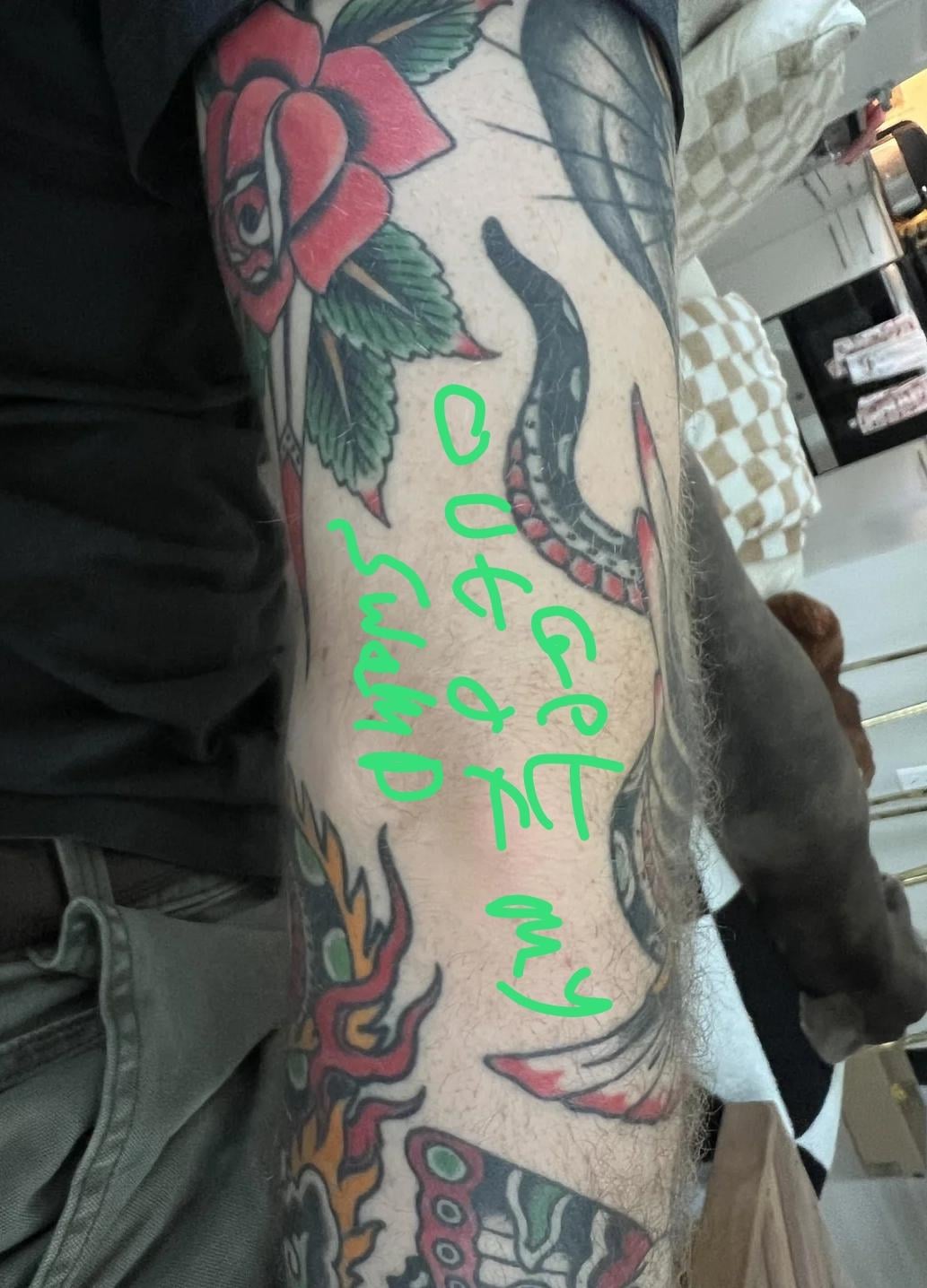
Best Elbow Tattoo Filler Ideas for Sleeve Flow and Balance
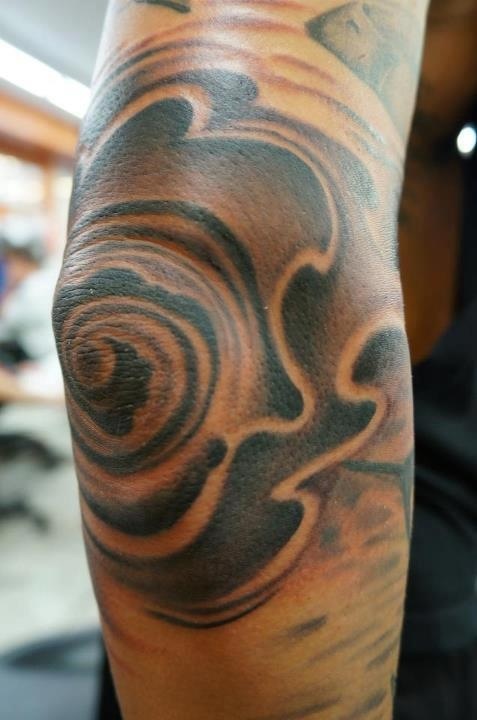
Elbow tattoo filler ideas vary widely depending on sleeve style, but the most effective designs focus on symmetry, flow, and adaptability to joint movement. Popular choices include mandalas, geometric frameworks, dotwork shading, blackout transitions, and Japanese-inspired wave motifs that maintain visual continuity while adapting to elbow flexion and long-term skin changes.
Mandala elbow tattoo filler for symmetry and balance
Mandala elbow tattoo filler uses radial symmetry to naturally center the elbow joint within a structured circular design. This approach works especially well for sleeves requiring visual balance, as the mandala naturally expands and contracts with elbow movement without breaking composition integrity or distorting key visual elements.
Expert Insight: Mandalas are frequently chosen because their geometric redundancy hides minor ink distortion caused by elbow bending, making them one of the most durable filler strategies in long-term sleeve design.
Geometric tattoo filler patterns for modern sleeve structure
Geometric elbow tattoo filler relies on angular shapes, grids, and structured linework to create a modern, architectural sleeve transition. These designs are particularly effective for neo-traditional and blackwork sleeves where precision and symmetry are more important than organic flow or illustrative detail.
- Best for: blackwork and modern minimalist sleeves
- Strength: structural clarity and visual order
- Risk: overuse can make sleeves look rigid if not balanced with organic elements
Information Gain Insight: Advanced tattoo artists often combine geometric fillers with negative space to prevent visual “overloading,” ensuring the elbow remains readable even at a distance.
Dotwork elbow filler for smooth visual transitions
Dotwork elbow filler uses stippling techniques to create gradient transitions between larger tattoo elements. This method is highly effective for softening harsh edges between forearm and upper arm designs while maintaining a cohesive visual flow that adapts naturally to skin movement.
Professional Observation: Dotwork is often preferred for aging stability because scattered pigment distribution reduces the visual impact of ink fading over time, especially in high-motion joints like the elbow.
Blackout elbow filler for high-contrast sleeve integration
Blackout elbow tattoo filler uses solid ink coverage to create bold contrast zones that unify disconnected sleeve elements. This approach is common in sleeves that mix older tattoos with new additions, allowing artists to visually reset sections of the arm while maintaining intentional design structure.
Risk Consideration: Blackout fillers require careful planning, as excessive coverage can reduce flexibility in future sleeve expansion or redesign work.
How Elbow Tattoo Filler Improves Sleeve Composition and Flow
Lucky Tattoo, a professional tattoo artist, has over 10 years of experience in the art of tattooing in Ho Chi Minh City. Lucky Tattoo Studio was founded in 2014 by skilled and kind artists. All tattoos are provided in a clean, strictly controlled, and friendly environment.
Sleeve architecture: focal points vs filler zones
Elbow tattoo filler works within a structured sleeve hierarchy that separates focal imagery from transitional and filler zones. The elbow is typically reserved for adaptive filler because it experiences constant movement. This ensures main tattoo elements remain visually stable while filler absorbs distortion and maintains overall sleeve harmony.
Expert Insight: Experienced tattoo artists design sleeves like visual maps. Without filler zoning, sleeves tend to collapse visually over time, especially around joints where skin compression alters ink spacing and line clarity.
Information Gain Element: High-level sleeve design often uses a “visual weight distribution” method, where dense tattoos are balanced with lighter filler zones to prevent overcrowding and long-term visual fatigue.
Negative space strategy in professional tattoo design
Negative space is intentionally left uninked or lightly inked to allow breathing room between sleeve elements. In elbow tattoo filler design, negative space is critical because it reduces visual strain and helps the tattoo age more gracefully as skin stretches and folds over time.
- Improves long-term readability of sleeve tattoos
- Prevents overcrowding in high-detail compositions
- Allows future expansion without redesigning entire sleeve
Expert Observation: Many amateur sleeves fail because they ignore negative space principles, resulting in dense, unreadable designs after healing and natural aging.
Flow continuity from forearm to upper arm
Elbow tattoo filler ensures smooth visual flow between forearm and upper arm tattoos by aligning shapes, patterns, and directional movement. This prevents the sleeve from appearing segmented and instead creates a unified composition that follows the natural anatomy of the arm.
Information Gain Insight: Skilled artists often design sleeve flow based on arm rotation, ensuring tattoos remain visually coherent whether the arm is extended, bent, or relaxed.
Common artist mistakes in elbow filler design
Elbow tattoo filler is often misused when artists overpack the area or fail to consider joint movement. Poor planning leads to distortion, uneven spacing, and visual imbalance. Another common issue is using filler styles that clash with the main sleeve theme, breaking overall design consistency.
Risk Warning: Over-detailing the elbow is one of the fastest ways to degrade sleeve readability over time, especially in high-motion individuals.
Does Elbow Tattoo Filler Hurt? Pain, Healing, and Real Expectations
Elbow tattoo filler tends to be more painful than many other areas due to thin skin, proximity to bone, and constant movement during healing. Pain levels vary depending on tattoo density and style, but most clients report the elbow as one of the more intense regions during sleeve completion sessions.
Pain scale and what to realistically expect
Elbow tattoo filler procedures are generally rated high on the tattoo pain scale due to nerve concentration and minimal fat cushioning. Dotwork and shading techniques may feel less intense than solid blackwork, but discomfort increases significantly as the needle passes directly over the elbow bone.
Expert Insight: Pain tolerance varies widely, but most professional tattooists recommend shorter sessions for elbow work to reduce trauma and improve ink retention quality.
Information Gain Element: Pain intensity often increases during touch-ups because previously healed skin becomes more sensitive to repeated needle exposure in the same joint area.
Healing challenges in elbow joint areas
The elbow is one of the most difficult tattoo healing zones because it constantly bends and stretches. This movement can disrupt scab formation, leading to uneven healing if aftercare is not strictly followed. Proper moisturizing and movement management are essential for maintaining ink clarity.
- Avoid excessive bending during early healing
- Keep area clean and lightly moisturized
- Prevent friction from clothing or surfaces
Medical Insight: According to dermatological research, high-mobility skin regions experience slower epidermal stabilization, which directly affects tattoo pigment settling quality.
How movement affects ink stability over time
Elbow movement impacts how tattoo ink settles in the dermis layer. Constant flexing can cause slight pigment dispersion, which is why filler styles like dotwork, geometric repetition, and blackout shading are preferred—they degrade more gracefully than fine-line detail work.
Expert Observation: Tattoos placed on joints rarely fade uniformly; instead, they soften at stress points first, making initial design choice critical for long-term aesthetics.
How Professional Tattoo Artists Design Elbow Fillers
Professional tattoo artists design elbow fillers using structured sleeve mapping techniques that account for flow, symmetry, and movement. The process involves pre-planning visual hierarchy, selecting filler styles based on existing tattoos, and ensuring long-term cohesion across multiple sessions.
Stencil planning and sleeve mapping techniques
Elbow tattoo filler is rarely improvised. Artists use stencil layering and arm mapping to visualize how designs will behave when the arm is in motion. This ensures that filler elements align with both static and dynamic arm positions, maintaining consistency in all poses.
Information Gain Insight: Advanced artists often photograph sleeves in multiple arm positions during planning to simulate distortion patterns before finalizing filler placement.
Matching filler style to existing sleeve tattoos
Matching elbow filler to an existing sleeve requires careful style analysis. Traditional sleeves require bold, structured fillers, while neo-traditional or blackwork sleeves benefit from high-contrast or geometric fillers that reinforce existing visual themes.
- Traditional → bold shading and classic motifs
- Neo-traditional → hybrid ornamental fillers
- Blackwork → high-contrast geometric fillers
- Minimalist → micro dotwork transitions
Expert Insight: Style mismatch is one of the leading causes of “unfinished-looking” sleeves, even when technically well-executed.
Avoiding overcrowding in sleeve composition
Overcrowding occurs when too many visual elements compete in the elbow region. Professional artists prevent this by controlling density, using negative space intentionally, and prioritizing visual hierarchy over excessive detail.
Risk Warning: Once overcrowded, elbow tattoos are extremely difficult to correct without partial blackout or cover-up work.
Case study: fixing uneven sleeve gaps
In real-world tattoo practice, uneven sleeves are often corrected using layered filler strategies. Artists may introduce geometric frameworks or dotwork gradients to unify disconnected elements without fully redrawing the sleeve.
Information Gain Element: In corrective sleeve work, elbow filler often becomes the “anchor point” that visually stabilizes the entire arm composition.
FAQ: Elbow Tattoo Filler Questions
What is the purpose of elbow tattoo filler?
Elbow tattoo filler connects larger tattoo elements in a sleeve, improving flow and preventing visual gaps caused by joint movement.
Which elbow tattoo filler designs last the longest?
Geometric, dotwork, and blackout fillers tend to last longer because they handle skin movement and fading more evenly than fine-line designs.
Is elbow tattoo filler necessary for a sleeve?
While not strictly required, filler is highly recommended for cohesive sleeve design and professional visual balance.
Can elbow filler be added after a sleeve is finished?
Yes, elbow filler is often added later to unify incomplete sleeves or improve flow between existing tattoos.
What style is best for beginners choosing elbow filler?
Dotwork or simple geometric patterns are best for beginners because they age well and integrate easily with most sleeve styles.
Conclusion: Why Elbow Tattoo Filler Defines Sleeve Quality
Elbow tattoo filler is a foundational element of professional sleeve design, not an afterthought. It determines how well tattoos flow, age, and visually connect across the arm. When executed correctly, filler transforms disconnected tattoos into a unified, intentional composition that enhances both aesthetics and longevity.
Final Expert Insight: The difference between an average sleeve and a professional-grade sleeve often comes down to how intelligently the elbow filler is planned—not the complexity of the main tattoos themselves.
Lucky Tattoo, a professional tattoo artist, has over 10 years of experience in the art of tattooing in Ho Chi Minh City. Lucky Tattoo Studio was founded in 2014 by skilled and kind artists. All tattoos are provided in a clean, strictly controlled, and friendly environment.
elbow-tattoo-filler