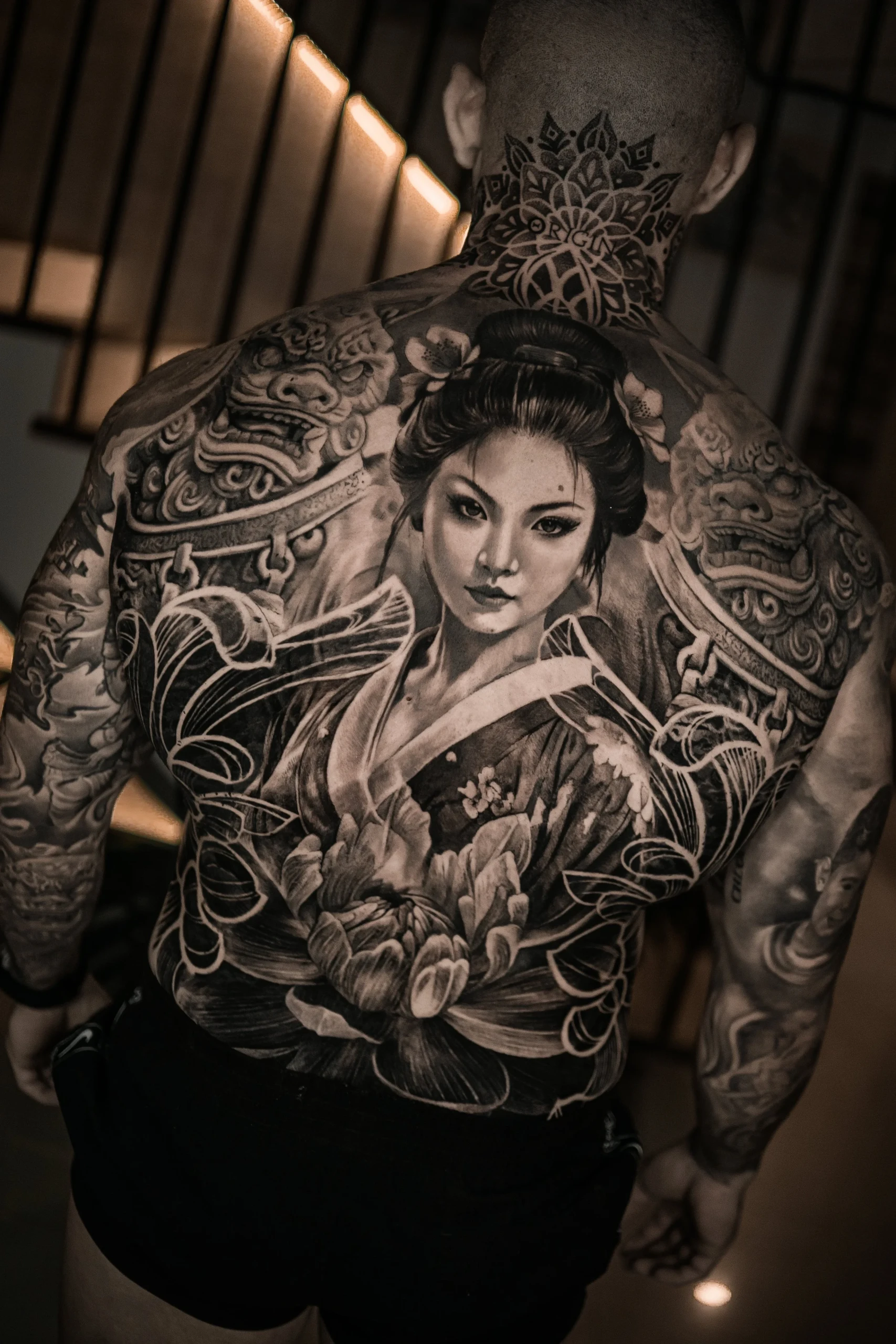
A geisha tattoo is one of the most recognizable motifs in Japanese-inspired body art. Beyond its striking visual appeal, it carries layered meanings connected to beauty, discipline, artistry, mystery, cultural heritage, and personal transformation. While many people associate geisha imagery solely with feminine elegance, authentic symbolism extends much deeper into Japanese history and artistic tradition.
In modern tattoo culture, geisha designs appear in traditional Japanese irezumi, neo-traditional compositions, realism portraits, and large-scale storytelling sleeves. Understanding the historical roots and symbolic nuances behind these designs helps ensure your tattoo is not only visually impressive but also culturally informed and personally meaningful.

What Does a Geisha Tattoo Mean?
A geisha tattoo symbolizes beauty, grace, artistic mastery, discipline, mystery, and inner strength. Unlike common misconceptions, geishas were highly trained cultural performers dedicated to music, dance, conversation, and traditional arts. As a tattoo, the image often represents self-improvement, resilience, refinement, and the pursuit of excellence.
The meaning of a geisha tattoo can vary significantly depending on the surrounding imagery, artistic style, facial expression, and color palette. Some designs focus on elegance and femininity, while others emphasize resilience, wisdom, sacrifice, or transformation.
One reason geisha tattoos remain popular is their versatility. They can represent:
- Personal growth through discipline
- Appreciation for Japanese culture and art
- Balance between strength and beauty
- Mystery and emotional complexity
- Dedication to mastering a craft
- Inner resilience hidden beneath outward composure
Core Symbolism: Beauty, Discipline, Artistry, and Strength
The core symbolism of a geisha tattoo centers on disciplined self-mastery rather than physical beauty alone. Historically, geishas devoted years to perfecting traditional arts, making them powerful symbols of dedication, perseverance, and lifelong learning.
Many first-time viewers focus on the visual elegance of a geisha tattoo. Experienced Japanese-style tattoo artists often explain that the deeper symbolism lies in commitment to refinement and self-development.
For example, a professional musician may choose a geisha tattoo to represent dedication to artistic excellence. A business owner might view the image as a reminder that mastery requires patience, discipline, and continuous improvement.
Expert insight: The most meaningful geisha tattoos often reflect personal journeys of mastery rather than purely aesthetic preferences.
Common Misconceptions About Geisha Tattoos
Many people incorrectly believe geishas were courtesans or symbols of seduction. Historically, geishas were professional entertainers trained in traditional Japanese arts. Understanding this distinction dramatically changes the symbolic interpretation of a geisha tattoo.
Common misconceptions include:
- Geishas were not prostitutes.
- Geisha symbolism extends beyond physical beauty.
- Traditional geisha culture emphasizes artistic achievement.
- Authentic geisha imagery reflects cultural sophistication and discipline.
- Different hairstyles and makeup styles can indicate different historical periods or training levels.
This misunderstanding is surprisingly common across tattoo websites and social media platforms, making historical accuracy an important Information Gain opportunity for anyone researching geisha tattoos.
Why Modern Tattoo Enthusiasts Choose Geisha Designs
Modern collectors choose geisha tattoos because they combine powerful symbolism with exceptional artistic flexibility. These designs can function as standalone portraits or serve as the central character within larger Japanese storytelling compositions.
Today’s tattoo enthusiasts often select geisha imagery for reasons such as:
- Connection to Japanese culture
- Appreciation for traditional tattoo art
- Personal transformation stories
- Feminine strength and resilience
- Artistic expression and creativity
- Balance between beauty and power
The History Behind Geisha Tattoos and Japanese Cultural Symbolism
Geisha tattoos draw inspiration from centuries of Japanese cultural history, traditional art, and storytelling. Understanding where geisha imagery originated provides deeper context for the symbolism embedded within modern tattoo designs and helps avoid common historical misunderstandings.
Many contemporary tattoo articles discuss symbolism without explaining its origins. However, understanding historical context often leads to more meaningful tattoo choices and stronger design concepts.
Who Were Geishas in Traditional Japanese Society?
Geishas were highly trained entertainers who specialized in traditional Japanese arts including music, dance, tea ceremony, poetry, and conversation. Their role was to preserve and perform cultural traditions rather than provide romantic or sexual services.
Training could begin at a young age and often required years of study. Mastery involved learning multiple artistic disciplines, social etiquette, cultural customs, and performance techniques.
This level of dedication explains why geisha tattoos are frequently associated with:
- Professional excellence
- Discipline
- Artistic mastery
- Patience
- Cultural preservation
The Difference Between Geisha, Maiko, and Courtesans
Geishas, maiko, and historical courtesans represented distinct social roles in Japanese society. Confusing these figures is one of the most common mistakes found in tattoo content online and can significantly alter a tattoo’s intended symbolism.
| Role | Primary Function | Symbolic Meaning in Tattoo Art |
|---|---|---|
| Geisha | Professional entertainer | Mastery, elegance, discipline |
| Maiko | Apprentice geisha | Growth, learning, potential |
| Courtesan | Historical companion role | Beauty, status, luxury |
Recognizing these distinctions allows collectors to create more historically informed and personally relevant tattoo designs.
How Geisha Imagery Entered Japanese Tattoo Art
Geisha imagery became popular in tattooing through traditional Japanese visual arts, particularly ukiyo-e woodblock prints. These prints frequently depicted actors, entertainers, warriors, folklore figures, and scenes from everyday life.
As Japanese tattooing evolved, artists incorporated recognizable cultural figures into larger narrative compositions. Geishas naturally became a recurring subject due to their visual elegance and symbolic depth.
Traditional Japanese tattoo artists often combined geisha portraits with:
- Cherry blossoms
- Peonies
- Koi fish
- Dragons
- Waves
- Samurai warriors
- Hannya masks
Information Gain: Evolution of Geisha Symbolism from Edo Japan to Modern Tattoo Culture
One overlooked aspect of geisha tattoos is how their symbolism has evolved. During the Edo Period, geisha imagery often represented cultural sophistication and artistic accomplishment. Today, many collectors use geisha tattoos to symbolize personal reinvention, emotional resilience, and identity transformation.
Experienced tattoo artists increasingly report that clients choose geisha imagery not simply because it looks beautiful, but because it represents a journey toward self-mastery.
This evolution reflects a broader shift in tattoo culture—from decorative imagery toward deeply personal storytelling.
Geisha Tattoo Symbolism Explained by Design Elements
The meaning of a geisha tattoo changes significantly depending on the symbols surrounding the central figure. This relationship between primary subject and supporting imagery is one of the most overlooked aspects of Japanese tattoo design and often determines the tattoo’s true narrative.
Many competitors discuss geisha symbolism in isolation. In reality, Japanese tattooing traditionally functions as visual storytelling, where each element contributes to a larger message.
Geisha with Cherry Blossoms Meaning
A geisha paired with cherry blossoms symbolizes beauty, impermanence, and appreciation for life’s fleeting moments. This combination reflects the Japanese concept of finding meaning in transience rather than permanence.
The symbolism is especially powerful for individuals who have experienced major life transitions, personal growth, or significant changes.
- Beauty and grace
- Mortality awareness
- Personal transformation
- Acceptance of change
- Mindful living
Geisha with Lotus Flowers Meaning
A geisha tattoo combined with lotus flowers represents spiritual growth, resilience, and the ability to overcome adversity. The lotus grows through muddy water before blooming, making it a universal symbol of personal development.
This pairing is commonly chosen by individuals who have overcome hardship, addiction, trauma, or major life obstacles.
Geisha with Fans Meaning
Geisha tattoos featuring traditional fans often symbolize opportunity, prosperity, hidden potential, and artistic expression. In Japanese culture, folding fans have historically represented expansion and possibility.
The fan can also indicate mastery of traditional performance arts, reinforcing the geisha’s association with cultural refinement.
Geisha with Lanterns Meaning
Lanterns introduce symbolism related to guidance, wisdom, and illumination. Together, the geisha and lantern create a narrative focused on finding direction through knowledge, experience, and self-awareness.
This combination appeals to individuals who view their tattoo as a reminder of personal growth and life lessons.
Geisha with Waves Meaning
Waves symbolize resilience, adaptability, and the ability to withstand life’s challenges. When paired with a geisha, they create a powerful contrast between external chaos and internal composure.
This design often resonates with entrepreneurs, athletes, military veterans, and individuals who have navigated significant adversity.
Information Gain: How Companion Symbols Change the Entire Meaning of the Tattoo
One of the biggest mistakes people make when selecting a geisha tattoo is focusing only on the portrait itself. Experienced Japanese tattoo artists typically begin by discussing companion elements because those symbols determine the story the tattoo ultimately tells.
| Companion Symbol | Meaning Added to Geisha Tattoo |
|---|---|
| Cherry Blossom | Impermanence and beauty |
| Koi Fish | Perseverance and achievement |
| Dragon | Wisdom and protective strength |
| Lotus Flower | Spiritual growth |
| Samurai | Honor and courage |
| Hannya Mask | Emotional transformation |
Understanding these combinations allows collectors to create tattoos that communicate a clear personal narrative rather than simply an attractive image.
Geisha and Hannya Mask Tattoos: Beauty Versus Inner Conflict
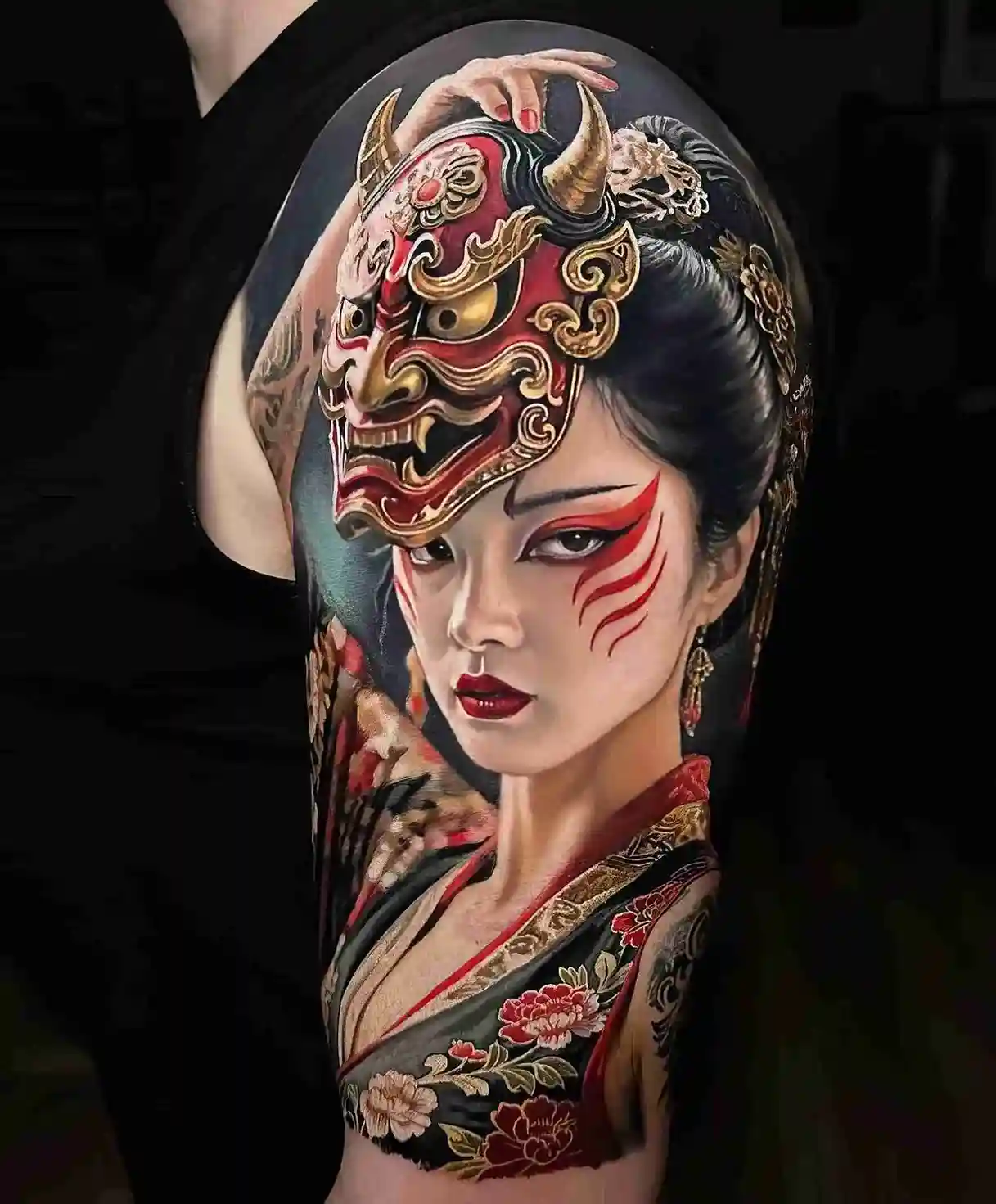
A geisha and Hannya mask tattoo represents the contrast between outward composure and inner emotional struggle. This combination is among the most symbolically complex designs in Japanese tattooing and often reflects transformation, emotional resilience, and the duality of human nature.
The pairing creates a visual story that goes far beyond aesthetics. It explores themes of love, loss, jealousy, growth, self-control, and redemption.
Lucky Tattoo, a professional tattoo artist, has over 10 years of experience in the art of tattooing in Ho Chi Minh City. Lucky Tattoo Studio was founded in 2014 by skilled and kind artists. All tattoos are provided in a clean, strictly controlled, and friendly environment.
What the Hannya Mask Represents
The Hannya mask represents a woman transformed by overwhelming emotions such as jealousy, grief, obsession, or betrayal. In Japanese folklore and Noh theater, the Hannya is not simply a demon but a tragic figure whose suffering altered her identity.
This distinction is important because many tattoo enthusiasts mistakenly view the Hannya solely as a symbol of evil. In reality, the mask often represents:
- Emotional transformation
- The consequences of unchecked emotions
- Personal growth through adversity
- Inner conflict
- Resilience after heartbreak
For many collectors, the Hannya serves as a reminder of past struggles and the lessons learned through overcoming them.
Why This Combination Is Popular
A geisha paired with a Hannya mask creates one of the most powerful storytelling concepts in Japanese tattoo art. The design contrasts external elegance with internal struggle, making it especially meaningful for individuals who have endured difficult life experiences.
The popularity of this pairing stems from its emotional depth. While a standalone geisha may symbolize discipline and beauty, the addition of a Hannya mask introduces themes such as:
- Healing from betrayal
- Personal reinvention
- Managing emotional challenges
- Acceptance of life’s complexities
- Strength developed through hardship
Real-World Design Example and Interpretation
A geisha and Hannya tattoo often tells a deeply personal story. A common design features a calm geisha face partially concealed behind a Hannya mask, symbolizing the contrast between outward composure and internal emotional battles.
Experienced Japanese-style artists frequently recommend this concept for clients seeking narrative-driven tattoos rather than purely decorative artwork.
Geisha and Samurai Tattoos: Balance of Grace and Power
A geisha and samurai tattoo symbolizes the balance between elegance and strength, wisdom and courage, artistry and discipline. This combination reflects complementary forces within Japanese culture and creates a visually powerful narrative centered on honor, resilience, and personal values.
Historical Context
Although geishas and samurai occupied very different roles in Japanese society, both represented dedication, discipline, and mastery. Their combined imagery creates a tattoo narrative rooted in traditional values rather than romanticized stereotypes.
Both figures required lifelong training and adherence to strict cultural expectations. This shared commitment to excellence makes the pairing particularly meaningful for professionals, athletes, military personnel, and entrepreneurs.
Symbolic Meanings of the Pairing
A geisha and samurai tattoo often represents the coexistence of seemingly opposite traits. Rather than conflict, the imagery communicates balance and harmony between different forms of strength.
| Geisha Symbolism | Samurai Symbolism |
|---|---|
| Artistry | Honor |
| Grace | Courage |
| Wisdom | Discipline |
| Refinement | Protection |
| Patience | Resilience |
Design Considerations for Storytelling Tattoos
Successful geisha and samurai tattoos rely on composition and narrative clarity. Rather than placing both figures randomly, experienced artists create visual relationships that communicate a specific story or personal philosophy.
Expert recommendation:
- Define the story before selecting imagery.
- Choose supporting elements carefully.
- Maintain traditional Japanese visual balance.
- Avoid overcrowding the composition.
- Use background elements to reinforce symbolism.
Geisha Tattoo Color Meanings Most People Overlook
Color choices significantly influence the meaning of a geisha tattoo. Traditional Japanese tattooing uses color intentionally, with each hue contributing additional layers of symbolism related to emotion, spirituality, personal growth, and cultural storytelling.
Red in Geisha Tattoos
Red often symbolizes passion, vitality, strength, protection, and life force. In geisha tattoos, red accents can amplify themes of determination, confidence, and emotional intensity.
Red is frequently incorporated into:
- Kimonos
- Cherry blossoms
- Makeup details
- Traditional Japanese motifs
Black and Grey Symbolism
Black-and-grey geisha tattoos emphasize sophistication, timelessness, and emotional depth. These designs often appeal to collectors seeking a more mature, understated aesthetic.
Many experienced tattoo artists note that black-and-grey realism can enhance facial expression and narrative detail without relying on vibrant colors.
Blue and Purple Interpretations
Blue and purple tones often symbolize wisdom, spirituality, mystery, introspection, and emotional maturity. These colors are increasingly popular in neo-traditional and illustrative geisha tattoos.
Collectors frequently use these palettes to create unique interpretations that maintain cultural inspiration while incorporating modern artistic influences.
Information Gain: Color Psychology in Japanese Tattoo Storytelling
Most articles discuss tattoo colors from an aesthetic perspective. However, experienced Japanese-style tattoo artists often approach color as a storytelling device. The same geisha portrait can communicate dramatically different meanings depending on color selection.
Expert observation: Clients who plan color symbolism early in the design process typically report greater long-term satisfaction because the tattoo feels more personally meaningful.
Most Popular Geisha Tattoo Styles
Geisha tattoos can be adapted into multiple artistic styles, each producing a different visual impact and symbolic emphasis. Choosing the right style affects readability, aging characteristics, cultural authenticity, and overall storytelling effectiveness.
Traditional Irezumi Style
Traditional irezumi geisha tattoos emphasize bold outlines, strong composition, symbolic storytelling, and integration with larger Japanese motifs such as dragons, koi fish, peonies, and waves.
This style remains the closest to historical Japanese tattoo traditions and is often preferred by collectors seeking cultural authenticity.
Neo-Traditional Style
Neo-traditional geisha tattoos preserve classic symbolism while incorporating modern color palettes, enhanced detail, and contemporary artistic techniques.
This approach offers flexibility while maintaining recognizable Japanese influences.
Realism Style
Realism geisha tattoos prioritize lifelike facial features, dramatic shading, and photographic detail. These tattoos often focus on emotional expression and visual impact.
Because realism requires exceptional technical skill, artist selection becomes especially important.
Blackwork Style
Blackwork geisha tattoos use strong contrast, heavy black ink, and graphic design principles to create bold visual statements. They often age exceptionally well when executed correctly.
Watercolor Interpretations
Watercolor geisha tattoos combine traditional subject matter with painterly techniques and fluid color transitions. While visually striking, these tattoos require careful planning to ensure long-term readability.
Which Style Best Matches Different Symbolic Goals?
The ideal style depends on your intended message. Traditional irezumi often communicates cultural appreciation and storytelling, while realism emphasizes emotional connection and portrait artistry.
| Style | Best For |
|---|---|
| Irezumi | Traditional symbolism |
| Neo-Traditional | Modern interpretation |
| Realism | Portrait impact |
| Blackwork | Bold visual contrast |
| Watercolor | Artistic expression |
Best Placement Ideas for Geisha Tattoos
Placement affects not only appearance but also storytelling potential, visibility, pain levels, and long-term aging. Larger placements generally provide more space for symbolic detail and traditional Japanese composition.
Sleeve Tattoos
Sleeve placements allow extensive storytelling through supporting imagery such as koi fish, cherry blossoms, dragons, peonies, and waves. They are among the most popular choices for geisha tattoos.
Forearm Tattoos
Forearm placements provide excellent visibility and sufficient space for portrait-focused geisha designs. They are ideal for medium-sized compositions.
Thigh Tattoos
Thigh tattoos offer a large canvas while remaining relatively easy to conceal. This makes them suitable for highly detailed geisha portraits.
Back Tattoos
The back remains one of the best placements for full Japanese storytelling compositions. Traditional irezumi narratives often use the entire back as a single artistic canvas.
Chest Tattoos
Chest placements create powerful focal points and can integrate seamlessly into larger body-suit concepts inspired by traditional Japanese tattooing.
Information Gain: How Placement Influences Visual Storytelling
Many people choose placement based on visibility alone. Professional tattoo artists typically recommend selecting placement according to narrative requirements first, then considering visibility and lifestyle factors.
- Portrait-focused designs benefit from flat surfaces.
- Complex stories require larger canvases.
- Symmetry influences visual balance.
- Future tattoo expansion should be considered.
- Professional environments may influence visibility preferences.
Cultural Appreciation vs Cultural Appropriation: What You Should Know
Geisha tattoos are generally considered cultural appreciation when approached with respect, understanding, and historical awareness. Problems arise when cultural symbols are misrepresented, stereotyped, or used without consideration for their meaning and context.
Respecting Japanese Cultural Traditions
Respect begins with education. Understanding the role of geishas, the history of Japanese tattooing, and the symbolism of supporting elements helps create a more meaningful design.
Expert Perspectives on Authentic Design Choices
Many Japanese-style tattoo artists encourage clients to research symbolism before finalizing artwork. Authenticity is less about strict replication and more about informed decision-making.
Common Mistakes to Avoid
Several avoidable mistakes can weaken the meaning and cultural integrity of a geisha tattoo.
- Confusing geishas with courtesans.
- Ignoring symbolic context.
- Mixing incompatible cultural motifs.
- Copying another person’s tattoo exactly.
- Selecting imagery without understanding its meaning.
Real Examples of Respectful and Inaccurate Interpretations
Respectful tattoos demonstrate awareness of Japanese symbolism and storytelling traditions. Inaccurate designs often rely on stereotypes, generic imagery, or historically incorrect representations.
How to Design a Unique Geisha Tattoo
Creating a unique geisha tattoo requires more than choosing an attractive portrait. The most successful designs combine personal meaning, coherent symbolism, cultural awareness, and expert artistic execution.
Choosing Symbol Combinations That Reflect Personal Meaning
Start by identifying values, life experiences, or goals you want the tattoo to represent. Then select supporting elements that reinforce those themes.
Questions to Ask Your Tattoo Artist
Consultation quality often determines the success of the final tattoo. Strong communication improves symbolism, composition, and long-term satisfaction.
- What Japanese styles do you specialize in?
- How would you improve this concept?
- What supporting symbols fit my story?
- How will the tattoo age over time?
- Do you recommend any compositional adjustments?
Creating a Cohesive Japanese-Themed Sleeve
A successful sleeve functions as a unified narrative rather than a collection of unrelated images. Traditional Japanese tattooing excels because each element contributes to a larger story.
Information Gain: AI Design Tools vs Custom Artist-Created Concepts
AI-generated tattoo concepts can help visualize ideas, but they often lack cultural nuance, technical tattoo knowledge, and practical composition expertise. Experienced artists remain essential for creating tattoos that age well and communicate meaningful symbolism.
How Much Does a Geisha Tattoo Cost?
Geisha tattoo pricing depends on size, detail level, artist reputation, location, color complexity, and the number of sessions required. High-quality Japanese-style tattoos typically require substantial investment due to their technical complexity.
Factors Affecting Price
Several variables influence final tattoo costs, and understanding them helps set realistic expectations.
Size
Larger designs require more time, planning, and technical execution.
Color Complexity
Traditional Japanese color work often increases session length and cost.
Artist Experience
Highly respected Japanese-style specialists typically command premium rates.
Geographic Location
Pricing varies significantly between cities, regions, and countries.
Typical Cost Ranges by Tattoo Size
Small geisha tattoos may cost several hundred dollars, while large sleeves and back pieces can require thousands of dollars and multiple sessions.
Why Quality Matters More Than Initial Cost
Cover-ups, corrections, and laser removal often cost significantly more than choosing a qualified artist from the beginning.
Expert Tips for Choosing the Right Japanese Tattoo Artist
Selecting the right artist is one of the most important decisions in the tattoo process. Technical skill, cultural knowledge, composition expertise, and experience with Japanese imagery all directly influence the final result.
Portfolio Evaluation Checklist
Strong portfolios demonstrate consistency, healed work, clear composition, and expertise in Japanese-inspired designs.
Questions to Ask During Consultation
Ask about design philosophy, technical approach, healing expectations, and experience with similar projects.
Red Flags That Signal Inexperience
Warning signs include inconsistent linework, poor composition, lack of healed examples, rushed consultations, and limited understanding of Japanese symbolism.
Geisha Tattoo Aftercare and Long-Term Maintenance
Proper aftercare directly affects healing quality, color retention, and long-term appearance. Even exceptional tattoo work can suffer if healing protocols are ignored.
First 30 Days of Healing
The first month is critical for protecting the tattoo from infection, irritation, and premature fading.
- Follow artist instructions closely.
- Avoid soaking the tattoo.
- Keep the area clean.
- Use recommended aftercare products.
- Protect the tattoo from sunlight.
Protecting Color Vibrancy
Consistent sun protection remains one of the most effective ways to preserve tattoo quality over time.
Long-Term Touch-Up Considerations
Large Japanese tattoos may benefit from occasional touch-ups to maintain detail, contrast, and color saturation.
Frequently Asked Questions About Geisha Tattoos
What does a geisha tattoo symbolize?
A geisha tattoo commonly symbolizes beauty, discipline, artistry, wisdom, resilience, and dedication to self-improvement.
Are geisha tattoos culturally offensive?
Generally no, provided the design is approached with respect, historical awareness, and an understanding of Japanese cultural symbolism.
What symbols pair best with a geisha tattoo?
Popular pairings include cherry blossoms, koi fish, dragons, peonies, lotus flowers, Hannya masks, samurai, and traditional Japanese waves.
What is the difference between a geisha and Hannya tattoo?
A geisha typically represents artistry and discipline, while a Hannya represents emotional transformation and the consequences of intense feelings.
What is the best placement for a geisha tattoo?
Sleeves, backs, thighs, and forearms are among the most popular placements because they provide adequate space for detailed storytelling.
Do geisha tattoos have to be traditional Japanese style?
No. Geisha imagery can be adapted into realism, neo-traditional, blackwork, watercolor, and illustrative tattoo styles.
How much does a geisha tattoo usually cost?
Pricing varies widely based on size, complexity, artist reputation, and location, ranging from a few hundred dollars to several thousand for large custom pieces.
Final Thoughts: Choosing a Geisha Tattoo with Meaning and Cultural Respect
A geisha tattoo remains one of the most symbolically rich designs in Japanese-inspired tattoo culture. Whether representing artistry, resilience, transformation, wisdom, or personal growth, its meaning extends far beyond surface-level beauty.
The most successful geisha tattoos are built upon historical understanding, thoughtful symbolism, skilled artistic execution, and a clear personal narrative. By carefully considering companion symbols, placement, style, and cultural context, you can create a design that remains meaningful for decades.
Ultimately, a geisha tattoo is not simply an image—it is a story. The more intentionally that story is crafted, the more powerful and enduring the tattoo becomes.
Lucky Tattoo, a professional tattoo artist, has over 10 years of experience in the art of tattooing in Ho Chi Minh City. Lucky Tattoo Studio was founded in 2014 by skilled and kind artists. All tattoos are provided in a clean, strictly controlled, and friendly environment.
geisha-tattoo