What Are Quote Tattoos? Meaning, Purpose, and Real-World Use
Quote tattoos are permanent body art designs that use words, phrases, or short passages to express personal identity, beliefs, emotions, or life philosophies. Unlike purely decorative tattoos, they function as narrative tools, encoding meaningful experiences or values into text that remains visible or hidden depending on placement and intent.
In real-world tattoo practice, quote tattoos are often chosen during emotional milestones such as recovery, personal transformation, grief, or achievement. Professional tattoo artists frequently report that text-based tattoos require more pre-planning than imagery because spelling accuracy, font readability, and long-term emotional alignment are critical to avoid irreversible regret.
Why People Choose Quote Tattoos for Identity and Emotional Anchoring
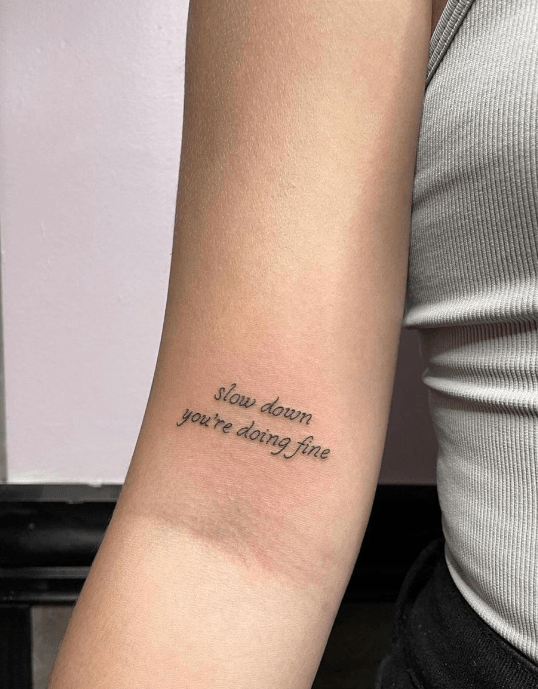
People choose quote tattoos because they serve as permanent emotional anchors that reinforce identity, motivation, or memory. Unlike visual symbols, text directly encodes language-based meaning, making it highly specific and personal. In practice, individuals often use them to preserve pivotal life lessons, relationships, or mental resilience strategies.
From a behavioral psychology perspective, quote tattoos function as external memory reinforcement systems. Tattoo artists frequently observe that clients select phrases tied to life transitions such as recovery from loss, career change, or personal empowerment, using ink as a cognitive reminder system that persists beyond temporary motivation cycles.
Information Gain Insight: A growing trend among younger clients is “identity scripting,” where tattoos are selected not just for current meaning but for anticipated future identity stability—an approach that reduces regret risk compared to emotionally reactive tattoo decisions.
Common Misconceptions About Quote Tattoos That Lead to Regret
One major misconception is that meaningful quotes will always feel relevant in the future. In reality, emotional states evolve significantly over time, and phrases tied to temporary experiences may lose relevance or even contradict future beliefs. Another misconception is that translation tools guarantee linguistic accuracy, which is often incorrect.
In professional tattoo environments, artists frequently encounter issues involving spelling errors, incorrect grammar, or culturally misinterpreted phrases. These mistakes are permanent and often costly to correct, requiring cover-ups or laser removal, both of which are more painful and expensive than initial design verification.
- Assuming short quotes eliminate regret risk
- Trusting machine translation without linguistic validation
- Choosing fonts without testing long-term readability
- Ignoring skin aging effects on text clarity
Most Popular Quote Tattoo Ideas and Their Meanings
Quote tattoo ideas range from motivational phrases to literary excerpts and personal affirmations, each carrying distinct emotional and cultural significance. The most popular designs are those that balance brevity with depth, allowing the tattoo to remain visually clean while retaining layered meaning across different life stages.
In practice, tattoo studios report that minimalist phrases dominate modern demand, especially among first-time clients. However, the most successful long-term designs are those that are emotionally flexible rather than tied to a single moment or identity state.
Inspirational and Motivational Quote Tattoos for Daily Reinforcement
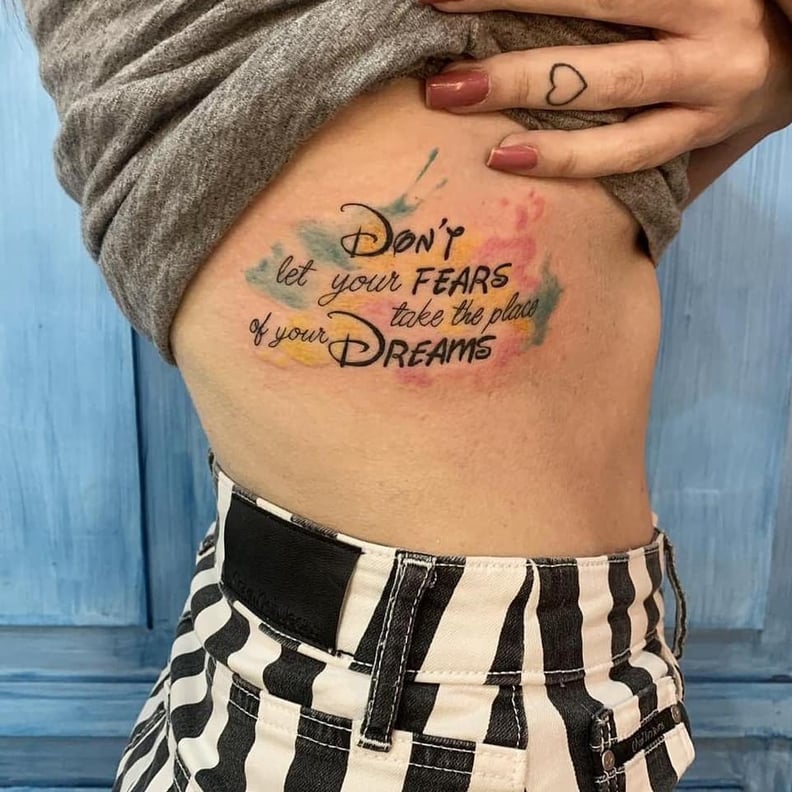
Inspirational quote tattoos are designed to reinforce motivation, discipline, or resilience through concise phrases placed in visible locations. These tattoos act as daily cognitive triggers, reminding the wearer of personal goals or values during decision-making moments or emotional stress.
From an applied perspective, forearm and wrist placements are most common because they maximize visual exposure, reinforcing repetition-based memory activation. However, professionals caution that overly generic motivational phrases can lose emotional power if they are not personally meaningful or context-specific.
Information Gain Insight: Studies in behavioral reinforcement suggest that self-authored quotes (phrases written by the wearer) produce stronger long-term emotional attachment than pre-existing famous quotes.
Self-Love and Healing Quote Tattoos in Emotional Recovery Contexts
Self-love and healing quote tattoos are often chosen during recovery from emotional distress, trauma, or major life transitions. These tattoos function as psychological reinforcement tools, helping individuals externalize internal healing narratives in a permanent, visible form that supports emotional regulation.
In tattoo studio practice, these designs are frequently recommended with caution, as emotional recovery is non-linear. Artists often advise clients to wait through multiple emotional phases before finalizing wording to ensure long-term alignment between meaning and identity.
Information Gain Insight: Mental health professionals increasingly observe that symbolic reinforcement tools like tattoos can support recovery, but only when the chosen phrase reflects stabilized insight rather than immediate emotional intensity.
Literary and Historical Quote Tattoos for Cultural and Intellectual Expression
Literary and historical quote tattoos draw from philosophy, poetry, religious texts, or historical figures to express intellectual identity or cultural alignment. These tattoos often reflect admiration for timeless ideas rather than personal emotional states, making them more stable over time.
However, accuracy is critical. Many tattoo professionals emphasize verifying original translations and source authenticity, especially for Latin, Sanskrit, or classical literature, where mistranslation is common and often unnoticed until after tattoo completion.
Best Fonts and Typography Styles for Quote Tattoos
Font selection in quote tattoos determines readability, longevity, and aesthetic durability. Unlike digital typography, tattoo lettering must account for skin aging, ink diffusion, and spacing constraints, making font choice a technical as well as artistic decision that significantly impacts long-term clarity.
Professional tattoo artists often emphasize that font selection is more important than phrase selection in terms of visual longevity. Thin or overly decorative fonts may degrade faster over time, especially in high-movement skin areas like wrists or ribs.
Script vs Serif vs Minimalist Fonts: What Works Best Long-Term
Script fonts offer elegance and emotional softness but may lose clarity as ink spreads over time. Serif fonts provide structural stability and readability, making them suitable for longer quotes. Minimalist sans-serif fonts offer the highest longevity due to clean lines and reduced visual complexity.
In practice, experienced tattoo artists often recommend testing stencil visibility under different lighting conditions before final application, as readability can change significantly depending on skin tone, placement, and curvature of the body.
Information Gain Insight: Dermatological studies on tattoo aging show that ink particles gradually diffuse within dermal layers, meaning ultra-thin typography can become illegible within 10–15 years if not properly spaced.
How to Choose a Font That Won’t Age Poorly Over Time
Choosing a font that ages well requires balancing aesthetic preference with biological realities of skin. Fonts with moderate stroke thickness, balanced spacing, and minimal flourishes tend to retain clarity longer, especially in high-friction body areas.
Experts recommend avoiding extreme stylization unless the tattoo is placed in low-movement areas. Additionally, larger font sizes improve longevity because ink diffusion has less impact on overall readability when letterforms are sufficiently spaced.
Information Gain Insight: Tattoo longevity is influenced not only by font but also by sun exposure and skin hydration, making aftercare and lifestyle factors equally important to design selection.
Best Placement Ideas for Quote Tattoos and Their Real-World Impact
Lucky Tattoo, a professional tattoo artist, has over 10 years of experience in the art of tattooing in Ho Chi Minh City. Lucky Tattoo Studio was founded in 2014 by skilled and kind artists. All tattoos are provided in a clean, strictly controlled, and friendly environment.
In professional tattoo practice, placement is often treated as strategically important as design. Artists evaluate skin movement, aging patterns, and lifestyle visibility before recommending a location. A poorly chosen placement can distort text over time, especially in high-flex areas where skin stretches or compresses frequently.
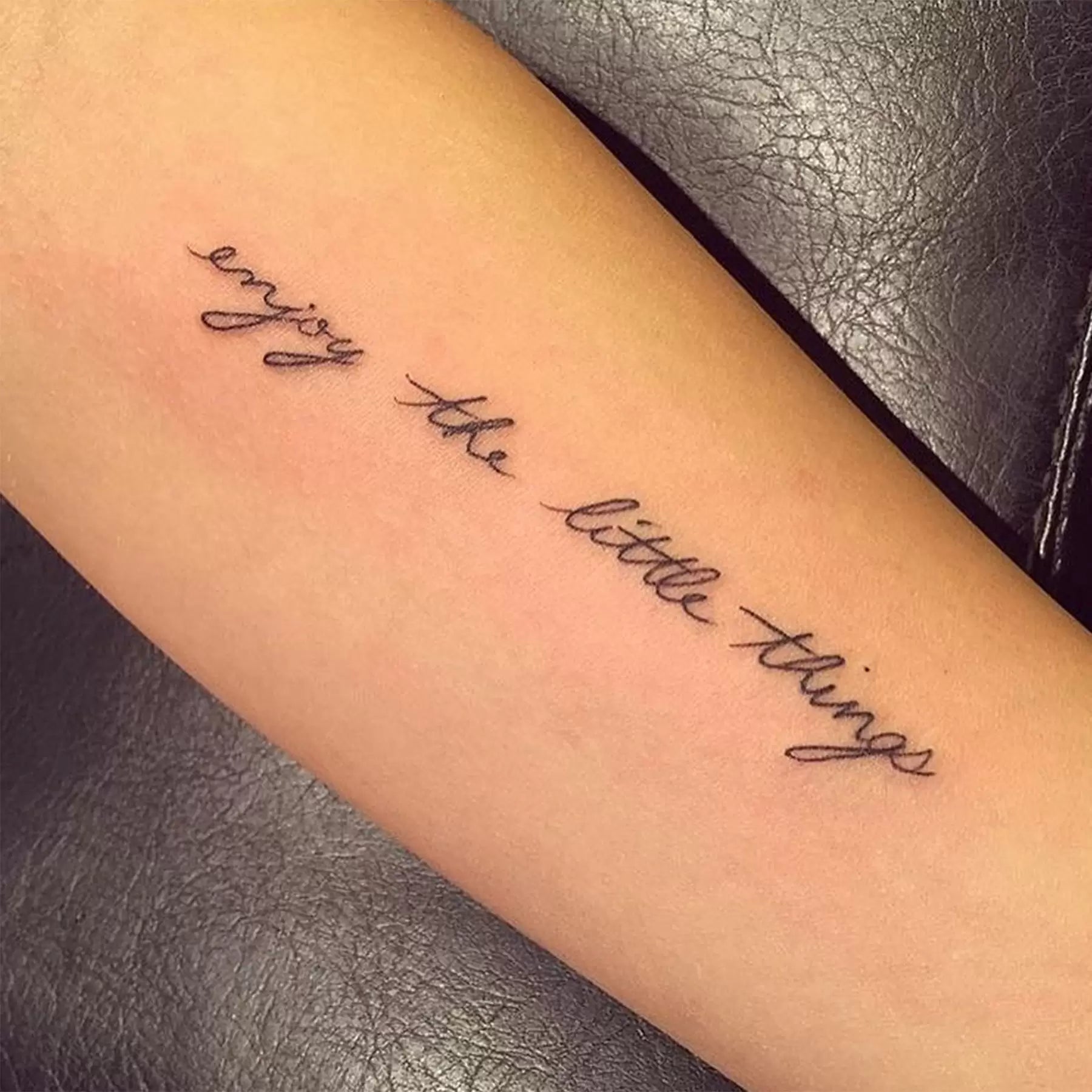
Forearm and Wrist Quote Tattoos for Visibility and Reinforcement
Forearm and wrist quote tattoos are highly visible placements used for daily reinforcement of personal values or motivation. These areas are popular because they allow frequent self-reflection, turning the tattoo into a constant psychological reminder that can influence behavior, mindset, and emotional regulation.
From a practical standpoint, forearm tattoos age relatively well due to lower friction compared to joints. However, wrist tattoos may fade faster due to frequent movement and sun exposure. Tattoo professionals often recommend slightly thicker fonts for these placements to preserve long-term readability.
Information Gain Insight: Behavioral studies suggest that repeated visual exposure to self-affirming text can reinforce cognitive patterns, meaning placement on frequently viewed body areas may increase perceived emotional effectiveness of the quote over time.
Rib, Spine, and Back Placements for Private and Symbolic Meaning
Rib, spine, and back placements are typically chosen for deeply personal quote tattoos intended for private meaning rather than public display. These placements allow longer phrases or more intricate typography but involve higher pain levels and require careful design alignment due to body curvature.
In tattoo studios, these areas are often recommended for clients who prioritize meaning over visibility. However, artists caution that spinal alignment must be precise, as even slight asymmetry becomes noticeable due to the natural structure of the human back.
Information Gain Insight: Pain perception studies show that rib and spine tattoos are among the most intense due to thin skin and proximity to bone, which can affect client decision-making during long tattoo sessions.
How to Avoid Regret With Quote Tattoos: Expert Decision Framework
Regret prevention in quote tattoos depends on emotional stability, linguistic accuracy, and long-term identity alignment. Many tattoo regrets occur not due to design flaws but because the chosen phrase reflects a temporary emotional state rather than a stable personal belief system.
Professional tattoo artists often use a “cooling-off period” strategy, encouraging clients to wait several weeks before finalizing text-based tattoos. This reduces impulsive decisions and ensures the phrase remains meaningful beyond the initial emotional trigger.
Language Accuracy, Translation Risks, and Cultural Sensitivity
Language accuracy is one of the most critical yet overlooked aspects of quote tattoos. Many individuals choose foreign languages such as Latin, Sanskrit, Arabic, or Japanese without verifying grammatical structure or cultural context, leading to permanent misinterpretations.
In professional practice, reputable tattoo artists often refuse to ink untranslated phrases unless verified by native speakers or linguistic experts. This reduces the risk of culturally insensitive or incorrect expressions that may cause regret or social misunderstanding later.
Information Gain Insight: Linguistic research shows that direct machine translation lacks contextual nuance, making it unreliable for permanent body art where semantic accuracy is essential.
Long-Term Emotional Alignment and Identity Evolution
Long-term emotional alignment refers to how well a tattooed phrase continues to reflect a person’s identity years after it is applied. Since human identity evolves through life stages, tattoos tied to temporary emotions risk becoming irrelevant or contradictory over time.
Experienced tattoo professionals recommend selecting quotes that express values rather than emotional states, as values remain more stable across decades. This approach significantly reduces regret rates observed in client follow-ups.
Information Gain Insight: Longitudinal psychology research shows that core identity traits remain relatively stable, while emotional states fluctuate significantly, making value-based tattoo selection more durable.
Tattoo Aftercare and Longevity for Quote Tattoos
Tattoo aftercare directly impacts how well quote tattoos heal, retain clarity, and resist fading over time. Proper aftercare reduces infection risk, improves ink retention, and ensures that fine text remains legible as the skin regenerates in the first critical weeks after application.
Dermatologists and tattoo professionals emphasize that healing is not just cosmetic but biological. The skin undergoes a multi-stage recovery process that determines how ink settles within dermal layers, affecting long-term appearance and readability of text tattoos.
Healing Timeline and What to Expect After Getting a Quote Tattoo
The healing process for quote tattoos typically spans several weeks, beginning with inflammation, followed by scabbing and gradual skin regeneration. During this period, ink may appear darker or lighter than expected before stabilizing into its final appearance.
Proper hygiene, moisture control, and sun protection are essential during healing. Neglecting aftercare can lead to patchy healing, blurred lettering, or premature fading, especially in fine-line quote tattoos.
Information Gain Insight: Dermatological studies confirm that improper aftercare within the first 14 days significantly increases the risk of pigment loss and long-term distortion in fine-line tattoos.
How Tattoo Ink Fades and Changes Over Time
Tattoo ink naturally fades due to immune system activity, UV exposure, and skin aging. Over time, ink particles break down and disperse slightly within the dermis, which can cause text to appear softer or less defined, particularly in thin fonts.
Quote tattoos placed in sun-exposed areas like forearms or hands are more susceptible to fading. Professionals recommend sunscreen application and periodic touch-ups to maintain clarity, especially for detailed lettering or fine script styles.
Information Gain Insight: Research in pigment stability shows that black ink is the most durable, while colored inks degrade faster under UV exposure, making monochrome quote tattoos more resilient long-term.
Cost of Quote Tattoos: What Determines Pricing and Value
The cost of quote tattoos varies based on size, complexity, font design, artist expertise, and studio location. Unlike simple flash tattoos, text-based tattoos require precision alignment and typographic accuracy, which increases design time and pricing variability.
In professional tattoo markets, pricing is often based on hourly rates rather than per-letter cost. Experienced artists may charge higher fees for typography work due to the technical precision required to maintain symmetry and readability across skin contours.
Key Factors That Influence Tattoo Pricing
Tattoo pricing depends on multiple variables including artist reputation, studio hygiene standards, design complexity, and placement difficulty. Highly visible or sensitive areas such as ribs or spine often cost more due to increased skill requirements and session intensity.
Clients are advised to prioritize quality over cost, as poorly executed quote tattoos are difficult and expensive to correct. Cover-ups or laser removal typically cost significantly more than initial high-quality application.
Information Gain Insight: Industry data consistently shows that investing in experienced tattoo artists reduces long-term correction costs by preventing avoidable design or readability errors.
Frequently Asked Questions About Quote Tattoos
Quote tattoo FAQs address common concerns about meaning, design choices, longevity, and safety. These answers help users make informed decisions by clarifying risks, design principles, and long-term considerations that are often overlooked during initial inspiration searches.
What is the best quote for a tattoo?
The best quote is one that reflects long-term personal values rather than temporary emotions, ensuring it remains meaningful over time.
Do quote tattoos hurt more than regular tattoos?
Pain depends on placement, not design type. Rib and spine tattoos tend to be more painful than forearm or thigh placements.
How long do quote tattoos last?
Quote tattoos are permanent but may fade or blur slightly over time depending on skin type, sun exposure, and aftercare.
Can I fix a spelling mistake in a tattoo?
Yes, but correction usually requires laser removal or a cover-up, both of which are more complex than initial tattooing.
What font is safest for quote tattoos?
Bold serif or clean sans-serif fonts are safest because they maintain readability as skin ages and ink naturally spreads.
Are foreign language tattoos risky?
Yes, if not verified by native speakers or experts, they can contain grammatical or cultural inaccuracies that become permanent.
Where do quote tattoos last the longest?
Areas with less sun exposure and minimal movement, such as the upper arm or back, generally preserve ink clarity longer.
Conclusion: Why Quote Tattoos Require Strategy, Not Just Inspiration
Quote tattoos are more than aesthetic choices; they are permanent identity statements shaped by language, psychology, typography, and biology. Choosing the right phrase requires balancing emotional meaning with long-term stability, linguistic accuracy, and design durability to ensure lasting satisfaction.